
By Richard Audry
When I first saw the movie adaptation of E.M. Forster’s Room with a View, I immediately fell in love with the passionate, rebellious Lucy Honeychurch character. At that same time, my wife and I had become big fans of Masterpiece Mystery’s Sherlock Holmes series, with Jeremy Brett playing the coldly logical, unemotional detective. I had been toying with the idea of writing a mystery for a while, and I had an inspiration: What would you get if you mashed up Lucy Honeychurch with Sherlock Holmes? And that is the origin story of Mary MacDougall.
My Mary MacDougall series takes place in the Upper Midwest c. 1900 and stars the eponymous 18-year-old heiress, whose unlikely and socially inappropriate dream is to become a consulting detective. I wrote the first book a number of years ago, in period style. And that’s when I stumbled across my first principle of historical mystery writing:
Begin with primary historical source material, if it’s available.
For that original Mary MacDougall novel, I spent weeks in a university library hunched over a microfilm machine, reading newspapers from that period. I immersed myself in the real news and life of the early 1900s. I learned what people were thinking back then, how they were behaving, what the news of the day was at a granular level. Occasionally, serendipity struck, such as the time I stumbled across a full-page feature story titled “Women As Detectives.” The thousands of advertisements were another valuable window on that era.
I also obtained two sources from the period that have proven to be vital. One, which I found in the back recesses of a used bookstore, is a world almanac from 1904, packed with general information—nearly a thousand tissuey pages. Another is my reproduction copy of the 1902 Sears & Roebuck catalog, now close to falling to pieces.
(Wishbook Web.com is a great source for writers who need details about clothing and products from the mid-20th century and later. It has every Sears catalog of that era. Even if you don’t need it for research, it can also be nostalgic trip back in time. Project Gutenberg is a great place to find thousands of free public domain books from the 19th and early 20th century, including travelogs and non-fiction.)
Doing research for a historical mytery can actually be quite enjoyable, especially if you’re a history buff. We booked a trip to Michigan’s Mackinac Island a couple years ago, to flesh out scenes for Mary’s vacation there in A Daughter’s Doubt (Book 3 in the series). The island was a popular tourist destination at the turn of the 20th century, with notables such as Mark Twain booked in for lectures and presentations.
More difficult than doing the research, I think, is deciding what to use. How much is too much? Some readers love rich immersion in historical detail. This seems especially true if you’re writing straight historical fiction. But I think with the historical mystery genre, readers’ expectations are a bit different. When I decide what to include, I have one clear guideline:
The research has to serve my characters and their stories, not the other way around.
In other words, I don’t want to be showing off my research and bogging down the plot. I’ve seen it happen too often. By oversharing research, you run the risk of boring readers and losing them. But determining what to include and what to exclude isn’t easy. For my mysteries, I find that watercolor brush strokes of history work better than photographic specificity. Still, on my second or third reads through the manuscripts, I’ll end up cutting descriptive sections that I know are slowing down the tempo of the narrative.
When I finished my first Mary MacDougall, I received compliments about its authentic voice but the book failed to sell—to agents, publishers, or readers. Discouraged, I set it aside and concentrated on a couple of new contemporary mysteries and an alternative history sci-fi ghost trilogy. A few years back, I revisited that first Mary MacDougall story. I realized my main character was not very likable—more Sherlock Holmes than Lucy Honeychurch.
I decided to give her a personality makeover. And to loosen the restraints that would have actually been put on a young, wealthy woman back in 1901. Which leads me to my next rule of thumb:
I am willing to fudge some historical outlooks and prejudices for the sake of a good story.
That meant, for example, that Mary’s father, a wealthy businessman, needed to be a bit more accepting than might be expected when his headstrong daughter seeks a career in detecting. True, he disapproves and complains and threatens a lot. But he allows Mary to set up shop with her cousin Jeanette, as secretary/chaperone—trusting that the daily grind of business will wear her down. Then, he hopes, she’ll see the sense in marrying some solid man of business. He even grudgingly tolerates Mary’s infatuation with an unsuitable fellow who happens to be an artist—trusting she’ll grow out of it.
And what about Mary’s corset? Where is the lady’s maid to help her put it on? My heiress/sleuth is no hoity-toity duke’s daughter or snooty Manhattan debutante. She’s a practical Midwestern girl who can take care of herself. And she’s also something else that I think is essential in a historical mystery.
Mary is the modern reader’s agent in a tale from the past. Her point of view is closer to ours than to that of a real heiress of 1902.
I want to be able to identify with any protagonist I write, and I want the reader to feel the same. That requires Mary to be kind of a version of you or me. If you or I were in her shoes, we might attempt the same things, which would be in tune with modern sensibilities.
For instance, in the new book, Mary takes up the cause of a street urchin whose most prized possession, a valuable pocket watch, has been stolen. The matter seems trivial, on its face. But her concern is an expression of her awakening notion that homeless children are deserving of justice just as much as anyone. In fact, it’s this particular epiphany that gets Mary in the gravest peril of her career. I believe it’s that sort of thing that makes her resonate with readers in 2020. She is our champion.
Writing about the bawdy, brilliant historical comedy The Favourite, New Yorker film critic Anthony Lane put his finger right on it: “…all historical reconstruction is a game, and to pretend otherwise—to nourish the illusion that we can know another epoch as intimately as we do our own—is merest folly, so why not relish the sport?”
I certainly have relished putting Mary through her paces in her first four adventures. And I have many more plots in mind than time to write them. I’d love to bring her out to the Carmel/Monterey artist colony to try and talk some sense into Edmond Roy, the man she loves who refuses to follow her advice and stay in Duluth. And then there’s the possibility she may go spying in Europe for the State Department—imagine how much fun that story would be to research. There could even be some cloak and dagger during the Atlantic crossing. (A tip of the hat to Jackie for that idea.)
 In closing, I have a request for writers in this group.
I’m starting work on a non-mystery novel about two young nurses who travel from the Midwest to work in California right after WWII. I’m looking for sources that would give me a flavor of what life in Santa Barbara was like in that period. Any suggestions for books (fiction or nonfiction), articles, websites, or libraries would be much appreciated. You can contact me at drmar120@netscape.net.
Here are the Mary MacDougall Mysteries in order, in their Kindle editions. The first three titles are currently available from other booksellers such as Barnes and Noble, Kobo, and Smashwords. A Fatal Fondness will be available in Epub versions later in February.
 A Pretty Little Plot
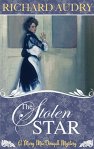 The Stolen Star
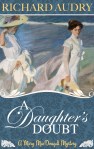 A Daughter’s Doubt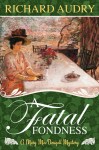
Also, please consider visiting my website and liking my Facebook author page.
This article was posted for Richard Audry by Jackie Houchin (Photojaq)
For a preview of Richard Audry’s A Fatal Fondness, please check out my FIVE STAR REVIEW on my: Here’s How It Happened – A Fatal Fondness


 Then there’s Romance Writers of America. It’s in San Francisco this year, and I’d certainly planned to go there, only… Well, things have changed in the entire organization. It’s been rocked by a scandal involving discrimination issues. I haven’t entirely followed all the changes and nuances, but a lot of people in charge have been ousted from their positions or resigned, and even a lot of members have decided not to renew their membership, even though the discrimination issues will hopefully all be addressed–and eliminated.
 So, instead of four conferences this year, I doubt I’ll attend any.
 My writing has matured over those thirty years, as has my heroine. Granted, when introduced in my first book, she was “almost eight”, so her voice and thoughts had to reflect her age. However, the book was meant for adults, therefore it had to present the story at a more mature level. Much of the storyline and the tension springs from a child who’s unable to fully understand her situation and an adult audience who clearly can.
 Mike McNeff introduced his hero Robin Marlette in GOTU (pronounced Got-U, it’s short for Guardians of the Universe). His action/adventure series features a covert ops team that has to balance work with home life. Mike’s currently writing the fourth book in the series. When I asked him how his characters have evolved over time, he decided to let Robin speak for himself:
 What began for Heather Ames as a stand-alone novel turned into a deftly blended mystery, suspense and romance series featuring Detective Brian Swift and socialite/club owner Kaylen Roberts (due in part to encouragement from some members of this blog). Ames says, “My characters have evolved from two people who didn’t even trust each other enough to share confidences into two people who have been trying to work through various challenges. They weren’t sure they could work things out by the end of Book one, but they both wanted to try.”
 Pat Kelley Brunjes traveled a similar route with her characters as I, opening her series with a story loosely based on her family history. In her first novel, The Last Confession, her protagonist serves as a stand-in for Brunjes. “Maggie was me seeking to find the truth about my grandmother’s relationship to the Catholic Church.” Although based on her research, she fictionalized the story, which allowed her to take Maggie in a non-biographical – and more dangerous – direction. In the sequel she’s writing, her heroine gets entangled in a cold-case murder and human trafficking. “In the second novel, Maggie has evolved into her own person dealing with what fate has thrown her, and how her personal beliefs guide her decision to help others.” Having given herself the freedom to step away from semi-autobiography, Brunjes will have much flexibility in plotting future entries in the series.
 Avis Rector faces a unique challenge in writing her historical fiction series, based on the early life of her family on Whidbey Island. In her first book, Pauline, the heroine and her husband settle on the island during the Depression. “So much of the first Pauline was based on my memories of the stories I heard as a child from my father who loved to tell stories—usually real happenings, but many embellished.” However, in her sequel, the story moves into the 1940’s, a time Rector lived through. She’s having to reinterpret her childhood memories through an adult’s perspective. “Actually, I’m having a hard time writing how the adults felt about the time. Pauline has changed.”


 “Ideas had space to roll around in my head,” she said. “My thoughts were uninterrupted. It was divine. These days the life of a 21st century writer are frantic, a pressure cooker requiring one to write reviews, connect with fans and friends, and try to stay in the game. ”
 Jill Amadio is from Cornwall, UK, but unlike her amateur sleuth, Tosca Trevant, she is far less grumpy. Jill began her career as a reporter in London (UK), then Madrid (Spain), Bogota (Colombia), Bangkok (Thailand), Hong Kong, and New York. She is the ghostwriter of 14 memoirs, and wrote the Rudy Valle biography, “My Vagabond Lover,” with his wife, Ellie. Jill writes a column for a British mystery magazine, and is an audio book narrator. She is the author of the award-winning mystery, “Digging Too Deep.” The second book in the series, “Digging Up the Dead,” was released this year. The books are based in Newport
 I frequent a bookshop in a neighboring town that sells books for and about writers, along with writing-related merchandise (if you’ve been to Port Townsend Washington you know which store I mean). They carry postcards and T-shirts with writing slogans like “Avoid Clichés like the Plague”. Cute. Unfortunately, it denigrates clichés. The meaning of the word has been ‘adjusted’, and unfairly so, IMHO.
 When selectively used, a good cliché expresses wisdom through metaphor. A stitch in time figuratively saves nine. Actions often do speak louder than words. Sometimes it is a dark and stormy night, but since that opening line shows up more in humorous writing nowadays, we expect it to be funny, not dark. Like cliché, the expression’s meaning has been ‘adjusted’.
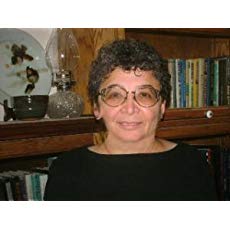 I had the pleasure of getting to know one of our Writers in Residence bloggers, M.M. Gornell, more in depth last month and decided to write up my talk with her for the monthly column I write for a UK magazine called Mystery People.
 One of the most famous, nostalgic, fascinating and historic highways that wagon trains of homesteaders traveled, along with migrants seeking fortunes in gold mines, land, and new opportunities, U.S. Route 66 was originally a 2,500-mile dirt trail that ran from Chicago, Illinois to Santa Monica, California. It was eventually smothered in asphalt and became known as the Mother Road, and the Main Street of America, passing through a total of seven states.
 Although her former residences have included other towns and the Sierra Nevada with its rich palette of Red Rock Canyon (the setting for her thriller, DEATH OF A PERFECT MAN), Madeline’s move to Newberry Springs inspired her to set the majority of her eight crime novels, including two series, along the famed highway. “For me,
  But California and Route 66 beckoned in the 1990s, due to mental pictures and expectations she had of the Mother Road twenty years earlier. It was not as easy as she had imagined, but new settings presented themselves and the majestic Sierra Nevada Mountains provided magnificent, magical scenery, inspiring her “Raven” mystery series, then LIES OF CONVENIENCE, and more recently her “Rhodes” mystery series.
 Although the romance of the route was a fixed American landmark, it was soon bypassed by the new Interstate Highway System which either paralleled it, resurfaced portions, or went elsewhere, leaving Route 66 abandoned and lined with ghost gas stations and tiny deserted communities. Eventually, it was officially designated as “ceasing to exist.” But you can’t keep an icon like the Mother Road down. It was rediscovered by musicians, hippies, artists, movie makers, and writers.


 Na-
Na- “Traditionally, NaNoWriMo works best when you start a brand-new project. It may be an arbitrary distinction, but we’ve seen that novelists do better (and have more fun) when they’re free from the constraints of existing manuscripts. Give yourself the gift of a clean slate!
 The only physical description we have of Nancy Drew is her “titian hair” and “blue eyes.” However, we hear a lot about her chic wardrobe and apparently endless clothes closet. Beyond her stylish threads, Nancy often dresses in costumes and old garments found in attic trunks. When the books were originally released in the 1930s, low-income readers could imagine wearing Nancy’s pretty outfits for themselves.
 The books are set in 1967, an era of vibrant and varied clothes. Poodle skirts and bobby socks gave way to miniskirts and pillbox hats. East Indian garments were in style. The “British invasion” of roc
 Destiny King is an African American agent who takes Noelle on her spy missions. Destiny sports a trimmed Afro and frequently wears jumpsuits. Her clothes are functional in more ways than one way. For example, she has a pair of earrings that are really plastic explosives.
 Sally Carpenter is native Hoosier living in southern California. She has a master’s degree in theater, a Master of Divinity and a black belt in tae kwon do.
 I’m a writer.
 Now I’m working on the fourth of those books. I’m first doing a synopsis and three chapters to turn in, then finishing the rest of the manuscript. I have a few months, so I should be fine. But right now I’m looking at all the weekend events, panels and more, that I’ve agreed to in the near future. Then there will be a visit from some dear family members that will probably use up a week. And an annual trip that has been extended to see those family members at their home. So… well, I’m worried about meeting that deadline.
 Yes, deadlines are a part of life.
 Linda O. Johnston, a former lawyer who is now a full-time writer, currently writes



 Jill Amadio is from Cornwall, UK, but unlike her amateur sleuth, Tosca Trevant, she is far less grumpy. Jill began her career as a reporter in London (UK), then Madrid (Spain), Bogota (Colombia), Bangkok (Thailand), Hong Kong, and New York. She is the ghostwriter of 14 memoirs, and wrote the Rudy Valle biography, “My Vagabond Lover,” with his wife, Ellie. Jill writes a column for a British mystery magazine, and is an audio book narrator. She is the author of the award-winning mystery, “Digging Too Deep.” The second book in the series, “Digging Up the Dead,” was released this year. The books are based in Newport


You must be logged in to post a comment.