
By Rosemary Lord
 Did you notice how small our world became during the Covid-19 lock-down?
For those of us in California it’s been over eighteen months of confinement, and it’s not over yet. We were prohibited from travelling, other than for emergency/essential needs. We were discouraged from meeting anyone, other than those we lived with. For those of us who live alone – too bad! In case we caught or spread the Dreaded Disease.
Our in-person Writers’ Conferences were cancelled. First the Left Coast Crime Conference in San Diego was cancelled March 2020, just after I’d checked in!
Even last month’s ‘Blood on the Bayou’ Bouchercon Writers’ Conference in New Orleans, was cancelled at the last minute.
Our hardworking conference organizers must have wept as years of planning were wiped away. But you can’t keep writers down for long. We always find a way… They came up with various creative online offerings.
There was no travelling to meet other writers or to research places for our stories. We stayed home, becoming ‘shut-ins,’ locked in our own little castles – be it one room or a whole rambling house. We were still ‘confined to barracks.’ We didn’t drive – there was nowhere to go. People had everything delivered. (Cardboard box-makers must be making a fortune!)
Lives the world over changed. We became resourceful. We helped relatives, friends and neighbors. We re-evaluated our world. But the fear the Media shared, became pervasive. It was – and still is – difficult to escape.
But, as writers, we had our own escape – into our private, isolated writing world. Some writers flourished, with no distractions, completing novels, articles, scripts – all sorts. Other writers struggled, unable to concentrate. I wrote some, but not as much as I wanted.
I read a lot more. Most of us did. Unable to get the creative juices flowing and seeking diversion, I found something quick and easy, re-reading “Eats, shoots and leaves” – which I’ve written about before. It’s Lynn Truss’s witty book on sloppy punctuation. It still made me laugh. Just what I needed. Lynn Truss bemoaned the fate of proper punctuation, claiming that it was an endangered species, due to low standards on the internet, email communication and “txt msgs” She explained, “Eats shoots and leaves” is a joke about pandas. They eat (bamboo) shoots and leaves – and not, by the simple addition of an errant comma, a comment about a violent criminal act. (Although pandas can give a very nasty bite.)
Then there’s Michael Caine’s interpretation of a line in a script that read, “What’s that in the road ahead?” By adding a simple dash, Caine had his fellow actors in fits of laughter when he announced: “What’s that in the road – a head?”
Or the Australian take on bad punctuation, taught in schools as a way of making students remember the grammatical rules: “Let’s eat Grandpa,” sends Aussie kids into helpless giggles with such a picture. But it’s not a cannibalistic suggestion, merely the absence of a comma in a sentence that should read: “Let’s eat, Grandpa.” That’s why Eats, Shoots and Leaves became so popular, reminding us of school lessons that seem to have vanished in today’s hurried world.
So, my lock-down reading provided some laughs, and I learned a lot of new things. (Just don’t get me started on Social Media for Dummies, or U-Tube attempts to teach me ‘techie’ things with my computer or Social Media. Urgghh!)
But at least I discovered a terrific search engine: DuckDuckGo – where you don’t get followed by advertisements and constantly besieged by sales pitches for something you were looking up.
My reading veered from my usual research about Old Hollywood, to total escapism. Mysteries in far off places: Peter Mayle’s The Marseille Caper, Victoria Hislop’s The Island and Rosanna Ley’s The Saffron Trail – to name just three. Clearly a theme here: my yearning to travel again!
Unless you’re half of a writing partnership – we write alone. Although, when I’m immersed in my writing, I’m enjoying a world with all sorts of characters – so I don’t feel alone. Our writing community is filled with a smart, imaginative assortment of writers. But this long, lock-down was different. And as much as we did Zoom Meetings, phone-calls and Webinars, we missed that personal interaction, spontaneity, the regular Coffee Shop meetings sharing our latest pages and new ideas. We missed meeting friends – especially the hugs. Waving at the end of a Zoom meeting is not the same.
So now, as we venture out again, we are cautious. Driving any distance, after eighteen months of only running local errands, was most disconcerting. The intrepid journey on not just one, but three, freeways, took me back to learning to drive when I was seventeen – in a clunky old Morris that would not go much faster than thirty miles an hour. I was right back there on that quiet English road, holding my breath until I reached my destination. I found going to a shopping center almost overwhelming. Where did all these people come from? I’d got used to the quiet isolation of my apartment building. But I wasn’t alone. We had stopped interacting with each other. Stopped those lovely unexpected meetings of friends and acquaintances we bumped into on the street. We’d not been out on the street for eighteen months.
But I discovered that friends and family were going through the same thing. The enforced isolation was more difficult than many of us realized. Not wanting to make light of kidnap victim’s suffering – but many people appear to be suffering from a form of Stockholm Syndrome.
We’d learned to keep ourselves ‘safe.’ Our world had become so small. Walking out again into the big, brash, noisy world was scary. It was tempting to run back inside and close the door. But, adventurers at heart, we writers have stepped back into the fray. Into that great big, bright, scary world again, that’s just waiting for our participation and our imagination. Hey, World, we’re back!
……..end……..
Photo by Clay Banks on Unsplash








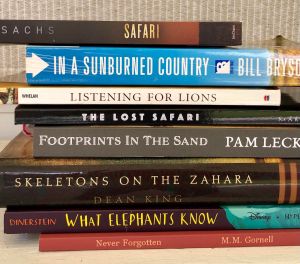
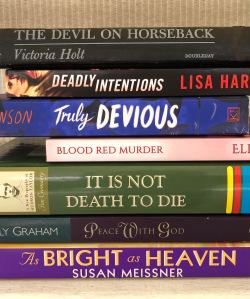
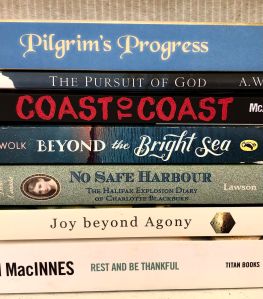


 After ordering restaurant take-out, my husband drove there to pick up dinner. It would take him almost an hour, leaving me time to explore a newly bloomed section of our garden, planted with rhododendrons. If you’re not familiar with the plant, they’re like azaleas on steroids, with flower clusters, some as big as your face, nestled against dark green leaves. Some grow as tall as trees; others have been pruned knee- or chest-high, their blossoms a riot of pinks, fuchsias, purples and reds.
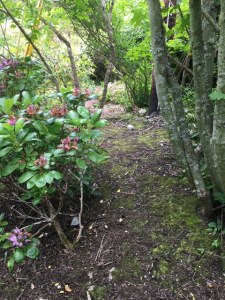 In the shelter of the garden, hidden beneath a canopy of lavender and laurel trees, I sauntered the path that wends through the rhododendrons. As I neared the end of the path, where it rejoins the lawn, I spotted something crescent-shaped sparkling on a branch. A closer look revealed a young bird, judging by its downy feathers of gray, which blended in with the bark. She (as I later discovered) had a curved beak, bright yellow, which stood out like a slice of sunlight in the darkness of the overgrowth.
 I so wanted to hear her sing, but she didn’t. Silently she sat there, occasionally darting her head, watching everything around her as I watched her, delighting in her curiosity, her seeming amazement with the world she’d recently entered. She hadn’t mastered flying yet. Her wings fluttered to help her balance on the branches as she hopped along, taking in the sights and sounds all around her. I’d been feeling blue awhile, in a rut. All that changed with my encounter with this fledgling. I found myself transfixed by her utter joy, and that joy flowed through me for the first time in months.



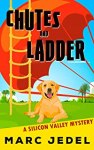
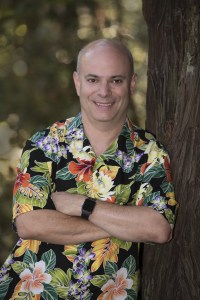 Marc Jedel writes humorous murder mysteries. He credits his years of marketing leadership positions in Silicon Valley for honing his writing skills. While his high-tech marketing roles involved crafting plenty of fiction, these were just called emails, ads, and marketing collateral.


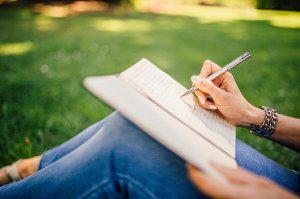 Here’s a suggestion for wannabe authors. You’ve pondered that writing project for years; now you have time to get those ideas down on paper (or computer, or recording device). What would it take to turn that dream into a manuscript?
 I’ve opened membership to this site on a temporary basis. Here’s a place for you to learn about the author’s journey from “aspiring” to “avid.” Find out how to improve your writing, where to market your work, and ways to research trends in the industry. Get questions answered from an author who’s been there.
 I’m a semi-retired college English instructor and published author with a doctorate in English composition. I self-published the Self-publishing Guide in 1979 and went on to self-publish print versions of a mystery series and several non-fiction books. I’ve given workshops through libraries, bookstores, writers organizations, and continuing education departments and have written for writers’ newsletters, homeschooling blogs, inspirational magazines, and publications such as the Des Moines Register.


You must be logged in to post a comment.