
by Miko Johnston
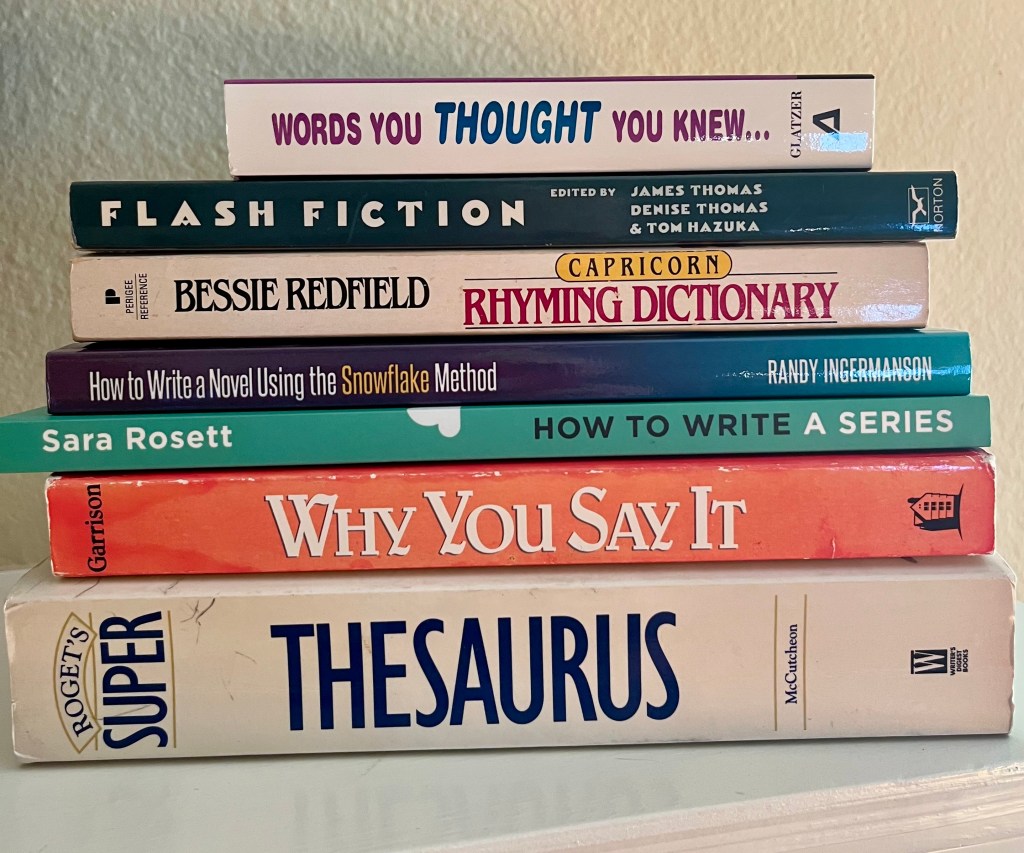
What would you guess? Perhaps a concept or workable idea. A grasp of proper grammar and punctuation. A good dictionary, thesaurus, or style manual. A viable marketing plan. A platform. A publishing contract. All important, but none of these top my list.
A while back, Jackie Houchin made an observation: “It’s no wonder that I’ve been asked by other writers if they could join our group – there is some great writing here.” As a founding member, I know this to be true, but it’s an incomplete assessment. As gifted as both present and past members may be, our greatest strength has been our support and encouragement of each other.
***
Long before the Writers In Residence existed, a core group of us – mostly talented amateurs aspiring to getting published – gathered to share and critique our writing. We met through established writer’s organizations such as the late Alameda Writers Group and our local chapter of Sisters in Crime. Eventually we spun off and formed our own group. Gayle Bartos-Pool, Jackie Houchin, Bonnie Schroeder and I met through the AWG; Gayle brought in Rosemary and Jackie Vick, and the Writers in Residence was born.
Each month, one of us would send out thirty pages of a manuscript for critique, then we’d meet at a library to discuss it. We’d book the room for two hours and spent half the time socializing. We admired each other’s work, but we truly liked each other and over the years we’d become friends. Those library meetings changed to meeting for lunch at a restaurant, with critiquing on a “by request” basis. When we began, only Jackie V, Gayle and Rosemary had books published and Jackie Houchin, a journalist and reviewer, had her work printed in a local newspaper. Now the rest of us have had at least two books published, and as our membership changed over the years, bringing Madeline Gornell and Kate Thornton, then Lynda, Jill, Maggie and Hannah into the fold, our list of publications has grown.
That pool of writing talent led to a second critique group, comprised of former WinR Bonnie Schroeder, Heather Ames (an occasional guest contributor to our website), and myself. Our writing genres differed but our goals aligned. We met in person when we all lived in SoCal, then switched to online. Now we all live in different states in the Pacific Northwest, but we’ve continued our online critique group to this day.
I measure our success not only in quantity (of publications), but in quality. I can honestly say my writing has improved over the years in no small part to the WinRs and its online offspring. I believe the others in our groups have benefitted from the feedback and support we give, as well as the respect we have for each other. I’ve relied on my fellow WInRs for everything from back cover blurbs to beta reads to a simple “go for it”.
I can’t imagine accomplishing as much as I have without the help, support, and encouragement of these women. I’ve been, and continue to participate, in other writers groups, but it’s not the same. Whether because of those early years, struggling together, or the ensuing years when we’ve counted on each other for camaraderie, counseling and courage, we remain … strong, committed and together.
We’ve helped each other in other ways as well. On more than one occasion I’ve written about how much our posts have benefitted me, from the instructive series to the topical pieces that make me ponder aspects of writing. Readers, if you’re new to the blog I suggest searching through our archives for a wealth of information and suggestions on how to get ideas, start a story, polish a manuscript and overcome writers block – just put your query in our search box.
I hope those of you who follow our blog have benefitted from the posts we’ve presented for more than a decade. Some of you who visit us may have writing communities of your own that you’ve come to depend on. If so, how has it helped you in your writing, personally and professionally? Or if you’ve ventured into writing solo, have you found community through the Writers in Residence? Let us know – we’d love to hear from you.
Miko Johnston, a founding member of The Writers in Residence, is the author of the historical fiction series, “A Petal in the Wind”. Her fifth and final book in the series is about to be published. She’s also a contributor to several anthologies, including the bestselling “Whidbey Island: An Insider’s Guide”. Miko lives in Washington (the big one) with her rocket scientist husband.






You must be logged in to post a comment.