A Writer Writes

by Rosemary Lord

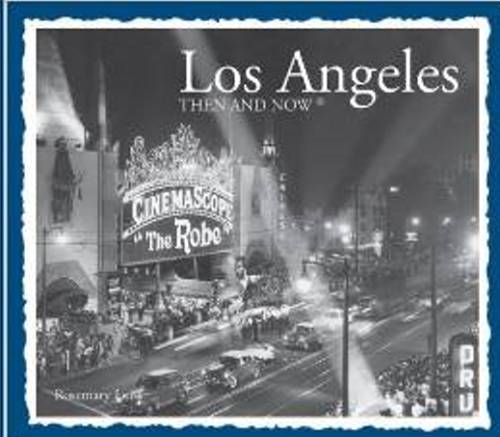
I’ve had a hectic few weeks writing my new Los Angeles Then and Now book, as I realized the June deadline was looming. Why do we think we always have more time than is really available?

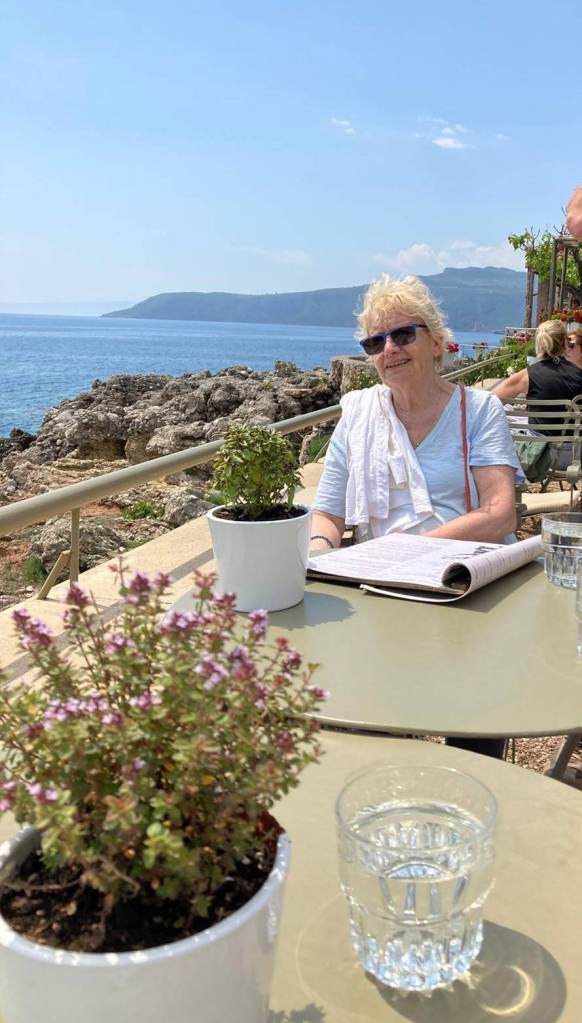
I’d been in England and Greece with my family – which was lovely. But even when I was there, I was mentally figuring when and where I could grab a couple of hours to research and write. Even half an hour would help. But I’m not one of those writers that can sit down – plonk! – and start writing. I’ve come to realize that I need to come down from my everyday life. Then time to mentally flatten things out, before I can switch into writer mode.

I think this is because I am not currently writing fiction – where I find I can, if I need, plonk myself down on the corner of a table and scribble inspired lines, and even paragraphs.  That doesn’t mean that I don’t have to eventually sit down for many hours at a time, day after day, to actually write the novel I promised. But I can also write it in bits and spurts.

But writing this particular, nonfiction, book requires a lot of research. The physical – driving all over in heavy Los Angeles traffic, checking if a building is still standing and in what sort of condition, who the neighbors are and how the neighborhood is looking.  But I also do research about any construction or new plans for the building in question and the surrounding area. Thank goodness for the internet – but I still have to find physical documents from in-person library and record-office visits as well. That is after I have investigated the entire history and Government records.

I’m still begging our local offices for more information on the upcoming Olympic Games to be played in Los Angeles in 2028 – just after my book comes out. No one seems to know where any of it is really happening. They tell me they ‘hope’ but are still not sure. So I have to get very creative to sound as if I have actual facts, locations and dates! Which I don’t! And I have to write in a timeless way so that the book, which is to be published in late 2027, is not out of date and does not sound as if I wrote it in 2026. It needs to be readable for years to come and not sound dated. If that makes any sense. 

That writing project has to be my main focus currently, as I have a publisher and a deadline.

But I’m also still fighting to save the Woman’s Club of Hollywood and have spent a lot of the past 3 years appearing in court, fighting off greedy people that suddenly decide that they should own the historic landmark property! I was even sued by one of them for trying to stop them claiming they own the property now. I have learned far more about the law than I ever wanted to. But I’ve also learned a lot of legal lingo and how attorneys and court officials write and speak. And how to make them listen and believe me. I just wish I could get inspired to write some legal drama – as a lot of writing has been involved. I have written copious ‘statements’ and ‘declarations,’ addressing dishonest or bizarre claims, cleaning up witness ramblings and creating documents that swiftly and cleanly explain the current situation, precluding any wiggle room for misinterpretation. Just the facts, ma’am!  It is a specialized form of writing.  But not enjoyable, other than the knowledge that I am fighting for justice for an historic landmark.

But I do snatch time for my fun writing, as I clear my head of the other ‘stuff.’ My fun writing rambles, but sometimes results in an unfinished short story, another chapter in my second Lottie Topaz book – as yet, unfinished. Writing is therapeutic. Sometimes I just write 3 or 4 pages of what may be an essay on something. Whenever I have the time, I shall go through these scribblings and decide if I think they’re worth publishing. I have a lot of unpublished writings!

It was good to escape to Greece again, as I always manage to clear my head while I am there, and decide what in my life and my writing is worth keeping and what needs to be discarded. I get surprising clarity.

It could be the sound of the ocean just yards away from where we stay. Or the serenity of the old house we rent, where every room has many windows, all with amazing views of treetops and the ocean, or mountains on the other side, or terracotta roofs amidst the endless olive trees, and that characteristic yellow brick of the local houses. Every room has a view. There are verandas that scream for writing time, and a small, tranquil garden. What’s not to like? The challenge is, when one does sit down to write there, is to not be lulled to sleep by the sound of the waves. Especially when this follows some wonderful Greek meal. So, the struggle is enormous.  And I noticed on so many occasions there, that when the house was quiet, my siblings were all reading – before they were lulled to sleep. Everyone got through several books while we were there. We always do.

So now it’s back to reality – and writing deadlines. But I’m grateful to have a deadline and a writing deal – after so many years of chasing publishers and literary agents. That agent bit never came to fruition. But my book writing did. And so, I write on. And as long as I can write – even if it just for my eyes – I am a happy camper.

ASSUMPTIONS, ASPIRATIONS AND ANNOYANCES

by Miko Johnston

While driving through a nearby town, I spotted the flashing lights of a half-dozen police cars ahead. One sat parallel to the driveway of an elementary school and the rest parked outside a housing complex across the street. My first thought caused my stomach to lurch – active shooter at the school! As I drove past the line of black and whites I saw two officers in the walkway leading into the complex and two young men kneeling on the ground, their hands clasped behind their heads. The police had been called about some mischief in one of the apartments. Whew. Nothing to do with the school. On reflection I recalled the police car parked in the school’s driveway did not block the entrance, as I’d expect if a threat existed there. I continued driving, but the incident stayed with me.

You can understand my assumption, given the frequency of events like I’d imagined, as well as the climate of violence and hostility in our country. All signs that led to my incorrect conclusion. But I hated that I automatically jumped to that conclusion because this really happened. Fact, not fiction.

I don’t mind being fooled or misled in fiction; in fact I enjoy it. The “aha!” moment of surprise when I learn the truth is part of the pleasure when I read, watch a tv series or a movie. I aspire to do the same in my fiction writing, with one exception. As an historical fiction author, I never mislead with history. The pleasure of fooling the reader, or being fooled, doesn’t extend to non-fiction, or at least, it shouldn’t.

I worked as a journalist at a television station during the eighties, when the golden era of news began its downward spiral. Until then we presented the news as information: what happened, where, to whom, and if we knew, why and how. Every story had to be verified by at least two independent sources before broadcasting it. Sometimes early reports would be inaccurate, especially in high-drama situations like hijackings, shootouts or terrorism, but we’d always update viewers with corrections.  We limited any opinions to PSAs – public service announcements – separate from the evening news.

I lost that job when I disagreed with the news director’s approach to a story: a man facing divorce and separation from his children was arrested when he hired a “hitman”  (an undercover policeman) to murder his wife. This occurred a few months after a Shiite Muslim man had hijacked an airplane. The suspect happened to be a Shiite, which had nothing to do with the story, but it dominated the lede. Sensationalism boosted ratings, and that became paramount as competition with other broadcast news sources grew.

When I read fiction, go to the movies or stream scripted series, I want entertainment, escape, or just to have some fun. That might include being misled or even tricked into thinking something “is” when it really isn’t. Unlike in real life, part of the enjoyment of a good mystery or suspenseful story, along with figuring out whodunnit, is the expectation that the bad deed rarely goes unpunished. Real life is messy and problems can’t always be solved by the end of the episode or the final chapters of the book. In non-fiction, documentaries and news, I prefer the facts straight up, with no embellishment or opinion. That’s become harder to find when I read the newspaper or switch on the nightly news. Journalists often blur the line between reporting and proselytizing. Too often, they unapologetically violate it. As the late NY senator Daniel Patrick Moynihan famously said, “You are entitled to your own opinion, but you are not entitled to your own facts.”

I’ve frequently riffed on Mark Twain’s quote about how fiction has to be believable even if it isn’t true, while non-fiction has to be true, even if it isn’t believable. Now I’m questioning whether that line still exists in present-day media.

We live in an era when the information we get may cause doubt as to its accuracy, in part because we witness or hear things that would defy believability on a daily basis. Situations that would have shocked us yesterday seem, if not normal, then normalized. How – or will – it change the way we view both fiction and non-fiction?  

Miko Johnston, a founding member of The Writers in Residence, is the author of the historical fiction series, “A Petal in the Wind”, as well as a contributor to several anthologies. Miko lives in Washington (the big one) with her rocket scientist husband. Contact her at mikojohnstonauthor@gmail.com

Fun Facts About the Revolutionary War You Didn’t Know

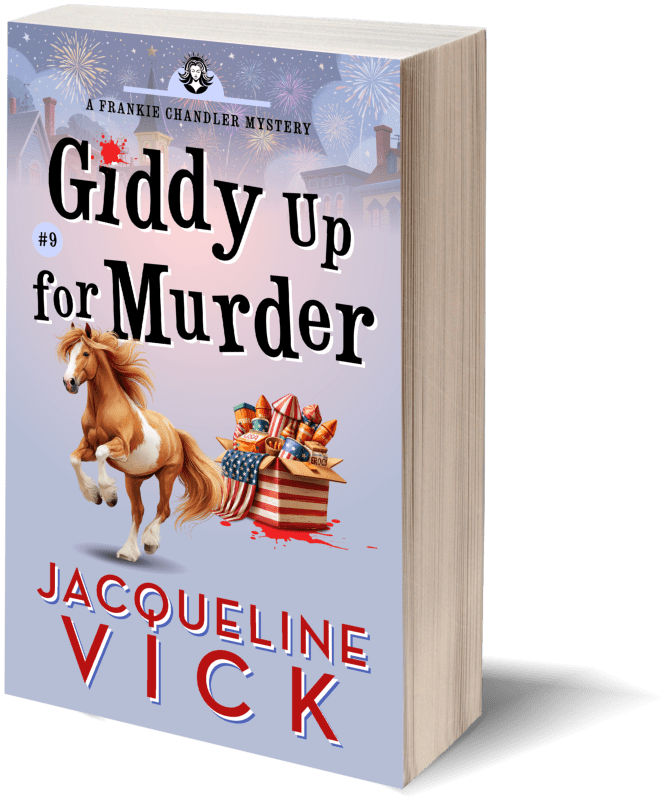
While I was researching my latest pet psychic mystery, Giddy Up for Murder, I discovered a few fun facts about the events surrounding the Revolutionary War that might change the way you remember these exciting events. 

For instance, how would you like your Stars and Stripes with six-pointed stars?

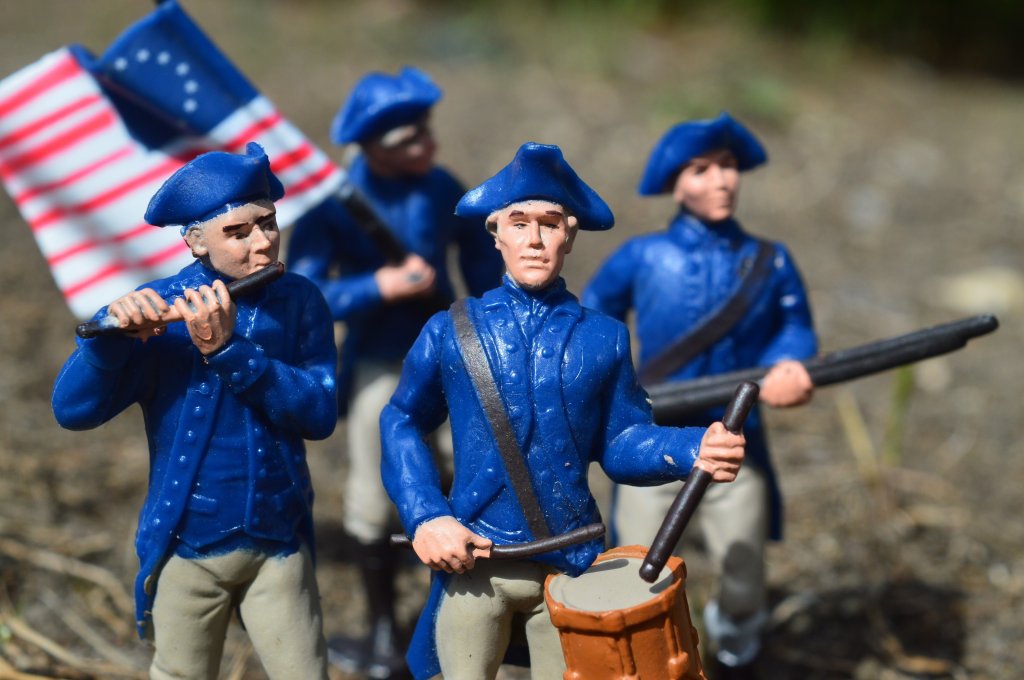
When a group of men including George Washington visited Betsy Ross to ask her to create a flag to represent our new country, Washington suggested the six-pointed star used by his Mason Lodge. Betsy showed the general how much easier it was to cut out a five-pointed star. So, our current flag may have come to us because the original seamstress was tired.

How do we know the story told by Betsy’s children is true? We don’t, but several factors support this version.

  • Several family members signed affidavits swearing her story was true.
  • Paperwork exists that shows the Ross’s did work for George Washington
  • Her late husband’s uncle was on the Flag Committee
  • On May 29, 1777, the Pennsylvania State Navy Board paid Betsy for making flags, and on June 14, 1777, Congress adopted the Stars and Stripes as our official national flag.

I’m going with yes, it’s true.

How about the story of Paul Revere shouting, “The British are coming! The British are coming!” True? Or false?

While Henry Wadsworth Longfellow made Paul famous in his 1860 poem “Paul Revere’s Ride,” in reality, our hero rode into the night with two other men, William Dawes, and Samuel Prescott. Paul was detained by a British patrol in Charleston, while Prescott made it to Concord.

“Listen, my children, and you will here

Of the midnight ride of Samuel Prescott,

Admittedly, this does not rhyme, so I understand Longfellow’s creative choice.

Two other riders are rarely mentioned: Isreal Bissel and Sybil Ludington, but theirs is a story for another day.  

Much of the research an author does winds up in a file for possible future use. The Betsy Ross episode made it into my book; Paul Revere’s ride did not.

In Giddy Up for Murder, pet psychic Frankie Chandler attends a Revolutionary War reenactment. When a man dies, the only witness to what really took place is a horse with a vendetta against a person who could not possibly have committed the crime. 

If you’d like to check out the book, the preorder is available now. 

So, while you’re celebrating America’s semiquincentennial this year, why not dig into the patriotic tales you remember from childhood. What you find may surprise you.

Material on Betsy Ross gathered from Historic Philadelphia, Inc. article “Did She or Didn’t She?”

Material on Paul Revere’s ride gathered from Constitutional Facts article “The Five Riders.”