GROUP QUESTION: What advice would you give to your younger writing self, or to writers who are just starting their careers later in life?

Hosted by Jackie Houchin

Once every 2 months or so, we ask our writers a group question. Those who can, reply below for your reading pleasure. Let’s see what they said this week.

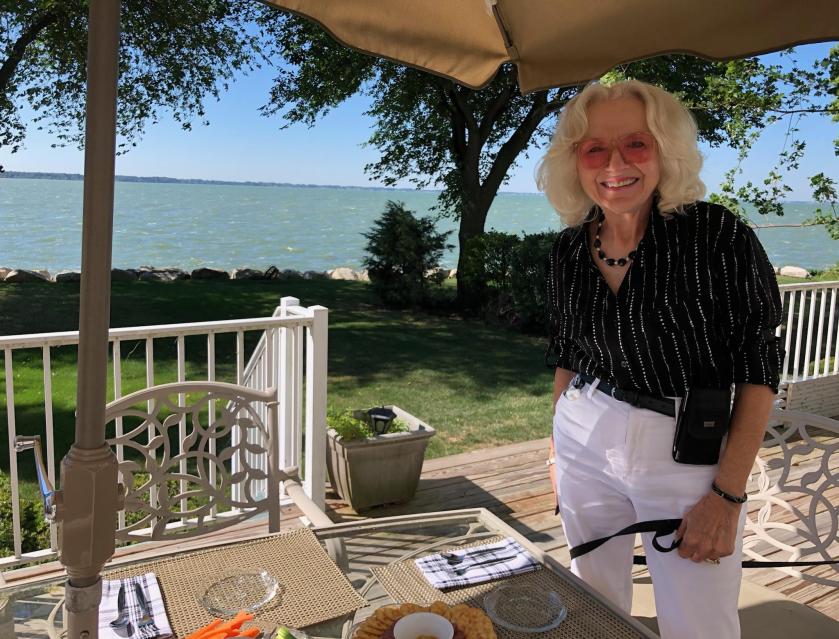
G. B. (Gayle) Pool:

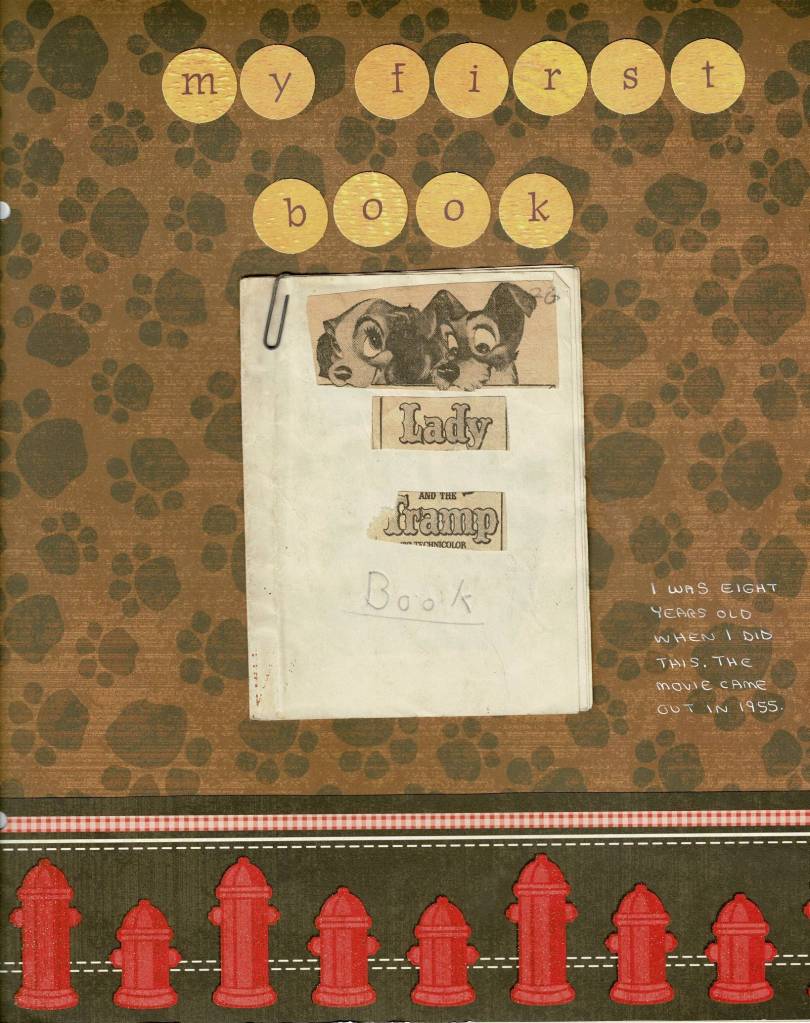
Even before I told everybody that I wanted to be a writer at age 12, I wrote stuff. When I was 8 years old, I stapled together newspaper clippings about the movie Lady and the Tramp. My mother kept it, and I still have it. It was technically my first book. But I kept writing things – poems, stories, ideas. It might have taken a while, but I finally completed a book when I was in my thirties. But I never stopped writing until that time. A little while after I wrote the book, though it hadn’t been published yet, I spoke to a kid who said he was a writer. I asked him what he had written. He said, so far, he hadn’t written anything. He was just thinking about it. Well, technically, he wasn’t a writer…yet. Because you have to write to be a writer. So write…something, anything. Put those words and ideas on paper. Hold onto them because they might be the basis of a book or two later on. But if the words don’t appear on paper or in your computer, you aren’t a writer. Writers write. Write On!

My first “clippings” book.
.

Jackie Houchin:

Younger self (or mid-life ladies): get an MFA degree (Master of Fine Arts) focusing on Creative Writing (or Journalism, communications, etc.), at a local college (or online) if at all possible. I wish I had, instead of just plunging in “by the seat of my pants,” and writing this and that, making mistakes, giving up, then beginning again. I took a few free or low-cost courses and learned a little. I joined critique groups (like Writers in Residence used to be), and I wrote stories for myself that never saw the light of day. And I even wrote for a couple of local newspapers for a few years (That was fun – maybe I should have studied journalism!). I learned things along the way by trial and error. BUT I COULD HAVE learned them at the beginning, and become a Great American Novel Writer, or a Pulitzer Prize Winner by now. And so today … I’ve never published a book. (I did have a short story published after entering it in a contest, but that’s as far as it got). ***** DO BETTER, younger self!

.

Maggie King

  • Read, read, read, especially the type of stories you plan to write.
  • Don’t let anyone discourage you. That includes YOU! 
  • Later in life is a wonderful time to write. Think of all the experiences you’ve had, the insights you’ve gained, the stories you’ve read. 
  • Above all, WRITE!

.

Miko Johnston:

I can answer that:  I’d tell my younger self to ask more questions of family and friends, engage more with strangers in social situations, and especially to discreetly listen to others’ public conversations (much easier today in our cell-phone world). Having that ability can generate lots of character background, quotable dialog, and plot ideas.

Years ago, a friend had a brief but oddly humorous conversation with a woman in a SoCal movie theater restroom. Two years later, she heard that conversation used verbatim in the movie “Independence Day.”  

..

..

..

.And that’s it for this time!

.

The Moral Compass

by Jill Amadio

Defined in most dictionaries as a set of values and beliefs that guide decisions, judgments, and behavior and provide us with a sense between right and wrong, our moral compass can be cast aside for our characters.

While the compass points us north, south, east, and west,  the antagonists in our mysteries can be all over the map when it comes to ethical judgment. How joyful it is to imbue one’s killer with a single gold standard that can, perhaps, offer the reader a glimpse of dastardly deeds.

In one of my mystery series, the plot required the killer to unwittingly reveal herself about a third of the way into the book. I was pleased with my characterization of her. But the more I wrote her, the more I came to like her, and eventually I knew I had to switch the plot around – no small task.

However, the exercise provided the opportunity to keep her on as a permanent minor character in future books. I later reflected that she had served her purpose, which had eluded me initially but made the plot more complicated and thus, to my beta and alpha readers, more intriguing.

I also read that a moral compass can provide direction for trainees, business guidelines, and the direction a person, company, or organization wishes to take.

The term moral compass can sound a bit pompous, but if it is laid out clearly, its use can certainly give the reader an immediate understanding of a character’s motives. Or serve to befuddle.

I also read in my research that the first use of the term “moral compass” was in 184. Should I add that tidbit to my story, or simply brush it aside as a non sequitur?  I often hope that mystery fans take such a mention as a jumping-off point to do their own research, although going off on such a tangent can ruin the flow. One wonders who came up with the phrase, but I stopped reading after six words and never found out.

I don’t remember ever seeing it used in a book, but it could easily be woven into a memoir when describing relatives or friends. Come to think of it, after writing six memoirs and autobiographies and ghostwriting a further 14, the phrase would have been a neat addition to incorporate. On the other hand, my clients never brought it up, but I should have. I guess there are several other ways to indicate a person’s moral compass, but now it seems to me it was a question I missed asking.

In fact, the term sounds rather stiff, old-fashioned, and ultra-formal. On the other hand, it sounds erudite.

Would using it satisfy a writer’s need for acceptance as being profoundly intelligent?

Actually, it can be used as a matter of pride when composing a character’s assets. Giving him or her a moral compass, whether acknowledged or not, can be considered a plus or a minus. Lacking moral judgment, such as committing murder and thinking little of it, is a character flaw many authors give the people in their books. However, do we really need a moral compass to distinguish right from wrong?   

Of course we do! 

Word Pictures

by Jackie Houchin

“One picture is worth a thousand words,” or so they say. (Actually, it was first said by newspaper editor Arthur Brisbane.) And that’s what I try to do.

Six mornings each week, I go out early and walk a couple of miles before the sun is all the way up.  I leave before eating or anything else… well, I do throw out some bread and peanuts for my crow friends as I go. 

I listen to a Christian podcast or two via Bluetooth as I walk, and I usually walk in one of the 4 directions from my house. The routes get familiar, so occasionally I drive to a walking or biking path. 

I’ve discovered 10 Little Free Libraries in my neighborhood along the way, and sometimes I switch books between them (or grab one to read).

It’s cool. It’s quiet. It’s sometimes foggy.  I may see a familiar dog-walker or two, but mostly I’m alone. I LOVE it.

My eyes are constantly roving here and there as I walk.  I’ve been a photographer for many years, and my mind-eye connection often sees unusual, fun, or beautiful sights out of things you would normally pass right by.

Such as a tree with eyes. A big stuffed tiger hanging out of a child’s wading pool. Or a bright cerise rose poking up through a snowfield of dusty-white other-plant leaves. A tiny black crow sitting in the top branches of a wintry black tree skeleton. A silvery Jetstream arrowing straight up and catching the first beams of the sun.  A hidden shell. A mossy side of a fireplace. Wild daisies growing in and through a log fence. Weird oil leaks and stains on the asphalt that look like something to me, which I call “street art.”

I shoot these with my phone and post them online under “Early Morning Walking.”  With a mini-fun description, or possibly a “find me” puzzle, a story, or maybe nothing. 

(A recent post showed what looked like an above-ground aquarium to me with colorful “marine” plants and even a fish swimming among them. Some people could “see” the fish.  Others wrote comments of frustration at missing it completely. (See photo below) I have a writer’s artistic imagination, I guess.

Yes, my family calls me weird. But I enjoy my “visual creative-writing” in my daily walks and pix.

.

See the fish peeking out? (Maybe squint a bit and use your imagination.) This is my above-ground aquarium. Heh, heh, heh. It’s become one of my faves!

I Could Do This: My First Writing Effort

By Maggie King

As a devotee of Nancy Drew, I wrote mysteries in grade school. In high school I poured my considerable adolescent angst into bad poetry. After that, the only writing I did for many years was journaling. During the last year I lived in Los Angeles, three of my co-workers took creative writing and screenwriting courses at UCLA Extension. I read their work and was impressed by their talent. I also thought “I could do this.” I belonged to a mystery book group (it was the model for the Murder on Tour group in Murder at the Book Group) and felt confident that I could turn out a mystery. When I moved to Virginia in 1996 the first thing I did was to register for a writing course at the University of Virginia. Two women, Margaret and Tristan, taught the course and were extremely encouraging and supportive of their students.

Despite the subtitle of this post, “My First Writing Effort,” my actual first writing efforts (the ones inspired by Nancy Drew) have vanished. But in that class at UVA I started a story I called Death Comes Knocking. When I submitted it, I received a lot of helpful feedback from the teachers and students. Here it is (I haven’t changed a word. Honest!):

Deanna unlocked the door of the motel room, flipping the light switch as she entered. She threw her purse down on the chair, sat on the edge of the lumpy bed, stood up, started pacing. Waiting. Clearly agitated. She no longer noticed the holes in the carpet, the cigarette burns on the formica nightstands as well as on the foam-filled vinyl chair cushions, or the steady drip of the shower.

She had been meeting her lover in the sleazy rooms of Marty’s Hideaway many times over the past year, but this time was different. This time they would talk about the future of their relationship, if indeed there was one.

The last time they met, Deanna had hit him with the news that she was pregnant. He didn’t have much to say, in fact he had lapsed into silence for an hour, a silence she wasn’t able to break. Then he said he needed time to think, that he would call her. He was distant.

He didn’t call for several days. Deanna was sure he was going to bolt, that this was the end for them. After a period of fretting, obsessing, and barely functioning, she started to accept his desertion. But then he did call, said he wanted to see her, he’d done a lot of reflecting, “agonizing” was how he put it, about their situation. He had seemed rather excited on the phone, not like his usual subdued self. They arranged a time to meet at “their” place.

So here she was, at Marty’s Hideaway, waiting for him, for his decision. She vaguely resented that he controlled the relationship, but didn’t feel up to addressing that issue now. She knew she couldn’t express her needs, like marriage, family, living happily ever after, etc. she paced some more, drank water from a plastic cup, felt almost desperate enough to peruse the inevitable Gideon bible, a blasphemous joke in this place where the clientele paid by the hour.

She jumped when she heard the knock. As she ran to open the door, she put on a big smile, and tried to pretend that she wasn’t nervous. She was greeted by an enormous bouquet of red roses, so enormous that it totally obscured the face of its presenter. What a nice surprise!—he wasn’t given to relationship niceties like flowers, and this arrangement must have cost him a fortune. So maybe he had decided to take the plunge, and make a commitment to her after all—maybe things were looking up.

Then the bouquet fell to the floor, the beautiful floral arrangement strewn over the ugly, threadbare carpet. Deanna bent down to pick them up, but stopped, startled, uncomprehending at what she saw before her. And she would never be able to reveal what she did see in that moment just before her world went black.

I wish I still had the critique comments from the teachers and the students. It’s not great writing, but, after all, it’s a first effort. I’ve toyed with the idea of doing something with it, perhaps a short story.

It was many years before I published any of my work, but to date my credits include three novels and numerous short stories.

The important lesson for me and one I will pass on to aspiring writers: look at the title and the first paragraph of this post where I told myself “I could do this.” Well, I am doing this. But it took that first effort.

Originally published as “How It All Started: My First Writing Effort” in the Novelspaces blog, June 22, 2018

POV from 4 Perspectives

By Gayle Bartos-Pool

Fiction writers have a choice to make as to “from whence cometh” the viewpoint of the story being told. In simpler words: Who’s telling the story? Of course, the writer is the one actually coming up with the plot, but the writer has a decision to make. Is the narrative to be written in First Person where the guy telling the story is, well, telling the story from his singular perspective or is the writer going to be more omniscient and relate the account from his own point of view? Afterall, the writer knows the entire sequence of events no matter who’s speaking.

I’ve discussed this topic before, but I thought I’d revisit it and take a closer look at the options facing the writer.

First Person – One POV with Strength and Limitations 

The writer does have total control over the narrative, but sometimes a story is better told if one main character lets the reader know what’s happening. Afterall, every human being is master of his own destiny, “Big Brother” notwithstanding. (Read 1984 to get the point if you don’t already know that book by George Orwell.) Outside events affect us all individually and we handle them one at a time or even several at a time when something major happens. It’s the same with a First Person character who has to deal with all the things that impact his or her life.

The First Person POV narrative lets that character reflect on how he handled things in his past and how that knowledge will help him solve the current problem. Knowing things about that character makes him more relatable to the reader. When I was writing my Johnny Casino Casebook series I “discovered” many things in Johnny’s past that explained why some things were happening in the present and also why he was who he was at that point in time. I, as well as the reader, gradually learned new things about the guy that moved the various short stories along. He didn’t just appear out of nowhere. He had a past and it impacted the current story that he was telling.

That earlier knowledge of the main character is also why I always write a biography about him or her so I know more about them and also why they would be doing what they are doing. There are tons of old movies that cover what’s happening at the time with no mention of the character’s past, but writing a book gives the writer and that main character an opportunity to tell the reader about their earlier life.

Take for example Gone with the Wind. The novel tells a whole lot more about Scarlette’s mother and other events that pre-date the story we see on the silver screen. The movie would have to be eight hours long to cover everything as written in the book. A TV series can give the main character a chance to tell some of his past when new characters are introduced sometime during the season. But a TV series can run four or five or even eight seasons so a lot of the character’s past can be revealed over that time period.

But that main character in a First Person POV story can “think” about something from their past that is impacting their present. Just a brief thought can explain why they feel the way they do because of that past episode in their life. And sometimes hearing from the character through his thoughts makes a deeper impression than just having a paragraph explain it. Just like a phone call from a friend who relates a personal story is far more impactful than a text message especially if they don’t spell everything out so “u can read it 4 yourself.” How impersonal.

And who’s better than the character himself telling the reader what he’s feeling inside. It’s sort of a friend to a friend conversation. You’re now part of his inner circle. And you’re seeing something that no one else sees since you’re reading that book alone. It’s up to the writer to dole out those tidbits a little at a time, gradually bringing the reader deep inside the story or should I say deep inside the heart and soul of that character.

That’s why when you write from the First Person POV you need to add those subtle touches that draw a clearer picture of your character. But you can also drop in some hard-hitting truths about the character that make him even more real. Stuff buried deep inside the guy that helped form his personality. And how about some deeper things that only he knows until he finds someone to share them with later in life…if at all. But the reader got to hear them and knows the character better because of those revelations.

That’s what you, the writer, gets to do when you write in the First Person POV.

The Second Person POV isn’t used very often because it uses “you” as the narrator of the story. “You” are the main character, and everything is happening to “you.” There are a few novels done in that style, but in those books “you” don’t really have your hand on the wheel. “You” are being driven around, but “you” have no control of the vehicle. It would be like a Tesla taking you someplace and “you” didn’t get to program the destination.

But what about a Third Person POV and the various options facing the writer. When the writer records what each character is doing as it happens and what each is saying at the time but not getting too deep into anybody’s brain and learning every private thought the characters are thinking, the story is slowly revealed by actual actions. All those hidden truths will be revealed near the end of the book when more and more things are uncovered as one character confronts another and the truth is exposed.

This is more like real life since none of us are mind readers. It can make it even more tense since we don’t know what the hero or other characters are thinking or what anyone might know about the other characters. Not that the hero in a First Person novel knows what the killer or anybody else is pondering or what brought any of them to that place at that time, but he does have insights that he shares with the reader. In a Third Person novel, only the writer knows the truth, and it is revealed slowly as we are nearing the climax.

This “peeling of the onion” as it were tells the story chapter by chapter, character by character, as each person reveals more about themselves and the facts in the story. That’s how real people live their own lives, learning new stuff day by day, encounter by encounter. It also lets everybody in the story have a story themselves. The writer has to let those individuals speak for themselves and not necessarily have the First Person character give a brief biography of each person he encounters. Not that he would be wrong, though when the main character misjudges someone and discovers his mistake later, we do get some great tension.

But Third Person POV allows the writer to let each character speak for themself and everybody, the main character and the reader, has to decide if it’s true or should there be more investigation (or reading) to discover the actual truth.

Then there is the Third Person Omniscient POV. That’s when the author is telling the story strictly from his own perspective and he tells you strictly what he wants you to know at any given time. It’s a much stiffer telling and not my favorite, more like what a lawyer would present in a court case, holding back some things until the right time. The Omniscient POV can do a flashback or take the reader in many directions as the story is revealed. They have done that in the movies when the camera can be somewhere nobody else could be, but it does tell the story. Seeing the past or even the future can help tell a story, but it takes something outside the realm of the characters themselves to get to those places.

So, there are several ways to tell your story. Which one works best for you?