
By Gayle Bartos-Pool
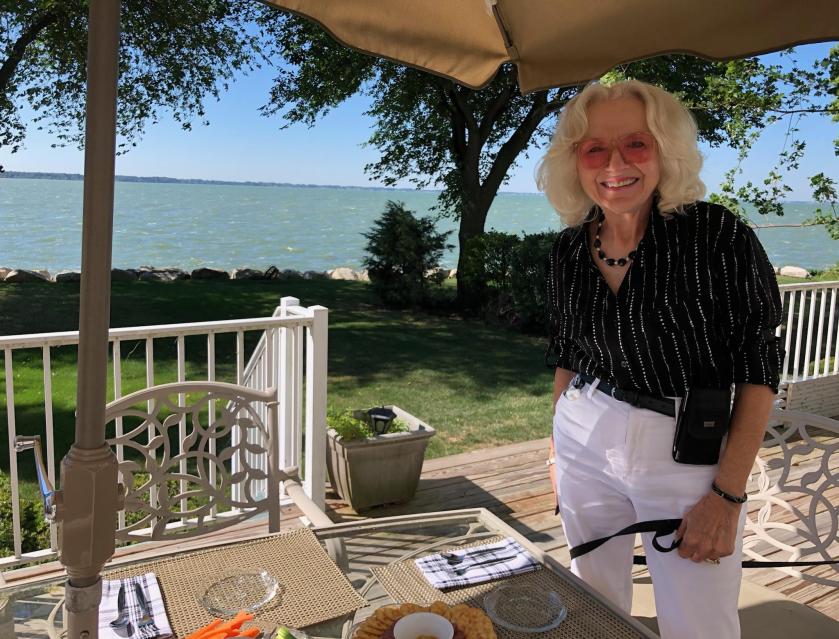
Fiction writers have a choice to make as to “from whence cometh” the viewpoint of the story being told. In simpler words: Who’s telling the story? Of course, the writer is the one actually coming up with the plot, but the writer has a decision to make. Is the narrative to be written in First Person where the guy telling the story is, well, telling the story from his singular perspective or is the writer going to be more omniscient and relate the account from his own point of view? Afterall, the writer knows the entire sequence of events no matter who’s speaking.
I’ve discussed this topic before, but I thought I’d revisit it and take a closer look at the options facing the writer.
First Person – One POV with Strength and Limitations
The writer does have total control over the narrative, but sometimes a story is better told if one main character lets the reader know what’s happening. Afterall, every human being is master of his own destiny, “Big Brother” notwithstanding. (Read 1984 to get the point if you don’t already know that book by George Orwell.) Outside events affect us all individually and we handle them one at a time or even several at a time when something major happens. It’s the same with a First Person character who has to deal with all the things that impact his or her life.
The First Person POV narrative lets that character reflect on how he handled things in his past and how that knowledge will help him solve the current problem. Knowing things about that character makes him more relatable to the reader. When I was writing my Johnny Casino Casebook series I “discovered” many things in Johnny’s past that explained why some things were happening in the present and also why he was who he was at that point in time. I, as well as the reader, gradually learned new things about the guy that moved the various short stories along. He didn’t just appear out of nowhere. He had a past and it impacted the current story that he was telling.
That earlier knowledge of the main character is also why I always write a biography about him or her so I know more about them and also why they would be doing what they are doing. There are tons of old movies that cover what’s happening at the time with no mention of the character’s past, but writing a book gives the writer and that main character an opportunity to tell the reader about their earlier life.
Take for example Gone with the Wind. The novel tells a whole lot more about Scarlette’s mother and other events that pre-date the story we see on the silver screen. The movie would have to be eight hours long to cover everything as written in the book. A TV series can give the main character a chance to tell some of his past when new characters are introduced sometime during the season. But a TV series can run four or five or even eight seasons so a lot of the character’s past can be revealed over that time period.
But that main character in a First Person POV story can “think” about something from their past that is impacting their present. Just a brief thought can explain why they feel the way they do because of that past episode in their life. And sometimes hearing from the character through his thoughts makes a deeper impression than just having a paragraph explain it. Just like a phone call from a friend who relates a personal story is far more impactful than a text message especially if they don’t spell everything out so “u can read it 4 yourself.” How impersonal.
And who’s better than the character himself telling the reader what he’s feeling inside. It’s sort of a friend to a friend conversation. You’re now part of his inner circle. And you’re seeing something that no one else sees since you’re reading that book alone. It’s up to the writer to dole out those tidbits a little at a time, gradually bringing the reader deep inside the story or should I say deep inside the heart and soul of that character.
That’s why when you write from the First Person POV you need to add those subtle touches that draw a clearer picture of your character. But you can also drop in some hard-hitting truths about the character that make him even more real. Stuff buried deep inside the guy that helped form his personality. And how about some deeper things that only he knows until he finds someone to share them with later in life…if at all. But the reader got to hear them and knows the character better because of those revelations.
That’s what you, the writer, gets to do when you write in the First Person POV.
The Second Person POV isn’t used very often because it uses “you” as the narrator of the story. “You” are the main character, and everything is happening to “you.” There are a few novels done in that style, but in those books “you” don’t really have your hand on the wheel. “You” are being driven around, but “you” have no control of the vehicle. It would be like a Tesla taking you someplace and “you” didn’t get to program the destination.

But what about a Third Person POV and the various options facing the writer. When the writer records what each character is doing as it happens and what each is saying at the time but not getting too deep into anybody’s brain and learning every private thought the characters are thinking, the story is slowly revealed by actual actions. All those hidden truths will be revealed near the end of the book when more and more things are uncovered as one character confronts another and the truth is exposed.
This is more like real life since none of us are mind readers. It can make it even more tense since we don’t know what the hero or other characters are thinking or what anyone might know about the other characters. Not that the hero in a First Person novel knows what the killer or anybody else is pondering or what brought any of them to that place at that time, but he does have insights that he shares with the reader. In a Third Person novel, only the writer knows the truth, and it is revealed slowly as we are nearing the climax.
This “peeling of the onion” as it were tells the story chapter by chapter, character by character, as each person reveals more about themselves and the facts in the story. That’s how real people live their own lives, learning new stuff day by day, encounter by encounter. It also lets everybody in the story have a story themselves. The writer has to let those individuals speak for themselves and not necessarily have the First Person character give a brief biography of each person he encounters. Not that he would be wrong, though when the main character misjudges someone and discovers his mistake later, we do get some great tension.
But Third Person POV allows the writer to let each character speak for themself and everybody, the main character and the reader, has to decide if it’s true or should there be more investigation (or reading) to discover the actual truth.
Then there is the Third Person Omniscient POV. That’s when the author is telling the story strictly from his own perspective and he tells you strictly what he wants you to know at any given time. It’s a much stiffer telling and not my favorite, more like what a lawyer would present in a court case, holding back some things until the right time. The Omniscient POV can do a flashback or take the reader in many directions as the story is revealed. They have done that in the movies when the camera can be somewhere nobody else could be, but it does tell the story. Seeing the past or even the future can help tell a story, but it takes something outside the realm of the characters themselves to get to those places.
So, there are several ways to tell your story. Which one works best for you?
Share this:


Great description of POVs and how to use them, Gayle. With what I write, I’m fairly much required to use the POVs that are generally included in the similar published works, but it’s fun to consider doing something different now and then.
LikeLiked by 1 person
I’ve used First Person and Third Person. They work for the various stories I want to tell. There are authors who use First Person POV as the basis of the book, but will have Third Person POV characters pop up in separate chapters that tell other parts of the story.
LikeLiked by 2 people
As Linda said, this is a great description and clarification of POVs. It really does change the whole approach with a different POV. I always learn something new or am inspired to write something else from your posts, Gayle. Thanks!
LikeLiked by 1 person
Agreed! I use different perspective depending on what I’m writing. It seems first person present tense has become more popular than third person past tense. I like the former for its intimacy and immediacy, but to me the latter seems more fitting for stories set in the past, which is why I wrote my historical fiction series that way. However, (spoiler alert) in my final book I introduced a new POV character, so I used both perspectives to differentiate them. Good post, Gayle.
LikeLiked by 1 person
Using two different POVs is actually a clever idea. I like both First Person and Third, but mixing them is intriguing. Have fun with that one.
LikeLiked by 1 person
I’ve played with a story of writing three characters in the 1st person POV, divided into sections. (Each character has their own section, with the three coming together at the end.) People tell me it won’t work, but romantic-crime writer, Nora Roberts does it just fine.
Of course, at this stage of my life, I just write blog posts.
LikeLiked by 2 people
Sometimes we have to try a different POV to see if it works…And if we do it right, it will most certainly work. And mixing them up a little makes the reading even more adventurous.
LikeLiked by 1 person
I mostly write in first person, as it seems the most natural to me. To sharpen my skills I occasionally write in third person. Third Person Omniscient intrigues me, so I’ll be trying that. Thanks for another valuable post, Gayle.
LikeLike