by Jeanette F. Chaplin
I recently discovered I’m a cruciverbalist. It’s chronic, incurable, and inoperable. Don’t worry, it’s not contagious. But it’s probably terminal. And it has absolutely nothing to do with the subject of this blog post, which is the whole point.
The purpose of this somewhat puzzling introduction was to get your attention. Using a word that is probably unfamiliar is one way of doing that. I “hooked” you in one of two ways: either you didn’t know the word and read on to learn the meaning, or you know the term because you are one. In that case, you decided to keep reading to see what I have to say about a topic that already interests you. Or, I may have lost you while you left to look up the word.
For your enlightenment:
cruciverbalist [ kroo-suh-vur-buh-list ] noun. a person skillful in creating or solving crossword puzzles
Two of the most challenging aspects of writing non-fiction are effectively introducing the topic and wrapping it up satisfactorily when you’re done. The trick is to find a natural and interesting way to lead into the topic in the beginning and close it off at the end.
Movies do this quite well. A classic example is The Princess Bride. The opening and closing scenes have nothing to do with the actual story (although some might challenge that statement). The well-meaning grandfather comes to read to his ailing grandson. After watching the story that’s enacted, the viewer is returned to the modern-day scene and Peter Falk excuses himself with, “As you wish.”
Using a narrator to tell the story can be useful, but it has been overdone and doesn’t lend itself too well to non-fiction. One way to make this “bookending” happen is to connect a seemingly unrelated idea with the theme of your essay, article, or blog post. Then weave it in seamlessly from beginning to end.
To accomplish this, come up with an idea, a concept, or premise that seems far removed from your topic, as I did with crossword puzzles and introductions and conclusions. Nothing is off limits: waterfalls, RV life, grandkids, politics. Well, maybe not politics.
Make a list or a cluster chart of your ideas and think of any connections between those random concepts and the topic of your essay or article. Let’s try waterfalls as an example. Waterfalls flow, they are refreshing, it may be difficult to reach them, they could present a danger, are challenging to cross, and they can be inspiring—or frightening. Those descriptions could apply to any number of topics. Do any of them spark a connection? If not, keep playing with ideas until you find a comparison that works. Brainstorming with a friend or family member may help.
So, back to my off-the-wall, totally irrelevant introduction. What connection could crossword puzzles possibly have to with writing non-fiction?
 For one thing, both follow a very specific set of rules. Crosswords must be square, they contain a specific number of squares and answers, they must be symmetrical, and they can’t duplicate clues in the grid. Clues and answers must match grammatically. Puzzles must have a theme. Now we’re getting closer to something writers can relate to: themes and grammar. For crossword creators, that means their answers must support the theme. Writers, on the other hand, must develop a theme that carries readers logically from beginning to end. Do I even need to mention that writing should be grammatically correct?
Non-fiction also needs an attention-getting beginning and an introduction to the topic, which may include why it is important to the reader. The author has to explain the concept in a way that is understandable to the reader, preferably in an interesting way, and conclude with a reminder of what was discussed.
In the crossword puzzle, the creator may attempt to misdirect the solver to make it more challenging. In the really difficult puzzles, generally scheduled for Saturday, creators often turn to wordplay, slang, unusual punctuation, or the ultimate twist of the knife: heteronyms (words that are spelled the same but have different pronunciations and meaning, Polish and polish, for example). 1
But ultimately, the creator wants the solver to succeed. According to crossword expert David Kwong, a New York Times puzzle constructor, “A good enigmatist makes the solver feel smart.” 2
 But solving a crossword puzzle is far removed from the experience of reading an article. The solver of the former is looking for entertainment and a challenge. The reader of the latter wants to be informed, inspired, or educated. Or, at times, to be entertained.
The crossword challenge ends when the cruciverbalist either a.) solves the complete puzzle unaided, b.) resorts to subterfuge to find answers, or c.) tears it up and tosses it into the trash.
In written work, the writers’ goals are accomplished when they convey the ideas to the reader as clearly and convincingly as possible and possibly even stir them to action. A good ending helps to achieve the desired result.
A satisfying conclusion should in some way reflect the introduction. It can be a restatement, an echo, a contrasting statement, or an illustration of the point. Or as in our example in this blog post—a bookend. Which means, at this point, I’m expected to return to the original crossword puzzle illustration.
Just as puzzle solvers come to a crossword with certain expectations, so do readers. Construct your non-fiction writing to smoothly lead them into your topic, cover the main point clearly, and tie it up neatly at the end. Make your reader feel smart.
Unlike the crossword creator, your goal is not to bewilder or stump your reader. You want to skillfully lead them from the hook to the denouement. Directly from 1. Across to 31. Down.
##
 Semi-retired college English and Spanish instructor. Self-publisher, editor, and entrepreneur. Jeanette has been writing, teaching, editing, mentoring, and publishing for the past four decades. Now she is available online to help writers around the world with their writing ventures. When she’s not writing, she enjoys enjoys traveling to visit family and friends, especially her two grown daughters and her two young grandchildren.
Jeanette F. Chaplin, Ed.D.
Look for Jeanette Chaplin on Facebook, LinkedIn, & Twitter
Sign up at http://www.WordsAreForever.com
Chaplain-esque https://chaplainesquethoughts.wordpress.com/
1 Amlen, Deb. “How to Solve The New York Times Crossword.” n.d. https://www.nytimes.com/guides/crosswords/how-to-solve-a-crossword-puzzle?module=inline
2 Kwong, David. “How to Create a Crossword Puzzle.” WIRED MASTERMINDS S1 E3. n.d. https://youtu.be/aAqQnXHd7qk
This article was posted for Jeanette Chaplain by Jackie Houchin

 I’m a writer.
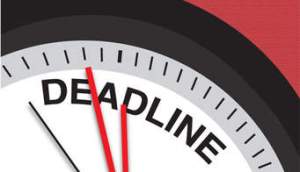 Now I’m working on the fourth of those books. I’m first doing a synopsis and three chapters to turn in, then finishing the rest of the manuscript. I have a few months, so I should be fine. But right now I’m looking at all the weekend events, panels and more, that I’ve agreed to in the near future. Then there will be a visit from some dear family members that will probably use up a week. And an annual trip that has been extended to see those family members at their home. So… well, I’m worried about meeting that deadline.
 Yes, deadlines are a part of life.
 Linda O. Johnston, a former lawyer who is now a full-time writer, currently writes two mystery series for Midnight Ink involving dogs: the Barkery and Biscuits Mysteries, and the Superstition Mysteries. She has also written the Pet Rescue Mystery Series, a spinoff from her Kendra Ballantyne, Pet-Sitter mysteries for Berkley Prime Crime and also currently writes for Harlequin Romantic Suspense as well as the Alpha Force paranormal romance miniseries about shapeshifters for Harlequin Nocturne.



 Jill Amadio is from Cornwall, UK, but unlike her amateur sleuth, Tosca Trevant, she is far less grumpy. Jill began her career as a reporter in London (UK), then Madrid (Spain), Bogota (Colombia), Bangkok (Thailand), Hong Kong, and New York. She is the ghostwriter of 14 memoirs, and wrote the Rudy Valle biography, “My Vagabond Lover,” with his wife, Ellie. Jill writes a column for a British mystery magazine, and is an audio book narrator. She is the author of the award-winning mystery, “Digging Too Deep.” The second book in the series, “Digging Up the Dead,” was released this year. The books are based in Newport

 I attended the Romance Writers of America National Conference last week in New York City. Am I glad I did? Yes, mostly because of the wonderful people I saw, meeting up with those I knew professionally and as friends–or both. I’ve been attending RWA conferences for many years and for different reasons, but that’s the most important.


 One of the things that helps is listening to a podcast of Old Time Radio Westerns. Before most of the classic western series of the 1950s and 1960s were on television, they were on radio. I grew up with those TV series, so the stories, while different, are very familiar. Now I fall asleep to the Lone Ranger or Gunsmoke or the less-familiar Frontier Gentleman.
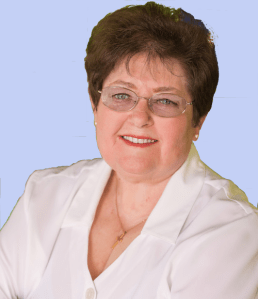 Brief Bio:

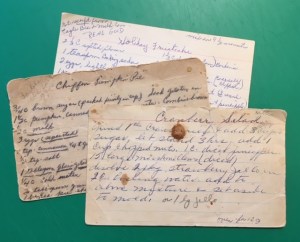 Now, the week before Thanksgiving I thumb through the 3×5 cards in Mom’s old plastic recipe box, looking for the Cranberry Salad, the Holiday Mincemeat Cake, and the Chiffon Pumpkin Pie recipes. The writing is faint and blurred; the cards are stained. And my heart gives a twist as I picture Mom taking each one out and assembling the ingredients on the counter. (This “treasured” box came to me 20 months ago when, at 94, she died.)
 Daily for a year or so in 1999, Dad sat at their kitchen table and drew stick figure sketches of Mom in various situations, from housecleaning and cooking, to relaxing with a morning coffee on the patio, working a jigsaw puzzle, gardening, and packing/traveling to Solvang on their anniversary. Each filmy paper illustration has her comment in a balloon above her head. I can hear her saying them all! I admit, I cried as I looked at each one in the stack.


 Years ago I bought a novel written by a well-known author because it took place in Seattle, a city where I’d lived, went to school, and worked for many years. A few chapters in, I was dismayed that the descriptions of setting were so generic that the story could have taken place anywhere. It was almost as if that the author had never set foot in the city.


 Why do I use a time machine when I write? For Sandy Fairfax, I had no choice. I wanted to write about a ‘70s teen idol because of the culture of that time when teen idols were promoted through TV shows. I like the melodic songs from the era, the cheesy clothes, and the drama that often took place behind the idols’ innocent façades. \
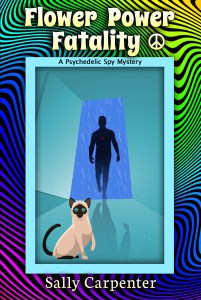 In “Flower Power Fatality,” Noelle McNabb is an actress at a Christmas-theme park in Yuletide, Indiana. Her drab routine is interrupted when a stranger shows up on her porch with a bullet in his chest. Then, a super-secret spy agency recruits Noelle to find missing microdots along with veteran agent Destiny King. As Noelle goes undercover, she finds herself dancing in sleazy nightclubs and chasing bad guys at night while wondering who is going to feed her pet cat.


 Sally Carpenter was born and raised in southwest Indiana but now lives in Moorpark California, leaving the land of rain and snow for wildfires and earthquakes. She has a master’s degree in theater from Indian State University. She also has a master’s degree in theology and a black belt in tae kwon do. She’s also “mom” to two black cats.


You must be logged in to post a comment.