
That is where I am right now.
Oh, sure, I’m writing every day: checks to pay bills, answers to emails and texts, posts on Facebook and Instagram, birthday cards to put in the mail that day, a grocery list, a “to do” list, a note to Hubby about an errand I need to do and when I’ll be back.
But creative writing? Um, no. Unless you count a quick book review I pound out in fifteen minutes, knowing that unless I do it today, it will be late, and then I’ll feel awful. Too bad I only skimmed the last two chapters… but you don’t mention how books end anyway, do you? And then I still felt awful, because I’ve always determined to finish a book – every word – before writing a review. Boo-hoo.
Oh, I do write curriculum for my third (used to be fourth) to sixth grade class* at church every week. That can be fun. The delivery can be somewhat creative, but not the text of course. It’s the Bible, after all.
In one point in last week’s lesson I was teaching how that precious Word of God is called “the sword of the Spirit” in the Bible. “Sharper than any two-edged sword, able to discern the thoughts and intents of the heart.” I’d been teaching them the first sermon preached by Peter, the fisherman-turned-apostle, when I came to its conclusion. (It’s a doozy!) I pictured a duel between forces of good and evil, raised my imaginary sword and did a bit of fencing (pantomime, of course), ending up with my opponent on the floor, my sword tip on his chest. The phrase “coup de grace” came to my mind, and still holding my imaginary position with opponent pinned down, explained the French phrase. “The final blow,” I said, looking at the fifteen kids slowly. “The thrust that pierces the heart,” I said. And then I jabbed my sword right to the floor… holding for a few seconds before looking up. Then I jerked it free, held it high, then slipped it into my imaginary sheath at my left hip.
There was quietness for a few seconds, then I had the kids read verse 37 of Acts chapter 2, which was the response of the crowd to the strong finish of Peter’s sermon. It reads, “Now when they heard this, they were cut to the heart, and said to Peter and the rest, ‘Brothers, what shall we do?'” Peter’s inspired use of Scripture had brought instant conviction.
But that was “creative” thinking and teaching, not writing. So what do you do when your ink well is dry?
- Read in the genre you want to write. Read for pleasure (maybe even some old favorites). Read those authors who inspire you. Read, read, read.
- Go online to the sites that list daily (a month at a time) story prompts or story ideas. Here’s one I sometimes use. (Click farther on the site for other ideas.) https://mailchi.mp/writerswrite/daily-writing-links-29-september-2020?e=befa474c79
- Start (or start up again) a daily or weekly journal. I have to admit that when we returned from our (fantastic) cruise and a week later faced the monster that became Covid-19, I quit journaling. (Crazy huh? What a “ripe” season of lockdowns, scary bar graphs, no one working, everything closed, ghost freeways, that I could have used in stories. Sigh!) Well, it’s not too late. Maybe begin with a “to do” list, and comment on your doings and feelings during that day. Or… you choose.
- Study books by writers that give instruction. A few weeks ago we had Sara Rosett as a guest blogger. She wrote about she used lots of things for Research in her historical mysteries. But she also mentioned a couple “How To ” books she has written. “How To Outline A Cozy Mystery” and “How to Write a Series.” Both are easily found on Amazon. (I recently bought them both and am eager to dig in, for at least a chapter a day.) Look for books on short story writing by our own The Writers In Residence, G. B. Pool.
- Take note of those weird dreams. Hey, maybe your creative muse is locked down inside your head, and wants to safely, with some social distancing via dreams, give your mind some help.
- Look at a calendar. Upcoming holidays are always good for getting the juices or muses working. Think back to fond memories. Think forward with some Sci-Fi or Fantasy weirdness. Let the seasons inspire.
Do whatever it takes, even acting out some scenes from your favorite book in front of your spouse, dog or cat, or the mirror. The movements, actions, even words may lead to some nice black… or maybe purple… INK in your writing well.
###
*I used to teach a class of 4th to 6th graders, but now that all must wear a face covering in class, I have inherited the 3rd graders as well. (They used to be together with 1st and 2nd grade.) According to the “order,” all students in 3rd grade and up must wear masks etc. Second grade and below do not have to. The Children’s Ministry leader felt it would be hard on some in a class that have to wear them while others didn’t. But, on the fun side, I’ve discovered that those third graders are pretty sharp too and I only need a little tweaking of the lesson that I prepare for the older kids. (PS: I wear a face shield, so the kids can see me better.)

 USA Today bestselling author Sara Rosett writes lighthearted mysteries for readers who enjoy atmospheric settings, fun characters, and puzzling whodunits. She loves reading Golden Age mysteries, watching Jane Austen adaptions, and travel. Publishers Weekly called Sara’s books “enchanting,” “well-executed,” and “sparkling.”


 In the spring of 2010, just six months after I published
  For example, in Maids of Misfortune, I had created two elderly dressmakers who lived in the O’Farrell Street boardinghouse. One of these sisters talked all the time, the other never said a word. And that was about all a reader learned of them in that first book. But I had developed a whole history for them and I wanted my readers to learn that backstory. So, in my second short story,
  Finally, I write these stories so I can explore historical themes in more detail. In
 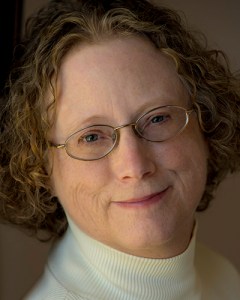 Louisa Locke, a retired professor of U.S. and Women’s History, is the author of the USA Today best-selling cozy Victorian San Francisco Mystery series. This series features Annie, a young boardinghouse keeper, and Nate Dawson, a local San Francisco lawyer, as they investigate crimes with the help of their friends and family in the O’Farrell Street boardinghouse. Not content with just exploring the past, Locke also helped create an open source, multi-author science fiction series called the Paradisi Chronicles. You can find out more about Locke’s books from both of these series at
 I love to write. I love to write novels that contain romance. I love to write novels that contain mystery or suspense.
 My kind of story, and I follow their bible and have my characters interact with the protagonists of other Colton stories in the various mini-series that are part of the Colton series. When I write stories that are all my own I fit a lot of dogs into them, and occasionally have been able to slip one in to a Colton story.

 My inquisitiveness started me digging into their history when agents at a writer’s conference said they were looking for historical paranormal. I came up with my
  Wanting to write Action Adventure, I wrote the
  The other mystery series, is the
 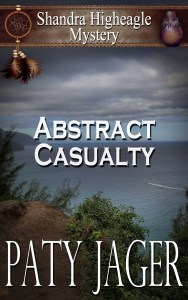 Abstract Casualty
 Paty Jager is an award-winning author of 43 novels, 8 novellas, and numerous anthologies of murder mystery and western romance. All her work has Western or Native American elements in them along with hints of humor and engaging characters. Paty and her husband raise alfalfa hay in rural eastern Oregon. Riding horses and battling rattlesnakes, she not only writes the western lifestyle, she lives it.
 I’d asked a wise librarian in Burbank if there was something beyond Nancy Drew, but kind of like her, that I could read. She looked at this budding, though still gangling young teen, and recommended Mary Stewart’s first book, Madam, Will You Talk? (1955)
 This Rough Magic (1964), my opiate. ***
 Mariner’s Compass (1999) is Earlene Fowler‘s sixth Benny Harper mystery, set along California’s central coast. Each of her books is named for a quilting pattern although Benny is not a quilter herself. She is a rancher and married to a cop, but she helps maintain a historical museum in town that features old quilts.
 Old Bones (1987) *** by Aaron Elkins is another favorite on my list. His protagonist Gideon Oliver is a forensic anthropologist, but his moniker in the series is “bone doctor.” It is absolutely amazing what you (he) can discover from a set of fresh or ancient bones. Who they were, yes, but more importantly in the book, how, where, when, and why a person becomes bones.
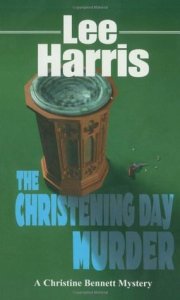 A freaky location again is the reason for my listing The Christening Day Murder (1993) by Lee Harris as a memorable favorite. (All Lee Harris’ Christine Bennett – a former nun – mysteries have a special “day” as their title.) I can’t even remember the mystery, but I remember where a good portion of it takes place.
 And lastly, the wonderfully warm and well-written family saga by the gifted Rosamunde Pilcher… The Shell Seekers (1987) **** (all 582 pages ) This is not a mystery, but a lovely women’s novel featuring Penelope Keeling, a 64 year old woman whose days are limited, and whose family does not understand her. A woman whose past is calling her, but whose present threatens to fence her in.
 One of the things that helps is listening to a podcast of Old Time Radio Westerns. Before most of the classic western series of the 1950s and 1960s were on television, they were on radio. I grew up with those TV series, so the stories, while different, are very familiar. Now I fall asleep to the Lone Ranger or Gunsmoke or the less-familiar Frontier Gentleman.
 Brief Bio: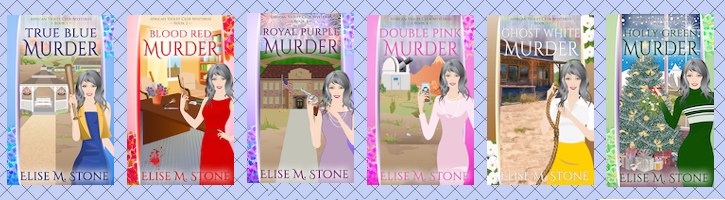

 How many blogs besides this one do YOU read regularly (daily, weekly, monthly)? Yes, you can confess. We don’t mind. Reading them will help you become a better writer.

 Years ago I bought a novel written by a well-known author because it took place in Seattle, a city where I’d lived, went to school, and worked for many years. A few chapters in, I was dismayed that the descriptions of setting were so generic that the story could have taken place anywhere. It was almost as if that the author had never set foot in the city.


 The Writers in Residence
You must be logged in to post a comment.