Getting together

By Linda O. Johnston

 I’ve mentioned here before that I used to attend a lot of writers’ meetings and conferences, including monthly lunches with my wonderful Writers in Residence friends. 

Well, we still get together monthly for a “lunch” – one that’s online on Facebook. It’s definitely enjoyable.  And that’s kind of how all my get-togethers with writer friends are going these days.

 I miss seeing them in person! 

Yes, writing is a solitary existence.  We generally sit in front of our computers and let whatever’s on our mind spill out onto the keyboard so we can read it on our screen.  And edit it.  And add to it.  

And it’s not like we can no longer run ideas by our writer friends.  Thank heavens for the internet and text messages and, yes, phones. 

Still, it’s different these days. 

But hey, thanks to my wonderful husband, who added a camera and microphone to my new computer, I can now attend Zoom meetings and be seen and heard. Not that I always want the others in a meeting to be able to see all my expressions, and I have to use a false background to prevent the windows in my actual home background from letting light in to blind anyone who looks at my frame.  But I can always pick up one of my dogs and let whoever I’m talking with see them, too! And I’ve also been interviewed on Zoom for an upcoming YouTube program, where I’ll be talking about cozy mysteries. 

I’ve always recognized that people are versatile–and these days we have to be especially versatile. And wise, hopefully. I don’t appreciate people who get together in large groups now, particularly without facemasks and not staying a decent distance apart. That can be dangerous not only for them, but for others, too.

 But I appreciate how resourcefully we’ve come up with ways to communicate with others, including other writers.  I look forward to when we can do it safely in person again.  Meanwhile, a virtual hi to all of you out there. Stay safe!

This article is posted for Linda O. Johnston by Jackie Houchin.

Mystery People

By Jill Amadio

As a Brit I put up with a lot of ribbing in America. Some friends take me to task for pronunciation. Well, I can’t help it if I have a very slight West Country accent as I am from Cornwall. To my amusement my accent is occasionally mistaken for Australian.

As a writer from over there, though, the ribbing can give me indigestion or at the very least depression for hours. The main problem is spelling. I am warned by colleagues that editors at U.S. publishing houses come down hard if you keep inserting a “u” into words like behaviour,  colour, and honour, or substitute a ”z’ for an “s”. Other minefields include using “ae” rather than “e,” as in “aeon” and “eon”.  Maybe it’s a matter simplicity. Americans pare as many ells from words as possible while Brits love double ells, such as “levelling” versus “leveling”.

My books are published here but habits die hard and I usually claim that Brits use the correct spellings. They only got chopped when unnecessary (to whom?) letters are summarily killed off. Flautists are called flutists, kerb is curb, and gaol is jail. Obviously what it comes down to is pronunciation, though. Americans spell words economically as they are spoken which is commendable although it escapes me why tyre is spelled tire. I think it has to do with the Boston Tea Party and wanting to be set apart from that awful king.

It’s a huge temptation to some authors who have leapt across the pond to use British spelling, perhaps as a sly signal to agents and publishers they are querying that the writer is a Brit – a sort of literary snobbism one occasionally encounters. In my first mystery I have my lead character admonish the British consul’s wife for this attitude which I did, in fact, actually encounter in Newport Beach.

Then there’s the grammar. Collective nouns in particular give me pause. Is a group, say, a government, singular or plural? Americans say it’s the former; Brits insist on the latter.  I have a page from the Associated Press Stylebook permanently stuck to my printer to remind me which to use.

Figuring out past particles is always fun. For instance, Brits say “pleaded” Yanks say “pled”. Oh, and the very, very worst word I hate to see changed is “hanged”. To my mind it should refer only to someone at the loop end of a rope, giving the action a far heftier meaning than the briefer word “hung”, as used here. People are not paintings.

What else? “Have” and “take” always flummox me. Am I going to take a bath? Or, am I going to have a bath? I read somewhere that this is an example of a delexical verb, which I’m not even going to touch.

While writing my mystery my beta readers caught another mistake. I wrote, “He drove her to hospital.” Wrong. I was told there should be a “the” in front of “hospital”.  I’m sure there’s some kind of diabolical rule about this but I think it is fine to give an in-house editor something to mark up to justify his/her salary.  As for tenses, the past participle in the U.S. for “got” is “gotten,” an ugly word that makes me shudder enough to want to write a thriller entitled “The Dangling Participle and the Dark, Dark Pluperfect”.

While writing the first in my crime series, whose amateur sleuth is a disgraced Cornish woman exiled by the palace for discovering a scandal (not sexual!), I had to learn the police rankings and figure out who was a sheriff and who was a police officer. Having worked with a reporter at the good old British rag, the Sunday Dispatch, I decided to have my sleuth simplify her confusion (and mine) by using British titles. When caught speeding she addresses a California Highway Patrol (CHiP) officer as Chief Superintendent, and calls the Chief of Police,  Constable.  I was very pleased to learn that sheriffs and policemen can be lumped into a group collectively referred to as “cops”.

When I mention a British pastime, such as nighthawking, no one has a clue as to its meaning. I was going to give the nasty habit to a character in my next book but I decided the explanation could be tedious unless you’re one yourself.

Even the four seasons can be a challenge. Seeking representation for my new book I scoured the agent lists and was rejected by 55 of them. I knew small presses can be approached directly and I found one with whose name I fell totally in love: Mainly Murder Press in Connecticut. However, the website declared, NO SUBMISSIONS UNTIL LATE SPRING!

Ha. I immediately sent in my query along with a note: “Dear MMP, I live in Southern California and although it is only January according to the calendar, and snowing where you are, it is already late spring here. You should see the roses!”

I received an email back within three hours, asking me to send chapters. Which I did. Obviously the publisher was not off in Tahiti but still on the snowy East Coast.” MMP published only 12-14 books a year and has now closed its doors but who can resist the name? So my advice is to go ahead and break the rules. Lay it on thick. Change the climate. Worked for me.

###

Jill Amadio is from Cornwall, UK, but unlike her amateur sleuth, Tosca Trevant, she is far less grumpy. Jill began her career as a reporter in London (UK), then Madrid (Spain), Bogota (Colombia), Bangkok (Thailand), Hong Kong, and New York. Jill writes a column for a British mystery magazine, and is an audio book narrator. She is the author of the award-winning mystery, “Digging Too Deep” and the second book in the series, “Digging Up the Dead.”  The books are set in Newport, California.    http://www.jillamadio.com


###


This article was posted for Jill Amadio by Jackie Houchin (Photojaq)

Introducing Cynthia Naden, our Newest Writers In Residence Member.

Cynthia, we are so glad to have you in our Writers in Residence blog group. Tell us about yourself.

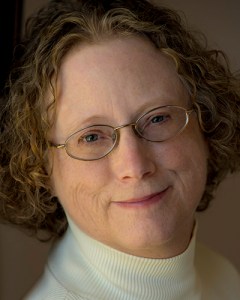
cynthia-nadenThank you, Jackie! I’m a native of California, I was born and raised in the Pasadena area.  My husband and I still live here, although we have talked about living elsewhere that is less expensive.  I have two adult sons and two adorable granddaughters.  We live in a condominium with two precious pups, Minnie, a mellow Maltese, and Mandy, a very precocious Terrier mix.  They keep us on our toes and give us hours of unconditional love and fun!

I bet they are cute!  When did you first get interested in writing?

I have been a writer since I was a child.  The first book I fell in love with was Pearl Buck’s Good Earth.  I subsequently read the rest of her tomes.  The first attempt at writing occurred when I was in the 4th grade and wrote about an imaginary trip I made to Australia aboard the SS Lurline.  What fun that was! Throughout my years in school, I always veered back to writing about Asia and when in college, studying for my Master’s in History found myself back in Asia but more specifically China.

Was History your only avenue of study?

No, besides my Master’s in history, I also have a Bachelor’s in English and Paralegal Studies, and a Master’s in Library and Information Science. But my writing career really took off following the completion of my last Masters.  I took a couple online writing courses and found myself writing a romantic suspense that is loosely based on a personal experience of my own.

You mean, the events in Cache Under the Stacks actually happened to you? That’s scary.

Well, some of the elements did, but not all. It is fiction. (smile)

A bookstore features prominently in the book. Do you have a favorite one?

I love bookstores. Whenever we travel my first stop is a bookstore. One of my favorites is Chaucer’s in Santa Barbara, but our own Vroman’s here in Pasadena is the best of the best.

What other writing interests do you have?

I’m interested in writing historical fiction and have a couple of novels started that take place during World War II – one in Europe and the other in the Pacific Theatre. And I would someday love to write about cooking or do restaurant reviews.  Always something that I am striving towards. But my one far-fetched desire is to own a boarding house for dogs with all the amenities!

I love it!  We have some dog-lovers in our group and among our readers. They would be happy about that aspiration.  I see you have many yummy recipes on your blog as well.  Cynthia’s blog recipes

Yes, and did you notice the SPAGHETTI BOLOGNESE recipe at the end of Cache Under the Stacks?

I sure did! I plan to try it soon. I love Italian food.  So, what have you in the works right now?

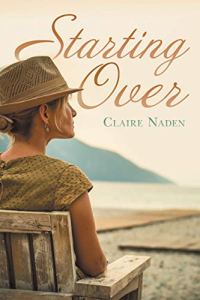
Starting Over 41S6cFWnPxLCache Under the Stacks was published in August 2018and Starting Over was published December 2019. Both books I “pantsed,” but now I am trying to outline and it is not as easy for me.  I’m working on a sequel to Cache Under the Stacks and a sequel to Starting Over, a woman’s fiction that has evolved into a bit of a mystery.

How about those two WWII novels you were considering? 

One is set in the late 1930s New York and London. It is called Because of You. The other one set in Pearl Harbor, and is yet to be titled, although tentatively I call it Murder in Waimea.

What are you reading now?

Reading during this “lock down” time has not been as productive as I thought it would be. I have several books on my bedside table: Woman in the Shadows by Jane Thynne; Erik Larsen’s The Splendid and the Vile; The Last Bathing Beauty by Amy Sue Nathan; and Landing by Moonlight by Ciji Ware.

How have you been managing during the “lock-down” time?

I thought I would have gotten a lot of writing done, but it has been hard to concentrate. If anyone has any suggestions, I would gladly like to know about how to overcome this. It has been a time of great distraction.

Do you have any dreams or goals?

My dream would be for Covid to be over and to travel to London, France, and Germany. I would like also like to publish at least one book a year and if possible, someday land a traditional publisher.

Thank you, Cynthia (Cyn), for sharing your past and your heart. We are so glad to have you here, and look forward to when you will be posting alongside us next year.

###

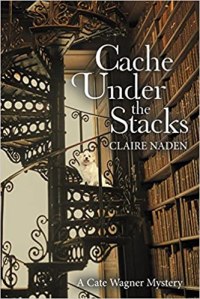
Cache Under Stacks 51iDVwGVQML._SX331_BO1,204,203,200_BOOK REVIEW: Cynthia (pen-name Claire Naden) published Cache Under the Stacks, A Cate Wagner Mystery, two years ago, and I have just found and read it. It’s a story about a divorced, empty-nester bookstore owner, living alone in a nice neighborhood with her sweet pup, Minnie.

But then, she begins to get threatening phone calls from an unknown person. It doesn’t matter if she is at home, at the bookstore, or 100 miles away, he seems to know just where she is and what she is doing.  For most of the book, this stalker only terrorizes by phone, but towards the climactic end, the calls and messages get more specific. And when strange packages and people begin to appear at her bookstore, she knows her life is in danger.

Fortunately for Cate, a handsome police detective enters her life and takes an interest in her case. As the threats escalate, their relationship begins to heat up. But he can’t be with her every minute. She is alone sometimes and the stalker knows it.

Advertised as Romantic Suspense, I can assure you the book is both.  From the first pages, you will feel an unease for the main character that quickly turns into unrelenting anxiety. It’s hard to stop reading even at chapter breaks, because you simply must find out who is terrorizing the heroine and why.

Naden writes simply but in great detail. Where another author might say “She went into the house and locked the door,” this author breaks down those movements into tiny increments (fumbling with the key, dropping it, her purse strap catching on the knob, preventing her from closing the door fast). You think it would be boring, but not so. It  holds you captive while it ratchets up the suspense. You “just KNOW” someone is in the house, in her bedroom, or right behind her…

PS: You only understand the title at the very end!


Genres and Generalities

by Linda O. Johnston

LINDA scott-broome-BcVvVvqiCGA-unsplashI love to write.  I love to write novels that contain romance.  I love to write novels that contain mystery or suspense.

Any surprise, then, that I write in multiple genres?

I’ve mentioned some of that before while blogging here.  At the moment, as with many people who do many things, my career seems to be changing a bit, yet staying the same.

And yours?

I’m currently writing romantic suspense novels for Harlequin Romantic Suspense.  I have a couple stories I’ve turned in that are my own plotting, and I’m currently working on another of HRS’s many, multiple stories about members of the Colton family, who always seem to be finding wonderful relationships and also dealing with a lot of crimes.

LINDA adult-1850704_640My kind of story, and I follow their bible and have my characters interact with the protagonists of other Colton stories in the various mini-series that are part of the Colton series.  When I write stories that are all my own I fit a lot of dogs into them, and occasionally have been able to slip one in to a Colton story.

I’ve also written a lot of cozy mysteries over time.  My most recent cozy publisher went out of business, so I don’t have any currently in progress–although I believe, and hope, that a publisher that’s new to me is going to buy one of my ideas.

So–yes.  I write in different genres, and often read in different genres to keep my ideas flowing.  Generalities–I guess I can say I love fiction, I love suspense and mystery, I love animals… and, as I said, I love to write.  Even these days, when there’s a lot going on in the world nearby and elsewhere.  My writing has slowed as a result, but it goes forward.

It’s always fascinating to me to see that some writers stick to their primary genres as long as they write.  Others are like me and have more than one favorite genre that they also  go back and forth among–or sometimes combine them, as I do. Of course my cozies contain a romantic interest, and all my romances also contain suspense or mystery.

So how about you?
What are your favorite genres?
If you’re a writer, which genre(s) do you prefer to write in?
Or read in?
What’s your general purpose for reading?
###
Linda O Johnston
Linda O. Johnston, a former lawyer who is now a full-time writer, has written two mystery series for Midnight Ink involving dogs: the Barkery and Biscuits Mysteries, and the Superstition Mysteries.  She has also written the Pet Rescue Mystery Series, a spinoff from her Kendra Ballantyne, Pet-Sitter mysteries for Berkley Prime Crime.  Currently writes for Harlequin Romantic Suspense as well as the Alpha Force paranormal romance miniseries about shapeshifters for Harlequin Nocturne.
This article was posted for Linda O. Johnston by Jackie Houchin (Photojaq)

How Will YOU Tell The Story? Part II

 by Miko Johnston

In my last post I asked, How will we write about this? There has to be a moment when the reality of the new normal hits you in a unique way.

This is my moment:

May 20, before the tragedies we’ve witnessed in the past weeks occurred, when we focused on the pandemic and its effects on our health, our economy and our lives 24/7:

Mikos Garden1aIMG_1530After ordering restaurant take-out, my husband drove there to pick up dinner. It would take him almost an hour, leaving me time to explore a newly bloomed section of our garden, planted with rhododendrons. If you’re not familiar with the plant, they’re like azaleas on steroids, with flower clusters, some as big as your face, nestled against dark green leaves. Some grow as tall as trees; others have been pruned knee- or chest-high, their blossoms a riot of pinks, fuchsias, purples and reds.

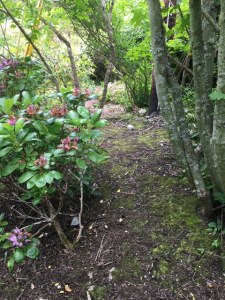
Mikos Garden2In the shelter of the garden, hidden beneath a canopy of lavender and laurel trees, I sauntered the path that wends through the rhododendrons. As I neared the end of the path, where it rejoins the lawn, I spotted something crescent-shaped sparkling on a branch. A closer look revealed a young bird, judging by its downy feathers of gray, which blended in with the bark. She (as I later discovered) had a curved beak, bright yellow, which stood out like a slice of sunlight in the darkness of the overgrowth.

I think the bird spotted me but didn’t fly away; she seemed to accept my presence without fear. I froze and observed in silence as she returned her attention to her surroundings.

She stared at the bees hopping into flower melheads, gathering their pollen, and buzzing into the next blossom. At the sound and movement of the leaves whenever a breeze rustled them. At sunbeams that danced across branches overhead. At a pair of energetic bunnies as they frolicked on the lawn, oblivious to our presence. Many minutes passed.

Mikos Garden3IMG_1555I so wanted to hear her sing, but she didn’t. Silently she sat there, occasionally darting her head, watching everything around her as I watched her, delighting in her curiosity, her seeming amazement with the world she’d recently entered. She hadn’t mastered flying yet. Her wings fluttered to help her balance on the branches as she hopped along, taking in the sights and sounds all around her. I’d been feeling blue awhile, in a rut. All that changed with my encounter with this fledgling. I found myself transfixed by her utter joy, and that joy flowed through me for the first time in months.

Soon her mama showed up for feeding time. Mama didn’t take kindly to my presence, so I backed away and fetched my binoculars to watch her offspring from a non-threatening distance. I continued to observe her until hubby returned with dinner – fortunately, fish that night. My spirits revived, I left her and went inside to eat. Later I searched through my bird book for a picture to identify her. She resembled a female European starling, except the juveniles don’t have golden beaks.

*          *          *          *          *

Two days later, as I walked toward my rhodie garden, I noticed a rock centered on a bare spot in the lawn. Nothing unusual about that, but a tiny light stripe along the top made me look closer. I found the little bird’s body lying there, her once vibrant beak now a dull tan, and I broke down.

My husband took her away and buried her, noting she had a peck wound on her chest, likely from a crow. I cried uncontrollably, then berated myself for crying over a dead bird when the tears didn’t come for much bigger tragedies.  How could I be so shallow?

Was I, though?

That little bird reminded me of how quickly melancholy can turn to joy, and joy to sorrow. How the magnitude of what’s been happening to so many, for so long, can be hard to process. By wrangling it down to its essence, finding a small representative to a larger picture – a symbol – we can better grasp how it affects us, better articulate what it means to us. And isn’t that what writers do?

So now I can answer the question I posed in my last post.

What about you? Have you begun your story yet?

###

mikoj-photo1

Miko Johnston is the author of the A Petal In The Wind Series, available through Amazon and Barnes and Noble. Miko lives on Whidbey Island in Washington. Contact her at mikojohnstonauthor@gmail.com


*****


This article was posted for Miko Johnston by Jackie Houchin (Photojaq)


Using Idioms, or Not

by Jill amadio

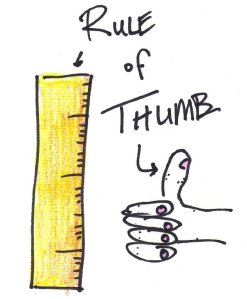
When we write “stabbed in the back” we may not necessarily be referring to murder. How about “I stubbed my nose yesterday, enjoyed a drop in the teacup, and beat around the flowers while protesters were a penny a dozen.”

Clock flyingOf course, the correct common usage idioms are “stubbed my toe, a drop in the bucket, beat around the bush, and a dime a dozen.” The last two are alliterative, yes, but why, I wonder, are toes the only part of our anatomy ever stubbed? And why drops only drip into a bucket instead of any other container? My favorite, though, is “a short/long week – or year, or hour.” What do they actually mean? Six days instead of seven? 11 months instead of 12? Sure, it’s easy to explain that an hour can drag on seemingly forever and a short week can mean time flies by, so why don’t we write that?

Happily, most writers are imaginative enough to come up with their own original phrases rather than rely on the over-used, and yet “stubbed my toe” is so perfect you can almost feel the pain.

rule-of-thumb-idiomI have a book, “The Describer’s Dictionary” that contains oodles of such hackneyed idioms but they do inspire me to create my own if possible. The book is tremendously helpful when trying to find a way to describe, for example, low-elevation clouds. One description offered is “a cloud mass like a formless gray horizontal sheet.”  Would you honestly use that? However, I have found the book invaluable for character physiques, architecture, locales, settings, and surfaces and textures. There is an entire chapter on Necks. Granted, it’s only half a page but it encourages the mind to explore other possibilities.

Chandler’s description of a building in ‘The Long Goodbye” was “The entrance had double stone pillars on each side but the cream of the joint…”Can’t mistake his signature style.

How about Edith Wharton’s “…its front [of the house was] so veiled in the showering  gold-green foliage…” in her novel, “Hudson River Bracketed.”

In Wallace Stegner’s “All the Little Things” he writes about an old house with its sides and roof “weathered silvery as an old rock…” and “…the way three big live oaks twisted like seaweed above the roof…”

What’s your pet peeve when it comes to using idioms?

###

JillAmadioHeadJill Amadio is from Cornwall, UK, but unlike her amateur sleuth, Tosca Trevant, she is far less grumpy. Jill began her career as a reporter in London (UK), then Madrid (Spain), Bogota (Colombia), Bangkok (Thailand), Hong Kong, and New York. She is the ghostwriter of 14 memoirs, and wrote the Rudy Valle biography, “My Vagabond Lover,” with his wife, Ellie. Jill writes a column for a British mystery magazine, and is an audio book narrator. She is the author of the award-winning mystery, “Digging Too Deep.” The second book in the series, “Digging Up the Dead,” was released this year. The books are based in Newport http://www.jillamadio.com



This article was posted for Jill Amadio by Jackie Houchin (Photojaq)


“A Cruel Blessing” a Ballad

by Jackie Houchin

                 I know this is an unusual post, but in this time of lock-down, I’ve not been able to focus on writing anything new. So I’m presenting this Ballad I wrote for a Creative Writing class at Glendale Community College. I’ve tried to publish it, but no one will take this many stanzas (27), although one of the lines is only ONE word. Can you find it?  And it’s less than 600 words. 

                This ballad is based on a real person I knew, a man who had Grand Mal epilepsy.  


“A Cruel Blessing”


In olden days, the ancient Land

Of Ararat became

The birthplace of a first born son—

So beautiful, but lame.


The lameness was inside of him,

A sleeping fiend, unseen,

That would attack and seize him fast

Once he became a teen.


But now, the babe lay peacefully

Against his mother’s breast,

And drank her nectar, white and rich,

And safely took his rest.


They double blessed and named the boy

Vartan and Victory.

Then sprinkled him with holy oil

To seal his destiny.


A close-knit tribe, his kin instilled

Within their growing child,

A pride of place, and heritage,

A name kept undefiled.


The father taught Vartan to war,

Retaliate, defend,

And laid in Victory the love

Of truth, and God and friend.


The mother gave him nourishment

To make him strong of limb.

Likewise, the food for soul and mind

She gently forced within.


Then on their son they placed this grave

Responsibility,

“The future of this clan does rest

On your integrity.”


Relentlessly the clock of months

Ticked thirteen times around.

Vartan approached his manhood proud,

A prince as yet uncrowned.


But on his honored day there struck

A death – so fresh, so raw.

The gruesome end of one most dear

Was what young Vartan saw.


Then deep within the boy-man’s frame

An aura and a flash

Preceded tremors, shakes and quakes,

A weakness, then a crash.


Like frozen forms the family

Around the crumpled lad

Took in with shock and fright the sight,

And wailed, “Our son is mad!”


They mourned the loss of hopes and dreams,

(As well, the one so dear),

And wake became a vigil grim;

A sick bed and a bier.


Vartan lay still as death that night;

The other’s corpse quite close.

At dawn they lowered bones below,

But Victory arose!


A celebration wild with joy

Then met the rising son.

They dared to hope that only once

The dreadful foe had won.


Forgotten soon the grievous curse

As manly, Vartan grew.

A wanton woman caught his eye,

Then taught him all she knew.


But in the rush of ecstasy

The pleasures turned to pains.

He screamed, convulsed, then toppled down

Amidst a dozen stains.


In shame they found the fallen oak

And slowly hauled him home.

Beside the hearth, he warmed and woke

With kin, but all alone.


A disciplined and structured life

He thought would bring release.

Vartan desired glory bright,

But Victory sought peace.


So in the frozen, northern wastes

A soldier he became.

And hardship burned the dross from him;

A cruel and thorough flame.


But still, in light-less days he fell

A victim to his plight.

And so there came to dwell in him

A darkness more than night.


A disciplined and structured life—

This time, a different kind;

In solitude and quietness

Release he’d surely find.


So to the Church, went Victory.

He knelt, and prayed and read.

Now sixty months of sanity

Have eased his tortured head.


A Holy Man, a Prophet true

Is what he’s meant to be.

For holy oil had marked him thus,

And sealed his destiny.


Now from the monastery, he

Speaks out the Truth he’s learned,

And prays forgiveness from his kin

For hopes and dreams he’s spurned.


For from Vartan no seed will flow

To populate the clan,

And to defend the name and place

There’s no one who will stand.


But, praise! The sleeping fiend has fled—

It dared not seize a priest!

So God and Church held Vartan in…

And Victory released.

Vartan 2

Vartan woman

Vartan 3

Vartan monestary


  • * * * * *


How to Write a Humorous Book (a not-very-serious version)

An Author Guest Post by Marc Jedel

People always ask me about my writing process for my humorous murder mystery series. They’re interested in how I get the ideas and how these turn into a novel. “Magic,” I tell them, but that rarely suffices. Some authors seem to swim in an endless pool of plots and characters, effortlessly plucking out one plot twist or character arc after another until they’ve burned through their keyboard.

Not me.

So how does it work for me?

Research. That’s a fancy term for my process. I start by collecting funny anecdotes, interesting people or snatches of overheard conversations. Back in the days when I used to leave my house, I would add notes to my phone about what I saw in daily life. (Don’t worry if you see me hanging around now, I’ll be wearing a mask.) I also change the names and exaggerate—or combine—the incidents to protect the guilty.

Over the last few years, I’ve noticed that I pay much more attention to my surroundings than I ever did. I also have become more willing to approach strangers and ask them questions. Who’d have expected that the solitary life of a writer would make me more social?

Plot. As plot ideas smack me in the face, I jot them down before I forget. My extensive study of bestselling books clearly highlighted the importance of having a plot. All those other successful authors must be on to something. I try to come up with ideas for challenges to throw at Marty (my protagonist) and then think about how he might solve the case despite those problems through his powers of self-delusion, attention to detail, and the inability to leave a coherent voicemail message.

Characters. Once I developed the concepts for a few of my regular characters, I find myself wondering how to make life more difficult for them during the course of the book and how they’d react to unexpected situations. Having my novels take place over the course of about a week has been a deliberate approach to force myself to increase the pace and make the characters act and react more often.

Humor. By setting up an imperfect character who’s not particularly good at the one thing the reader expects him to achieve in the story, and then making his life hectic, I’ve found plenty of opportunities for situational humor. Personally, I’ve always been better at coming up with a quick, funny comment in the moment than telling canned jokes. I can never remember punchlines so there’s no chance of my doing standup comedy even if I were funny enough.

Dad Jokes, Puns, Shakespeare Lines and Lyrics as Humor. These make me laugh as I’m writing my stories. Writing can be a long and lonely process, and editing even more boring. My dog is great company but not the best conversationalist so I have to entertain myself as I go. Sometimes that spontaneity happened months ago and I wrote it down and sometimes it comes to me as I’m writing. Typically, the use, or misuse, of parts of music lyrics as dialogue hits me on the spot. Same for most of the puns. Fortunately for readers, my editor is awesome and she removes the attempts at humor that aren’t quite funny enough.

A while back I read a good article about famous Shakespeare put-downs and quotes. That gave me the idea to develop a key character in my third novel, SERF AND TURF, who plays the Bard in Renaissance Faires and tries to use Shakespeare’s quotes whenever possible. He wound up as a fun character who starts off as a suspect and winds up … well, you’ll have to read the book.

Outline. Some writers are ‘pantsers’. This means they fly by the seat of their pants, writing without a detailed plan. Not that they wear pants. Some authors probably do wear pants when they write. That’s kind of a personal question best unasked of an author, especially in these days of shelter-in-place.

I outline. I admit to it. If I didn’t, I’d still be trying to figure out how the book would end, or who gets killed. Creating an outline with each scene on one line of a spreadsheet helps me to look at holes, try to spread out when different side characters show up, and make sure the action keeps moving forward at a good clip. Then I go through all my notes and put most of the notes into the relevant scene so I can include all the right amount of humor as well as balance tense vs wacky situations. Once that’s done, there are no more excuses. It’s time for the next stage.

Write and Edit. This part sounds simple — write, edit, repeat.  Eventually magic makes it good.

My books in the Silicon Valley Mystery series, starting with Uncle and Ants, are humorous murder mysteries. The first three are available as audiobooks from Tantor Audio almost everywhere that audiobooks are sold. The books can be read standalone but I think you’d enjoy reading all 4 of them—and probably enjoy it even more if you buy copies for everyone you know. I know I would.

Silicon Valley is not your typical cozy mystery locale and Marty Golden doesn’t fit the normal profile of a mystery protagonist. Despite finding himself thrust into challenging situations, Marty isn’t exactly hero material. He brings a combination of wit, irreverent humor and sarcasm mixed in with nerdy insecurities, absent-mindedness, and fumbling but effective amateur sleuthing skills. With an active inner voice and not a lot of advanced planning, he throws himself into solving problems. Sometimes, he even succeeds.

Hit and Mist, book 4, was just released on May 8 and can also be read standalone. The books are free to Kindle Unlimited readers. Buy them on Amazon at: amazon.com/gp/product/B07PHNT7XM.  For more about my books or me, please visit www.marcjedel.com.

*****

Bio for Marc Jedel

Marc JadellMarc Jedel writes humorous murder mysteries. He credits his years of marketing leadership positions in Silicon Valley for honing his writing skills. While his high-tech marketing roles involved crafting plenty of fiction, these were just called emails, ads, and marketing collateral.

For most of Marc’s life, he’s been inventing stories. Some, especially when he was young, involved his sister as the villain. As his sister’s brother for her entire life, he feels highly qualified to tell tales of the evolving, quirky sibling relationship in the Silicon Valley Mystery series.

The publication of Marc’s first novel, UNCLE AND ANTS, gave him permission to claim “author” as his job. This leads to much more interesting conversations than answering, “marketing.” Becoming an Amazon best-selling author has only made him more insufferable.

Family and friends would tell you that the protagonist in his stories, Marty Golden, isn’t much of a stretch of the imagination for Marc, but he accepts that.

Like Marty, Marc lives in Silicon Valley where he can’t believe that normal people would willingly jump out of an airplane. Unlike Marty, Marc has a wonderful wife and a neurotic but sweet, small dog, who is often the first to weigh in on the humor in his writing.

Visit his website, marcjedel.com, for free chapters of novels, special offers, and more.

Uncles ants    Chutes Ladders    Serf Turf   Hit and Mist


(To read my review of Serf and Turf, click here)


This article was posted for Marc Jedel by Jackie Houchin (Photojaq)


Writers in Residence

by Linda O. Johnston 


Lock downYes, this is The Writers in Residence blog.  And what am I posting about here today?  Writers in residence.

That’s pretty much all of us writers, I assume.  Some writers can write anywhere, and I know of many who prefer taking their laptops to a Starbucks or a Panera or similar place and spending many days there, ignoring the crowds and discussions around them and getting a lot of their writing done.

Prefer it? Maybe so, but even though a lot of towns in this country appear to be “opening up” more than they’ve been recently during the Covad-19 virus pandemic, the most logical locations still require social distancing and, mostly, masks. Sitting at a table nursing cups of coffee as you write may be a beloved memory, and a beloved aspiration for the future, but I doubt that many people are engaging in it now.

Maybe some writers who also have outside jobs are able to write at their offices, at lunchtime or other off hours. At one time, years ago, I arrived at my in-house law office an hour earlier than our scheduled starting time and used that hour as my writing time. My coworkers knew that’s what I was up to, so for them, I wasn’t there during that hour.

But now–well, most offices currently also allow, or even insist on, their employees working from home.

kaitlyn-baker-vZJdYl5JVXY-unsplashSo most often these days, I assume we’re writers in residence. We all have homes–houses, apartments, condos or whatever–although maybe there are some homeless people out there who write, too. In any case, we reside somewhere.  And write.

Those of us who are members of The Writers in Residence all have homes, not necessarily near one another. And as far as I know, we also all have home offices, or at least places within our homes where we write.  If I’m wrong with respect to anyone, please tell me!

Me? Yes, I’ve been a writer in residence for a long time, no longer working as a lawyer. I have a messy office where I write, sitting in front of my computer nearly all day–except when one of my dogs comes in and stares at me and I need to figure out what she wants, which usually isn’t hard to do. But yes, I write a lot in my residence. I did so even before. And now, while we’re mostly confined to our homes, it feels even more appropriate.

virus readingOh, and by the way, I was very impressed by our last Writers in Residence blog, written by Rosemary Lord–focusing on independent bookstores near us in Southern California.  It’s a great idea to buy books from them, probably online and either have them shipped or pick them up outside the store.  And it’s not only the independents doing that now. I’ve picked up several books from outside my nearby Bookstar, which is part of Barnes & Noble.  I want that store, and the entire company, to survive, and the indies, too!

So how about you? Are you a writer in residence? A reader in residence? Both?

***

Linda O Johnston
Linda O. Johnston, a former lawyer who is now a full-time writer, currently writes two mystery series for Midnight Ink involving dogs: the Barkery and Biscuits Mysteries, and the Superstition Mysteries.  She has also written the Pet Rescue Mystery Series, a spinoff from her Kendra Ballantyne, Pet-Sitter mysteries for Berkley Prime Crime and also currently writes for Harlequin Romantic Suspense as well as the Alpha Force paranormal romance miniseries about shapeshifters for Harlequin Nocturne.
**
This article was posted for Linda O. Johnston by Jackie Houchin (Photojaq)