How Will YOU Tell The Story?

.

By Miko Johnston

I’ll cut straight to the chase: How will we write about this? For unless we write science fiction, fantasy, or historical fiction, we must.

Over the past few months we have been going through an experience unprecedented in our lifetime*.  Not a single person has been unaffected by the current situation, nor will the world ever get back to “normal”, whatever that means, anytime soon. Living through the Corona virus pandemic will fundamentally change us, as a world, a country, a state. A city. A neighborhood. A street. A home.

There is no way we will be able to ignore what we’re going through.

The repercussions will ripple for years, even decades. This time will become a pivotal point in many of our lives, much like Pearl Harbor, 9/11 or the 2008 financial crisis.

We’re hearing a lot about the Spanish Flu pandemic that ripped across the globe in the post-World War I period, largely because it’s the last time we’ve faced a medical crisis like this one. Unfortunately, like that pandemic, the current one is not only threatening our health, but our economy.

I think of how the Great Depression of 1929 affected people for the remainder of their lives. The vast majority became extremely frugal; the fear of losing everything, or going hungry, never left them. On the other hand, some moved in the opposite direction, spending every cent they made on frivolous things; their fear was depriving themselves of pleasure when they had the opportunity to enjoy it. Same story, different endings.

There has to be a moment when the reality of the new normal hits you in a unique way. Three months ago, one friend had to self-quarantine for five days – this was before sheltering in place became mandatory – after coming in contact with someone who had been in contact with someone with the virus (she’s fine). Another friend’s husband lives in a senior care facility due to other medical problems. She has been unable to visit him beyond standing in the parking lot and waving to him through a window since February, but she’s also been lax about remaining in quarantine. Social isolation seems to have aggravated the occasional periods of confusion and forgetfulness another friend experiences. I and others have been calling her, hoping to keep her mentally stimulated, but as we all know, it’s not the same as social contact. And some younger relatives have ignored the warnings and continue to hang out with friends, despite the fact that their parents fall in the high-risk category.

For me, it began with some rice. 

I’d rinsed a half cup before cooking it for dinner.  As I was cleaning up after the meal, I noticed a few uncooked grains in the strainer. Normally, I’d toss it without a thought; there couldn’t have been more than a dozen grains of raw rice there. It has been over forty years since I faced food insecurity, but at that moment I couldn’t help but wonder if I would be standing at the sink a year from now, wishing I had saved those grains as my empty belly rumbled from hunger due to food shortages.

Eventually, we will look back and see this time as we see all great stories, with a beginning, a middle, and an end – how it was before, during, and after the pandemic. We’ll have some amusing memories, like Zoom parties, cerebral conversations with the dog, and bizarre meals patched together from pantry staples (pasta, sardines, dukkah and lemon peel anyone?). And we’ll recall the unpleasant moments, of loneliness and fear, anger and frustration. Of sickness and death, which will remind us of the courage and sacrifices we’ve witnessed throughout this crisis by those who did their best to help protect us, and the failings of those who did not.

It’s too early to have an ending yet…

…but it’s not too soon to think about this: How will you tell the story of what we’re going through? Will you keep it in the background, just part of the world in which your characters exist, or will it loom so large it almost becomes a character? Will you show how your characters came through it, all the intimate details that illustrate for the reader how it affected them, or served as a pivotal point in their life? We want to know.

Maybe you’re keeping a journal, maybe you’re devouring news reports. Maybe you’re juggling family, home, work and writing. Maybe you’re hunkered down and working on your next novel. Whatever you’re doing, stay safe, be well and look ahead.


*with few exceptions, including my almost 105 year old Aunt Rose.

*****

mikoj-photo1

Miko Johnston is the author of the A Petal In The Wind Series, available through Amazon and Barnes and Noble. Miko lives on Whidbey Island in Washington. Contact her at mikojohnstonauthor@gmail.com


This article was posted for Miko Johnston by Jackie Houchin (Photojaq)


Painful or Exhilarating? The Writer’s Process

by Jill Amadio

Taking a flight across country, from one coast to the other, isn’t a great idea during a pandemic but a family matter necessitated such a trip earlier this month (April).  Snatching a couple of books to read on the plane, and my kindle, I arrived at the almost empty-airport, a ghost town, only to have two flights cancelled. I finally boarded the third, only to have my ongoing flight from Dallas to New York also cancelled. And the one after that. And the one after that. So, plenty of reading time!

Writing of One novel (2)Turned out I had grabbed a paperback I’d bought second-hand years ago and never got around to reading, Irving Wallace’s “The Writing of One Novel.’  It relates the all-absorbing 16 years he spent researching, traveling for settings, and finally writing his bestseller, “The Prize.” In meticulous detail Wallace describes his exhausting, frustrating, and determined journey into the background of the Nobel Prize. He interviewed dozens of judges, winners, losers, and journalists who covered the event.  He kept daily journals and diaries of his efforts to get behind the politics, drama, and the decisions, all of which resulted in “The Prize” being almost non-fiction. Wallace discovered facts, regarded as explosive and titillating at the time, about all those involved over the years. Most of the characters were a combination of the real person and the author’s creativity but they were so obvious that the country of origin of the Nobel Prize, Sweden, refused to publish or distribute the book.

The PrizeThat aside, the tattered paperback I was reading, yellowed with age – it was published in 1951 – was the most honest and revealing of any author’s how-I-wrote-it book I have come across. It is more than a fascinating peek into Wallace’s writing process and method of research.  He lays bare the heart, mind, and soul of a writer’s inner workings. Would reading this book turn off a new writer? It’s a daunting task that Wallace set for himself because he wanted to know everything, and as he dove deeper and deeper into the history of the Nobel Prize he uncovered real data that he could not resist including in his novel. Luckily today we are armchair researchers, although I find that visiting locales can’t be beat for sniffing the atmosphere.

Story of NovelInterestingly, Wallace’s “The Writing of One Novel” mentioned another author who wrote a tell-all of his writing process. I immediately downloaded Thomas Wolfe’s “The Story of a Novel.”

Here was no jaunty, initially-optimistic search for far-reaching knowledge about a subject, but a gloomy, negative, and painfully writing process that produced the brilliant classic, Look Homeward Angel“Look Homeward, Angel.” Wolfe dredged up so many childhood and young adult personal experiences that the novel is considered practically autobiographical. His first draft was over one million words! Happily, Scribner’s genius editor, Max Perkins, sorted it all out and gave us Thomas Wolfe in all his glory. Perkins probably also heavily edited “The Story of a Novel” because Wolf admits at one point that all he did when writing it was jot down a few random notes.

End of the AffairBoth memoirs put me in mind of Graham Greene’s despondent “The End of the Affair,” another heart-breaker that makes one wonder how much of the author’s life it reveals. Faulkner called the book “true and moving.”

So, is today the day we sit at our keyboards, “open a vein and bleed,” as Fitzgerald, Hemingway and Red Smith (probably the originator of the phrase) described authorship? Surely the metaphor gives us pause.

Frankly, I find the creative process exhilarating, even when frustrated in creating my puzzles. Do you?

*****

JillAmadioHead

Jill Amadio’s mysteries are available in paperback and kindle on amazon, Barnes and Noble, and Nook. She is also the ghostwriter of 16 memoirs and biographies, and co-author of the Rudy Vallee life story, “My Vagabond Lover.”


This article was posted for Jill Amadio by Jackie Houchin (Photojaq)

Writing From Jeopardy!

by Sarah Beach

In 1990, I was hunting for my first job in the film & television industry, after spending about six years getting used to living in Los Angeles. I had social circles, a church home, and after four and a half years working at the County Law Library and then several months doing temp work, I finally got what seemed like a good prospect for an entry level job.

It was a blind ad in one of the trade papers, the Hollywood Reporter. “Wanted: researcher for quiz show. Send resume and cover letter to PO Box.” It gave the address. There was nothing more than that. I looked at that and thought, “Hey, I can do that!” After all, I had two degrees in English, which had included doing a lot of research on my own, for my own writing projects. And then there was over eight years of working in libraries, first at the University of Texas at Austin, and then the Law Library. Resume and cover letter were sent in, and then more temp work while waiting to hear anything back.

Then came the call: “This is Jeopardy! Can you come take the contestant test and a proofreading test on Saturday morning?” You bet I could! (Actually, I was very thankful it was on a Saturday. At that week, my temp job was full time weekdays and I would have been hard put to skip any work.) I showed up at the test location, and there were maybe 60 or so people sitting waiting. One guy looked around, fascinated, who said, “Are these all the people who answered the ad?” I don’t recall if I actually answered out loud, but I certainly thought, “No. These are just the people they called in based on the resumes and letters.” Once we filed into the testing location, it was explained to us that the producer was looking for people who were at least as smart as the show’s contestants.

Once the testing was done, we were let go, and then came another waiting period. By the time I got a call to come in for an interview, my temp job had been cut back to part time, so I was able to schedule my interview without losing any work time. I thought the interview went well, because certainly the prospect of working for the show had great appeal.

I like to think that my closing line of the interview helped cap it for me: I told the head writer that I was an info-junky, that I liked to collect fascinating information of all sorts.

A couple of weeks later, the last day of my temp job, in fact, I got a call from the producer. He told me the starting pay (precisely the minimum amount I had calculated I would need to meet my living expenses), and I said okay to that. He asked if I could start on Monday. And I said absolutely. So from doing temp work, I stepped straight into what is almost the only secure job on Hollywood, working for the quiz show Jeopardy! (and yes, the exclamation point is part of the title, which is trademarked).

The hallmark of Jeopardy! and what makes the audience trust it so much, is the level of attention paid to getting the facts correct. Everything, every little factoid in the clues is double sourced. In the office, the by-word was “There is no such thing as common knowledge.” Things like “Paris is the capital of France” were double sourced from two independent sources (usually something like an encyclopedia and an almanac). Only direct sources (quoting directly from a literary work, for instance) could be single sourced. So, a quote from Bartlett’s was not allowed to stand on its own, you had to find the original source (preferably) or another non-Bartlett’s quotation source.

On any particular day, as a researcher, I could be delving into five to seven different categories which could cover anything from Shakespeare movies to astrophysics to word play to the Crimean War. The object was to make sure the writers had read their original source correctly (they only had to cite the sources they used for their clues, the researchers had to find the second sources to verify the information). Then off we went to make sure everything passed muster. Sometimes it did, and sometimes it didn’t.

So how does this affect someone as a writer, outside of those specifically formulated clues for the quiz show?

As I had said in my job interview, I am an info-junky. I like learning things, and many of those little side bits of information have found their way into my own fiction. A day reading about plasma energy ended up giving some background to a science fiction story I was working on. I learned little tid-bits about stamp collecting and coin collecting that could be used in mystery stories. Researching a popular legend about an English historical figure for a game category ended up inspiring a novel I am currently working on (now, several years after leaving the show). Any writer should spend some time just wandering through encyclopedias, or other collections of information. Staying stuck in your own interests can leave you much too predictable in your choices as a writer.

But another thing those years working on the show did for me was really hone my research skills. I learned how to focus in on the points I needed to learn, and how to find them. Instead of trying to do all the research upfront for a novel, do the basic stuff that you need (details of locations, basic attire, diet, and such) and then get on with telling your story. If you reach a point where you want to add something, then you can stop and do spot research for those particular elements.

For instance, that novel I mentioned I’m currently working on: it’s set in the spring, in the medieval period, in England. I wanted to have a scene where an orchard of trees was in bloom, with wildflowers rampant in the grass below. All of a sudden I went, “Oops, I know about the date I have this story going. Are the apple trees in bloom yet, or do they bloom later – or worse, earlier?” Research ahoy! Turns out, those trees would indeed be blooming just as I needed them. Elsewhere at one point, I was going to have my female main character prepare for a feast, and I was thinking she’d put on a velvet gown. But then I went, “Wait. When did velvet come to England? What was it made of? Would she have had velvet?” Turns out, not likely. Fine wool it is, then. Not rough stuff, but tightly spun, tightly woven, high quality wool, dyed black. “Oops, wait again. What cloth dyes were available?” More research required on medieval dyes in England.

While I worked on the show, I often told people it was a great job for a writer who was not yet making a living from their writing. I looked at more material than I would have if left to my own devices. And I have pretty broad, eclectic interests. 

The other thing about working on the show that greatly influenced my writing was learning the importance of choosing the right word. Not just the most evocative one, but the most accurate. In a Jeopardy! clue, the wrong wording can throw the whole thing into inaccuracy. But also, word choice can influence the implications of what is being said. Do you mean this to be cast in a negative light, or in a positive one? How you choose to word something can make a great deal of difference about where your Reader’s mind goes. Do you mean to imply that your hero feels contempt toward the women he meets? If not, be careful about saying that he “smirks” at them, when all you really mean is that he is smiling. If you want him to be really vicious about it, then say he “sneers” at them.

Close is not good enough for storytelling. You are trying to weave a spell over your audience, ensnare them in the world of your tale, shutting out the “real world” for a time. Choosing the right word, with the right tone and connotation is important.

In conjunction with that, pay attention to the casual language you give your characters. It is very easy for our everyday idioms to creep into our writing when we are caught up in our first draft. We don’t always register when it happens. “Okay” is a prime example of this: it’s very modern and very American. “Plugging into” something belongs to the age of electricity and afterward. Not knowing the source of idioms is what gives us people writing things like “give free reign” to mean giving someone a wide open choice. Unfortunately, the proper phrase is “give free rein”, which literally mean to let the horse run where it would. To “reign” is to rule, and so “to give free reign” is actually a bit contradictory.

Eventually, the time came for me to get out of Jeopardy! and I moved on. It was a great job to have, and made a big difference for me as a writer.

   * * *

About the Author

Color headshot

Now residing in Las Vegas, I was born in Michigan and moved to Texas when 16. After getting my Masters degree in English, I moved to Hollywood, because of the high demand for Medievalists (NOT!). As a freelance writer and editor, I find that Nevada offers better conditions for the wallet. I love writing all sorts of things, and occasionally also create some artwork.

Visit Sarah’s Website here


This article was posted for Sarah Beach by Jackie Houchin (Photojaq)


Answer: A Jeopardy! Quiz Show Researcher. Question….

“What is Sarah Beach?”

If you stay tuned to tomorrow’s blog you will read the interesting story of how a former Clerical Assistant at the Los Angeles County Law Library snagged “what is almost the only secure job in Hollywood, working for the quiz show, Jeopardy!

She will reveal what it took to research and cross-check “every little factoid in the clues,” and the variety of category topics she had to delve into daily to make sure the writers had read their sources correctly.

Sarah will also share how working on the quiz show greatly influenced her own writing. (She currently writes screenplays, novels, short stories, and non-fiction.)  And finally, she will give us tips and examples to use when we write and edit our manuscripts.

So the answer is:  The Writers In Residence blog

And the question is:  “What online blog will I be reading on Wednesday, April 15, 2020?”

See you there!!


How it all began…

He hadn’t yet reinvented himself as the real estate tycoon that he became. But one-time big band singer, Merv Griffin, was already an established talk show host when he and his wife, Julann, came up with the idea for the hit game show Jeopardy! As it happened, they were flying somewhere. And Griffin, a lifelong aficionado of crossword puzzles, was lamenting the fact that there hadn’t been a successful question and answer show since the hugely popular The $64,000 Question was canceled due to a scandal.

“He was despondent,” says his son, Tony Griffin, describing how his parents began brainstorming game show ideas. “My mom turned to him and said, ‘Why don’t you give them the answers?’ My dad was like, ‘What?’ She said, ‘5,280.’ He said, ‘How many feet in a mile?’ She said, ‘221 B Baker Street.’ He said, ‘Where does Sherlock Holmes live?’”

With that, they nailed down the concept. However, says Tony, his dad felt there wasn’t enough tension. “He said, ‘How can I get more jeopardy into the show?’ She said, ‘Why not take the money away if they’re wrong. That’ll put them in jeopardy.’ He said, ‘Jeopardy! What a great name.’”

~~~ From “Merv Grillin: Hall of Fame Tribute by Ann Farmer, December 8, 2017.


(a teaser tidbit by Jackie Houchin about the GUEST for our regular Wednesday blog post)


Oh, The Places My Mind Has Been

 by Paty Jager

I’ve been writing since I was a child. I started writing plays for our stuffed animals, then an ongoing story with two friends. When I had small children, I discovered I could make money writing freelance human interest stories for the two local newspapers.

My mind has always been filled with stories. It was several years after I started writing on a regular basis, that I realized I didn’t daydream about family members coming to harm anymore. My husband drove a semi-truck for thirty years of our marriage. Before I started writing, my mind would dredge up all these horrible things that happened to him each time he was out on the road. Once I started writing every day, those went away. I had put my imagination to better use.

My first book, let me rephrase that. The seventh book I wrote, was contracted by a small press. Yes, I didn’t sell my first attempt at writing a book. It took me 7 manuscripts before I had crafted a book that a publisher wanted.

Even though the first two books I wrote were mysteries, it was a historical western romance that was contracted. The book hadn’t started out as a series, but the hero had four brothers and once readers started asking for the other brothers’ stories, well, what could I do! The first book, Marshal in Petticoats, started the series titles: Outlaw in Petticoats, Miner in Petticoats, Doctor in Petticoats and Logger in Petticoats. Then I wrote three standalone historical western romance books. Improper Pinkerton, I had hoped to make into a series about the Pinkerton’s, but it didn’t fly off the shelves or onto ereaders.

I have always been interested in the Wallowa Nez Perce, the band of American Indian that summered and wintered in the county where I grew up. We had a rodeo each summer named after Chief Joseph, but that was the only time I ever saw a Native American in the county. Other than the ghost of a warrior I saw one day while riding my horse on the mountain behind our house.

Spirit-Box-Set1-3500x3420-1000x977My inquisitiveness started me digging into their history when agents at a writer’s conference said they were looking for historical paranormal. I came up with my Spirit Trilogy. Three siblings of a northern band of Nez Perce with blonde hair and blue eyes that turned red with their emotions (my research discovered this northern band), who had become spirits. They are shapeshifters. Through them, I showed the history of the Wallowa Nimiipuu, as they call themselves.

Historical Western Romance seemed to be taking a hit and not selling well. I was complaining about it at a Romance Writers of America meeting and one of the other authors said, then write contemporary western. I said I didn’t think I could. Lo and behold, on the two hour drive home from the meeting, a radio show host talked about how kids had used their parents’ credit card to order items on the internet. And Poof! I had an idea for a book. That was Perfectly Good Nanny which won an EPPIE award for Best Contemporary Romance in 2008. I wrote another contemporary western romance, Bridled Heart. They are both stand alone romances.

Then readers were asking for more Halsey Brothers. I decided to move forward in time and wrote stories for three male secondary characters who had been brought into the Halsey family. This is the Halsey Homecoming series. Each character is finding their way back home to Sumpter and the Halsey family. There is also a novella, A Husband for Christmas. This is a female secondary character’s story.

MayanWanting to write Action Adventure, I wrote the Isabella Mumphrey Adventures. She is a cross between Indiana Jones and MacGyver. The first book, Secrets of a Mayan Moon, she is in the Guatemalan Jungle. I became friends with a Guatemalan blogger who helped me make sure the book sounded authentic. I LOVED writing this character. She had three books. Then, again, even though the first book won the Reader’s Crown in 2013, the books are slow selling.

Mail Order Bride books became popular, but I thought they had been done over and over, so I came up with a sort of mail order husband series. Letters of Fate. In these historical western romance books, the hero receives a letter that changes his path and leads him to the woman he marries.

Ditto my Silver Dollar Saloon series. These are historical western romance, where the heroines are women who are taken in by the saloon owner when they are found starving, sick, or beaten. As they heal both in body and in mind, they find they can love and be loved again. They are redemption stories.

I finally felt confident enough to go back to writing mystery books in 2014. I wrote the first three Shandra Higheagle Mystery books and released them three months in a row in 2015. I love writing what I had always wanted to write, and I love that readers are enjoying the books. Shandra is a Native American potter. She is only half Nez Perce and wasn’t raised knowing her father’s heritage. This aspect made me feel confident I could write her because I could discover more about her family right alongside of her as I wrote her books. I have a friend who lives on the Colville Reservation where Shandra’s family lives. Number 14 in this series just released. It is set in Kaua’i Hawaii. I vacationed there last year and used it as a setting.

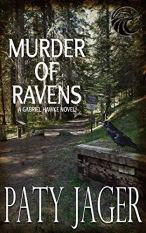
Murder of Ravens  The other mystery series, is the Gabriel Hawke Novels. Hawke is from the Umatilla Reservation in Oregon. He joined the military, came home, and became an Oregon State Trooper. Fifteen years ago, he became a fish and wildlife officer with the Oregon State Police in Wallowa County. Remember that place from earlier in my post? I grew up in Wallowa County, I love the rugged, ruralness of it for a mystery series. And what better character to solve mysteries than a master tracker, with roots in the area. His forefathers summered and wintered in the valleys and the mountains.  He is not only protecting the animals and land for the law but for his ancestors. To be sure I had this character’s occupation written correctly, I rode with a Fish and Wildlife State Trooper in the county for a day. He gave me a notebook full of information and ideas for stories. I’m currently writing book 5 in this series. It is set in Iceland, a place I visited last year. When I discovered they held a large SAR (Search and Rescue) conference every other year, I knew I had to bring Hawke to Iceland.

As you can see, I tend to write what is strongest in my mind. And if they don’t sell, well, then I move on to something else. Right now, the mysteries are doing much better than the romance. My calendar for 2020 is to write only mysteries.

What genre(s) do you like to read? Why?

My latest release:

Abstract Casualty 5x8Abstract Casualty

Hawaiian adventure, Deceit, Murder

Shandra Higheagle is asked to juror an art exhibition on the island of Kauai, Hawaii.

After an altercation at the exhibition, the chairwoman of the event, Shandra’s friend, arrives home with torn clothes, scratches, and stating she tried to save an angry artist who fell over a cliff. Shandra and Ryan begin piecing together information to figure out if the friend did try to save the artist or helped him over the edge.

During the investigation, Shandra comes across a person who reminds her of an unhealthy time in her past. Knowing this man and the one from her past, she is determined to find his connection to the dead artist.  When her grandmother doesn’t come to her in dreams, Shandra wonders if her past is blinding her from the truth.

https://books2read.com/u/4XXLke

Author Paty Jager (2)Paty Jager is an award-winning author of 43 novels, 8 novellas, and numerous anthologies of murder mystery and western romance. All her work has Western or Native American elements in them along with hints of humor and engaging characters. Paty and her husband raise alfalfa hay in rural eastern Oregon. Riding horses and battling rattlesnakes, she not only writes the western lifestyle, she lives it.

blog / websiteFacebook / Paty’s Posse / Goodreads / Twitter / Pinterest   / Bookbub


Jackie: To read my review of the first Gabriel Hawke mystery, see – Murder of Ravens


This article was posted for Pati Jager by Jackie Houchin (Photojaq)

Stuck at Home? Write That Book!

By Jeanette F. Chaplin, Ed.D.

This devastating pandemic took us all by surprise. With no time to prepare, we were suddenly either inundated with work and/or home obligations, or we found ourselves isolated and wondering what to do with all the spare time.

writing-923882_640 (1)Here’s a suggestion for wannabe authors. You’ve pondered that writing project for years; now you have time to get those ideas down on paper (or computer, or recording device). What would it take to turn that dream into a manuscript?

In a perfect stroke of timing, CampNaNoWriMo begins the first of next month. If you’re not familiar with the National Novel Writing Month challenge, it provides a venue for novice and accomplished alike to focus for an entire month on writing. The goal is to produce 50,000 words of a novel during the month of November. I’ve done it a few times and managed to produce a satisfactory draft in the allotted 30 days. Except for the year I had an emergency appendectomy on November 6!

CampNaNoWriMo is more flexible, allowing you to work on a project of your choosing, setting your own goals. I’ve signed up and plan to compile my advice for beginning writers. At the same time, I’ll be posting the most relevant tips in my Avid Authors Facebook group. Join me there and immerse yourself in learning about writing at the same time as you write.

bookstore-4343642_640 (1)I’ve opened membership to this site on a temporary basis. Here’s a place for you to learn about the author’s journey from “aspiring” to “avid.” Find out how to improve your writing, where to market your work, and ways to research trends in the industry. Get questions answered from an author who’s been there.

* * * * *

Jeanette Chaplin I’m a semi-retired college English instructor and published author with a doctorate in English composition. I self-published the Self-publishing Guide in 1979 and went on to self-publish print versions of a mystery series and several non-fiction books. I’ve given workshops through libraries, bookstores, writers organizations, and continuing education departments and have written for writers’ newsletters, homeschooling blogs, inspirational magazines, and publications such as the Des Moines Register.

Disclaimer: I focus on writing as a craft and what a beginner needs to know. I’m still learning the ever-changing marketing and digital publishing aspects of the industry. I have no affiliation with NaNoWriMo and receive no compensation for referrals.

Check out the latest writing tips and find more info about the “Camp” at https://www.facebook.com/groups/AvidAuthorsGroup/


This article was posted for Jeanette F. Chaplin by Jackie Houchin (Photojaq)


Upside Down

By Linda O. Johnston

upside down natural-2728146_640Apologies.  I’m late with this blog.  But… well, as I’m sure all of you reading this know, life is different now from what it’s been.

The pandemic.  Potential danger to all of us.  Lots to learn about how to protect ourselves.  Staying home most of the time–and only going out to buy essentials or bring in take-home food… occasionally.

What’s good about it?  Well, for writers, our lives may not have to change as much as other people’s.  We’re often home a lot anyway, staring at our computers and hopefully being productive on them.

 But… well, for me, some of the changes include not getting together with other people for exercise classes.  Or attending writers’ group meetings–which now have been canceled.  Or even considering attending writers’ conferences, which are also mostly canceled anyway.

 And then there were a couple of trips with family that we’ve had to cancel.

 I am walking our dogs more than before, which they enjoy–though of course staying more than six feet away from also-walking neighbors.  Our pups also enjoy having my husband and me around nearly all the time, to give them even more attention and treats.

 So yes, that part is good.  But considering how things will progress, when this might end, the situation regarding nearly the entire world… we’re upside down.

And then there’s this blog.  Being late didn’t help, but my mind obviously is on other things.  And though yes, I’m editing some stories I’ve been working on and plotting more–and my mind is also roiling around possible scenarios in which I can include this horrible situation in a book–things are different enough that I’m clearly not planning or focusing as I should be.

 I’d like to be focusing here on an aspect of writing.  That’s what we often do on the Writers in Residence blog.  And in a way, I am.  I’m suggesting that writers can do their job no matter what’s going on around them.  Focus on fiction, perhaps, to help your mind deal with the difficult facts.

I’m suggesting that writers can do their job no matter what’s going on around them.  Focus on fiction, perhaps, to help your mind deal with the difficult facts.

 Perhaps the hardest thing for me is not seeing family.  We have a son in our area but not right next door, and for now I’ve told him not to visit, at least for a while.

 What’s the hardest thing for you?  What kind of fiction are you focusing on to help you through this?

 How are you upside down?


This article was posted for Linda O. Johnston by Jackie Houchin (Photojaq)


Keeping It Real: Developing Characters, Part II

by Miko Johnston

Frequent readers of this blog may recall me referring over time to the fourth novel in my A Petal In The Wind series, which I’ve been writing for more than a year. I got stuck. My plot points kept stalling out, but I had a breakthrough after my last post. Whew! Until then I worked on revising earlier chapters. In one I found something I not only rarely do, but scold other writers for doing – I repeated myself in consecutive scenes. The actual scene played out first, and on the next page my protagonist Lala told another character what happened.

Then it occurred to me – maybe I didn’t repeat myself; maybe instead, I wrote the scene in two different perspectives. I didn’t need both, but I could compare them and keep the better of the two. Out went the full scene; the gist from her dialog worked better. Lala had to have her say about the incident, and that clarified why I got stuck finishing the novel. Lala found my direction for her ‘wanting’. I realized I kept forcing the plot in a way that wasn’t true to the character, so I ‘asked’ Lala to explain, in a few sentences, what she sought for herself. That solved the mystery. I feel confident she – and my readers – will agree this new direction sounds like the Lala we’ve watched grow up.

*          *          *

Our characters must be real to us, for if we can’t envision them, body and soul, no one else will. It’s why I always write: characters ‘who’, rather than ‘that’, and say they’re created, not invented. KEEPING IT REAL: PART I focused on writing series, where you have more time and pages for character development. When creating and developing characters for a short story or stand-alone novel, how do we keep them ‘real’?

  1. Give them a background

Begin with a basic police description of gender, age, and physical size: Asian male, mid- thirties, five foot ten, 170 pounds. Ask them what you’d ask any person you’ve just met – what’s your name, where are you from, what do you do? Delve further and observe. How are they groomed and dressed? What do they sound like? Are they eloquent, plain-spoken or inarticulate? Adventurous or timid, gregarious or shy? Many writers, including our own GB Pool, recommend writing biographies for your primary and secondary characters. It’s helpful in writing a short story but vital in a novel.

  1. Find inspiration in real life

Often we base characters on actual people we know. We observe strangers in public places, listen in to their conversations. We play-act, or fantasize about what a celebrity might be like.  That may make them real to us, but it doesn’t always translate onto paper. If you write fiction, you don’t have to recreate an exact duplicate. Instead, borrow traits from the person, like appearance, personality, or history. Use those elements as a foundation to write a unique character who reminds you of what you love, or hate, about their real counterpart.  I based one character on a dear departed friend who suffered more than she deserved, and gave her a better life. I’ve also created some who resemble people I know and have one trait in common – their taste in clothes, or their bluntness. The rest I fictionalize, but with qualities I’ve found in real people.

  1. Get to know them

We must become familiar enough with a character to understand what they will say and do. Talking to your characters, questioning or interrogating them will flesh out little details. Are they outgoing or shy, active or couch potatoes? Do they like to travel, or are they homebodies? Do they eat to live or live to eat? If they could change any aspect of their life, what would it be? What flaws does your hero possess, and in contrast, what are your villain’s fine points? The more you know the better you’ll know them. To grow interrelationships, try free-form dialog, where you write a conversation between two of your characters. Sit down and begin to write without pausing, without dialog tags or punctuation. Just write, and after a few minutes your logical left brain will switch over to your more creative right brain. Try this for at least ten minutes and see what your characters have to say about each other, and by insinuation, themselves.

  1. Go beyond words and actions to thoughts and motivations

To really understand someone, we need to know more than what they say or do, but why they say or do it. Your biography will help with this, but like the exception proves the rule, contradictions in characters prove their ‘realness’. Look for contradictory traits, for everyone has a touch of hypocrisy within them. Even if your characters don’t know why they say or do something, as often happens in real life, you – their creator – must know and present it in a way the reader can deduce it without being told.

  1. Set them apart

To create characters who are not cardboard cutouts, begin by avoiding clichés and stereotypes. Not everyone from Mexico is named José (or Maria) Gomez, and you can’t always tell by appearance or mannerisms if someone is gay. Real folks are a mixture of commonality and individuality. What we share in common makes us recognizable, but our uniqueness sets us apart. Think of anyone you know and list five traits that they share with many people. Then list two or three that are different. My five shared traits would include compassionate, sensible, impatient, analytical, and curious. What sets me apart? Despite being a mature adult, put me in an environment with animals and I turn into a giddy three-year-old, as I recently demonstrated in the Monterey Bay Aquarium.

  1. Let them be

Once you’ve created your characters, allow them their voice. Let them tell you what they want and don’t want, and listen to them. It could save you hours, weeks, even months of writers block. You don’t always have to obey, but trust and respect them enough to hear them out. Also allow them some privacy. Instead of writing in every detail, give enough to flesh out the character and let readers have the pleasure of filling in the rest.

All this may seem like a lot to compact into a story or book, but the sum of big picture and little details about characters humanizes them. It also makes them vivid in our minds, which enriches the story, for even above plots, great stories revolve around the people who occupy them.

To find more writing on the subject throughout this blog – just put CHARACTERS in the search line. For an in-depth look at how to create villains, see my earlier post:  https://thewritersinresidence.com/2015/07/15/building-a-better-villian-by-miko-johnston/ If you have any advice you’d like to share, we’d love to hear from you.

mikoj-photo1

Miko Johnston is the author of the A Petal In The Wind Series, available through Amazon and Barnes and Noble. Miko lives on Whidbey Island in Washington. Contact her at mikojohnstonauthor@gmail.com


This article was posted for Miko Johnston by Jackie Houchin (Photojaq)


My Fishy Introduction to Malice Domestic

by Jill Amadio


Ever feel like a fish out of water? As an ex-pat in California where residents are famous for being “the people from somewhere else,’ I humbly claim myself as a prime example. Because I am a Brit from Cornwall I was invited to be a “Fish-Out-of-Water” panelist at the three-day Malice Domestic Writers Conference held in Bethesda, MD just outside Washington, D.C.

Mary HigginsThe event is the largest annual gathering in America for writers and fans of traditional mysteries in the genre of Agatha Christie, which places them in a genre called ‘cozy.” It appears that publishers here prefer authors to be strictly categorized into the type of book they write: romantic suspense, noir, thriller, psychological suspense, hard-boiled, legal thriller, historical, private investigator, cozy, police procedural, and sub-genres such as a sci-fi and the newest, cyber-crime mysteries.

Some crime writers look down their noses at cozy writers. We are often considered to be the low man on the totem pole. No matter. We bask in the knowledge that it attracts hundreds of attendees from all over the country.  It was my first foray into this cozy conference although I am a veteran of Bouchercon, Left Coast Crime, Ladies of Intrigue, Surrey International in Canada, and other conferences for cozy writers and readers.

DiggingDeadCover-375x600The second book in my series, “Digging Up the Dead: A Tosca Trevant Mystery” was published just in time for this premier annual event. My main character hails from Cornwall and comes to live in Newport Beach, like me, so the “Fish Out of Water” panel was perfect for us both.  It was fun to explain to the audience that Tosca Trevant, a London gossip columnist (me too!) had rattled the royals by discovering yet another scandal at Buckingham Palace. This led her editor to re-assign her temporarily to America. Cussing mildly in the Cornish language, and coping with a culture that sees no need for a teashop on every corner, the meddlesome, outspoken and humorous Tosca turns amateur sleuth when she stumbles upon human remains in a neighbor’s garden, in the best Miss Marple tradition although Tosca is a younger version.

I was the only ex-pat author among us five panelists at Malice, whose main characters were also considered outsiders rather than police detectives or private investigators. I was bombarded with questions from the packed audience about how I came to live in the United States (“my ex-husband insisted and who needs all that rain back home?”), why I write traditional mysteries (“because Agatha Christie is my muse”) and how I manage to conjure up clues, settings, and plots. My favorite question is usually how I decide who the murderer will be. I answer honestly that I don’t always know until I’m into the story.

In my new book I created a character whom I intended to be the killer but the more I wrote about that person the more I came to like them so I designated someone else to be the villain instead. Another time during the writing of chapter 16 something incredible happened to me. I was writing dialogue wherein a character denies knowing something. GuardianShe was instantly contradicted by a voice behind my chair shouting out, “Yes! You did know!” The voice was male and sounded exactly the way I had described his gravelly voice in a previous chapter. I swung around, dumbfounded. Of course, there was no one there and no one else was in the house. Some writers say their characters often take over their role in a book but this was different. Sam spoke a line of dialogue that added another dimension to the plot. It worked well, surprisingly, giving an extra twist to the story. I didn’t hear from him again nor from anyone else I created so I guess he and the others were satisfied with how the plot was progressing.

One important take-away I have learned from being a panelist and this was particularly true at Malice: make ‘em laugh. I was fortunate enough to be able to describe some of Tosca’s amusing clashes with American culture, a few of which I experienced myself when I arrived in the U.S. Her reactions, though, are a bit more defined and she has no problem expressing herself although most of the time she is proven to have grabbed the wrong end of the stick or has misinterpreted the meaning, which makes for a few giggles.

So the lesson is that the more listeners you can make laugh, the more likely they are to buy your books. The key is for your readers to like you as a person, which can encourage them to believe they’ll like your writing. I was lucky enough to have sold out of my books at that first conference, as did other authors. I’m told that cozy readers make up the bulk of the crime-reading market so I plan to attend Malice Domestic forever. Or as long as I write mysteries.

###

JillAmadioHead

Jill Amadio’s mysteries are available in paperback and kindle on amazon, Barnes and Noble, and Nook. She is also the ghostwriter of 16 memoirs and biographies, and co-author of the Rudy Vallee life story, “My Vagabond Lover.”


This article was posted for Jill Amadio by Jackie Houchin (Photojaq)

Cruises Can Be Murder**

by Jackie Houchin

(**See disclaimer at the end)

Ahoy there Maties! Have ye sailed the Seven Seas yet?  What’s stoppin’ ye?  Oh… murder!  That!

In January my Hubby and I went on the most amazing 15-day cruise from Florida to Los Angeles by way of the Panama Canal.

What made it amazing?

IMG_5504The Canal transit, of course!! (#1 on Hubby’s bucket list), But the perfect sunny weather, the deep blue sea(s), the small, uncrowded ship (just 670 passengers), the funny and very personable Captain, the amenities (food, lounges,  gorgeous library, spa, pool, Internet café, crafts & games, casino, theater), our beautiful cabin with a balcony (oh, the views!), breakfast in bed, the lack of crowds and lines, the cool excursions in Aruba, Costa Rica, and Chiapas and Cabo San Lucas in Mexico were all definitely fantastic.

IMG_5214(Yes, we are in our 70’s, but we had a blast zip-lining in the Rain Forest!)

If EVER you go on a sea cruise, be sure to book passage on a small ship (unless you have kids). The Princess line has only one, and the Oceania Line has just three. And yes, they can and do travel around the world in 111-195 days. (I’m still dreaming of that!)


IMG_5638Imagine, if you will, 4-6 months in luxury, with everything taken care of for you, the occasional excursion ashore, time spent in one of several lounges or the library or your room, even out on the balcony with a laptop, with a bunch of characters eager to do malice, and a twisted mystery plot to direct them!

Yep, I could write a book on a World Cruise.*  (sigh)  Oh, yeah, writing and books, that’s what this blog is about…


Since we’ve come home, I have noticed the abundance of mysteries aboard ships.  There are the dark ones like The Poseidon Adventure by Paul Gallico, Dangerous Crossing by Rachel Rhys, The Woman in Cabin 10 by Ruth Ware, Birds of Pray by J.A. Jance, and Death on The Nile by Agatha Christie.  (Perhaps you’ve read a few.)

On Goodreads, there is a list of 47 Cruise Ship mysteries/adventures for Young Adults and Kids, including some with the new Nancy Drew and Hardy Boys, and the Boxcar Kids.

And of course, the cozy and humorous mysteries; Killer Cruise by Laura Levine, Cruising for Love by Tami Cowden, Princess Charming by Jane Haller, and Murder on the Oceana by Elizabeth Martin.  Whew!!  With all that written murder, mystery, and danger, I can see why you might be hesitant to walk up a ship’s gangway.


IMG_5146But what about on OUR cruise ship, the Pacific Princess?  I asked the Capitan Paolo Ariggo several questions during our two weeks, but one of them was about this topic.

“I’m a part-time mystery writer, and I want to know, does the ship have a morgue and a brig?”

He grinned and in a very soft voice said, “Ahhh, yes. There are two refrigerators that could be used for that…” then in a normal voice, “but a brig, what is this?”

“A jail,” I said.

“No-o-o,” he said with that Italian accent and a quick shake of his head.

“So where would you keep a prisoner until the ship docks?”

Silence, then, with a laugh, “In the Captain’s quarters!”

(Yeah, right.)


The seasoned passengers were more forthright. One related this story.

“On the world cruise we took two years ago, there was a murder. Late one night on the pool deck (#10), a man and a woman, obviously drinking, had a loud argument. The man (he was quite large) back-handed the woman.  She fell to the deck and lay still.  He thought she was dead! (she wasn’t). So he picked her up and threw her overboard.  BUT she landed on top of one of the life boats. She did die that time.  They found her body the next day.

“They searched the ship. Everyone was called to their muster stations.  We had to wait there until he was found. It was two hours!  And when we docked in Aruba no one was allowed off the ship until the police had come and taken him away.”

Wow.

Another told of a husband being poisoned to death. They thought it was the wife.

I bet you writers are thinking of possible crimes now that could be set aboard a cruise ship. What would be YOUR angle?  How would it happen? Would it lead to other murders? Would a passenger become the sleuth, or would there be a retired/recovering detective aboard? And… who would be the killer?


Bonbon voyageRight now, I’m reading an ARC (Advanced Reader’s Copy) of a cozy mystery for review, Bonbon Voyage by Katherine H. Brown about the Chef being murdered. (Oh, no!!)

And I’ve recently reviewed Death on the Danube by Jennifer S. Alderson which you can read here.  Review on my Here’s How It Happened blog This one was a river cruise.

After the BonBon book, I’m looking forward to reading The Cunning Cruise Ship Caper by Sally Carpenter, and the humorous “geezer-lit” mystery,  Cruising in Your Eighties is Murder by Mike Befeler.

How about you? What is on your TBR pile? Have you got a mystery or memoir set on a cruise ship?  Or… perhaps you know a dark true tale that could be made into a short story or book?

Well, dive right in!  Launch that story! All aboard!


(Disclaimer: First of all, this seems like a very untimely post. I am so sorry about the unfortunate cruise ship in Asia and the number of sick people on it. I pray all those among the 3,500 passengers plus crew will recover soon. But please don’t let that stop you from an ocean voyage in the future!)

*A 111-day cruise on the Pacific Princes in a balcony cabin like ours begins at $60,000 double-occupancy.