by Jackie Houchin
Hi all. Are you ready for a tome? (I don’t mind if you skim this post!) If you hate reading about vacation itineraries, I hope you won’t cringe as you begin this. But it really IS about books & reading.
I’m bouncing off my fellow Writer in Residence friend, Gayle Bartos-Pool who wrote that wonderful post last week about how reading fired and inspired her own successful writing history. Her last words “Read On!” were terrific.
I am a prolific reader. I LOVE to read or listen to books. A while back, I wrote about The 52 Bookclub Reading Challenge that I’ve been in for three years now. Each of the 52 books must match a book category that the moderators come up with each year. So far, I’ve met the challenges. For this year I have but 14 of the 52 yet to read, and it’s just June. 52 bookclub page
However, I’ve read many, many other books in 2022. And when I say read, I include print books, eBooks, and audiobooks. Non-fiction, novels, inspirational books, study books, and children’s books fill in the gaps around my favorite genre – mystery.
So, when my husband and I went on a 23-day cruise in the Mediterranean and Aegean Seas, I decided to read a book set in every country we visited, including the ship itself, and a jet plane. What fun! I’ve read 13 and have about 6 left to read.
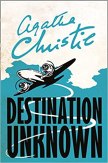 I began this quest waiting at LAX for the flight that would take us to Portugal to meet our ship (with a stop in Montreal). I started with Agatha Christie’s DESTINATION UNKNOWN. (We knew where we were headed, but hey, you never know – as the protagonist in that book soon found out!)
We spent so little time in Lisbon, Portugal, that I haven’t considered a book set there, but I just recently came across 300 DAYS IN THE SUN by Deborah Lawrenson or A SMALL DEATH IN LISBON by Robert Wilson. Not sure I will get to them. They are a bit long. But who knows, maybe.
 As for that 4-hour stop in Montreal, I chose A DISAPPEARANCE AT THE BONNE NUIT HOTEL by Dominique Daoust, about a young female newspaper reporter who goes to Montreal in search of that “big story.” It’s the first book of a trilogy.
(This is yet to be read.)
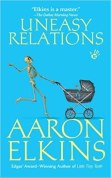 Our ship docked in five ports in Spain, with a stop at Gibraltar (a British Overseas Territory) after the first. I read Aaron Elkins, UNEASY RELATIONS, set in and on that famous rock. Wow, what fun to follow Gideon Oliver, the bone detective, up the cable car to the top for a really scary view, and then inside to St. Michael’s cave where stalactites come together to form of figure of an angel. There is a lecture hall beside it and Gideon spoke there! It totally makes a difference reading a book when you have BEEN THERE!
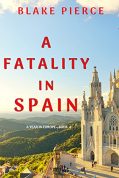 I read A FATALITY IN SPAIN by Blake Pierce, which is set in Barcelona (also in Pamplona). Oh, yes, I definitely remember that weird Antoni Gaudi modernistic church in town! And the dancing “giants” with the wooden heads! Reading the story…I was there too, hearing, seeing, smelling. (Although we chose to wear a mask there because of the packed crowds in the streets.)
 I am currently reading MISTAKENLY IN MALLORCA by Roderic Jeffries, an Inspector Alvarez mystery. It’s number one of 37! (And perhaps I’ll also read HOTEL MALLORCA; AN ELAINE PEARSON MYSTERY by Susan Linden Emde, if I finish the rest in good time. It looks very interesting.
We also docked in Seville, Malaga and Cartagena, Spain, but I’ll maybe be happy with the two books I have already for that country.
By the way, I am also reviewing each book I read on my new and very simple WordPress blog – Words and Reviews blog.
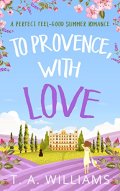 At Marseilles, France, we took a bus an hour inland to Avignon, France. Since high school French classes, I’ve always dreamed of “dancing on the Bridge of Avignon” as the children’s song goes. Finally, after 50 years – I did it! To remember that beautiful time in Provence, with everything lavender, I read, TO PROVENCE, WITH LOVE by T.A. Williams. More of a light romance than mystery, the protagonist is a writer and teacher, who came from England to write the biography of an elderly Hollywood film star. (Rosemary Lord, you would like this one!)
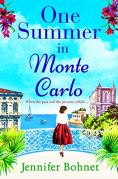 ONE SUMMER IN MONTE CARLO by Jennifer Bohnet is a sort-of mystery and again a light romance, set in the Principality of Monaco. It featured a lot of action and information about the F-1 Auto Racing circuit. While we were there, they indeed were setting up grandstands, pitstops, and pilon curve barriers for the race that would happen two weeks after we left.
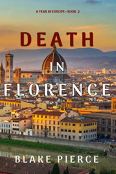 I was able to take my husband to Florence, Italy – a city I’d visited on my own three times before. Sadly, we were not able to go out into Tuscany for a visit to a vineyard and chateau. (Excursion cancelled.) But I was able to show him around one of my favorite cities, eat gelato, have spaghetti Bolognaise at my favorite café. (Sigh) I’ve chosen A DEATH IN FLORENCE by Blake Pierce, or DREAMING OF FLORENCE by T.A. Williams. I’ve read books by both of these authors (A Fatality, and To Provence), so I’m hoping for a different one. Any Suggestions?
 I read AUNTIE POLDI AND THE SICILIAN LIONS by Mario Giordano, while in Sicily, and we actually took a private taxi to Taormino because of that book. We didn’t have an excursion booked there, and, well, why not? It only cost E100.00 for the 30-minute trip each way, and a patient driver while we toured the town for a couple hours. It made the book more real, although we did NOT visit Palermo, where the “mob” lived in the book. Hahaha.
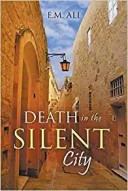 I have yet to begin DEATH IN THE SILENT CITY by E.M. Ali, but I can’t wait. I loved Malta from the moment we first docked. And indeed, the old city has red-stone walls protecting houses in the narrow winding streets just like on the cover. We entered one of those bolted doors with our tour guide, and into a beautiful studio where he was restoring stained glass windows they’d found buried after World War II. I always thought Malta was a part of Italy, but it is a country on its own.
 We had only two “at sea” days between distant ports, so I read two cruise ship mysteries. VANISHING VACATIONERS by Hope Callaghan and PINEAPPLE CRUISE by Amy Vansant.
Both settings in staterooms, dining rooms, decks, lounges, pool, etc., were so very familiar as I roamed our ship – the Nautilus, er, I mean, Oceania’s Nautica.
 Ah, Greece! I finally got to visit the setting of my all-time favorite book by Mary Stewart – THIS ROUGH MAGIC. It is set on the Isle of Corfu in the beautiful Aegean Sea. A romantic-suspense mystery that I first read when I was about 13 or 14. I’m sure I’ve reread it a dozen or more times since. I love it. And now, I’ve seen those lovely clear-water coves and sandy beaches, the castle-like homes way up on the steep mountainside, the winding dirt roads suitable only for a motorbike, the enchanting Corfu Town and the harbor. (sighhh)
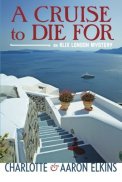 I read A CRUISE TO DIE FOR by Charlotte & Aaron Elkins, an art-forgery mystery set on a fantastic mega-yacht, on Corfu, and in Athens.
It reminded me of that sleek, black super-sailing yacht, The Maltese Falcon, docked near our ship in Corfu harbor. Oh, my, what an uber-expensive 180-foot beauty! Seriously, “Google” this super-yacht by name and you will be aghast!
 I just finished the most fun, interesting, and un-put-downable audio book that I have listened to in a long time. SACRED GAMES by Gary Corby is set in ancient Olympia, Greece in 460 BC. The still-active archeological dig that we visited and loved is portrayed so clearly in this book (the author must also have visited the old Olympic Games site) that I was sharing bits of it here and there with my husband. “Oh, yeah! I remember that!” he would say. The book is a murder mystery that takes place during the games, and a young Athenian man is the investigator. He has 4 days to find the murderer before the Games end and his best friend is executed. The action, intrigue, fast pace, brutality of the sports, and the setting, well, it was like walking there in person again.
Have you ever done this? I mean read your favorite genre set in the places you have visited, be they in another part of the world, or nearby? It’s amazing. It makes reading so much richer. Can you think of a book right now that is set in the last place you vacationed or visited? Think hard, then go buy or rent it and READ IT.
 I can’t believe I actually found a book – another light romance – set in Croatia (and part of it actually in Split, where we visited)! CLUELESS IN CROATIA by Joy Skye was a fun book, and the scenes in the harbor, in the city of Split, even a mention of the cruise ships there was fun.
After Croatia we cruised across the Aegean Sea to the East side of Italy for a 1-hour long trip into Ravenna to see the glorious mosaics there. It was an eyes and mouth open wide to see all that fine work. But alas, I’ve found no mystery/ romance books set in this smallish, inland city, or any with Italian mosaics. Do YOU know of any?
Our last port of call was again across the Aegean, in Koper, Slovenia. As I said, I haven’t found a book set in Slovenia yet. It was a beautiful town as we strolled through it. We bought a wood craft that I hope my hubby can duplicate for gifts for Christmas. We ate gelato, sat by an unusual fountain that reminded me of a dandelion puff! And we strolled by the small sunshine-bathed beach. I bought a little cup at a souvenier shop with the LOVE emphasized in the country’s name sLOVEnia.
Neither have I founda mystery set in Trieste, Italy where we disembarked. At Trieste when we got off the ship with our luggage, VERY early in the morning, the Nautica was surrounded in the water by shimmering, semi-transparent jelly fish! It was amazing!
 I hope to read A GIRL FROM VENICE by Siobhan Daiko, or maybe Jennifer S. Alderson’s DEATH BY GONDOLA, or maybe even one of Donna Leon’s more recent Commissario Brunetti mysteries, set in the floating city. We were not able to visit Venice – I really cried about that – but itineraries change and we make do. We did bus to Venice from Trieste and fly out of the Marco Polo Airport to Heathrow on our way home.
 For the UK, I read Victoria Tait’s book two in her new Dotty Sayers antiques mysteries VALUED FOR MURDER set in the Cotswolds. And I read another UK book since we had that glitch in the British Airways jet – did you hear about that?
An hour out from London to LAX, the plane abruptly turned around, dumped fuel, and hi-tailed it back to Heathrow. It seems the captain was very ill with extreme lower-abdominal pain (appendicitis?) and had to return. Back at Heathrow, we all waited patiently till the paramedics took him off the plane.
 THEN – after hours and hours we were bussed to a hotel for a free over-night stay in London, free dinner and breakfast, and then back to Heathrow for another try at LAX the next morning. Because of the additional day in the UK, I read THE CURIOUS CASE OF THE COPPER CORPSE, a Flavia de Luce novella by Alan Bradley set in England.
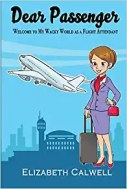
And finally, I will read DEAR PASSENGER: WELCOME TO MY WACKY WORLD AS A FLIGHT ATTENDANT by Elizabeth Calwell. It’s a very short, humorous little book and will top off my vacation reading adventure.
Okay, this is a really long post I know, and if you skimmed or stopped reading a quarter of the way down, that’s fine. But, tell me, have you ever done what I did? Not the cruise, but read books set in places you’ve traveled (either before or right after). Did it make the books better? More fun to read? Can you do it this summer?
And let me know if you know of a mystery/adventure/light romance book set in Ravenna, Italy (or mosaics), Slovenia, or Trieste, Italy!

 (Dianne Ascroft’s Cozy Mystery Short Story is part of the Deadly Traditions: A Cozy Mystery Christmas Anthology, by & 8 more See the other stories and authors at the end of this review.)
 How many of you have ever read the Book (or parts of the book) of Ecclesiastes in the Bible? It’s in the Old Testament, right after Psalms and Proverbs (other excellent books to read!).


 I’ve used the
 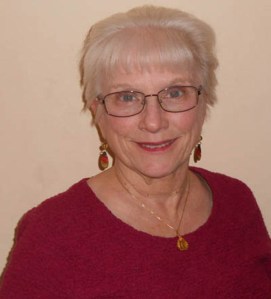 Elaine L. Orr writes four mystery series, blogs, keeps in touch with lots of family and friends, and tromps cemeteries looking for long-dead ancestors.
 My historical stories are all set in Imperial China, specifically (at this point) in the late 1300s, the beginning of the Ming Dynasty. The first three—Hidden, Warned, and Trapped—is a young adult trilogy that I had been thinking about and working on for many years. My educational background is anthropology with an interest in Chinese culture and traditions. Of course, that was long before I retired from jobs that did not specifically involve much of this training.
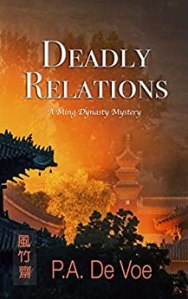 Also, research is needed to get a realistic picture of what’s happening at the local level, beyond the Emperor’s court. In my newest series, A Ming Dynasty Mystery (Deadly Relations and No Way to Die), I wanted to show life from both a male and female perspective. The male character, Shu-chang, was easy to develop. He’s an amalgamation of striving young men struggling to achieve social and economic success through the long-standing Chinese merit system which was based on an examination process. There are many, many examples of such young men.
 The female character, however, was more difficult because I wanted her to be educated and to have freedom to act outside of her home. At the same time, she had to be realistic. I couldn’t simply give her a contemporary mindset in order to create an interesting story. After all, she lived in a period and culture with a different set of expectations for men and women. Fortunately, while reading broadly, I ran across an account of a learned woman who had trained as a professional women’s doctor under her own grandmother. I was able to use her as a model on which to build my character Xiang-hua. I now had a strong female protagonist that I felt was also true to her time and place.

 by Jackie Houchin

 For lovers, every day is Valentine’s Day. But February 14 is the official day when Cupid’s arrow strikes and big business rakes in billions spent on candy, flowers, jewelry, and fine dining.
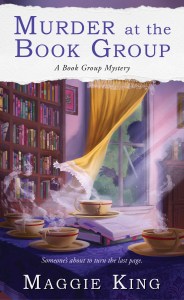 In Murder at the Book Group, the series debut, Hazel describes Vince as her on-again, off-again lover. She attributes their sporadic relationship to their inability to get along. She doesn’t offer details as to why they don’t get along but the reader can guess that the real problem is Hazel’s cold feet about committing to a permanent relationship. She’s been married four times and isn’t eager to make a fifth trip to the altar, only for the relationship to sour soon afterwards. Does she love Vince? She doesn’t want to commit to that either, but she definitely has a soft spot for him.
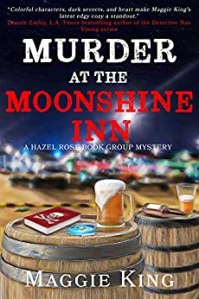 If you read #2 in the series, Murder at the Moonshine Inn, you will know the answer is “yes.” They married in beautiful Costa Rica. Hazel becomes a successful romance writer. The very name Hazel Rose conjures romance.
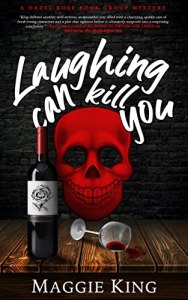 The book group members don’t fare as well as Hazel and Vince in the romance department:
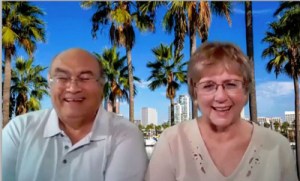
 Maggie King is the author of the Hazel Rose Book Group mysteries and short stories set in Virginia. Her story, “The Last Laugh,” appears in the recently-released Virginia is for Mysteries III anthology.










 The Writers in Residence
You must be logged in to post a comment.