

Yeah, yeah, I know. Nobody makes resolutions at New Year’s anymore. A least not ones they can keep beyond the 31st of January. (Surveys report that 47% of resolution makers can’t keep them until February 1st.)
WHY?
I have some suggestions, tips, and encouragements if you really want to change something in your life/writing in 2022.
From the Hints From Heloise column, I found these believable suggestions.
- Be specific.
- Don’t vow to “Lose weight” but, to Lose 20 pounds by May 1st.
- Don’t vow to “Exercise more” but, to Walk 2 miles a day for 4 days a week.
- Don’t vow to “Write more in 2022” but, to Write 2 chapters, or 2,000 words, or a complete short story or article each week.
2. Then add your answer to the question, “why?”
- Because I’m too young to be heavy and it makes me look matronly.
- Because walking is healthy for me, and the kids (dogs, Hubby) can go with me.
- Because I’m a writer and I want to finish my book and/or publish my work.
- Put these (your) resolutions on 3×5 cards and tape them to your bathroom mirror. Read them aloud to yourself every morning.
- Keep track of your progress.
- Reward yourself when you accomplish each one!
(If you try this, let me know how it works!)
Hey, have you heard this one? “I was going to quit all my bad habits for 2022. But then I remembered: Nobody likes a quitter!”
Here’s a unique take from The Victoria Magazine, letters, Jan/Feb.
Says Wendy J. “Decades ago, a friend and I came up with the idea of “un-goals” instead of resolutions. This gave us permission to give up things we detested! I gave up zucchini. For years I had tried one recipe after another to use the piles of this vegetable that I received from neighbors’ gardens or the market. I finally decided that they all tasted the same because I truly dislike zucchini!”
Do you have something you really dislike and will renounce in 2022?
(Let me know, and I’ll rejoice with you!)
Do you have a (mental) list of what you want to do “someday?” Here are a few examples: (I love #2.)
- Finish the book I’m writing
- Spend a season living abroad
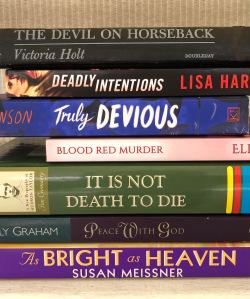
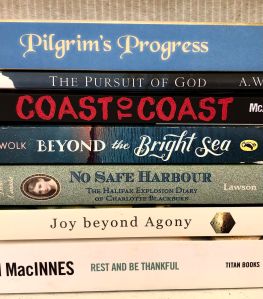
- Read that stack of books I’ve been accumulating
- Add weight training to my workouts
- Plan day trips with my family
- Schedule those _____________ lessons I promised myself I would take
Resolve to move these from the “Someday” to the “In-progress” column.
(Maybe I’ll join you on those lessons!)
From Cathy Baker’s Creative Pauses Facebook group, Dec 31, 2021. Choose a word or two as a theme for 2022. (Easier than a whole resolution.)
There are many websites that can suggest words to you, or give you ideas. Think of your goals/hopes for the New Year, and use these or other sites to help you choose. Some even give you ideas on how to make the word stick for 365 days.
https://elisabethmcknight.com/word-of-the-year-ideas/
(Scroll down to the 100-word list at the bottom, Abundance to Zest.)
https://www.happinessishomemade.net/word-of-the-year-ideas-one-little-word/
(Schroll down to the 150-word, printable, non-alphabetized list.)
OR… for heaven’s sake, we are writers & readers… pick your own. Haha!
(Let me know if you pick one and what it is, or maybe keep it secret.)
Here are some suggestions from the Orange County Register newspaper, on the personal side, with specific fill in the blanks.
- Mend a relationship with _______________.
- Be more kind to _________________.
- Call _______________ whom you haven’t spoken to in a long time.
- Adopt or foster a ___________ (animal) and take good care of it.
(Or sponsor a child.)
From an article in The Epoch Times:
- Get inspired by reading blogs you love (like The Writers in Residence).
- Begin with tiny stuff – make it a habit that is “too easy NOT to do.”
- Find a friend or family member for support.
- And lastly, don’t call them NEW YEAR’S RESOLUTIONS, rename them as “January Objectives” or maybe even “Today’s List.”
(And check those buggers off! I’ll celebrate with you.)
For me, three for ’22:
- Try new recipes from my “Eating Clean” cookbook at least twice a week.
- Shorten my “screen time” by half (PC and phone). Use a timer if needed.
- Cut out sugar (again) to help with inflammation issues.
(And YOU can check on ME at the end of the month/year. Really!)
###
Our Faith Bible Church pastor gave us this verse for the year:
Romans 12:9b. “Detest evil; cling to what is good.”
#









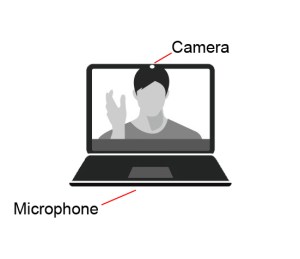 Computer (laptop/notebook, desktop, or tablet) with a built-in camera and microphone.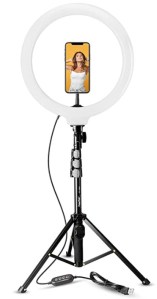
 If you do not have a built-in camera, you may be able to connect a DSLR (digital reflex camera) to your computer. Ask for help from a tech-savvy friend if this is getting too complicated
 Make sure you have good lighting. Use a couple of lights (position them on either side of your computer.) They don’t have to be fancy lights, even table lamps will work. (Try not to sit with a window behind you.)
 A pleasant, but not distracting, room for your background. If you don’t have a suitable space, try a solid, blank wall. Zoom provides digital backgrounds or you can use your own.
  If you don’t have one, purchase “greenscreen” fabric on-line.
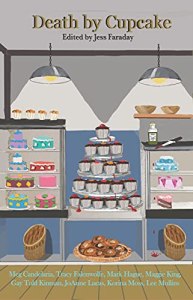 I also got a few tips from author, Maggie King (MaggieKing.com) about writing regular length short stories. Her “Cupcakes and Emeralds” is featured in the new mystery anthology DEATH BY CUPCAKE, published by
  Ran Walker (RanWalker.com) is the award-winning author of 23 books. He teaches creative writing at Hampton University and lives in Virginia with his wife and daughter.




 Since I mentioned
 What a fascinating book! It’s very different from the usual historical cozy mysteries out today. It has a main character who is unique and amazing in her disability, living in a disguised house with her once royal parents and a pair of staff who love and protect on her.
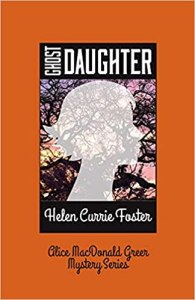 This is an amazing, sometimes jaw-dropping, mystery-adventure in which the heroine, Texas lawyer Alice Greer, risks life and limb to fulfill the last wishes of her friend Ellie. In Ghost Daughter, the newly widowed Ellie has discovered her long-lost daughter, conceived at age 17 and given up for adoption decades earlier. She wants to include her somehow in her estate and asks Alice to be executor if/when she dies.








You must be logged in to post a comment.