Why I Read Short and Long

by Jackie Houchin

I read a lot of print books and listen to a great many audiobooks each year. I do not read anthologies or collections of short stories unless they contain several stories by authors that have a track record I enjoy.

Recently, I have been “reading” (I will use that word whether I use my eyes or ears) a good many short prequels to book series. If the book turns out to be so-so, I haven’t wasted much time. If I like it, I’ll consider the series. Also, more authors are writing their stories as novellas, which I enjoy too.  For me “shorter is better.”

Except!

Except when I read authors that I KNOW will come through with an outstanding story. Then I will read longer. Sometimes much longer.  I’m currently reading CITY SPIES by James Ponti. It has 378 print pages and I LOVE it. I eat it up. I can’t get enough, even when my eyes are stinging. I’m already looking for the next in the series. (Okay, yes, it’s geared to 10-12 year-olds, but I’m a kid at heart, and it really IS written well.)

In general, for LONG reading, I like fascinating, immersive, tightly-written books, with unique plots and hooks and plenty of jaw-dropping moments. And the characters better resonate with me.  I enjoy relevant back-story told well and within the plot.  In mysteries, I don’t want to easily figure out who is the villain or how he did the crime. I want to follow the author step by cleverly contrived step to the WOW ending, which, on second thought, makes perfect sense. I want a story that stays with me for a while.

Charles Todd is one of those authors. His Ian Rutledge historical mysteries are top notch. Here are my reviews of two of those books. You can see why I love them and will READ LONG.

A Pale Horse

A Deadly Loyalty

Historical Novels and Mysteries need to be believable and take me right to that setting and hold me there. If they do, I’ll READ LONG.  Here are three I reviewed that did that.

The Ghost Map by Steven Johnson

The Girl in The Painting by Tea Cooper

A Brilliant Night of Stars and Ice by Rebecca Connolly

In a LONG READ novel, I want to be carried along with astonishing characters, vivid settings, and heart-wrenching but hopeful story telling. Here are two I loved.

The Bronte Plot by Katherine Reay

Light on Bone by Kathryn Lasky

Here’s one dual-time plot that is outstanding and innovative and that I gladly READ VERY LONG.

When The Day Comes by Gabrielle Meyer

And I could name more.  I totally enjoy reading Charles Martin (long & intense), Connie Berry (intricate plots), Katie Gayle (addictive), A.J. Pearce (Historical), Spencer Quinn (Humor, a dog’s POV), and my all-time favorite Mary Stewart, which I read and listen to over and over.

All these books are well written and enjoyable. If these authors keep on writing, and others like them, I think there is hope for readers. (At least in my life time.)

NOTE: I hope you don’t mind the blatant self-promoting of my Words and Reviews blog!

..

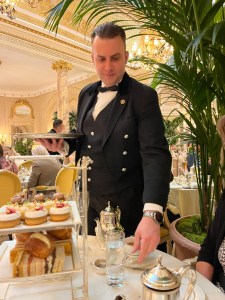
And a few fun shots of Jolly Ole England – Afternoon Tea at the Ritz with lovely piano music, 150 Picadilly, London.


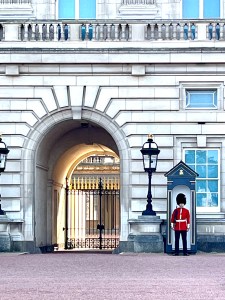
Buckingham Palace and Big Ben


How I Set A Mystery In The Galapagos

By Guest Blogger, Sharon Marchisello

For as long as I can remember, I had three goals in life: become a bestselling author, meet and marry the love of my life, and travel the world together. And I always figured I’d do them in that order. Although I achieved my dream of being a published author, I’m still working on that “bestselling” part.  

When I graduated from the University of Southern California with a master’s degree in professional writing, I realized I’d have to get a “real” job. Not only was I not making a living as a writer; I wasn’t even published. Should I go for an opportunity that involved writing but might drain my talent and energy? Or should I look for something mindless that would pay the bills, so I could focus on my stories during off hours? Then a position as a reservations agent at Western Airlines fell into my lap.  

My roommate had a friend who worked there, and one day the friend called to say Western Airlines was hiring. I was the first person to listen to the message on our answering machine and begged to go to the interview too.  

The woman who interviewed me said, “You’re overqualified for this job. You just want it for the travel perks, and I know you’ll quit after a year or so. But I won’t stand in your way.” I stayed with the company for twenty-seven years; my roommate left after six months.  

But she was right about me wanting the travel benefits, and my first few years, I was on a plane every time I had a day off. I met my future husband at the Los Angeles airport, and together we’ve taken 65 cruises and visited over 100 countries on all seven continents.  

Although I kept writing fiction and even published a few travel articles, I never set a story in one of the destinations I’d traveled to. Until the Galapagos.  

If you’re looking for the Galapagos on the map, it’s a group of islands straddling the equator, approximately 600 miles off the Pacific Coast of Ecuador. I never planned to set a book there, either, but six months later, I remembered an experience from our cruise that I thought would make a great opening scene for a mystery.  

Normally, the guides were conscientious about counting heads and watching over all the passengers in their charge whenever we were away from the ship. In an archipelago comprising 97% national park containing flora and fauna found nowhere else on earth, tourists must be carefully supervised.

But one day, my husband and I left another activity to join a snorkeling excursion already in progress, and neither of the guides assumed responsibility for us.  

We were swimming along, marveling at the vast array of colorful underwater life, when I surfaced to see both Zodiac boats motoring back to the ship—without us! I can still feel the panic of being left alone in the middle of the ocean, treading water off the shore of an island populated only by sea lions and blue-footed boobies.  

I waved and screamed, bobbing up and down like a spyhopping whale, and fortunately, someone spotted me. One of the boats turned around and came back to pick me up. I didn’t see my husband right away but told the guide he was still out there. In a moment, he’d swum up and climbed aboard. All was well.  

But what if… What if my protagonist’s companion didn’t get picked up? And what if the person was left behind on purpose?  

I had a great time writing the book, reliving our trip through photos and program notes, plus doing a lot of supplemental research on the internet.  

When Secrets of the Galapagos begins, my heroine, Giovanna Rogers, is snorkeling with her new friend, tortoise researcher Laurel Pardo. The two get separated from the group, and Laurel disappears. No one on the ship will acknowledge that Laurel didn’t make it back.  

To determine a motive, I recalled a conversation I’d had with one of our guides during a visit to the Charles Darwin Research Station in Puerto Ayora, the largest town on Santa Cruz (one of only four inhabited islands in the chain). “I know a secret about Lonesome George,” he said. “But if I tell you, I’ll have to kill you.”

Lonesome George was a Galapagos giant tortoise made famous for being the sole survivor of the Pinta Island species. Unfortunately, efforts to breed George were unsuccessful, and the ancient tortoise passed away in 2012 without an heir.  

But what if someone discovered another giant tortoise from a different subspecies also thought to be extinct? And then a tortoise researcher unearthed information about the animal that the tourist industry didn’t want released?  

You’ll have to read Secrets of the Galapagos to find out what happens next.  

Blurb:  

Shattered by a broken engagement and a business venture derailed by Jerome Haddad, her unscrupulous partner, Giovanna Rogers goes on a luxury Galapagos cruise with her grandmother to decompress. At least that’s what her grandmother thinks. Giovanna is determined to make Jerome pay for what he’s done, and she has a tip he’s headed for the Galapagos.  

While snorkeling in Gardner Bay off the coast of Española Island, Giovanna and another cruise passenger, tortoise researcher Laurel Pardo, become separated from the group, and Laurel is left behind. No one on the ship will acknowledge Laurel is missing, and Giovanna suspects a cover-up.  

When the police come on board to investigate a death, Giovanna assumes the victim is Laurel. She’s anxious to give her testimony to the attractive local detective assigned to the case. Instead, she learns someone else is dead, and she’s a person of interest.  

Resolved to keep searching for Laurel and make sense of her disappearance, Giovanna learns several people on board the ship have reasons to want Laurel gone. One is a scam involving Tio Armando, the famous Galapagos giant tortoise and a major tourist attraction in the archipelago. And Jerome Haddad has a hand in it. Thinking she’s the cat in this game, Giovanna gets too involved and becomes the mouse, putting her life in jeopardy. But if she doesn’t stop him, Jerome will go on to ruin others.

AMAZON 

SUNBURY PRESS

Bio:  

Sharon Marchisello is the author of two mysteries published by Sunbury Press—Going Home (2014) and Secrets of the Galapagos (2019). She has written short stories, a nonfiction book about finance, training manuals, screenplays, a blog, and book reviews. She earned a Master’s in Professional Writing from the University of Southern California and has been an active member of Sisters in Crime since 1995, currently serving as treasurer of the Atlanta chapter. Retired from a 27-year career with Delta Air Lines, she now lives in Peachtree City, Georgia, and volunteers for the Fayette Humane Society.  

Website: sharonmarchisello.com (https://smarchisello.wordpress.com/)  

##

This article was posted by member, Jackie Houchin. If you’d like to read my review of the audiobook version of  SECRETS OF THE GALAPAGOS, click here.   


“Letters From Afar”

An Interview by Jackie Houchin
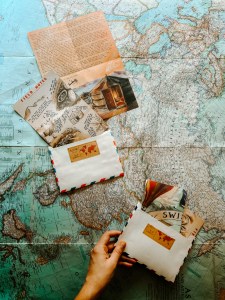
For about a year and a half, I have been receiving by subscription ‘LETTERS FROM AFAR’ through the (snail) mail. They are stories about real places written by the “fearless explorer” Isabelle. I am an avid traveler myself, and these letters feed my wanderlust in between my trips. As a writer, I got curious about who wrote the letters, how they got started and a bit of the process. Was Isabelle really her name? Did she actually travel to these places?

I read up on it on the LETTERS FROM AFAR website, but I wanted more. As writers and readers, I thought YOU might be interested too, so I interviewed the gracious gal and she responded with lots of interesting and encouraging facts.

Jackie – I love your “fearless explorer” Isabelle and her history, but what is your actual name and history?

My name is Shawnee Mills. I’m originally from Texas, but have lived in New Mexico, Colorado, Kentucky (where I met my husband), North Carolina, and now New York City. I was homeschooled from the second grade and attended college early at age 14. From there, I decided to pursue cosmetology, and I worked as a stylist for 8 years. Throughout my career, my true passion was always creating art and traveling as often as possible.

Jackie – Tell me about your family. I know you have a husband, but do you have children and pets?

I’m the middle of 3 girls. My parents chose quite a different pathway for us, and I firmly believe it’s led to my current career and lifestyle. When I was nine, my parents decided to sell everything they owned and begin living off the grid in Colorado. My father built our home (a log cabin), and my sisters and I spent our days exploring, pursuing our own unique interests, and avoiding our daily lessons as much as possible. 😉

After that adventure was over, we again sold everything we owned, bought an RV, and traveled the country on a year-long quest to find our next home base. We eventually settled on Kentucky, where I began my adult life and career as a stylist and met my husband, Palmer.

Palmer and I do not have any children, only of the furry variety 🙂 Our two dogs’ names are Izzy and Bronco.

 Jackie – What did you do before the LETTERS FROM AFAR?  Did you travel for business? Was the painting for pleasure or business?

When Palmer and I decided to sell everything we own (see the theme here? ;)) and move from Kentucky to North Carolina, I left my job as a stylist behind. I decided to dive right in and attempt to make it as a full-time artist…. Which was daunting, to say the least.

My medium of choice back then was oil painting, and peddling my works in local coffee shops and art markets was not panning out as planned. After doing a lot of research on profitable business models, I decided to try to find a way to blend my passions for art and travel into the world of subscriptions.

While I had traveled the United States extensively, I had never actually left the country. In a roundabout way, creating LETTERS FROM AFAR manifested my current life of travel and adventure. My actual life and my business fuel each other.

Jackie –   How did the idea come to you for the letters? Was it an “Aha” moment? A passing suggestion from someone?  Your hubby or your muse?  Which painting were you doing? Were you sitting in a café in Bangladesh?

 One day, I was brainstorming and jotting down ideas in my journal. It was a scorching day in July, and I was sitting on the beach on a random weekday.

I had no job, and after my failed attempts at selling my artworks, also had no money. Around that time, I had been reading a fiction novel (cannot remember the name of it), and the main character was traveling and writing a letter to her mother. The idea hit me hard and fast…. Write letters about faraway places, include illustrations of the location, and send the letters to readers on a monthly basis!

I drove home so quickly, and excitedly told my husband all about my idea. His exact words were, “I love the idea. Go for it… if it even pays the water bill, it’ll be worth it.” 😉

Jackie – What was the process from that first idea, to the actual addressing and mailing out the letters?  Did you imagine it would spread so widely around the world?

That same day, I pulled out my dusty and rarely used watercolors and a piece of paper and hopped onto my computer to learn as much as I possibly could about Marrakesh, Morocco.

I had never been but had always dreamed of going. After researching, I wrote a letter from the perspective of someone who was there. The character was telling their friend all about the sights, smells, and wonders. At the bottom of the page, I sketched out a scene of Marrakesh and added a splash of color with my watercolor paints. Voila! The very first LETTER FROM AFAR was born. I made copies of the original, folded them with care, and prepared them to be mailed to my future readers

We decided to name the fictional writer of the letters Isabelle. My dad came up with the name. She’s inspired by the real-life Isabella Bird, an explorer that lived in the 19th century and bravely traveled solo.

I created an Instagram page and a website and began advertising my little idea. That first week, five people subscribed to receive my monthly letters. I’ll never forget the feeling. It paid for the water bill in just seven days.

The letters have come a long way since then in terms of style and skill… but this very first letter was and is very special to me. Even then, it somehow felt like the start of something big…. Not in terms of finances but in the idea that I was on my way to “making it.” AKA, truly doing what I love.

Jackie – How many subscribers received the first letters, and about what is your readership now?  How did you go about building your mailing list?

We were very fortunate that LETTERS FROM AFAR basically grew on its own. Through word of mouth and occasional posting on social media, it grew to over 1000 subscribers in the first year. 3000 by the second year. My husband was able to quit his job to help full-time. And the third year? That’s when covid hit.

Like many small business owners, I was in sheer panic when the world shut down. Would my little company survive? Would the postal system even be able to deliver my letters? To our complete shock, the pandemic was the catalyst that skyrocketed our monthly readership.

While everyone was stuck at home and no longer able to travel, my letters became a small way to see the world without having to leave. In 2020, our readership grew to over 8000, and in 2021, to 10,000. It’s steadily continued to grow each year since.

Today, we grow and maintain our readership by continuing to post on social media and doing some light paid advertising.

Jackie – I personally began with the letter about Predjama Castle in Slovenia.  How many letters came before this one?  (I see on your website; you can order past letters. How would a person go about that, and how much would they cost?)

I’ve created a new letter each month since July of 2017. In short, there are many, many letters! Some of them are out of print, and some are still available in our “archives.” The previous letters can be purchased for $7 on www.pastlettersafar.com.

Jackie – Do you write and illustrate ALL of the LETTERS FROM AFAR yourself?

I research, hand illustrate, and write each monthly letter. The process is long, but it’s my favorite part of this whole endeavor. My goal is for the colors of the letter and the story told to portray the true magic of each location.

In the beginning, I started each letter by heavily researching each location. Nowadays, I’m so happy to say that some of the letters are written on location. The eventual goal is for all of them to be written on location. That means a LOT of traveling, the idea of which makes me smile.

Jackie – What gave you the idea to hide objects in the letters for readers to find? (Very clever and fun!)  I like the Field Notes and the actual map too.  Why did you decide to include that extra insert?
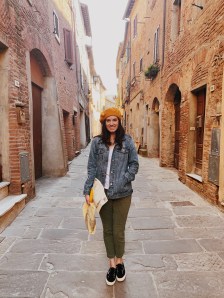
From day one, our audience has been mixed. While half of our readers are children and homeschooling families, the other half are adults who simply love to travel and learn about new places! I added the “hidden images” to entertain my littlest readers. 🙂

I decided to start including the field notes insert so I could be sure to include as much information as possible. LETTERS FROM AFAR is inspired by old-world exploration, and I imagine an explorer would always carry their trusty journal to jot down interesting facts or “field notes” from the journey. It’s just a way to make it a touch more special, in my opinion.

Jackie – I like that you help (with a portion of all sales) to sponsor education in Third World Countries through ‘Pencils of Promise’. A perfect charity for explorers. Thank you.

You’re welcome! I’ve always wanted this project to have some sort of an impact, so I was happy to partner with them.

Jackie – Thank you for joining us today, Shawnee. It’s been fascinating to learn about what you have accomplished in “doing what you love” through the LETTERS FROM AFAR.  I look forward to the monthly LETTERS, and when I see that yellow airmail envelope with the golden seal, I open it first, find a comfy chair, and dive into whatever new place you are taking me to.

You are welcome. Thank you and have a great week!

Links:

Website to subscribe – LETTERS FROM AFAR

About – Idea/Destinations/Process

Isabelle – Meet your new Pen Pal

Instagram – letters.from.afar

Facebook – Letters From Afar

.

Can Writers Be Replaced by AI?

By Guest blogger/author Naomi Hirahara

Artificial intelligence, especially ChatGPT, is on people’s minds these days. ChatGPT is developed through OpenAI, a company Elon Musk co-founded with a controlling and growing investment by Microsoft, which is beta-testing artificial intelligence in its search engine, bing. Instead of doing a simple Google search in which you type in a word, phrase, or even question, resulting in a list of search links, chat bots can provide full narratives. They are interactive, too, and can simulate a conversation with the user, albeit with mixed results. (See https://www.kpcc.org/2023-02-27/how-microsofts-experiment-in-artificial-intelligence-tech-backfired)

These developments have Google on the run and the whole high-tech community both excited and nervous about what disruptions may take place. Certain authors savvy about this world have also expressed the whole range of emotions—fear, anticipation, and indifference. Artificial intelligence is already used in narrating audiobooks for outlets like Apple Books in lieu of “real people.” (For an interesting conversation about AI audiobook narration, listen to the last story on this page: https://www.kpcc.org/show/airtalk/2023-01-23/lunar-year-massacre-in-monterey-park-leaves-ten-dead)

I’ve been listening to and reading such conversations as both a novelist and co-chair of the Imagine Little Tokyo short story contest. Regarding the latter, some journals and magazines mostly in the science-fiction realm have been recently dogged with a flood of short story submissions created on AI. (See https://www.theverge.com/2023/2/25/23613752/ai-generated-short-stories-literary-magazines-clarkesworld-science-fiction) Could someone input our guidelines on ChatGPT with locations in Little Tokyo and come up with a semblance of a good story? I can’t imagine how teachers in the future will evaluate the veracity of student essays with the spread of AI.

Joanna Penn of the Creative Penn podcast has been discussing AI for years, pointing out how writers already utilize artificial intelligence, which predicts language based on patterns, in checking our spelling and improving our prose through software programs like Grammarly and ProWritingAid. She’s also now utilizing AI exploring various creative storytelling options.

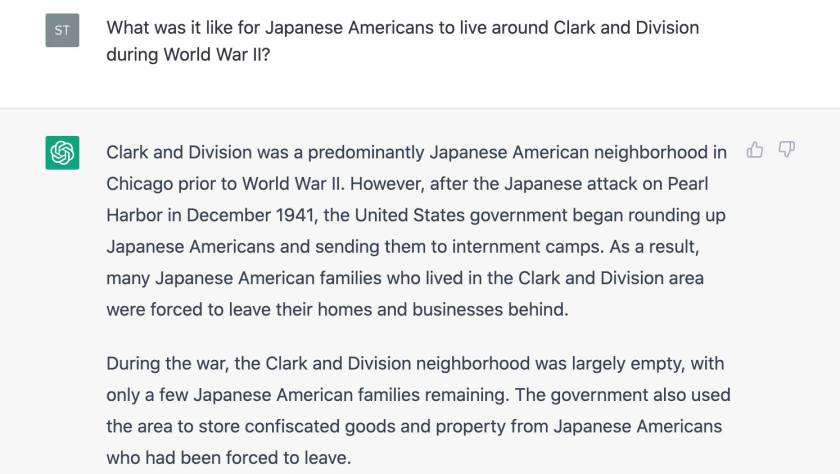
As an author who writes very specific historical and ethnic stories, I haven’t been that concerned that I can be possibly replaced by a robot. But for fun, I did go to ChatGPT and asked the bot questions about the incarceration of Japanese Americans during World War II. The answers it gave me were both encouraging and unnerving. Encouraging in that the answers were correct and factual. Unnerving because the prose was clear and well-written. Then I asked ChatGPT specifically about the topic of my recent historical mystery, CLARK AND DIVISION, which is set largely in 1944 Chicago, where many Japanese Americans released from the ten detention camps sought refuge for some months and years. For this question, ChatGPT picked up none of the historical nuance and came up with a completely wrong answer. (See screenshot.)

As I discussed recently at a Sisters in Crime Los Angeles meeting, when writing historical mysteries—or perhaps any kind of fiction—look for the gaps of knowledge. Let’s surprise our readers, take them to places and situations that they have never been. If a robot can easily replicate our tropes, characters, or plot points, maybe we should seek to create fresher tales that only living, breathing person can tell. Let’s go to those archives and open those dusty books that haven’t been digitized or engage in vulnerable, emotional conversations with people who share stories that they have never told. In this way, I see artificial intelligence as a good challenge more than a competitor. I seek to stump the robot instead of destroying it.

For a headier analysis of ChatGPT, go to science fiction writer Ted Chiang’s article in the New Yorker, in which he likens the new technology to a bad photocopy of source material: http://Ted Chiang’s Article

(Naomi Hirahara is the Edgar- and Mary Higgins Clark Award-winning author of the Mas Arai mystery series and the historical novel, Clark and Division. Evergreen, the sequel to Clark and Division, will be released this August. For more information, go to her website, http://www.naomihirahara.com.)

.

(Naomi Hirahara’s article is posted by Jackie Houchin)

(Blog) Housekeeping & Inspiration

(Jackie Houchin is standing in temporarily for another member.)

Before we go on to some inspiring quotes from a dozen great mystery writers, here’s a little housekeeping to help you get the most from our blog.

1. Have you ever been unable to see or post comments on The Writers In Residence blog?  Here’s a trick to try.

When you first open the page, “click on” the title of the post. NOT the site title, but the new posting title. In this case, it would be “Housekeeping & Inspiration.”  The page should adjust, and then you will be able to see the Comments section.  Try it!  PS: You will also be able to see the extended bio of the current posting’s author.

2. If you are curious about the rest of us bloggers, you can go to the top of the site and click on “About.”  This will give you the complete list of bios by author.

3. From the sidebar, you can also search past postings by typing in an author’s name in the “Search” box and clicking. Recent articles by that author will appear. You can also type in a topic. If we have covered that, you will see them as well.

4. If you came upon our blog via social media and like what you see, you can enter your email address in the next box and click on “Subscribe.”  Then you will receive an email every Wednesday with a link to the new post. We’d love for you to join us!

5. Further down the side bar,  you will see “Recent Posts,” and under that, you can search by month and year in the “Archives”.  We go back to 2009!

6. If you have any other questions, you can use the “Contact” feature at the top of the page, but (blush, blush) I’m not sure at this point, whom that will go to! Eek! If all else fails, and you are SERIOUS, you can email me. Photojaq@aol.com.

And now for the INSPIRING QUOTES! *

“The mystery story is two stories in one: the story of what happened and the story of what appeared to happen.”  Mary Roberts Reinhart

“There is nothing more deceptive than an obvious fact.” The Adventures of Sherlock Holmes by Arthur Conan Doyle

Another dead body. Every year it is the same. Every year, another dead body…”  Lion in the Valley by Elizabeth Peters

“All things are poisons, for there is nothing without poisonous qualities. It is only the dose which makes the thing poison.” Paracelsus

“The best crime novels are all based on people keeping secrets.” Alafair Burke

“Revenge is sweet and not fattening.” Alfred Hitchcock

“Conversations are always dangerous, if you have something to hide.” A Caribbean Mystery by Agatha Christie

“People are straightforward enough, on the whole, till one starts to look for crooked motives, and then, oh boy, how crooked can they be!” The Ivy Tree by Mary Stewart

“Truth will come to sight; murder cannot be hid long.” The Merchant of Venice by William Shakespeare

“There simply must be a corpse in a detective novel, and the deader the corpse the better.” S. S. Van Dine

“The great advantage about telling the truth is that nobody ever believes it.” Dorothy L. Sayers

“Very few of us are what we seem” The Man in the Mist by Agatha Christie.

*This collection of quotes is from The Bookish Sleuth, Mystery Reader’s Calendar by mystery writer, Sara Rosett

A Blog Challenge – Write the Chapter Titles in Your Autobiography

by Jackie Houchin

On my Personal Blog: “Words and Reviews” I took part in what WordPress called BLOGanuary. It was a gimic at the first of the year to get bloggers to  write every day. They sent questions to answer, and tags so you could connect with the community. It worked I guess. I went from 79 to 91 to 141 followers in one month! (Yeah, I know that’s no big deal, but my blog is less than a year old, and I don’t promote it much.)

Anywho, the question of post #30 was: What would you title the chapters of your autobiography?

At first I thought this challenge was just TOO hard.

I didn’t WANT to write an autobiography or even a memoir.  (Although a friend in THIS writer’s group blog has encouraged us to do just that. “Everyone has a story!” Gayle Bartos-Pool urges. And yes, she wrote her own life’s story, wonderfully illustrated, titled – A SCRAPBOOK LIFE.)

OK, I told myself, I’ll write down just TEN chapter headings and be done.

THIS is what I came up with….

Chapter — Title

  1. A Baby Sister!
  2. Hanging By a Head
  3. The Bobby Pin
  4. The Long Trek
  5. Trailor Park Life
  6.  Daddy’s Demise
  7.  Rude Awakening
  8. An Auto Repair Shop
  9. The Lone Ranger
  10. Joe Boysen
  11. The Gunsmith
  12. Church Camp Decision
  13. Nancy’s House
  14. Locker Combinations
  15. The 3-Mile Walk
  16. Pimples and Fat
  17. Denny Murphy
  18. The Evil Out There
  19. Double Dating
  20. A Twelth-Grade Diamond
  21. Dr Dentist
  22. Hollywood Firsts
  23. No Valentine’s Day
  24. Miramar Reality
  25. Cats and Cooking Disasters
  26. Baby Mine
  27. Hot Rods First
  28. Adoption Debacle
  29. Terror and Escapes
  30. Wrong Way Turns
  31. Dancing With Devils
  32. Comedy and Tragedy
  33. Horsing Around
  34. Deadly Diagnosis
  35. The Southern Retreat
  36. Faith
  37. Africa and Beyond
  38. Letters to Kids
  39. Pandemic Teaching
  40. See, Hear, Speak No Evil
  41. Cruising
  42. Grands and Greats
  43. Facing the Future

Gosh, maybe I SHOULD write my autobiography!

IF YOU WERE ME, with which chapter would YOU begin writing?  From 1 to 43, or here and there?  Tell me your answer in the Comments.

AND… let me challenge you to give this a try too.  Write out at least 10 chapter headings if YOU were to write YOUR autobiography.  Seriously. Try it! It may inspire you!

Welcome to Mystery Writer Maggie King

Hello everyone!  I’m using my normal posting date to introduce the second of our two new The Writers in Residence bloggers.  Maggie King will tell her story in her own words.  Happy reading!

My Writing Journey: Condensed Version, by Maggie King

Like many young girls I was a huge fan of Nancy Drew and the Dana Girls. I’ll never forget the day my mother brought home The Hidden Staircase after a trip to the P.M. Bookshop in Plainfield, New Jersey.

In sixth grade I started writing my own girl detective mystery and would read the latest chapter to my friends while walking home from school. They enjoyed my creative efforts (they would have told me otherwise; I have no doubt). I wish I still had those stories, for posterity.

(WOW! We wish you’d saved those early mysteries too! A middle grade treasure!)

Alas, I drifted away from writing, and it took a few decades to get back to it. I joined my first mystery book group in Santa Clarita, California in 1993. Aside from Nancy Drew and Agatha Christie, I’d read few works by other mystery authors, and I was ready to discover them. Sue Grafton, Marcia Muller, Jill Churchill, Robert Crais are just of the few who became my favorites.

The women in the book group were lovely—almost too lovely. I hadn’t yet started my writing career, but I knew I was on my way when the what-if scenarios came to me unbidden—

What if these women weren’t really so nice?

What if this was all for show and they harbored secrets, agendas, hatreds?

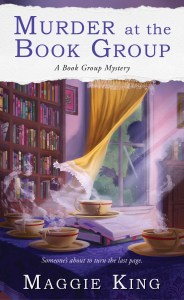
But it wasn’t until 1996 when I moved to Virginia and took a creative writing course at the University of Virginia that I started writing in earnest. I didn’t forget those nice women—or were they?—from the Santa Clarita book group. I gave them backstories and they became the story prototypes for Murder at the Book Group, my debut mystery featuring Hazel Rose.

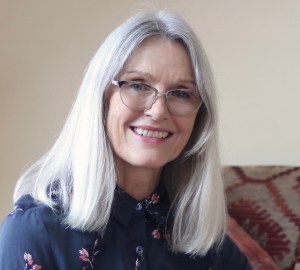
Two more mysteries in the Hazel Rose Book Group series followed, along with seven short stories. So far, all are set in Virginia.

Like many mystery writers, I have a strong need to see justice done and set the world right. Mysteries are the perfect vehicle for that. I serve conventional justice in my novels, but my short stories tend to be morally ambiguous, and the justice may be of the vigilante variety. I’m a law-abiding citizen, but sometimes I wonder if justice is better served outside the boundaries of the law. That’s why I write. It keeps me out of prison and my victim(s) safe. And I can create interesting characters I’d never want to know off the page.

It’s unlikely that I’ll ever solve a mystery—and I have no desire to—but my sleuths can do anything. Just like Nancy Drew.

When I’m not writing, I take courses (including writing) at Lifelong Learning, work out at the gym, walk, cook, indulge my overly indulged cats, and come up with ways to save money.

(Please share some of those ways to save money in the comments, Maggie!)

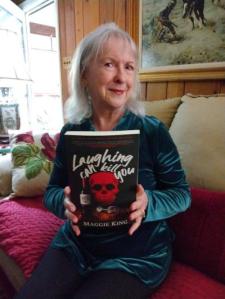
Photo: Maggie with Morris

See Maggie’s newest book, Laughing Can Kill You, at Bookshop.org

For this book as well as all her others, see her Amazon Author Page: https://www.amazon.com/Maggie-King/e/B00HR6MPOO

Thanks Maggie!  We can’t wait to read your first posting, February 15, 2023! Meanwhile, readers can check out Maggie’s BIO under the “ABOUT” button at the top of the page.

###

Welcome Cozy Mystery Writer Hannah Dennison from the UK!

 Today, we are introducing one of our two NEW members – Hannah Dennison. Several of us have known her for quite a while, so it’s a treat to have her join us.
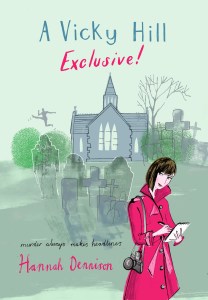
Welcome to The Writers in Residence, Hannah!

Q: We know you live on the other side of the world from most of us, so tell us just where DO you live now. What’s your house like?  And what’s the weather like there right now?

HANNAH: “I live in a tiny hamlet called East Leigh which is about three miles from the ancient market town of Totnes  I’ve included a link here in case anyone is interested. It’s such a beautiful part of the UK. I feel very fortunate and of course, I am close to my family here too. I live in a small barn conversion on what would have been a working farm fifty years ago. As I type this – the sun is shining and it’s cold. We’ve had torrential rain however and many of the fields are still water-logged which reminds me, my Wellies are leaking.”

Q: From your website/blog bio we learn you were born in a little village called Old Basing in Hampshire, England. Its claim to fame was the siege of Old Basing House during the “very bloody” English Civil War.

HANNAH: “Yes. as children, my sister and I used to play among the ruins and in the secret tunnels. I dreamed of musketeers and knights in shining armor and I’m quite sure it was there that I first discovered a passion for telling stories. My mother said I told fibs but I just liked to embellish my version of events because they seemed more interesting.”

Q: Ah, fibs and embellishments – the makings of a good fiction writing!  Okay, let’s get personal. What is your favorite chocolate! You do like chocolate, right?

HANNAH: “Not like, LOVE. Slabs of Bourneville and tubes of Smarties – those are my favorites.”

Q: What about coffee? Fave brew or style?

HANNAH: “I have a Keurig machine with k-cups. I’m a dark French Roast fan.”

Q: We know you have a daughter, is she a writer too?

HANNAH: “She’s not a writer but she’s got a very sharp eye and often proofs my newsletters. Sarah is a buyer for house and homeware and before Covid-19, traveled all over the world. I’m very proud of her.”

Q: Vizslas? What are these, and tell us about yours? Pets or Protection?

HANNAH: “Ah … the Hungarian Vizslas. Vizlsa, is the Hungarian word for ‘pointer.’ They make excellent alarm dogs but they are also very affectionate and are nicknamed “Velcro Dogs.” They must be touching you at all times which can often be a challenge when you want to take a shower.

Q: They are beautiful! Writers love to read, so who are your favorite fiction authors?

HANNAH: “So many! It depends on my mood. Barbara Pym, Agatha Christie (of course), Dodie Smith, Carolyn Hart, Jilly Cooper, Barbara Erskine, Jane Austen, the Brontës, Dennis Lehane, Frederick Forsythe, Ken Follett., Samantha Ford. You did ask.

Q: Yes, I did. Great choices! If you could travel to any place around the world right now, where would it be?

HANNAH: “Africa. 100%. In another lifetime I worked for Coca-Cola Africa on the company jet (I was a flight attendant). I traveled all over the continent. It was magical.”

Q: Do you still teach UCLA Workshops?  If someone wanted to attend or apply, what would they do?

HANNAH: “I do but I won’t be teaching until next Fall since I am feverishly writing the tenth Honeychurch book. Here is the link for the amazing workshops on offer. https://www.uclaextension.edu/writers-studio  I know I would never have been published had I not taken classes there myself.”

Q: Have you ever considered writing a book on ‘how to write a mystery’? I know many would love to buy it.

HANNAH: “Well … it’s funny you should say that because I have thought about it. I’ve also thought about creating online writing workshops too. I think it’s finding the mental space to do it – life seems to get in the way of all my best intentions!”

Q: Besides a mystery writer with three cozy series published, you’ve had a LOT of amazing jobs and interests.  Here are a few. WOW!

  1. A disastrous stint in the British Royal Navy
  2. Avid supporter of the Society for the Protection of Ancient Buildings
  3. Cub reporter at a local weekly newspaper
  4. Secretary to a Formula One World Champion
  5. A job with a French antique dealer
  6. Flight attendant for private jet charters where you met Steven Spielberg
  7. A job with various film studios, reading scripts
  8. A job with an advertising agency in Los Angeles 
  9. Teacher of a mystery-writing Workshop at the UCLA Extension Writer’s Program

HANNAH: “Well … I think I stumbled into each one with no clear plan in mind at the time. The Navy was so embarrassing. I desperately wanted to travel and back in those days, Wrens (as they were called) didn’t go to sea. If I’d stuck it out, I might have been an Admiral by now – ha ha. Looking back, it all SOUNDS exciting but I was always in a state of panic. I was/am a single mum and so much of it was trying to make ends meet and survive. Little did I know that all these experiences would serve me perfectly as a mystery writer (or fictional murderess!)”

 And serve you they did!  The VICKY HILL MYSTERIES (6 books) are where you started.

Q: What should we know about Vicky?

HANNAH: “I love Vicky Hill. Of course, she is based on my experiences as an obituary writer for the local paper. Just like Vicky I was desperate for a front-page scoop … ANYTHING other than covering funerals and weddings. I was able to live out that fantasy on the page. It was also fun to incorporate some of the crazy British customs and traditions. Snail racing? Who knew!”

Q: What “family secret” does she have?

HANNAH: “Vicky’s parents are on the run. Her father is a famous silver thief known as The Fog. I must point out that neither of my parents ever broke the law (at least, if they did, I never knew).”

I love this aspect about her story. They don’t appear in most of the series, but I recently read TRAPPED, the Christmas Novelette from 2021, and was excited to meet them again!

Q: Is Gipping-on-Plym a real village? And if not, how did you come up with that name?

HANNAH: “Ah … what’s in a name. I agonized over that for weeks. I found the River Plym and then googled quirky place names in England and hey presto! Gipping-on-Plym was born.

Q: Who are the protagonists in your ISLAND SISTERS MYSTERIES? (2 books)
HANNAH: “The sisters are both in their mid-to-late thirties. Evie Mead, an amateur photographer, has just been widowed so her sister Margot Chandler, races to be by her side. Margot is a Hollywood producer and at the beginning of the series, she lives in Los Angeles (I know, I know … sound familiar?) They are both starting new chapters in their lives. Starting over seems to be a theme in many of my books.

Q: How did you come to set the series on this little island?

HANNAH: ”My sister Lesley introduced me to her friend Gill Knight who had worked as the HR manager on a tiny island called Tresco in the Isles of Scilly, an archipelago twenty-eight miles off the southwest tip of the Cornish coast. Gill said that those who came to work on the island were either hiding or running away from something or someone. I couldn’t think of a better place to set a mystery!”

Q: Wow, he really handed you that a perfect plot point! Will there be a third in the series?

HANNAH: “I am hoping there will be. I can’t leave the sisters hanging … Watch this space, as they say.”

Q: The HONEYCHURCH HALL MYSTERIES (9 books). What inspired you to begin this series?

HANNAH: “My mother.  Basically, when my dad passed away, Mum impulsively (and secretly) bought the wing of a country house. She was 72 at the time and my sister and I were horrified! The expense! The practicality of it all – it was on three floors, the roof was leaking, it was miles from anywhere but she was happy. It was her dream house. I’ve also always been interested in old buildings so this gave me an opportunity to highlight the fading glory of grand old country houses and the struggles to keep them afloat.

Q: Who are the two protagonists?

HANNAH: “Kat Stanford is the daughter (not based on me I may add, but my very practical daughter), and Iris who is definitely based on my mother – although Mum doesn’t write bodice-ripper romance books. I have to thank Rhys Bowen for that suggestion and it’s one that’s worked really well. The series also explores the intricacies of mother-daughter relationships.

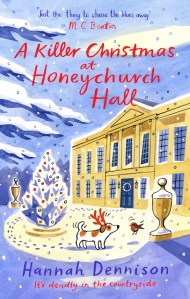
Q: Very cool! And finally, I hear there is a sweet white donkey named Hannah who has a cameo in your new Christmas book, A KILLER CHRISTMAS. Do you want to tell us how that came about?

HANNAH: “Oh dearest little Hannah the donkey. My best friend sponsored Hannah for my Christmas gift last year. I loved watching Hannah on the webcam – it was my daily reward after I’d done my wordcount. Poor Hannah died a few weeks ago – so sad. Her best friend Drizzle was bereft so of course I now have Drizzle. Here is the link to The Donkey Sanctuary if you feel the urge to take a peek.

#

Readers can purchase A KILLER CHRISTMAS AT HONEYCHURCH HALL as an e-book from Amazon right now.  Amazon Buy Link

Or they can order a PRINT copy from BLACKWELLS BOOKSTORE UK. Shipping is free. (I ordered a copy and it came within a week.)

#

Hannah, we feel so fortunate to have you as a part of The Writers In Residence.  And we will be waiting eagerly for your first post on January 18th, 2023.

Q: Do you have a closing thought for our readers?

HANNAH: “I know, without a shadow of a doubt, that if you say, “Yes” to whatever life has to offer, no matter how daunting, the most extraordinary things really can and do happen. After all, they happened to me.”

#

Readers: if you have anything else you are dying to ask Hannah, put it in the comments below. (If you don’t see “Reply” click once on the title, “Welcome Hannah Dennison” and it should come up.)

Reach Your Blog Readers – using Hashtags, Titles, & Images correctly!

A guest Post by Edie Melson

(Reprinted by permission – The Write Conversation, Monday, August 29, 2022.)

by Edie Melson @EdieMelson

A little teaching moment… 
 
With the chaos of social media, and the strict guidelines now in place with email, our digital connections have gotten more complicated. But one thing hasn’t change—the ability to be found through an organic search. 
 
This process begins when we know the basics of keywords and SEO. The post I wrote, How to Apply SEO to Your Blog – One Blogger’s Process, will help you get started.
 
Recently I’ve been working with several bloggers about ways to get more organic page views. Organic views happen when someone searches for a topic—either through a search in a search engine or by searching for a topical hashtag. Beyond keywords and SEO, titles and hashtags are critical to getting found. 
 
It may surprise you to learn that it is possible to be found. But as bloggers, we need to deliberately set ourselves us to be found in a topical search. So today we’re specifically looking at the use of hashtags when we share a post on social media, the titles we choose for posts, and the images we pair with them. 
 
Hashtags
There are two times when bloggers need to carefully choose hashtags for a post.
  1. When composing a click to tweet within the post.
  2. When sharing a social media update about a specific post.
Here are the things we need to remember when choosing hashtags.
  • Choose two. Occasionally it may make sense to use a third, and even more rarely use only one. But the majority of your updates (unless you’re on Instagram) should have two. 
  • Choose hashtags that are relevant and specific. I see more mistakes here than in any other use of hashtags. For example, if I was sharing a blog post about tips on how to deal writing rejection it might seem like a good thing to use rejection as a hashtag. The word rejection is not a good hashtag. The context of that hashtag is rejection—NOT writing rejection. It doesn’t help us get more views or likes because the people searching for rejection hashtags are primarily looking for relationship advice. Hashtags are a search tool and must stand alone in their context or they’re worthless.
  • If possible, hashtag words in the main message of the update. For example, if the word you want to hashtag is in the title, hashtag that instead of adding the word again unless it’s the first word. Avoid hashtagging the first word of a tweet.
Titles
Titles need to reflect the full topic of the post. This is not time to be clever or too generic. Here are three things to remember.
  • Your readers will evaluate your post’s content based on the title. When a title is misleading or even ambiguous, the reader can walk away feeling cheated.
  • The blog title must stand alone—with full context—when shared on social media. For example, if we go back to that imaginary post about how to deal with writing rejection. I’ve seen a lot of bloggers who would go with the title: Tips to Deal with Rejection. At first glance that seems like a pretty good title for someone who is reading a post on a writing site. But what about those doing a search in a search engine or reading the text in a social media update? For them it’s misleading and generic. A better title would be: Tips to Deal with Writing Rejection. What makes sense to a reader who has the full content of a blog is much different from what makes sense without visual clues and context.
  • The title should contain a phrase that someone would type into a search engine to find the content in your post. It’s not clever, but I can see many people typing How to deal with writing rejection, into a search engine. That’s the final piece of the puzzle and immediately moves your post up in a search engine search. 
Images
It may seem like images are less important when it comes to being found in an organic search, but when we know how to do certain things, an image can provide a huge boost in visibility. 
  • Images need to illustrate the main focus of the blog post. Let’s once again go back to the imaginary blog post, Tips to Deal with Writing Rejection. If we’re not careful about the image we choose, we can lead potential readers astray. For example, choosing the image below could send the wrong message if someone misses the word, writing, in the title. 
  • We all know that images aren’t searchable….Unless they are captioned….Unless the file name of the image contains a searchable keyword. Yep. By taking a few extra moments to compose a relevant caption and saving the image with a relevant file name instead of some generic title you can increase your organic search views. Let’s once again visit that imaginary blog post.
    • That image above has a file name that includes the word loneliness—this is what www.Pixabay.com lists as the title of this specific image. So this image is not only a poor choice, but with that file title it will reinforce the wrong type of results in an organic search. 
The bottom line is that the details matter. It’s important that we blog smart. By paying attention to the titles we choose, the hashtags we use, and the classification of images we can make a huge difference in the visibility of our posts. 
 
Now it’s your turn. What questions do you have about these details? Be sure to leave your thoughts in the comments section below. 
 
Don’t forget to join the conversation!
Blessings,
Edie
 
TWEETABLE


Edie Melson is a woman of faith with ink-stained fingers observing life through the lens of her camera. No matter whether she’s talking to writers, entrepreneurs, or readers, her first advice is always “Find your voice, live your story.” As an author, blogger, and speaker she’s encouraged and challenged audiences across the country and around the world. Her numerous books reflect her passion to help others develop the strength of their God-given gifts and apply them to their lives. Connect with her on her website, through FacebookTwitter, and Instagram.