
By Miko Johnston
It’s a valid question. Maybe a few of you can’t think of an idea, but I’m willing to bet that you’re in the minority. In most cases we have an overabundance of ideas and at least one work in progress, if not more. Why are we having so much trouble writing? In a word:
PROCRASTINATION
Okay, we can admit it. We do procrastinate. Why? There are many reasons why, and they’re tied to different types of procrastination.
A dear friend and fine writer often wore a sweatshirt that said, EASILY DISTRACTED BY BRIGHT SHINY OBJECTS. This describes procrastinators who get sidetracked by other projects. Often they take on more than they can handle, or they get diverted by the next big thing. The only cure is to acknowledge writing is important enough to do. Focus on what’s in front of you for a set amount of time and literally time yourself.
Do you suffer from perfectionism syndrome? If you have a deadline and still can’t make progress, this may be why. If we can’t get it right, we don’t want to commit to working on our projects. I have a suggestion: GET OVER IT. You can argue about whether there’s crying in baseball, but there is no perfection in writing. Commit to doing the best that you can, then review it and make it better.
Sometimes I open a work-in-progress document and stare at the last bit I wrote, wondering where to go next. Then I close it because I can’t think of anything. Does this happen to you?
Try creating a separate ‘work’ sheet, copy the last paragraphs you’ve written onto it and then…just write. Don’t concern yourself with anything other than getting words down on the page. This technique opens the door to creativity; once your mind is free to explore ideas without judgement, the ideas will flow. Write until you come to a natural concluding point, then read back what you’ve written. I guarantee that most times you’ll find something useful for some part of the story, and sometimes you’ll get what you need. If the block occurs at a point where the story is still open-ended, your ideas may give you some direction to move forward, or warn you, “don’t go there”. If you’re trying to connect your scene with an approaching plot point, try the bridge technique I explained in an earlier post .
Easier said than done, you say? True. But I’m guessing that none of you became writers because you expected to become rich, famous, younger and more beautiful. You did it because you had a passion to write, or a story to tell, or characters whom you’ve created who deserve to live. The world is not an easy place right now; has it ever been? We need your stories out there, whether to entertain or to educate, distract us from our problems or understand them better. Or all of the above. So please sit down, take out your computer, or notebook, or whatever you use to write, and WRITE!.
And why not begin by commenting on this post – do you procrastinate, and if so, how do you get past it?
###
Miko Johnston, a founding member of The Writers in Residence, is the author of the historical fiction saga A Petal In The Wind, as well as a contributor to anthologies, including LAst Exit to Murder. She has recently completed the fourth novel in her series. Miko lives in Whidbey Island in Washington (the big one) with her rocket scientist husband. Contact her at mikojohnstonauthor@gmail.com









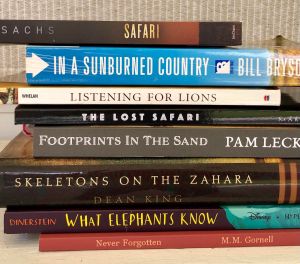
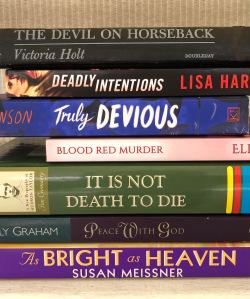
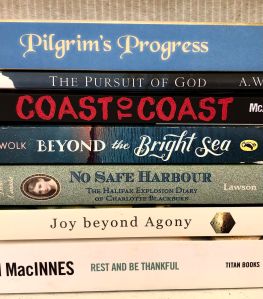


 After ordering restaurant take-out, my husband drove there to pick up dinner. It would take him almost an hour, leaving me time to explore a newly bloomed section of our garden, planted with rhododendrons. If you’re not familiar with the plant, they’re like azaleas on steroids, with flower clusters, some as big as your face, nestled against dark green leaves. Some grow as tall as trees; others have been pruned knee- or chest-high, their blossoms a riot of pinks, fuchsias, purples and reds.
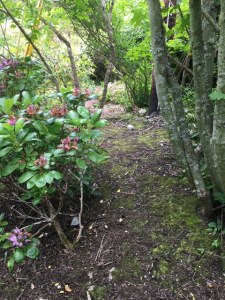 In the shelter of the garden, hidden beneath a canopy of lavender and laurel trees, I sauntered the path that wends through the rhododendrons. As I neared the end of the path, where it rejoins the lawn, I spotted something crescent-shaped sparkling on a branch. A closer look revealed a young bird, judging by its downy feathers of gray, which blended in with the bark. She (as I later discovered) had a curved beak, bright yellow, which stood out like a slice of sunlight in the darkness of the overgrowth.
 I so wanted to hear her sing, but she didn’t. Silently she sat there, occasionally darting her head, watching everything around her as I watched her, delighting in her curiosity, her seeming amazement with the world she’d recently entered. She hadn’t mastered flying yet. Her wings fluttered to help her balance on the branches as she hopped along, taking in the sights and sounds all around her. I’d been feeling blue awhile, in a rut. All that changed with my encounter with this fledgling. I found myself transfixed by her utter joy, and that joy flowed through me for the first time in months.



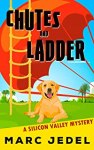
 Marc Jedel writes humorous murder mysteries. He credits his years of marketing leadership positions in Silicon Valley for honing his writing skills. While his high-tech marketing roles involved crafting plenty of fiction, these were just called emails, ads, and marketing collateral.


 Here’s a suggestion for wannabe authors. You’ve pondered that writing project for years; now you have time to get those ideas down on paper (or computer, or recording device). What would it take to turn that dream into a manuscript?
 I’ve opened membership to this site on a temporary basis. Here’s a place for you to learn about the author’s journey from “aspiring” to “avid.” Find out how to improve your writing, where to market your work, and ways to research trends in the industry. Get questions answered from an author who’s been there.
 I’m a semi-retired college English instructor and published author with a doctorate in English composition. I self-published the Self-publishing Guide in 1979 and went on to self-publish print versions of a mystery series and several non-fiction books. I’ve given workshops through libraries, bookstores, writers organizations, and continuing education departments and have written for writers’ newsletters, homeschooling blogs, inspirational magazines, and publications such as the Des Moines Register.
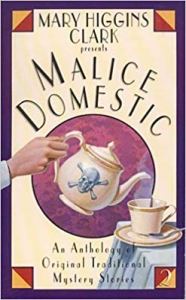 The event is the largest annual gathering in America for writers and fans of traditional mysteries in the genre of Agatha Christie, which places them in a genre called ‘cozy.” It appears that publishers here prefer authors to be strictly categorized into the type of book they write: romantic suspense, noir, thriller, psychological suspense, hard-boiled, legal thriller, historical, private investigator, cozy, police procedural, and sub-genres such as a sci-fi and the newest, cyber-crime mysteries.
 The second book in my series, “Digging Up the Dead: A Tosca Trevant Mystery” was published just in time for this premier annual event. My main character hails from Cornwall and comes to live in Newport Beach, like me, so the “Fish Out of Water” panel was perfect for us both. It was fun to explain to the audience that Tosca Trevant, a London gossip columnist (me too!) had rattled the royals by discovering yet another scandal at Buckingham Palace. This led her editor to re-assign her temporarily to America. Cussing mildly in the Cornish language, and coping with a culture that sees no need for a teashop on every corner, the meddlesome, outspoken and humorous Tosca turns amateur sleuth when she stumbles upon human remains in a neighbor’s garden, in the best Miss Marple tradition although Tosca is a younger version.
 She was instantly contradicted by a voice behind my chair shouting out, “Yes! You did know!” The voice was male and sounded exactly the way I had described his gravelly voice in a previous chapter. I swung around, dumbfounded. Of course, there was no one there and no one else was in the house. Some writers say their characters often take over their role in a book but this was different. Sam spoke a line of dialogue that added another dimension to the plot. It worked well, surprisingly, giving an extra twist to the story. I didn’t hear from him again nor from anyone else I created so I guess he and the others were satisfied with how the plot was progressing.

 The Writers in Residence
You must be logged in to post a comment.