
by Jill Amadio
Many of my writer friends are “gung-ho enthusiasts” of Artificial Intelligence, or AI. They run their projects through, often chapter by chapter, to test their writing skills.
When the results come through, there is great interest in what the non-human synthetic experts have to say. While AI is a huge help, I suppose, if we need to be assured that our style and other fundamentals of our writing are up to par, does AI also diminish our confidence in our creativity?
Why do we trust an automatic machine to judge our writing rather than a person with a brain, a soul, and emotions, muddled as they may be? Why do writers believe that feelings expressed by AI have more depth and provide more compelling characters than those from human intelligence?
Certainly, we often feel a need for support when we aren’t sure we are on the right path with our plots and settings, but research can frequently send us on fascinating journeys when we use that old-fashioned tool.
Then, too, a friend might shoot down our joy by criticizing work we’ve spent weeks creating, but at least we can open a debate with said friend to challenge their viewpoint.
I read online that writers should not wait until a first draft is completed before checking it through AI. One should pass our writing chapter by chapter or paragraph by paragraph if we want our books to sell well.
However, brainstorming with AI can be a revolving door if we rely solely on it to give us feedback with which we disagree. We already have Spell Check in our Word program, and there are also grammar sites if we are unsure. Yet, do we want that advice?
I recently edited a book for a client from Liverpool, U.K., who writes in the way he speaks, a style that is occasionally ungrammatical but beautifully reflects his upbringing in a poverty-stricken family. He writes honestly and in detail about his criminal activities before reforming and brings the reader into his world in a personal, delightfully unself-conscious and un-generated-by-AI manner. His style takes us into heartfelt statements about his culture, his bitterness growing up, and how he turned his life around.
His book doesn’t flow strategically or logically. Instead, it takes us on a journey most of us could not imagine but feel compelled to follow to its happy ending. Would AI have come up with anything as mind-blowing as this man’s true story? Granted, AI is consulted mostly for its judgment of our writing, even its relevance to a central theme, but it seems to create doubt rather than determination to follow our own path.
All of which leads to the question of who is actually writing AI’s advice and training AI, and who is instructing us with strategic decisions we are told to make. Perhaps the AI originators are best-selling authors. Maybe they are paid a royalty for each bit of AI advice activated.
I read that AI can be biased and can misrepresent your writing style. It can tell you to make changes with which you disagree, but you can’t help believing that AI knows best.
Seems to me that human creativity is one of the most perfect parts of our mind, albeit for good or evil, and that if AI flags it, then we follow patterns and look twice at what we are thinking.
It also appears that AI can figure out if you are falling into the trap of writing patterns that annoy readers or structures that don’t make sense. All of which leads us to wonder if we could be accused of plagiarism if two or three writers receive the same rewriting from AI. Maybe we need to become our own amateur detectives to discover such an activity, and instead of fact-checkers, we need to become text-checkers for artificial intelligence.
I admit that AI is an excellent tool for writers who dither and are unsure of their characters, plots, and settings. It is normal to want an outside opinion, but there can be a nagging worry that AI cannot truly understand where our plot is going, or how characters can change as we write. Taking the guesswork out of our plots, sub-pots, and themes can lose us readers for future books in our series, and perhaps even prompt an admission that we used AI as an assistant to write the book in a Disclaimer or Introduction.
In conclusion, I am honestly pleased that some of my writer friends enjoy a foray into AI. I just ask them to be transparent and honest about it.


 Whoever coined the phrase “making lemonade out of lemons” must have had an acerbic wit. As a champion receiver of citrus, I’ve always tried to look at each situation as a challenge instead of a mountain of acidity, despite the after-taste.
 My most recent pitcher of lemonade appeared last year, when I finished Book 2 of the
  I couldn’t afford to sit around waiting for my two year contract on “Indelible” Book 1 to expire before offering both books in the series to another publisher. Readers had been asking when Book 2 would be available. Since it had already taken me close to 3 years to get Book 2 out of the starting blocks (including the 9 months wasted over that abortive contract,) I decided there was only one way out of my dilemma, and that was to self-publish “Indelible” Book 2,
 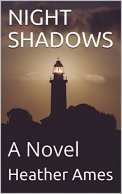 I just self-published a second book. This one is the stand-alone suspense,
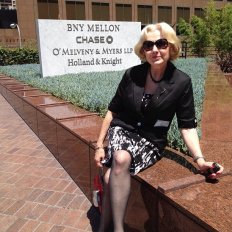
  Heather Ames knew she was a writer from the time she won first prize in a high school novel contest. An unconventional upbringing gave her opportunities to travel extensively, leading to nomadic ways and an insatiable desire to see the world. She has made her home in 5 countries and 7 states, learning a couple of languages along the way. She is currently pitching her tents in Portland, Oregon, and after a long career in healthcare, made her dream of writing full-time come true.




 If you ever come to my house you will see small notebooks all over the place that I can grab and jot down an idea if it drops out of the sky. And they do on occasion. My fellow author, Bonnie Schroeder, gave all us Writers-in-Residence ladies a notebook and pencil set for the shower that writes in the wet. What a concept. So I am covered wherever an idea strikes.
 Stories are everywhere. The writer just has to see the possibilities. But remember, as a writer, you control your world and you can twist the story into something unique if you try. Just try not to twist it into something that doesn’t make any sense. More and more TV shows are turning into pretzels that barely make sense. That’s why I read more books than watch television.
 Now how about the middle? There it sits. Is it a big, hulking middle that the reader has to push around the dance floor with no music or is it thin and bony with no rhythm at all? This middle section is where the reader learns all the little things that hold the story together. Some backstory and some character traits are sprinkled in along with the bulk of the plot. Whether it’s on the high-calorie side with lots of detail or maybe a diet plate with most of the fat is trimmed off, you have to make the middle tasty.
 Editing happens here. Add a little to enhance the story. Cut some off to make the pages turn faster toward the climax. Sweeten it with some good dialogue. Add some choice settings to give it flavor.










 The Writers in Residence
You must be logged in to post a comment.