Me? Write a Memoir? But…!

by Gail Kittleson

Decades ago, some friends invited us to go rafting on a local stream. I thought our son, three years old at the time, would be excited, but he said,

          “I’m scared of those rabbits, Mommy.”

          “Rabbits?”

          “Yeah. Evelyn said we’re going to come to some rabbits…”

Those rapids would’ve scared me, too, if I thought they might hop into our raft. After a bit of explanation about the mild rapids, our son loved rafting.

**

Misunderstandings often ground our fears, and this proves true with writing. Being afraid to express our anxieties in black and white originates in false assumptions:

  1. What we write may be used against us.
  2. There’s a ‘right’ way to write, and we haven’t learned how.
  3. Once we write something down, we’re bound to the perspective we embraced at the time.
  4. Once written, our words will be “golden,” and therefore, we can’t destroy them.

          First of all, what we write may be used against us. But this is no reason to forego all the benefits of the process. Writing in a safe place that no one ever sees has done wonders for many people experiencing trials.

The feeling that we have no control over who might see what we write can keep us bound by the tide of emotions swirling inside us. Launching out to safely journal our thoughts, tied irrevocably to those emotions, may seem beyond our power.

          In order to take this tentative step, we must unlearn the second misconception, that there’s a ‘right’ way to write. Nothing could be farther from the truth. No perfect method for expressing what we feel exists.

In fact, the ‘perfect way’ will be the way our words come out. Each person’s story contains unique content, since it comes from our one-of-a-kind inner being. Each of us perceives even the identical situation with variations.

A family outsider, my sister, or my brother will see what I remember differently than I do. But my first feeble step—even if that amounts to writing one short paragraph about what’s transpiring inside me—unleashes immense healing power.

          Now to the third misnomer: we are not bound by our viewpoint at any given time. A glance around us reveals that everything changes constantly. The only constant is change, as they say.

If I still looked at what I experienced fifteen years ago with the same eyes, I would be in big trouble. But the thing is, I would never have arrived at my present perspective if I hadn’t started writing down my thoughts and feelings.

          At the time, my journal pages seemed somehow sacred, and they were. But as the years have passed, I’ve grown, and at certain points, I let go of certain writings from the pasts. Burned them, because they no longer seemed ‘golden.’ Some of them, I kept and edited. And re-edited, and re-re-edited into a memoir. That’s not the route for everyone, but proved to be an important part of my journey.

The point is, your writings are your writings. You have the right to choose what to do with them, including chucking them down a sinkhole never to be seen again.

And the broader point is that in the darkness of an emotional avalanche, we cannot even know what we think. By allowing words to flow from us, we invite clarity, and through this process, discover truths we would never have imagined.

Words equal an enormous gift—penned quietly in secret places, they blossom like hidden desert plants that bloom in darkness, where no one observes. But their flowers bear perfume, attracting the necessary insects for pollination. It may be that we will rework and launch our writings into a published memoir, but either way, this practice can become a powerful experience.

“Today you are you, that is truer than true. There is no one alive who is youer than You.” 
Dr. Seuss


Gail Kittleson 2

When Gail’s not steeped in World War II historical research, writing, or editing, you’ll find her reading for fun, gardening, or enjoying her grandchildren in Northern Iowa. She delights in interacting with readers who fall in love with her characters.

Gail Kittleson taught college expository writing and ESL before writing women’s historical fiction. From northern Iowa, she facilitates writing workshops and women’s retreats, and enjoys the Arizona Ponderosa forest in winter.

catching up

Catching Up With Daylight; a Journey to Wholeness, is Gail’s own memoir. She and her husband began renovating an old house after he returned from a deployment in Iraq.  The book is “a gorgeous tapestry of non-fictional thoughts. This very gifted author knows how to weave her thoughts, memories, and the history of the old house she is refurbishing into a journey of emotional and spiritual wholeness.”


Women of the Heartland, Gail’s World War II series, highlights women of The Greatest Generation: In Times Like These, April 2016, With Each New Dawn, February, 2017 A True Purpose (Lighthouse Publishing of the Carolinas, and Word Crafts Press, December, 2017.)


  Cover_APuroseTrue    With Each New Dawn    In-times-like-these
Visit her at the following social media sites:

 ******
NOTE: This article was posted for Gail Kittleson by The Writers In Residence member, Jackie Houchin

Starting a New Series

by Elise M. Stone

When I was a little girl, I dreamed of being a writer. I put that dream on hold for decades while I got married, had a family, and built a career. It was one of the many things on my “someday” list. Then 9/11 happened, and I realized that “someday” might never happen. If I wanted to write a novel, I’d better get started.

I’ve written nine cozy mysteries in two different series over the past few years. Cozies generally have a romantic subplot, and mine are no different. While writing the last book, I realized I was enjoying writing the romance more than the mystery. What if my next book was a romance novel instead of a mystery? An intriguing question, which I decided to answer.

I began 2019 by starting on a sweet historical western romance series for a change of pace. This has been coming for a long time. Years, in fact, although I didn’t realize it myself at the time.

I have trouble sleeping. In the quiet, my brain is like a hamster on one of those spinning wheels. It thinks of all kinds of things it should not be worrying about at midnight. I have to distract it in order to fall asleep.

OTRW-TotTROne of the things that helps is listening to a podcast of Old Time Radio Westerns. Before most of the classic western series of the 1950s and 1960s were on television, they were on radio. I grew up with those TV series, so the stories, while different, are very familiar. Now I fall asleep to the Lone Ranger or Gunsmoke or the less-familiar Frontier Gentleman.

I’ve been absorbing these stories in my dreams for at least two years.

I find the time between the Civil War and the beginning of the twentieth century, when cowboys and outlaws and marshals were in their heyday, fascinating. The legends in themselves are romantic.

But I’d forgotten how hard it is to start a new series in a new genre. There are new characters in a new place in a new time.  The people are like cartoon outlines with indistinguishable features. They’re not even wearing any clothes. They’re white blobs like the Pillsbury Doughboy. This is quite a change from going back to my senior citizens in the fictional town of Rainbow Ranch, Arizona, characters I love who live in places I’ve visualized dozens of times.

Another stumbling block is the historical aspect of this series. I often find myself stopped with questions like when did the railroad arrive in Tucson? (1880, which means I can’t use it because my story takes place in 1872.) Or did Philadelphia have mass transit in 1872? (It did: a horse-drawn streetcar.) Or handling issues of diversity for today’s sensitive audience.

The biggest threat to the settling of southern Arizona was Apache raiders. The attitude of most back then was that the only way to solve the problem was to exterminate the Apache. This was the opinion of not only whites, but Mexicans and the Papago, an Indian tribe now known as the Tohono O’odham. In fact, these three groups banded together and massacred a group of over ninety Apaches, mostly women and children, in a peaceful settlement outside Camp Grant in 1871. But not all Apaches were peaceful, and they were a serious problem for the ranchers and miners and homesteaders in the late nineteenth century.

And then there’s the romance plot itself. I bought several books on how to write a romance novel because—ahem—I’d only read one or two of them prior to this year. Unlike cozy mysteries, where I’d read hundreds over the years before I tried to write one, I had no gut feel about how a romance needs to work. A lot of times, I feel like I’m stumbling in the dark.

I know, eventually, the whole story will start playing itself out in my head faster than I can type. I’m looking forward to that stage because that’s when the magic happens. In fact, it happened for a time his past week as I was writing a scene and the characters started interacting in a way I’d never thought they would. I love when that happens. So I’ll keep pushing forward, stumbles and all, because I’m addicted to that magic.

And I love a happily ever after.


Elise StoneBest Photo Reduced Size Lavender Background 2Brief Bio:

Elise M. Stone was born and raised in New York, went to college in Michigan, and lived in the Boston area for eight years. Ten years ago she moved to sunny Tucson, Arizona, where she doesn’t have to shovel snow. With a fondness for cowboys and westerns, Arizona is the perfect place for her to live.

Like the sleuth in her African Violet Club mysteries, she raises African violets, although not with as much success as Lilliana, who has been known to win the occasional prize ribbon. Elise likes a bit of romance with her mysteries. And mystery with her romance. Agatha and Spenser, her two cats, keep her company while she writes.

Elise StoneAVC Series Six Books
Elise M. Stone
***
Elise M. Stone’s article was posted by The Writers In Residence member Jackie Houchin.

Those OTHER Blogs on Writing

signHow many blogs besides this one do YOU read regularly (daily, weekly, monthly)?  Yes, you can confess. We don’t mind. Reading them will help you become a better writer.

Of course there are thousands to choose from. Just Google a topic and you’ll see. Bloggers will give you tips on everything, from where to get ideas to how to publish and market your final product, be it a book, short story, poem or article.

Some writer magazines and blogs publish lists of the Top 50 or 100 from the previous year.  Here’s a link to the Top 50 Blogs in 2018

I have THREE blogs that I read daily and usually take notes on. Okay, sometimes I only peruse them, if the topic is not relative to my needs right then.

  1. Mia Botha’s Writers Writehttps://writerswrite.co.za/

Every day, Mia posts links to articles on a wide variety of subjects. Each article will offer other links to follow on related subjects in an Alice In Wonderland type trail that is positively addicting! And time consuming.  Watch out!

Her daily Writing Prompts will tickle your imagination and sometimes get a story going.

There are usually cute (or smarmy) writing cartoons to make you chuckle.

Finally, there is a list of “famous” authors whose birthday is that day. Each gives his/her advice on some aspect of the writing life.

Writers Write also hosts the “12 Short Stories Writing Challenge” each year beginning in January.  Using a monthly prompt that they supply, you write, finish and polish a 1500 word (exactly) story to submit. You comment on 4 other stories and receive feedback on your own piece. One a month for 12 months. Whew!

Writers Write also offers a variety of online classes which you need to pay for.


  1. Edie Melson’s The Write Conversationhttp://thewriteconversation.blogspot.com/

Each day Edie, or one of 10 or so guest writers, presents short articles that inspire, encourage, inform, and teach you all facets of the art of writing and publishing. It is a Christian site, but usually only one in seven posts talks about the author’s beliefs in her writing process.

Here are some topics on recent posts: (You can click on these to go to the blog.)

YOU HAVE A GREAT SCENE, BUT WHAT TO DO WITH IT?

7 TIPS TO MAKE YOU A MORE OBSERVANT WRITER

WHEN AN AUTHOR SHOULD SEEK PERMISSION FOR QUOTES

QUOTATIONS—HOW WRITERS FIND THE ORIGINAL SOURCE

WRITING SO THEY CAN’T PUT IT DOWN

GET YOUR BLOG READY FOR 2019

Edie also uses a technique for readers to easily sharing her posts on Twitter. She types the title of the post or another phrase that describes the topic, and gives it a hyperlink. Readers can click on this and it takes them to their Twitter account. The title and ping-back to the blog posts are already there. They click on “Tweet” and voila’, they have effortless shared your message!

She calls them TWEETABLES.

I tried it in a blog post I wrote on The Writers In Residence about a year ago. It takes a little effort the first time you do it, but it’s a great tool!


  1. Tara Lazar’s Story Writing for Kids with January’s StoryStorm Challenge https://taralazar.com/storystorm/

What is StoryStorm? It’s an amazing, month-long, story idea brainstorming event. It’s designed for children’s books mostly, but can be useful for any genre. The weird and whimsical, and sometimes serious topics by a new author each day, are really wonderful!

The Challenge is to create 30 story ideas, one or more each day in 31 days. Maybe it will be a clever title idea, or a lovable character, or a skeleton of a plot. If you follow through, you’ll have a list of at least 30 new, fantastic ideas to flesh out at the beginning of February.

And…. if you read it each day and post a brief comment, you are eligible for a bunch of prizes and free services.

From the topic “Double Story Lines” …. I came up with “I know an old woman who lived in a shoe…store. She had so many shoes she couldn’t fit in any…more.

Enter Old Mother Hubbard who went to the display case to buy some soft slippers for her poor aching “dogs.” But she found nary a moccasin or “mule”.

Enter a Fairy God Mother who felt sorry for the old ladies and turned every shoe into a slipper.

Ms Hubbard bought all 365. The Old Woman sold her shoe store and moved to Tahiti, where NO ONE wears ANY kind of shoes at all!”

From the topic “Stop, Look, Listen” …. I came up with a tale of a musician who paid for an extra seat on an airplane to carry his very valuable and fragile guitar in its case.  But his seatmates complained – I can’t see over the top of it, it’s on my armrest, etc., and caused a near riot. Crew and pilot intervened so the plane could go up on schedule. Ends with the man strumming and all the cabin requesting songs and singing along.

StoryStorm is a really fun Challenge, one of many throughout the year on a colorful, kid-friendly, idea-stuffed blog.


And then there are blogs that are more like OUR blog – The Writers In Residence – where multiple member writers and the occasion guest, wax eloquent on some aspect of their writing life.

Here are a few examples, check them out:

Make Mine Mysteryhttp://makeminemystery.blogspot.com/  –  Mystery writing ladies.

Ladies of Mystery https://ladiesofmystery.com/  –  Mystery writing ladies.

Pens, Paws, and Claws http://penspawsandclaws.com/  – Animal loving ladies and gents writing about pets, mystery and other topics.

eat poto


I hope this post has whet your appetite for reading OTHER blogs besides ours.  If you already indulge in this “sweet” pastime, will you share some of your favorites with our readers?  Or… if you write one of your own, please share a link to it. Our readers might like to “read you” too!


PS: I’m adding a few “OTHER” blogs that I remembered after posting.

Creative Writing Nowhttps://www.creative-writing-now.com/  –  They offer Writing tips, Ideas, Courses (free and paid)

Penny Sansevieri’s  Author Marketing Expertshttps://www.amarketingexpert.com/book-promotion-blog/   –  Wonderful articles about promoting/marketing your book.  You can also sign up for a free weekly “5 Minute Book Marketing Tip” via email or more extensive and personal, direct coaching on selling your book (for a fee).

Poetry for Prose: Make Your Fiction Come Alive with Music

 by Maggie King

Looking to take your fiction to a higher level? Add a little poetry to your prose and bring music to your sentences and scenes.

This YearI’ve been intrigued with this idea since I read Walter Mosley’s This Year You Write Your Novel. Yes, that Walter Mosley, creator of the bestselling historical crime series featuring Easy Rawlins. Mr. Mosley considers poetry the basis of all writing and suggests that reading, writing, and studying poetry gives fiction writers a deeper appreciation of the nuances of language.

He has taken several poetry workshops and, although he says he has failed to turn out “even a passable poem,” he’s confident that what he learned from the workshops has benefited his fiction. 

Here’s an excerpt from This Year You Write Your Novel:

Of all writing, the discipline in poetry is the most demanding. You have to learn to distill what you mean into the most economic and at the same time the most elegant and accurate language. In poetry you have to see language as both music and content. A poet must be the master of simile, metaphor, and form, and of the precise use of vernacular and grammar, implication and innuendo. The poet has to be able to create symbols that are muted and yet undeniable. The poet, above all other writers, must know how to edit out the extraneous, received, repetitious, and misleading.

Take Walter Mosley’s advice and sign up for a poetry workshop. You may not become a poet, but you’ll gain an appreciation of language that will make your fiction come alive. If you can’t find a workshop in your community, check online sources.

Who knows … you may become a regular at poetry slams.

Words and Music

In lieu of a poetry workshop—or in addition to one—enhance your fiction with a few tips from the poets:

  • Think in terms of music. When you read your work aloud, does it please the ear? Does the rhythm of your words, phrases, sentences, and paragraphs vary?
  • Add words into phrases, delete others, create different words. Try different ways of expressing the same idea.
  • Shorten or lengthen sentences by using words with fewer, or more, syllables.
  • Use beautiful words like mellifluous or enchanted to add music to your writing. Less appealing words like disgust and harangue and the like can evoke a different response.
  • Use the poet’s tricks of alliteration.
  • Play with punctuation to liven up the musicality of your sentences. Take out commas and periods. Combine three or four sentences into one.
  • Metaphors make implied comparisons, and poets use these comparisons to evoke complex images and emotions for readers. “America is a melting pot” is one simple example of a metaphor.

Don’t wimp out

Avoid weak, wimpy verbs. Follow the “show, don’t tell” rule with action verbs that create images and stir emotions.

An example: an unhappy student with a failing grade visits her professor’s office. Show that she’s unhappy. Have her crying, pleading, screaming, kicking the door, throwing books across the room.

Eliminate or minimize to be in its various forms. Change “He’s in love with her” to “He loves her.”

To be verbs aren’t the only weak ones. Strengthen “Larry went to Florida” with “Larry traveled to Florida.”

As for your characters …

Reveal characters by how they speak: smooth words with soft sounds vs. harsh words with harsh sounds.

Try changing the name of a character or place; does it change the mood and tone of a scene? A name can affect how a reader responds to a character.

Further reveal characters by showing their honesty (or lack of). Richmond poet/novelist Vernon Wildy, Jr: “I’ve always felt that poetry was a place where I could not lie. I believe fiction holds that same weight. Characters have to be honest with themselves and how they are feeling. Readers are smart and they can tell if a character is being disingenuous. Also, it messes up the arc of the story if the characters are not being real with themselves and the others around them in the story.”

I agree with Mr. Wildy. However, consider your genre: duplicitous characters have their place, especially in crime fiction. It’s all about the writer’s intention and the character’s motivation.

A Few Caveats

By all means, flourish your writing with poetic touches. But keep the touches light, especially if you write genre fiction. Readers of literary fiction and, of course, poetry, will appreciate pretty, nuanced writing. Crime fiction enthusiasts, on the other hand, want to know who killed Ramon’s odious boss and don’t want to plow through endless metaphors and other style choices.

In a popular thriller that I recently read, the author went way overboard with beautiful poetic styling, constantly taking me out of the story. At several points I wanted to hurl the book across the room. Don’t irritate your readers!

Back to Walter Mosely (who does strike the right balance of the poetic in his crime novels)

If the fiction writer demands half of what the poet asks of herself, then that writer will render an exquisitely written novel.

Now, let’s make music together!

Thank you for letting me visit one of my favorite blogs. Happy Holidays to all!

*****

Maggie King Author Photo 72 (1)Maggie King is the author of the Hazel Rose Book Group mysteries, including Murder at the Book Group and Murder at the Moonshine Inn. She has contributed stories to the Virginia is for Mysteries anthologies and the 50 Shades of Cabernet anthology.

Maggie is a member of Sisters in Crime, James River Writers, and the American Association of University Women.  These days she lives in Richmond, Virginia with her husband, Glen, and cats, Morris and Olive. She enjoys reading, walking, movies, traveling, theatre, and museums.

Website: http://www.maggieking.com

Facebook: https://www.facebook.com/MaggieKingAuthor

Twitter: https://twitter.com/MaggieKingAuthr

Instagram: https://www.instagram.com/authormaggieking

Amazon author page: http://amzn.to/2Bj4uIL

***

Optional links:

Walter Mosely: http://www.waltermosley.com

Vernon Wildy, Jr.: https://vernonwildyjr.com

Poetry workshops

Key “online poetry workshops” in a search engine or visit the following sites:

Gotham Writers: https://www.writingclasses.com/classes/description/poetry-writing

Lighthouse Poetry Workshop (online) https://www.lighthousewriters.org/workshop/8-week-online-poetry-workshop

Poets&Writers: Writers Conferences, Colonies, and Workshops http://www.pw.org/content/writers_conferences_colonies_and_workshops?cmnt_all=1

For further reading

Norton Anthology of Poetry 6th Edition

This Year You Write Your Novel by Walter Mosley

***


This page was posted for Guest Blogger, Maggie King, by The Writers In Residence member, Jackie Houchin.

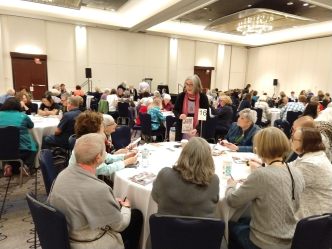
A Christmas Cozy Review

by Jackie Houchin

Here’s a new cozy mystery, just in time for Christmas. Have you ever been to a “Santa’s Village” complete with a Misses and Mister Claus?  T. C. Wescott’s new book takes you there and makes you want to stay for the festivities, food and fun.

Slay Bells 7

“Slay Bells is a cozy mystery that is indeed “cozy.” Imagine the aromas of cinnamon cookies, tarts, cakes and puddings baking, fireplaces glowing, villagers bundled in furs and mukluks, while powdery snow gently covers the famous hamlet.

Imagine mistletoe (a curious part of the mystery) and holly,  twinkling lanterns (a beautiful ancient tradition there) and carols at the annual Christmas Festival.  This is the setting for T.C. Wescott’s first Christmas Village mystery.

Two ladies feature in this tale. Super sleuth and much beloved is Maribel Claus, wife of the famous mister Claus who is conspicuous by his absence, being busy with his shop workers preparing for the “big night.” Meanwhile Maribel aids the fumbling Sheriff Fell in solving crimes in Christmas Village.

Rose Willoughby is her elderly friend, fellow goody-baker, and sometimes assistant in crime solving (when she can be trusted to keep secrets.)  Rose owns Plum Cottage, a quaint Bed & Breakfast where at present; a traveling troupe of circus performers – magician, juggler, acrobat, fortuneteller, strong man, grumpy manager and assistant – is lodging.

When one of them is murdered in a most peculiar way – with a small silver bell left on his chest – the list of capable suspects is long. Each performer has a special ability that could almost have accomplished the “impossible” act.  But which one? And mostly, how?

Wescott keeps the reader in suspense as first one then another is considered by Maribel and Sheriff Fell. When a second more curious murder occurs (again a bell is left on the body), there are even rumors of a legendary flying monster doing the killing.

While the village struggles to carry on with the festivities, and the performers huddle in fear wondering who will be the next to die, Maribel works to pry out and then trap the killer.

Slay Bells is a delightfully perplexing mystery. It will take a most astute armchair detective to discover HOW the murders are done before the author reveals the very believable solution!

Readers will love the atmosphere and the characters Wescott has created. The humorous superstitions, lovely holiday traditions, and the vague allusions to the famous mister all add to the fun of the story. And so is trying to beat Maribel in finding the “who” and “how.”  Betcha you can’t!

Full Disclosure – I received a digital ARC of this book from the publisher for review


Kitchen Art and Edible Legacies

by Jackie Houchin

I’m so thankful that both my mom and my dad put pen to paper while they were alive to draw and write out lasting legacies for me to cherish now that they are gone.

Our Thanksgiving Dinner

Mom cooked the whole feast, all the fixings and desserts, until way after she had great-grandchildren. When she was no longer able, I took over the task for a few years before handing it down to my daughter-in law who excels in the kitchen.

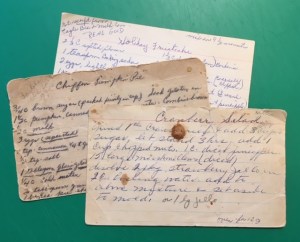
IMG_4917Now, the week before Thanksgiving I thumb through the 3×5 cards in Mom’s old plastic recipe box, looking for the Cranberry Salad, the Holiday Mincemeat Cake, and the Chiffon Pumpkin Pie recipes. The writing is faint and blurred; the cards are stained. And my heart gives a twist as I picture Mom taking each one out and assembling the ingredients on the counter.  (This “treasured” box came to me 20 months ago when, at 94, she died.)

Six weeks ago my Dad joined her in Heaven. Now they are giving thanks to God continually, not just on our annual holiday.

In cleaning out my dad’s file drawers I found a stack of napkins about five inches high. I thought they were dust cloths for his crafting projects, until I took them out of the plastic bag. Instead of throwaways, I found ‘priceless’ pieces of art that I will treasure alongside my mom’s recipe box.

IMG_4915Daily for a year or so in 1999, Dad sat at their kitchen table and drew stick figure sketches of Mom in various situations, from housecleaning and cooking, to relaxing with a morning coffee on the patio, working a jigsaw puzzle, gardening,  and packing/traveling to Solvang on their anniversary.  Each filmy paper illustration has her comment in a balloon above her head. I can hear her saying them all! I admit, I cried as I looked at each one in the stack.

I’ll share a few of his sketches here, along with two of her “famous” Thanksgiving recipes.

Mom, baking her Chiffon Pumpkin Pies (Thin crusts; never soggy!)

IMG_4898 (Edited)    IMG_4900 (Edited)

Mom’s pie recipe:

  • 3/4 cup brown sugar
  • 1 1/2 cup canned pumpkin (not pie mix)
  • 1/2 cup milk
  • 3 eggs (separated)
  • 1 tsp. cinnamon
  • 1/4 tsp. ginger
  • 1/4 tsp. allspice
  • 1/2 tsp. salt
  • 1 TBS. plain gelatin
  • 1/4 cup cold water
  • 2 TBS. granulated sugar
  • 1 baked pie shell

Soak Gelatin in water. Combine brown sugar, pumpkin, milk, egg yolks (lightly beaten), spices and salt.  Cook in top of double boiler until mixture begins to thicken (about 5 minutes)  Add gelatin to hot mixture. Chill until partially congealed. Beat egg whites stiff, but not dry. Beat granulated sugar into egg  whites. Fold into pumpkin mixture.  Pour into baked pie shell. Chill for 1-2 hours or until stiff enough to cut and hold its shape.  Garnish with whipped cream if desired.

Mom’s Cranberry Salad recipe:

  • 1 pound fresh or frozen whole cranberries
  • 2 1/2 cups sugar
  • 1 cup chopped pecans
  • 1 cup drained crushed pineapple
  • 1 cup mini marshmallows
  • 1 large package of strawberry Jell-O
  • 1 cup boiling water

Grind (or process) the cranberries roughly. Add sugar. Let set 3 hours.  Add pecans,  pineapple, and marshmallows.  Dissolve Jell-O thoroughly in boiling water. Add to the above mixture and set aside to mold. (When slightly thickened, stir down the marshmallows.)

Gratitude

How glad I am that my parents took time to write out and draw “every day” things.  They may never be published (other than on this blog), but they are as enduring and endearing to me as any literary classic or masterpiece painting.  They are the hearts of my Mom and Dad.

Creativity in any form is a gift from God and destined to bless (or change) someone.  Keep on creating from your heart. You’ll never know who will pick up a piece of “you” and smile (or cry).

Happy Thanksgiving!

Thanksgiving snoopy

“Oh, give thanks unto the Lord, for He is good.” Psalm 136.1

#WriteMotivation    !    #Creativity

The Importance of Setting

Guest Post by Patricia Smiley*

michael-discenza-331452-unsplashYears ago I bought a novel written by a well-known author because it took place in Seattle, a city where I’d lived, went to school, and worked for many years. A few chapters in, I was dismayed that the descriptions of setting were so generic that the story could have taken place anywhere. It was almost as if that the author had never set foot in the city.

Setting matters. The place of your novel includes the broader vistas into which you set the story, such as the culture and customs of the people who live there, history, land, floral and fauna, and even the shape of the clouds. It’s also where each scene takes place, be it the backseat of a Mini Cooper, an English garden, a Federal prison cell, or a home kitchen.

We were given five senses for a reason. Detail specificity enriches your writing. Don’t just say the kitchen was messy; describe the smell of spaghetti sauce oozing down the wall, the feel of that sticky green substance puddled on the floor next to the baby highchair, and the tick tock of the antique grandfather clock in an otherwise silent room. Descriptions should not just be an inventory of the space. Each one must illuminate an element of plot, theme, or character and, in the case of this kitchen, raise a myriad of dramatic questions about what happened there and to whom.

Description as fine sauce. Descriptions need not be long and rambling, but a writer must persuade the reader that the story is real. Even people who’ve never been to a location should feel as though they’re experiencing it firsthand. This also applies to imaginary settings. To prevent long passages of boring prose, take Elmore Leonard’s advice, ”Don’t write the parts people skip.” Instead, distill the essence of a place into a fine sauce. Below is an example of reporter Jeffrey Fleishman’s brilliant and evocative description of Port Said, Egypt, from the Los Angeles Times:

“This shipping city of factory men, with its whispers of colonial-era architecture, was once a crossroads for intellectuals, spies and wanderers who conspired in cafes while the Suez Canal was dug and Egypt’s storied cotton was exported around the globe. Rising on a slender cusp in the Mediterranean Sea, the town exuded cosmopolitan allure amid the slap of fishing nets and the creak of trawlers.”

Don’t trust your memory—verify. Get the specifics right. Nothing takes a reader out of the story faster than getting hung up on inaccurate details. If you can’t visit the location, read travel blogs, talk to friends with knowledge of the area, consult Google Maps, online photos, and YouTube videos.

People like to “travel” when they read. Effective use of description creates atmosphere and mood, and stimulates emotions. Anyone who is familiar with the cold, bleak settings in Scandinavian crime novels or films knows how integral “place” is to every part of those stories. So, give your readers a compelling setting and then wish them a bon voyage.

_______________

patty-smiley-250-shadow

Patricia Smiley is the author of four novels featuring amateur sleuth Tucker Sinclair. Her new Pacific Homicide series profiles LAPD homicide detective Davie Richards and is based on her fifteen years as a volunteer and a Specialist Reserve Officer for the Los Angeles Police Department.

The third in that series, The Second Goodbye, is set for release on December 8, 2018.

Patty’s short fiction has appeared in Ellery Queen Mystery Magazine and Two of the Deadliest, an anthology edited by Elizabeth George. She has taught writing at various conferences in the U.S. and Canada and also served as vice president for the Southern California chapter of Mystery Writers of America and as president of Sisters in Crime/Los Angeles.

PatriciaSmiley.com

3books
______________
Photo by Michael Discenza on Unsplash
*This blog article is posted for Patricia Smiley by The Writers In Residence member, Jackie Houchin


Writing a Murder

by Jackie Houchin


I began feeding the crows one morning when my Hubby told me that his Cheerios were too stale to eat. I carried the box outside and dumped about a half cup of the O’s in the middle of the street. A friend occasionally throws out stale crackers for birds, so perhaps a few would show up for the cereal.

Halfway to my front door, I turned to look.  A half dozen jet black birds were enjoying breakfast, compliments of moi. I smiled, pleased

IMG_4568A few days later I threw out some stale bread crusts that I’d cut into tiny squares. (I’d hesitated only briefly as the thought of making croutons crossed my mind.) Too much trouble, and besides, maybe my new feathered friends would come again.
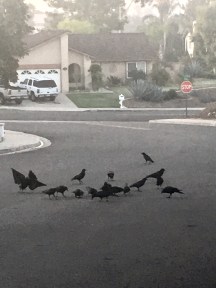
They did. Plus a few more.

I bought a cheap 3# bag of kitty kibble and began casting a handful or two out in the street each day. Soon I had eight or nine pecking away. Thinking they needed a bit of protein, I added a bag of raw, unsalted, shelled sunflower seeds to the next kibble bag.  After a month there was a growing murder* of crows waiting patiently for my handout each morning between 6:30 and 7:00.

It was fun.

My actions were not altogether altruistic, however. I’m not a bird lover.  I’d read in several articles that crows often show their gratitude by bringing small gifts for “their” humans. See what a young girl received from “her” crows here. They can also recognize faces (friendly or not) and react to them. For six scary things these cunning creatures can do, click here.

I had visions of coins, golden rings or pins, and yes, even a diamond tennis bracelet.  HA!  Okay, I did get a few Macadamia Nut shells, a small piece of ½ -inch plastic pipe, and – now this is pretty cool – a rose made out of a red pipe cleaner! But no gold and no diamonds.

Once, out of nowhere a flock of seagulls arrived and started eating, pushing the crows to the perimeter.  (Seagulls  are TWICE the size of crows! Seriously!)  I marched out to my driveway and raised my hands to shoo them away.  The sea birds flew off while the crows stayed, unafraid. Casually they walked back to eat what was left. Two came to within three feet of me and cocked their heads this way and that before going back to eat. A thank you?  A closer look at a “friendly” face?

When OSH went out of business I picked up a 5# bag of wild bird seed at a good price and added that to the next two kibble bags.  They really loved that… and told their friends.

IMG_4571 (Edited)Now I have twenty-four black birds each morning. And they are beginning to make a lot of noise if I’m late.  A man down the street came out with hands on hips and frowned at me. Dog walkers give my house that “look” as their dogs pull on their leashes towards the kibble mix.

This has got to stop, I thought one morning.  I will not feed them today. Maybe if  I skip a few days, then a week they’ll stop coming.

The first day they were cool with that. Occasionally I do have to go away early before I can feed them. But the next day, they were pretty loud.  They sit in my Magnolia tree, on the street lamp, and the rooftops of  my and my neighbors’ houses. Some boldly strut on my lawn, close to the porch. When I walk into the street with the kibble others come cruising out of nowhere.

It’s beginning to feel a little creepy.  I worry about stopping the food altogether. So far none have been aggressive, just noisy, but I’ve heard they can swoop and peck. Have a created a monster? Will I experience another kind of murder?

Oh dear! Excuse me, I have to go feed the crows now. I can count well over thirty of them through my window, all eyeing me as I look at them.

Yikes, the bag is getting nearly empty. I must go shopping today!  What would happen if I ran out of kibble!!


Writer thinking

Where do writers get their ideas? 

From lots of places, including researching curious facts and from their own experiences. All it takes is a touch of imagination.

To read the “murder” mystery I wrote from my research and experience with these inky birds (and my own imagination), follow this link to my personal blog and the story titled, THE CROW:   https://jackiehouchin2.wordpress.com/2018/09/25/the-crow/


*a flock of crows is called a “murder.”

Never a “Sense”less Moment – Writing the Big FIVE.

What is your favorite sense to write with?  Use the senses God gave you to SHOW your readers how you feel.  They’ll love you for it.

Jackie Houchin

I just returned home from a two-week trip to Torino (Turin) Italy.  If you want to experience your five senses with GUSTO, this is one of the countries you should visit.

IMG_3496 (Edited)I TASTED the cool creamy sweetness of real Italian Gelato, bit into crusty (salt-free) Tuscan bread piled high with fresh-made tomato Bruschetta and drizzled with first-press virgin olive oil from an orchard that covered the nearby rolling hills.  I sipped a frosty pale green menta (mint) icy that tingled my taste buds and sent shivers of coolness through my mouth and throat…on a baking-hot humid day.

IMG_1367I sampled a vast array of Italian cheeses (said to outshine France’s), from wedges of soft, creamy whites, protected by powdery rinds, to the mellow, medium-soft, large-holed varieties (not Swiss), that were delicious in a salty-sweet way with a dollop of apricot jam on top, to the hard, net-wrapped aged cheeses that take a good strong knife to slice, and a hunk of soft Italian bread to eat it with to even out the sharpness.

An expensive treat reserved for special occasions are the tiny balls of fresh Mozzarella floating in whey and filled with rich sweet cream that oozes into your mouth when you eat them. Magnifico!

What of the pastas (hardly ever spaghetti) in rich tomato sauces with melted cheese (and occasionally chopped hard boiled eggs), or made with basil-green home-made pesto?

Italy18 Hot Choc. Fresh whip cream What about a decadent hot chocolate so thick and rich that it looks like Hershey’s Chocolate Topping, but more delicious, served with a scoop of freshly whipped cream so thick you could eat it with a fork.Italy18 Hot Choc.

Aromas tease your nose when you walk past pizzerias or pastry shops. Sweets and Savories. Or sniff the meaty goodness of rows of whole chickens roasting on a rotisserie, dripping their goodness onto large chunks of peeled potatoes below.

Old Roman style streets of small cobblestones or large rectangle blocks make for uneven walking and leg strain…but offer a “rubbery warbling” from the tires of cars passing by…if you listen.  Horns honk continuously as Italian drivers in tiny cars dart in front of you, whiz by you, or fume impatiently behind you. “Romantic” Italian is spoken everywhere, quickly, rolling from the tongue with unfamiliar consonant and vowel endings, sometimes staccato, sometimes lyrical.

Italy18 Torino fountainMove through wet heat that causes limp hair, sticky skin, and clothes that cling. And then come upon an arched metal fountain in a park or piazza in the shape of a bull’s head (honoring “Torino”) that flows with cool sweet entirely drinkable water from its mouth. Hold out an empty water bottle, or cup your hands to catch the coolness, or even bend your head and drink freely.

Italian greetings surprise you, not with impersonal nods or stodgy handshakes, but with full frontal hugs, kissing (or air-kissing) on each side of the cheeks (always beginning on the right side!), a hearty pat or two on the back and a warm smile and verbal “Ciao.”

Italy18 Sibling hugsKids walk down the streets holding hands and they hug their siblings freely, unembarrassed.

You will see women (entirely “straight”) strolling arm in arm or hand in hand.

Sometimes men too. (Seriously!)

Ah, Italy.


Vibrant with the five senses!

What about your writing? Are you taking advantage of the “Big Five?”

SMELL

Exercise: Smell is the only sense that has a direct pathway to the memory center of your brain. What smells brings up unexpected memories for you? (Grandma’s house, your husband’s pajamas, Plumaria flowers, frying bacon, a certain spiced tea, wood polish, month-old laundry, cinnamon rolls warm out of the oven….a dead rat?  Describe a few of these using your sense of smell.

Hint: Read wine or perfume sites to build your smell vocabulary.

SOUND

Exercise: How would you describe the sounds around you right now? Pause and listen! Describe how fire sounds in a fireplace… in a forest fire. What’s the sound of water in a pool, a creek, an ocean? Make up a few new onomatopoeia sounds.

TOUCH

Exercise: Describe something fluffy, icy, pliable, jagged, papery, leathery, or slick. What do things vibrating or painful feel like?

TASTE

Exercise: Describe what something tastes like using a metaphor. (Comedian, Tim Hawkins, compares the taste and texture of a Krispy Kreme donut to “eating a baby angel.”  Think about that!)  What makes your mouth “water?” What makes you gag?  What does blood taste like when you bite the inside of your cheek? Have you tasted tears? Mother’s milk? Can you describe them?

Extra Credit Exercise. Buy a Bean Boozled Spinner Game and play several rounds with a friend. Describe the tastes of the Jelly Belly beans your pointer chooses for you. Flavors include Buttered Popcorn, Peach, Carmel Corn, Chocolate Fudge, and Rotten Egg, Dead Fish, Lawn Clippings and Barf.  I DARE YOU!!  Find a game here: https://amzn.to/2v4snUc

SIGHT

Exercise: Describe places you love. Describes different kinds of light, different shapes, perspective, illusion. Truly see a person passing by and tell what each aspect of his clothing, skin hue, walk, manner, and speed could mean. Use metaphors to describe a few of your favorite colors.

Italy18 checkered hall  Italy18 Castle shapes

Italy18 Lucky clover  IMG_3828 (Edited)

Close your eyes. Imagine one of your favorite places: a local coffee shop, the beach, a small bakery in Paris… anywhere. Take a few minutes to describe this place.

What is your favorite sense to write with?  Use the senses God gave you to SHOW your readers how you feel.  They’ll love you for it.

The Fun of Writing “Retro-Cozies”

Guest Post by Sally Carpenter*

An interviewer once referred to my stories as “retro-cozies.” I liked the term and use it to describe my work.

A retro-cozy is an amateur sleuth mystery with no graphic gore, violence, sex, or language, and occurs in the past. What defines “the past” is up for grabs—I’d say any time before the 21st century.  My Sandy Fairfax series is set in 1993. The protagonist, a former teen idol, often refers to his TV show, which was filmed in the 1970s.  My newer series, the Psychedelic Spy, takes place in 1967.

Beatlemaniac_final_ large_2500Why do I use a time machine when I write? For Sandy Fairfax, I had no choice. I wanted to write about a ‘70s teen idol because of the culture of that time when teen idols were promoted through TV shows. I like the melodic songs from the era, the cheesy clothes, and the drama that often took place behind the idols’ innocent façades.  \

Sandy was 18 when his TV show started, so if I set the books in today’s world, he would have aged up to 61 or so. But I wanted to write about a younger man who could still do his own stunts and would be making a comeback, not plans for retirement. The year 1993 places Sandy at age 38, still agile but facing a midlife crises.

For the second series, the ‘60s is a ripe era for storytelling: war protests, civil rights and women’s movements, the generation gap, influence of Eastern religions, and the Cold War.  I love the culture of the age, the bright colors, pop art, rock music, movies, mod clothes and hairstyles. Let’s face it, women’s clothing styles in 2018 are—dare I say it—drab and ugly.

I like the simplicity of past times. I use a computer, but I’m out of touch with today’s technology. I don’t even own a cell phone (gasp!). I gave up trying to figure out streaming services, podcasts, YouTube videos, Twitter, social media and whatnot.

If a contemporary protagonist gets in trouble, all she has to do is whip out her cell phone and call for help. Ho hum. But my protags have to think and fight their way out of their predicaments. If my protags need information, they can’t Google or ask Alexis; they have to put in the legwork. They need hard evidence, not just a DNA sample. With fewer crime fighting tools at their disposal, my heroes work harder.

People who stare at their phones or computers all day bore me. Characters who talk face-to-face are more interesting than those who send texts. Modern technology is helpful in real life, but it’s a story killer.  When I read for pleasure, I want to escape into another world, away from the commotion of modern times. Writing a retro-cozy lets me, at least in my mind, take a break from today.

Flower_Power_Fatality_jpg (1)In “Flower Power Fatality,” Noelle McNabb is an actress at a Christmas-theme park in Yuletide, Indiana. Her drab routine is interrupted when a stranger shows up on her porch with a bullet in his chest. Then, a super-secret spy agency recruits Noelle to find missing microdots along with veteran agent Destiny King. As Noelle goes undercover, she finds herself dancing in sleazy nightclubs and chasing bad guys at night while wondering who is going to feed her pet cat.

My next project is putting my first book, “The Baffled Beatlemaniac Caper,” back in print. Washed-up pop star Sandy Fairfax, in a desperate move to get his career back on track, takes his only job offer—a guest appearance at a disorganized Beatles fan convention in Evansville, Indiana. What look like an easy gig turns deadly when a member of the tribute band is killed and the police finger Sandy as the prime suspect.

“Beatlemaniac” will include a new cover art, new forward, updated author’s bio, re-edited text and a bonus short story, a brand new Sandy Fairfax adventure, “The Deadly Disco Caper,” in which the 1970s get skewered. Yowzah, yowzah, yowzah!


306141_347563052028408_642323995_n(2)Sally Carpenter was born and raised in southwest Indiana but now lives in Moorpark California, leaving the land of rain and snow for wildfires and earthquakes.  She has a master’s degree in theater from Indian State University. She also has a master’s degree in theology and a black belt in tae kwon do. She’s also “mom” to two black cats.

Her first book, “The Baffled Beatlemaniac Caper,” was named by Left Coast Crime as a 2012 Eureka! Award finalist for best first mystery novel.  She penned chapter three of “Chasing the Codex,” a group mystery written by 34 authors with Cozy Cat Press and has stories in three other anthologies.  She’s a member of Sisters in Crime/Los Angeles and blogs monthly at https://ladiesofmystery.com/ .

For more about Sally Carpenter and her books, go to http://sandyfairfaxauthor.com/   Reach her on Facebook or email her at:  scwriter@earthlink.net .


*This blog article is posted for Sally Carpenter by The Writers In Residence member, Jackie Houchin