Backpacking With a Pitcher

Guest post by Heather Ames*

lemonade unbornWhoever coined the phrase “making lemonade out of lemons” must have had an acerbic wit. As a champion receiver of citrus, I’ve always tried to look at each situation as a challenge instead of a mountain of acidity, despite the after-taste.

51NyNyt9s8L._UY250_My most recent pitcher of lemonade appeared last year, when I finished Book 2 of the “Indelible” mystery/suspense series and contacted the publisher of Book 1 to find out how much of the completed manuscript they wanted to see. After two attempts, I was told to send “whatever you want.” I sent a partial and waited, then waited some more. Much more. Months.

I then emailed the editor-in-chief, who said she had just returned from an extended hiatus. She told me to send the entire manuscript immediately, which I did. The contract came. I signed it. The CEO signed it. I breathed a sigh of relief. Then the momentum, which had built to its normal level, ground to a halt as I waited for my editor to be assigned. And waited.

A sense of foreboding crept over me. Bushels of lemons rolled onto the horizon and waited, poised to roll into my lap. I tried to ignore them. After all, progress had slowed one time before. They were probably just running behind due to the EIC’s absence.

But then it came…an email from the publisher, returning my rights due to their poor quarterly returns for the second quarter in a row. I wasn’t their only author to receive that email, the EIC assured me. She said the staff was upset about the situation. I found little comfort in that knowledge.

There had been other signs that the publisher, despite its growth and a propensity to purchase smaller competitors, was itself in trouble. One huge misstep resulted in all titles from one of those buy-outs, including one of my own e-books, suddenly disappearing from Amazon. Apparently, when the old site was pinged without success, Amazon believed the publisher had closed, not that the titles were in the process of being moved to their new home. A year later, despite an email from the publisher that explained all the titles would be reloaded “in a lengthy process,” that still hasn’t happened. Perhaps they are busy making lemonade, too.

A Swift Brand Of justiceI couldn’t afford to sit around waiting for my two year contract on “Indelible” Book 1 to expire before offering both books in the series to another publisher. Readers had been asking when Book 2 would be available. Since it had already taken me close to 3 years to get Book 2 out of the starting blocks (including the 9 months wasted over that abortive contract,) I decided there was only one way out of my dilemma, and that was to self-publish “Indelible” Book 2, “A Swift Brand of Justice.”

Self-publishing has become more accepted during the last few years. Many popular authors have departed their small publishers, taken back their rights and chosen that route. Financially, it makes more sense for them. They already have a fan base, and their back-listed books have all been edited and formatted. All they need are new covers. They no longer have to share their profits with the small publishers, who find themselves, as a result of this exodus, left with newer and less well-known authors. Their piece of the pie has become much smaller, and their bottom line has suffered as a result. Many of them have folded and others are in financial trouble.

For those of us who find our books orphaned (and there are a growing number of us,) “DIY” has morphed into an acceptable solution. I know of several other writers who have had to move their series from the original publisher. I will be another. After I complete Book 3’s manuscript, I hope to find another home for my series. If I don’t, then I know I can continue self-publishing and growing my brand, instead of waiting months, even years for a contract.
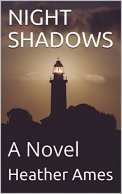
Night ShadowsI just self-published a second book. This one is the stand-alone suspense, “Night Shadows,” I was working on when my rights were returned for “A Swift Brand of Justice.” In order to retain and grow my readership, I need to offer new material on a regular basis. That won’t happen if I’m marking time while I wait for responses to queries, partials and even full manuscripts, or unexpectedly have my rights returned again.

I would much prefer the support and expertise of a new publisher. But if that doesn’t happen, and I need to self-publish again, I know I can do it. I still need to build my support list. Finding reasonably-priced editors is one challenge I haven’t yet mastered. But I’m getting better at designing my own covers, and the learning curve isn’t as steep or as angled as it was before those lemons rolled into my lap.

I’m keeping the pitcher handy as I write the first draft of “Swift Retribution,” Book 3 of the “Indelible” series, but I’m not resigning myself to using it yet. Hope springs eternal, but this time it’s couched. The publishing industry as a whole is in a state of flux, and these days, writers need to be ready for anything. Even a fresh bushel of lemons.

ABOUT THE AUTHOR
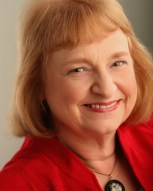
my big picHeather Ames knew she was a writer from the time she won first prize in a high school novel contest. An unconventional upbringing gave her opportunities to travel extensively, leading to nomadic ways and an insatiable desire to see the world. She has made her home in 5 countries and 7 states, learning a couple of languages along the way. She is currently pitching her tents in Portland, Oregon, and after a long career in healthcare, made her dream of writing full-time come true.

Heather is a current board member of the Harriet Vane Chapter of Sisters in Crime and a member of Toastmasters International. She moderates an online critique group and a local book club.

Visit her website at www.heatherames.com 


*Posted for Heather Ames by Jackie Houchin

What’s in a Name?

Bonnie_Schroeder-McCarthy-Photo-Studio-Los-Angeles-7187

Bonnie Schroeder started telling stories in the Fifth Grade and never stopped. After escaping from the business world, she began writing full-time and has authored novels, short stories and screenplays, as well as non-fiction articles and a newsletter for an American Red Cross chapter.


As I get older, I seem to be experiencing an odd form of dyslexia (I think) where my brain transposes letters in words so that I read something that’s not there. Only on second glance do the letters rearrange into what they’re supposed to be.

This has been a boon for me in one way: character names. For example, I came across the surname “Murdock,” but my eyes thought they saw “Mudrock,” and after my initial annoyance at myself, I thought, what a great name for a character.

I collect names because few things are as frustrating to a writer as creating a new character and not being able to name them, right? First names are easier to come by; I pop open 1001 Names for Baby and can usually find one that works. But surnames? The tone must be just right.

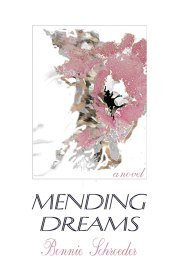
In my novel Mending Dreams, the main character’s last name is Krajewski [yeah, even now I have to look it up in the book to spell it correctly], and that was intentional. I knew a fellow with that last name, and he used to joke about how people mispronounced it. I wanted the character, Susan, to have willingly kept the name even after she and her husband divorced. Her maiden name was Stafford, and it says volumes about her and her feelings about her ex-husband that she kept his name despite the difficulties it could cause.

My list of unusual surnames fills several pages in my notebook. One I’m trying to find a story for is “Evilsizer.” Meaning no disrespect to real people with this name—and I found several via Google—I think it would be perfect for a scheming couturier. Or maybe someone who is really nice. . .

Strong first and last names are essential to me so I can paint a picture in my own mind of the character before I start writing. Names help me visualize characters—sometimes even more than physical descriptions. Names bring with them associations for me personally that color a character’s nature and behavior.

Take the name “Joan,” for example. What does this name conjure up for you? Joan of Arc? Joan Crawford? Joan Baez? For me, it brings back the memory of a woman named “Joanie,” the utterly helpless wife of a fellow I worked for. This woman would call my boss with every little challenge life presented her. If she locked her keys in the car, her first call wasn’t to Auto Club; it was to her husband. I haven’t found a role for Joan or Joanie in my stories yet, but some day I will.

Names and the way they are used in a story also reveal behavior and sometimes emotion.  The main character in my novel Write My Name on the Sky goes by “Kate,” but when she exasperates her mother, she becomes “Kathryn Ann.” How many of you remember hearing the sound of your first and middle name as a cue that you were in big trouble with a parent? And if they added your last name—run for cover!

Sometimes the way a name is mis-used in a story can affect the outcome, too. For example, my flash fiction piece “What’s in a Name?” answers that question with one word at the end of the narrator’s date with the man of her dreams. If you want to check it out (it’s only 532 words), follow the link on my website: http://bit.ly/2En7TJw

Yes, names are important to writers, and to readers. And not just the human characters. The animals in our stories need particular names, too. After all, none other than the masterful poet T.S. Eliot admonishes us to give thought to the naming of cats:  http://bit.ly/2mZ47xQ

How about you writers: do you struggle as much as I do to come up with suitable character names? And, readers: any favorites among your literary heroes and heroines? Any tips for good name sources?


Creating Seasonal Articles*

Christmas sugar plumsby Jackie Houchin

Does reading all those December magazines with their holiday stories, recipes, tips, traditions, and inspirations make visions of sugar plums, er, I mean, ideas for articles to dance on your head?

“Oh dear! I so wanted to write an article about those fun games we play for identifying Grandma’s tag-less gifts under the tree!” (Family Circle Magazine?)

“And how I wished I’d shared my Mom’s Christmas fruitcake recipe from her recipe box (that I inherited this year when she died), and told all who read the article why they really should try fruitcake again.”  (Reminiscence Magazine?)

But, I forgot to write them.

And now it’s too late – WAY too late.

At least for this year.

But not for next year, if I plan ahead.  Many magazines need seasonal articles. But they need them long before the pub date. Articles with a “time-tag” are a good way for new writers to break into print (or seasoned writers to pick up some pocket money).

It’s all in the timing

Start by picking up Chase’s Calendar Of Events and look ahead to see what holidays will be celebrated in six months to a year. Or you can check the guidelines in the new The Writers Market Guide for specific publications you hope to write for.

Send a query letter with your idea ahead of the suggested time. If you get a go-ahead, be sure to deliver your article on time. And be patient. If it isn’t used in 2018, it may be held till 2019.

Low-profile holidays

Brain storm ideas for the less popular holidays, such as Arbor Day, Grandparents’ Day, Flag Day, Patriot Day, Friendship Day, Bastille Day, Poppy Day, or even…. Cookie Baking Day! (December 18)  Also think about back-to-school and summer vacation themes.

Your special “slant”

If those “sugar plum” ideas aren’t already dancing away up there, then:

  • Leaf through old magazines (yours or at the library).
  • Think about experiences you’ve had during holidays.
  • Write a short biography of a person linked to a holiday.
  • Research a holiday custom.
  • Remember anniversaries. (What happened 5, 10, 500 years ago?)
  • Interview a teacher, a parent, a coach, a Macy’s clerk.
  • Write a holiday short story or poem. (Some magazines are still open to them.)

Christmas funny poem

Before and After Tips

Start an idea folder with clipped articles from magazines or newspapers. Jot notes about ideas on each. Not all will be usable, but many will work. When you’re looking for a certain seasonal theme, these may trigger an idea.

After the original-rights sale, look for reprint markets for next season. Make a list of potential ones and their lead times, and keep your original article with them.

Open a new bank account!

Christmas bank accountJust kidding!  You won’t get rich from these sales, but you will get “writing clips.”  And when magazine editors discover your timely, well-written articles/stories etc., they will approach YOU with their needs.

Okay… do you need some ideas for NEXT Christmas?  Check out these:

  • Favorite Christmas books, movies, musicals/plays (pastiche or true likes)
  • Christmas mishaps (humorous, or coping skills)
  • Christmas trees: cutting your own, uniquely decorating (we knew friends who lit live candles on their tree!), a special nostalgia ornament
  • Family traditions (oldies, or how to start your own)
  • How to make homemade gifts (food, ornaments, clothes, home decor)
  • Holiday baking (how-to, tastes & smells, shipping)
  • Holiday traditions from other countries (foods, decorations, activities)
  • Or…. interview someone with over 3,500 Santa Claus decorations (Hint: I can give you her name.)

Take away

After all the gifts are opened, the holiday meal is eaten (and cleaned up), the kids are playing with new toys (or the boxes), and the older “boys” are watching football, go grab a piece of crumpled wrapping paper, smooth it out, flick open that new expensive gold-plated pen, and start writing up your holiday impressions, experiences, and ideas while they are still “dancing in your head.”

Christmas garland

Merry Christmas &  Happy New Year !


*Inspiration for this post came from Jewell Johnson’s article, Writing Seasonal Articles in the Christian Communicator, Nov-Dec, 2017.

(RE)STARTING YOUR ENGINE

4618c-bonnie

Bonnie Schroeder started telling stories in the Fifth Grade and never stopped. After escaping from the business world, she began writing full-time and has authored novels, short stories and screenplays, as well as non-fiction articles and a newsletter for an American Red Cross chapter.


(RE)STARTING YOUR ENGINE

I was on an author panel recently, and a member of the audience asked us if we wrote every day. The other panelists confirmed that they did, and I had to confess that I do not. I know, call me Slacker.

 
It’s not like I don’t enjoy writing—most of the time. I usually have plenty of ideas of what to write, I know where my work in progress is heading, and I WANT to sit down and write, but there are days when it just doesn’t happen. The phone rings—Caller ID tells me it’s a friend I haven’t heard from in weeks, so of course I must answer. Or the computer goes on the fritz and I spend an hour in Help Desk Hell, listening to a robovoice assure me that my call is very important, so please stay on the line for the next available representative. Or the dog begs me for a walk with an irresistible, pleading expression on her furry face.

 
And there go my good intentions right out the window.

 
Generally, I make up for lost time, sooner or later. I turn off the phone, let the dog amuse herself in the yard for a while, and swear off Facebook until I’ve done at least 1000 words or put in an hour of writing, whichever comes first.

 
Recently, however, everything ground to a screeching halt—not for a day, or even a week.

 
For a month.

 
I had a good excuse: hip surgery. The surgery itself was uncomplicated and successful, and I’m making a rapid recovery. But in the days leading up to it, I had too many things to think about besides my current work in progress, where I was a little over the halfway point.

 
Post-surgery, there were many more distractions: follow-up doctor appointments, physical therapy, and fatigue that demanded frequent naps. Additionally, for a while I needed heavy-duty prescription pain meds—a creativity-killer if ever there was one. The opioid fog began to clear, but I still felt apathetic about writing. I’d abandoned the unfinished novel at a point where I wasn’t sure exactly what should happen next, which was a huge tactical error, but by then it was too late to remedy it.

 
I stared at the pile of pages on my writing table, overwhelmed with hopelessness. The novel reminded me of a car with a dead battery; the parts were all there, but the battery was drained and the vehicle was just a cold, unresponsive lump of metal—or, in this case, paper. Stalled car

At that point, I gave in to despair. Why bother? Who cares? Does the world even need another book from me?

 
Then I remembered that some people did care: my writers’ critique group. I soon would owe them 30 pages of new work. With that deadline looming, I sighed. How could I let them down? I must at least try to produce something for them. So I picked up the pages and re-read what I’d written before I went under the knife, all the while laughing at my foolish assumption that I would “catch up on my writing” while I was recuperating.

 
The pages I’d already written weren’t bad, and I’d gotten some positive feedback from my fellow writers. I started writing down words, reminding myself that if  I simply put them on paper, I’d have something to work on, something to build on and edit. I remembered a valuable saying: You can’t fix what’s not on the page.

 
I knew this approach as surely as I knew my own name, so I gritted my teeth and ground out five pages. They seemed flat and pointless. But at least I had something to show for my time and effort. And as I read over what I’d written, I had an idea for how to make them better. A flicker of hope beckoned. Hey, maybe this wasn’t a lost cause.


I wrote a few additional pages, and the more I wrote, the more ideas started to flow. First a trickle, then a stream. I lost track of time as I scribbled the outline of what needed to happen next, and a delicious enthusiasm flowed over me, that feeling I’d begun to fear was lost for good. That poor old dead engine had finally turned over. It sputtered a few times, but then it started chugging along.

 
I still have a long way to go to “The End,” but if I hadn’t sat down and made myself pretend to be a writer again, the muse would not have whispered in my ear. Why try and talk to someone who’s not listening?

 
So you see, magic can still happen. Believe in it. You may think the game is lost, but there’s always the chance it isn’t over yet. There may be a tiny spark of life left in that engine after all, but you won’t know unless you fiddle around with it a while.

Anybody out there who had to abandon a project and then fought to resurrect it after some time had passed? How did you get going again, or did you? Or perhaps now you’re thinking, maybe you will . . .?


Writing Advice: Better Done than Perfect

Complete confidence is not a common trait among writers. I assume that statement applies to people who work in any creative field. It’s not that we’re neurotic. Usually. We are often charming people if you can drag us out into public. Did I mention that we are typically introverts who prefer the company of animals?

So, why the lack of confidence?

When a writer brings a character to life, builds a world, and plots out an entire novel, it’s personal. The character’s thoughts, words, and actions are driven by the author, so they are a peek into that person’s mind. Not necessarily an expression of his or her own thoughts on a subject, but what he or she is capable of thinking about a subject. Writing is an act of exposure, and there is always the fear that someone will—wittingly or unwittingly—cause harm.

When a wolf exposes its belly to the pack, no other wolf will touch it, not even a pup. The same can’t be said of the reading public. Once that short story, essay or novel is out there, it becomes fair game for comments, criticism, and the dreaded internet trolls.

Sometimes the criticism is correct.

I’ve looked up the spelling of names and words when writing only to find they are spelled wrong in the final draft. How does this happen??? It’s a mystery, but it does happen. And I once referred to a shoe string necktie tie as a bolero rather than a bolo. Never mind that an editor and four proof readers missed it as well. When the book came out, a sharp-eyed reader caught it and left a scathing review on Amazon. I immediately corrected it, and I would have reached out and thanked the reviewer had it been possible to contact him.

Sometimes people will simply disagree with you.

In my second pet psychic mystery, A Bird’s Eye View of Murder, Frankie Chandler’s Aunt Gertrude is visiting from Arizona. Auntie can be overbearing at times, which made for some funny situations. Don’t we all have relatives who test our patience? A reader commented that Frankie was just another weak female character because she put up with her aunt and didn’t tell the old lady off. I don’t think self-control and respecting one’s elders are signs of weakness, so I moved on.

The natural response to a fear of making mistakes is to never, ever publish, and this may be why completed manuscripts still languish on some writers’ computers.

Recently, I was lamenting the results of a new jewelry technique I wanted to master. An artist friend told me Better done than perfect.

What a freeing thought.

This doesn’t mean an author should send out a submission or post a book on Kindle without a thorough proofread. (Note: You are your own worst proofreader, because you will fill in the blanks as you read with what you wanted to say. Find an expert if you can afford it. If not, remain friends with former classmates who delighted in comma usage.) It also doesn’t mean that half-baked efforts are okay. It’s only a first draft, but I really want to get it published. Someone will like it.

What it does mean is that after you’ve done your best, after you’ve taken all necessary steps to ensure mistakes are fixed and formatting meets industry standards, you need to let it go and move on to the next project.

Every time you reread a page, you will think of a new and—possibly–better way to say it. Know that and decide to end the loop.  You will never stop learning new techniques and tips. Your style will develop, and you will become a better writer, but only if you keep writing. (And not the same thing over and over.)

Once you complete a few projects and let them go, you may even see an increase in confidence. It’s not a guarantee. Those niggling thoughts may always follow you around. Is the finished product perfect? Are the clues too obvious? Did I misspell mononucleosis? Just remember, you’re in charge. You can ignore those thoughts, do your best, and move on.

Do you suffer from paralysis by analysis? Give us some examples. Sharing your demons and having a laugh over them destroys their power!


A Boost Up!

By Jackie Houchin

Boost up2“A boost up”….when someone holds their clasped hands together next to a horse, and you put your foot in like a stirrup, and they propel you upward into the saddle.

#

Sometimes a beginner (or lazy) writer needs a boost up into the writing saddle.  That’s where The Write Practice came into the picture for me. (I’m one of those lazy ones!)

The Write Practice

”If you want to become a better writer, you need to practice,” says Joe Bunting, creator of The Write Practice organization and blog. What’s involved? Fifteen minutes a day, five days a week, practicing with fresh writing prompts, unique lessons on technique, and getting feedback from a supportive community.

There are over 1000 practice exercises and lessons on the blog in such categories as; better writing, genre & format, characterization, grammar, journalism, plot & story, writers block, inspirational writing, publishing, and blogging. And it’s free.  http://thewritepractice.com/about/

I’ve attempted two lessons so far in the Short Story category. The first lesson was to read at least six short stories from the many magazine links supplied. The second lesson was to free-write for at least 15 minutes, post what you wrote in the comments section, read three of what other people wrote, and give them brief feedback.  Simple as that; practice writing and give feedback. It’s really the basis for everything Bunting does.

I wrote a short ditty on ‘Pig, Porcupine & Pineapple.’  It was totally fun!  Now to see with my fellow writers say about it

The Becoming Writer Community & Challenge

 If you are ready to go to the next level and start writing finished pieces (and get published), then the Becoming Writer community is the next step. Bunting compares this with what the “Inklings were for Tolkien and C.S. Lewis, the expats in Paris were for Hemingway, and the Bloomsbury group was for Woolf.”

I discovered Becoming Writer because membership in it (yes, it does cost a little) was a requirement to submit to The Write Practice’s quarterly short story writing contest. But what you get with membership is a lot more than the contest.

Like the free practice lessons above, you share your writing with a community of writers to get and give feedback.  Actually giving feedback on another’s work helps you when it comes time to edit your own piece.

The Challenge is to write ONE piece EACH WEEK, submitted on Fridays.  It can be a short story, blog post, poem, essay, or a chapter in a book.  This is what us “lazy” writers call accountability.

And finally, besides actually finishing your pieces (Yay!), you get opportunities to submit to magazines like Short Fiction Break, Wordhaus and others.

The feedback on my first piece, an essay I wrote about Africa, brought a suggestion for submission to a specific online magazine. I submitted it and am waiting to hear.  http://thewritepractice.com/members/join

The Fall Contest

This is what caught my attention at first, a writing contest that promised cash prizes, free books, and publication. The theme was “Let’s Fall in Love.” Stories had to contain the two elements FALL and LOVE and be no longer than 1,500 words.  I told myself, “I can do that.”

The name “Autumn Gold” sprang to my mind and I quizzed my writer friends on Facebook as to how a girl with that name might look. The first answer – a stripper – caused me to cringe because that’s not what I had in mind. But when another person confirmed what he said, it left no doubt.

The story I eventually wrote keeps the title “Autumn Gold,” but the girl’s name is Audrey Gould.  I wrote an outline of sorts, showed it to a friend for her opinion, and then pounded out a story about LOVE that takes place in AUTUMN. It was 1,948 words. Lots of cuts and edits later, I submitted it to the Becoming Writer Contest community.

For the contest (548 entrants) the community is divided into ten groups, A–J, with about 40-50 writers in each. I landed in Group D. There are 46 of us, and we’ve become a close-knit group.

I’ve gotten about nine feedbacks on “Autumn Gold,” and I’ve given at least many more on other stories.  Some are VERY good! Others will need some work.  Reading my story’s feedback and the feedback on the other stories has opened my eyes to what works and what doesn’t, and what readers “get” from what you write, even if it’s not what you intended.

Invaluable!

I’m considering rewriting the ending and running it past them one more time. The final deadline to submit the story to the judges is September 4.

Other Programs

The Write Practice offers other programs for writers and authors on building a platform, publishing & marketing, Twitter, and the 100 Day Book challenge.  http://thewritepractice.com/products

#

Now I’m up in the saddle. I’m trotting around and loving it. I can’t wait to press my calves against my steed’s sides and rise into a canter.  I needed that boost up.  Do you?  Perhaps you should consider a writing community.

I suggest The Writing Practice. Take advantage of the discipline and the getting and giving of feedback.  Pick the lessons you are interested in and go for it. They are free! You might also consider Becoming Writer.

Or join a critique group and begin giving your work over to new eyes and opinions.

Get up there and get galloping!

###

Currently the Becoming Writer and the 100 Day Book programs are closed until next semester.  Future contests in Becoming Writer will be on Flash Fiction, Essay writing, Novels, and Poetry.


Respecting the Muse by Bonnie Schroeder

Bonnie_Schroeder-McCarthy-Photo-Studio-Los-Angeles-7077-Edit-web


Bonnie Schroeder started telling stories in the Fifth Grade and never stopped. After escaping from the business world, she began writing full-time and has authored novels, short stories and screenplays, as well as non-fiction articles and a newsletter for an American Red Cross chapter.


Most writers inevitably encounter the question, “Where do you get your ideas?” I’ve been on the receiving end more times than I can count, and I often wonder aLife after Lifebout other writers, too.

Where, for example, does Stephen King come up with all his intricate storylines? Where did Kate Atkinson get the idea for Life After Life? 

Actually, ideas are everywhere, and they’re often triggered by those magic words, “What if . . ..?”

In my experience, however, the initial spark tends to morph into something quite different when I begin to work on a story. My first novel, Mending Dreams, came about because I knew a woman whose husband did the same thing my protagonist’s husband did: came home one day and told her he was leaving her because he was in love. . . with another man. “What if,” I wondered, “that had happened to me? How would I react?” The eventual premise turned into something quite different than I expected, as themes of love and courage emerged from the mess I created in those first pages.

I was married to an artist in the 60s and 70s, and as I was looking over old photos from those days, I asked myself, “What if my husband had become really famous?” This led to Write My Name on the Sky, which will be published this summer. The story changed tremendously in the execution, but that first flash of inspiration arose from those old pictures.

A couple of years ago, during my annual physical exam, my doctor remarked that both my hearing and breathing capacity had improved in the past year. Hmmm. What if I was growing younger? That idea became the cornerstone of the novel I’m currently writing, and it’s become more than a case of mere wish fulfillment.

Webster’s New World Dictionary defines “Muse” as “a source of genius or inspiration,” but I have other names for her. She is quite a trickster, and if I don’t pay attention to her whispered ideas, they vanish like smoke. That’s why I am almost never without pen and paper—or in today’s world, without my trusty iPhone, which I use to record the Muse’s suggestions and sometimes even to photograph the source of them.

Yes, ideas are everywhere, but writers need to respect them when they appear; don’t squander them; nurture them and preserve them.

I believe the writing process is at least one part voodoo. Inspire

For me, it seems that once I set my intent to write about a particular topic, the creative universe springs into action. For my woman-getting-younger novel, even while I was sketching out the premise, articles started appearing in newspapers and magazines I read, about “age disruption” and “life extension.” My research file on the subject is over six inches thick!

I would love to hear from my fellow writers and readers about this subject. What inspires you? Where do you get your ideas? And how do you hang onto them when they appear? What do you do with them? Please share!

Beginnings, Middles, and Endings

me-at-mellon

A former private detective and once a reporter for a small weekly newspaper, Gayle Bartos-Pool (G.B. Pool) writes the Johnny Casino Casebook Series and the Gin Caulfield P.I. Mysteries. She also wrote the SPYGAME Trilogy: The Odd Man, Dry Bones, and Star Power; Caverns, Eddie Buick’s Last Case, The Santa Claus Singer, Bearnard’s Christmas and The Santa Claus Machine. She teaches writing classes: “The Anatomy of a Short Story” (which is also in workbook form), “How to Write Convincing Dialogue” and “How to Write a Killer Opening.” Website: http://www.gbpool.com.

Beginnings, Middles, and Endings… A Thought or Two

When I start writing a story I usually don’t have the entire story blocked out in my head. Sometimes I have a beginning and an end. That’s the best way because I know how the story opens and blessedly where the story is going to end. Usually I have at least a sentence or a paragraph that tells me what the story is supposed to be about. Sometimes I have a page or two of the gist that provides the flavor of the story. That tells me the sub-genre: a detective yarn, a lighthearted mystery, a darker tale, or maybe a holiday story because I write those, too.

notebookIf you ever come to my house you will see small notebooks all over the place that I can grab and jot down an idea if it drops out of the sky. And they do on occasion. My fellow author, Bonnie Schroeder, gave all us Writers-in-Residence ladies a notebook and pencil set for the shower that writes in the wet. What a concept. So I am covered wherever an idea strikes.

The all-important beginning sets that Tone for any piece of writing. This is when the reader bites off a chunk and chews it to see if they might like to stay around for the rest of the meal. When these ideas strike, they have to grab my imagination, too, or I’ll discard them and wait for another inspiration.

Sometimes the initial idea is a bit of business that sets up a crime. Once I know how it’s done, I have to see who does it. The all-important villain will be the second, if not the first, character I must get to know. Remember, the bad guy or gal is the reason the story is being written. If nothing bad happens, I won’t need my private detective or amateur sleuth or long arm of the law to solve the case.

The Plot might be something that I hear on television that sparks the idea. I seldom rip a headline off the front page because I can almost hear half of the writers out there in “Fiction Land” ripping it off their newspapers and I want to write something new. But I will take a headline and turn it upside down or inside out to get a story.

That’s the old “What if?” game. If there is a story about a politician killing his playmate on the nightly news, what if the playmate sets up the politician instead in the fictional take on that account? I did that in a story in From Light To Dark, a collection of short stories that run the gamut from lighthearted to down right evil.

typewriterStories are everywhere. The writer just has to see the possibilities. But remember, as a writer, you control your world and you can twist the story into something unique if you try. Just try not to twist it into something that doesn’t make any sense. More and more TV shows are turning into pretzels that barely make sense. That’s why I read more books than watch television.
So now you have a great beginning and maybe you are lucky enough to have an ending in your head. As I said earlier, knowing the ending lets the writer know where he or she is going. You don’t want to wander. And this isn’t only for the writer’s sake. If the reader gets lost along the way, they might put the book down and never pick it up again.

Make the ending as stunning as the beginning. When you are having a great meal and the dessert is terrific, too, you know you have had an experience. When someone puts down your book or even finished your short story, you want them to feel satisfied. And you want them to come back for more.

In TV shows, I can usually guess whodunit in the first ten minutes. That’s because of the formula that shows use. Sometimes it’s the lousy actor who plays the part who just looks guilty. He read the script and knows he did it and it’s written all over his face. I hate that.

In a book, I seldom analyze the story as I am reading it to see if I can pick out the villain. I want to enjoy the story and know we’ll get to the end eventually. I never read the end ahead of time, either. I wouldn’t have dessert before the main course, so why soil the meal?

I like to read the set-up, watch for clues, and at the end I’ll go back over the story in my head and see where those clues were if I missed any of them. Good writers leave them in plain sight. Readers just don’t know they were clues. There is nothing better than to say, “Boy, there was that clue right there all the time.” I love that.

The only thing I can caution writers against is dropping the villain and the clues in at the end where the reader had no chance to pick them up. Not fair to the reader or to the story. You can do better.

fat-lady-dancerNow how about the middle? There it sits. Is it a big, hulking middle that the reader has to push around the dance floor with no music or is it thin and bony with no rhythm at all? This middle section is where the reader learns all the little things that hold the story together. Some backstory and some character traits are sprinkled in along with the bulk of the plot. Whether it’s on the high-calorie side with lots of detail or maybe a diet plate with most of the fat is trimmed off, you have to make the middle tasty.
scissorsEditing happens here. Add a little to enhance the story. Cut some off to make the pages turn faster toward the climax. Sweeten it with some good dialogue. Add some choice settings to give it flavor.


Some writers over-write their work. They cut and paste so much that they lose the story completely with all the tape and staples and glue. If your story is ponderous you will lose readers faster than if it is short and sweet.

But don’t shortchange the reader either. They paid for a story, so tell them a story. Give them the details, not an encyclopedia. You want them to know the characters, but remember: some characters are only there for color or to give some vital information before going off stage. Have a few main characters, some minor ones, and everyone else is just there to set the stage.

This holds true for novels and short stories. I have read quite a few mystery novels that packed in so much extra stuff that I lost track of the plot. The characters might be fun and the banter clever, but that dead body lying in the living room still needs to be discovered along with his killer.

Tell me a story first. I’ll get to know the people along the way. Have a beginning that pulls me in. Have a middle that holds my interest. Have an ending that makes me glad I bought your book or read your short story. I’ll look for your books on the shelf again if you can do that.

books-on-shelf

MY SUPERPOWER: PERSISTENCE by BONNIE SCHROEDER

4618c-bonnie


Bonnie Schroeder started telling stories in the Fifth Grade and never stopped. After escaping from the business world, she began writing full-time and has authored novels, short stories and screenplays, as well as non-fiction articles and a newsletter for an American Red Cross chapter.


I come from a family of quitters. Sort of.

Several generations ago, my family owned a farm in northern New Mexico, in the Four Corners area. Now, anyone who’s ever lived on a farm knows it’s hard work. There are no vacations, holidays, or sick leave. It’s dangerous work, and you’re always at the mercy of Mother Nature.

So it’s totally understandable that at some point they gave up, sold the farm, and moved on to something less overwhelming. However, the people who bought the family farm went on to discover oil there. And I’m sure my great-grandparents sometimes thought, “If only we hadn’t given up.”

I heard that story from the time I was a little kid, and it haunted me. So when I became a writer, I swore I would never give up or give in to discouragement. I would become a published writer.

Life intervened in unexpected ways, and I had to put my dreams on the back burner for a while, but I never abandoned them. I kept writing, if only in stolen moments on a commuter van traveling to and from my job.

Writing is hard work, and you often must sacrifice other pursuits, many of which are easier and more entertaining. Your friends look at you funny when you tell them you’re skipping the movie so you can work on your novel. Sometimes I’d wonder, “Is it worth it? Who will care about this book anyway?” The answer, of course, was “I will.”

I finally finished a novel, and I even found an agent. Yay! Mission accomplished!

Ooops, not really. My agent was very determined; she got me rejected by all the big publishing houses, until a junior editor at the now-defunct Zebra Books took a liking to the novel. We talked, she suggested a few changes, and I was almost done revising when my agent called. The junior editor’s boss overruled her. No publishing deal.

My agent briskly told me to write another novel— “a mystery this time.” I did. She read it and dismissed it, telling me “that theme isn’t selling right now.” And she gave up on me.

But I didn’t give up. I wrote another novel, and after years of workshops and revisions, I began sending it to agents and to publishers who took unagented work.

I sent 167 query letters over six years before luck landed me at Champlain Avenue Books (well, luck and my friend MM Gornell, a fellow member of this blog.) And after all that time and all that angst, before I could even catch my breath, Mending Dreams came into being—and into bookstores.mdfrontcover-web

I was tempted a lot of times to give up, but that family story stuck with me, and I didn’t want to be the one who walked away and let someone else reap the benefits.

You hear all kinds of slogans on this subject: “Winners never quit; quitters never win.” But in my case the slogan took tangible form, and I’m here to tell you that you CAN achieve your dreams, if only you keep trying. Sometimes just hanging on for that extra day, that extra mile, that extra page—it can make all the difference.mountaintop

I’m putting my words to the test again, working on a new novel—the most challenging one yet. But it’s easier to keep going now, because I know I can do it, and I know that I have to.

Have you ever been tempted to quit writing because it can be so hard and sometimes so discouraging? Did you persist? How did you motivate yourself to keep going?


DEAD MICE, An African Tale – Turning Experiences Into Stories

By Jackie Houchin

In last week’s Writers in Residence blog post, Gayle Bartos-Pool asked the question, “What do I bring to the party?”  She went on to tell of her extensive and varied experiences and personal contacts that have helped in research for her detective and spy novels. It got me to thinking about what I “bring to the party” of my story writing.

(1) I have a good knowledge of the Bible. (2) I’ve been on three short-term mission trips to Malawi, Africa. (3) I have 3 granddaughters who were once little and to whom I told and wrote many stories. (4)  I teach the 4th-6th grade Sunday School class at church and I occasionally help in the K-2nd grade Junior Church.

What a set up for writing children’s stories that take place in Africa and that have a Bible truth woven into them. Hey! That’s just what I am doing. I write the “Missionary Kids Stories” series (about a family serving in Malawi) and I send them out to about a dozen young kids (6-11) at church via email every 1-2 weeks. They are entertaining (according to  the kids) informative about Africa and mission life (occasionally gross as in the story that follows), “safe” (one mom’s comment), and have truths from the Bible as a take away.

Here is the first one I sent out, introducing the family and setting up the series. It is the shortest and simplest one. The stories vary in age level depending on the MK (Missionary Kid) who is telling the story. Stories five and six – told by a teenager – is one story in two parts with a cliff hanger at the end of five.

Dead Mice

Introduction

 These stories are about the (make-believe) Matthews Family, who went to Malawi, Africa about eight years ago to be missionaries.  This family has a dad and a mom, and seven children (three boys and four girls including a set of twins). As part of their names, each of them has the month that they were born in as a first or middle name, like Melody May or April Grace.  All of the stories are written to you as letters.  The first story starts like this: 

Hi kids!

My name is Melody May, and I have a twin sister whose name is Charity June. I also have three brothers and two more sisters. We all have the month we were born in as part of our names. It’s really cool I think, but some people think it’s weird.

My mom – her name is Mrs. Matthews – is really fun and creative. She picks out all our names. My dad – his name is Mr. Matthews – just smiles at her with love and agrees to the names.

People call me Melody, but they call my twin sister “June.” You may wonder how twins could be born in two different months. Can you guess how? It’s kind of tricky.

I’ll let my brothers and sisters tell you about themselves in other letters, but right now, let me tell you about what happened to my sister June and I a week ago.

We are MKs (Missionary Kids) who live in Malawi, Africa. Our dad is a college teacher at the African Bible College. We go to a school there too, but in a different building.

One day, an African boy in our class showed us a mouse… a really DEAD mouse. Then he dared us to do something with it. At first June and I refused, but then…..

Here’s how it happened.

The boy’s name is Kukana (Koo-KAH-nah). On that day, the first day of the new school year, he dared us to EAT a dead mouse! Ewww! Would YOU eat a mouse, especially a dead one? (I guess a live one would be worse!)

There are kids from America and Canada and Holland and South Africa in my class. There are many Malawian kids too. We have three grades in our classroom because, well, our teacher is very smart and can teach three grades at once! At least that’s what I think.

That day, when Kukana stood up in class with a closed box and told us he brought something for us to eat, we all smiled. We thought it might be some roasted peanuts, or those small super-sweet bananas they grown in Malawi. Yum.

Then he opened the box and reached in and held up this really stiff, black, hairy thing.  Some of the new girls screamed, but June and I didn’t. We almost did, but we grabbed each other’s hands and squeezed real tight.

“This is a mbewa,” he told us.

(You say mbewa like this – mmmmm-BEE-wah.)

“They are very tasty to eat,” Kukana said.

Then he held the mbewa up high by the stiff tail, tilted his head back, put the old dead mouse’s head into his mouth… and crunched it off!!!!!  He smiled big as he chewed it. The Malawian boys cheered and stomped their feet!

Our teacher frowned a little, but she didn’t say anything.

Kukana smiled again, real big, and there were little bits of black fur in his teeth!  He leaned very close to June and me and showed us his icky tongue, trying to scare us, I think.

Then he ate the rest of it….. even the tail. There were more hoots from the boys, and this time Mrs. Molenaar said, “Okay. That’s enough. Now tell the class about mbewa. Why did you bring it – and eat it?”

Mrs. Molenaar knew about mbewa – we could tell by her look – but she wanted Kukana to explain about this “famous Malawian snack food.”

“We eat mbewa because it’s good protein food,” began Kukana.

June and I looked at each other, our eyebrows raised way up and our eyes got big. OUR family eats  eggs, chicken, fish, and sometimes pork or beef for protein.

Kukana went on, “Village families here in Malawi are very poor. They raise goats and sometimes cows to SELL but not to EAT. They do this to have money for beans and maize to eat, and seeds to plant.”

I thought about what else OUR family eats. We like the beans, tomatoes, pumpkins, and peanuts that the villagers grow. We also eat yogurt and canned fruit and oatmeal. Sometimes Mom cooks nsima (nnnnnn-SEE-mah) which is made from white corn, called maize, and tastes like thick hot cereal without any salt. (Mom adds some for us.) Poor Malawians eat that every day. Sometimes that is all they HAVE to eat.

“There’s LOTS of mbewa around,” said Kukana. “You just have to catch them. We go to where old maize stalks or dead grass is piled up. We stand around the pile with sticks. Then someone lifts up the pile with a long pole and mice run out everywhere.  We have a lot of fun killing them with our sticks!”

Kukana laughed and all the boys laughed too.

“Then we put five or maybe ten of them on a long stick and roast them.”

Kukana looked right at June and me, opened his eyes really big and added, “….just… like… your… marshmallows!” Then he laughed in a mean way.

That made us feel mad and scared and icky, but we didn’t do anything. I think it was then, that I started to think….. maybe I WILL eat a dead mouse!

Mrs. Molenaar gave Kukana a stern look and he finished his talk like this. “Sometimes our fathers burn off the maize stubble (old stalks) in our fields. Then all the people stand around the edge of the field to catch the mice that run out.”

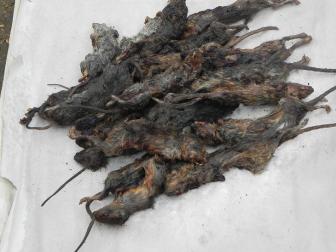
Mrs. Molenaar told the rest of it. “After the mice are roasted, which dries out the bodies but doesn’t burn off all the fur, they will keep for quite a while. Maybe you American children have tried jerky. It’s a bit like that.”

She turned to Kukana. “Did you want to share your mbewa with the class?”

He walked through the desks with the box down low. All the Malawian boys and girls took one out and started crunching and chewing. One American boy, named Benji took one too.

When the box came to June and me, my sister leaned way back, but I….. I reached in, grabbed a stiff hairy burned mouse and took it out.  Before I could think about what I was doing, I leaned back, held the thing up, and crunched off its head!!!!!!

This time June DID scream. “Melody! Noooo!! You are going to get sick and die!! And Mom will be very mad!”

I didn’t look at her. I stared at Kukana as I chewed the prickly, scratchy thing. It tasted kind of like burnt peanut shells and grease to me. Finally I swallowed it and stuck out my black-specked tongue to prove I ate it.

Kukana was surprised. He smiled at me (nicely, this time) and gave a little nod.  After that, he didn’t tease June and me. He kind of respected me, and since I was usually with my sister, he didn’t dare tease her either. After a while we even became friends.

Let me tell you a secret now. I didn’t finish the dead mouse.  I passed it to the boy behind me who snatched it up and ate it.

And you know what else?  I didn’t get sick and die.

I just became a Malawian.

But Mom DID get mad at me and told me never to do that again. I promised her that I wouldn’t. I figured I would never HAVE to do it again.

Later in our Sunday School class at the International Bible Fellowship church where my Dad sometimes preaches, I learned what Paul wrote in one of his letters in the Bible. He was a missionary to MANY countries. I don’t know if he ever had to eat mice, but he did say in 1 Corinthians 9:22, that he wanted to “become all things to all men that he might save some” for Christ.

I hope Kukana will someday want to know Jesus too. Maybe he will listen to me now when I tell him the gospel story ….. BECAUSE I ate the mouse.

mk-mice-and-boy

mk-mice-1

~~ Facts ~~

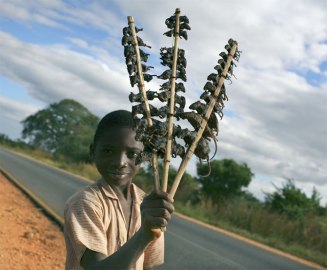
          Malawians DO eat mice like this for protein. Sometimes you can see them along the road, selling mbewa still lined up in a row on the roasting sticks, or in piles on a piece of cloth they spread out on the ground. They also eat big grasshoppers for protein which they fry in oil and sprinkle with hot pepper.