
By guest author, Sally Carpenter
If you saw a stranger walking down the street, what can you tell from her clothes? Sherlock Holmes could determine the social standing, wealth, occupation, education and gender of persons by their clothes.
Authors use to spend much time in describing their characters’ garments, sometimes to a fault. Without TV or film, writers felt they needed many words to help readers depict the characters in their minds.
In the story “A Scandal in Bohemia,” Arthur Conan Doyle writes: “His dress was rich with a richness which would, in England, be looked upon as akin to bad taste. Heavy bands of astrakhan were slashed across the sleeves and fronts of his double-breasted coat, while the deep blue cloak which was thrown over his shoulders was lined with flame-colored silk and secured at the neck with a brooch which consisted of a single flaming beryl. Boots which extended halfway up to his calves, and which were trimmed at the tops with rich brown fur, completed the impression of barbaric opulence . . .” Sensory overload!
Nowadays writers limit their characters’ physical description, because readers often skip over lengthy sketches to get to the action, and also to encouraging readers to imagine their own selves in the story.
 The only physical description we have of Nancy Drew is her “titian hair” and “blue eyes.” However, we hear a lot about her chic wardrobe and apparently endless clothes closet. Beyond her stylish threads, Nancy often dresses in costumes and old garments found in attic trunks. When the books were originally released in the 1930s, low-income readers could imagine wearing Nancy’s pretty outfits for themselves.
Cozy mysteries continue the trend of “less is more.” Clothes are mentioned briefly, if at all. With the modern heroine’s casual lifestyle, her wardrobe consists of tee-shirts, sweats and jeans. Readers want a quick and easy read without wading through mounds of description.
But when I started writing my Psychedelic Spy retro-cozy series, clothing was crucial.
 The books are set in 1967, an era of vibrant and varied clothes. Poodle skirts and bobby socks gave way to miniskirts and pillbox hats. East Indian garments were in style. The “British invasion” of roc
k music also brought English designers such as Mary Quant. African Americans adopted styles that expressed their ethnicity. The hippies had their own unique forms of dress.
Clothing of the 1960s differs so much from today’s styles that I had to describe nearly everything that people wore. I tried to keep such explanations to a minimum, yet the clothes were essential to place the reader into the era.
My protagonist, Noelle McNabb, is single and 25 years old. She apparently spends most of her income on clothes. In the first book, “Flower Power Fatality,” Noelle wears 14 different outfits! And her clothes are new, many purchased at the big city mall. She talks about how she loves shopping and checking out the latest fashions.
In finding clothes for Noelle, I’ve used a few costumes that I’ve seen in 1960s TV shows. I also have a great reference book, “Fashionable Clothing from the Sears catalogs: Mid 1960s.” The book has actual photos (and prices) from the era’s Sears mail order catalogs. I’d love to see those clothes come back into style, as they’re more beautiful and feminine than the women’s tee-shirts and leggings sold today.
Clothes also express the generation gap. When Noelle wears a miniskirt to church, her mother complains that the dress is too short. Mom is clad old, fussy dresses with below-the-knee skirts. Mom wears stockings and garter belts; Noelle is in pantyhose and colored tights.
In the 1960s, women wore dresses more frequently than today. I put Noelle in dresses most of the time. Even when she wears pants at her record store job, she’s in nice slacks and pant suits. The only time she’s in dungarees is when lounging around home.
Jeans are reserved for my “bad boy” characters, a group of young males who spend their time racing their choppers, shooting craps and smoking Marlboro cigarettes. In the mid 1960s denim was only slowing becoming acceptable as a fashion choice.
 Destiny King is an African American agent who takes Noelle on her spy missions. Destiny sports a trimmed Afro and frequently wears jumpsuits. Her clothes are functional in more ways than one way. For example, she has a pair of earrings that are really plastic explosives.
My hippie couple, Rambler and Moonbaby, are the most fun to cloth. Hippies wore an eclectic style, often put together from castaways and thrift store finds. Styles, patterns and colors did not need to match. One useful reference book is “The Hippie Handbook” by Chelsea Cain, which has a chapter on “How to Dress Like a Hippie” and information on making skirts out of old jeans and how to tie-dye a shirt.
Trevor Spellman is a newspaper reporter on the prowl for a big scoop. He rebels against the small-town norms by wearing his hair long—below his ears—and he never puts on a tie. In the 1960s the collarless shirt became appropriate for formal/dress wear.
The clothing of Mr. Baldwin, the audio-visual technician at the high school, describes him well: white shirts, skinny dark ties, dark pants, plastic-rim glasses and a “dorky haircut.” Did “geek” and “nerd” pop into your head?
What the retired Army colonel wears also paints a picture. He’s in an Army bomber jacket over a khaki shirt. “His voice was as crisp and sharp as the creases pressed into his khaki pants.” Even in retirement he runs his life with military precision.
Clothes can describe a character more efficiently than a long list of traits, helping a reader to visualize a person more so that relying on the reader’s imagination alone.
###
 Sally Carpenter is native Hoosier living in southern California. She has a master’s degree in theater, a Master of Divinity and a black belt in tae kwon do.
Her Sandy Fairfax Teen Idol books are: The Baffled Beatlemaniac Caper (2012 Eureka! Award finalist), The Sinister Sitcom Caper, The Cunning Cruise Ship Caper and The Quirky Quiz Show Caper.
Her Psychedelic Spy series has Flower Power Fatality and the upcoming Hippie Haven Homicide (2020). Sally has stories in three anthologies and a chapter in the group mystery Chasing the Codex.
She’s a member of Sisters in Crime/Los Angeles. Reach her her at Facebook or http://sandyfairfaxauthor.com or scwriter@earthlink.net.
This article was posted for Sally Carpenter by Jackie Houchin


 One of the things that helps is listening to a podcast of Old Time Radio Westerns. Before most of the classic western series of the 1950s and 1960s were on television, they were on radio. I grew up with those TV series, so the stories, while different, are very familiar. Now I fall asleep to the Lone Ranger or Gunsmoke or the less-familiar Frontier Gentleman.
 Brief Bio:

 by Jackie Houchin
 Just kidding! You won’t get rich from these sales, but you will get “writing clips.” And when magazine editors discover your timely, well-written articles/stories etc., they will approach YOU with their needs.



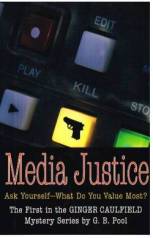
 A former private detective and once a reporter for a small weekly newspaper, Gayle Bartos-Pool (G.B. Pool) writes the Johnny Casino Casebook Series and the Gin Caulfield P.I. Mysteries. She also wrote the SPYGAME Trilogy, Caverns, Eddie Buick’s Last Case, The Santa Claus Singer, Bearnard’s Christmas and The Santa Claus Machine. She teaches writing classes: “Anatomy of a Short Story” (which is also in book form), “How to Write Convincing Dialogue” and “How to Write a Killer Opening.” Website:
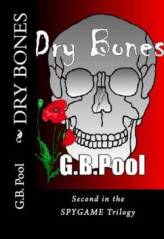
 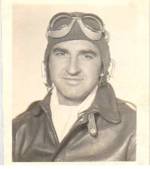 My father was in the Air Force. We traveled a lot. I lived on Okinawa and in France as well as in Memphis (near Elvis) and here in California. There were a few other military bases along the way and many of these places turn up in my SPYGAME Trilogy. I used some of my father’s experiences as a pilot during World War II and afterwards, as well as my imagination, to concoct an intriguing set of stories. The first one, The Odd Man, deals mostly with WWII and the Bay of Pigs. I went to a boarding school in France and that place finds a home in book two, Dry Bones. Book three, Star Power, wraps up the trilogy by bringing back characters from books one and two for a climax ending up in Southern California with some Hollywood stars tossed in for fun, though some are positively deadly.


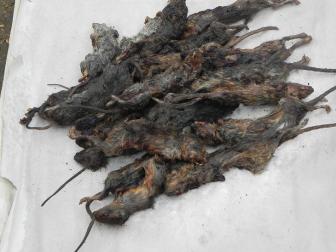
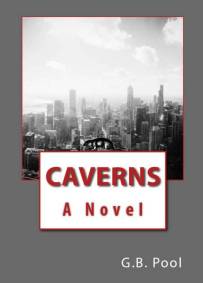 Here’s another story. When I was on assignment in Chicago as a P.I., I lived in an apartment near Lake Michigan. It was February. A brutal winter. I had to take the subway and a bus to the job at night. I worked from 5 p.m. until 2 in the morning. I survived Chicago. Years later I heard a story from a co-worker in California about a police officer in New York City who ran across something rummaging around in garbage cans down an alley. He shot it. It was a rat. It weighed in at 105 pounds. I moved the rat and his friends to snowy Chicago and I have them eating away the garbage on which a large area of The Windy City was built after the Great Fire. This was near the lake. Huge caverns have been carved out under the condos around the lake. Disaster looms. That book is Caverns.
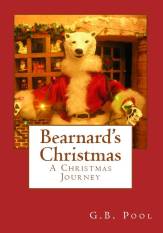 started making my own and making vignettes. I had an idea for a Christmas castle that I designed. I still have the sketch. I decided to write a story to go along with the idea of this castle. Then I decided to build the castle and make the figures that went with the story. Then I published the book. The first one was Bearnard’s Christmas.


You must be logged in to post a comment.