
Madeline (M .M.) Gornell is the author of seven award-winning mystery novels. Her current literary focus is Route 66 as it traverses California’s Mojave Desert. Madeline is a lifetime lover of mysteries. She lives with her husband and assorted canines in the High Desert. Visit her website and Amazon Author Page.
 Several events/ideas have brought me to this post. My continuing interest in the importance of setting in conjunction with “taking me there,” G.B. Pool’s recent post on Openings, and my enjoyment-of and fascination-with audio books. I’ve mentioned in past posts how much I enjoy audio books—and now I’m asking myself why, in that there might be a couple writing-nuggets there worth paying attention to.
Being taken (dropped) into a protagonist’s world is what reading is all about for me, and has also been mentioned by other readers to me. In that line of thought, I’m currently listening to an audio series called Cherringham Mystery Shorts[i], and though the blurb for these audio book offerings didn’t immediately grab me, the narrator did. Neil Dudgeon[ii] I’ve liked his acting and “aura” from first seeing him in Mrs. Bradley Murder Mysteries—and I’m now realizing a lot of the like is the sound of his voice. When listening to Neil read these stories, it feels like I’m actually in Cherringham, UK. I can visualize the dual female and male protagonists, see their world. Part is the writing of course, but a large part is the immediate involvement that comes with hearing a spoken word, versus reading a sentence. Indeed, I think if the narrator reads well, the reader can so easily be “taken there.” Dropped into the character’s lives.
How can a writer do that without having Neil read their book (smile)? I suggest the knack/art/skill, is to take the reader into your protagonist’s head with your writing POV. Then once inside, see the world through their eyes. A Big deal I think, and not that easy without simultaneously stagnating the story or “dragging” the action and dialogue. But once a reader is with your character, so much easier to go into their world. There is a downside though with character identification, and one that has caused me to not finish reading more than one book. Once engaged with a character, and/or their environment, if you don’t like the character-person, interest is gone. Most recently, I didn’t finish such a book because even though the author quite successfully took me into their world, and was indeed a very good writer, I didn’t like the character or the character’s world. A future post maybe on what makes a likeable character—a protagonist you want to root for?
I’m throwing-out in this post, that a narrator, if good, does that “taking you there” easily and quickly—including setting, events, and personalities. Would very much like to hear from readers and writers reading this post on your experiences and thoughts about audio books in the comments below.
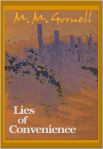 On a personal note, I would love to have all my books as audio, but don’t sell enough (not yet! Smile) for many narrators to take a commission-split chance on me, and can’t afford the narrator I want with a hefty flat out payment! (I’m talking about someone famous of course like Neil Dudgeon or Hugh Frasier) The talented Mei-Ling Downey, did take a chance on me and narrated Lies of Convenience, on Audible. What a joy to my writing-heart that is!
On the flip-side, a few comments from other writers have pointed out not everyone is as fond of audio books as I am! Nonetheless, the key point I’m aiming for is–paying attention to bringing your reader into your character’s world is crucial to reader enjoyment and writer success—whatever the format. Paper, eBook, or the spoken word.
Happy 2018 writing trails!
[i]Written by Matthew Costello and Neil Richards about a retired NYC policeman who moves to England and lives on a houseboat solving crimes with a divorced lady co-protagonist and her two teen aged children.
[ii] Of Mrs. Bradley mysteries way back when, and currently Barnaby in Midsomer Mysteries.


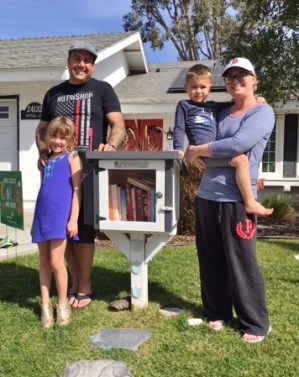 Kevin drew plans and constructed his Valentine’s Day gift, painting it to match their house. He checked with city regulations (though not all the Libraries I visited did) and sunk a post into their front lawn three feet from the side walk and about 24 inches from the ground. Three small flagstone steps invite kids to visit. He attached a mailbox flag which is extended when new books are added.

 The 14th of February is also LIBRARY LOVERS DAY.
 The 14th of February is also INTERNATIONAL BOOK GIVING DAY.



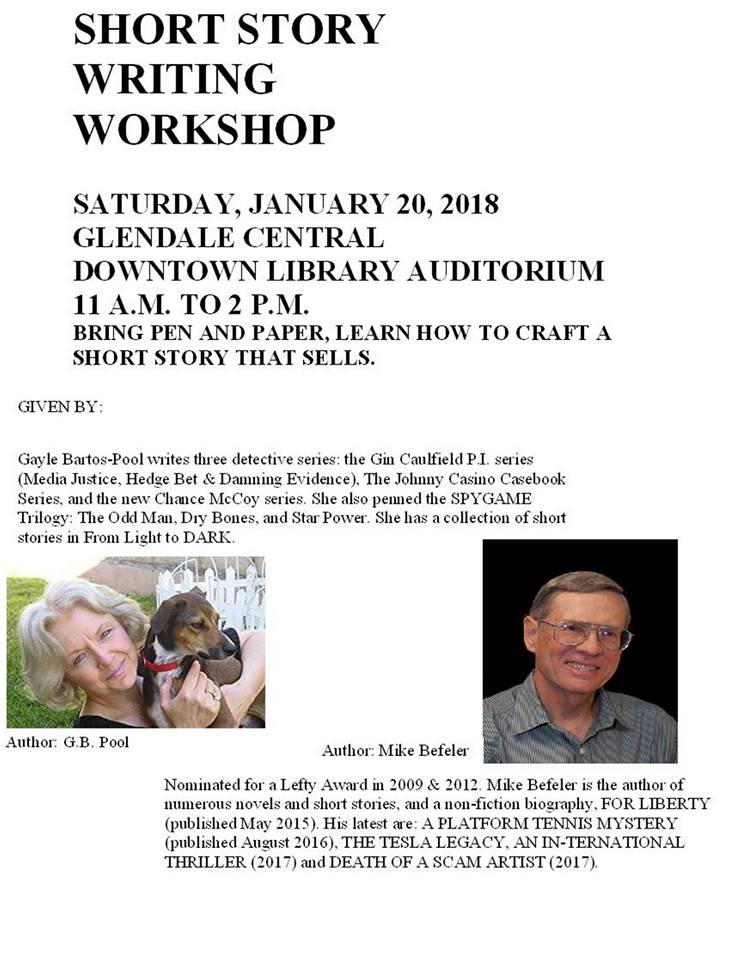
 How To Open a Great Short Story using the


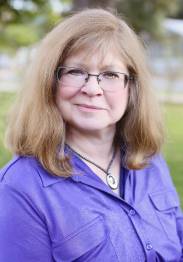 Linda O. Johnston, a former lawyer who is now a full-time writer, writes the Barkery and Biscuits Mysteries for Midnight Ink. She has also written the Pet Rescue Mystery Series, a spinoff from her Kendra Ballantyne, Pet-Sitter mysteries for Berkley Prime Crime. She additionally currently writes the K-9 Ranch Rescue miniseries for Harlequin Romantic Suspense about a ranch where dogs are trained, as well as the Alpha Force paranormal romance miniseries about shapeshifters for Harlequin Nocturne. And yes, they all involve dogs. Her most recent release is her 46th published novel, with more to come…soon.

 Rosemary wrote her first book when she was ten years old – for her little brother. She also illustrated it herself. It was later rejected by Random House!



You must be logged in to post a comment.