
by Miko Johnston
Have you been writing? No? I hear you. We can’t seem to find the energy, or the creativity, to write. Even though we have a file full of ideas to play around with, or a started piece, or a half-finished manuscript. Even though we have plenty of time to write with no excuse other than the million other things we can be doing. Cleaning out the hall closet. Again. Thinking of a new way to use canned tuna. Researching unfamiliar candidates on my primary ballot – maybe I would want the next governor of Washington to be Goodspaceguy* : )
I sympathize. It took me a few months to get inspired enough to write again (see my last post). If you’re still stuck in neutral, I’m here to help get you in gear. And what better way than to get back to basics – how to write a story.
WHAT IS A STORY?
A story is a fully formed concept that has a beginning, middle, and end, plotted with characters, goals, conflict, and stakes. This applies whether you write short stories, screenplays, novellas or novels.
HOW TO BEGIN:
When you consider buying a new book, you generally open it and read a few pages before you decide to take it or leave it – you can even do that online with Amazon’s “Look Inside” feature. If the book’s middle sags, or the ending isn’t satisfying, you won’t know that until after you’ve purchased it. However, if the beginning doesn’t grab you, it’s not going home with you. That’s how readers will react to your book. This is why the most important part of a story is the beginning.
A beginning has to serve many purposes. It must introduce us to the ‘who’ of the story, also some of the what, when, and why. The tone and genre should be apparent. It should also give us enough to pique our interest; too much bogs down the story and too little leaves us scratching our heads.
As authors, we really begin by sitting down and writing. Thinking, mulling, researching – all important, but they won’t get the words on the page. Once you’ve committed to writing, you need a way to begin. The possibilities might seem endless, but there are basically three ways to launch a story.
I Mid-action
This is when you begin at the last possible minute to give the reader a sense that the story has already started and they’re joining it already in progress. This may seem counterintuitive, like walking into a movie after it’s begun, but it tends to get the reader curious about what’s going on, so they keep reading to find out.
A good example of this would be a murder mystery that opens with the detective arriving pre-dawn at the crime scene; a beat cop hands her a take-out coffee and reads his notes: “The vic is….”, which gives readers information simultaneously with the detective. We don’t need to be in her bedroom when she’s awakened by the precinct’s call, or watch her get dressed, fix breakfast and head out to her car. That would be like arriving at the movie theater before the commercials. With mid-action, you get the reader engaged right away and weave in the details as you go.
II Setting a scene that’s about to change
This is when you open with a scene of normal everyday life. It could focus on a character, like a young woman celebrating her promotion with her office mates, then walking home alone. Or a place, like a military base in the Middle East, where soldiers are relaxing. Often the genre hints that the placid opening will be disrupted with a bang – maybe literally. If the book’s a mystery or a thriller, you know something is going to happen – that young woman will be murdered; the soldiers playing cards or tossing a football around will suddenly come under attack. If the genre doesn’t imply something will happen, hint at it in your opening paragraph or page.
The key to this method is to hold off the revelation long enough to generate tension. Change it too soon and it will be like shouting BOO; startling but not satisfying. Wait too long and the reader will lose patience as well as interest. It also must depend on the length of the manuscript. You can take more time with a novel than with a short story.
III A statement or explanation
Common in many great classics, this type of beginning employs a form of narration:
A nostalgic “I remember…” musing
A “Let me introduce myself” statement
A narrator’s observation
An implied ‘bookend’
An omniscient point of view.
Mysteries that open with the murderer observing his deed, such as Paula Hawkins’ Girl On A Train, is one example, since the murderer is not the protagonist. Using an implied bookend, Lawrence Hill begins his engrossing novel, Someone Knows My Name, with his elderly heroine ready to tell a packed audience her life story. The rest of the novel is told in flashback up to the climax, which brings us back to her about to go on stage.
Using this method addresses the reader in a direct way, which builds a bond. However, it introduces the plot slowly, in a cerebral rather than a dynamic manner, so it must intrigue us enough to keep reading. You can accomplish this with an opening sentence in a short story, but longer form fiction allows for more time.
Confused yet? Think of beginning a story like getting into a pool. Some just jump right in – method one. Others will dangle their feet in the water awhile, then slip in – method two. Others (me) will dip a toe in, complain about how cold it is, then slowly inch deeper into the pool until the water’s shoulder-high before gliding under – method three.
* * *
Are you are having trouble starting your story? Consider writing three different versions using each of these methods, then see which best accomplishes the goal of an opening. Which will lead you in the direction you want to go? Even though you’ll reject two of the openings, you may keep a nugget from them to use elsewhere. Or, if you decide to use a bookend opening, you can convert one of your other versions into chapter two.
Have you begun your story but aren’t satisfied with it? Does it feel bloated with backstory? Does it convey enough to grab the reader’s interest? Which type of beginning did you use? Does it satisfy the goals of that method? If so, perhaps trying another method would be more effective, or it might suggest a fix for your original beginning.
Your opening should not only prod your readers to keep going, but you as well. Again, even outlining an opening using another method of beginning may prompt some questions or ideas that will move you forward. If you’re writing a sequel, try rereading your previous book, or go back to the beginning and reread them all. It may give you momentum, or you may find some detail that triggers an idea to follow up on.
* * *
Have you gotten stuck after writing the opening and can’t seem to progress? Does your plot feel bogged down and going nowhere? In the next installment, we’ll look at ways to keep the middle from sagging or lagging.
*Spacemanguy` was an actual gubernatorial candidate in Washington state’s primary election. He lost.
Miko Johnston is the author of three novels in The Petal In The Wind series, available through Amazon and Barnes and Noble. Miko lives on Whidbey Island in Washington (the big one). Contact her at mikojohnstonauthor@gmail.com


 I’m sharing today two short blog writing-trails I’ve been down recently. As always, my hope is there’s something in my meanderings that might send you down helpful writing paths of your own.
 Knowing what I know about my myself and where I am writing-wise——answering Paul’s question, I did arrive at being a Movie/TV Show Producer and/or Director (admittedly based only on outsider-knowledge of the professions). I do love movies and TV, and in my mind, producers and directors do all the great things in putting together a compelling story, like picking the setting, lighting, color pallet, sequence of scenes, casting…
 I should backtrack a bit, and point out my prevailing approach and perspective on writing comes from reading. And especially from the golden age. Updated by P.D. James, of course! So, adding radio and movie profession perspectives, though it may be obvious to some, was not such a straight line for me.
 My second Little thing–is weighing egoism, good sense, advice taking, and the shortness of life. Items/thoughts which are a continuing balancing act for me–especially during the editing process.
 Definitely interested in hearing your thoughts on Paul’s question(which I’m still thinking about), and what “perspectives” you might be using for your writing reviews. And here’s hoping, my ziggy/zaggy comments will help you make your next work

 Thank you, Jackie! I’m a native of California, I was born and raised in the Pasadena area. My husband and I still live here, although we have talked about living elsewhere that is less expensive. I have two adult sons and two adorable granddaughters. We live in a condominium with two precious pups, Minnie, a mellow Maltese, and Mandy, a very precocious Terrier mix. They keep us on our toes and give us hours of unconditional love and fun!
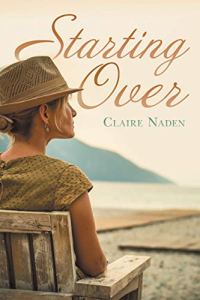 Cache Under the Stacks was published in August 2018, and Starting Over was published December 2019. Both books I “pantsed,” but now I am trying to outline and it is not as easy for me. I’m working on a sequel to Cache Under the Stacks and a sequel to Starting Over, a woman’s fiction that has evolved into a bit of a mystery.
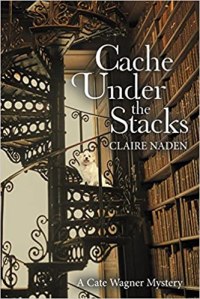 BOOK REVIEW: Cynthia (pen-name Claire Naden) published Cache Under the Stacks, A Cate Wagner Mystery, two years ago, and I have just found and read it. It’s a story about a divorced, empty-nester bookstore owner, living alone in a nice neighborhood with her sweet pup, Minnie.
 As you learn new skills, like doing a TV interview, let people know about it on your website. Polish old skills. (You can always improve.) You should have learned a hundred great writing techniques and mistakes to avoid in that writing group you joined. (We can all learn from other’s mistakes as well as our own.)


 In the spring of 2010, just six months after I published
  For example, in Maids of Misfortune, I had created two elderly dressmakers who lived in the O’Farrell Street boardinghouse. One of these sisters talked all the time, the other never said a word. And that was about all a reader learned of them in that first book. But I had developed a whole history for them and I wanted my readers to learn that backstory. So, in my second short story,
  Finally, I write these stories so I can explore historical themes in more detail. In
 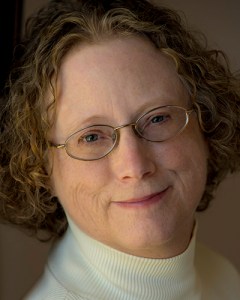 Louisa Locke, a retired professor of U.S. and Women’s History, is the author of the USA Today best-selling cozy Victorian San Francisco Mystery series. This series features Annie, a young boardinghouse keeper, and Nate Dawson, a local San Francisco lawyer, as they investigate crimes with the help of their friends and family in the O’Farrell Street boardinghouse. Not content with just exploring the past, Locke also helped create an open source, multi-author science fiction series called the Paradisi Chronicles. You can find out more about Locke’s books from both of these series at
 I love to write. I love to write novels that contain romance. I love to write novels that contain mystery or suspense.
 My kind of story, and I follow their bible and have my characters interact with the protagonists of other Colton stories in the various mini-series that are part of the Colton series. When I write stories that are all my own I fit a lot of dogs into them, and occasionally have been able to slip one in to a Colton story.


 During the Covid 19 enforced solitary confinement, my writing methods have changed somewhat. Partly because, after all the Woman’s Club administrative work,
  So now, sitting in my newly arranged office space, with smartly labeled files and clearly focused folders – I can’t find anything. I do a lot of research and have copious folders of notes, print-outs and clippings; now all neatly categorized. Normally, when I sit at my desk in my very small ‘office’ (in reality, a corner of the living room) I can reach my arm out and grab the stack of papers I need. Or reach the other arm out and grab the specific notebook. Everything’s at arms length and very convenient. Except now I have to stop and think “which arm?” “Is it to the left or to the right or behind me? My color-coded files are in upheaval because I have re-arranged them methodically. But my creative mind doesn’t work that way. Now I have to rethink my steps as to why I re-filed things and where my logic was going with the new system.

 After ordering restaurant take-out, my husband drove there to pick up dinner. It would take him almost an hour, leaving me time to explore a newly bloomed section of our garden, planted with rhododendrons. If you’re not familiar with the plant, they’re like azaleas on steroids, with flower clusters, some as big as your face, nestled against dark green leaves. Some grow as tall as trees; others have been pruned knee- or chest-high, their blossoms a riot of pinks, fuchsias, purples and reds.
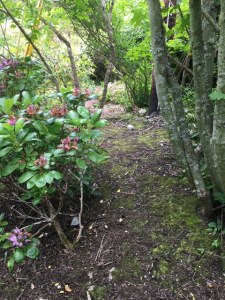 In the shelter of the garden, hidden beneath a canopy of lavender and laurel trees, I sauntered the path that wends through the rhododendrons. As I neared the end of the path, where it rejoins the lawn, I spotted something crescent-shaped sparkling on a branch. A closer look revealed a young bird, judging by its downy feathers of gray, which blended in with the bark. She (as I later discovered) had a curved beak, bright yellow, which stood out like a slice of sunlight in the darkness of the overgrowth.
 I so wanted to hear her sing, but she didn’t. Silently she sat there, occasionally darting her head, watching everything around her as I watched her, delighting in her curiosity, her seeming amazement with the world she’d recently entered. She hadn’t mastered flying yet. Her wings fluttered to help her balance on the branches as she hopped along, taking in the sights and sounds all around her. I’d been feeling blue awhile, in a rut. All that changed with my encounter with this fledgling. I found myself transfixed by her utter joy, and that joy flowed through me for the first time in months.

 Of course, the correct common usage idioms are “stubbed my toe, a drop in the bucket, beat around the bush, and a dime a dozen.” The last two are alliterative, yes, but why, I wonder, are toes the only part of our anatomy ever stubbed? And why drops only drip into a bucket instead of any other container? My favorite, though, is “a short/long week – or year, or hour.” What do they actually mean? Six days instead of seven? 11 months instead of 12? Sure, it’s easy to explain that an hour can drag on seemingly forever and a short week can mean time flies by, so why don’t we write that?
 I have a book, “The Describer’s Dictionary” that contains oodles of such hackneyed idioms but they do inspire me to create my own if possible. The book is tremendously helpful when trying to find a way to describe, for example, low-elevation clouds. One description offered is “a cloud mass like a formless gray horizontal sheet.” Would you honestly use that? However, I have found the book invaluable for character physiques, architecture, locales, settings, and surfaces and textures. There is an entire chapter on Necks. Granted, it’s only half a page but it encourages the mind to explore other possibilities.
 Jill Amadio is from Cornwall, UK, but unlike her amateur sleuth, Tosca Trevant, she is far less grumpy. Jill began her career as a reporter in London (UK), then Madrid (Spain), Bogota (Colombia), Bangkok (Thailand), Hong Kong, and New York. She is the ghostwriter of 14 memoirs, and wrote the Rudy Valle biography, “My Vagabond Lover,” with his wife, Ellie. Jill writes a column for a British mystery magazine, and is an audio book narrator. She is the author of the award-winning mystery, “Digging Too Deep.” The second book in the series, “Digging Up the Dead,” was released this year. The books are based in Newport
 The Writers in Residence
You must be logged in to post a comment.