
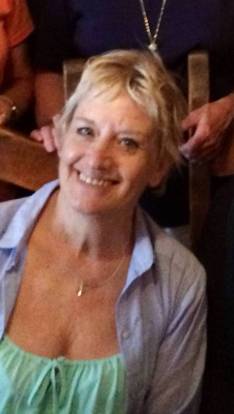
 Where do you escape to when it all gets too much? When that sleep that you really, really need alludes you? For those stressed with over-work, with family or money worries or health problems – a respite is definitely needed. Other than flying away from it all and off to an exotic desert island, what are we ordinary mortals supposed to do? I have discovered my best escape is found between the pages of a book.
I guess I have always escaped into the magical world of stories. I have been reading all my life. My brother, Phil, reminded me that I started my own library – ‘The Leafy Way Public Library’ – in my bedroom as a small child. I had a little rubber stamp that imprinted the logo in my books. Phil remembers my issuing him with a library ticket that I date-stamped to take out books! My ‘library’ included the different Enid Blyton mystery series, The Famous Five, The Secret Seven and the Mary Mouse tales. Phil was not interested in the more girlie books that I loved: the Pamela Brown adventures about theatre life: The Swish of the Curtain, Blue Door Ventures and Golden Pavements – or Noel Streatfield’s Ballet Shoes and the Dancing Shoes series. 
Even at that very young age I found an escape into these magical books. I even wrote my own first book, Make Believe Mondays, when I was ten – carefully handwritten, with an orange, pencil- illustrated cover. I wrote it for my brother Phil, I recall! The love of books clearly stayed with me throughout my growing up. I know I have written before about these books that colored my life. Books have always been a wonderful escape for me.
But I think this is true for most of us writers. I know that with my fellow bloggers we often talk about the books that we lose ourselves in. Reading is truly a wonderful way of retreating from the woes that life sometimes presents. Even if it is a snatched fifteen minutes on a train or bus ride to work, or a quick read on a short coffee-break. What a relief to vanish from today’s world, for a glimpse into someone else’s fictional world.
 And in the middle of the night, instead of tossing and turning and sheep-counting – reach for a book. I do. I currently have a favorite Rhys Bowen novel about Molly Murphy in the turn-of-the-century New York mystery series. In a different mood, I will re-read Rosamund Pilcher’s The Shell Seekers, a Maeve Binchy novel, a Marcia Willet story, one of Carol Drinkwater’s books set in the South of France, or Victoria Hislop’s The Island and her other Mediterranean-set novels. I just love anything set in the sunny Mediterranean. No rush-hour traffic jams, no screaming police sirens, angry crowds pushing and shoving. Just gentle walks though olive grows, planning delicious simple meals, folk watching the tides come in and go out again under breath-taking sunsets. What’s not to like?
 Although my all-time favorite remains the childhood classic, Heidi, by Johanna Spyri, about the little girl who goes to live with her grandfather in the Swiss mountains. Some years ago I learned to refocus my mind while in the dentist’s dreaded chair – and would whisk myself off to that Swiss mountain side with Heidi and her goat-herd friend Peter.
As a writer, I love to think that someone else might lose themselves in a story that I have created. I write about another world I like to lose myself in: Lottie Topaz’s discovery of Hollywood in the 1920s. It’s quite exhilarating to inhabit this other reality.
As we lose ourselves in someone else’s stories, one forgets – for a while – the troubles and stresses that surround us.
So the next time that bedroom clock relentlessly blinks 3:30 am at you, and you find yourself start back at number one with your counting sheep, reach for a book instead – a gentle, charming story. Nothing too violent or thought-provoking. Just a beautiful, exotic island of words, with a gentle breeze blowing across the pages and the scent of tropical flowers to lull you into that other realm that will take you out of yourself for a while. Sleep then comes more easily when you leave reality behind. To sleep – perchance to dream – of inhabiting the world of your favorite books… written by your favorite authors….
…………………………………
ROSEMARY LORD BIOGRAPHY
 The author of Best Selling non-fiction Hollywood Then and Now and Los Angeles Then and Now, English born ROSEMARY LORD has lived in Hollywood for over 25 years. As an actress, her credits include Monty Python, Rivals of Sherlock Holmes, Days of Our Lives, L.A. Heat and more. She did voice-work on Titanic, Star Trek, Shakespeare In Love, The Holiday and Pirates of the Caribbean amongst many others. A former journalist, she is published in many magazines such as Woman’s Journal, Atlantic Review, Woman, Films & Filming, Jackie, Field newspapers and more in the UK, USA and Australia, where she wrote about Hollywood’s Golden Age, interviewing such luminaries as Cary Grant, James Stewart, Tony Hopkins, John Huston. She was a Senior Publicist at Columbia Pictures. Rosemary lectures on Hollywood history and is the Historian of the Woman’s Club of Hollywood. She is a member of MWA, Sisters-in-Crime, SAG, BAFTA and contributes to The Writers In Residence Blog.
Her first mystery novel Lottie Topaz and the Flicker Murders… is set in the 1920s Jazz Age Hollywood featuring Lottie Topaz, an extra in silent movies.
_____________________________________________________________
Rosemary’s Blog posted by…

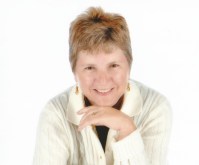 Jacqueline Vick is the author of over twenty short stories, novelettes and mystery novels. Her April 2010 article for Fido Friendly Magazine, “Calling Canine Clairvoyants”, led to the first Frankie Chandler Pet Psychic mystery, Barking Mad At Murder, followed by A Bird’s Eye View of Murder. Her first Harlow Brothers’ mystery, Civility Rules, is out in ebook format and paperback. To find out more, visit her website at
  Dave Rosenfeld brings us the Andy Carpenter mysteries. His character is a defense attorney who inherited a pile of wealth, so he spends most of his free time with the Tara Foundation, a dog rescue. The rescue is the launching point for the mystery, such as when a dog is stolen from the foundation only to turn up next to a corpse in Who Let the Dog Out? And yes, I do plan to purchase The Twelve Dogs of Christmas for my holiday reading list.
 picked up Ashley Weaver’s Death Wears a Mask based solely on the cover, so I guess good covers do matter. I found a fun world that revolved around Amory Ames and her playboy husband, Milo. The back cover described it as Agatha Christie updated, and I thought it came close. This is the second book in the series, so I’ll have to go back and start with number one.
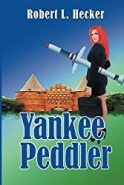 L. Hecker’s Yankee Peddler is more of a farcical social commentary than a mystery, but it’s so funny I had to include it. Ambassador Elizabeth Sullivan Wexford Adams sets out to sell the Litanians on “The American Way.” Hard to do when these isolated islanders have never heard of the USA.





 And this isn’t an isolated event for me. Research that gets out of hand—at least at “that” moment of interest. Here’s a picture of an ages old bookcase in my kitchen, stuffed with unused recipe books and internet printouts. Many are products of “Research.” Nonetheless, I sincerely believe–not only are past memories, experiences (see several preceding excellent posts here on our site), and travels invaluable to writing, but all the “research gone array” also contributes to the mosaic of our stories. Maybe not exactly at this moment in writing time, maybe even unconsciously, but down the road for sure. To use a bread analogy, to write with texture, flavor, and aroma (I can smell the bread), research is invaluable. Though it can get out of hand for some of us. But even if I’m completely wrong about the value part, it sure is fun.


 A former private detective and once a reporter for a small weekly newspaper, Gayle Bartos-Pool (G.B. Pool) writes the Johnny Casino Casebook Series and the Gin Caulfield P.I. Mysteries. She also wrote the SPYGAME Trilogy, Caverns, Eddie Buick’s Last Case, The Santa Claus Singer, Bearnard’s Christmas and The Santa Claus Machine. She teaches writing classes: “Anatomy of a Short Story” (which is also in book form), “How to Write Convincing Dialogue” and “How to Write a Killer Opening.” Website:
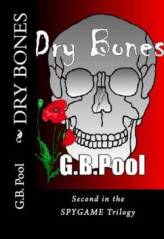
 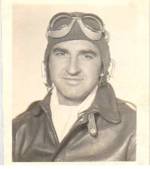 My father was in the Air Force. We traveled a lot. I lived on Okinawa and in France as well as in Memphis (near Elvis) and here in California. There were a few other military bases along the way and many of these places turn up in my SPYGAME Trilogy. I used some of my father’s experiences as a pilot during World War II and afterwards, as well as my imagination, to concoct an intriguing set of stories. The first one, The Odd Man, deals mostly with WWII and the Bay of Pigs. I went to a boarding school in France and that place finds a home in book two, Dry Bones. Book three, Star Power, wraps up the trilogy by bringing back characters from books one and two for a climax ending up in Southern California with some Hollywood stars tossed in for fun, though some are positively deadly.

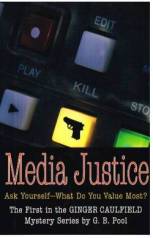
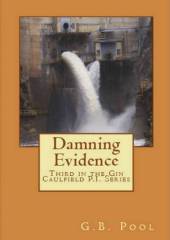
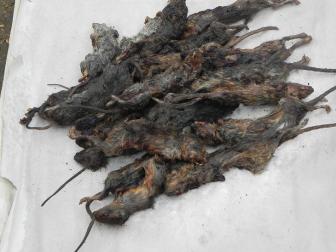
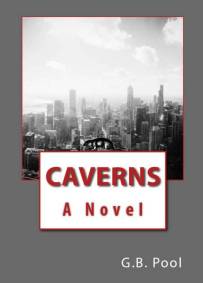 Here’s another story. When I was on assignment in Chicago as a P.I., I lived in an apartment near Lake Michigan. It was February. A brutal winter. I had to take the subway and a bus to the job at night. I worked from 5 p.m. until 2 in the morning. I survived Chicago. Years later I heard a story from a co-worker in California about a police officer in New York City who ran across something rummaging around in garbage cans down an alley. He shot it. It was a rat. It weighed in at 105 pounds. I moved the rat and his friends to snowy Chicago and I have them eating away the garbage on which a large area of The Windy City was built after the Great Fire. This was near the lake. Huge caverns have been carved out under the condos around the lake. Disaster looms. That book is Caverns.
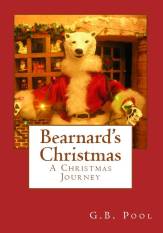 started making my own and making vignettes. I had an idea for a Christmas castle that I designed. I still have the sketch. I decided to write a story to go along with the idea of this castle. Then I decided to build the castle and make the figures that went with the story. Then I published the book. The first one was Bearnard’s Christmas.


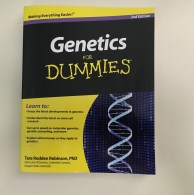 ve me the vocabulary I needed to comprehend the technical articles I encountered as I chased down epigenetics and followed the threads that spun out from there.
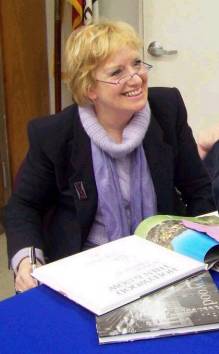 Rosemary wrote her first book when she was ten years old – for her little brother. She also illustrated it herself. It was later rejected by Random House!
 Then someone told me about “Org. Charts”… Online Organizational Charts that are supposed to make your life easier. Some of the versions can be very expensive, I was told. I was excited. Perhaps this is the magical cure I had been seeking?


You must be logged in to post a comment.