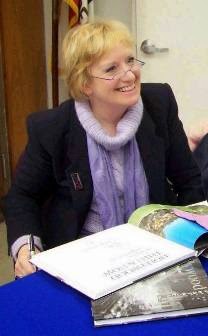
 Rosemary wrote her first book when she was ten years old – for her little brother. She also illustrated it herself. It was later rejected by Random House!
She has been writing ever since.
The author of Best Sellers Hollywood Then and Now and Los Angeles Then and Now, English born Rosemary Lord has lived in Hollywood for over 25 years. An actress, a former journalist (interviewing Cary Grant, James Stewart, Tony Hopkins, John Huston amongst others) and a Senior Publicist at Columbia Pictures, she lectures on Hollywood history. Rosemary is currently writing the second in a series of murder mysteries set in the 1920s Jazz Age Hollywood featuring Lottie Topaz, an extra in silent movies.
# # # #
I was going to write about my many Bad Hair Days. But I realized that, by deciding that I could not write another word until my current strange hair color was sorted, this was just another form of Writers’ Avoidance Tactics – albeit colorful! That is a subject for a whole other Blog to come!
But it reminded me how important I felt the color of my character’s hair was. In my current novel series, my protagonist, Lottie Topaz, has copper-colored hair styled in the 1920s fashionable bob with ‘spit-curls’ on her forehead. ‘Spit-curls’ are so called because you spit on your fingers, then make a couple of curls from your bangs, securing them flat against your forehead with spittle. (Charming – I know!)
Lottie’s best friend, Flora, has jet-black hair in a sleek bob with straight bangs – or ‘fringe’ as we Brits call it. Very sophisticated.
This is why I love writing this series that is set back in the early Twentieth Century. It is such fun exploring the styles and fashions of that era. But not just that: recreating the life-style and sharing the whys and wherefores of a by-gone time. So that I and my readers are immersed in another world.
For instance, I find it fascinating to use a mystery setting where telephones were not readily available. Certainly no mobile-phones. How would they communicate, especially in an emergency?
Mysteries set in today’s world have so many solutions to use: computers, emails, Skype, texting. It appears much easier to explain clues and resolutions of the who-dunnits when you can show your characters following an email trail or intercepting a text message on a stolen cell-phone. Researching people’s backgrounds or tracking addresses or locations for present-day books is swiftly done on the computer.
So, why do I give myself this headache of working out how Lottie and her friends can find out about potential suspects or track locations where they may have traveled to? I guess that’s because one of my favorite things is research. I have Lottie and her friends do what I have always done: Of course, today I do use computer research. But I have always spent hours at the libraries, pouring over musty tomes, looking up old newspapers, checking magazines and advertisements. This gives me the color to weave into my stories, words and names that are not used today. I also glean ideas from those pages as to how to provide clues as well as challenges for my characters.
It is imperative that the details are authentic and that everything rings true. Even when I create situations with a little ‘poetic license’ – I always check it out so that it certainly could really have happened. As a reader, I hate it when something jars because it is out of the realms of possibility – or just plain wrong! I find it difficult to continue reading after that. So I go to great lengths to ensure I have my facts right.
Then there is ‘the leg-work.’ Over the years I have been drawn to exploring wherever I go in the world. I stroll through streets, note book and pencil ready, checking out addresses and buildings, noting the conditions and architectural style of doorways, windows, even roofs that I can access. Up and down steps and stairways I wander. As I explore these old streets, buildings and gardens, I can really get a feel for what went before me. I get a sense of how people lived and worked.
Basements are especially fascinating. Because they are rarely cleared out thoroughly, I find old magazines, pages of newspapers, abandoned cases, luggage tags and labels on shelves and doors. They all tell a story.
I am very chatty. So in my wanderings I will always chat to people I come across: those guarding old buildings, neighbors in old houses, cleaners, workmen – just anybody I can. “How long have you been here?” I ask. “What was here before?” “How many generations of your family have been here” I ask lots of questions about the past. I am very nosey! But most people are eager to share whatever they know. They love to repeat stories they have heard or tell me about their grandparents, aunts and uncles. I find that almost everyone has a fascinating tale to tell. So I borrow and steal unashamedly from the past.
As I have previously confessed, I have an abundance of scraps of paper with these many notes on them. Although I do occasionally get overwhelmed by the sheer volume I have accrued, mostly I absolutely love surveying them spread all over my desk and my floor as I piece together my stories. Like pieces of a jigsaw puzzle, I work out what gem I can place where and string together a necklace of a mystery.
I have written contemporary stories. In many ways they are much easier, as I don’t encounter an ‘oops’ moment when my character switches on a light – at a time before electricity was available.
Writing historical books and novels is considerably more time-consuming. But, for me, it is so much more fun. I love to share what I have discovered about times gone by. I love the intricacies of weaving historical facts and people into my stories. I love using a vocabulary from earlier generations.
Although I am very grateful for modern plumbing, medical advances and internet access, I often feel that the world I write about was a kinder and gentler place – most of the time, anyway.
……………………………

 Miko Johnston is the author of A Petal in the Wind and the newly released A Petal in the Wind II: Lala Hafstein.
 Later, as the more intriguing aspects of taking Buster to a psychic began to settle in, I thought I could make up some of my expenses if I could interest a magazine in running an article. I sent out queries and scheduled two appointments for my dog.

 Madeline (M.M.) Gornell is the author of six award-winning mystery novels. Her current literary focus is Route 66 as it traverses California’s Mojave Desert. Madeline is a lifetime lover of mysteries, and besides reading and writing, is also a potter. She lives with her husband and assorted canines in the High Desert. For more information, visit her at

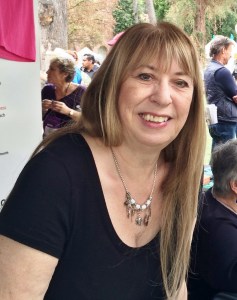 OUTSIDE THE LINES is sixth in the popular mystery series. Sheila Lowe has also written a stand-alone thriller in which her Handwriting Specialist appears in a minor role (What She Saw). Like her fictional character Claudia Rose, Lowe is a real-life forensic handwriting expert who testifies in court cases. She has begun work on the 7th book in the series, UNHOLY WRIT.
 Jackie Houchin is a Christian writer, book reviewer, and retired photojournalist. She writes articles and reviews on a variety of topics, and occasionally edits manuscripts. She also dabbles in short fiction. She enjoys creating Bible craft projects for kids; growing fruits, flowers, and veggies; and traveling to other countries. She also loves cats and kittens and mysteries.”
 A former private detective and reporter for a small weekly newspaper, G.B.Pool writes the Johnny Casino Casebook Series and the Gin Caulfield P.I. Mysteries. She teaches writing classes: “Anatomy of a Short Story,” “How To Write Convincing Dialogue” and “Writing a Killer Opening Line.”
 This takes me to Anna Katharine Green and Mary Roberts Rinehart. These two ladies lived a hundred years ago. Anna Katharine Green wrote her Amelia Butterworth character in 1897, well before Agatha Christie wrote The Murder at the Vicarage (1930) featuring Miss Marple. Christie acknowledges Green as her inspiration. Green also wrote about a young female amateur sleuth, Violet Strange, years before the first Nancy Drew stories hit the bookstore shelves.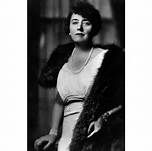
 he is considered the source for the term: “The butler did it.” She didn’t use that exact phrase, but the butler was the culprit. She even has a series of stories centered around World War I. She was a trained nurse and married a doctor; so much of what she writes has facts behind it. She even served as a war correspondent during World War I in Belgium and toured the front lines, so the visuals are based on things she saw firsthand. Not all her stories are mysteries, but they are all good, solid stories, some even slightly romantic, but nothing even remotely lurid. How refreshing.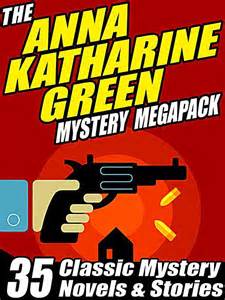

 Kate Thornton is a retired US Army officer who enjoys writing both mysteries and science fiction. With over 100 short stories in print, she teaches a short story class and is currently working on a series of romantic suspense novels. She divides her time between Southern California and Tucson, Arizona.


 Miko Johnston is the author of

 Jacqueline Vick is the author of over twenty published short stories, novelettes and mystery novels. Her April 2010 article for Fido Friendly Magazine, “Calling Canine Clairvoyants”, led to the first Frankie Chandler Pet Psychic mystery, Barking Mad About Murder. To find out more, visit her website at
 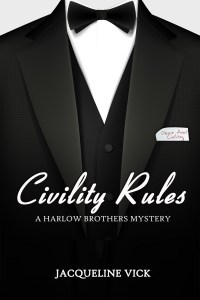 ial representative
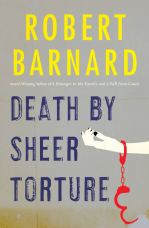 e mysteries throw an average person into a mix of lunatics. It’s that duck-out-of-water aspect that makes for big laughs. Take Death by Sheer Torture by Robert Barnard. A perfectly respectable police detective must return to his family home (which he’s avoided for almost 20 years) where he’s surrounded by the suspects–his family members. These include a slob cousin who married the daughter of Italian mafia and their brood of Squealies (the children), a cheerful aunt who collects and admires Nazi memorabilia, and his very real memories of the corpse, his own father, who died in embarrassing circumstances. What more could you want?


You must be logged in to post a comment.