We are a group of published writers who come here weekly to entertain, inform, and encourage you in your writing and your reading journey. Grab a cup of coffee, get comfortable, and join us.
I love what I write, and I want to do more of it. I’m currently writing for two Harlequin Romantic Suspense series, their long-running Colton books and my own Shelter of Secrets series, as well as a mystery series called Alaska Untamed for Crooked Lane Books under my first pseudonym, Lark O. Jensen. I enjoy them all and have new books coming soon in each of them.
But my mind is at work on, yes, something new. Not sure what yet, but it’ll quite possibly be a mystery series. And it’ll have romance in it. And it’ll definitely have at least one dog.
That’s who I am, and what I write.
How did I become that way? I’ve developed my writing persona over a lot of years, and I write the kinds of things I like best.
But how about you? What is your favorite genre to write in? Your favorite kinds of characters? Any quirks, like mine of including dogs whenever possible? And do your favorite ideas morph over time or stay the same?
Think about it now. If you were going to change what you’re writing, how would you determine what came next? I have to admit I do ponder that a lot, though I recognize I’m fairly set in my ways.
Or do you always try something new? Or do you prefer staying with a particular genre?
I suppose that kind of pondering is part of the creative process. Writers write. And think. And plot. And create characters and stories, and even their own futures, to some extent.
Well – a New Year begins – full of promise and excitement.
I think many of us writers welcome a new year in which to fulfill our promises of writing goals. As Hannah Dennison said recently, “write that Big Book”!
It’s a time, after reflection during the holidays, that we can decide on a new path, a new direction. Renewed enthusiasm.
As writers, we might decide to try a different genre to explore, a new audience to reach, different publishing sources or methods of publication, a fresh approach to promotion. It’s quite exciting, isn’t it?
Perhaps it’s time to create a whole new ‘image’ as an author. Of course, there’s a risk of losing loyal followers. So how do you convince them that you’re still keeping that strand of your writing that they enjoy, but you’re expanding to include new themes, character lines, new series. It’s a way of reaching additional audiences.
I’ve been looking at new markets and new approaches. I’ve spent so much time writing about Old Hollywood and its Golden era, maybe I should look at contemporary subjects.
In working my way through my scattered ‘memoir’ project, I realized how many different lives I’ve led, different places I’ve lived, different eras I’ve inhabited.
I thought about those who suddenly took off in a totally different direction and created a new life. A writing life. Often, a very satisfying, successful writing life. Doing something totally different from their earlier success, but following their heart.
Californian Barbara Seranella turned her life as an auto mechanic into wonderful mystery book series featuring Munch Manchini, a female auto mechanic turned sleuth.
Fellow Sister-in-Crime and MWA member, Pamela Samuels Young was an attorney. She yearned to be an author, but her work as Managing Counsel for Toyota required long, long hours. Pamela rose extra early, writing before she went to work, in her lunch hour and on weekends. Eventually her dedication paid off and her courtroom dramas became huge successes. Abuse of Discretion about youth sexting looks into the juvenile court system. Anybody’s Daughter won the NAACP and other awards. Pamela is now a full-time author and, happily, a former attorney.
British musician Chris Stewart came to fame as the drummer in the band Genesis. In the 1970s Chris decided he’d had enough of touring, enough of cold, rainy, dark English winters and moved to Spain. He and his wife found a remote home in the village of Alpujarras, a region of Andalucia. They bought a ram-shackled hovel and restored it into a simple, self-sufficient rambling home. He helped the local village solve their sheep-shearing challenges and soon became an avid farmer, discovering an amazing variety of local plants, flora and vegetation. Eventually Chris began to write about his new life in Driving Over Lemons, which found a hungry audience of several million readers. Last Days of the Bus Club followed and recently Three Ways to Capsize a Boat.
National Theatre Company actress Carol Drinkwater, who found fame as Herriot’s TV wife in All Creatures Great and Small and movies such as An Awfully Big Adventure travelled the world as an actress. While filming in Australia she met her French husband, Michel, and wrote her first children’s book Molly, which became a series. Carol and Michel fell in love with a run-down olive farm they bought in Provence, France, and spent years cultivating it into a thriving olive oil business. Carol continued to write. As well as her children’s and YA books about suffragettes, World War I and World War II, Carol was asked to write magazine articles about their struggles in restoring their olive farm. These, turned into books, became a highly successful Olive Farm series.
For the movie buffs amongst us, the late David Niven turned away from Hollywood and moved to Southern France. He turned a garden shed, overlooking the Mediterranean, into his writing den with two planks of wood across two stacked orange crates for his desk. Having entertained TV audiences and Talk Show hosts with hilarious tales of his showbiz life, he turned this talent into successful books starting with The Moon’s a Balloon. It became an instant hit. Several other volumes followed.
Another famous actor, Dirk Bogard, also turned to writing. Fed up with ‘pretty-boy,’ Doctor in Love romantic roles, he moved to Europe in search of meatier, serious parts, in The Servant and Death In Venice. From his new home in the South of France came several semi-autobiographical books, based on a lengthy correspondence with an older American woman in the Mid-West. She knew nothing of his acting success, but they wrote to each other about family, the world and many things. She encouraged him to start writing books. Bogard’s letters to her were returned to him after her death, with her request for him to write books based on those letters. A Postillion Struck by Lightning became an instant success, followed by Snakes and Ladders and many more.
It’s curious what happens when we decide to try a new career, when we step off into that unknown. Turn right instead of left. As FDR once said, “The only limit to our realization of tomorrow will be our doubts of today.”
Are some of us writers (like ME!), going through the motions of a writers’ life, without really living it. Due to Life’s challenges and interruptions, are we just putting one foot in front of the other?
So, what is in store for us this year? Do we try a new recipe, if our writing career is sagging? Do we add a little bit of this, a pinch of that? Do we try something new, experiment with a different approach?
Envious of those writers whose lives hum along productively, what can I learn from them? I am excited to discover what’s next. What will be the new inspiration? I think that this time I’ll get it right!
As January comes around again and, for the fourth year running, I’ve made the same resolution to finish writing my “big book.”
My agent always talks about “when you write the big book Hannah” – but it’s a struggle to get to it. I juggle a full-time job on the West Coast (working remotely from the UK), an elderly mother (not juggling her physically I must add), plus exercise two high-spirited Hungarian Vizslas at least a couple of hours a day.
Trying a different genre is always a challenge. For those who don’t know me (yet), I write three mystery series – cozies. I love writing puzzles and of course, the joy of writing a “traditional” mystery is that justice is always served, good conquers evil and if you can make people smile along the way, that’s even better.
Readers expect to solve the mystery. They get caught up in the whodunnit and the page-turning climax but with a different genre and a different kind of reader, it’s a new experience for me.
Rather than rely on my friends to read the current draft of my “big book” (who would be kind), I hired a respected book/script doctor, Lisa Cron.
Well, to say I was utterly crushed is putting it mildly. “I’m sorry but it just doesn’t resonate. I don’t feel anything.” What? How can it not resonate? The story was solid and, although I say it myself, it was quite clever, especially with the final twist. But Lisa was not interested in the nuts and bolts of story. Of course, character development, setting, dialogue etc. are critical since they’re the foundation and cornerstones of the ‘story house,’ but it’s the essence, the soul of the story that is the key to drawing a reader in.
It’s not enough to tell your reader that your character is happy, sad, or angry. That’s too general. As Lisa says, “these descriptions are the what – we need to dig to the why.” If you pluck a scene out of any novel, are you able to immediately tell what your protagonist is going through emotionally?
Just like us, whatever we are worried about or mentally going through, is always at the back of our minds. My mother has been deemed end-of-life at least three times this past year and her health dominates my every waking moment. We don’t live in a vacuum so nor should our characters. And just like us, how would your character’s state of mind impact everything he/she says and does?
Another thing to ponder – who really remembers the twists, turns and intricacies of a good plot be it a thriller or a love story? Yes, we’re caught up in the story especially if it’s a good one, but don’t we just remember how a scene makes us feel? I think back to my childhood and The Lion, The Witch and The Wardrobe (C.S. Lewis) – I wasn’t that bothered about the lion and the White Witch, I just wanted to find a wardrobe and wade through some fur coats to meet the Faun under the lamppost.
When I began to develop feelings for the opposite sex, I devoured sweeping romantic sagas like Penmarric and The Rich Are Different (Susan Howatch) and The Forsyte Saga (John Galsworthy). I don’t remember the plot in the Thorn Birds (Colleen McCullough) but I do remember that scene on the beach where the priest and Meggie consummate their illicit love. Toe tingling stuff.
In a “Survey of Lifetime Reading Habits” conducted by the Book-of-the-Month Club in 1991, researchers found that To Kill a Mockingbird (Harper Lee) ranked second only to the Bible as “making a difference in people’s lives.” Oprah Winfrey called To Kill a Mockingbird “our national novel,” and former first lady Laura Bush said, “it changed how people think.” But maybe it changed how people felt as they lived vicariously through Scout, Jem, and Atticus Finch? The story resonated with readers and, as Lisa believes, “the only way to change how someone thinks about something is to first change how they felt.”
As for my “big book” I’m busily rewriting it. I’m digging into the why of my protagonist and it feels so different to the what. I’ve learned that it takes a lot of courage to excavate emotions of my own that I would prefer to keep buried but I’m doing it anyway.
What books still resonate with you years later and why? Don’t think too hard. I’ve already added a dozen or so books to my original list of favorites! I’d also love to hear tips and suggestions on how you make your writing resonate with readers.
Happy New Year everyone. The holiday season has ended, but the memory lingers for many reasons. Because of all the activity at the end of the year, I limit my writing to holiday messages and thank you notes, but as we always say – writing is writing.
Each year I buy five dozen holiday cards with messages ranging from Merry Christmas to various generic seasonal greetings. It takes a full day to pick an appropriate card and think of something to write in each one that I send to family and friends, but the annual ritual always begins with updating the mailing list before my husband prints out labels. Although I get together, or at least correspond, with many on the list, with some this is the only time of year we’re in contact. The exchange is a way to stay in touch, see how we’re doing, and send good wishes for the holiday and upcoming year.
Revising the list has become a bittersweet part of the process. In the past, most of the changes have been addresses and the occasional addition (marriage, children) or division (divorce). However, for the past few years, most changes have been subtraction – the painful act of deleting ANDs. Don and Jean are now Don, Bert and Ruth are now Ruth. Some former ANDs become NONEs. When Don or Ruth are no longer with us, the entire entry will have to be deleted, leaving gaps in my mailing list as well as my heart.
The joy of receiving cards offsets much of that nostalgia. I often get to see pictures of the family and hear about their adventures over the past year. Some of the news may not be happy, but the contact always is. I set up all my cards along the living room and dining room windows, each one like a handshake, or hug, from someone dear. When I remove them in early January I take a moment to reflect on the cards that are missing, a reminder of those I’ve lost, either in body, or in mind, or who’ve just drifted away.
For me the best part of holiday gifts isn’t receiving them, but writing thank you cards. Like the holiday cards, it starts with finding the right card for the person to be thanked. I have an assortment of stationery with different designs, ranging from charming illustrations to an embossed THANK YOU. I favor classic white or cream notes with matching or coordinating envelopes. Then there’s the challenge of coming up with something fresh, sincere and meaningful to write, just the type of challenge I relish.
I always begin with pen and paper, and write out something I think may be suitable using the three-step method*. I play around with the wording until I’m happy with the results, then carefully copy it onto the note**. Unlike my holiday cards, I always hand write both the recipient’s address and my return address on the envelope. Only the stamp and the card’s design is pre-printed. To me that’s part of the thank you process.
Don’t get me started on how getting thank you notes has become rarer than a 1952 Mickey Mantle rookie card, especially from anyone under 60. However, when I do receive one I treasure it. After reading the note, I study how the sender constructed the message, admire the wording – heck, I admire the attempt! One of the best notes I’d received last year came from the grandson of a cousin, thanking my husband and me for a high school graduation gift. We winged the present based on what little we knew of his interests, but his note expressed such appreciation and gratitude, and so eloquently, that it didn’t matter that he emailed it to us. I’ll happily accept an emailed, phoned or texted note of thanks now. Frankly, some of my younger relatives can’t be bothered to even say thank you, let alone send a written note to us. Only my husband’s intervention kept me from giving them coal for Christmas. But that’s another story.
How was your holiday season? Did you receive any cards or notes that were especially meaningful? And what was your favorite part of holiday writing?
#
*Thank the giver, tell them why you’re thankful, then thank them again.
**I have dysgraphia – the writing equivalent of dyslexia.
###
Miko Johnston, a founding member of The Writers in Residence, is the author of the historical fiction saga A PETAL IN THE WIND, as well as a contributor to anthologies such as the newly released “Whidbey Landmarks.”
Miko lives in Washington (the big one) with her rocket scientist husband. Contact her at mikojohnstonauthor@gmail.com
Hope all of us end this year with wonderful Christmas festivities, followed by a coming year of health, happiness, and good cheer!
On the writing front, I’m still rambling down the writing-road and stopping at another rest stop to do some writing-pondering. Here’s the back story of how and why for this stop. First off, I have a guilty confession—I’ve indulgently watched every Midsomer Murders episode many time. Have on DVDs, consequently I can binge-watch whenever!
The other night, on the DVD I was watching, there was a bonus interview with Carolyn Graham, the creator of Barnaby and the murder mystery series books. During the interview she talks about creating, writing, and thought processes involved in writing in general and this series in particular. And one of the things she emphases in the interview is characters! Of course, music to my ears. For her, the plot comes from the people she creates. Characters come first…then the story.
If you are familiar with the series, there are a lot of characters in every episode—brought to life by outstanding British actors—and they are mostly people you like (a few you don’t}—and among both is a murderer (and you have the fun of figuring out out which one of these quirky characters “done it”)
Then in Maggie King’s excellent post last week, she made what I consider an outstanding statement. “That’s why I write. It keeps me out of prison and my victim(s) safe. And I can create interesting characters I’d never want to know off the page.”
I’ve talked about characters a lot—but Carolyn’s interview brought a new point of view—start with the characters to develop the plot. I’ve mostly started with the story, and created characters I thought fit. And I started with a need to like the characters. Even the murderer, I’ve “liked” on some level. But what about some characters I don’t like. Not sure I can do..?
So/but, I’m starting anew with my latest, Mojave Gáteau–which will come from character development, not plot development. This may not sound like a big deal—but for me, it’s a whole turn around. And I’m writing all these thoughts here because, just maybe, thinking about character and plot evolution might be something of interest in your own writing?
And for us readers, can we tell a difference? I’ve looking over my recently read books and taking a look to see if I can—I’m guessing not.
Hopefully, writers are also readers. We really need to see what others are doing, not to copy their story, but to learn what works and what doesn’t quite get the job done. Thankfully, many writers have their own unique style, though I have read many books that were a tad too much like twenty other authors’ work. Even movies and television shows fall into that category of being like every other show or movie out there. Unfortunately, many current publishers and producers prefer to stick with whatever worked before and won’t venture into a Brave New World. Their loss.
But what if you stick with your original story and don’t want it changed? (1) You don’t sell it to a major publisher/producer. (2) You find a small publisher or studio that doesn’t ask for too many changes. (3) You find a vanity press that lets you do what you want but you don’t make all that much money on the deal, or (4) You self-publish and make even less money unless the winds are favorable and you actually get the recognition you were hoping for. People like Mark Twain, Beatrix Potter, Steven King, Charles Dickens, and even Benjamin Franklin self-published. Their books found fame after the initial publication, but they did start out doing the job themselves.
I have heard many stories about those who sold their work to Hollywood and ended up basically selling their soul in the deal when the entire story was rewritten into something the author wouldn’t recognize. That’s the name of the game. You sell the movie rights to a production company and just walk away with the check in your hand and don’t look back. Really big name writers can negotiate a contract that keeps most of their work intact. Good for them. Some writers might sell the first script/novel/story to Hollywood and if it is a huge success, even if it was gutted and rewritten, their agent negotiates the next deal and the writer keeps his next story intact. Sylvester Stallone didn’t give up his rights on the Rocky movies and it worked out for him. But that isn’t the norm.
So what does a writer do to keep her story close to what she envisions? If the writer reads a lot of books and watches a lot of current movies and takes note of what type of story any given publisher or producer seems to like, she might gear her story toward that type of writing. That doesn’t mean turning out a carbon copy of the previously published or produced story, but the writer probably should stay within those known parameters. And as I said before, lots of work out there kind of looks the same as everything else you see or read.
Now if you are as frustrated as I am with this nonsense, you will just write your book the way you want, try to find an agent and/or a publisher that likes your work as is. You might be willing to change something on the surface, but if it is a slash and burn request that totally guts your work, you might want to go to another agent and/or publisher, or self-publish.
So what are you willing to cut out of your work? Its heart? Its soul? It’s a tough question to ponder and even harder to answer. Think about it. Write On!
With the chaos of social media, and the strict guidelines now in place with email, our digital connections have gotten more complicated. But one thing hasn’t change—the ability to be found through an organic search.
Recently I’ve been working with several bloggers about ways to get more organic page views. Organic views happen when someone searches for a topic—either through a search in a search engine or by searching for a topical hashtag. Beyond keywords and SEO, titles and hashtags are critical to getting found.
It may surprise you to learn that it is possible to be found. But as bloggers, we need to deliberately set ourselves us to be found in a topical search. So today we’re specifically looking at the use of hashtags when we share a post on social media, the titles we choose for posts, and the images we pair with them.
Hashtags
There are two times when bloggers need to carefully choose hashtags for a post.
When composing a click to tweet within the post.
When sharing a social media update about a specific post.
Here are the things we need to remember when choosing hashtags.
Choose two. Occasionally it may make sense to use a third, and even more rarely use only one. But the majority of your updates (unless you’re on Instagram) should have two.
Choose hashtags that are relevant and specific. I see more mistakes here than in any other use of hashtags. For example, if I was sharing a blog post about tips on how to deal writing rejection it might seem like a good thing to use rejection as a hashtag. The word rejection is not a good hashtag. The context of that hashtag is rejection—NOT writing rejection. It doesn’t help us get more views or likes because the people searching for rejection hashtags are primarily looking for relationship advice. Hashtags are a search tool and must stand alone in their context or they’re worthless.
If possible, hashtag words in the main message of the update. For example, if the word you want to hashtag is in the title, hashtag that instead of adding the word again unless it’s the first word. Avoid hashtagging the first word of a tweet.
Titles
Titles need to reflect the full topic of the post. This is not time to be clever or too generic. Here are three things to remember.
Your readers will evaluate your post’s content based on the title. When a title is misleading or even ambiguous, the reader can walk away feeling cheated.
The blog title must stand alone—with full context—when shared on social media. For example, if we go back to that imaginary post about how to deal with writing rejection. I’ve seen a lot of bloggers who would go with the title: Tips to Deal with Rejection. At first glance that seems like a pretty good title for someone who is reading a post on a writing site. But what about those doing a search in a search engine or reading the text in a social media update? For them it’s misleading and generic. A better title would be: Tips to Deal with Writing Rejection. What makes sense to a reader who has the full content of a blog is much different from what makes sense without visual clues and context.
The title should contain a phrase that someone would type into a search engine to find the content in your post. It’s not clever, but I can see many people typing How to deal with writing rejection, into a search engine. That’s the final piece of the puzzle and immediately moves your post up in a search engine search.
Images
It may seem like images are less important when it comes to being found in an organic search, but when we know how to do certain things, an image can provide a huge boost in visibility.
Images need to illustrate the main focus of the blog post. Let’s once again go back to the imaginary blog post, Tips to Deal with Writing Rejection. If we’re not careful about the image we choose, we can lead potential readers astray. For example, choosing the image below could send the wrong message if someone misses the word, writing, in the title.
We all know that images aren’t searchable….Unless they are captioned….Unless the file name of the image contains a searchable keyword. Yep. By taking a few extra moments to compose a relevant caption and saving the image with a relevant file name instead of some generic title you can increase your organic search views. Let’s once again visit that imaginary blog post.
That image above has a file name that includes the word loneliness—this is what www.Pixabay.com lists as the title of this specific image. So this image is not only a poor choice, but with that file title it will reinforce the wrong type of results in an organic search.
The bottom line is that the details matter. It’s important that we blog smart. By paying attention to the titles we choose, the hashtags we use, and the classification of images we can make a huge difference in the visibility of our posts.
Now it’s your turn. What questions do you have about these details? Be sure to leave your thoughts in the comments section below.
Edie Melson is a woman of faith with ink-stained fingers observing life through the lens of her camera. No matter whether she’s talking to writers, entrepreneurs, or readers, her first advice is always “Find your voice, live your story.” As an author, blogger, and speaker she’s encouraged and challenged audiences across the country and around the world. Her numerous books reflect her passion to help others develop the strength of their God-given gifts and apply them to their lives. Connect with her on her website, through Facebook, Twitter, and Instagram.
Hey, our blog is still here, and I couldn’t be more delighted. I was pondering what to write about now, and came up with what I hope is a fun topic: my thoughts about the most fun thing about writing.
Do I know yet? No! But I’ve gotten a lot of ideas. And I’ve been writing for a long time.
My thoughts? First, even if I set a story somewhere real, near me, the fun thing about it is figuring out what can be different, and what my protagonist can learn about it—and tell me! For one thing, since most of what I write are mysteries and romantic suspense, people can get hurt or even killed in those environments I find fairly safe in real life. So where’s a good place to murder someone where the mystery can be resolved well and quickly enough in a story? A real place? A fictional place?
Even more important is those characters, especially my protagonists. They’re not me, but they contain some of my characteristics. The character closest to me was in my first mystery series, the Kendra Ballantyne, Pet-Sitter Mysteries. Kendra was a lawyer who lived in the Hollywood Hills with her Cavalier King Charles Spaniel Lexie. At the time I was writing about her, I was a practicing lawyer, and one of my Cavaliers was named Lexie. And yes, I live in the Hollywood Hills.
Other protagonists aren’t quite as close, but still had characteristics I like and admire. The spinoff series from Kendra was the Pet Rescue Mysteries, which of course contained dogs and other animals—and I was volunteering a lot at local rescue organizations when I wrote it. In my Barkery & Biscuits Mysteries, my protagonist owned a bakery for dog treats—and was owned by a dog named Biscuit. In my Superstition Mysteries, my protagonist owned a dog named Pluckie. And currently, in my Alaska Untamed Mysteries under my first pseudonym, Lark O. Jensen, the protagonist, a naturalist, introduces tourists to all sorts of wonderful Alaskan wildlife, including seals and bears and wolves—and yes, she brings her own dog Sasha along on her tour boats.
And in the Harlequin Romantic Suspense stories in the various series I create, yes, dogs are involved. All my stories do contain suspense, whether they’re mysteries or not, and even those I’m asked to write when I can’t always include dogs. And they contain at least a touch of romance, often more.
So… setting is fun. Characters are fun. Killing people vicariously, and not for real, of course, can be fun. And creating romances can be fun.
Plus, various animals are fun. Dogs are fun.
Hey, for me, maybe the most fun thing about writing involves one of the most fun things in my life: dogs.
So what’s the most fun thing about writing for you?

 But my mind is at work on, yes, something new. Not sure what yet, but it’ll quite possibly be a mystery series. And it’ll have romance in it. And it’ll definitely have at least one dog.




 The joy of receiving cards offsets much of that nostalgia. I often get to see pictures of the family and hear about their adventures over the past year. Some of the news may not be happy, but the contact always is. I set up all my cards along the living room and dining room windows, each one like a handshake, or hug, from someone dear. When I remove them in early January I take a moment to reflect on the cards that are missing, a reminder of those I’ve lost, either in body, or in mind, or who’ve just drifted away.
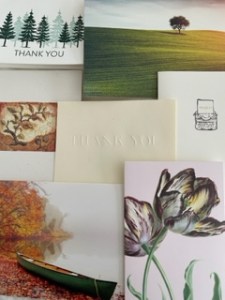 For me the best part of holiday gifts isn’t receiving them, but writing thank you cards. Like the holiday cards, it starts with finding the right card for the person to be thanked. I have an assortment of stationery with different designs, ranging from charming illustrations to an embossed THANK YOU. I favor classic white or cream notes with matching or coordinating envelopes. Then there’s the challenge of coming up with something fresh, sincere and meaningful to write, just the type of challenge I relish.





 On the writing front, I’m still rambling down the writing-road and stopping at another rest stop to do some writing-pondering. Here’s the back story of how and why for this stop. First off, I have a guilty confession—I’ve indulgently watched every Midsomer Murders episode many time. Have on DVDs, consequently I can binge-watch whenever!




You must be logged in to post a comment.