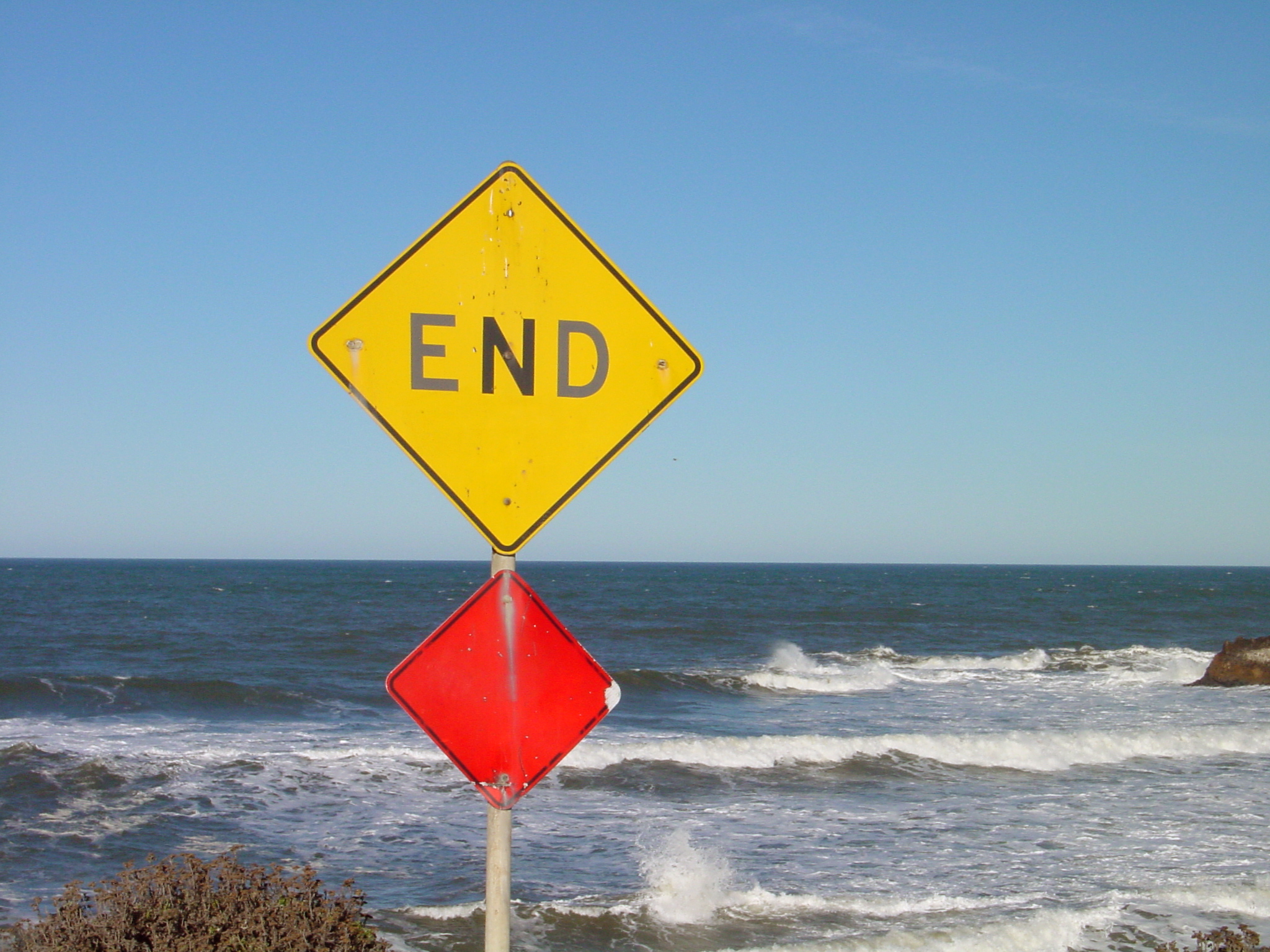
‘THE END’… Naah – not really…!   

                      By Rosemary Lord

1.08RoseSignCrop (1)

So, how d’you like our Blog’s new look?

We weren’t ready to call it a day! We just needed a change – a fresh view. And we have two new writers joining us in our blog sandbox: Hannah Dennison and Maggie King.  What fun. Just in time for the holidays.

The holidays… so soon?! As we gallop towards the year end, one tries not to panic, not to think of all the things one had intended to do, to complete. But never quite got there.  The short stories not written, the scattered memoir attempted, the unfinished novels. A half-finished website comes to my mind. Hmmm.

Perhaps, instead, stop for a moment to remember what we have accomplished. Fer starters –  we’ve all written our Blogs for this shared writers’ venture. Look back at the unforeseen distractions life gave us. All the positive, unexpected things we’ve done this year. The new people we have met or old acquaintances with whom we’ve re-connected. Those shared memories are often inspiration for the next tome we attempt.

I’ve done masses of research for different projects – that’s always my favorite. Made wonderful discoveries that set my mind charging down different avenues. I’ve done a quick script outline for a couple of new projects – even if they’re not yet completed. Well, at least I started.

Lots of de-cluttering, re-decorating, re-planting, re-designing was accomplished with new, fresh eyes. Another diversion prevalent this year was travel.  I think a lot of us, so relieved to be allowed out of our Covid-cages, have travelled far and wide. Therefore, we’ll forgive ourselves for that wonderful distraction and appreciate the terrific story ideas and new characters we have encountered along the way. Ideas and characters just waiting to be poured out onto the blank page.

I’ve been reading a lot, too. Especially on plane journeys. And, as the days get shorter, who doesn’t like to curl with a good book. (When I should have been finishing my writing!) I think my Kindle said 51 books this year! Although I have abandoned quite a few after a couple of chapters. And I have shelves of new REAL books!

I have re-read, for the umpteenth time, some of Rosamund Pilcher’s wonderful escapist novels. Her ‘Winter Solstice’ is especially timely. It’s about a group of strangers who find themselves stranded together in the snow over the Christmas holidays in Scotland.

But I’ve also been finding new, younger writers; lots of ‘finding-oneself’ novels set on far flung shores, many of them self-published, so they have a different voice, different settings and different styles. A different way of writing. It’s opened up my eyes to new options.

But I sometimes find myself getting frustrated at the endings. I like a satisfying ending. I want questions answered, problems solved and nuanced solutions to characters and relationships. But sometimes, in these new books, it’s as if the writer suddenly noticed their word-count and decided to jump to ‘The End.’

Hey! Not so quick! You can’t just hurry up and finish. That’s not fair!  

The intrepid old standby, ‘Who? What? When? Where? Why?’ seems to be missing a syllable or two. The journey we create on the written page needs to lead us in that direction, that ties up all the bits and pieces. Instead I find myself asking – “but what about so-and-so?” Or, “How did that come about – that was quick!”

I’ve been tempted to write my own version –  a new chapter of the book I’m reading, that really wraps up everything. And sometimes I have become so invested in characters, that I want to know more about them. Where did they go after that particular drama was solved. Again, my imagination has come up with intriguing storylines for the next episode in their lives.

I often get annoyed when film makers produce a copy-cat version of a classic movie. Well, a cheap, poor, knock-off, really. Why don’t they instead write and produce a sequel – or a prequel. That would be much more creative. Why don’t they use their imagination, instead of trying to duplicate someone else’s talent? Or why don’t they write a “What If…”? What if Romeo and Juliet had not died so young? Would they have lived happily ever after, with half a dozen children running around Verona? Would they have stayed together? What work or careers would they have pursued? That gets one thinking… 

Do you ever think of writing a new ending to someone else’s story? Or even a new beginning. That’s even more important. There are a couple of characters I’ve encountered recently, that I’m thinking of ‘borrowing’ and installing them in a totally different book.

As you can see, my mind is all over the place at the moment. My unfinished To Do list lurks just outside of my grasp, with my promises of “- soon…any minute now…”

But I’m inspired by our New-Look Blog page and by my fresh, yet seasoned,  eyes on my own writing, as we emerge from our Covid cocoon.

Refreshed. Re-energized. Ready for tomorrow.  Ready to write some more – and keep reading….

                                    ……………………………………………………..

(This blog entry was posted by Gayle Bartos-Pool for the wonderful Rosemary Lord. Thanks for dropping by.)

Weather…Or Not?

The extent to whether or not weather should influence a plot line, or impact a character’s actions, is a writing line of thought I’m currently pondering right now on my “writer’s road…” And why? Could it be my thoughts about how important setting is are still nagging at me?  Indeed, climate, which consequently influences what the characters and readers see. But how about what our characters do?

My personal example from my current WIP is—does Leiv proceed forward in the 100◦ weather he’s experiencing, or does he demand Glover take him back to Shiné, and not meet the Packston sisters? Does he instead (as I’m writing it), hurry into the house, and consequently really appreciates the ice tea being served and think. “Thank goodness,and what a nice lady for seeing how flinging hot I am…” Indeed, and this may sound nitpicky, but I’ve found myself fussing at a book I was reading that the character should have been motivated in a completely different direction by the weather! In my defense, I really want a reader to enjoy the story in a way that brings pleasure to them.

Having lived in both Washington States’overcast and rainy Puget Sound, and California’s moderate bay area: and having been born and raised in cold windy Chicago, and now living in and loving the sometimes blazing Mojave, I do accept for myself, “yes,” maybe I would have done some things differently if I’d paid attention to the weather. Hmm…

Bottom line on my current WIP from my meandering weather thoughts is, Leiv is going to do a completely different action than I first wrote (months ago.) And, his weather related changes will also change the ending. But I think for sure, his character is stronger and more admirable for the weather directed action he takes early on.

My thoughts have further led me to thinking back on my earlier books self-critique—such as my Pacific Northwest setting and California’s Ridgecrest area, and now out here in the Mojave…makes me think I personally need to enhance the aspect of Mojave weather affecting my heroes and villains on more levels and in more ways than before. And my queens of murder mystery(Ngaio, Agatha, etc.–who are always in my mind) don’t make a big deal about weather…or do they? I need to take a rereading deep dive(smile), or binge on DVDs and Brit Box! Research(smile)

All thoughts are welcome.

Also, this post is sooo short because it’s still hot, IN OCTOBER, and zapping my energy, ha, ha….

Happy Writing Trails

Let’s Talk about Dialogue

By Gayle Bartos-Pool

Aristotle That Aristotle guy was smart. He understood the basics in writing a story: Plot, Character, Dialogue, Setting, and the Meaning of the story. If the writer doesn’t address all those points… what’s the point of the story? Of course you have to have a Plot. Something’s got to happen. And without people or even a furry face, there is nobody to watch as they uncover those twists and turns. Without a Setting you have no place to wander through while the main characters are exploring that environment. And without a Meaning to the story the reader is going to wonder: Why am I here?


But what about Dialogue? That is the way each character tells the reader who they are and even sometimes explains what that environment looks like in personal terms. Remember, one character might see a desert as a wasteland while another might see it as a beautiful vista. That being said, dialog can be tricky. Ask an actor who has to interpret those words and make their character have personality and not be just another passenger on the bus. I learned this lesson when I took acting lessons back in California.


There was a time I thought I would write for the movies and television. Yeah, me and about ten million other people. In California, half the people you meet want to be actors, the other half want to write for the silver screen. I thought a good way to see what these actors needed from a screenwriter was to take acting lessons and learn firsthand. I actually learned a lot from the acting teachers I had.


The first teacher was actor Bruce Glover. What a character, and I say that with deep respect. He was in the movie Diamonds are Forever with Sean Connery. He played one half of the “killer” duo that wanted those diamonds and did whatever they could to retrieve them. The patter between Glover’s Mr. Wint and Puffer Smith’s Mr. Kidd was reminiscent of the old Vaudeville act featuring the song: “Absolutely, Mr. Gallagher. Positively, Mr. Shean” in the movie Ziegfeld Girl 1941.

Glover took that a step further and made sure his character had not only the delivery right, but he did a little bit of business so the camera picked up on his actions. Don’t they say: Actions speak louder than words?

typewriter-and-deskSo as a writer you need to give your character something to say that fits his or her character, but also have them do something that nails that character while they are speaking. Whether you are putting those words on the page to be read in a book or writing a scene for a movie, describe those characters with words unique to them and give them something unique to do. And I don’t mean just your main characters. Why have somebody show up on the page or in a scene who adds nothing to the story. If you don’t want to add a superfluous character, have someone literally send a telegram and then let an established character read it out loud. But remember, when they’re reading that message let them give it some personality… it’s either good news (slap your thigh)… or bad news (cringe)… or it’s a disaster (dive under the table!)

GroupOfPeople

EXAMPLE:

Ladies sitting around having tea and mentioning the great weather doesn’t move the story.

Ladies sitting around having tea, mentioning the weather and the latest fashion doesn’t move the story, either.


                        But how about this…

Ladies sitting around having tea, mentioning the weather, talking about the view, noticing the flower arrangements in the restaurant and the latest fashion being worn by other guests doesn’t move the story until one of the ladies finally says: “Let’s stop talking about nothing and talk about Sarah’s murder. Somebody killed her and we’re going to find out who did it.” Now that gets the ball rolling.


Let’s explore the last example. We can see/hear the ladies chatting. Each character’s view of her surroundings will tell us a little about that character whether one lady is envious of someone’s very expensive outfit or they notice the guy this other lady is with and they know he isn’t her husband. Meow!


Or how about the lady who thinks the prices on the menu are a tad too high and she reveals that her husband just lost his job.


Or maybe one lady doesn’t want to mention that the handsome guy coming in the door of the restaurant with the little floozy used to be her boyfriend, but one of the other women points it out in a catty remark.


But the gal who wants to get down to the important things like who killed their friend is setting the story off in another direction. And what if all the ladies are raring to go to solve the crime except one of their group who is hesitant. She doesn’t say much or maybe says nothing. Does she know more about this than she’s willing to admit? What if our main character picks up on that lack of comment and confronts her later? Or maybe somebody else confronts her and one of them turns up dead?

typewriter

What they say… or what they don’t say. That’s part of Dialogue. And their actions as well. Sometimes actions do speak louder than words. What if the quiet one excuses herself early from their tea and the next thing we hear is that one lady’s home was broken into and that someone just might have something to do with the death of poor Sarah?


Ah, Dialogue. That Aristotle, who was born in 384 B.C., knew of what he spoke. Words have consequences. And how they are delivered can even change their meaning. How about this: two versions of the exact same Dialogue.


First Version: A guy and a gal are on a date. He has been a little free with his affections with another lady and she knows about it, but she will forgive him.

He says, “I’m sorry I was such a fool, Gwen. It’ll never happen again. I’m crazy about you.”

She says, “I’m just mad about you, too, Harry,” she responded, touching his face lovingly, seeing the love in his eyes.


Compare it to this version:

He says, “I’m sorry I was such a fool, Gwen. It’ll never happen again. I’m crazy about you.” He says this while looking off in another direction.

She says, “I’m just mad about you, too, Harry,” she responded, grinding her cigarette into the plate of uneaten lobster.


Does Harry have a chance in version two? Probably not.

What a character says and how he says it and what he is doing while he is saying it tells a story.


So, as you write Dialogue always ask yourself:

                        Does it advance the story?

                        Does it enhance the story?

                        Is it redundant? Is it redundant?


Write On!

AS ONE DOOR CLOSES – 

ANNUS MIRABILIS BECKONS

                                                              (a remarkable year)

by Rosemary Lord

Just as I was thinking, “Aah, I can relax, just focus on my writing. I’ve got things covered…” Then everything goes topsy-turvy – again. Why is that?

I’ve been working on a book on the history of the 1905-founded Woman’s Club of Hollywood. I’m thoroughly enjoying diving back into research – one of my favorite things! It’s fun, pulling out the documents and newspaper clippings of the Club history, therefore early Hollywood history. Local Hollywood papers in the 1920s were full of Club news! I love recreating those early 1900 scenes.

Maybe I should just stop there. Because, next, I started on the more recent history story. I gathered the copious notes, Court Reports and endless pages I’ve written about the last ten years of thievery, skullduggery, break-ins, bankruptcy and lawsuits. However, this rendered me emotionally exhausted and overwhelmed, as I relived the stress, the 18-hour days, the threats, physical attacks, the police protection, the ugly shenanigans I endured. My goodness – how did I get through that? That was quite depressing. So, I’ve put that book aside for now. I’ll get back to that later…

Much better is my work on a new Lottie Topaz novel. A wonderful adventure. I’m busy plotting – or rather, following Lee Goldberg’s idea and writing a simple movie script of the story as a basic map. It’s very helpful. I’ll add the fun color my imagination creates later.

I’ve also started a sort of ‘memoir; about my early days in the British movie industry, based on all the diaries and scrapbooks gleaned from my Christmas visit to England. My apartment is littered with these stacks of post-it covered papers and files.

So, I’m loving my writing life once again. And the Woman’s Club was humming along nicely with new volunteers and only part-time attention required from me.

But then the L.A. Building and Safety Inspectors decided to complete their inspection of our Historic buildings, explaining their report was delayed due to Covid-19 shutdown backlog. The original report was from May 2011. It only took them 11 years to catch up! The Hollywood School for Girls schoolhouse was built in 1903, so we knew we had a long list of repairs, upgrades and restoration. We’re doing as much as we can without funding for the expensive, specialized work on our historic landmark buildings.  

But the stringent Building and Safety regulators were not satisfied with our progress, issuing a new To Do list, with a fourteen-day deadline! And a fine for the violations! (Such as missing 1903 building permits!) They added $64,000 worth of termite and pest-control tenting and remedying! Hmmm.

Although the Inspector I met was very sympathetic and gave me a time extension to complete. Phew!  So now all we have to do is raise about $200,000 to pay for this…

Then the Fire Department joined in. We’re always very careful with brush clearance. In the 1990s, a carelessly tossed cigarette from the apartments next door caused a fire that destroyed four of our small 1915 wooden classroom-cottages. So, we’re really cautious! We shook the trees to remove any dried-out dead bits. One of our younger members climbed some of the trees to remove dead branches. With the help of our local police, all the dead brush was safely removed. We thought.

Aha! We missed a bit! The Fire Department noticed that some of the palm trees – over 100-years old and over 4-storeys tall – had a few more dead branches. More fines! I’m now trying to find someone who can shimmy up those palm trees and thwack off the offending branches. The professional tree trimmers charge thousands – which we don’t have. I thought I might even stop by the Fire Station that cited us: they have tall ladders and are not afraid of heights…

But, I’ve been through worse with this Club. And I shall persevere. People will come in to help, I know. As one door closes, another always opens. I’ll canvas the Hollywood community for donations. This, too, shall pass.

So, all this stopped my writing flow and dragged me back into another world.

Then, last week – just as I was getting back into writing mode – much of the World was shocked and saddened by the news of the death of Queen Elizabeth II. I was surprised at how emotional I was. I know she was 96 years old – but we thought she would go on forever. She was always in my life.  It’s like losing your favorite grandmother.

 Queen Elizabeth truly devoted her life to the service of Britain and the Commonwealth. Growing up in England, I accepted that girls – women – could do anything they wanted. Even become Queen! Elizabeth was not born in line for the throne. She had an ‘ordinary’ (if privileged!) childhood and served in the Army during World War II.  People all over the world loved and admired her grace, her sensible approach to life, her love of animals – and her sense of humor. Although, even the Queen had her bad times, her “annus horribilis,” dealing with wayward offspring and grandkids.

But, as one door closes… Britain now has a new King: Charles III. People have been buoyed at the way he is dealing with these early days in his new position as King, knowing that he has had a long ‘apprenticeship’ and will follow in his mother’s footsteps in service to the people. And so, my sadness was soon replaced by hope and pride, watching the new King step into those big shoes! A new door opened – a fresh start.

Excuse my ramblings, as I, too, open a new door in my life. Instead of allowing these ‘challenges’ from the Woman’s Club to destroy me, I’m re-focusing once more on my writers’ life.

And with this view through a different door, I’m really looking forward to an “Annus Mirabilis.” A wonderful Year ahead!

(Rosemary’s delightful blog was posted by Gayle Bartos-Pool.)

A New Book Release Party!

Release party for Miko Johnston’s

A Petal in the Wind Book IV: Lala Smetana

Sunday Sep 11 2022 5:00pm – 6:00pm

Kingfisher Bookstore, 16 Front Street NW, Coupeville WA

 **

We are thrilled to announce the long-awaited continuation of Miko Johnston’s Petal in the Wind saga. A founding member of Whidbey Island’s Writers in Residence, Johnston’s historical novels beautifully capture the heartbreaks and triumphs of a young Jewish woman coming of age in early 20th century Europe.

Please join us for an exclusive free event as we celebrate the release of Johnston’s newest novel on Sunday, September 11th at 5 pm in the Kingfisher Bookstore’s lower level. Champagne and small bites will be provided by our neighbor, Front Street Grill.

While this is a free event, tickets are required. Please secure your place by calling the Kingfisher Bookstore at  360.678.8463 or by emailing hello@kingfisherbookstore.com.

Petal in the Wind Book IV: Lala Smetana

As the Great War rages, Lala dreams of someday having it all — marriage, motherhood, and a career. She reunites with Josef Smetana, the man she loves, and they marry. Amidst a world-wide pandemic and political discord rippling through Europe in the aftermath of war, Lala and Josef encounter undercurrents of mistrust and bigotry that sprout like noxious weeds. Lala notes a disquieting change of attitude in Josef as well; he no longer supports her desire to work.

The Smetanas move to Prague and start a family. When an opportunity arises for Lala’s final dream to come true, she plots to keep her secret from Josef, until she learns he’s kept a far more dangerous secret from her. With her family’s fate hinging on her success, together they must navigate a new resurgence of an old hate that threatens to shatter their lives.

Why? And What?

Once again, as I’m traveling down my winding writing road, my book club happenings have started me thinking on several fronts. And as before, I’m posting my thoughts here in the hope they will help readers understand what goes into an author’s mind in getting a book out there, and maybe a few other writers might be having similar thoughts of their own? And I’m also publically airing a tad of self-pity (smile.)

Why do I read a book? These days, mainly because my book club tells me to! This month’s selection was a book I would not have thought of as a reading selection on my own, but that’s one of the great parts about book club—to read outside our own readings “ruts.” My rut, of course is mysteries. Well this month, our book was How I Killed Pluto and Why It Had It Coming, by Mike Brown. Not a book that would have crossed my reading horizon by itself—and I loved it! Even ended up doing Google research and further reading. The topic, the writer, the style, the information—all were wonderful!

From there my mind went to other sources of reading suggestions, like author reader/author posts (Of course Writers in Residence suggestions are the best!), recommendations from friends and relatives, bookstore promotions, social media platforms like Facebook, and in the far past, even grocery store checkout displays.

All of this is leading to the big questions in my post here—why would anyone want to read my books, or said a different way, what would entice a reader to want to read my book? My past answer to these questions has often been—Location – Such as, what is the Pacific Northwest like? What is the Mojave Desert like? Why are these characters living there? And why does “what and why” matter to me right now? Well, besides being an interesting writing knowledge topic in itself—which always interest me, my book sales are very low and I want to fix that. If I can(smile)

But there’s more, and not about me. It’s partly about the concept of reading is a wonderful “thing” in itself, and also that there is a “twinkling something” in a reader and writer’s mental world. That “something” that causes us to recommend a book to a friend. Brings a smile to our faces.

Is it the title? What I’m working on now is tentatively titled Mojave Gateau. A chocolate gateau certainly gets me salivating…but is it enough to buy a book? I’m thinking not.

So what and where are my meanderings leading me to so far? Well, as I have tended to think in the past about location, the desert does still tickle the fancy, but it’s not enough. I’m also still clinging to the concepts that characters and scenery are the keys to good writers. And that might still be true, for me at least. But, what’s the good of a great story that no one reads? Is it enough I’ve written the darn thing and my editor, even a publisher or two think it was worth the effort? Hmmm???…

Maybe there is no magic bullet. Just a lot of good hits on multiple fronts? Paid publicity, titles, word of mouth, cover, implied adventure, puzzle solving???…All thoughts are welcome!

Happy Writing Trails

Metaphors by a Kingly Author

by Jackie Houchin

How many of you have ever read the Book (or parts of the book) of Ecclesiastes in the Bible? It’s in the Old Testament, right after Psalms and Proverbs (other excellent books to read!).

Ecclesiastes is written by King Soloman (the wise) toward the end of his life. He’s thinking back on all the “things” he has accumulated and accomplished. He calls them futile, useless, and vanity. It’s a bit depressing, however true.

Then in the last chapter he writes a fantastic – and rather gruesome – metaphor on aging, with a brilliant comment at the end. If you use metaphor in your writing, you will really appreciate it. If you are older and things about your body are “wearing out” (hearing, eyesight, energy, knees, memory) like me, you will maybe get a rueful kick out of it as well.

Here is King Solomon…

1Remember your Creator

in the days of your youth,

before the days of trouble come

and the years approach when you will say,

“I find no pleasure in them”—

..

2before the sun and the light

and the moon and the stars grow dark,

and the clouds return after the rain;

..

3when the keepers of the house tremble,

and the strong men stoop,

when the grinders cease because they are few,

and those looking through the windows grow dim;

..

4when the doors to the street are closed

and the sound of grinding fades;

when people rise up at the sound of birds,

but all their songs grow faint;

..

5when people are afraid of heights

and of dangers in the streets;

when the almond tree blossoms

and the grasshopper drags itself along

and desire no longer is stirred.

Then people go to their eternal home

and mourners go about the streets.

..

6Remember Him—before the silver cord is severed,

and the golden bowl is broken;

before the pitcher is shattered at the spring,

and the wheel broken at the well,

..

7and the dust returns to the ground it came from,

and the spirit returns to God who gave it.

..

How many of those metaphors did you catch?  I know personally about the diming vision and fading hearing, and definitely the white “almond blossom” hair!  So far, my “grinders” are still in fair shape, but I know about energy lagging with that old grasshopper.

And then in conclusion the wise old king writes…

..

12But, my child, let me give you some further advice: Be careful, for writing books is endless, and much study wears you out.

13That’s the whole story. Here now is my final conclusion: Fear God and obey his commands, for this is everyone’s duty. 14God will judge us for everything we do, including every secret thing, whether good or bad.

..

#

How have you used metaphors recently in your writing?  Do you enjoy reading them when other writers use these methods…sparingly, of course?

**** If you want to learn more about Metaphors, Similes, Analogies, Allegories and Idioms to use in your writing, check out this article in  The Free Dictionary for explanations and samples of each.

..

Photo by Matt Bennett on Unsplash

Holy Bible, New International Version®, NIV® Copyright © 1973, 1978, 1984, 2011 by Biblica, Inc.®.

Now About that Memoir…

By Gayle Bartos-Pool

GlendaleEvent2018cropped

Several of us on The Writers-in-Residence blog have been mentioning writing a memoir recently. Maybe you’re thinking that it must be associated with people “of a certain age,” but frankly, younger people haven’t lived through nearly as many adventures, ups, downs, and life in general as we folks in that upper age bracket, so we do have more to write about, but that doesn’t mean you can’t start writing your own memoir now and keep adding to it.

But it is true that older folks have survived it all, the good, the bad, and what life threw in our path to make us who we are. And you want to know something else? We all learn from those things. I’m sure you all have stories to tell. So why not let others laugh and cry and say Wow! along with you? Your friends and family will enjoy reading about your life because they weren’t with you every step of the way unless you’re a Siamese twin. Younger people can actually learn things when they read how you became you.

And there is a bonus in there, too. You will start to understand who you are as well. There will be some things that you recall, maybe some that have been buried for a while, that will let you reevaluate your life and see that you were and still are a very interesting person. You won’t be able to change the past, but you can see what you did along the way. If there were problems in your life, what did you do to overcome them? Not everybody starts out a Rockefeller.

As for John D. Rockefeller, the head of one of the wealthiest families in America, he started out as a bookkeeper at sixteen in Cleveland in 1855. He sold and moved produce during the Civil War to the Union Army. He was an abolitionist, voted for Lincoln, and after the war when the need arose switched from food stuffs to oil. An oil glut had some refiners dump the excess in rivers and streams, J.D. used the surplus to run his refineries and turned the rest into other by-products. He wasn’t going to pollute the waterways or waste all that product. He founded Standard Oil. The guy had a philosophy: He said God had provided the opportunity to earn all the money he had made; J.D. didn’t mind making it. He also wanted to save as much as he could and give away as much as he could. He was a philanthropist and considered one of the richest men ever in American history. There were downsides to his businesses, but he did a lot of good in his life. But that is what makes people so interesting no matter what they have in the bank. The good, the bad and the interesting.

dad-and-meI had the opportunity to have a father in the United States Air Force. We lived on the island of Okinawa when I was 5-7 and in France when I was a teenager. I went to a boarding school that provided an education that exceeded my first year in college in Memphis. I switched schools because I wanted to actually learn something. To pay for my college education, my wonderful dad sold some of the French clocks he and my mom had collected while we lived in France. I worked a year between my sophomore and junior years in college as a private detective to earn money myself and to see what the world was all about. That was probably as important as the four years in college. After I graduated from Rhodes College in Memphis and worked another year to earn money, I moved to California. I took acting lessons so I could learn about the movie industry and especially how to write dialogue because I wanted to write for TV or the movies. I had a few scripts looked at, but none sold. I decided to write mystery novels instead. There is even a story in how that came about, but you’ll have to read my upcoming memoir to see how that happened. It’s a good story. Oh, I went on to write 24 books. I guess all this preparation in life laid the groundwork for that little endeavor.

I have a little saying that I wrote a while back:

It doesn’t matter what you don’t have; It’s what you do with what you have.

OLYMPUS DIGITAL CAMERA

I have been working on my memoir for nearly a year. I have over 40 scrapbooks with bits and pieces of my life from the time I was born to today. I even have my mom’s family album that I redid when it started to fall apart that has the family’s history in pictures. What a joy to look through it now with my niece and her kids. My brother and I still recall old stories and some of them are in the book. It’s full of pictures and memorabilia and stories of my family and me. It shows how I became who I am.

So when you are writing your memoir, even if it takes you a few years to go through your scrapbooks or diaries or old photographs or spend a few holidays with family and talk about old times, discover who you are and share it with others. We all have a story to tell. Frankly, we are all interesting. Write On!

From PI to Mystery Writer

I’M READY FOR MY TAKE OFF…

by ROSEMARY LORD

Of course, first I scrubbed the kitchen sink, did a load of laundry, sent belated birthday cards, and read a “Be Kind to your Kidneys” article. All essential stuff – when you’re supposed to be writing your current book…

YakIs it ‘Yak Shaving’ again? For those of you who weren’t there: ‘Yak Shaving’ is when you find yourself doing something as irrelevant as shaving a yak (don’t ask!), instead of the goal you set out to accomplish. MIT student Carlin Vieri invented the term and blogger Seth Gordon, explained, “the seemingly unrelated, endless series of small tasks that have to be completed before the next step in a project can move forward.” Hmmm.

Don’t get me wrong. I have increased my writing accomplishments ten-fold.

I started a strange mystery about a young, dark-haired girl (so not autobiographical!) in London climbing out of a window to escape… you get the gist. I’ve written many pages of another new mystery set in a small, Greek coastal village. A 60-year-old widow returns to the site of her honeymoon, hoping to find some direction in her life – but finds mayhem instead…I wonder where that ideal came from? Perhaps I should go back and do some more research in that village. What a great idea! Then there’s a World War Two mystery – only six pages done on that one. I’m also still fiddling with my Lottie Topaz Book Two. I’ve written several chapters, know where I’m going – I thought. But the rest is still foggy. So, I took Jackie Vick’s advice and moved away from that book to focus on another project. All these other new storylines. She’s right about the insights you get as you write the draft of another book. Answers to the one you were stuck on filter through whilst writing the next.

As you can see, I’m all over the place. I share this with my fellow writers and readers, not as a cry for help. Well maybe a smidge. More as a warning. Don’t do as I do!

When I see what fellow blogger Linda Johnson accomplishes – she’s a prolific novelist, meeting deadlines with her strict writing schedules. Gayle Pool, Jill Amadio and Miko Johnson all do it. And Jacki H. continues to promote all of us and write children’s stories, as well.

I ask myself, what is wrong with me? I know better. I think I’m missing a gene…

Pushing RockSometimes I feel like  Sisyphus – the Greek Mythology, evil sinner Sisyphus was condemned to an eternity of pushing a boulder up a mountain. Once he got to the top, the weight of the boulder forced it to start rolling down to the bottom, wherein he had to start again.  According to Albert Camus, the Greek gods felt that there is no more dreadful punishment than this futile and hopeless labor for Sisyphus. Hmmm.

So,  I’ll stop whining! I think this is the way writers’ lives go – seasons of fruitfulness and seasons of distractions.

Stephen King said of writers: “Talent is cheaper than table salt. What separates the talented individual from the successful one is a lot of hard work.” And I’m certainly not afraid of hard work. Just sometimes need a push in the right direction to get over that hump!

When you think of it, we’re really lucky. This is what we choose to do: write. Yes, most of us have ‘day jobs’ – other ways to survive, whilst we feed our muses. Or they feed us. I think most of us have managed several careers – often simultaneously. Which become wonderful sources of material for our writing. And I can’t complain.

It’s not as if we have to study for years, as doctors, nurses and medical professionals do in order to improve and save people’s lives. Or go through really tough, brutal training and then, literally, put ones’ life on the line every day as our police officers and military do, in order to protect us all.

Computer filesWe sit at our computers – or with pad and pen – and spill our imaginations onto the page. We aim to entertain, to educate, to inspire, to elevate people’s lives and show them different possibilities – escape into other worlds. Or perhaps just to make them laugh. Everyone needs to laugh. Charlie Chaplin said, “A day without laughter is a day wasted.”  And then some of us write because we just want to.

And so I get back to the writing. To the completion of writing. Of getting unstuck and moving forward with all the storylines and characters coursing through my brain and – sometimes – tumbling out onto the written page. Hooray!

Fortunately, I’m not alone. As very successful and prolific author M.C. Beaton  – author of the Hamish Macbeth and the Agatha Raisin series – once said when asked her worst habit – “Procrastination!” she replied. Yay! There’s hope for me yet! The interview continued with her philosophy: “Stop projecting. Tomorrow’s a mystery. This is not a rehearsal. I’m on stage now.”  Although my favorite was her answer was to the question, “What do you collect?” M.C.’s immediate response: “Dust. I’m a lousy housekeeper.”

Thankfully, after this cathartic Blog, I’m ready to get going again. Move to the next stage. Be disciplined. Finish one book before moving on to the next. Get going.

Someone once said, “Move forward. Aim high. Plan a takeoff. Don’t just sit on the runway and hope someone will come along and push the airplane. It simply won’t happen. Change your attitude and gain some altitude. Believe me, you’ll love it up here. “

I’m ready for my take off. How do you get unstuck and move forward?      

Rosie and sister 2 cropped……………………………

Character Immortality

Recently, I’ve been thinking about character immortality. Not just in regards to my reading, but my writing too. Indeed, I don’t think I’ve ever killed off a “good guy” main character that readers have gotten to know, and hopefully like, in any of my books—so why and how did I get here in my meanderings?

Here’s the trail that got me started on character mortality thinking…. G.B. Pool and Jackie Houchin recently delved into the importance, scope, and all around “goodness” of reading. Then—once again—a book club happening moved my thoughts further on. That’s what reading will do for you, make you think! And thirdly, while mentally contemplating a chapter I’m currently working on, my writing-brain wished a character wasn’t there. Should I kill him off? Flashed across my thoughts. No. Was my answer. But, why not?

Starting with the reading part—if I know from the beginning a lead and/or beloved character is going to be killed off—I seldom will read the book. “But you’re always killing off people,” my hubby (a non mystery-genre reader) would probably point out. To explain the difference between a “plot-revolving-around” murder victim, and a key “on-stage” character is hard to explain to him—but for me, there definitely is a big difference.

On to Book Club. Members pick the books that go on our list, mainly I think, because it’s a book by an author they like, or it’s a book they’ve already read and think everyone else will like. The Hamish MacBeth series written by M. C. Beaton (Marion Chesney) is one of my favorites—and having read many of Hamish’s adventures—I put one on our list. In the book I recommended, a character I really liked died, and it soured me on the whole book. Why, I asked myself?

I’m a bleeding-heart-nitwit was my answer. not an “answer” befitting my mystery writer/reader ego. But in fact, I’ve never read/or watched a Morse or Poirot outing where either protagonist got seriously ill, much less die. Avoided on purpose. Indeed, I guess I want me literary heroes to be immortal. Aging is okay, but you can’t go too far.

But time does pass in our stories. As it does in life, and one can only squeeze so much activity in a storytelling year! You have to adopt either a false conceit about time, or ?? Then when it comes to animals, even worse—sigh. I was told by a relative—that even as a child (this was way back when in the dark ages!) when leaving the movie theater after watching “Bambi” I proclaimed I’d never watch another movie like that again in my whole life.

This winding and contradictory mortality thinking road is snaking back and forth for me… For example, in my Rhodes series, it all starts with LC Rhodes setting everything in motion for Leiv’s adventures on his deathbed. And throughout the few books I’ve subsequently written in the series, Leiv often talks to his deceased grandfather, LC.

Clearly, my ramblings here have not brought me a clear understanding—or even a “why”—when it comes to immortality for some, and not for others? Indeed, in my writing reality conundrum mentioned earlier, I’m not killing off one of Leiv’s compadres, but decided to make him fit in. This time. But why?  I’m currently leaning toward considerations such as, “what kind of character are they?” Main, supporting, likable, gender, looks, age… I haven’t sorted it out yet.

And why am I continuing down this character immortality road—despite the lack of a clear answer? I didn’t like not liking one of my favorite author’s books! Indeed, Marion Chesney was(still is) very much a guiding-light “STAR” for me. Consequently, I would very much prefer that–not enjoying this particular offering–has to do with wrong-headed thinking on my part!

All thoughts on character mortality are definitely welcome…because as I’ve so often jabbered on about before —I think characters and scenery are the essence of good storytelling. And a key character’s mortality, is probably pretty important to good character development.

Happy Writing Trails!