 How many blogs besides this one do YOU read regularly (daily, weekly, monthly)? Yes, you can confess. We don’t mind. Reading them will help you become a better writer.
Of course there are thousands to choose from. Just Google a topic and you’ll see. Bloggers will give you tips on everything, from where to get ideas to how to publish and market your final product, be it a book, short story, poem or article.
Some writer magazines and blogs publish lists of the Top 50 or 100 from the previous year. Here’s a link to the Top 50 Blogs in 2018
I have THREE blogs that I read daily and usually take notes on. Okay, sometimes I only peruse them, if the topic is not relative to my needs right then.
-
Every day, Mia posts links to articles on a wide variety of subjects. Each article will offer other links to follow on related subjects in an Alice In Wonderland type trail that is positively addicting! And time consuming. Watch out!
Her daily Writing Prompts will tickle your imagination and sometimes get a story going.
There are usually cute (or smarmy) writing cartoons to make you chuckle.
Finally, there is a list of “famous” authors whose birthday is that day. Each gives his/her advice on some aspect of the writing life.
Writers Write also hosts the “12 Short Stories Writing Challenge” each year beginning in January. Using a monthly prompt that they supply, you write, finish and polish a 1500 word (exactly) story to submit. You comment on 4 other stories and receive feedback on your own piece. One a month for 12 months. Whew!
Writers Write also offers a variety of online classes which you need to pay for.
-
Each day Edie, or one of 10 or so guest writers, presents short articles that inspire, encourage, inform, and teach you all facets of the art of writing and publishing. It is a Christian site, but usually only one in seven posts talks about the author’s beliefs in her writing process.
Here are some topics on recent posts: (You can click on these to go to the blog.)
YOU HAVE A GREAT SCENE, BUT WHAT TO DO WITH IT?
7 TIPS TO MAKE YOU A MORE OBSERVANT WRITER
WHEN AN AUTHOR SHOULD SEEK PERMISSION FOR QUOTES
QUOTATIONS—HOW WRITERS FIND THE ORIGINAL SOURCE
WRITING SO THEY CAN’T PUT IT DOWN
GET YOUR BLOG READY FOR 2019
Edie also uses a technique for readers to easily sharing her posts on Twitter. She types the title of the post or another phrase that describes the topic, and gives it a hyperlink. Readers can click on this and it takes them to their Twitter account. The title and ping-back to the blog posts are already there. They click on “Tweet” and voila’, they have effortless shared your message!
She calls them TWEETABLES.
I tried it in a blog post I wrote on The Writers In Residence about a year ago. It takes a little effort the first time you do it, but it’s a great tool!
-
Tara Lazar’s Story Writing for Kids with January’s StoryStorm Challenge – https://taralazar.com/storystorm/
What is StoryStorm? It’s an amazing, month-long, story idea brainstorming event. It’s designed for children’s books mostly, but can be useful for any genre. The weird and whimsical, and sometimes serious topics by a new author each day, are really wonderful!
The Challenge is to create 30 story ideas, one or more each day in 31 days. Maybe it will be a clever title idea, or a lovable character, or a skeleton of a plot. If you follow through, you’ll have a list of at least 30 new, fantastic ideas to flesh out at the beginning of February.
And…. if you read it each day and post a brief comment, you are eligible for a bunch of prizes and free services.
From the topic “Double Story Lines” …. I came up with “I know an old woman who lived in a shoe…store. She had so many shoes she couldn’t fit in any…more.
Enter Old Mother Hubbard who went to the display case to buy some soft slippers for her poor aching “dogs.” But she found nary a moccasin or “mule”.
Enter a Fairy God Mother who felt sorry for the old ladies and turned every shoe into a slipper.
Ms Hubbard bought all 365. The Old Woman sold her shoe store and moved to Tahiti, where NO ONE wears ANY kind of shoes at all!”
From the topic “Stop, Look, Listen” …. I came up with a tale of a musician who paid for an extra seat on an airplane to carry his very valuable and fragile guitar in its case. But his seatmates complained – I can’t see over the top of it, it’s on my armrest, etc., and caused a near riot. Crew and pilot intervened so the plane could go up on schedule. Ends with the man strumming and all the cabin requesting songs and singing along.
StoryStorm is a really fun Challenge, one of many throughout the year on a colorful, kid-friendly, idea-stuffed blog.
And then there are blogs that are more like OUR blog – The Writers In Residence – where multiple member writers and the occasion guest, wax eloquent on some aspect of their writing life.
Here are a few examples, check them out:
Make Mine Mystery – http://makeminemystery.blogspot.com/ – Mystery writing ladies.
Ladies of Mystery – https://ladiesofmystery.com/ – Mystery writing ladies.
Pens, Paws, and Claws – http://penspawsandclaws.com/ – Animal loving ladies and gents writing about pets, mystery and other topics.

I hope this post has whet your appetite for reading OTHER blogs besides ours. If you already indulge in this “sweet” pastime, will you share some of your favorites with our readers? Or… if you write one of your own, please share a link to it. Our readers might like to “read you” too!
PS: I’m adding a few “OTHER” blogs that I remembered after posting.
Creative Writing Now – https://www.creative-writing-now.com/ – They offer Writing tips, Ideas, Courses (free and paid)
Penny Sansevieri’s Author Marketing Experts– https://www.amarketingexpert.com/book-promotion-blog/ – Wonderful articles about promoting/marketing your book. You can also sign up for a free weekly “5 Minute Book Marketing Tip” via email or more extensive and personal, direct coaching on selling your book (for a fee).


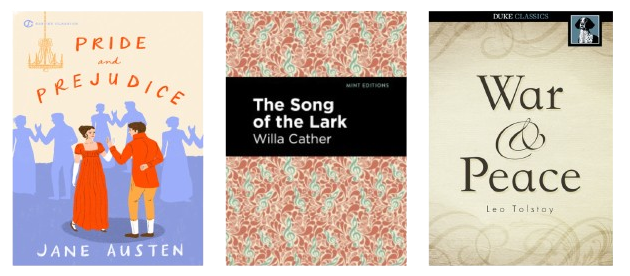


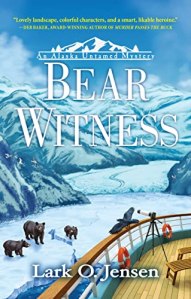 My mystery series for Crooked Lane is the Alaska Untamed series, under my first pseudonym, Lark O. Jensen. It has wildlife, and dogs, in it. I like to read many kinds of mysteries, and those that take place in Alaska also intrigue me, especially if they have dogs. And other stories in Alaska also get my attention. Plus other mysteries…primarily with dogs.

 USA Today bestselling author Sara Rosett writes lighthearted mysteries for readers who enjoy atmospheric settings, fun characters, and puzzling whodunits. She loves reading Golden Age mysteries, watching Jane Austen adaptions, and travel. Publishers Weekly called Sara’s books “enchanting,” “well-executed,” and “sparkling.”



 My fellow fish in the sea of writing, Writers In Residence in particular, have finished products that are enduring; books bound in soft or hard covers, given as gifts, re-read, treasured, shared among friends, and at the very least, end up on Friends of Library book shelves or even at yard sales at discounted prices to be bought and re-read again.
 About being the odd man (woman) out…I actually feel comfortable among my book writing and selling sisters. And if I can promote them, inspire them, write about them or their books, I will. (Look forward in the next months for some blog posts in which I feature these WWWs, or WIRs – you know, the talented, passionate, fun, interesting friends in our little lake of scribes.)


 The Writers in Residence
You must be logged in to post a comment.