We are a group of published writers who come here weekly to entertain, inform, and encourage you in your writing and your reading journey. Grab a cup of coffee, get comfortable, and join us.
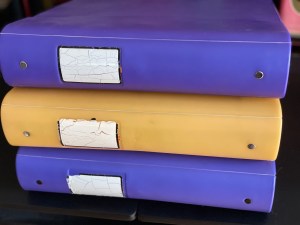
In my library are three slightly repellent books. One is the colour of poisoned custard, and the other two are a poisonous purple.
They look as if they’ve been through a lot. And they have.
These fat volumes, of about 500 pages each, were compiled in a time of disaster, and at the time, I didn’t know what I was doing or why. All I knew was that it needed to be done.
But first, a word of explanation. I am often asked, as are most writers, “Where did your main character come from? How did you go about creating him/her?” The simple answer is “I didn’t”, but the truth lies hidden in the thousand and more pages of these three uneasy books.
We had, at the time, a comfortable home on the edge of a forest – just like in the fairy tales. Until one night, lightning struck, and our forest was ablaze. Although we managed to get out safely with our pets, just ahead of the flames, more than 200 of our neighbours’ homes were reduced to ashes. When we were finally allowed to return, several weeks later, we found ourselves living in a blasted landscape: skeleton trees in a dead landscape of soot and ashes.
Time changed, and everything became different, including ourselves. What were we to do?
Sometime during those long hours and days and weeks that followed, I began compiling a compendium of poisons. The psychologists ought to have a field-day with that! Without knowing why, I had begun collecting and collating everything I could find on poisons and their history, all nicely filed alphabetically and indexed all the way from ‘A is for Arsenic’ to ‘Z is for Zarutin.’
The files grew from a folder, to many, and then to a book, then two, then three.
They contained detailed descriptions of the life and crimes of famous and not-so-famous poisoners, the history of specific poisoners from antiquity until just yesterday, the chemistry of poisons and their medical aspect. Ancient newspaper accounts told many a grim story, all so sadly the same: love gone wrong, ambition gone mad, and cleverness come a cropper.
There were heart-breaking tales of poor children who, in searching for something to eat, had – but enough! You get the idea.
Then, as the world around us restored itself, I put these books away, not knowing if I would ever look at them again. Whatever angel had caused me to compile this stuff had not bothered to leave an explanatory note. When the time came, I would know why.
Several years passed. Five, in fact. And there came a day when I decided that it was time to sit down and write that ‘Golden Age’ mystery novel I had been mulling since my younger days. It was a book that I much looked forward to, a tale that would draw on my years of experience in television broadcasting. Something fresh – something startling.
But it was not to be. I got no farther than the second chapter when, in a scene involving a visit to a crumbling country house in England, an eleven-year-old girl materialised suddenly on the page and would not, in spite of my every effort, be budged. She would not be written out and she would not be ignored. After a time, I realised that she had taken over my book completely. It was her book now, and my role was to sit down, shut up, and write what she told me to write.
And it came as no real surprise that her whole being revolved around a passion for poisons. Her knowledge of the subject was, you might say, voluminous.
Since then, she has more or less dictated ten novels, and has gathered readers around the globe in forty-some countries and forty-some languages. She has been on the New York Times bestseller list.
And that, dear reader, is the origin of Flavia de Luce, as best as I can manage to explain it.
And these three noxious volumes are the only proof I have that all of this is true.
I grew up in a small town in Southern Ontario, and being always fascinated by the magic of light and colored glass, naturally went into television broadcasting, both private and public. After twenty-five years as Director of Television Engineering at the University of Saskatchewan, I took early retirement to write a mystery that never got written. I did manage to write other things, though.
Now that I’m retired from retirement, having lived for a while in Malta, my wife and I now live in the Isle of Man, in the shadow of an old castle, where we keep an eye on the sea at our door, which was once frequented by Saint Patrick and the Vikings.
Alan Bradley has written TEN Flavia deLuce books, plus a short story, The Curious Case of the Copper Corpse. His newest novel is The Golden Tresses of the Dead. All the books are available in audiobook form (which I love).
He also wrote a wonderful ebook memoir, The Shoebox Bible.
The last time I posted here, I was in the throes of a move to Boise, Idaho. My third novel was almost finished, although another couple of rounds of editing would take place before I considered it ready for publication. In the meantime, Champlain Avenue Books—publisher of my first two novels, Mending Dreams and Write My Name on the Sky—decided not to issue any new work, and at present they are closing their doors entirely. Therefore, I can’t announce that my latest novel, working title Turn Back the Clocks, is being published, but I’m actively seeking a publisher, so stay tuned.
Meanwhile, I’ve been writing short stories. And one of them, I was delighted to learn, was accepted for inclusion in an anthology published by The Cabin, a local literary arts organization in Boise. Idaho has a lot of writers, and a lot of readers—there’s not a lot else to do in the winter here, you know. And The Cabin has a lot of prestige within the community—I can now say my work has been included in the same book as a former Poet Laureate of Boise.
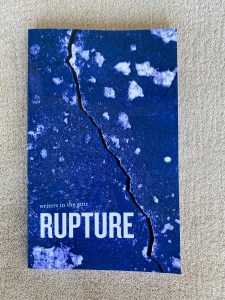
The Cabin chooses a theme for each year’s anthology, and this year’s theme was “Rupture”—kind of fitting, given the state of the world these days. When I saw the theme, guess what came to my mind?
Were any of you in Southern California on January 17, 1994? If you were, you probably remember the Northridge Earthquake. That was the only time in my life I truly thought I was going to die—waking up in the dark with the whole house creaking and groaning and the sound of glass shattering.
So, I decided to write a short story about the Northridge Quake. Now, I had a 1500-word limit, and it was hard to capture the magnitude—pun intended—of that event, so I chose to describe just a few minutes in the life of one person—Amy—who awakes, as I did, at 4:30 in the morning to the sound of her world crashing apart. She’s alone—her partner or husband, we don’t know which—has left, we don’t know why. And I needed to show what kind of person Amy is, without going into a lot of description. Well, actions speak louder than words, so I used a device which won’t surprise anyone who knows me well. Amy has a dog, and her overriding concern is, where’s the dog? She gets up, finds the dog—who is of course terrified and cowering in a corner—and tries to calm the traumatized animal. And in doing that, she kind of calms herself. She cleans up the glass from the kitchen floor so the dog, Luna, won’t shred her pads, feeds Luna, and waits out the aftershocks—there were more than a thousand in the aftermath. The story ends with Amy and her dog sitting together in the dark, waiting for daylight, and although it’s not stated explicitly, you get a sense that they will both be okay. (I’ll explain in a minute why I’m telling you the whole story instead of suggesting you buy the book.)
So I sent the story off, and a few months later I was thrilled to get an email from The Cabin, saying they’d chosen my story, which I called “Fault Lines,” to be included in this year’s anthology, titled “Rupture.” The email also informed me that they’d received 293 entries, and out of those had selected just 50. So I felt pretty good about that.
Unfortunately (or perhaps not so unfortunately), The Cabin is largely staffed by volunteers, and as a nonprofit it runs on a very small budget—which is why “Rupture” won’t be widely distributed. You won’t be able to search for it on Amazon. Eventually—and it hasn’t happened yet, but it will—”Rupture” will be featured on their website and will be available for purchase, but don’t hold your breath. And there’s no free shipping either! I hope to eventually be able to post a PDF of the story on my website; I did retain all rights.
Since I did have some success entering this story in . . . well, it’s not exactly a contest, as there were no cash prizes, but I was competing against a field of other writers—I thought I’d discuss the value of entering writing contests, especially short story contests. It’s a good way to gain visibility for your writing, and sometimes you even get paid.
I’ve lost count of the number of contests I’ve entered, and most of the time I don’t win, but I have had enough small successes to keep me encouraged. And sometimes, if you win a contest, it boosts your chances of selling that story somewhere else. That happened to me the year after I moved to Idaho, when I entered the Idaho Writers Guild’s short story contest. A story that had been rejected by several literary magazines actually won first place! Not only did I get a cash prize and a nice certificate, I went on to sell that story to “The Bark” magazine—it was a story about a dog, of course—and “The Bark” paid me even more money!
Now, how do you find contests, and how do you know which ones to enter? There is usually a fee, mostly around $25-$50, so you don’t want to go entering them willy-nilly unless you have a lot of cash to spare.
“Poets & Writers” Magazine has a bi-monthly list of writing contests, and so do other writer-centric publications and websites.
If you see one that interests you, before you submit, go to the contest’s website. It’s usually a literary magazine or website that publishes other stories and runs a contest a couple of times a year. They often post previous winners, so take a look and see if the winners are anything like what you’re writing—not so much the storyline, but the styles and themes you see. If you want to send in a literary piece and all you see among the winners are slasher stories or aliens from space—probably not the kind of contest you’d be likely to win.
Also, try to find out who’s judging the contest. Sometimes it’s just “the editors,” but occasionally they’ll publish the judge’s name, maybe even a little bio. Check that out and see if you get a sense of the judge’s taste. Not always possible, but if you can do it, and if the judge’s taste aligns with yours, you have a better chance of winning.
I actually did this with the Cabin’s anthology. I submitted a story two years ago for their anthology that was themed “Fuel,” and it wasn’t accepted. I knew nothing about that judge, but I did hear him speak at a conference after I’d entered the contest, and I knew just from listening to him that I probably was out of luck, and sure enough, my story wasn’t accepted that time.
However, this year’s judge was someone with whom I was familiar. I didn’t know him personally, but I’d seen him talk about the winners of another contest he’d judged, and I really liked the way he talked about the work and what he appreciated about it. I figured I maybe stood a chance this time, and sure enough, I was right.
There are nonfiction contests, and poetry contests, as well as fiction contests. So go and explore the landscape. Target a few possibilities and risk the investment—it may well pay off, not only in monetary rewards, but also in status, and maybe even publication. Good luck!
#
Bonnie Schroeder has been a storyteller since the fifth grade, when her teacher suggested she put her vivid imagination to work as a writer. She took the advice to heart and has pursued the craft of fiction ever since. After escaping the business world, she began writing full-time, completing two women’s fiction novels, Mending Dreams and Write My Name on the Sky—both published by Champlain Avenue Books. She is currently seeking publication for her latest novel, working title Turn Back the Clocks.
She lives in Boise, Idaho, where she is a Vice President of the Idaho Writers Guild.
A common piece of advice given to school children and new authors alike is “Write what you know”. But many established authors dismiss the principle. Ken Kesey, author of One Flew Over The Cuckoo’s Nest, told The New York Times, “One of the dumbest things you were ever taught was to write what you know. Because what you know is usually dull.”
So where does an aspiring writer begin? Unlike most authors, I had no lifelong desire to write a book and only considered it as a potential career two years ago. We moved back to the UK from Kenya so my husband could begin training for his next military posting in Sarajevo, in Bosnia and Herzegovina. I realised that as I didn’t speak Bosnian, and the country had a high unemployment rate, I was unlikely to find a job.
Further, as a family we would be moving around the UK, and potentially the world, for at least the next eight years. I needed to keep myself busy and engaged, but not with a physical business like the farm shop I had set up in Kenya. My new venture needed to be portable and flexible to work around the demands of my family.
I first considered writing as a method to convey the incredible experience I’d had living in Kenya, in Eastern Africa. I’m not sure if moving to Kenya or returning to the UK was more of a culture shock. In Kenya I’d become used to a way of life lived at a slower pace, with no judgement of what people wore or what car they drove, and far less emphasis on the material side of life.
In Africa, the first priority is to survive and so each day, and certainly every birthday, is celebrated. After that come friendships and community and, of course, enjoying the glorious sunshine, fantastic scenery and amazing wildlife that Kenya is famous for.
P.D. James wrote in her “10 Tips for writing novels” for the BBC, “You absolutely should write about what you know. There are all sorts of small things that you store up and use, nothing is lost as a writer. You have to learn to stand outside yourself. All experience, whether it is painful or whether is is happy is somehow stored up and sooner or later it’s used.”
My Kenya Kanga Mystery Series is set in Nanyuki, a small market town three hours north of Nairobi, Kenya’s capital. It is dominated by the often snow-capped Mount Kenya which, at over 17,000 ft, is the second highest mountain in Africa. This is where I lived for six years, and it’s the perfect setting for a cozy mystery series.
In my books I’ve used actual locations, such as Dormans, a town centre coffee shop and a hub of gossip, and the relaxed garden location of Cape Chestnut restaurant. Other places, such as the Mount Kenya Resort and Spa, are recognisable as being based on real settings which I’ve altered to suit my stories.
Small towns in cozy mystery series can develop the “Cabot Cove” syndrome; if Cabot Cove existed in real life it would top a number of categories of the FBI’s national crime statistics.
To avoid this phenomenon, I themed the second and subsequent books around actual events. These include an important elephant focused wildlife summit, a 4×4 off-road charity event in the Maasai Mara and, in the book I am releasing in May, a marathon in a UNESCO World Heritage wildlife reserve.
A sense of place is important to me and my writing. Has a certain smell or the call of a bird transported you back to a memorable location? I try to convey the smells, sounds and sights of the individual settings and it does help that I’ve visited most of them. And if I haven’t, as P.D. James said, I can use snippets of other places that I have stored up to successfully create them.
The characters are another aspect of my books which I’ve developed as I’ve expanded my writing craft. Mama Rose is based on an incredible friend of mine, now in her 80s, who is a community vet, a staunch catholic and a member of various committees. The help and assistance she has given, and continues to provide, those less fortunate than herself can not be fully conveyed in my books. But is it important to recognise, and remember, that there are still people who put others before themselves and work for what is morally right and just in life.
The other characters have developed from meeting people and observing situations in Kenya: the interaction of customers and stall holders at the local vegetable market, street sellers trying to persuade tourists and visitors to buy their wares, and the ability of a charismatic priest to captivate his audience in a town centre park.
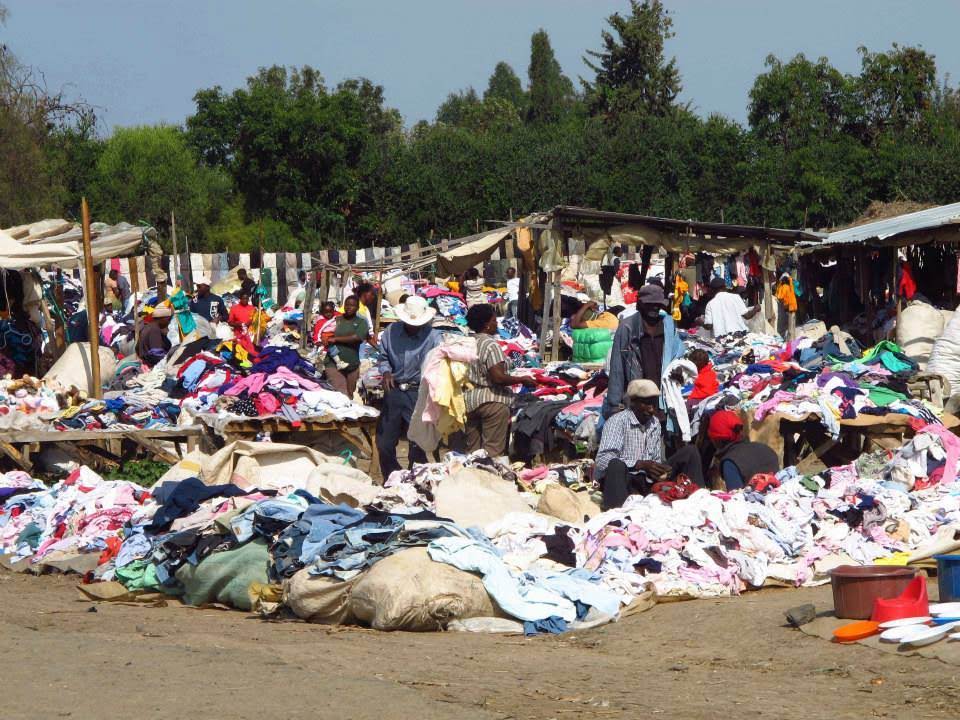
A snippet I have woven into one of my books occurred when I took my young children to mitumba; a large jumble sale of donated thrift clothes, and other items, from first world countries which are shipped to Kenya and sold in makeshift markets.
Two raggedly dressed, and shoeless, children tentatively approached our car holding out their hands in a begging gesture. I remembered two squares of jam sandwich which my boys hadn’t eaten. I handed the pieces to the children expecting them to stuff them into their mouths, but instead they just stood and waited. Slowly they were joined by a group of similarly attired children, and those who had the sandwiches carefully divided them up until every child had a small morsel to eat.
This was an incredibly humbling experience. So perhaps it is not necessarily “write what you know” but “write what you feel”. After all, as writers we strive to elicit an emotional response in our readers’ minds.
Finally, Dan Brown said, “You should write something that you need to go and learn about.” As writers we do need to expand our knowledge, and understanding, and researching is one of my favourite area in the writing process. I have learnt so much more about Kenya than I knew, or understood, when I lived there.
Rhino Charge, my third book, has many Kenyan Indian characters. It evolves around events at a 4×4 vehicle off-road event which is popular amongst the Kenyan Indian community. Whilst I had Indian friends, I wasn’t aware of how, or why, their ancestors had settled in Kenya. Researching this aspect of the Kenyan culture was fascinating. I learnt that Indians came to Kenya with the British and supported the creation of the East African Protectorate, which became Kenya, as clerks, accountants and police officers.
Two and a half thousand Indian labourers died during the construction of the Mombasa to Uganda railway line, including those killed by the infamous man-eating lions of Tsavo. The rupee was the first currency used in the colony which was ruled using an extension of Indian law. On the 22nd July 2017, President Kenyatta officially recognised the Indian community as the 44th tribe of Kenya. Researching and learning this extended my knowledge and increased the depth of Rhino Charge.
Not all authors are luckily enough to live in extraordinary locations such as Kenya, or Bosnia and Herzegovina, but small towns still have their own customs and query characters.
I’m currently planning my next series which will be set in areas of the UK I have lived in and visited. The theme is antiques, of which I have no knowledge. I enjoyed, and was fascinated by, auctions which I attended on my return to the UK, to buy furniture for our house. And I observed some fantastic people for the basis of my characters. I’ll research collectibles, antiques and related crimes to build interesting stories with “can’t put down” plots.
When I can finally move freely around Sarajevo, and Bosnia and Herzegovina, I will begin researching for a future series. I’ve already discovered that everyone here has a story to tell from the devastating war and various sieges, including the longest in modern history in Sarajevo. As I search for potential locations, characters and stories my attention will be more focused as I learn to observe and record even the smallest incidents. Who knows what snippets will make into future books.
Can I ask you how you first got fascinated with that era?
Since I was a child, I’ve heard stories about the Second World War from family members who lived through that era. But my own interest in the Second World War era was really sparked when I moved to County Fermanagh, at the western edge of Northern Ireland, almost twenty years ago. Soon after I arrived, I began to hear stories from local residents about what life was like here during the war era. I was enthralled by their tales of the real servicemen and women who were stationed at the flying boat bases and army camps that were dotted around the county. This prompted me to do some research into life in the county during the war.
What I discovered was that the arrival of the Allied troops had a huge impact on the quiet, largely rural county. County Fermanagh is far from Belfast and Londonderry, the largest cities in the province, and, at the outbreak of the war, the way of life in the county had changed little in generations. Then there was an influx of servicemen and women from several nations, and approximately a quarter of the population were suddenly military personnel. The lives of the local residents were turned upside down. The county must have been so different from the tranquil place that I know today.
I’ve heard some marvellous and unique true stories of those days but very few wartime novels have been set in Northern Ireland. I think it’s a shame that such a rich heritage doesn’t receive more attention so I decided to write stories that will keep it alive. Although my stories are fictional, there are grains of truth behind them, and I do my best to evoke the era faithfully so readers can enjoy the unique place that County Fermanagh, and the rest of Northern Ireland, was during the Second World War.
How did you do research about it.
I do quite a bit of research for each of my books. And research is never finally finished until the story is written and released to readers. There’s always something else you need to check. Writing stories set in Northern Ireland also means I have extra research to do, compared to authors who write about the home front anywhere in the rest of the United Kingdom, as many aspects of the war in Northern Ireland weren’t quite the same as in England, Scotland and Wales. For one thing, there was no conscription because of the division of opinion about the war between the Protestant and Catholic communities, and the threat of rebellion by anti-unionist organisations if conscription was introduced. Related to this, there was the threat of the terrorist organisation, the Irish Republican Army, attacking strategic locations in Northern Ireland for their cause while the military and police were occupied with the war. The province was waging an internal war as well as the one against the Axis countries and I endeavour to include this aspect of the war in my books.
Before I begin writing, I do general background research, reading memoirs and accounts of life on the home front in Britain as well as general history texts about the war era. I also read local history books and memoirs to glean details about places in County Fermanagh that I won’t find anywhere else. I visit the places I write about speak to people who lived through the war to hear their memories. I’ve also trawled through countless photographs to get a flavour of the era. I try to make my stories as authentic and believable as I can.
Do you have relatives who fought in the war?
Yes, I do. My parents were both children during the war but members of my grandparents’ generation served their country. My great uncle was a soldier in a Canadian regiment, and my grandmother worked in a munition’s factory in Toronto, Canada. My great uncle was injured in a training accident while he was stationed in England so he returned to Canada before his unit deployed to the continent. Another great uncle was also a soldier and fought on the continent. During his time in Europe he met his future wife who was a member of the resistance movement in Belgium. Unfortunately, because I only became interested in the war after I left Canada, I never had the chance to ask my family members as much as I would have liked to about their experiences.
And a bit about The Yankee Years too.
During the Second World War Northern Ireland hosted American, British and Canadian troops. County Fermanagh welcomed Air Force squadrons hunting U-boats and defending shipping convoys in the Atlantic Ocean and Army battalions training and preparing for deployment to Europe’s Western Front. I’ve written The Yankee Years books to bring this era to life. Although my stories are fictional, there are grains of truth behind each plot. I look for snippets of information that grab my attention and build a story from there.
For instance, when I was planning Acts of Sabotage, the second story in The Yankee Years Book 1, I noticed numerous newspaper items in local newspapers from the era reporting on court cases where the defendant was charged with the theft of military equipment. The stolen goods were sold on the black market. I also noticed several articles about local residents’ fears that the I.R.A. would take the opportunity to mount terrorist attacks against strategic targets in Northern Ireland while the government was occupied with the war effort. I put these two pieces of information together and wove them into the events in my story. One of the newspaper court reports mentioned the judge’s comment when he sentenced the prisoner for theft, saying that the theft ‘was an act of sabotage’. This really hit home to me and catapulted my story into life.
There are six novellas in the two collections, The Yankee Years Books 1 and 2, and Allies After All is a standalone novella in the same series.
Be sure to check with Amazon on December 1st for this new collection of WWII Christmas stories “Wartime Christmas Tales.” (Dianne Ascroft has written one of the stories.)
AUTHOR BIOGRAPHY: Dianne Ascroft is the author of the Second World War series, The Yankee Years, and the Century Cottage Cozy Mysteries. She is a Canadian who has a passion for Canada and Ireland, past and present. Dianne enjoys walks in the countryside, evenings in front of her open fireplace, and Irish and Scottish traditional music. Born in Toronto, Canada, she now lives on a small farm in County Fermanagh, Northern Ireland with her husband and an assortment of strong-willed animals.
I’ve been writing since I was a child. I started writing plays for our stuffed animals, then an ongoing story with two friends. When I had small children, I discovered I could make money writing freelance human interest stories for the two local newspapers.
My mind has always been filled with stories. It was several years after I started writing on a regular basis, that I realized I didn’t daydream about family members coming to harm anymore. My husband drove a semi-truck for thirty years of our marriage. Before I started writing, my mind would dredge up all these horrible things that happened to him each time he was out on the road. Once I started writing every day, those went away. I had put my imagination to better use.
My first book, let me rephrase that. The seventh book I wrote, was contracted by a small press. Yes, I didn’t sell my first attempt at writing a book. It took me 7 manuscripts before I had crafted a book that a publisher wanted.
Even though the first two books I wrote were mysteries, it was a historical western romance that was contracted. The book hadn’t started out as a series, but the hero had four brothers and once readers started asking for the other brothers’ stories, well, what could I do! The first book, Marshal in Petticoats, started the series titles: Outlaw in Petticoats, Miner in Petticoats, Doctor in Petticoats and Logger in Petticoats. Then I wrote three standalone historical western romance books. Improper Pinkerton, I had hoped to make into a series about the Pinkerton’s, but it didn’t fly off the shelves or onto ereaders.
I have always been interested in the Wallowa Nez Perce, the band of American Indian that summered and wintered in the county where I grew up. We had a rodeo each summer named after Chief Joseph, but that was the only time I ever saw a Native American in the county. Other than the ghost of a warrior I saw one day while riding my horse on the mountain behind our house.
My inquisitiveness started me digging into their history when agents at a writer’s conference said they were looking for historical paranormal. I came up with my Spirit Trilogy. Three siblings of a northern band of Nez Perce with blonde hair and blue eyes that turned red with their emotions (my research discovered this northern band), who had become spirits. They are shapeshifters. Through them, I showed the history of the Wallowa Nimiipuu, as they call themselves.
Historical Western Romance seemed to be taking a hit and not selling well. I was complaining about it at a Romance Writers of America meeting and one of the other authors said, then write contemporary western. I said I didn’t think I could. Lo and behold, on the two hour drive home from the meeting, a radio show host talked about how kids had used their parents’ credit card to order items on the internet. And Poof! I had an idea for a book. That was Perfectly GoodNanny which won an EPPIE award for Best Contemporary Romance in 2008. I wrote another contemporary western romance, Bridled Heart. They are both stand alone romances.
Then readers were asking for more Halsey Brothers. I decided to move forward in time and wrote stories for three male secondary characters who had been brought into the Halsey family. This is the Halsey Homecoming series. Each character is finding their way back home to Sumpter and the Halsey family. There is also a novella, A Husband for Christmas. This is a female secondary character’s story.
Wanting to write Action Adventure, I wrote the Isabella Mumphrey Adventures. She is a cross between Indiana Jones and MacGyver. The first book, Secrets of a Mayan Moon, she is in the Guatemalan Jungle. I became friends with a Guatemalan blogger who helped me make sure the book sounded authentic. I LOVED writing this character. She had three books. Then, again, even though the first book won the Reader’s Crown in 2013, the books are slow selling.
Mail Order Bride books became popular, but I thought they had been done over and over, so I came up with a sort of mail order husband series. Letters of Fate. In these historical western romance books, the hero receives a letter that changes his path and leads him to the woman he marries.
Ditto my Silver Dollar Saloon series. These are historical western romance, where the heroines are women who are taken in by the saloon owner when they are found starving, sick, or beaten. As they heal both in body and in mind, they find they can love and be loved again. They are redemption stories.
I finally felt confident enough to go back to writing mystery books in 2014. I wrote the first three Shandra Higheagle Mystery books and released them three months in a row in 2015. I love writing what I had always wanted to write, and I love that readers are enjoying the books. Shandra is a Native American potter. She is only half Nez Perce and wasn’t raised knowing her father’s heritage. This aspect made me feel confident I could write her because I could discover more about her family right alongside of her as I wrote her books. I have a friend who lives on the Colville Reservation where Shandra’s family lives. Number 14 in this series just released. It is set in Kaua’i Hawaii. I vacationed there last year and used it as a setting.
The other mystery series, is the Gabriel Hawke Novels. Hawke is from the Umatilla Reservation in Oregon. He joined the military, came home, and became an Oregon State Trooper. Fifteen years ago, he became a fish and wildlife officer with the Oregon State Police in Wallowa County. Remember that place from earlier in my post? I grew up in Wallowa County, I love the rugged, ruralness of it for a mystery series. And what better character to solve mysteries than a master tracker, with roots in the area. His forefathers summered and wintered in the valleys and the mountains. He is not only protecting the animals and land for the law but for his ancestors. To be sure I had this character’s occupation written correctly, I rode with a Fish and Wildlife State Trooper in the county for a day. He gave me a notebook full of information and ideas for stories. I’m currently writing book 5 in this series. It is set in Iceland, a place I visited last year. When I discovered they held a large SAR (Search and Rescue) conference every other year, I knew I had to bring Hawke to Iceland.
As you can see, I tend to write what is strongest in my mind. And if they don’t sell, well, then I move on to something else. Right now, the mysteries are doing much better than the romance. My calendar for 2020 is to write only mysteries.
What genre(s) do you like to read? Why?
My latest release:
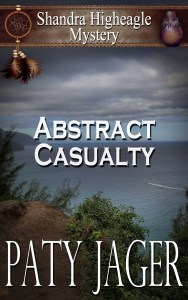
Abstract Casualty
Hawaiian adventure, Deceit, Murder
Shandra Higheagle is asked to juror an art exhibition on the island of Kauai, Hawaii.
After an altercation at the exhibition, the chairwoman of the event, Shandra’s friend, arrives home with torn clothes, scratches, and stating she tried to save an angry artist who fell over a cliff. Shandra and Ryan begin piecing together information to figure out if the friend did try to save the artist or helped him over the edge.
During the investigation, Shandra comes across a person who reminds her of an unhealthy time in her past. Knowing this man and the one from her past, she is determined to find his connection to the dead artist. When her grandmother doesn’t come to her in dreams, Shandra wonders if her past is blinding her from the truth.
Paty Jager is an award-winning author of 43 novels, 8 novellas, and numerous anthologies of murder mystery and western romance. All her work has Western or Native American elements in them along with hints of humor and engaging characters. Paty and her husband raise alfalfa hay in rural eastern Oregon. Riding horses and battling rattlesnakes, she not only writes the western lifestyle, she lives it.
Ahoy there Maties! Have ye sailed the Seven Seas yet? What’s stoppin’ ye? Oh… murder! That!
In January my Hubby and I went on the most amazing 15-day cruise from Florida to Los Angeles by way of the Panama Canal.
What made it amazing?
The Canal transit, of course!! (#1 on Hubby’s bucket list), But the perfect sunny weather, the deep blue sea(s), the small, uncrowded ship (just 670 passengers), the funny and very personable Captain, the amenities (food, lounges, gorgeous library, spa, pool, Internet café, crafts & games, casino, theater), our beautiful cabin with a balcony (oh, the views!), breakfast in bed, the lack of crowds and lines, the cool excursions in Aruba, Costa Rica, and Chiapas and Cabo San Lucas in Mexico were all definitely fantastic.
(Yes, we are in our 70’s, but we had a blast zip-lining in the Rain Forest!)
If EVER you go on a sea cruise, be sure to book passage on a small ship (unless you have kids). The Princess line has only one, and the Oceania Line has just three. And yes, they can and do travel around the world in 111-195 days. (I’m still dreaming of that!)
Imagine, if you will, 4-6 months in luxury, with everything taken care of for you, the occasional excursion ashore, time spent in one of several lounges or the library or your room, even out on the balcony with a laptop, with a bunch of characters eager to do malice, and a twisted mystery plot to direct them!
Yep, I could write a book on a World Cruise.* (sigh) Oh, yeah, writing and books, that’s what this blog is about…
Since we’ve come home, I have noticed the abundance of mysteries aboard ships. There are the dark ones like The Poseidon Adventure by Paul Gallico, Dangerous Crossing by Rachel Rhys, The Woman in Cabin 10 by Ruth Ware, Birds of Pray by J.A. Jance, and Death on The Nile by Agatha Christie. (Perhaps you’ve read a few.)
On Goodreads, there is a list of 47 Cruise Ship mysteries/adventures for Young Adults and Kids, including some with the new Nancy Drew and Hardy Boys, and the Boxcar Kids.
And of course, the cozy and humorous mysteries; Killer Cruise by Laura Levine, Cruising for Love by Tami Cowden, Princess Charming by Jane Haller, and Murder on the Oceana by Elizabeth Martin. Whew!! With all that written murder, mystery, and danger, I can see why you might be hesitant to walk up a ship’s gangway.
But what about on OUR cruise ship, the Pacific Princess? I asked the Capitan Paolo Ariggo several questions during our two weeks, but one of them was about this topic.
“I’m a part-time mystery writer, and I want to know, does the ship have a morgue and a brig?”
He grinned and in a very soft voice said, “Ahhh, yes. There are two refrigerators that could be used for that…” then in a normal voice, “but a brig, what is this?”
“A jail,” I said.
“No-o-o,” he said with that Italian accent and a quick shake of his head.
“So where would you keep a prisoner until the ship docks?”
Silence, then, with a laugh, “In the Captain’s quarters!”
(Yeah, right.)
The seasoned passengers were more forthright. One related this story.
“On the world cruise we took two years ago, there was a murder. Late one night on the pool deck (#10), a man and a woman, obviously drinking, had a loud argument. The man (he was quite large) back-handed the woman. She fell to the deck and lay still. He thought she was dead! (she wasn’t). So he picked her up and threw her overboard. BUT she landed on top of one of the life boats. She did die that time. They found her body the next day.
“They searched the ship. Everyone was called to their muster stations. We had to wait there until he was found. It was two hours! And when we docked in Aruba no one was allowed off the ship until the police had come and taken him away.”
Wow.
Another told of a husband being poisoned to death. They thought it was the wife.
I bet you writers are thinking of possible crimes now that could be set aboard a cruise ship. What would be YOUR angle? How would it happen? Would it lead to other murders? Would a passenger become the sleuth, or would there be a retired/recovering detective aboard? And… who would be the killer?
Right now, I’m reading an ARC (Advanced Reader’s Copy) of a cozy mystery for review, Bonbon Voyage by Katherine H. Brown about the Chef being murdered. (Oh, no!!)
And I’ve recently reviewed Death on the Danube by Jennifer S. Alderson which you can read here. Review on my Here’s How It Happened blog This one was a river cruise.
After the BonBon book, I’m looking forward to reading The Cunning Cruise Ship Caper by Sally Carpenter, and the humorous “geezer-lit” mystery, Cruising in Your Eighties is Murder by Mike Befeler.
How about you? What is on your TBR pile? Have you got a mystery or memoir set on a cruise ship? Or… perhaps you know a dark true tale that could be made into a short story or book?
Well, dive right in! Launch that story! All aboard!
(Disclaimer: First of all, this seems like a very untimely post. I am so sorry about the unfortunate cruise ship in Asia and the number of sick people on it. I pray all those among the 3,500 passengers plus crew will recover soon. But please don’t let that stop you from an ocean voyage in the future!)
*A 111-day cruise on the Pacific Princes in a balcony cabin like ours begins at $60,000 double-occupancy.
Try the classics. Try some older writers. Try a new writer and hope they have something clever or interesting to say.
We are losing the language and our sense of humor and even our sense of right and wrong by leaving those books on the shelf. People are afraid to tell a joke for fear of offending somebody. Hey! The joke’s on them. They don’t realize they ARE the joke… and the joke isn’t funny. Suggest a book for them to read.
Some are eye-opening like Orwell’s 1984. Some are riveting like E. Phillips Oppenheim’s spy novels. Some are clever like Mary Roberts Rinehart’s mysteries. Some will stun you like Edgar Rice Burroughs Tarzan or the Barsoom series. Read. Learn. Enjoy.
What is your reading pleasure in 2020? Will you share a few titles on your TBR list? Who are your favorite authors? What genre do you like to read?
2020 Reading Challenges
by Jackie Houchin
And, if you’d like some direction, I have several reading plans for you for 2020. They range from DYR20 (Diversify Your Reading) which lists just ONE BOOK PER MONTH, but in categories that may make you “stretch” a bit, especially if you’ve been reading books in just one genre. Here’s the link: Diversify Your Reading Challenge – 12 categories (Follow another link in this site, for the blogger’s 3-book recommendations for each category.)
Could you read ONE BOOK PER WEEK? (Whew!) New mom, Mommy Mannegren, has a list of 52 categories for you to read in. You can interpret a category any way you choose (“a book with a senior character” could be an elderly woman, or a teenager in 12th grade), and you can read them in any order. The 2020 52-book Reading Challenge
And…. how about TWO BOOKS PER WEEK?? This site is for the light reader (13 books), avid reader (26 books), committed reader (52 books) and the obsessed reader (104 books). About 25% of the book categories at this site are suggested reading for Christians. (Read in them, or not.) Multi-level Reading Challenges




 The Cabin chooses a theme for each year’s anthology, and this year’s theme was “Rupture”—kind of fitting, given the state of the world these days. When I saw the theme, guess what came to my mind?

 In Africa, the first priority is to survive and so each day, and certainly every birthday, is celebrated. After that come friendships and community and, of course, enjoying the glorious sunshine, fantastic scenery and amazing wildlife that Kenya is famous for.
 In my books I’ve used actual locations, such as Dormans, a town centre coffee shop and a hub of gossip, and the relaxed garden location of Cape Chestnut restaurant. Other places, such as the Mount Kenya Resort and Spa, are recognisable as being based on real settings which I’ve altered to suit my stories.
 A sense of place is important to me and my writing. Has a certain smell or the call of a bird transported you back to a memorable location? I try to convey the smells, sounds and sights of the individual settings and it does help that I’ve visited most of them. And if I haven’t, as P.D. James said, I can use snippets of other places that I have stored up to successfully create them.
 Two raggedly dressed, and shoeless, children tentatively approached our car holding out their hands in a begging gesture. I remembered two squares of jam sandwich which my boys hadn’t eaten. I handed the pieces to the children expecting them to stuff them into their mouths, but instead they just stood and waited. Slowly they were joined by a group of similarly attired children, and those who had the sandwiches carefully divided them up until every child had a small morsel to eat.
  Rhino Charge, my third book, has many Kenyan Indian characters. It evolves around events at a 4×4 vehicle off-road event which is popular amongst the Kenyan Indian community. Whilst I had Indian friends, I wasn’t aware of how, or why, their ancestors had settled in Kenya. Researching this aspect of the Kenyan culture was fascinating. I learnt that Indians came to Kenya with the British and supported the creation of the East African Protectorate, which became Kenya, as clerks, accountants and police officers.
 When I can finally move freely around Sarajevo, and Bosnia and Herzegovina, I will begin researching for a future series. I’ve already discovered that everyone here has a story to tell from the devastating war and various sieges, including the longest in modern history in Sarajevo. As I search for potential locations, characters and stories my attention will be more focused as I learn to observe and record even the smallest incidents. Who knows what snippets will make into future books.


 My inquisitiveness started me digging into their history when agents at a writer’s conference said they were looking for historical paranormal. I came up with my
  Wanting to write Action Adventure, I wrote the
  The other mystery series, is the
  Abstract Casualty
 Paty Jager is an award-winning author of 43 novels, 8 novellas, and numerous anthologies of murder mystery and western romance. All her work has Western or Native American elements in them along with hints of humor and engaging characters. Paty and her husband raise alfalfa hay in rural eastern Oregon. Riding horses and battling rattlesnakes, she not only writes the western lifestyle, she lives it.
 The Canal transit, of course!! (#1 on Hubby’s bucket list), But the perfect sunny weather, the deep blue sea(s), the small, uncrowded ship (just 670 passengers), the funny and very personable Captain, the amenities (food, lounges, gorgeous library, spa, pool, Internet café, crafts & games, casino, theater), our beautiful cabin with a balcony (oh, the views!), breakfast in bed, the lack of crowds and lines, the cool excursions in Aruba, Costa Rica, and Chiapas and Cabo San Lucas in Mexico were all definitely fantastic.
 (Yes, we are in our 70’s, but we had a blast zip-lining in the Rain Forest!)
 Imagine, if you will, 4-6 months in luxury, with everything taken care of for you, the occasional excursion ashore, time spent in one of several lounges or the library or your room, even out on the balcony with a laptop, with a bunch of characters eager to do malice, and a twisted mystery plot to direct them!
 But what about on OUR cruise ship, the Pacific Princess? I asked the Capitan Paolo Ariggo several questions during our two weeks, but one of them was about this topic.
 Right now, I’m reading an ARC (Advanced Reader’s Copy) of a cozy mystery for review, Bonbon Voyage by Katherine H. Brown about the Chef being murdered. (Oh, no!!)
 Try the classics. Try some older writers. Try a new writer and hope they have something clever or interesting to say.

 The Writers in Residence
You must be logged in to post a comment.