
by Rosemary Lord
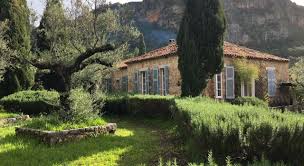 Paddy’s House was finally open for visitors. It’d been long enough. For 3 or 4 years, during our summer and winter visits, my siblings and I had peered through endless tall shrubs and overgrowth at the seemingly abandoned house, wondering what was going to happen to this magical home in the middle of nowhere. It was at the water’s edge of the remote little town called Kardamyli in Greece’s southern region of the Peloponnese.
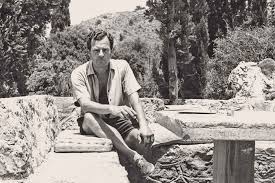 The house had belonged to British-born writer Sir Patrick Leigh Fermor – known as Paddy to friends and followers. A great traveler and adventurer, at age 18 in 1933, he walked across Europe, from Holland to Constantinople. He was travelling through Germany just as Hitler came into power and carried on to Greece at the outbreak of World War II, when he joined the Irish Guards. Having learned several languages along the way, Leigh Fermor joined the S.O.E and fought to help free occupied Crete.
Many years later the film Ill Met By Moonlight retold this wartime episode, with Dirk Bogard playing Sir Patrick.
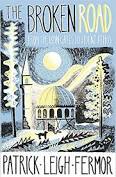 Patrick Leigh Fermor’s first non-fiction book was The Travellers Tree, followed by his only novel, The Violins of Saint-Jacques which was published in 1953. His later books about his travels include Mani, Roumelli and A Time of Gifts. These he wrote first in longhand at his Kardamyli retreat.
 Paddy began building this charmingly beautiful, rambling Kardamyli House in 1965. He paid the local youths a penny a rock to gather small and large boulders from around the craggy area and help him create a rustic hideaway. He wove rock and pebble designs throughout the floors inside and outside in the meandering seating areas. Stone benches abound, each with a different inspiring view of the sea or the towering Taygetos mountains behind the property. A series of individual guest rooms surround the main house. In the centre of the house is the large living-room with long built-in, comfy seating at either end, under the windows that cover the length of the room and overlook the craggy rocks leading down to the turquoise waters of the Messinian Gulf.

In the ensuing years Paddy and his wife Joan played host to writers Lawrence Durrell, John Betjeman, Henry Miller and painters Picasso, John Craxton, Ghiko and other literati of the day, inspired by the surroundings. This was how ‘Paddy’s House’ got its reputation.
Now Paddy’s house has been lovingly restored. It is light, airy, simple and very welcoming. Just the place to hide away and write a book. It was finally opened to the public this October and exhibits his vast book and art collection and is once again a writer’s retreat. Writer guests are chosen by a panel from UCLA, Princeton and the Banaki Museum, sponsors of this refurbishment. Elpitha, Paddy’s house-keeper for his final eleven years after his wife Joan died, gives private tours and shares glimpses into Leigh Fermor’s life. She would clean for him, cook his favorite moussaka dish, drive him places and told us that he would clamber down to the sea and swim each morning until not long before his death in 2011 at the age of 94. He spoke mostly Greek to her.
 Patrick Leigh Fermor certainly had a full, well-lived life, as his books tell. Living in such a remote part of Greece – or anywhere in the Mediterranean area – would seem like a perfect place to inspire creativity; to write and paint. Or is it? It certainly is a wonderful respite from the hustle, bustle, traffic and cacophony of Hollywood or London – for a week or two. A wonderful place for me to meet up with scattered family members. A chance to relax, recharge one’s batteries and catch up on sleeping, eating – and writing. But I realize that I find my inspiration from my surroundings. The everyday tales of those I meet. The lengthy chats about youthful adventures. The revelations of the history of our surroundings.
I really look forward to my sojourns with no thoughts of any time-keeping. Instead, timeless days spent wandering through olive groves, exploring ancient ruins and unfamiliar towns. Or walking along the deserted beaches, watching the distant tide creep in and turn to crashing waves and then, later, marveling at the fierce summer thunder and lightning storms in the night. Hours spent enjoying free-flowing conversation over a simple, leisurely meal. What’s not to like? But would I want to live there?
I have a feeling that, were the opportunity to arise, I would get little work of any sort done in those surroundings. Especially writing. At my impending return to the ‘civilization’ of Hollywood, I relish the chance for another fresh attack on my next book. I look forward to sitting at my newly re-ordered and de-cluttered desk. It awaits all of the inspiration gathered during my travels. A new blank page waiting to be filled with fresh ideas and newly remembered forgotten words.
What’s not to like? How do you re-charge your batteries?


 I frequent a bookshop in a neighboring town that sells books for and about writers, along with writing-related merchandise (if you’ve been to Port Townsend Washington you know which store I mean). They carry postcards and T-shirts with writing slogans like “Avoid Clichés like the Plague”. Cute. Unfortunately, it denigrates clichés. The meaning of the word has been ‘adjusted’, and unfairly so, IMHO.
 When selectively used, a good cliché expresses wisdom through metaphor. A stitch in time figuratively saves nine. Actions often do speak louder than words. Sometimes it is a dark and stormy night, but since that opening line shows up more in humorous writing nowadays, we expect it to be funny, not dark. Like cliché, the expression’s meaning has been ‘adjusted’.


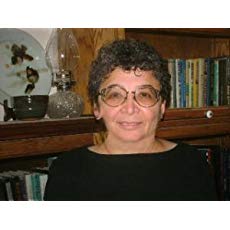 I had the pleasure of getting to know one of our Writers in Residence bloggers, M.M. Gornell, more in depth last month and decided to write up my talk with her for the monthly column I write for a UK magazine called Mystery People.
 One of the most famous, nostalgic, fascinating and historic highways that wagon trains of homesteaders traveled, along with migrants seeking fortunes in gold mines, land, and new opportunities, U.S. Route 66 was originally a 2,500-mile dirt trail that ran from Chicago, Illinois to Santa Monica, California. It was eventually smothered in asphalt and became known as the Mother Road, and the Main Street of America, passing through a total of seven states.
 Although her former residences have included other towns and the Sierra Nevada with its rich palette of Red Rock Canyon (the setting for her thriller, DEATH OF A PERFECT MAN), Madeline’s move to Newberry Springs inspired her to set the majority of her eight crime novels, including two series, along the famed highway. “For me,
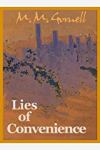 But California and Route 66 beckoned in the 1990s, due to mental pictures and expectations she had of the Mother Road twenty years earlier. It was not as easy as she had imagined, but new settings presented themselves and the majestic Sierra Nevada Mountains provided magnificent, magical scenery, inspiring her “Raven” mystery series, then LIES OF CONVENIENCE, and more recently her “Rhodes” mystery series.
 Although the romance of the route was a fixed American landmark, it was soon bypassed by the new Interstate Highway System which either paralleled it, resurfaced portions, or went elsewhere, leaving Route 66 abandoned and lined with ghost gas stations and tiny deserted communities. Eventually, it was officially designated as “ceasing to exist.” But you can’t keep an icon like the Mother Road down. It was rediscovered by musicians, hippies, artists, movie makers, and writers.


 getting here is twisting and curving. This particular writing thought path started for me this last August, with a Jackie Zortman post on her blog, Jackie’s Mountain Memos. It is the most lovely post, and the link is provided below
 participated in—on whether pottery was Art versus craft. I always sided with art, and now as I move more down my writing road, once again I’m siding with art. So, how can we make our writing-tapestry
 My bottom line point is, past events need to come through on a personal level through our characters eyes and heart. Not cardboard characters with simply narrative pasts, but living, breathing pasts that are part of their being, and make them full-flushed-alive as they experience their present. I know, I’m talking about characters as if they are actually alive. They are, aren’t they?

 Na-
 “Traditionally, NaNoWriMo works best when you start a brand-new project. It may be an arbitrary distinction, but we’ve seen that novelists do better (and have more fun) when they’re free from the constraints of existing manuscripts. Give yourself the gift of a clean slate!

 by Gayle Bartos-Pool
 Polishing the Gem




 The only physical description we have of Nancy Drew is her “titian hair” and “blue eyes.” However, we hear a lot about her chic wardrobe and apparently endless clothes closet. Beyond her stylish threads, Nancy often dresses in costumes and old garments found in attic trunks. When the books were originally released in the 1930s, low-income readers could imagine wearing Nancy’s pretty outfits for themselves.
 The books are set in 1967, an era of vibrant and varied clothes. Poodle skirts and bobby socks gave way to miniskirts and pillbox hats. East Indian garments were in style. The “British invasion” of roc
 Destiny King is an African American agent who takes Noelle on her spy missions. Destiny sports a trimmed Afro and frequently wears jumpsuits. Her clothes are functional in more ways than one way. For example, she has a pair of earrings that are really plastic explosives.
 Sally Carpenter is native Hoosier living in southern California. She has a master’s degree in theater, a Master of Divinity and a black belt in tae kwon do.

 I’m a writer.
 Now I’m working on the fourth of those books. I’m first doing a synopsis and three chapters to turn in, then finishing the rest of the manuscript. I have a few months, so I should be fine. But right now I’m looking at all the weekend events, panels and more, that I’ve agreed to in the near future. Then there will be a visit from some dear family members that will probably use up a week. And an annual trip that has been extended to see those family members at their home. So… well, I’m worried about meeting that deadline.
 Yes, deadlines are a part of life.
 Linda O. Johnston, a former lawyer who is now a full-time writer, currently writes


 “It’s just a bunch of middle-aged women who don’t know what they’re doing. They can’t stop us,” one was overheard saying. Oh, that set my blood boiling.


 Soon waitstaff brought out steaming five-gallon pots filled with briny shellfish, loaves of French bread and bottles of chilled wine – a white Beaujolais, which I’d never heard of before. I took one sip and delighted in its light freshness, its unpretentiousness, like young girls in summer dresses.
 Not wanting to be alone, I found my husband and we gathered with other Americans in the lobby, where we watched the horror continue to unfold on a big screen. We gathered in small groups to commiserate. One friend had a brother who worked in the first tower (miraculously, he wasn’t there that day). Another recognized a name from the passenger list of one of the planes that hit the tower – his former boss. All of us were too shocked to respond until he said, “If anyone deserved to go like that, it was that SOB.”



You must be logged in to post a comment.