
By ROSEMARY LORD
 Well – who could have known…
I was heading for the Left Coast Crime ‘Murder’s A Beach’ writers’ conference in San Diego.
Two Southern California authors were being honored: Rachel Howzell Hall and T. Jefferson Parker. I was moderating a panel, “Hooray For Hollywood: Tinsel Town as a setting…” with Kellye Garrett, Lee Goldberg, Sherri Leigh James and Pat Broeske on Friday.
These conferences are always a great time to catch up with other writers who live far and wide – all coming together because of their love of books, of reading and writing – and especially mysteries. They readily share their knowledge, expertise on novel writing and their encouragement to those in pursuit of a publisher. It’s also a chance to meet their readers and fans.

I bumped into old friends writer/magician Stephen Buehler, wine-expert Nadine Nettmann, Catriona McPherson, Sheri James and Pat Broeske on my way in. But I’m getting ahead of my self.
It was a long, slow drive from Hollywood through a heavy rainstorm, averaging 9 miles an hour. 4 hours later, as I drew into the Marriot Mission Valley, I was looking forward to all the panels and lectures I had marked on the busy schedule.
Having checked in, left my bags in my room, I had already missed the ‘Not Too Distant Past: 20th Century Historical Mysteries’ panel that I wanted to hear, so I headed for the Rio Vista ballroom to listen to Toastmaster author Matt Coyle being interviewed. I stood at the back, as it was already underway.
A small cluster of somber-faced women with clip-boards arrived and stood at the back. Hmm. At a long pause in questions, they walked up to the front and one announced. “Please everyone stay in your seats – do not leave!” Then, the dreaded words followed that the San Diego Health Department was shutting down the conference, due to the Covid-19 virus concerns. Effective immediately. (The Arizona Book Festival and the L.A. Times Festival of Books would soon follow.)

The conference organizers had spent 3 year planning this what-would-have-been-wonderful 4 days of panels, discussions, celebrations and networking. They were, naturally, devastated. They announced they would be emailing us about refunds. Some in the audience suggested that we return any refund to put towards the huge cost of putting on this event. Then there was the discussion of the Saturday Night Award Banquet, when awards for the Best First Novel, Best Historical Novel and so on. No solutions yet. The crowd promised to meet up at the next Left Coast Crime conference in Albuquerque, New Mexico in April 2021.
We were asked to vacate the ballroom. Immediately.
“But we’re here, together, now – can’t we at least have the Opening Cocktail Reception before we leave?” rippled through the crowd. A glass of wine and hors d’oeuvres sounded very welcoming at that moment. Alas no. They shut that down too.
But, as we filed out of the room, the hotel staff wheeled out trolleys of spring rolls and wantons into the corridor, offering us plates to help ourselves as we left. They explained that they had cooked them, so we might as well eat. But the wine-bar was quickly moved out of sight!
The rest of the evening was spent congregating in the bar-café area as we figured out our next step. I had a relatively short drive, compared to many who had flown in from Canada or the East Coast, with return flights booked for Sunday.

The attendees include not only writers, publishers and editors, but many readers – fans. They seem to often be older women – often Agatha Christie fans who love meeting other mystery writers, collecting signed copies of their books. I wondered how many of these fans lived alone and, having had just had their big, exciting vacation crushed, would be returning to empty apartments and homes. I also thought about the struggling writers who spent hard-earned money on promotional items such as pens, notebooks, bookmarks to give out at various events during the weekend, attempting to sell their books. And then there were all of the extra hotel staff hired especially to work this conference. What happens to them?
Although I appreciate that this is insignificant compared to the health risks of those who are felled by this awful virus and the impending suffering of so many workers, travelers and businesses affected by the quarantines in force.
But it was sobering to observe this sliver of the rippling effect.
But I don’t want this to be all doom and gloom, for this, too shall pass. We will get beyond this bizarre situation we have all been thrown in together. And when we come out the other end, we will be much wiser and a lot more appreciate of the freedoms we usually enjoy, of the good friends we have, aware of the health and safety of our loved ones, friends and co-workers. Many of our parents lived through World War Two. The motto then was KEEP CALM AND CARRY ON.
I shall be working from home for the next couple of weeks, having closed down the Woman’s Club as a health precaution for our members, guests and volunteers. Although I still have a large stack of club paperwork to tackle, I shall be able to take more time to work on my Lottie Topaz books and a couple of new ideas I have.
It’s a chance for all of us to take some time to reflect on where we are going with our lives and our writing careers, to count our blessings and make wonderful plans for a bright future.
So just remember to check on friends and neighbors living alone. Stay safe and healthy. See you on the other side of this pandemic.
So keep calm and carry on writing….!



 The event is the largest annual gathering in America for writers and fans of traditional mysteries in the genre of Agatha Christie, which places them in a genre called ‘cozy.” It appears that publishers here prefer authors to be strictly categorized into the type of book they write: romantic suspense, noir, thriller, psychological suspense, hard-boiled, legal thriller, historical, private investigator, cozy, police procedural, and sub-genres such as a sci-fi and the newest, cyber-crime mysteries.
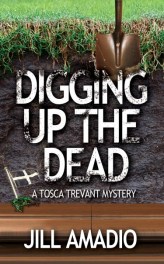 The second book in my series, “Digging Up the Dead: A Tosca Trevant Mystery” was published just in time for this premier annual event. My main character hails from Cornwall and comes to live in Newport Beach, like me, so the “Fish Out of Water” panel was perfect for us both. It was fun to explain to the audience that Tosca Trevant, a London gossip columnist (me too!) had rattled the royals by discovering yet another scandal at Buckingham Palace. This led her editor to re-assign her temporarily to America. Cussing mildly in the Cornish language, and coping with a culture that sees no need for a teashop on every corner, the meddlesome, outspoken and humorous Tosca turns amateur sleuth when she stumbles upon human remains in a neighbor’s garden, in the best Miss Marple tradition although Tosca is a younger version.
 She was instantly contradicted by a voice behind my chair shouting out, “Yes! You did know!” The voice was male and sounded exactly the way I had described his gravelly voice in a previous chapter. I swung around, dumbfounded. Of course, there was no one there and no one else was in the house. Some writers say their characters often take over their role in a book but this was different. Sam spoke a line of dialogue that added another dimension to the plot. It worked well, surprisingly, giving an extra twist to the story. I didn’t hear from him again nor from anyone else I created so I guess he and the others were satisfied with how the plot was progressing.

 As my posts often are, I tend to share “things” going on in my life influencing my writing, with the thought there’s “something” going on beyond just my little mental shenanigans—and might be a nugget for my fellow readers and writers. This is another one of those posts, but possibly even more “rambling down the writing road” than others.
 Some things you just can’t fix. Besides being positive leaning, I’m also a rather private person—I know, I know, yet here I am writing a very public blog about all this. But I’m sharing, because of the prime motivator I have for writing these posts—that maybe other writers can identify with my experiences, and consequently say to themselves, either “I’m not like that, I’m doing it right,” or “yes, I can use those thoughts, too.”
 hniques:
 Back writing at last! And on top of that, Jackie Houchin’s post about murder on the high seas, has started some new ideas for future books/novellas percolating in my writing brain.
 The Canal transit, of course!! (#1 on Hubby’s bucket list), But the perfect sunny weather, the deep blue sea(s), the small, uncrowded ship (just 670 passengers), the funny and very personable Captain, the amenities (food, lounges, gorgeous library, spa, pool, Internet café, crafts & games, casino, theater), our beautiful cabin with a balcony (oh, the views!), breakfast in bed, the lack of crowds and lines, the cool excursions in Aruba, Costa Rica, and Chiapas and Cabo San Lucas in Mexico were all definitely fantastic.
 (Yes, we are in our 70’s, but we had a blast zip-lining in the Rain Forest!)
 Imagine, if you will, 4-6 months in luxury, with everything taken care of for you, the occasional excursion ashore, time spent in one of several lounges or the library or your room, even out on the balcony with a laptop, with a bunch of characters eager to do malice, and a twisted mystery plot to direct them!
 But what about on OUR cruise ship, the Pacific Princess? I asked the Capitan Paolo Ariggo several questions during our two weeks, but one of them was about this topic.
 Right now, I’m reading an ARC (Advanced Reader’s Copy) of a cozy mystery for review, Bonbon Voyage by Katherine H. Brown about the Chef being murdered. (Oh, no!!)
 Platform:
 Roll up your sleeves and join me as we polish the gems that we are inside.
 So, what do you primarily write?
 So, what is your biggest asset?
 In closing, I have a request for writers in this group.
 A Pretty Little Plot
 The Stolen Star
 A Daughter’s Doubt


 Then there’s Romance Writers of America. It’s in San Francisco this year, and I’d certainly planned to go there, only… Well, things have changed in the entire organization. It’s been rocked by a scandal involving discrimination issues. I haven’t entirely followed all the changes and nuances, but a lot of people in charge have been ousted from their positions or resigned, and even a lot of members have decided not to renew their membership, even though the discrimination issues will hopefully all be addressed–and eliminated.
 So, instead of four conferences this year, I doubt I’ll attend any.



 My writing has matured over those thirty years, as has my heroine. Granted, when introduced in my first book, she was “almost eight”, so her voice and thoughts had to reflect her age. However, the book was meant for adults, therefore it had to present the story at a more mature level. Much of the storyline and the tension springs from a child who’s unable to fully understand her situation and an adult audience who clearly can.
 Mike McNeff introduced his hero Robin Marlette in GOTU (pronounced Got-U, it’s short for Guardians of the Universe). His action/adventure series features a covert ops team that has to balance work with home life. Mike’s currently writing the fourth book in the series. When I asked him how his characters have evolved over time, he decided to let Robin speak for himself:
 What began for Heather Ames as a stand-alone novel turned into a deftly blended mystery, suspense and romance series featuring Detective Brian Swift and socialite/club owner Kaylen Roberts (due in part to encouragement from some members of this blog). Ames says, “My characters have evolved from two people who didn’t even trust each other enough to share confidences into two people who have been trying to work through various challenges. They weren’t sure they could work things out by the end of Book one, but they both wanted to try.”
 Pat Kelley Brunjes traveled a similar route with her characters as I, opening her series with a story loosely based on her family history. In her first novel, The Last Confession, her protagonist serves as a stand-in for Brunjes. “Maggie was me seeking to find the truth about my grandmother’s relationship to the Catholic Church.” Although based on her research, she fictionalized the story, which allowed her to take Maggie in a non-biographical – and more dangerous – direction. In the sequel she’s writing, her heroine gets entangled in a cold-case murder and human trafficking. “In the second novel, Maggie has evolved into her own person dealing with what fate has thrown her, and how her personal beliefs guide her decision to help others.” Having given herself the freedom to step away from semi-autobiography, Brunjes will have much flexibility in plotting future entries in the series.
 Avis Rector faces a unique challenge in writing her historical fiction series, based on the early life of her family on Whidbey Island. In her first book, Pauline, the heroine and her husband settle on the island during the Depression. “So much of the first Pauline was based on my memories of the stories I heard as a child from my father who loved to tell stories—usually real happenings, but many embellished.” However, in her sequel, the story moves into the 1940’s, a time Rector lived through. She’s having to reinterpret her childhood memories through an adult’s perspective. “Actually, I’m having a hard time writing how the adults felt about the time. Pauline has changed.”
 The Writers in Residence
You must be logged in to post a comment.