

by Jill Amadio
Marketing our mysteries is probably one of the least preferred tasks on our to-do list but it is crucial if we wish for success and sales. I truly dislike having to hawk my books and with so many different avenues than ever from which to choose, the effort becomes far more onerous than ever. But with writers’ conferences shut down and virtual meetings on the rise I found time to think about how to increase my book sales.
Five Guides
In isolation, I decided to buckle down and educate myself further about book promoti0on, buying five guides to add to the two I already own which are The Frugal Book Promoter by Carolyn Howard Johnson, and Red Hot Internet Publicity by Penny Sansevieri. I must confess I barely cracked open either of them but added them to five new books from amazon: The Tao of Book Publicity by Paula Margulies, How I Sold 80,000 Books by Alinka Rutkowska, Marketing Books on Amazon by Rob Eagar, Book Marketing…Reinvented by Bryan Heathman, and another by Penny updated in 2019., titled 5-Minute Book Marketing for Authors. Naturally there are overlaps in all of these guidance books, some of them explained well with detail and others just glossed over. I offer my opinions herewith.
Five Minutes?
The 5-Minute book intrigues me the most. Five minutes? That’s just 30 minutes spread over a six-day week. Surely we can all handle that. Packed not only with advice on how to promote, Sansevieri includes a generous selection of web sites to contact after each point she makes. For example, to promote eBooks Penny presents dozens of free sites where you can list your book, as well as sites on Twitter worth notifying. She also has several advice sections on how to use amazon’s author page, book page, reviews, how best to demystify amazon’s categories, key words, etc. if you self-publish with them. Her book offers the main benefits of Instagram, Pinterest, BookBub, Goodreads, Facebook, Google Alerts, blogs, and other social media, as well as creating your own newsletter for visibility.
Amazon
While on the subject of amazon, Bob Eagar’s guide focuses entirely on making the best use of the online global bookseller. He tells us how to find and understand their bestseller rankings, how to estimate your book sales, and why the rankings aid marketing efforts. Eagar also debunks a few myths about those rankings, as they change every hour of every day but at least give an idea of your sales, unlike traditional publishing houses. If there’s a spike upwards does it mean that your recent marketing campaign was effective? Or vice versa? Your non-amazon publisher probably buys ads on the amazon site which means you can check your rankings without self-publishing with them. Is amazon advertising your book? You can find out from the site he cites in his book.
How to Sell 80,000 books
Moving on, I was eager to know how to sell 80,000 books. The author’s name alone fascinated me and I wondered who Rutkowska is. Turns out she is a bestselling USA Today and Wall Street Journal author and founder of Library Bub that connects indie authors with 10,000 libraries although you can find this list yourself online now.
A third of the book sets out interesting interviews with bestselling authors as to their promotional strategies, and Alinka shares how she sold those 80,000 books and more not only on amazon but also through online sites, bulk sales, foreign rights (there’s a service site for this), networking, and clubs. Happily, most of us are already skilled as panelists and speakers. She tells us something I never knew – that Apple is the second-largest book market player after amazon and publishes books, she says. Something also new to me, that Kobo is the second largest eBook retailer in Japan and has 3% of the market in the U.S. Is your YA plot linked to the ocean? If so, Alinka says we should contact the retail department of the cruise lines. They ordered hundreds of copies of her children’s books for their gift shops.
Selling the Sizzle
Heathman’s informal and friendly book includes branding and marketing formulas and understands the angst authors feel about the work that is necessary. He gets down quickly to the nitty-gritty of selling the sizzle, and like the other guides, talks about the various avenues available except that he adds how fortunate we are these days to have so many ways to promote our work and exactly how you approach Barnes and Noble through their CRM author signing schedule. I like his emphasis on reading local print media so you know what they are looking for regarding author interviews, and especially regarding radio. Don’t leave it up to organizations and clubs to publicize your event, get to work! However, his advice to create a daily series of social media posts sounds a bit daunting. I like Heathman’s list for getting quality book endorsements you can use for your back cover, press releases, and on your website and blog. Particularly useful is his 15 Week Book Marketing Checklist chart.
A ‘How-To’ Guide
The how-to book promotion guide I have taken a special liking to is The Tao of Publicity. Margulies directs it to beginners trying to figure out how to publicize one’s books but even those skilled at it can learn something from her pages. Like the other guides mentioned above except for Penny’s lengthier tomes, the Tao is around 145 pages but is crammed with tips, ideas, website content advice, timing your launch, Q and A questions for the media to ask, the pros and cons of a blog tour, why limiting social media sites can be a better way initially to build relationships with readers, and many other issues. Ever heard of dashboards Hootsuite, Threadsy, and Tweetdeck to post information about your books? And make sure you take into consideration America’s different time zones.
After reading all seven guides I found something in each one that was individual enough to make a note of, writing down the page numbers. However, I am now too exhausted to figure them out.
If you care to share, which promotional ideas bring you the most reward?
Photo by Campaign Creators on Unsplash


 Of course, the correct common usage idioms are “stubbed my toe, a drop in the bucket, beat around the bush, and a dime a dozen.” The last two are alliterative, yes, but why, I wonder, are toes the only part of our anatomy ever stubbed? And why drops only drip into a bucket instead of any other container? My favorite, though, is “a short/long week – or year, or hour.” What do they actually mean? Six days instead of seven? 11 months instead of 12? Sure, it’s easy to explain that an hour can drag on seemingly forever and a short week can mean time flies by, so why don’t we write that?
 I have a book, “The Describer’s Dictionary” that contains oodles of such hackneyed idioms but they do inspire me to create my own if possible. The book is tremendously helpful when trying to find a way to describe, for example, low-elevation clouds. One description offered is “a cloud mass like a formless gray horizontal sheet.” Would you honestly use that? However, I have found the book invaluable for character physiques, architecture, locales, settings, and surfaces and textures. There is an entire chapter on Necks. Granted, it’s only half a page but it encourages the mind to explore other possibilities.
 Jill Amadio is from Cornwall, UK, but unlike her amateur sleuth, Tosca Trevant, she is far less grumpy. Jill began her career as a reporter in London (UK), then Madrid (Spain), Bogota (Colombia), Bangkok (Thailand), Hong Kong, and New York. She is the ghostwriter of 14 memoirs, and wrote the Rudy Valle biography, “My Vagabond Lover,” with his wife, Ellie. Jill writes a column for a British mystery magazine, and is an audio book narrator. She is the author of the award-winning mystery, “Digging Too Deep.” The second book in the series, “Digging Up the Dead,” was released this year. The books are based in Newport
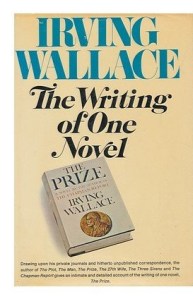 Turned out I had grabbed a paperback I’d bought second-hand years ago and never got around to reading, Irving Wallace’s “The Writing of One Novel.’ It relates the all-absorbing 16 years he spent researching, traveling for settings, and finally writing his bestseller, “The Prize.” In meticulous detail Wallace describes his exhausting, frustrating, and determined journey into the background of the Nobel Prize. He interviewed dozens of judges, winners, losers, and journalists who covered the event. He kept daily journals and diaries of his efforts to get behind the politics, drama, and the decisions, all of which resulted in “The Prize” being almost non-fiction. Wallace discovered facts, regarded as explosive and titillating at the time, about all those involved over the years. Most of the characters were a combination of the real person and the author’s creativity but they were so obvious that the country of origin of the Nobel Prize, Sweden, refused to publish or distribute the book.
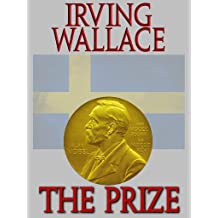 That aside, the tattered paperback I was reading, yellowed with age – it was published in 1951 – was the most honest and revealing of any author’s how-I-wrote-it book I have come across. It is more than a fascinating peek into Wallace’s writing process and method of research. He lays bare the heart, mind, and soul of a writer’s inner workings. Would reading this book turn off a new writer? It’s a daunting task that Wallace set for himself because he wanted to know everything, and as he dove deeper and deeper into the history of the Nobel Prize he uncovered real data that he could not resist including in his novel. Luckily today we are armchair researchers, although I find that visiting locales can’t be beat for sniffing the atmosphere.
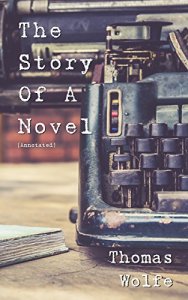 Interestingly, Wallace’s “The Writing of One Novel” mentioned another author who wrote a tell-all of his writing process. I immediately downloaded Thomas Wolfe’s “The Story of a Novel.”
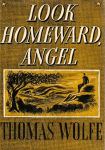 “Look Homeward, Angel.” Wolfe dredged up so many childhood and young adult personal experiences that the novel is considered practically autobiographical. His first draft was over one million words! Happily, Scribner’s genius editor, Max Perkins, sorted it all out and gave us Thomas Wolfe in all his glory. Perkins probably also heavily edited “The Story of a Novel” because Wolf admits at one point that all he did when writing it was jot down a few random notes.
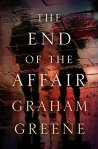 Both memoirs put me in mind of Graham Greene’s despondent “The End of the Affair,” another heart-breaker that makes one wonder how much of the author’s life it reveals. Faulkner called the book “true and moving.”
 The event is the largest annual gathering in America for writers and fans of traditional mysteries in the genre of Agatha Christie, which places them in a genre called ‘cozy.” It appears that publishers here prefer authors to be strictly categorized into the type of book they write: romantic suspense, noir, thriller, psychological suspense, hard-boiled, legal thriller, historical, private investigator, cozy, police procedural, and sub-genres such as a sci-fi and the newest, cyber-crime mysteries.
 The second book in my series, “Digging Up the Dead: A Tosca Trevant Mystery” was published just in time for this premier annual event. My main character hails from Cornwall and comes to live in Newport Beach, like me, so the “Fish Out of Water” panel was perfect for us both. It was fun to explain to the audience that Tosca Trevant, a London gossip columnist (me too!) had rattled the royals by discovering yet another scandal at Buckingham Palace. This led her editor to re-assign her temporarily to America. Cussing mildly in the Cornish language, and coping with a culture that sees no need for a teashop on every corner, the meddlesome, outspoken and humorous Tosca turns amateur sleuth when she stumbles upon human remains in a neighbor’s garden, in the best Miss Marple tradition although Tosca is a younger version.
 She was instantly contradicted by a voice behind my chair shouting out, “Yes! You did know!” The voice was male and sounded exactly the way I had described his gravelly voice in a previous chapter. I swung around, dumbfounded. Of course, there was no one there and no one else was in the house. Some writers say their characters often take over their role in a book but this was different. Sam spoke a line of dialogue that added another dimension to the plot. It worked well, surprisingly, giving an extra twist to the story. I didn’t hear from him again nor from anyone else I created so I guess he and the others were satisfied with how the plot was progressing.


You must be logged in to post a comment.