
by Gayle Bartos-Pool
 After writing my first three published short stories, something happened: Readers responded favorably to one of my characters. They liked this guy’s personality.
Of course a writer is supposed to craft memorable characters, but those are usually found in a novel. A writer has more room to flesh out characters in a 300-page novel, not a 25-50 page short story. But something was happening with my “Johnny Casino” character. His personality was too big to stay within 28 pages.
That’s when I realized I had more Johnny Casino stories in me. In fact, by the time I was finished, I had nine stories and 388 pages. That’s called a book. I had turned a one-shot story into what is basically a series.
But the journey was also a learning experience.
I wrote a batch of these stories and showed them to my agent. She liked them, but…she wanted more information about Johnny. She thought the stories needed a love interest, but I didn’t want the short stories bogged down with schmaltz. That wasn’t what I envisioned for my character. But I hadn’t written any reason why Johnny didn’t have a woman in his life, so I wrote a backstory. That’s when I learned a lot of new things about him. It was so detailed; it turned into the second story in the first collection, The Johnny Casino Casebook 1 – Past Imperfect.
The backstory also gave me a different view of Johnny. He had his dark side as well as his sarcastic side. He was becoming a three-dimensional person. I started learning so much about him, more stories popped up. One was so compelling; it became the focal point of the second collection, The Johnny Casino Casebook 2 – Looking for Johnny Nobody.

Since I had created a past for Johnny, I could write stories about him when he worked for the mob back in New Jersey when he was younger; after all, I had discovered that his father was a high ranking guy in the D’Abruzzo crime family. I could also do a story explaining how he became a private detective after he fled to California.
And here’s a heads up for all you multi-tasking short story/novel writers. The character I created who taught Johnny how to be a first class P.I. is the heroine in another mystery series I have been writing. I figured, if people like Johnny, they just might like the novel featuring Gin Caulfield. She is now in three novels, not short stories in this case.
The last thing I learned on this journey is that there is a different kind of short story out there. In classes I teach about The Anatomy of a Short Story I mention a short story is like an hors d’oeuvre. It consists of a few really good things served up in a small bite. Whether it’s a handful of cool characters in a terrific location involved in a catchy plot, the short story gets you to one location in the fastest way possible.
In contrast, a novel can take you far and wide with a cast of thousands with sub-plots and bits of interesting background stuff just for the fun of it, and the writer can use 300 to 400 pages to accomplish the task. But the short story writer has to chop out unnecessary characters, places, plot twists and trim down the description to its bare bones and do it in 10 to 25 pages, give or take. Or does he?
I think there is a new home for the short story. The Short Story Novel. The length of each individual story can be anywhere from 25 to 70 pages, but the main thing is to have a single set of characters, or in my case, one main character, in every story. Several characters make repeat appearances, and I mention one sub-plot in several of the earlier stories in any given collection that is resolved in a story of its own. Each story reveals more and more about my main character and the final story in Book One ends with a haunting question that will be answered in Book Two.
If this sounds like a television series, you betcha. I called it a “series” earlier in this blog and that is exactly how I visualize The Johnny Casino Casebook, whether it stays in book form or hits the TV screen. His stories might be in the “short story” format, but his entire life is a novel.
And for those of you who prefer to create something completely stand-alone in each short story you write, those individual tales can always be put into your own collection and published. I did just that in From Light TO DARK.

 And to add one more thing to this blog, Johnny Casino isn’t the only short story character to be in a book of his own. Chance McCoy arrived this year. His first book is called Second Chance. There are more stories to come. And there is a second short story anthology called Only in Hollywood coming out next year. The book consists of various stand-alone stories, but one features a guy named Charles Miro, a former TV actor turned private eye. He works for a younger woman who owns the detective firm. There are several stories about these two coming up. You see, even a short story can magically turn itself into a book if you try.
Write on.




 t, I copy posts from this blog onto my Goodreads blog, so I get extra mileage from it. When you have an “author event,” you can promote it on Goodreads. And unlike certain other websites that are mighty picky about who can and cannot review books, Goodreads lets you review your own books and give them five stars if you want to. What’s not to love about Goodreads?
 ons. Book clubs are a terrific way to get your book noticed, but you can’t just wander in to any old club and ask them to read your book. You need to build a relationship first—but that’s half the fun! There are book clubs at most libraries and independent bookstores, and if you don’t find one, consider starting one yourself. Readers are everywhere; might as well make them potential readers of your books.


 Linda O. Johnston, a former lawyer who is now a full-time writer, currently writes one mystery series for

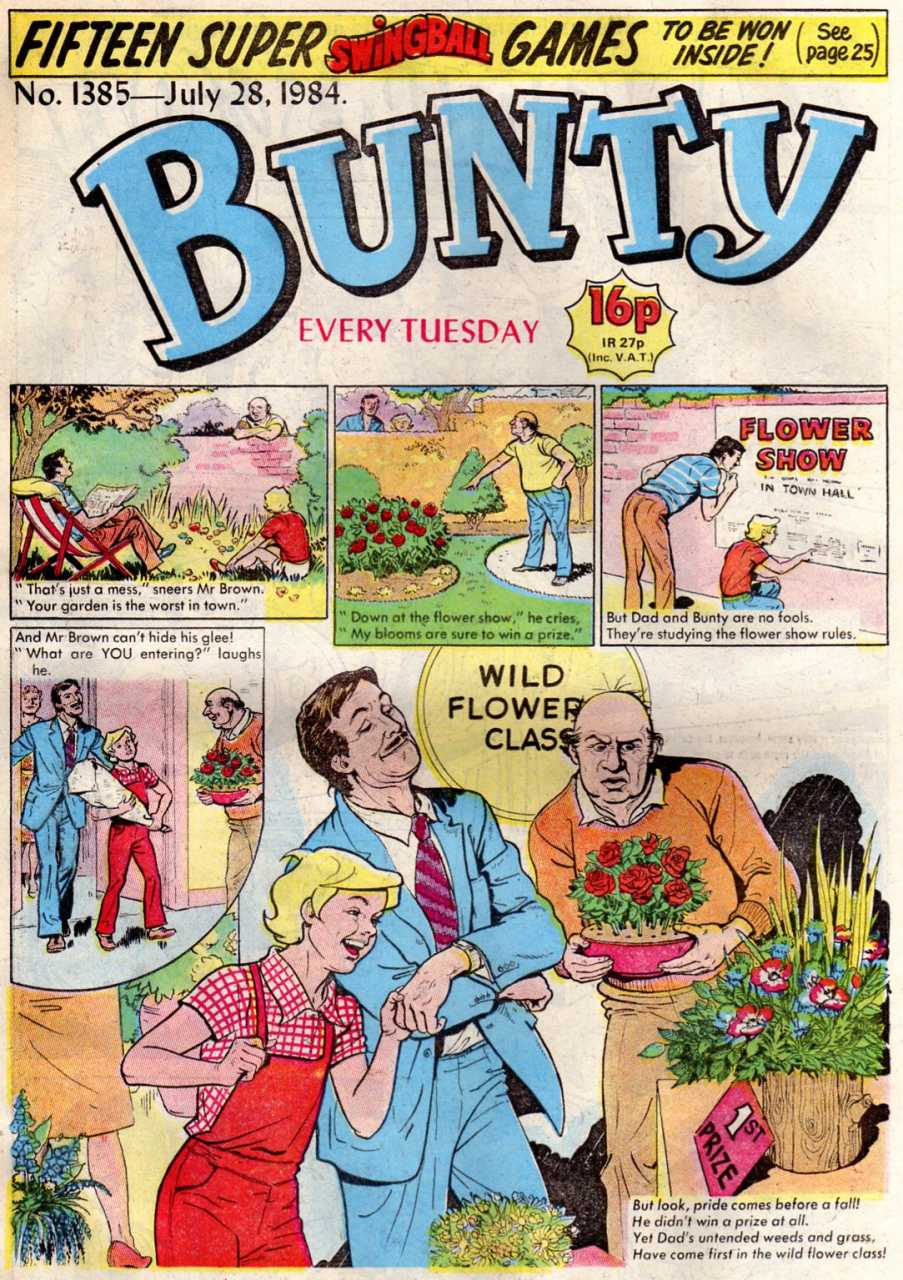

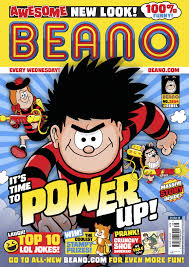 The boys had more serious comics and magazines such as The Boy’s Own Paper, The Beano, The Dandy. I guess adding a “The” made them more weighty. But then what about Buster, Topper and Beezer? Not so serious-sounding now, eh boys? As they got older, the boys progressed to The Eagle, Valiant, Look and Learn and Tiger. The Eagle was my older brother Ted’s favorite.
 Petticoat, Mirabelle and New Musical Express, as well as the women’s periodicals Woman and Woman’s Own. IPC (International Publishing Corporation) was founded in 1963, but its’ umbrella group goes back to the 1800s and covered the Suffragette Movement, two World Wars, the Swingin’ 60s and today’s revolutions. Taken over by Time Warner in 2001 and renamed Time Inc.UK in 2014, the groups periodicals include Horse and Hound, Woman’s Weekly, InStyle UK, TV Times, Woman, Country Life, Homes and Gardens and seemingly hundreds more.



 Romantic-suspense, peppered with frank reality
 A good story
 Bio

 Freedom from fear and oppression, freedom to live our lives and fulfill our dreams, freedom to write our stories. It’s in our constitution and our patriotic songs. Freedom is a precious commodity still alive (for the most part) in this country. Oh, may we cherish it!
 Words have power.




 When I was asked to teach a writing course for Sisters-in-Crime/Los Angeles, I decided I better evaluate how I wrote a story first. I write novels as well as short stories and figured there were similar fundamentals all writers use in both endeavors. Then I remembered the Aristotle course I had taken in college. I still had the textbook, The
 Poetics, so I dusted it off and read the part on the 5 Basic Elements in any story: Plot, Character, Dialogue, Setting, and The Meaning of the story.
 There is another type of timeline I make: A List of Characters. I include their date of birth in case they age throughout the story. You want to make sure you don’t have a character born in 1920 be only fifty in 1990. And you don’t want a character to remember seeing news of the Hindenburg when she was born in 1947. Keep track.
 I have put most of my writing course into a book:


You must be logged in to post a comment.