Called to Please

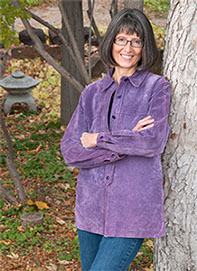
Guest post by Rebecca Carey Lyles*

becky Lyles

Write what pleases your readers?

While on my daily walk this morning, I listened to one of my favorite book-marketing podcasts. Although I’ve learned much from that audio show, I took exception to a statement made by today’s guest, who writes romance novels, thrillers and comedy. In addition to being versatile, she’s prolific and has sold thousands of eBooks. Obviously, she knows whereof she speaks. Even so, her suggestion that we write what pleases our readers didn’t quite jive with me.

My reluctance to accept her advice is partly due to being a faith-based author and partly due to the fact I’m old enough to be her mother. I realize more each day that life is short and my time on Planet Earth is limited. I want to leave a written legacy that deepens readers’ faith, enhances relationships, and inspires personal life-change as well as concern for others.

For a Christian author, writing for publication is a calling to use our God-given talent to honor him and draw others to him. Of course, I want to please readers. However, pleasing God should be my primary goal. Such a focus will enable me to compose stories that uplift, educate and challenge as well as entertain.

windsRomantic-suspense, peppered with frank reality

My romantic-suspense novels might attract a few readers similar to the above-mentioned readers. But difficult subjects like imprisonment and human trafficking will likely cause many who prefer a “lighter read” to turn away. Yet, I felt led to write about those important topics through a series of “serendipitous” events that precipitated each book in the Kate Neilson Series.

I’m currently conducting interviews and doing research for my next fiction series, which will feature individuals trapped in an abusive religious cult. Not exactly pleasant subject matter. Thanks to family members caught in a controlling group, I’ve learned that cult awareness is as crucial for Americans as is understanding the human-trafficking epidemic that plagues our country.

My part in disseminating truth about cults is to create an entertaining plot peopled by compelling characters who search for transformation and freedom in a beautiful mountain setting (only because I like mountains!). Just so you know, despite daunting themes and heartrending storylines, all my books have happy endings, even the nonfiction ones, It’s a God Thing! and On a Wing and a Prayer.

Passagways.A good story

 I might add that my writing is neither literary nor preachy (at least I try not to be preachy). I’ve penned short stories that entertain or make readers think but don’t overtly teach biblical truths (see Passageways)***. As Henry says in the movie The Book of Henry, “A good story will remind you of who you want to be.” All truth emanates from God’s Truth.

How do we live out our calling and write what God wants us to write? The same tools that help us know his will for other aspects of life are also useful for writing guidance. Prayer, Bible reading and study, Bible teaching, listening and responding to the Spirit’s nudges, wise counsel, inspirational books and music, intuition, contemplation, circumstances, confirmation, serendipitous moments—and peace when the right decision has been made.

“We know that in all things God works for the good of those who love him, who have been called according to his purpose.” Romans 8:28 (NIV)

Becky.Steve LylesBio

Rebecca Carey Lyles grew up in Wyoming, the setting for her Kate Neilson novels. She currently lives in Idaho, where she serves as an editor and as a mentor for aspiring authors. She’s also written two Colorado-based nonfiction books, “It’s a God Thing!” and “On a Wing and a Prayer,” and compiled a short-story collection with other Idaho authors titled “Passageways.”  With her husband, Steve, she hosts a podcast called “Let Me Tell You a Story.”

Please visit her website or contact her via email or Facebook.

*Posted for Rebecca Lyles by Writers In Residence member, Jackie Houchin

Excerpt from her most recent novel:

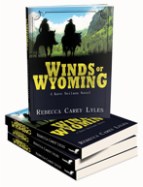
 Winds of Hope***

Prequel to the Kate Neilson Series

THE PRISON GATE CLANGED SHUT behind Kate Neilson, the sound as loud and harsh in her ears as coupling train cars. She’d heard that clatter of metal against metal hundreds of times during her five years of incarceration. Yet with each slam, her stomach lurched and her shoulders jerked. Try as she might to steel herself against the jarring crash, she couldn’t help but react like a startled bird.

For the first time, Kate stood on the visitor side of the barred gate that separated the reception area from the wide fluorescent-lit hallway leading to the cellblocks…..


***NOTE from Jackie: To read the entire excerpt, go to http://bit.ly/2sLVHzI  on my ‘Here’s How It Happened’ blog.

 ***NOTE from Jackie: PASSAGEWAYS  is a collection of 16 stories by four authors. They range from amusing (an old lady with an unusual “weapon” for an unusual purpose, in Mattie Cummins), to romantic (Follow the Moonbeam), heart-rending (Grand Champion), thought-provoking (Invisible Thread), mysterious (Three Days) and sweet (Morning Song) to….. downright creepy! (The Magician).

And yes, Gayle Bartos-Pool, there is a Christmas story (Spirit of Christmas) with a not-so-typical ending.


Let Freedom Ring!

*My country ’tis of thee,
Sweet land of liberty,
Of thee I sing.
Land where my fathers died!
Land of the Pilgrim’s pride!
From every mountain side,
Let freedom ring!

Our father’s God to, Thee,
Author of liberty,
To Thee we sing.
Long may our land be bright
With freedom’s holy light;
Protect us by Thy might,
Great God, our King!

Freedom.

Freedom.flagFreedom from fear and oppression, freedom to live our lives and fulfill our dreams, freedom to write our stories. It’s in our constitution and our patriotic songs. Freedom is a precious commodity still alive (for the most part) in this country. Oh, may we cherish it!

As authors and journalists, we are still relatively free from censor as long as we don’t intentionally harm someone. Ours is a country made for wordsmiths! We can write our articles, poems, songs, memoirs, stories, and books without fear of being imprisoned. We can think up plots that chill spines or puzzle astute minds; humor and satire that produce chuckles, guffaws, or wry smiles; and desperate, horrific situations that rend hearts (and bring out tissue boxes), and pierce consciences.

Freedom.pen.swordWords have power.

“The pen is mightier than the sword,” said English playwright, Edward Bulwer-Lytton. So let’s wield our words wisely.  Yes, let us use them to entertain, but  also to encourage, inspire, challenge, and provoke our readers toward  what is good.

Come mighty patriots, take advantage of the freedom you have. Write on! Publish! Change a mind, a life, a world!

The Lord announces the word, and the women who proclaim it are a mighty throng:” Psalm 68:11 NIV

“How beautiful upon the mountains are the feet of him who brings good news, who publishes peace, who brings good news of happiness, who publishes salvation, who says to Zion, “Your God reigns.” Isaiah 52:7


* Written by Samuel Francis Smith; the tune used for this song is “God Save the Queen”, the British National Anthem.


Launching a New Adventure

Thunder.Bailey.Book Cover.2


Hi again! It’s me: Thunder, the PR Rep for some of the Writers in Residence. This job is taking up so much of my nap and play time that I hired an intern. That’s her, Bailey, behind me in the photo. She’s learning the ropes, but since she’s not even a year old, she’s easily distracted by squirrels and other moving objects.

But I digress.

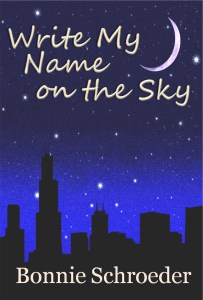
I’m here today to tell you about a brand-new book by Bonnie Schroeder (that’s my mom.) We are beyond excited to share the news that Write My Name on the Sky has just been published by Champlain Avenue Books!

Here’s the official press release, written by Bonnie of course, since dogs don’t think this kind of stuff up themselves:

Write My Name on the Sky is the story of Kate Prescott, a 1960s college dropout who marries art student Jack Morrison and helps him become famous. Then things go off the rails, as they must in a novel.FrontCoverOnly300dpi (002)

The book’s title is a metaphor for ambition and its dark side. Many of the characters in the novel are wildly ambitious—and ambition often drives success, but at a cost, which comes out as the story progresses.

All names have been changed to protect both innocent and guilty, of course, and most of the story events are purely imaginary, but it’s grounded enough in reality to make it believable—and, I hope, entertaining to read. Based on the early reviews, readers seem to agree so far.

The book is available wherever good books are sold (online of course, and mostly by special order at physical bookstores, although Flintridge Bookstore & Coffeehouse in La Canada will always have it in stock.)


All right, my work here is done. For now. It’s past my nap time. See you around the book universe.

Happy Summer Reading!Bonnie_Schroeder-McCarthy-Photo-Studio-Los-Angeles-7187

–Thunder and Bonnie

Mapping Your Mayhem by G.B. Pool

typewriterWhen I was asked to teach a writing course for Sisters-in-Crime/Los Angeles, I decided I better evaluate how I wrote a story first. I write novels as well as short stories and figured there were similar fundamentals all writers use in both endeavors. Then I remembered the Aristotle course I had taken in college. I still had the textbook, The AristotlePoetics, so I dusted it off and read the part on the 5 Basic Elements in any story: Plot, Character, Dialogue, Setting, and The Meaning of the story.


I have covered most of these points in previous blogs, but there is one crucial thing a writer needs to make sure all these elements fit and that is a Timeline. I looked back over the files I had on all the books and stories I had written and lo and behold, I actually made a timeline for just about all of the stories.


What does a Timeline do? It keeps track of Who does What Where and When and sometimes Why.


I actually use several methods to achieve these goals. If the story doesn’t cover very much time or utilizes few locals, I write a simple timeline noting the date and time certain things happen and where the action takes place and who does what each time. If there is a lot of time covered, I use a calendar.


I generally have a basic idea what my story is about before I start putting words on paper. I write the opening (usually about 20 times) until I know where I’m going and the tone I want in the story. Then I jot down the relative time of day each event happens as the story progresses. I break them into no less than 15 minute intervals. Usually it is thirty minutes or by the hour. You can’t have more than 24 hours in any given day, so it keeps you honest and organized.


If my characters are driving around the city, take for instance Los Angeles, I use Google Maps to see how long it takes to get from point A to point B. I’ve seen TV shows where people in L.A. can get someplace in thirty seconds… Only if they use a teleporter. (“Beam me up, Scotty.”) I discipline myself and make my fiction a tad more real.


When I have finished the story, I’ll go back over the Timeline to see if I have crammed too much or too little into that given time frame. And I do something else. I’ll see if the plot holds together. Sometimes a destination doesn’t make sense or maybe some other character should be involved or eliminated. And sometimes I need to add a high point or low point just to give the story movement. I know movies today are all action and explosions and no plot, but I prefer plot and character.


Character ListThere is another type of timeline I make: A List of Characters. I include their date of birth in case they age throughout the story. You want to make sure you don’t have a character born in 1920 be only fifty in 1990. And you don’t want a character to remember seeing news of the Hindenburg when she was born in 1947. Keep track.


Fellow Writer-in-Residence blogger, Bonnie Schroeder, has a new book (Write My Name on the Sky) coming out in July that starts out in the late Sixties. She had to make sure the items mentioned were around then. She did it meticulously. She might have lived through that time, but she still had to make sure she didn’t drop a 21st Century gadget into the story or mention a tune that wasn’t around then.


I start out with a piece of paper that I print off just for this task. I pencil in the character’s name as I write them. I give a brief description of their role and age. Many times I change the name. If you will note, there is an alphabet at the bottom of that page. I circle the first letter of the character’s name in that alphabet. I want each name to fit each particular character, but they can’t all begin the same letter unless you’re having fun.


When I’m finished with the story, I copy all those names and descriptions into the computer and add even more description and start evaluating those characters. Do some need more personality? Does one need to be meaner? Or smarter? Or should a particular character add something to the story that is needed? Or should the character be eliminated? One time I wrote a book knowing who the bad guy (or in this case gal) was going to be, but when I was finished I had another thought. I bumped off the initial suspect and then my private detective had to go back over the case to see what she missed… or was it time to hang up her .38s and retire? It was by reviewing that list of characters that allowed me to see a “What if?” scenario. And I am glad I did. It made for a much better and far more exciting conclusion to the novel.


And here is another benefit in having that Timeline. It gives you an Outline for your story in case an editor or publisher wants a synopsis of your book. And even better, that quick rundown of the plot lets you see what your story is about so you can more easily write the all important blurb for the back of your book. You only need the first third to tell any reader what is in store. Think of the timeline as the dry run for that “elevator pitch” you have heard about. The fact that you have consolidated your story into a few pages of a “timelined” plot; you can easily tell someone what the story is about.


Anatomy  Book CoverI have put most of my writing course into a book: The Anatomy of a Short Story Workbook. It covers many of the things I have posted on our blog, but as an added bonus, it gives you diagrams and pictures of these worksheets. I use them in all my writing. I never create a story without them. Maybe they can help you.


Author Bio

A former private detective and a reporter for a small weekly newspaper, Gayle Bartos-Pool has several books in print: The Johnny Casino Casebook 1- Past Imperfect, The Johnny Casino Casebook 2 – Looking for Johnny Nobody, and The Johnny Casino Casebook 3 – Just Shoot Me; Media Justice, Hedge Bet, and Damning Evidence in the Gin Caulfield P.I. Series; From Light To DARK, a collection of short stories; Eddie Buick’s Last Case, Second Chance, The Santa Claus Singer, Bearnard’s Christmas and The Santa Claus Machine. She is the former Speakers Bureau Director for Sisters in Crime/Los Angeles and also a member of Mystery Writers of America and The Woman’s Club of Hollywood. She teaches writing classes: “Anatomy of a Short Story,” “How to Write Convincing Dialogue” and “Writing a Killer Opening Line” in sunny Southern California. Website: www.gbpool.com.

Chance McCoy just got the opportunity of a lifetime.

Second Chance Book CoverChance McCoy was a private detective killed during a routine case, but he is given a second chance to make good. But with his track record as a P.I., he just might blow this chance, too.


SECOND CHANCE is a year in the life of this P.I. who usually misses clues by a mile, but this time there just might be some help along the way. Or maybe his new pal, Harold, was right when he said: “Everything you need is inside, my friend.”


Hello All. My name is Thunder. I’m G.B. Pool’s P.R. Person for her latest book:

Thunder with Second Chance

SECOND CHANCE.

As you can tell from the blurb, this one is different. G. B. might write detective novels, spy novels, and a few Christmas novels, but this one will take you to a place you’ve never been… At least most of you have never been there… yet. Sometimes I wonder about a few of the good souls me and my furry friends have encountered during our lives.

That brings me to something special about this book. If you happen to find this one on your bookshelf or on your Kindle and have read the last chapter and the Acknowledgements, you’ll see what this “second chance” stuff means to the author. But something else, G.B. has made me a deal. 25% of the profits from this book go to animal shelters in the L.A. area or special ones she hears about. She already donated to Paws for Life, a unique rescue site that takes dogs literally on death row from pounds in the area and sends them to inmates doing life in the penitentiary. The inmates retrain these dogs to be good “citizens” so they can be teamed up with folks on the outside and given a forever home or if you will: a second chance. She was introduced to this worthy enterprise by author Christopher Lynch who has taught some creative writing courses to these guys. Sometimes a soul can be reached. Thank God.

So, if you find yourself in need of a summer read, SECOND CHANCE just might be your ticket. It’s a series of short stories all about this guy named Chance McCoy who gets something we all might want in life – a second chance.

Author Note: Thunder is studying to be a therapy dog with her talented mistress, Bonnie Schroeder. Bonnie’s latest book, Write My Name on the Sky is on the brink of release, but Thunder took time out from both their busy schedules to help me with the P.R. for this book. Thanks, Thunder and Bonnie.) G.B. Pool website.

Holy Cow! by Bonnie Schroeder

Bonnie_Schroeder-McCarthy-Photo-Studio-Los-Angeles-7187

Bonnie Schroeder started telling stories in the Fifth Grade and never stopped. After escaping from the business world, she began writing full-time and has authored novels, short stories and screenplays, as well as non-fiction articles and a newsletter for an American Red Cross chapter


I’m wrapping up our series of pet-centric posts today and hope everyone has enjoyed reading about the animals in our lives. . . and our writing.

I’ve had pets almost all my life, mostly dogs and cats, but few have had starring roles in my fiction.

My very first “published” short story, however, featured a cow as a main character, and not just any cow. My pet cow.

Here’s how it happened:

As a child, I spent my summers on my grandparents’ farm in northern New Mexico. It was a kid’s paradise, with all sorts of animal life: dogs and cats and chickens and pigs and cows. Being semi-obsessed by Western movies that were all the rage back then (mid-20th-century, that is), I often lamented that there were no horses on the farm.

The reason? Simple economics. My grandparents were not wealthy, and a tractor can do the work of many horses, without the attendant feed bills. My grandfather tired of my yearning for a horse, and he offered me what was, in his opinion, the next-best substitute: a docile milk cow named Brindy.

Brindy and I became fast friends during my summer visits. When I arrived, I’d race out to the pasture, climb over the fence and call to her, and she always came to say hello. I’d tell her how my time in California had gone, share a few confidences, rub her forehead and give her a carrot. When she was lying down, I’d often climb on her bony back and stroke her bristly hide. She was always gentle with me and seemed to enjoy the attention.Brindy

My favorite thing, though, was to help with the milking! You need VERY strong fingers to milk a cow, and I wasn’t always successful, but I kept trying. Milk straight from the cow, by the way, is nothing like the stuff you buy at the supermarket. It’s warm and thick and has a distinct, earthy taste.

How did Brindy come to star in my short story? As the product of a “broken marriage”—which was not taken so casually then as now—I was something of an outsider in school; friends did not come easily. But in the 5th grade, I discovered—or rather my teacher discovered—that I had a knack for creative writing. I suppose it came from all the time I spent alone with my books, coupled with a wild imagination. My teacher gave the class an assignment to write a story about an animal, and without my even having to think too hard about it, a story emerged about a cow that wanted to be a horse. The cow in my story, of course, was named Brindy, and although she tried hard to act like a horse, she eventually came to realize horses didn’t have it all that easy: people riding on their backs, hauling heavy wagons, and so on. Brindy decided she was pretty darn happy being a cow.

The ”be yourself” message must have impressed my teacher, because she typed up the story, shared it with the class, and sent a note to my mother that my writing “talent” should be encouraged—which, of course, it was.

That summer when I went to visit Brindy, very full of myself for all the attention my story had received and the friends it had won me, my grandfather cautioned me that Brindy had given birth while I was away. Eager to see the new calf, I hurried to the pasture and climbed the fence. Sure enough, there was Brindy with the cutest little baby standing next to her. I called out to her and ran forward. At this point, Brindy lowered her head, bellowed, and charged. I was threatening her baby.

I turned and fled and barely made it to the fence without being trampled. When I told my grandfather what happened, he shook his head. “I warned you. She’s mighty protective of that calf.”

And so it was that I lost my friend on the farm. Brindy became a mom and had no more interest in me. It made me sad, but then my grandfather brought home a puppy, and when he presented it to me, my disappointment over Brindy melted away. We named the puppy Buck, and he lived a long and happy life, watching over me and protecting me from the many hazards a child encounters on a farm. I decided a dog was a more suitable pet than a cow, after all.

Brindy had abandoned me, true enough, but she was my first muse, and I have always been grateful to her for that. In return, I gave her a kind of immortality, at least on the written page. If cows have emotions—and I think they do—she’d be proud.

Why Dogs? by Linda O. Johnston

lindaphotoLinda O. Johnston, a former lawyer who is now a full-time writer, writes two mystery series for Midnight Ink involving dogs: the Barkery and Biscuits Mysteries, and the Superstition Mysteries.  She has also written the Pet Rescue Mystery Series, a spinoff from her Kendra Ballantyne, Pet-Sitter mysteries for Berkley Prime Crime and additionally currently writes for Harlequin Romantic Suspense as well as the Alpha Force paranormal romance miniseries about shapeshifters for Harlequin Nocturne.  Her June release was her 46th published novel, with more to come.


 *  *  *

My turn. 

All my fellow Writers in Residence have been focusing their posts on pets for a while, and there are few subjects of more interest to me than that. 

Why?  I’m a dog lover.  A cynophilist.  All my novels these days feature dogs in one form or another.  In my Harlequin Nocturne paranormal romances, those canines might be shapeshifters or their cover dogs.  In my Barkery & Biscuits Mysteries, they include the protagonist Carrie Kennersly’s dog Biscuit as well as canine customers in her barkery, where she sells dog treats based on healthy recipes she developed as a veterinary technician.  My Superstition Mysteries featured Pluckie, a dog who’s lucky according to superstitions because she’s black and white–and she proves to be lucky in the stories.  And my upcoming K-9 Ranch miniseries for Harlequin Romantic Suspense has a background of many kinds of dog training occurring on that K-9 Ranch.

Is that all?  Not really.  In my first mystery series, the Kendra Ballantyne Pet-Sitter Mysteries that I wrote for Berkley Prime Crime, Kendra was a lawyer who lived in the Hollywood Hills with her tricolor Cavalier King Charles Spaniel Lexie.  At the time, I was a practicing lawyer, and I still live in the Hollywood Hills with my two Cavaliers, although we lost our wonderful Lexie last year.  Unlike Kendra, though, I haven’t tripped over murder victims–except in my mind.  And my second mystery series, the Pet Rescue Mysteries, was a spin-off from the Kendra books. 

So why dogs?  I’m not sure why I started loving them, but I was definitely young.  I convinced my grandfather to buy me my first puppy from a pet store when I was eight years old.  I learned a horrible lesson then about pet stores at the time.  My mother took Cuddles to a vet when I was in school the next day, and learned that the poor pup had distemper.  We returned her to the store and learned that all the dogs there had distemper.  In those days we couldn’t even bring a dog into the house for a three-month quarantine period after that, and I used the time to research breeds.  My next puppy was a Boston Terrier from a qualified breeder, and I had Frisky for quite a while.

Then, years later, on my first trip to London I saw my first Cavalier King Charles Spaniel on a woman’s lap on the Underground.  The rest was my history.  I hunted for a Cavalier puppy when I returned to the States and have been owned by them ever since.  Our current Cavaliers are Mystie, a Blenheim (red and white) and Cari, another tricolor.  Cari’s still a puppy, very cute, very energetic, and very determined to play with Mystie, whether Mystie wants it or not.

Dogs have inspired other aspects of my life, too, and I absolutely love writing about them.  In fact, I’m always dreaming up new story ideas but don’t have time to follow up on all of them. 

Why?  Well, if you’ve ever been leapt on by a puppy who wants nothing but attention and to give you doggy kisses, you know.  If you’ve ever worked with training a dog who really wants to learn what you want so you’ll be happy with him, you know.  If you’ve ever looked into a dog’s eyes and believe you understand what they’re communicating to you, you know.

Will I ever write anything in the future that doesn’t have dogs?  Possibly, but there’d have to be a good reason for it.

For now, dogs rule in my real life–and in my writing.


A Monkey’s Tail… by Rosemary Lord

just-rosie-3Rosemary wrote her first book when she was ten years old – for her little brother. She also illustrated it herself. It was later rejected by Random House!

She has been writing ever since.

The author of Best Sellers Hollywood Then and Now and Los Angeles Then and Now,  English born Rosemary Lord has lived in Hollywood for over 25 years. An actress, a former journalist (interviewing Cary Grant, James Stewart, Tony Hopkins, John Huston amongst others) and a Senior Publicist at Columbia Pictures, she lectures on Hollywood history. Rosemary is currently writing the second in a series of murder mysteries set in the 1920s Jazz Age Hollywood featuring Lottie Topaz, an extra in silent movies.


*  *  *


When it was suggested we bloggers write about our pets, I panicked.

My first reaction was “You must be joking. I am not allowed pets where I live. I am terrified of dogs (a childhood incident – don’t ask…) and I am allergic to cats…” Where does that leave me? Not wishing to be a spoilsport, I had a good, long think. So here goes:

I once had a monkey called Poggy. I was four years old and living with my family on the Mediterranean island of Malta, where my dad was stationed in the navy. I loved Poggy. Poggy was brown and white, with a long tail and red felt feet and paws. He was very cuddly.

But when we returned to live in England, Poggy stayed behind. In readiness for our big move back to England, Poggy was carefully washed, so he would be smart for the journey, and pegged on the washing line to dry. But somehow, with all the turmoil, soggy Poggy was left hanging on the washing-line in the back-garden, next to the well, amidst grapevines in the Mediterranean sunshine. I hope that the family that found Poggy, loved him as much as I did.

I’m quite good with turtles, though. Or was. My late husband, Rick, taught me to rescue turtles. In Kentucky, over the many years we spent visiting and taking care of his late-mother in the small town, south of Louisville, we frequently encountered turtles ambling across the narrow country lanes. Rick would stop the car and wait. If they didn’t get a move on – before cars or farm vehicles would come barreling down the road from the opposite direction – it became my job to get out of the car and carefully pick up the wandering turtle and place it on the far grass verge, out of harms way. They were often quite mad at me, spitting, wriggling or peeing as I lifted them to safety, before a speeding vehicle could  run them over. Road-kill abounded on those winding trails.

red eared sliderSo did Red-eared Sliders. So-called, because they have a narrow red stripe around their ears. The ‘slider’ bit comes from their ability to slide off rocks and such into the water quickly. Then there’s the common Snapping Turtle. I learned to grab them more towards the back of the shell, because they have longer necks and would, of course, snap at me. Hence the name. They can be vicious little what-nots, craning their necks, trying to reach my fingers and glaring at me as if to say, “Leave me alone, I was on my way to the pond up by the crossroads.”  Mind you, the Alligator Snapping Turtles can be huge, like some prehistoric creation. Their faces look a bit like E.T. on a bad day. My mother-in-law’s doctor had a collection of these in his garden. Some were as big as 75 lbs. Then, of course, there is the  Yellow-Bellied Slider: with a yellow under-belly and sometimes yellow stripes on its’ top shell. Not to be confused with the Eastern River Cooters, who have yellow stripes, too. Here endeth the turtle lesson. See. I used to know my turtles!

Rick was a goodfile00065284551 teacher. He loved all living creatures and had the most amazing knowledge, experience and affinity with them. Turtles and snakes were his favorite. We would go snake hunting, too. That’s when I usually stayed in the car. But sometimes I would have to handle the smaller ones. Or, if he found a large, wriggling snake and didn’t have a big sack to put it in, he would hold it gently out of the car-window with one hand, (careful not to injure the delicate vertebrae) while he drove – very slowly – back to the farm. He often promised (or threatened?) to take me to Death Valley in the summer, in search of the striped Rosy Boa!

Goodness, it’s all coming back to me. Maybe I should think about including some of this herpetological information in my writing. Not sure how ‘Lottie Topaz and the Red- Eared Slider’ would sound…

We continue our series of animal posts. Today’s contributor is Miko Johnston

I grew up in New York City, where outdoor wildlife was limited, particularly in winter. Pigeons, sparrows and the occasional squirrel coexisted with alley cats and leashed dogs until the robins and blue jays returned in spring.

The reverse was true in Los Angeles, where many bird species wintered in my backyard, at the foothills of the Verdugo Mountains. Some birds left by March, but not all. Red tailed hawks circled the hills, crows commandeered the scrub oaks, blue jays screeched from fences, and the largest hummingbirds I’d ever seen buzzed from yard to yard in search of nectar.

Other critters visited our neighborhood. The ever-present lizards scrambled across walkways and along fences, or lazed in the sun, doing push-ups to attract a mate. Squirrels, chipmunks, and skunks vied with deer for their share of fruit from garden trees. Less welcome were rattlesnakes, coyotes, bobcats, and the occasional mountain lion or bear.

I now live on an island in Washington, by an inland sound teeming with wildlife. Cormorants love to perch on the buoys, their wings outstretched to dry. Herons stand patiently on the beach at low tide, searching for fish. The sight of the birds hunched on tree branches reminds me of Gru from “Despicable Me”, and when they fly their prehistoric ancestry is evident. Seagulls and crows use our driveway to crack open mussels and cockleshells. As fall winds down, white-crown sparrows, golden nuthatches, robins and finches go into a feeding frenzy, devouring every blackberry left on the vines and then, as a last resort, the tiny red berries of our hawthorn tree. (Yuck. They taste like petroleum jelly.) In winter, when daytime tides are high, packs of mallards and scoters peacefully cohabit in the calm water near the shore.

I’ve watched deer eat the fallen apples from our trees and had the rare privilege of seeing a stark white fawn. I’ve observed families of river otters sprinting along the beach, and seals hunting in the eelgrass a hundred yards away. Rabbits nibble on our lawn (and tomatoes). In spring, when our hawthorn tree erupts in white flowers, it attracts so many bees it hums louder than a generator.

Several bald eagles nest in nearby trees. One of my great pleasures is watching them soar effortlessly across the sky, circling overhead and diving into the water as they hunt, hearing their distinctive twitter. It takes a few years for the birds to grow into their good looks. Eaglets, with their mottled feathers and ungraceful stance, remind me of awkward teenagers with acne. That was reinforced when I saw one youngster standing on the beach in front of my house, his parents observing from farther away. Crows began to pester him and he finally flew to his parent’s side as if to say, ‘Mom, they won’t leave me alone!’ Later, mom caught a fish and dropped it back in the water for Junior. He went for it, but couldn’t lift it out, so he extended his wings and swam back to shore. I once observed two cormorants fighting over a fish too large for either to swallow whole, when an eagle swooped down and stole it from their mouths. Priceless.

Don’t you agree that animals give an instant sense of place, time and mood? It’s a great technique for setting a scene, which can go beyond the visual:

By midnight, fog had rolled in from the coast, blurring visibility outside and misting the windshields of cars parked on the street. Around three a.m., a howling pack of coyotes in the foothills set off a chain reaction of yelps and barking from a chorus of neighborhood dogs, gradually settling down to a few whimpers as a dark car cruised slowly past the houses on Stargazer Circle.

Animals also make great similes: slippery as an eel, gentle as a lamb. And metaphors: black sheep, lone wolf. In my short story, “By Anonymous”, animals symbolize the disparity between my protagonist and his wealthy client. She lives in a luxury gated and guarded SoCal enclave carved out of coyote wilderness. He, an auto body mechanic working in a downscale industrial zone a few miles away, observes:

Here the gates are chain link topped with barbwire; the guards have four legs and the coyotes, two.

Birds make instant scene setters because they’re both universal and unique to their place – penguins and Polar regions, macaws and rainforests. I used avian references to show a different time and mood in one novel. The first time my protagonist walks through the forest, she hears songbirds and calls it, “God’s music”. Later, after a horrific incident, she’s back in the forest, but she experiences it differently:

Shrill cries pierced the sky and she jumped, sending her ball of laundry tumbling out of her hands. A hawk circled above the treetops, hunting for prey.

She maintains her fear of the forest for years. As an adult, she once again steps back into the woods and finds it peaceful:

Her feet sank into the mulch as she treaded deeper into the forest, her senses alert to danger. Birds rooting for food rustled the dead leaves, intruding on the silence. She caught movement out of the corner of her eye; turning, she watched a hare scoot away.

It’s no exaggeration to say animals are all around us. Many of us enjoy their companionship. Historically we’ve depended on them for food and labor. They provide adventure and entertainment, whether it’s hiking in the woods or going on safari. For some that means hunting, though I prefer to shoot them with cameras instead of guns.

When animals appear on the page, we see them as recognizable characters whether they’re there to comfort, amuse, or terrify us. Without their presence, the real world would be diminished. So would the worlds created on the page.


Pet News by Jacqueline Vick

Since animals have broken loose on the Writers in Residence blog, I thought I would post a part of a newsletter I wrote to introduce the real life pets behind the characters in my novels. I give you, Chauncey. Enjoy!

Chauncy

577d861cd3822ba86c96e42c63007a61“A solid, ginger mutt glanced up from his position on the couch, but he didn’t move his eighty pounds to greet me. I’d rescued Chauncey from a local shelter three months ago. Rescued animals usually brought baggage with them, but Chauncey had an entire set of luggage.”  

Frankie Chandler’s rescued mutt, Chauncy, is the star of her home. He enjoys laying on the furniture, passing wind, and eating. The real-life model for his character is Buster, also known as Buster Brown and Busterlicious.

Buster was rescued from the Castaic Animal Shelter by author Jacqueline Vick, and she was his last shot at a forever home. He’d been adopted and returned twice, which meant three different homes in less than seven months!

His troubled puppyhood, which his current vet believes included abuse, caused him many neuroses, including a fear of loud noises, a fear of riding in the car (sometimes), a fear of walking near the street (which thankfully passed) and an inability to greet other dogs face-to-face (which makes his pet parents want to murder people who let their dogs off leash, free to rush Buster.)

Soon after his arrival at his forever home, Buster entered doggie day care for a few hours each week in order to develop his social skills. He loved playing with every dog, but his favorites were a pair of boxer siblings and a standard poodle named Rocky. He also took an agility class at a local park, but when the trainer parked a jeep nearby in which she had recently transported a mountain lion, he caught a wiff of the scent and that put an end to his classes. His boycott of that particular park is still in force.cone of shame 005

He was 55 pounds at 7 months old, and to his family’s surprise, grew to 82 pounds! They also discovered that Buster had colitis. He’s on a diet that consists mainly of homemade dogfood, and he’s doing just fine! His large size doesn’t make him any less active, and he’s suffered a few minor injuries, which have forced him into the cone-of-shame!

Buster is the proud recipient of the Canine Good Citizenship award, and he hopes to train as a therapy dog when he finally calms down. His other talents include barking at cars and sleepiheadshot and buster 015ng in his appointed chair, but his absolute favorite activity is eating, which caused one trainer to nickname him Bear.

Buster takes his new celebrity status in stride.