

The trail leading to “why this post?” about visualizing characters—is twisty and meandering…
Trail-head number 1: Connotation and denotation[i]. I’ve wanted for awhile to do a post about how much a writer can potentially convey just by choosing a word that conveys more than a fact—but also has an “aura.” I’ve called it in the past, choosing the most-loaded word. A bend in the road with an uphill rise—also love alliteration, and especially if combined with words that denote more than their definition–even when just an impression. Though, there needs to be a shared or recognizable background for those words to work. So I’m often finding myself, especially in re-write and draft-reviews, trying to fin d that “perfect” word that will conjure up a particular image in the reader’s mind. At a minimum when stuck, adding peripheral-props, like a style of dress, or a slump of the shoulders, type of build, a turn of the head or other unconscious character mannerisms–even the type of car the character drives; instead of skin color, exact features, type of hair, or how the character “looks” in a mirror. Hopefully you get my drift even though these aren’t great examples. A starting “impression” a reader can create a real character from using their past life encounters.
Trail-head number 2: At my/our latest book club meeting we discussed different kinds  of electronic gadgets like Smartphones, Kindles, IPods, etc. From somewhere in that discussion, audio books came up and I spouted-off about how much I liked them and what narrators I liked listening to.[ii] On the way home I also thought further about what writers I listen to, and realized my favorites mostly go on-and-on-and-on describing the physical attributes of their characters.
On the side of the road during a curving twist, in editing my latest, The Movie-Maker, it was rightly pointed out to me there’s not a lot of physical descriptions of my characters, and several could be “fleshed-out” a little better.
So, I went back and flipped through my latest (something I seldom do because it’s too late to rewrite…), but I wanted to know what I actually do/did—versus what I like to read, and what I might want to change in future books.  And yes—unfortunately or fortunately—depending on your writing-style perspective, a lot of visualizing my latest cast of characters is left up to the reader without lengthy descriptions from me. Nonetheless, that night I so enjoyed listening to my latest audio book, a very long-winded character description in Margery Allingham’s The Fashion in Shrouds– brought to life by narrator Francis Matthews. I’m not sure if I saw the person(s) Margery wanted me to see, or if somehow, a key word(s) she used triggered in my memory a real person I’ve known or met? But Georgia Wells and others were very real. Hmmm. Dueling perspectives—even goals?
Bottom line I think, is creating identifiable characters—and by that I mean characters a reader can visualize in their mind’s eye, feel they know, and maybe even identify with—is  neither easy, nor as linear as it at first might seem. The often given writing advice, “show not tell,” can definitely also be applied to character description–but it’s not the whole story either. I don’t think it’s easy—yet another writing goal ha! But an aspect of writing well worth being thought about when you’re doing that last draft. And asking the questions, “How will the reader picture XXXX in their mind’s eye? Have I given enough clues? Not enough description? Too much description?”
A side detour: (for a future post unless the road turns again)—the Hercule Poirot character I will always have in my brain is not the “person” I initially conjured-up from Agatha Christie’s realistic descriptions of the great detective in her books. No, it is David Suchet. Bringing up the question of what film actors and audio-readers bring to the character visualization table? And then there’s what picture a choice of a character’s name brings.
Happy writing trails! (even though sometimes circular, winding, and many times, an uphill climb.)
[i] Connotation – “An idea that is implied or suggested.” Denotation – “The most direct or specific meaning of a word…”
[ii] Hugh Fraser and Patrick Malahide.

 I wrote a 1,500 word short story titled AUTUMN GOLD about a couple of young artists having a hard time making ends meet when a huge “windfall” arrives (literally) at their feet. What they conspire to do about it is the gist of the story, with the climax happening on the first day of fall five years later.
 Two weeks later I was informed that AUTUMN GOLD was among the five Honorable Mentions (after first, second, and third places). I was totally surprised. Wow. A week later they featured it – with the other winners – in their online magazine, Short Fiction Break with a jacket cover that, well, didn’t quite show what I had in mind, but which brought many readers and good comments.
 What I came up with is a story with two points of view on an upcoming wedding ceremony. One person gleefully anticipates the event, thinking the time drags at a snail’s pace, while the other person desperately dreads the act and sees the time flying by way too quickly.

 7. The Opening should hint at, but not necessarily give away, the ending. A good example where this is done well is the opening from the movie Sunset Boulevard. (There is a dead body floating in a pool. It is narrating the story. How he got that way is the plot.)

 Some months ago there was an unbelievable news story on TV. The gist was that some teachers no longer wanted to teach the classics. Unlike my reaction to other things I have heard on TV news shows (or the Internet), I actually believed the report. My snarky first reaction was that the teachers probably couldn’t read themselves and didn’t want their students to know they were illiterate. I’m still tossing around that idea.

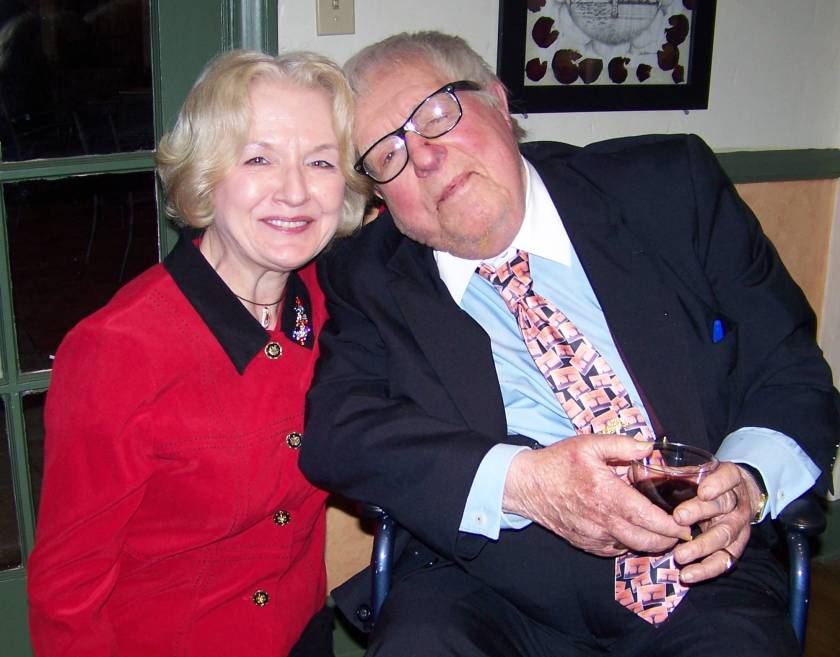






 Jacqueline Vick is the author of over twenty published short stories, novelettes and mystery novels. Her April 2010 article for Fido Friendly Magazine, “Calling Canine Clairvoyants”, led to the first Frankie Chandler Pet Psychic mystery, Barking Mad About Murder. To find out more, visit her website at
  Sally Carpenter put out a post about her new book The Quirky Quiz Show Caper. I saw it on Facebook. (Hint: Don’t be afraid to promote your books, gently, on social media.) I immediately downloaded a copy, realized I hadn’t read the previous book, and downloaded that one, too. (See? Promotion pays off!)
 back together at 38 after drying out. The choices available to him at this point in his career are pretty cheesy, but as grandma used to say, beggars can’t be choosers.
 I’m glad I did, because I wouldn’t have wanted to miss the excitement. Samantha and Nick Taylor just may move their relationship to a new level, but will the handsome photographer Dante get in the way? And what’s Dante doing hanging around Samantha at Christmas anyway? He’s lending brotherly support to his sister Cat whose husband has just been murdered. Did I mention Cat is eight months pregnant? If you think it sounds like a soap opera, you’re right. Twists and surprises galore but without the annoying “scene hold” before commercial break.
 I’ll have to wait until October for the next Ellen Byron novel, A Cajun Christmas Killing, and I’ve been to several bookstores looking for Ashley Weaver’s The Essence of Malice. Ooh! Did I just see an Amory Ames Kindle Single? Another for the pile!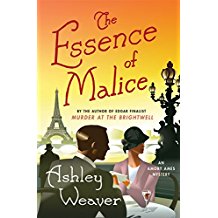

 questions were, “Where do you get your ideas?” and “How do you know all that stuff?”
 But then recently at the Vons grocery store, a lovely lady traveling on Route 66 from Illinois to Santa Monica came up to me, and said “I know you!” I had on a Route 66 T-shirt, and as it turned out, it was mistaken identity–she thought I was a “Roadie” she’d met elsewhere in another state.


You must be logged in to post a comment.