We are a group of published writers who come here weekly to entertain, inform, and encourage you in your writing and your reading journey. Grab a cup of coffee, get comfortable, and join us.
Do you ever need a respite from the news of the world? Or maybe a respite from personal concerns? In recent months I’ve found solace in what I call “comfort” reading. I stumbled across Jen’s Reading Life on YouTube. Jen describes herself as “A 50+ Booktuber sharing my love for timeless literature, cozy mysteries, British women’s fiction, and comfort reads that warm the soul.”
Exactly what I needed. On Jen’s recommendation, I enjoyed Enchanted April by Elizabeth von Arnim, Miss Buncle’s Book by D.E. Stevenson, Spam Tomorrow by Verily Anderson, and 84, Charing Cross Road by Helene Hanff. Jen describes each book she reviews as “lovely and charming” (Jen herself is lovely and charming!).
The following may, or may not, be on Jen’s lists–she has a lot of lists.
For cozy mysteries, I’ve discovered Betty Hechtman’s crochet series.
The Gentle Art of Swedish Death Cleaning by Margareta Magnusson focuses on decluttering–during your lifetime. It is an ongoing activity in my house.
The satirical Lula Dean’s Little Library of Banned Books by Kirsten Miller addresses today’s controversial issues, but in a highly entertaining way.
I loved Bonnie Schroeder’s Write My Name on the Sky. Bonnie was featured guest for my holiday newsletter.
I tried to read Christmas stories, but couldn’t find one that held my interest. Exception was “The Adventure of the Christmas Pudding” by Agatha Christie. The Killer Wore Cranberry is a Thanksgiving-themed mystery anthology featuring a variety of tales.
I still return to the “dark side.” e–llegal treasures by C.V. Alba and The Pilgrim by Thomas A. Burns, Jr. are hard-boiled tales that offer little in the way of comfort but much in the way of great stories. They do have happy endings, so there’s that.
If you’re in need of some comfort reading, I suggest visiting Jen’s Reading Life, and reading Tolstoy Therapy’s article “16 of the most wholesome comfort reads for a hug from a book.”
An added benefit: all this comfort reading is making writing more comfortable for me!
Tell us what you’re reading and recommending. Let’s keep those TBT lists toppling over!
Once upon a time, in a WAYlong time ago, before I had a smartphone, a computer, an online presence, or even a typewriter, I wrote with a pencil, on lined school paper. I wrote letters (to pen pals and cousins), stories (mostly tragically romantic vignettes in far-off places), and I wrote in small daily diaries.
You know those little books, about four by five inches, with a strap that wrapped across the pages and fit into a lock on the front, and had a half-inch, flat key to secure it. I mean, even a fork or a good slap could open them!
The pages were dated, but you had to fill in the year. And you had to write quite small if you had a lot to say, like I did. Wow, did they hold secrets! And souvenirs – another good reason for that little strap and key. I wrote about feelings, events, boys, teachers, embarrassments, fights, dreams, disappointments, and things or people who made me mad, jealous, or envious.
One day, I found and opened a thirty-five-year-old diary like that. Oh, my goodness! I slammed it shut and looked around me. Then I carried it to a small chair in a corner of the bedroom and opened it again.
I wrote THAT? And that? Oh, my!
I laughed. I cringed. I even cried a little. A couple of times, I gazed off into space, seeing and reliving a sweet incident. I’d smile and sigh.
How would my life be different if THAT had happened? Or hadn’t happened? Or if I’d said something else? Or acted quickly, nicely, or at least not selfishly? What if….?
What if?
That’s the way fiction writers often dredge up a story idea or outline. What if such and such happened, or someone said or did THAT?
I glanced down at the diary and thumbed through the pages, stopping now and then to read a heavily underlined passage. WHOA!
I eventually put the little book back into the cardboard box with maybe eight others like it. I’ll read them all, I promised myself. I’ll write a story or two. Is there enough for a book, I wondered?
I stretched the duct tape tightly across the flaps and penciled “diaries” on the front. Tomorrow we will take the last of these attic finds to our new house. After all the unpacking and settling in, I will dig out these diaries and sit at my computer, and type, “What if….?”
Halfway down the busy freeway to the new house, traveling at 65 mph, our heavily packed pick-up truck hit a pothole. In the passenger side mirror, I saw a small box jump and pitch itself over the truck’s railing. When it landed, the box split apart. Small square objects flew out and bounced into the bushes growing close along the side.
“OH!” I cried.
“What?” my hubby asked.
“My diaries! Didn’t you tie the boxes down?”
“I did!”
“But…”
There was no place to pull over. No going around. No going back, either along the freeway… or to that youthful time long ago.
I sat stunned. Then I laughed, imagining some homeless dude living in the bushes finding and being entertained by my teenage drama and angst. Or maybe a gang of miscreants wearing orange vests and carrying plastic bags would come by to clean up the roadside trash, and find them.
Hey, my stories could be read in jail! Perhaps even traded among the inmates for snacks or phone calls. Juicy sections could be copied on the backs of old envelopes and reread a hundred times. Pages might be torn out and passed on to new inductees as the old timers were released. My audience would grow! I might become “a best-selling author!”
Well, maybe not.
Anyway, that’s why I never wrote the “Great American Novel.”
Did you ever write in diaries? Do you keep a journal now? If so, is what you write “stream-of-consciousness” or does it have a specific purpose? Have you ever reread your previous ones from a year ago, or many years past?
My love affair with the classics took off in 1989. Why 1989? That was when I started a job in downtown Los Angeles. One day at lunch a co-worker asked if I wanted to go to the library. Surprised, I said, “Sure!” I’d never worked with anyone who spent her lunch hour at the library.
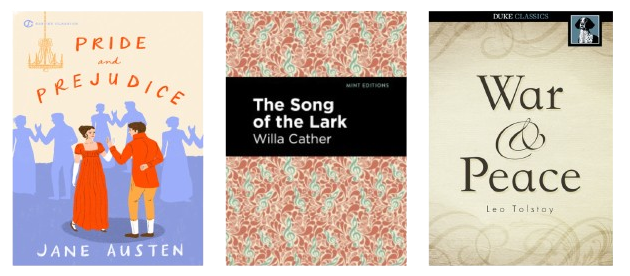
We walked to the Los Angeles Public Library and I checked out Jane Eyre. I had a vague memory of reading Charlotte Bronte’s tome in high school and decided to try it again. Over the next few years, I read—in many cases revisiting my high school reading list—works by Jane Austen, the Bronte sisters, Willa Cather, Theodore Dreiser, F. Scott Fitzgerald, Gustav Flaubert, Thomas Hardy, Nathaniel Hawthorne, Washington Irving, D. H. Lawrence, Sinclair Lewis, W. Somerset Maugham, Ayn Rand, Robert Lewis Stevenson, Leo Tolstoy, Mark Twain, Edith Wharton, and Virginia Woolf, among others.
Many I loved, with a few being okay. Sad to say, I didn’t like Wuthering Heights any better in the early nineties than I had in high school. Heathcliff was just too dark (funny reaction from a crime writer, but there you have it). For many years, Jane Eyre topped my list of favorite classics. But a year ago, I picked it up for the third time and didn’t even finish it. Jane Eyre was given to monologues! Apparently that didn’t bother me thirty-plus years ago.
In 1993 I joined a mystery group and became obsessed with that genre, classic and contemporary. Up to that point, I’d read many Agatha Christie mysteries, but few by other authors. It wasn’t long before I started penning my own.
I try to read at least one classic a year, and sometimes it’s a mystery. A favorite is Wilkie Collins’s early example of detective fiction, Woman in White. I read the epics Brothers Karamazov and War and Peace from start to finish and lived to tell it! I finally got to Little Women a few years ago. I had seen countless film versions but never actually read the delightful autobiographical novel by Louisa May Alcott. David Copperfield was wonderful but populated with characters who, like Jane Eyre, spoke at great length.
Why do I love the classics? They have a timeless quality and universal appeal, essential traits that make a classic a classic. Little Women—despite the lack of texting and social media—could be a contemporary coming-of-age novel.
The classics are known for well-drawn characters and compelling storylines. That said, it can take time for a classic story to be compelling. Contemporary books have to grab the reader on page one; classics require more patience, but are worth the wait. My friend who took me to the LAPL and I started Middlemarch together. Several times I was ready to close the book for good but, being a faster reader, my friend assured me that the story would pick up. Sure enough, George Eliot’s masterpiece became a page turner.
What’s my next classic? Many of my author friends rave about The Count of Monte Cristo by Alexandre Dumas. And I’ve had Elizabeth Gaskell’s Wives and Daughters on my TBR list for some time.
Would reading the classics benefit writers? Absolutely! Have they improved my writing? As an optimist, I want to think so—but such a belief is hard to verify. This post on KindredGrace, “5 Reasons Why Every Serious Writer Should Read Classic Literature”, is worth reading. I especially like #4: Classic literature expands our knowledge base for literary allusions.
Renowned author Joyce Carol Oates suggests that writers read Ulysses by James Joyce. According to her, our vocabulary will improve (or, if nothing else, we’ll want our vocabulary to improve). I take Ms. Oates’s point, but will pass on Ulysses (I managed to get through one chapter).
Back to where the classics began for me: here’s a photo of the beautiful and impressive Los Angeles Public Library. During my stint working downtown, this building was closed for renovations due to two fires, and the collection was temporarily housed on South Spring St. By the time the original building reopened in 1993, I was working elsewhere, but occasionally returned to visit this stunning structure. If you can visit, do so, but you can read about it here.
Closing thoughts: what contemporary novels will become classics? Any of our own? Perhaps works by Margaret Atwood, Toni Morrison, and Joyce Carol Oates will stand the test of time. As for contemporary crime novels, would any make the cut? As much as I enjoy them, they lack the timeless quality—even the historical ones. I’d love to be proved wrong. In the meantime, we have Arthur Conan Doyle, Wilkie Collins, Anna Katharine Green, Agatha Christie, Dashiell Hammett, and many others.
A couple of weeks ago, Hannah Dennison wrote a post here about “So Many Books! So Little Time!” I certainly agree with that concept. I’m always writing, of course, and I’m also always reading. Like many writers, and readers, I collect a lot of books.
How do I decide which to buy? Well, I’ve been pondering that, and the results don’t surprise me. And I suspect that’s true with a lot of others who love to read.
First, I write romantic suspense stories these days for Harlequin Romantic Suspense, as well as mysteries for Crooked Lane. Guess what. Among the books I read the most are Harlequin Romantic Suspense books, and mysteries. For one thing, I am writing books for the vast and long-lasting Colton stories for HRS. I have one being published in December that’s the eleventh in the year-long Coltons of New York mini-series. It should come as no surprise, therefore, that I’ve been reading the earlier ones in that series this year. And I’ve done the same thing with the other Colton series I’ve written for in previous years.
I also have my own HRS miniseries about a Shelter of Secrets, where a very special animal shelter also shelters people in trouble. I do read other HRS books, especially those that also contain dogs. And yes, I read other Harlequin books, too, many of which contain dogs.
And that’s something else. I’m a dog nut, so I’ll also pick up a lot of books that are stories including dogs, even if they’re not romantic suspense or mysteries.
My mystery series for Crooked Lane is the Alaska Untamed series, under my first pseudonym, Lark O. Jensen. It has wildlife, and dogs, in it. I like to read many kinds of mysteries, and those that take place in Alaska also intrigue me, especially if they have dogs. And other stories in Alaska also get my attention. Plus other mysteries…primarily with dogs.
Anyway, you get the idea. I’ve got some particular interests and love to read stories containing those subjects. Do I also read other books, including best sellers? Sure, especially if they’re recommended by friends. But I have to figure out my time first.
How about you? How do you select the kinds of stories you read?
Oh, sure, I’m writing every day: checks to pay bills, answers to emails and texts, posts on Facebook and Instagram, birthday cards to put in the mail that day, a grocery list, a “to do” list, a note to Hubby about an errand I need to do and when I’ll be back.
But creative writing? Um, no. Unless you count a quick book review I pound out in fifteen minutes, knowing that unless I do it today, it will be late, and then I’ll feel awful. Too bad I only skimmed the last two chapters… but you don’t mention how books end anyway, do you? And then I still felt awful, because I’ve always determined to finish a book – every word – before writing a review. Boo-hoo.
Oh, I do write curriculum for my third (used to be fourth) to sixth grade class* at church every week. That can be fun. The delivery can be somewhat creative, but not the text of course. It’s the Bible, after all.
In one point in last week’s lesson I was teaching how that precious Word of God is called “the sword of the Spirit” in the Bible. “Sharper than any two-edged sword, able to discern the thoughts and intents of the heart.” I’d been teaching them the first sermon preached by Peter, the fisherman-turned-apostle, when I came to its conclusion. (It’s a doozy!) I pictured a duel between forces of good and evil, raised my imaginary sword and did a bit of fencing (pantomime, of course), ending up with my opponent on the floor, my sword tip on his chest. The phrase “coup de grace” came to my mind, and still holding my imaginary position with opponent pinned down, explained the French phrase. “The final blow,” I said, looking at the fifteen kids slowly. “The thrust that pierces the heart,” I said. And then I jabbed my sword right to the floor… holding for a few seconds before looking up. Then I jerked it free, held it high, then slipped it into my imaginary sheath at my left hip.
There was quietness for a few seconds, then I had the kids read verse 37 of Acts chapter 2, which was the response of the crowd to the strong finish of Peter’s sermon. It reads, “Now when they heard this, they were cut to the heart, and said to Peter and the rest, ‘Brothers, what shall we do?'” Peter’s inspired use of Scripture had brought instant conviction.
But that was “creative” thinking and teaching, not writing. So what do you do when your ink well is dry?
Read in the genre you want to write. Read for pleasure (maybe even some old favorites). Read those authors who inspire you. Read, read, read.
Start (or start up again) a daily or weekly journal. I have to admit that when we returned from our (fantastic) cruise and a week later faced the monster that became Covid-19, I quit journaling. (Crazy huh? What a “ripe” season of lockdowns, scary bar graphs, no one working, everything closed, ghost freeways, that I could have used in stories. Sigh!) Well, it’s not too late. Maybe begin with a “to do” list, and comment on your doings and feelings during that day. Or… you choose.
Study books by writers that give instruction. A few weeks ago we had Sara Rosett as a guest blogger. She wrote about she used lots of things for Research in her historical mysteries. But she also mentioned a couple “How To ” books she has written. “How To Outline A Cozy Mystery” and “How to Write a Series.” Both are easily found on Amazon. (I recently bought them both and am eager to dig in, for at least a chapter a day.) Look for books on short story writing by our own The Writers In Residence, G. B. Pool.
Take note of those weird dreams. Hey, maybe your creative muse is locked down inside your head, and wants to safely, with some social distancing via dreams, give your mind some help.
Look at a calendar. Upcoming holidays are always good for getting the juices or muses working. Think back to fond memories. Think forward with some Sci-Fi or Fantasy weirdness. Let the seasons inspire.
Do whatever it takes, even acting out some scenes from your favorite book in front of your spouse, dog or cat, or the mirror. The movements, actions, even words may lead to some nice black… or maybe purple… INK in your writing well.
###
*I used to teach a class of 4th to 6th graders, but now that all must wear a face covering in class, I have inherited the 3rd graders as well. (They used to be together with 1st and 2nd grade.) According to the “order,” all students in 3rd grade and up must wear masks etc. Second grade and below do not have to. The Children’s Ministry leader felt it would be hard on some in a class that have to wear them while others didn’t. But, on the fun side, I’ve discovered that those third graders are pretty sharp too and I only need a little tweaking of the lesson that I prepare for the older kids. (PS: I wear a face shield, so the kids can see me better.)
Some writers can sit down at their computer with no idea of what they will write about and launch into the first draft of their book. They find the blank screen and the infinite possibilities exciting and inspiring. I’m not one of those writers. I must have an idea of where the story is going before I begin writing. Otherwise, the blank screen paralyzes me. Before I begin a book, I spend a lot of time researching and thinking about the story. I’ve discovered that both nonfiction and fiction inspire different aspects of the story for me.
Nonfiction
I like to dig into nonfiction as I brainstorm my historical mystery plots. Here are a few of the resources I’ve found most helpful:
Newspaper Archives—My historical series is set in early 1920s England, so the online British Newspaper Archive has been an invaluable resource. I scoured the Positions Available section, what we’d call the Help Wanted section today, which gave me an insight into the jobs were available, the qualifications required, and the salaries that were paid. The British Newspaper Archive has magazines in addition to newspapers, and those are wonderful for getting a feel for what people read in their leisure time. One delightful surprise came as I flipped through an issue of the Sketch. I came across the first publication of Agatha Christie’s short story, The Adventure of the Egyptian Tomb with Poirot and Hastings.
Magazine and newspaper advertisements are also helpful for researching clothing and fashion as well as helping me keep in mind the attitudes of the time. Ads for fur coats and smoking tobacco seem a bit jarring to me as a modern reader, but browsing the ads helps me keep in mind the typical mindset of someone who lived in the early 1920s.
Nonfiction books—Once I have a general idea of the direction of the story, I search out nonfiction books related to the theme of the novel. I’ve read all sorts of books—everything from books on the English country house to code breaking during World War I. I find nonfiction is an excellent source for clues and red herrings. Nonfiction books have even inspired a complete plot. The second book in my historical series is about an author who keeps her gender secret from everyone—including her publisher. A real-life author who did the same thing inspired that story idea.
While researching the Egyptomania that gripped the world after the discovery of King Tut’s tomb, I ran across a story of a British nobleman who had been connected to the excavation and committed suicide. That incident became the jumping off point for the third book in my series, The Egyptian Antiquities Murder.
Memoirs—One of the most valuable resources I’ve found for getting inside the heads of my historical characters are memoirs and biographies. The Bright Young People of the 1920s were a prolific and literary bunch. It’s easy to find information about them, and reading about their midnight scavenger hunts and paper chases across London as well as their extravagant themed parties meant that I had plenty of ideas for a book set in London among the high society set when it came time to write An Old Money Murder in Mayfair. In addition to story ideas, I also cull clues in red herrings from memoirs. I note down the things that people hid from their families or feared would become public knowledge.
Video clips—I didn’t realize how much video is available from the early 1920s. YouTube and stock image sites have quite a bit from that time. I’ve watched videos of people strolling in Trafalgar Square, dancing in nightclubs, as well as an informational video from the 1920s on how the brakes work on an early motorcar, which was critical when plotting how a certain murder was committed.
Vintage clothing auction sites—My readers want to imagine the characters wearing flapper dresses and elegant evening gowns. I need to know about the fabric, cut, and embellishments of the dresses. With multiple images of individual clothing items, auction listings of vintage clothes are a good source of detailed information about the materials and construction of the clothes of the era. Another great source for clothing details and inspiration is the Metropolitan Museum of Art’s Costume Institute with its extensive online collection.
Fiction
I was a fan of Golden Age mysteries, but I’d always read them for pleasure, not research. When I decided to write a historical mystery, I began reading and rereading my old favorites as well as seeking out new authors from the era. I read the books in a different way and found that they gave me a first-hand view of day-to-day life in the time. I used my fiction-reading to glean small details that gave my stories the feel of the time.
Dialogue—Writing dialogue is one of my favorite parts of writing a High Society Lady Detective series. Much of the verbiage is inspired by my reading of Golden age fiction. Terms like old bean, old thing, topping, and that’s not cricket are common in Golden Age mysteries. The posh set was fond of their adjectives and adverbs, so I use those types of words in conversation in my historical books in a way that I wouldn’t do in a contemporary novel. Everything was ghastly, frightful or screamingly. I sprinkle those terms throughout conversation to give it a feel of the 1920s.
Culture—As I read Golden Age fiction, I made mental notes of how the characters’ lifestyles: the size of their houses, whether or not they had telephones, what they ate for meals, as well as what types of cars they drove—even if they had a car. Another thing I noticed was the formality of conversation and address. People rarely used their first names when they spoke to each other unless they were well acquainted. I fold all those details into my stories.
I’ve learned to allow some time to delve into research before I begin a book. I gather these all these details and ideas, then let them brew in my mind for a while. By the time I sit down to actually begin writing, I have a pretty good idea of the direction I want to go and some of the clues and red herrings I’ll use. If I take the time to absorb ideas from both nonfiction and fiction that blank screen isn’t as intimating and my writing goes much faster.
###
USA Today bestselling author Sara Rosett writes lighthearted mysteries for readers who enjoy atmospheric settings, fun characters, and puzzling whodunits. She loves reading Golden Age mysteries, watching Jane Austen adaptions, and travel. Publishers Weekly called Sara’s books “enchanting,” “well-executed,” and “sparkling.”
She is the author of the High Society Lady Detective historical mystery series as well as three contemporary cozy series: the Murder on Location series, the On the Run series, and the Ellie Avery series. Sara also teaches an online course, How to Outline A Cozy Mystery, and is the author of How to Write a Series. Sara’s latest release is An Old Money Murder in Mayfair. Find out more at SaraRosett.com.
A journalist among published book authors…what am I doing here?
I’m a “Writer In Residence” in a book emporium with only a pencil and pad and a rampant curiosity about everyone and everything around me – all of them possible subjects and mysteries to write about for the weekly (daily) news readers.
My newspaper articles (back in the day) were flashes in the night. Written fast, submitted, run through processors onto newsprint, placed in supermarket stands, picked up by semi-disinterested shoppers for a quarter, a buck, or even for free. And then gone; in the trash can, recycle bin, as puppy papers or to line a bird cage. (Does anyone have birds in cages anymore? Hmmm…. I must research and interview someone and write about that!!)
I have a tentacle in a hundred things!
Today, my daily (hourly?) posts are on Facebook – yes, I know, that gobbler-of-time social media outlet that most people have a love/hate relationship with. I love it. I enjoy posting a variety of things on my “timeline page.” I share tips (how to make cookies either crisp or chewy) & fun facts (12 million adult coloring books were sold in 2015). I talk about people who do marvelous things (like my fellow writers), post upcoming events (Baskin & Robbins 31st-of-the-month discounted ice cream), and tell my friends and family what I am doing that is ho-hum or adventuresome.
And if you know me well, you also know I post a lot of things that I learn in my Bible study reading. And photos…. whoa, do I post photos. (Throwbacks from my photographer and photo-journalist days.)
But again… flashes in the night. Sure, you can scroll down to see former Facebook posts, but any more, about 10 days is all you can see without major effort.
My fellow fish in the sea of writing, Writers In Residence in particular, have finished products that are enduring; books bound in soft or hard covers, given as gifts, re-read, treasured, shared among friends, and at the very least, end up on Friends of Library book shelves or even at yard sales at discounted prices to be bought and re-read again.
Flashes in the night versus beloved tomes held erect by sturdy bookends. (Sigh) But we are all valuable, as I discovered recently.
Our Writers In Residence (formerly Wednesday Women Writers), had a brainstorming lunch-meeting about our blog. (I was taking notes, figuring in the back of my mind what kind of articles could come from it.) The others were discussing how to promote their books, encourage reading in general, and inspire others to write and write well. And entertain. We all want to entertain in some way – to inspire, enlighten, and make readers ponder… or laugh.
Hey… did you hear the one about why the French like to eat snails? It’s because they hate fast food! Get it? FAST food, SLOW snails?*
Or… How many cars does it take to fill a mall with shoppers? Why, a whole lot, of course!
Yeah…. About being the odd man (woman) out…I actually feel comfortable among my book writing and selling sisters. And if I can promote them, inspire them, write about them or their books, I will. (Look forward in the next months for some blog posts in which I feature these WWWs, or WIRs – you know, the talented, passionate, fun, interesting friends in our little lake of scribes.)
Well, if you will pardon this stream of consciousness post, I promise to do better next time. Meanwhile….
1) Check out my fellow writers (here and on their websites)
2) Buy and read their books (Amazon or other places)
3) Write reviews about their books (Amazon or Goodreads, etc.)
4) Tell your friends about them and this blog
5) Link our posts to your Facebook or Twitter page
6) And comment, oh please comment, on our posts (it’s how we know you are out there!). And it will delight us so much!
Okay, time for a swim among all the other amazing and eclectic fishes in the sea. SPLASH! Notice that we are all swimming in the same direction.
(Can you find me? Color me different, but blended in.)
*Joke submitted by Richard Pool.
(PS: If you don’t see a comments box, or an icon to Facebook or Twitter or a “like” and “follow” us button, GO TO THE TOP OF THIS PAGE (or any of the posts), click on the title (it will change to blue for a fraction of a second), and then………… Voila! All those possibilities are right here below.
This week on Writers in Residence, author Kate Thornton shares her thought son the connection between reading and writing. You can find out more about Kate at her Amazon page.
Reading and Writing.
I have been doing both.
It has always been a firm belief of mine that you can’t write – or write well, anyway – if you don’t read. And I’m not talking about magazines – c’mon, people, we all read magazines, if only while waiting at the checkout counter (although 2 of my regular supermarkets now have TV for the attention-impaired, 5 second snippets of shows and commercials.) I do not discount this type of reading; I publish in magazines and do not bite the hand that at least pats me on the head. But magazines are very thin picture books, meant to give your mind a jumpstart or a tweak, not to give you hours of transportation to a completely other world.
The difference between books and magazines (or newspapers or blogs or the Huffington Post) is not exactly the same as the difference between People Magazine and actual people, but it is nonetheless great.
So when I say I have been reading, I mean books. It sort of goes without saying that I read magazines, online posts, news, cereal boxes, tee shirts, bumper stickers, the mail, and just about anything with printed words.
I have my favorite genre fiction – it runs from James Lee Burke, Dean Koontz, and Louise Penney on one side to Earl Derr Biggers, Arthur Upfield and Ngaio Marsh on another and Sue Ann Jaffarian, Jeff Sharrat and Taffy Cannon on yet another – it’s a multi-sided construct. But I love classic fiction as well. I learn from it, the easy way, while being entertained, enthralled, whisked away, and fed on rich things.
I have a dear friend who just discovered the joys of a Kindle and is reading Willa Cather. Now that’s reading. This same friend just finished Faulkner (the hard, difficult, rip your eyes out Faulkner of Light in August) in hardcover, so she’s no stranger to the type of reading that sometimes takes you to places you would never allow yourself to be taken otherwise. But she enjoys going to the good, kind places, too.
Which brings me to writing. If you don’t take the trips to places through reading, I don’t see where you can buy your ticket to take others to places through your writing. It is one of only two ways I know to learn how to write, and they are both connected. The other half of it is actually writing, the BIC (Butt In Chair) method.
This week I have been reading both fiction and non-fiction – and writing.
I have completed that same novel I started writing in late 2007. I confess I let it sit for several years due to plot holes, but I have since learned how to knit up the raveled sleeve of a couple of good ideas strung together with engaging characters, an endearing puppy dog and a couple of gruesome murders. What’s not to love? And working on it this time around was a pleasure, not a chore.
I also discovered – by reading through it and looking ahead to the satisfying conclusion that it is not the mystery I thought it would be, but is an animal I have not before tamed, namely Romantic Suspense.
So I have begun to read in that genre. And it’s fun. I am enjoying and learning and reading it all with a delight I before had reserved only for mystery, science fiction and certain favorite classics.
So my question is:
Which romantic suspense authors do you like? Recommend a few books to me as I reach the end of my own.





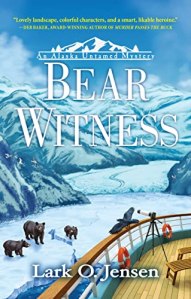 My mystery series for Crooked Lane is the Alaska Untamed series, under my first pseudonym, Lark O. Jensen. It has wildlife, and dogs, in it. I like to read many kinds of mysteries, and those that take place in Alaska also intrigue me, especially if they have dogs. And other stories in Alaska also get my attention. Plus other mysteries…primarily with dogs.

 USA Today bestselling author Sara Rosett writes lighthearted mysteries for readers who enjoy atmospheric settings, fun characters, and puzzling whodunits. She loves reading Golden Age mysteries, watching Jane Austen adaptions, and travel. Publishers Weekly called Sara’s books “enchanting,” “well-executed,” and “sparkling.”



 My fellow fish in the sea of writing, Writers In Residence in particular, have finished products that are enduring; books bound in soft or hard covers, given as gifts, re-read, treasured, shared among friends, and at the very least, end up on Friends of Library book shelves or even at yard sales at discounted prices to be bought and re-read again.
 About being the odd man (woman) out…I actually feel comfortable among my book writing and selling sisters. And if I can promote them, inspire them, write about them or their books, I will. (Look forward in the next months for some blog posts in which I feature these WWWs, or WIRs – you know, the talented, passionate, fun, interesting friends in our little lake of scribes.)


 The Writers in Residence
You must be logged in to post a comment.