Writing Humor

by Jackie Houchin

How do you make a story funny?

Do you have to be a comedian? If you can’t make it laugh-out-loud-able, how do you make it chuckle-able, or at least grin-able? Or at the VERY least, smirk-able?

Our own Gayle Bartos Pool does it with punny words, double entendre, dialects, and snappy, sometimes tongue-in-cheek dialogue. And… hysterical situations!

You will grin and you will laugh aloud when you read her short story, “Only in Hollywood” in the Sisters-in-Crime collection, LAndmarked for Murder. I mean, can you picture a bunch of thugs pushing a dressed up dead body around in a wheel chair in the Bonaventure Hotel in Hollywood? No Way!

Gayle’s “Glitzville” in her own short story collection From Light to Dark has some hilarious dialogue scenes. They may not be as tangled as Abbott and Costello’s “Who’s on first?” but they sure come close. The back-and-forth conversation between Archie Wright and Sal Cohn is definitely grin-able. Your eyes will dance down the pages as you read it.

Here’s the opening paragraph so you can “taste” the style, before the funny dialogue begins.

“Archie Wright’s the name. Dishing dirt’s the game. My sandbox: Hollywood. The most glamorous and glitzy, vicious, and venomous playground in the world. If you come for a visit, bring your sunscreen and your shark repellant. If you come to stay, let me warn you, Tinsel Town eats up and spits out a hundred just like you every day. Sometimes it isn’t pretty, but it’s my job to chronicle the ebb and flow of the hopeful, the helpless, and the hapless. My best stories come from the dark side of Glitzville.”

And then the whip smart fun begins….

These are two stories in books you can try out for examples of how write comedic.  Perhaps you can recommend others?

If you are an author, how do YOU make scenes funny in your books? Is it by the characters, or some ridiculous premise, or by snappy, punny words and dialogue?  (SHARE YOUR SECRETS!)

##

Okay, as a journalist and book reviewer, I don’t have much talent with humor aside from a pun now and then. So, for the end of this post, I will try to get you to laugh, chuckle, guffaw, grin, or maybe just smirk with a few corny jokes. (from Woman’s Day magazine)

What do you call a snake wearing a hard hat?
A boa constructor.

What do you get when you cross a centipede with a parrot?
A walkie talkie.

How do you make an octopus laugh?
With ten-tickles.

How do you get a country girl’s attention?
A-tractor.

What do you call a beehive without an exit?
Unbelievable.

(You can pause here and come back later if you are grinned out.)

What do you call someone with no body and no nose?
Nobody Knows.

What do you call a blind dinosaur?
A do-you-think-he-saw-us.

Where do pirates get their hooks?
Second hand stores.

What do you call black birds that stick together?
Vel-crows.

(And a few to whet your appetite.)

What do scholars eat when they’re hungry?
Academia nuts.

Why do seagulls fly over the sea?
If they flew over the bay, they’d be called bagels.

Why should you never use “beef stew” as a password?
It’s not stroganoff.

What do you call a pig that does karate?
A pork chop.

(And for our own, Linda Johnston…)

What do lawyers wear to court?
Lawsuits.

What do you call a priest who becomes a lawyer?
A father-in-law.

What’s a lawyer’s favorite drink?
Subpoena colada.

I hope you got some ideas, or at least some laughs.

Remember the Bible verse – “A merry heart does good like medicine.” – Proverbs 17:22.

.

If you can’t find where to comment, click the title of this post at the top (Writing Humor) and you should find Likes & Comments below.

Sadly, the COMMENTS BUTTON seems to be missing. We are working on it with a PC man. Please be patient and keep reading  The Writers In Residence every Wednesday!

.

Listening for the Rhythm of What Your Characters Say: Applying Poetry Writing Techniques to Writing Dialogue

by  Guest Blogger, Tammy D. Walker

           Writing dialogue can be difficult.  First, there’s the content of what the characters say.  And then, there’s the subtext, or what the characters are trying to communicate to each other without saying something that might be too awkward or imperiling for them to say directly.  And, also, there are the actual words that need to go between those harrowing quote marks.

            As readers, we want what characters say to sound realistic, even though, as writers, we understand that the best-sounding dialogue in the context of a story might strike us as odd if we heard it in real life.

            So how do we balance all these moving parts to make them work as solid dialogue?

            One solution I’d like to offer is to use techniques from crafting poetry.

            Before I started writing mysteries, I’d had a couple collections of poetry published, and I studied the form in grad school.  And while I find writing poems and novels to be quite different in most ways, I did find that the “ear training” required for writing poems has helped me fine tune my dialogue writing process. 

            Though most of the poems we encounter are in print, poetry is still a very auditory art, meant, for the most part, to be read aloud.  So when I’m thinking about how to construct dialogue, I apply the same sound-related techniques in writing poems as I do while writing dialogue.  Though dialogue in fiction, like poems, isn’t generally read aloud, we should still consider its sound and how that sound serves the story.

            Writing poetry requires the poet to not only think about individual words but also their arrangement in syntactic units, in lines, and in juxtaposed groupings.  As fiction writers, we can apply these ideas to writing dialogue to give our characters words that make them more compelling to our readers.

Countering Some Possible Objections

            Let’s just get something out of the way, first: Poetry has a reputation among the general public for being obscure, enigmatic, and perhaps also stodgy.  Which, I think, is unfair.  The poems most of us encountered in high school are throw-backs to previous centuries, when flowery language twisted harder than barbed wire to fit the perimeter of some rigid form might well have kept all but the most diligent reader out of the green pastures of meaning. 

            Okay, maybe I took that metaphor too far.  But I think you’ll get my meaning. 

            Contemporary poetry, and that leading up to it in the last century, relies on plainer language.  Sure, there’s metaphor, simile, and all the other techniques we learned about in freshman English class, but there’s also a directness and freshness to language used now.  Victorian poems were written for Victorian audiences; poems written in the 2020s were meant to be read by, well, you and me.  In general, the language is accessible by your average reader. 

            So, for the most part, the language in this poetry-techniques-in-dialogue should be what your character would use in day-to-day life.

            Unless you don’t want them to, of course.

What the Characters Say

            So, that out of the way, let’s get to content.

            Before I write either a poem or a scene, I first think about what the content of the poem or the scene and outline what needs to take place.  For a scene, of course, that means thinking about what the characters want and how they’ll either achieve that or how I can thwart them.  For a poem (and yes, I outline my poems before I begin drafting) I think about the arc of the poem, or what argument the speaker of the poem will make.

            (A note on terms: even though many poems are autobiographical–or even confessional–many aren’t, including almost all of mine.  The “I” of the poem is the speaker, who may or may not be the poet, so it’s useful in this context to think about the poem as spoken by a character, even if that character functions more as a narrator than a in-the-scene actor.)
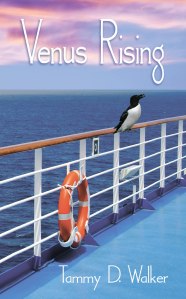
            Since most of my fiction these days is cozy mystery, I’ll use examples from that genre.  Let’s say we have two characters, Curtis, an art collector and one of the suspects in my novel Venus Rising, and Amy, a librarian intent on solving the mystery of a painting at the center of the book’s mystery.

            Amy joins Curtis for dinner in his suite.  She wants to know more about his art collection, but, of course, being a good amateur detective, she can’t ask her pointed questions directly.  But she’s there to gather information.  Curtis, on the other hand, just wants to impress Amy.  So this gives me both Amy’s content–she wants information–and Curtis’s–he just wants Amy.

How the Characters Say It

            So now we know what the characters want to say.  But Amy can’t tip her hand about her suspicions just yet, and Curtis can’t come on too strong.  Let’s go back to a few ideas from poetry about wording, rhythm, line length, and syntactic units. 

            Curtis wants to woo Amy, and his language is more song-like.  The rhythm of the words is more lilting.  He calls Amy “A vision in aquamarine,” and later asks “Champagne for my lovely companion?”

            To which Amy replies, “I don’t drink.”  Her words here are clipped and emphatic.  (She’s caught on to Curtis’s intentions by this point, and she has no interest in him.)

            The rhythm of the words in this short example show how differently the characters are approaching each other.  The words themselves are also worth noting, as Curtis uses Latinate language (“vision,” “aquamarine,” and “companion”) to inflate is dialogue, whereas Amy’s more Germanic retort punches back.

            Line length is also key to establishing rhythm and the perceived speed at which the dialogue is spoken by characters.  While dialogue isn’t split by line or stanza breaks in the way poems are, it can be split by tags (“she said,” for instance) or by the end of a sentence.

            Longer lines tend to quicken a reader’s pace.  Shorter lines, conversely, slow it.  Poems such as H. D.’s “We Two” cause us to stop more often at the ends of short lines: “We two are left: / I with small grace reveal / distaste and bitterness[.]”  Poems with longer lines draw us forward at a quicker pace.  W. B. Yeats’s “The Lake Isle of Innisfree” does just this: “And I shall have some peace there, for peace comes dropping slow, / Dropping from the veils of the morning to where the cricket sings[.]”

            So as I’m writing dialogue, I think about whether I want the character to speak quickly, perhaps revealing their anxiety, or slowly, to reveal their uncertainty.  And then, from there, I’ll decide whether to use longer or shorter words in longer or shorter phrases, and how I’ll either break them (or not) with tags, interruptions, or actions.

            In this example, I wanted to show Amy’s distaste for Curtis, even though she can’t reveal the fact that she does not like him just yet, since she needs to know more about his art collection.  She backtracks a bit and later says, “Sparkling water would be lovely, thank you.”  I wanted to move her more toward Curtis’s rhythm and longer lines, so that she doesn’t reveal her suspicions too soon.

Concluding Remarks Using the Best Words

            One of the concerns of poets in the early 20th century was that the language of poems had been, too often, contorted to fit forms, and that the resulting work sounded contrived and unnatural.  This carries forward through contemporary poetry, and poets do strive to make the sounds of the words, lines, and syntactic units fit with, complicate, and enrich the arguments of their poems.         

            This concern with the naturalness of language is also useful to fiction writers crafting dialogue.  We want the content of what our characters say to sound natural.  Considering the content in light of poetic sound craft can give the characters compelling things to say in a way that enriches the characters themselves and their movements through the story. 

            Which is an aim that, I hope you’ll agree, sounds good.

#

Bio: Tammy D. Walker writes mysteries, poetry, and science fiction. Her debut cozy mystery, Venus Rising, was published by The Wild Rose Press in 2023.  As T.D. Walker, she’s the author of three poetry collections, most recently Doubt & Circuitry (Southern Arizona Press, 2023).  When she’s not writing, she’s probably reading, trying to find far-away stations on her shortwave radios, or enjoying tea and scones with her family.  Find out more at her website: https://www.tammydwalker.com

#

Tammy D. Walker’s article is posted by member, Jackie Houchin  (Don’t you want to run out and buy her cozy mystery to see how she does this?  Wow!)

How I Use Nonfiction and Fiction for Research and Inspiration

By Guest Author,  Sara Rosett

Some writers can sit down at their computer with no idea of what they will write about and launch into the first draft of their book. They find the blank screen and the infinite possibilities exciting and inspiring. I’m not one of those writers. I must have an idea of where the story is going before I begin writing. Otherwise, the blank screen paralyzes me. Before I begin a book, I spend a lot of time researching and thinking about the story. I’ve discovered that both nonfiction and fiction inspire different aspects of the story for me.

Nonfiction

I like to dig into nonfiction as I brainstorm my historical mystery plots. Here are a few of the resources I’ve found most helpful:

Newspaper Archives—My historical series is set in early 1920s England, so the online British Newspaper Archive has been an invaluable resource. I scoured the Positions Available section, what we’d call the Help Wanted section today, which gave me an insight into the jobs were available, the qualifications required, and the salaries that were paid. The British Newspaper Archive has magazines in addition to newspapers, and those are wonderful for getting a feel for what people read in their leisure time. One delightful surprise came as I flipped through an issue of the Sketch. I came across the first publication of Agatha Christie’s short story, The Adventure of the Egyptian Tomb with Poirot and Hastings.

Magazine and newspaper advertisements are also helpful for researching clothing and fashion as well as helping me keep in mind the attitudes of the time. Ads for fur coats and smoking tobacco seem a bit jarring to me as a modern reader, but browsing the ads helps me keep in mind the typical mindset of someone who lived in the early 1920s.

Nonfiction books—Once I have a general idea of the direction of the story, I search out nonfiction books related to the theme of the novel. I’ve read all sorts of books—everything from books on the English country house to code breaking during World War I. I find nonfiction is an excellent source for clues and red herrings. Nonfiction books have even inspired a complete plot. The second book in my historical series is about an author who keeps her gender secret from everyone—including her publisher. A real-life author who did the same thing inspired that story idea.

While researching the Egyptomania that gripped the world after the discovery of King Tut’s tomb, I ran across a story of a British nobleman who had been connected to the excavation and committed suicide. That incident became the jumping off point for the third book in my series, The Egyptian Antiquities Murder.

Memoirs—One of the most valuable resources I’ve found for getting inside the heads of my historical characters are memoirs and biographies. The Bright Young People of the 1920s were a prolific and literary bunch. It’s easy to find information about them, and reading about their midnight scavenger hunts and paper chases across London as well as their extravagant themed parties meant that I had plenty of ideas for a book set in London among the high society set when it came time to write An Old Money Murder in Mayfair. In addition to story ideas, I also cull clues in red herrings from memoirs. I note down the things that people hid from their families or feared would become public knowledge.

Video clips—I didn’t realize how much video is available from the early 1920s. YouTube and stock image sites have quite a bit from that time. I’ve watched videos of people strolling in Trafalgar Square, dancing in nightclubs, as well as an informational video from the 1920s on how the brakes work on an early motorcar, which was critical when plotting how a certain murder was committed.

Vintage clothing auction sites—My readers want to imagine the characters wearing flapper dresses and elegant evening gowns. I need to know about the fabric, cut, and embellishments of the dresses. With multiple images of individual clothing items, auction listings of vintage clothes are a good source of detailed information about the materials and construction of the clothes of the era. Another great source for clothing details and inspiration is the Metropolitan Museum of Art’s Costume Institute with its extensive online collection.

Fiction

I was a fan of Golden Age mysteries, but I’d always read them for pleasure, not research. When I decided to write a historical mystery, I began reading and rereading my old favorites as well as seeking out new authors from the era. I read the books in a different way and found that they gave me a first-hand view of day-to-day life in the time. I used my fiction-reading to glean small details that gave my stories the feel of the time.

Dialogue—Writing dialogue is one of my favorite parts of writing a High Society Lady Detective series. Much of the verbiage is inspired by my reading of Golden age fiction. Terms like old bean, old thing, topping, and that’s not cricket are common in Golden Age mysteries. The posh set was fond of their adjectives and adverbs, so I use those types of words in conversation in my historical books in a way that I wouldn’t do in a contemporary novel. Everything was ghastly, frightful or screamingly. I sprinkle those terms throughout conversation to give it a feel of the 1920s.

Culture—As I read Golden Age fiction, I made mental notes of how the characters’ lifestyles: the size of their houses, whether or not they had telephones, what they ate for meals, as well as what types of cars they drove—even if they had a car. Another thing I noticed was the formality of conversation and address. People rarely used their first names when they spoke to each other unless they were well acquainted. I fold all those details into my stories.

I’ve learned to allow some time to delve into research before I begin a book. I gather these all these details and ideas, then let them brew in my mind for a while. By the time I sit down to actually begin writing, I have a pretty good idea of the direction I want to go and some of the clues and red herrings I’ll use. If I take the time to absorb ideas from both nonfiction and fiction that blank screen isn’t as intimating and my writing goes much faster.


###

Sara Rosett Author Photo 2016 Headshot 1500 copyUSA Today bestselling author Sara Rosett writes lighthearted mysteries for readers who enjoy atmospheric settings, fun characters, and puzzling whodunits. She loves reading Golden Age mysteries, watching Jane Austen adaptions, and travel. Publishers Weekly called Sara’s books “enchanting,” “well-executed,” and “sparkling.”

She is the author of the High Society Lady Detective historical mystery series as well as three contemporary cozy series: the Murder on Location series, the On the Run series, and the Ellie Avery series. Sara also teaches an online course, How to Outline A Cozy Mystery, and is the author of How to Write a Series. Sara’s latest release is An Old Money Murder in Mayfair. Find out more at SaraRosett.com.

Social Media Links:


###


This article was posted for Sara Rosett by Jackie Houchin (Photojaq)

Mystery People

By Jill Amadio

As a Brit I put up with a lot of ribbing in America. Some friends take me to task for pronunciation. Well, I can’t help it if I have a very slight West Country accent as I am from Cornwall. To my amusement my accent is occasionally mistaken for Australian.

As a writer from over there, though, the ribbing can give me indigestion or at the very least depression for hours. The main problem is spelling. I am warned by colleagues that editors at U.S. publishing houses come down hard if you keep inserting a “u” into words like behaviour,  colour, and honour, or substitute a ”z’ for an “s”. Other minefields include using “ae” rather than “e,” as in “aeon” and “eon”.  Maybe it’s a matter simplicity. Americans pare as many ells from words as possible while Brits love double ells, such as “levelling” versus “leveling”.

My books are published here but habits die hard and I usually claim that Brits use the correct spellings. They only got chopped when unnecessary (to whom?) letters are summarily killed off. Flautists are called flutists, kerb is curb, and gaol is jail. Obviously what it comes down to is pronunciation, though. Americans spell words economically as they are spoken which is commendable although it escapes me why tyre is spelled tire. I think it has to do with the Boston Tea Party and wanting to be set apart from that awful king.

It’s a huge temptation to some authors who have leapt across the pond to use British spelling, perhaps as a sly signal to agents and publishers they are querying that the writer is a Brit – a sort of literary snobbism one occasionally encounters. In my first mystery I have my lead character admonish the British consul’s wife for this attitude which I did, in fact, actually encounter in Newport Beach.

Then there’s the grammar. Collective nouns in particular give me pause. Is a group, say, a government, singular or plural? Americans say it’s the former; Brits insist on the latter.  I have a page from the Associated Press Stylebook permanently stuck to my printer to remind me which to use.

Figuring out past particles is always fun. For instance, Brits say “pleaded” Yanks say “pled”. Oh, and the very, very worst word I hate to see changed is “hanged”. To my mind it should refer only to someone at the loop end of a rope, giving the action a far heftier meaning than the briefer word “hung”, as used here. People are not paintings.

What else? “Have” and “take” always flummox me. Am I going to take a bath? Or, am I going to have a bath? I read somewhere that this is an example of a delexical verb, which I’m not even going to touch.

While writing my mystery my beta readers caught another mistake. I wrote, “He drove her to hospital.” Wrong. I was told there should be a “the” in front of “hospital”.  I’m sure there’s some kind of diabolical rule about this but I think it is fine to give an in-house editor something to mark up to justify his/her salary.  As for tenses, the past participle in the U.S. for “got” is “gotten,” an ugly word that makes me shudder enough to want to write a thriller entitled “The Dangling Participle and the Dark, Dark Pluperfect”.

While writing the first in my crime series, whose amateur sleuth is a disgraced Cornish woman exiled by the palace for discovering a scandal (not sexual!), I had to learn the police rankings and figure out who was a sheriff and who was a police officer. Having worked with a reporter at the good old British rag, the Sunday Dispatch, I decided to have my sleuth simplify her confusion (and mine) by using British titles. When caught speeding she addresses a California Highway Patrol (CHiP) officer as Chief Superintendent, and calls the Chief of Police,  Constable.  I was very pleased to learn that sheriffs and policemen can be lumped into a group collectively referred to as “cops”.

When I mention a British pastime, such as nighthawking, no one has a clue as to its meaning. I was going to give the nasty habit to a character in my next book but I decided the explanation could be tedious unless you’re one yourself.

Even the four seasons can be a challenge. Seeking representation for my new book I scoured the agent lists and was rejected by 55 of them. I knew small presses can be approached directly and I found one with whose name I fell totally in love: Mainly Murder Press in Connecticut. However, the website declared, NO SUBMISSIONS UNTIL LATE SPRING!

Ha. I immediately sent in my query along with a note: “Dear MMP, I live in Southern California and although it is only January according to the calendar, and snowing where you are, it is already late spring here. You should see the roses!”

I received an email back within three hours, asking me to send chapters. Which I did. Obviously the publisher was not off in Tahiti but still on the snowy East Coast.” MMP published only 12-14 books a year and has now closed its doors but who can resist the name? So my advice is to go ahead and break the rules. Lay it on thick. Change the climate. Worked for me.

###

Jill Amadio is from Cornwall, UK, but unlike her amateur sleuth, Tosca Trevant, she is far less grumpy. Jill began her career as a reporter in London (UK), then Madrid (Spain), Bogota (Colombia), Bangkok (Thailand), Hong Kong, and New York. Jill writes a column for a British mystery magazine, and is an audio book narrator. She is the author of the award-winning mystery, “Digging Too Deep” and the second book in the series, “Digging Up the Dead.”  The books are set in Newport, California.    http://www.jillamadio.com


###


This article was posted for Jill Amadio by Jackie Houchin (Photojaq)

Ready for the Padded Cell

me-at-mellonA former private detective and once a reporter for a small weekly newspaper, Gayle Bartos-Pool (G.B. Pool) writes the Johnny Casino Casebook Series and the Gin Caulfield P.I. Mysteries. She also wrote the SPYGAME Trilogy: The Odd Man, Dry Bones, and Star Power; Caverns, Eddie Buick’s Last Case, The Santa Claus Singer, Bearnard’s Christmas and The Santa Claus Machine. She teaches writing classes: “The Anatomy of a Short Story” (which is also in workbook form), “How to Write Convincing Dialogue” and “How to Write a Killer Opening.” Website: http://www.gbpool.com.


“Hi. My name is Johnny Casino. I’m a retired P.I. with a past. I just hope it doesn’t catch up with me. That’s how I was introduced in the first book about yours truly. It was fun reading about my exploits. I guess when you’re in the middle of it; you don’t see what’s happening around you. But the stories in The Johnny Casino Casebook 1 – Past Imperfect do a pretty good job telling part of my life story.past-imperfect-cover-12


“Since the book is about pasts, mine and a few other people I bumped into along the way, it gives you a pretty good idea who I am. Anyway I thought so when I read it. But sometimes what you think you know isn’t the truth. I found that out the hard way.


“You see, I grew up in a Mob family in New Jersey. Nothing like having a father who is the consigliere for one of the top Mob families in the country. And my darling mother was the daughter of another Mob boss right outta Chicago. What a pedigree. My name was Johnny Cassini back then.


“Me and my brother were raised thinking this was the only life there was. But after a while I got tired of it. Maybe that’s because I watched a lot of old movies while waiting for protection money to be dropped off at my hotel room in those days. These were Black & White films on the movie channel. But a steady diet of Bogie, Cagney, and Edward G. Robinson opened my eyes. And it wasn’t just seeing them splattered on the pavement. Sometimes these tough men played the good guys. That’s when I started seeing a different side of things.


“So I fled to Miami and joined another Mob. I know that didn’t exactly remove me from the life I was starting to hate, but I was seeing it from a different perspective. I worked on a gambling ship and met a lady who changed my life. She wasn’t the only one. Not by a long shot, but this gal was the wife of the Mob boss in Miami. She was steering me away from her daughter who was even more trouble. And then everything went to hell.


“A dealer on that gambling ship went overboard one night, literally, so I switched identities with him and then hightailed it to Los Angeles. So Johnny Cassini died and Johnny Casino was born. But the story didn’t end there. I was having a hard time shaking my life of crime and got myself into some hot water when I was working for this guy in L.A. He had me kidnap this lady. She’s the one who really changed my life.”


“Let me take over from there, Johnny. Hi, my name is Ginger Caulfield. I’m a private detective, too. I was on a case and ran into Johnny during his crime wave here in Los Angeles. It was an odd meeting to say the least. He kidnapped me, but I could tell the guy had something, so when the case was over I told him to look me up sometime because I might have a job for him. He did.


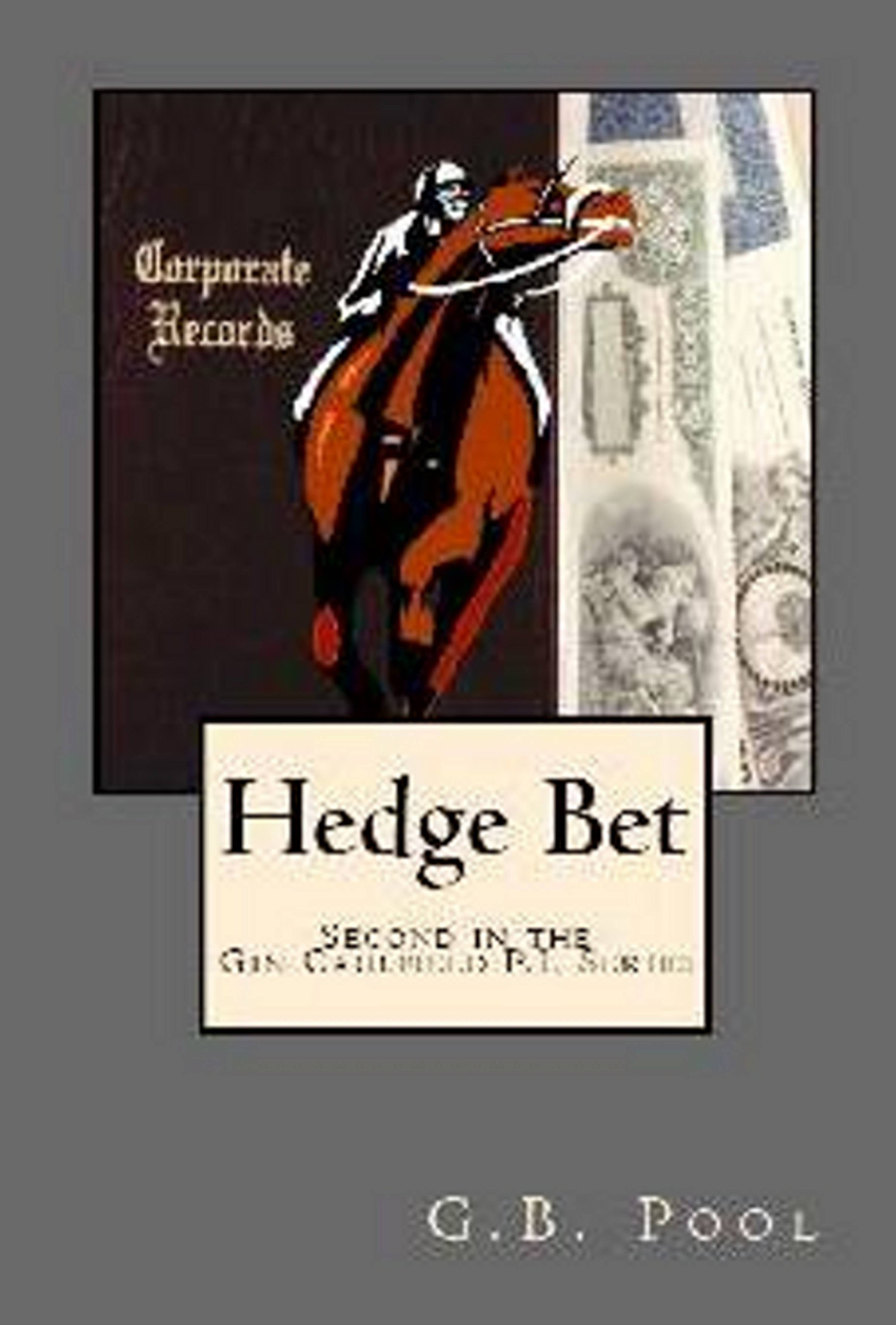
hedgebetfinalcovercropped“Johnny worked for me several years until he had enough P.I. hours under his belt to go out on his own. I hated to see him go, but I knew he worked better alone. Most of the time I do my work solo like the case at the racetrack in Hedge Bet. I should amend that statement because I got my husband, Fred, to do some work for me. His trip to Mexico to bring back a witness led to a few choice words from him, mostly unprintable. But the guy’s a natural P.I.

 

“I had been in the detective business for a while and knew good people like Johnny when I saw them. In fact I knew a few things about Johnny that he didn’t know, but I have a reason. You see my uncle is a spy. His name is Robert Mackenzie and he has had some incredible exploits around the world ever since World War II. His story, at least the parts that can be told, are in a series called The SPYGAME Trilogy documented by a writer who I got to know through the years. She’ll explain this next part.”


“Hello, folks. My name is Elaine Barton. My dad was involved in Colonel Mackenzie’s exploits and I got caught up in a few exciting adventures in books like The Odd Man, Dry Bones, and Star Power. The trilogy covers about fifty years and follows not only Mac’s life but also my father’s Air Force career. Parts of my life got caught up in this tale, too, and I put it all in book form. Though you’ll see in the books, some of it almost didn’t get written.”

the-odd-man-cover-4-croppeddry-bones-cover-view-2-smallstar-power-cover-trial-2


“Thanks, Elaine. Since I knew my Uncle Mac had ways of checking on people, I had him check out Johnny Casino. I learned his real name, bookcoverpreviewcroppedor at least I thought it was his real name, until another story in the Johnny Casino Casebook series uncovered something that even Johnny didn’t know. It changed everything for him. It’s in The Johnny Casino Casebook 2 – Looking for Johnny Nobody. That’s when I started seeing a pattern.”
 

“Hey, Gin. Johnny here. You aren’t the only one who is starting to see a pattern. When I had a case in Las Vegas, I met one of the biggest headliners in the world, Jack Lynn. He turned up in two of my stories, but then I noticed he was also in The Santa Claus Singer about a lounge singer called Frankie Madison. He met Jack, too.”


“I’ve got another one for you, Johnny. One of the guys I trained after you went out on your own, Chance McCoy, has a story about him and me in the upcoming short story collection called Second Chance. Chance is a special guy. You see, he got killed on a case, but his story doesn’t end there. Not by a long shot.”


“I can give you another one, Gin.”


“Lay it on us, Elaine.”


“I’ve heard a rumor that there is a particular elf, yes, I did say elf, who is thinking about starting his own private detective agency to help ‘the little guy.’ How does something like this happen?”


“Maybe we should ask the author of all our books. Hey, G.B. What goes? The ladies and I want to know.”


“Okay, Johnny. I’ll confess. When I started creating this fictional world I had no idea you all knew each other, but as this world grew I saw connections between all of you. First it was Johnny knowing Ginger Caulfield. Then I wondered how Gin knew so much about Johnny’s past and I realized her uncle was Mac Mackenzie. Who else would have access to all that secret stuff?


“As for Chance McCoy, he told me a bunch of his stories and when he needed a fellow P.I. to help him out in a case, it just happened to be Gin Caulfield.


“Did I say he told me’? Yes, I did. If any of you readers have ever been to an author panel, I bet half of those writers mentioned that when they write their stories, especially the dialogue, they just sit back and let their characters speak because those people really do talk to us. That doesn’t mean we are ready for the padded cell… yet.


“We do ‘hear’ those voices if we have created a character with a past and a personality. And by that I mean that you should try writing a biography of your main characters and even for a few of the other people who play an important part in the story.


“You, as the writer, need to know as much as you can about the character you are working with. If you know where he or she was born, their education or even lack there of, or maybe even their desires or hates, you will be able to craft a character with depth. And maybe, just maybe, you will discover something about a character that they didn’t know. That’s what happened when I found out something about Johnny that shocked him and me.


“I can’t explain it, but by knowing who my characters are, I hear their voices and I basically transcribe what is being said in my ear. On top of that, I marvel at the fact that some of my characters actually know each other, but the small world I created is only a part of the larger world around us. I sometimes wonder if any of my other characters know or have run into these people sometime or somewhere. Anything is possible in fiction… if it is fiction. Or maybe there is a parallel universe where they all live—”


Knock, knock, knock.


“Excuse me; somebody is at the door. I think it’s the guys from the asylum. They tracked me down and they are going to take me back so I can do some more writing.

Catch you later.”

typewriter

Dialogue – The Workhorse of the Story By Gayle Bartos-Pool

Dialogue – The Workhorse of the Story
By Gayle Bartos-Pool
Dialogue is the workhorse of the novel, short story, and screenplay. Even Silent Movies had dialogue. Dialogue performs several functions. It provides: Character Development; Plot Advancement, and Action or Movement.
In other words: It brings the story to life.

Dialogue Enhances (Describes) the Character – How a character speaks and acts says a lot more about him or her than just the words. Dialogue tells the place of birth, type of education, her temperament, his soul. Speech patterns denote character just as costumes do for an actor whether it’s a stammer or a dialect.
“Honey, somethin’s happened to yer livin’ room. Did ya’ll get another dawg?”

Dialogue Advances the Plot – and Provides Pacing – Good dialogue always adds something to the plot, whether it builds tension, relieves tension, imparts needed information to the other characters (and the reader), animates the story, thus moving it along; or even slows down the pace when you need a breather.
“Why’d you get out of the fund?”
“Frankly, I was scared. They played too rough.”
“They?” That got my attention. “Who’s they? Does Racine have a partner?”

Dialogue provides real time action. You are in the room with the characters as they speak. You are eavesdropping or right in the middle of the conversation. Or the character might be speaking directly to you. And dueling dialogue between opposing characters brings the reader right into the action. But note: as the argument gets more heated, the length of the sentences gets shorter.
“I never loved my wife!”
“Did you kill her?”
“No!”
Dialogue gets you Up-Close and Personal – Provides Tone and Mood while it brings the reader into the story. – How the words are delivered sets the verbal stage on which the scene is set; a whisper denotes mood just like a rant.
I lowered my voice before asking her my next question. “Do you outrank him?”
“No, I sleep with him,” Trin whispered.
 Remember: A character blurting out information that advances the plot is far more interesting than a long narrative description. But note: Dialogue is the illusion of conversation.
In order to know how a character speaks or acts, or even the words he uses, you must get to know your characters…intimately.
First, make the characters seem real to you as well as to your readers. Let them speak to you and trust them. Most writers will tell you they actually “hear” their characters, and it is that particular “voice” that makes a character unique.

Archie Wright’s the name. Dishing dirt’s the game. My sandbox: Hollywood. The most glamorous and glitzy, vicious, and venomous playground in the world. If you come for a visit, bring your sunscreen and your shark repellant.
Make a character sound different from the other characters with him by adding: a dialect or a foreign accent or words to denote an education or lack thereof. Add rhythm to their speech to show how the person is thinking at the time: hesitation vs. rapid-fire.  Word choice might show a character’s education level, but keep it consistent; a drugged out biker probably won’t quote Shakespeare, but a  professor in prison might quote Hamlet.
Speech should:  Move the plot along by telling us something about the character; convey information about the plot; add to the mood; change the POV to get another character’s side; and add to the reality of the piece. Just make sure somebody (a character or the reader) learns something new during any conversation. But if something is conspicuously held back, make sure it is found in the next chapter or at least by the end of the story.
If there is no purpose to the dialogue, rewrite it or dump it.

“Larry and I didn’t have children. We had two ‘vipers’ instead, just to be different. And to tell you the truth, if they didn’t kill their father, they hired someone to do it. But their funds are limited now. They’ll have to do the deed themselves.”
Language & Body Language
Simple gestures describe the characters more fully than words alone. Instead of: “Go ahead. Date my ex-wife!” he shouted. Try: “Go ahead. Date my ex-wife,” he said while slamming his fist into the wall.

Body language or Stage Business Helps Dialogue.
            “I love you,” he said.
She blew smoke in his face. “How nice.”
Instead of a constant stream of he said/she said, use stage directions to show how someone is reacting while talking.
“I’m crazy about you, too,” she said, looking at her watch.
Internal monologue can shake things up.
I couldn’t believe they found Brad’s body. I thought I buried him deeper.
Things to Avoid:
Expository dialogue: “As you know, Fred…”
Pleasantries: “Hello. Nice weather we’re having.”
Long speeches – Unless you’re Shakespeare; less is always more in dialogue.
Adverbial action tags like: “I loathe you,” she said fiercely. –can be replaced with action: “I loathe you,” she said, grinding her cigarette into the back of his hand. “Have a nice day.   Instead of: he said gravely. Try: with his head bowed he said…  
Sometimes what the character doesn’tsay is important: “I knew you wouldn’t care if I left you,” he said. She bit her lip.
Keep you, the writer, out of the piece. Don’t let your thoughts get tangled with those of your characters.
Write a biography of your main characters, whether it’s a paragraph or a page, describe who they are, where they came from, their background. Where a character was “born,” went to school, and his neighborhood will dictate his speech pattern, whether it’s a Southern drawl, a French accent, or a gangsta rapper from the ‘hood.’
If you are having difficulty, start with a “stock character” straight from central casting. If you want a villain, pick a character from some old movie, like Edward G. Robinson, and than mold him into your own creation. You can always find a picture in a magazine that fits the type of person you want in a particular role. Cut the picture out and devise a background for him or her.
If you know your characters, you can find their individual voice, even if the character isn’t human. Dogs, cats and birds have found their way into great stories.
After you have written your scene, read it aloud or have someone else read it to you, or use one of the many software programs that reads your work back to you. It will make a huge difference. You will hear things you didn’t know you wrote (both good and bad) and you will pick up the redundancies and misused words. And you just might find out how good you are at writing dialogue.
Let your dialogue work for you. It has a lot to say.