Cruises Can Be Murder**

by Jackie Houchin

(**See disclaimer at the end)

Ahoy there Maties! Have ye sailed the Seven Seas yet?  What’s stoppin’ ye?  Oh… murder!  That!

In January my Hubby and I went on the most amazing 15-day cruise from Florida to Los Angeles by way of the Panama Canal.

What made it amazing?

IMG_5504The Canal transit, of course!! (#1 on Hubby’s bucket list), But the perfect sunny weather, the deep blue sea(s), the small, uncrowded ship (just 670 passengers), the funny and very personable Captain, the amenities (food, lounges,  gorgeous library, spa, pool, Internet café, crafts & games, casino, theater), our beautiful cabin with a balcony (oh, the views!), breakfast in bed, the lack of crowds and lines, the cool excursions in Aruba, Costa Rica, and Chiapas and Cabo San Lucas in Mexico were all definitely fantastic.

IMG_5214(Yes, we are in our 70’s, but we had a blast zip-lining in the Rain Forest!)

If EVER you go on a sea cruise, be sure to book passage on a small ship (unless you have kids). The Princess line has only one, and the Oceania Line has just three. And yes, they can and do travel around the world in 111-195 days. (I’m still dreaming of that!)


IMG_5638Imagine, if you will, 4-6 months in luxury, with everything taken care of for you, the occasional excursion ashore, time spent in one of several lounges or the library or your room, even out on the balcony with a laptop, with a bunch of characters eager to do malice, and a twisted mystery plot to direct them!

Yep, I could write a book on a World Cruise.*  (sigh)  Oh, yeah, writing and books, that’s what this blog is about…


Since we’ve come home, I have noticed the abundance of mysteries aboard ships.  There are the dark ones like The Poseidon Adventure by Paul Gallico, Dangerous Crossing by Rachel Rhys, The Woman in Cabin 10 by Ruth Ware, Birds of Pray by J.A. Jance, and Death on The Nile by Agatha Christie.  (Perhaps you’ve read a few.)

On Goodreads, there is a list of 47 Cruise Ship mysteries/adventures for Young Adults and Kids, including some with the new Nancy Drew and Hardy Boys, and the Boxcar Kids.

And of course, the cozy and humorous mysteries; Killer Cruise by Laura Levine, Cruising for Love by Tami Cowden, Princess Charming by Jane Haller, and Murder on the Oceana by Elizabeth Martin.  Whew!!  With all that written murder, mystery, and danger, I can see why you might be hesitant to walk up a ship’s gangway.


IMG_5146But what about on OUR cruise ship, the Pacific Princess?  I asked the Capitan Paolo Ariggo several questions during our two weeks, but one of them was about this topic.

“I’m a part-time mystery writer, and I want to know, does the ship have a morgue and a brig?”

He grinned and in a very soft voice said, “Ahhh, yes. There are two refrigerators that could be used for that…” then in a normal voice, “but a brig, what is this?”

“A jail,” I said.

“No-o-o,” he said with that Italian accent and a quick shake of his head.

“So where would you keep a prisoner until the ship docks?”

Silence, then, with a laugh, “In the Captain’s quarters!”

(Yeah, right.)


The seasoned passengers were more forthright. One related this story.

“On the world cruise we took two years ago, there was a murder. Late one night on the pool deck (#10), a man and a woman, obviously drinking, had a loud argument. The man (he was quite large) back-handed the woman.  She fell to the deck and lay still.  He thought she was dead! (she wasn’t). So he picked her up and threw her overboard.  BUT she landed on top of one of the life boats. She did die that time.  They found her body the next day.

“They searched the ship. Everyone was called to their muster stations.  We had to wait there until he was found. It was two hours!  And when we docked in Aruba no one was allowed off the ship until the police had come and taken him away.”

Wow.

Another told of a husband being poisoned to death. They thought it was the wife.

I bet you writers are thinking of possible crimes now that could be set aboard a cruise ship. What would be YOUR angle?  How would it happen? Would it lead to other murders? Would a passenger become the sleuth, or would there be a retired/recovering detective aboard? And… who would be the killer?


Bonbon voyageRight now, I’m reading an ARC (Advanced Reader’s Copy) of a cozy mystery for review, Bonbon Voyage by Katherine H. Brown about the Chef being murdered. (Oh, no!!)

And I’ve recently reviewed Death on the Danube by Jennifer S. Alderson which you can read here.  Review on my Here’s How It Happened blog This one was a river cruise.

After the BonBon book, I’m looking forward to reading The Cunning Cruise Ship Caper by Sally Carpenter, and the humorous “geezer-lit” mystery,  Cruising in Your Eighties is Murder by Mike Befeler.

How about you? What is on your TBR pile? Have you got a mystery or memoir set on a cruise ship?  Or… perhaps you know a dark true tale that could be made into a short story or book?

Well, dive right in!  Launch that story! All aboard!


(Disclaimer: First of all, this seems like a very untimely post. I am so sorry about the unfortunate cruise ship in Asia and the number of sick people on it. I pray all those among the 3,500 passengers plus crew will recover soon. But please don’t let that stop you from an ocean voyage in the future!)

*A 111-day cruise on the Pacific Princes in a balcony cabin like ours begins at $60,000 double-occupancy.


Time-Tripping to 1902: The Mary MacDougall Mysteries

By Richard Audry

When I first saw the movie adaptation of E.M. Forster’s Room with a View, I immediately fell in love with the passionate, rebellious Lucy Honeychurch character.  At that same time, my wife and I had become big fans of Masterpiece Mystery’s Sherlock Holmes series, with Jeremy Brett playing the coldly logical, unemotional detective. I had been toying with the idea of writing a mystery for a while, and I had an inspiration: What would you get if you mashed up Lucy Honeychurch with Sherlock Holmes? And that is the origin story of Mary MacDougall.

My Mary MacDougall series takes place in the Upper Midwest c. 1900 and stars the eponymous 18-year-old heiress, whose unlikely and socially inappropriate dream is to become a consulting detective. I wrote the first book a number of years ago, in period style. And that’s when I stumbled across my first principle of historical mystery writing:

Begin with primary historical source material, if it’s available.

For that original Mary MacDougall novel, I spent weeks in a university library hunched over a microfilm machine, reading newspapers from that period. I immersed myself in the real news and life of the early 1900s. I learned what people were thinking back then, how they were behaving, what the news of the day was at a granular level. Occasionally, serendipity struck, such as the time I stumbled across a full-page feature story titled “Women As Detectives.” The thousands of advertisements were another valuable window on that era.

I also obtained two sources from the period that have proven to be vital. One, which I found in the back recesses of a used bookstore, is a world almanac from 1904, packed with general information—nearly a thousand tissuey pages. Another is my reproduction copy of the 1902 Sears & Roebuck catalog, now close to falling to pieces.

(Wishbook Web.com is a great source for writers who need details about clothing and products from the mid-20th century and later. It has every Sears catalog of that era. Even if you don’t need it for research, it can also be nostalgic trip back in time. Project Gutenberg is a great place to find thousands of free public domain books from the 19th and early 20th century, including travelogs and non-fiction.)

Doing research for a historical mytery can actually be quite enjoyable, especially if you’re a history buff. We booked a trip to Michigan’s Mackinac Island a couple years ago, to flesh out scenes for Mary’s vacation there in A Daughter’s Doubt (Book 3 in the series). The island was a popular tourist destination at the turn of the 20th century, with notables such as Mark Twain booked in for lectures and presentations.

More difficult than doing the research, I think, is deciding what to use. How much is too much? Some readers love rich immersion in historical detail. This seems especially true if you’re writing straight historical fiction. But I think with the historical mystery genre, readers’ expectations are a bit different. When I decide what to include, I have one clear guideline:

The research has to serve my characters and their stories, not the other way around.

In other words, I don’t want to be showing off my research and bogging down the plot. I’ve seen it happen too often. By oversharing research, you run the risk of boring readers and losing them. But determining what to include and what to exclude isn’t easy. For my mysteries, I find that watercolor brush strokes of history work better than photographic specificity. Still, on my second or third reads through the manuscripts, I’ll end up cutting descriptive sections that I know are slowing down the tempo of the narrative.

When I finished my first Mary MacDougall, I received compliments about its authentic voice but the book failed to sell—to agents, publishers, or readers. Discouraged, I set it aside and concentrated on a couple of new contemporary mysteries and an alternative history sci-fi ghost trilogy. A few years back, I revisited that first Mary MacDougall story. I realized my main character was not very likable—more Sherlock Holmes than Lucy Honeychurch.

I decided to give her a personality makeover. And to loosen the restraints that would have actually been put on a young, wealthy woman back in 1901. Which leads me to my next rule of thumb:

I am willing to fudge some historical outlooks and prejudices for the sake of a good story.

That meant, for example, that Mary’s father, a wealthy businessman, needed to be a bit more accepting than might be expected when his headstrong daughter seeks a career in detecting. True, he disapproves and complains and threatens a lot. But he allows Mary to set up shop with her cousin Jeanette, as secretary/chaperone—trusting that the daily grind of business will wear her down. Then, he hopes, she’ll see the sense in marrying some solid man of business. He even grudgingly tolerates Mary’s infatuation with an unsuitable fellow who happens to be an artist—trusting she’ll grow out of it.

And what about Mary’s corset? Where is the lady’s maid to help her put it on? My heiress/sleuth is no hoity-toity duke’s daughter or snooty Manhattan debutante. She’s a practical Midwestern girl who can take care of herself. And she’s also something else that I think is essential in a historical mystery.

Mary is the modern reader’s agent in a tale from the past. Her point of view is closer to ours than to that of a real heiress of 1902.

I want to be able to identify with any protagonist I write, and I want the reader to feel the same. That requires Mary to be kind of a version of you or me. If you or I were in her shoes, we might attempt the same things, which would be in tune with modern sensibilities.

For instance, in the new book, Mary takes up the cause of a street urchin whose most prized possession, a valuable pocket watch, has been stolen. The matter seems trivial, on its face. But her concern is an expression of her awakening notion that homeless children are deserving of justice just as much as anyone. In fact, it’s this particular epiphany that gets Mary in the gravest peril of her career. I believe it’s that sort of thing that makes her resonate with readers in 2020. She is our champion.

Writing about the bawdy, brilliant historical comedy The Favourite, New Yorker film critic Anthony Lane put his finger right on it: “…all historical reconstruction is a game, and to pretend otherwise—to nourish the illusion that we can know another epoch as intimately as we do our own—is merest folly, so why not relish the sport?”

I certainly have relished putting Mary through her paces in her first four adventures. And I have many more plots in mind than time to write them. I’d love to bring her out to the Carmel/Monterey artist colony to try and talk some sense into Edmond Roy, the man she loves who refuses to follow her advice and stay in Duluth. And then there’s the possibility she may go spying in Europe for the State Department—imagine how much fun that story would be to research. There could even be some cloak and dagger during the Atlantic crossing. (A tip of the hat to Jackie for that idea.)


RichardAudry (1)In closing, I have a request for writers in this group.

I’m starting work on a non-mystery novel about two young nurses who travel from the Midwest to work in California right after WWII. I’m looking for sources that would give me a flavor of what life in Santa Barbara was like in that period. Any suggestions for books (fiction or nonfiction), articles, websites, or libraries would be much appreciated. You can contact me at drmar120@netscape.net.


Here are the Mary MacDougall Mysteries in order, in their Kindle editions. The first three titles are currently available from other booksellers such as Barnes and Noble, Kobo, and Smashwords. A Fatal Fondness will be available in Epub versions later in February.

A Pretty Plot  A Pretty Little Plot

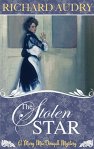
Stolen Star  The Stolen Star

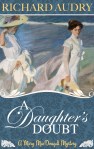
DaughtersDoubt  A Daughter’s Doubt

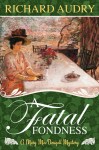
A FATAL FONDNESS   A Fatal Fondness

Also, please consider visiting my website  and liking my Facebook author page.


This article was posted for Richard Audry by Jackie Houchin (Photojaq)


For a preview of Richard Audry’s A Fatal Fondness, please check out my FIVE STAR REVIEW on my:  Here’s How It Happened – A Fatal Fondness


Changes

by Linda O. Johnston

Linda O Johnston

Everyone’s careers, everyone’s lives, can change.  And does change.

Once upon a time I was a practicing real estate attorney.  I loved what I did, working in-house for a major oil company… that eventually had to sell off its assets, so that job ultimately ended.  My last work for that company consisted of doing project work for the law department’s remaining real estate group for a while, and I used that to continue my practice by doing real estate project work for other attorneys.

Till the economy tanked and I was unable to grab onto any other projects, or even full-time jobs.

I’d already been published by then, in paranormal romance, romantic suspense and cozy mysteries.  Writing then became my main career, and it remains that way today–although which genre I’m writing in does… change.  You guessed it.  I’m currently concentrating on Harlequin Romantic Suspense, which I love, but I’d also love to do some cozy mysteries as well and still remain traditionally published.

Then there are other things that change, like how to connect with other authors and readers, and how to promote my work.  Last year, I attended four conferences, two focusing on romance and two focusing on mystery: Romance Writers of America National Conference,  California Dreamin’, Malice Domestic, and California Crime Writers.  Loved them all.  But two of them, California Dreamin’  and  California Crime Writers, are held by local organizations, and they’re both held every other year, the same year.  Therefore, this is the off year.

I won’t be attending Malice Domestic this year even though I enjoy it, but its focus is cozy mysteries and I don’t have any new ones currently pending.

rwalogoThen there’s Romance Writers of America.  It’s in San Francisco this year, and I’d certainly planned to go there, only…  Well, things have changed in the entire organization.  It’s been rocked by a scandal involving discrimination issues.  I haven’t entirely followed all the changes and nuances, but a lot of people in charge have been ousted from their positions or resigned, and even a lot of members have decided not to renew their membership, even though the discrimination issues will hopefully all be addressed–and eliminated.

I’ve been a member for a long time, and I’m hopeful it will survive–including the local chapters I belong to–so I did renew.  I’d hoped also to still attend the national conference.  But even if it’s held this year, a lot of major traditional publishers have said they won’t participate, and that includes my romance publisher, Harlequin.

Colton First Resp So, instead of four conferences this year, I doubt I’ll attend any.

But will I keep on writing, and possibly in different genres?  Oh, yeah.   That’s who I am.

And by the way, my next published book will be available in about a week. It’s COLTON FIRST RESPONDER, a Harlequin Romantic Suspense novel that’s a February release.


This article was posted for Linda O. Johnston by Jackie Houchin (Photojaq)


Keeping It Real: Developing Characters Throughout a Series

by Miko Johnston

I became an author when I finished the first in my series of fiction novels – my first book, period. Interestingly, Lala, the character I inaugurated thirty years ago, recently turned thirty herself. Is that a coincidence?

Maybe not.

Petal InTheWindMy writing has matured over those thirty years, as has my heroine. Granted, when introduced in my first book, she was “almost eight”, so her voice and thoughts had to reflect her age. However, the book was meant for adults, therefore it had to present the story at a more mature level. Much of the storyline and the tension springs from a child who’s unable to fully understand her situation and an adult audience who clearly can.

As the story develops, and Lala ages, she had grown up in the eyes of my readers as well as my own. I sometimes feel like thirty years ago I gave birth to this young girl, though I’m thrilled not to have actually given birth to an eight-year-old! Still, having lived with these characters for almost half my life and four books, they’ve become very familiar, and I’ve grown close to them. I sense a greater intimacy between the characters with each novel, in part because of my growing familiarity with them.

I feel the same way about characters in the series I still read. I’ve become invested in their lives, curious to see how they play out. It’s become an even more important aspect of pleasure in reading than the storyline. I’ve stuck with a few series with formulaic plots because of my attachment to the people who populate the stories.  I’ve also dropped a few series from my must-read list and always for the same reason – stagnant characters.

I asked several writers of serialized fiction about how their relationship with their characters – and their characters’ relationships with each other – has changed with each book, and each passing year.

51pZwz0PBbL GOTUMike McNeff introduced his hero Robin Marlette in GOTU (pronounced Got-U, it’s short for Guardians of the Universe). His action/adventure series features a covert ops team that has to balance work with home life. Mike’s currently writing the fourth book in the series. When I asked him how his characters have evolved over time, he decided to let Robin speak for himself:

“We were once cops who tried not to hurt anyone, including suspects. Now we kill just to survive and it has reached the point where killing has become a mere afterthought. I’ve killed sleeping men, men who didn’t know I was near them and men who were simply doing an assigned task at a particular moment. They were all involved in acts threatening innocent people, but I gave them no warning…no chance to surrender. I just killed them.” Robin’s eyes met the admiral’s. “My men and I have become dark and dangerous shadows moving through the night grappling with a squirming underworld. I’ve become unsure of just what and who the enemy really is…I just react to threats to the innocent people on this earth.”

I’ll add that the series has grown darker, but as Mike’s characters have developed into a close-knit team, they’re more comfortable teasing each other, and their humorous banter provides comic relief that lightens up the action.

*

41SMl8rQs0L IndelibleWhat began for Heather Ames as a stand-alone novel turned into a deftly blended mystery, suspense and romance series featuring Detective Brian Swift and socialite/club owner Kaylen Roberts (due in part to encouragement from some members of this blog). Ames says, “My characters have evolved from two people who didn’t even trust each other enough to share confidences into two people who have been trying to work through various challenges. They weren’t sure they could work things out by the end of Book one, but they both wanted to try.”

In each subsequent novel she balances the suspense between solving the mystery and navigating their evolving romance. Readers root for the couple, but Ames keeps us wondering as we follow their emotional roller coaster ride. “Being mismatched soulmates isn’t an easy gig. Brian’s profession is a huge stumbling block for Kaylen (while) Brian feels like a fish out of water in Kaylen’s world, and isn’t so sure he wants to try fitting in.”

The couple has progressed with each book. “Kaylen has evolved into a much stronger character than she was at the beginning of the series, while Brian has developed chinks in his armor that make him more vulnerable.”

*

41SMgxyg59L Last ConfessionPat Kelley Brunjes traveled a similar route with her characters as I, opening her series with a story loosely based on her family history. In her first novel, The Last Confession,  her protagonist serves as a stand-in for Brunjes. “Maggie was me seeking to find the truth about my grandmother’s relationship to the Catholic Church.” Although based on her research, she fictionalized the story, which allowed her to take Maggie in a non-biographical – and more dangerous – direction. In the sequel she’s writing, her heroine gets entangled in a cold-case murder and human trafficking. “In the second novel, Maggie has evolved into her own person dealing with what fate has thrown her, and how her personal beliefs guide her decision to help others.” Having given herself the freedom to step away from semi-autobiography, Brunjes will have much flexibility in plotting future entries in the series.

*

51sKIWU-ULL._SX322_BO1,204,203,200_ PaulineAvis Rector faces a unique challenge in writing her historical fiction series, based on the early life of her family on Whidbey Island. In her first book, Pauline, the heroine and her husband settle on the island during the Depression. “So much of the first Pauline was based on my memories of the stories I heard as a child from my father who loved to tell stories—usually real happenings, but many embellished.” However, in her sequel, the story moves into the 1940’s, a time Rector lived through. She’s having to reinterpret her childhood memories through an adult’s perspective. “Actually, I’m having a hard time writing how the adults felt about the time. Pauline has changed.”

Part of that involves Pauline’s maturing. Rector admits she struggles to find the right balance between the irrepressible gal readers meet in the first novel and the responsible parent she becomes after adopting two children. “It was difficult for her to become a mother. She’s no longer the fun-loving young wife (as in the first book), but a serious, not so much fun, mother. I’m sorry about this, and feel I should…try to soften her personality, to enjoy the experience of being a mother like she always wanted to be.”

***

Most of us in WInRs have written, or are writing, series – I’m interested in hearing their take on this. I also know some of you reading this post write serialized fiction. What challenges have you faced moving your characters through the years, either in ‘book-time’ or real time? Have they evolved over the course of your series, and if so, how?


mikoj-photo1

Miko Johnston is the author of the A Petal In The Wind Series, available through Amazon and Barnes and Noble. Miko lives on Whidbey Island in Washington. Contact her at mikojohnstonauthor@gmail.com

#


This article was posted for Miko Johnston by Jackie Houchin (Photojaq)

A Writer’s Resolutions on Social Media

by Jill Amadio

note notebook notes page

New Year resolutions?

I have known mine for many, many months, as had a writer friend. Bombarded and burned out by social media ‘noise’ last month, she left her computer and iPad at home and fled to the forest and her grandpa’s cabin in Oregon, Bigfoot be damned. Alas, Hazel was unable to escape her addiction to Facebook and Twitter and she drove miles into town each day to find an Internet café where she continued to pollute the airwaves.

apps blur button close up

Linked In, Pinterest, Tumblr, Fomo, Reddit, WikiHow, Instagram and others jam our lives with clamorous demands to log on, read posts, share photos, and comment. The more timid of us comply.

No Escape.

I know dozens of writers who complain about the time it takes to respond to cute comments yet day after day we find ourselves enslaved to the practice, afraid to miss something someone has written. Did they see my latest awards photo on my FB site?  Have they followed my Tweet link to my new mystery web site? While grateful for congratulatory messages online, and helpful tips on feeding hippos, how about admirers sending a snail-mail card instead or a basket of premium wine?

One can barely escape social media even without going to the sites. I receive email messages daily that someone has commented on my status (whatever that means – single, poverty-stricken?) or wants me to Like them.

Procrastination.

We seem to be obsessed with spending hours online replying to friends’ remarks posted on social media sites, laughing at cartoons and jokes when we should be writing the next chapter or polishing an article. For some, it’s procrastination, an excuse not to tackle that elusive plot point, or figure out the murderer’s true motive; for others, perhaps, a means to make a mark upon the vast Internet audience.

Do the networking benefits outweigh the negatives? Many around the world have found long-lost school friends and relatives.  Others bemoan the lack of privacy. I still haven’t figured out how to send a private FB message to my daughter.

Guest Blogging

blog icon information internet

Then there are the invitations to be a guest blogger. I was asked if I’d like to join a Blog Hop whereby ten mystery authors answered a series of questions about their books and their writing life.  First, it had to be explained to me how the process worked, then I answered the host blogger’s eight questions, after which I was told to wait my turn for the right day. I was nudged the day before with three emails reminding me, and finally, I was asked to promote the entire Hop through social media for several days beforehand, and several days afterwards: “I am guest-blogging today on Santa’s site.”

It was fun but time-consuming. The new idea prompted other friends who were not included in the Hop to ask me if I’d invite them to be a guest blogger on my own site.   After agreeing to two of them, I realized that probably no one checked out the blog page on my site anyway. More time lost.

An addiction?

How do we escape the trap and refuse to be manipulated? There are plenty of advice columns and seminars on how to overcome the addiction, even a 10-step program on how to recognize the symptoms and treat them.  You can Google the subject and dozens of sites show up. Even the Times of India newspaper has an article on how to handle the problem.

person using typewriter

Kim Fay, author of “the Map of Lost Memories,” was making a deliberate effort to stay “clean.  She said that Facebook terrified her, and she wasn’t sure what to do with Linked In.

Longing for peace and quiet aside from social media noise and actual noise of traffic and sirens outside her home in Los Angeles, she accepted her parent’s offer to holiday in their house in the mountains of Arizona while they went out of town. Once there, she covered all the clocks, researched, napped, and wrote 50 pages of her next thriller without once logging on anywhere.

Kim-Fay“Ideas had space to roll around in my head,” she said. “My thoughts were uninterrupted. It was divine. These days the life of a 21st century writer are frantic, a pressure cooker requiring one to write reviews, connect with fans and friends, and try to stay in the game. ”


Well, I gotta go. Time to check my FB page, and wish everyone a Happy New Year.

Capture (1)Jill Amadio is from Cornwall, UK, but unlike her amateur sleuth, Tosca Trevant, she is far less grumpy. Jill began her career as a reporter in London (UK), then Madrid (Spain), Bogota (Colombia), Bangkok (Thailand), Hong Kong, and New York. She is the ghostwriter of 14 memoirs, and wrote the Rudy Valle biography, “My Vagabond Lover,” with his wife, Ellie. Jill writes a column for a British mystery magazine, and is an audio book narrator. She is the author of the award-winning mystery, “Digging Too Deep.” The second book in the series, “Digging Up the Dead,” was released this year. The books are based in Newport http://www.jillamadio.com

***


This article was posted for Jill Amadio by Jackie Houchin (Photojaq)

In Defense of Clichés (and Other ‘Adjusted’ Words)

 by Miko Johnston

william-james-booksellerI frequent a bookshop in a neighboring town that sells books for and about writers, along with writing-related merchandise (if you’ve been to Port Townsend Washington you know which store I mean). They carry postcards and T-shirts with writing slogans like “Avoid Clichés like the Plague”. Cute. Unfortunately, it denigrates clichés. The meaning of the word has been ‘adjusted’, and unfairly so, IMHO.

Hear me out. I’m not endorsing the constant use of ‘isms’ we now label as cliché. But the word has become synonymous with trite, and that’s unfair. While some clichés may be trite, most are merely unoriginal, though with good reason – they’re shorthand for knowledge that’s been established throughout the ages and shown to be generally true.

clicheWhen selectively used, a good cliché expresses wisdom through metaphor. A stitch in time figuratively saves nine. Actions often do speak louder than words. Sometimes it is a dark and stormy night, but since that opening line shows up more in humorous writing nowadays, we expect it to be funny, not dark. Like cliché, the expression’s meaning has been ‘adjusted’.
Not a unique situation in phrases or in words. So many words have been adjusted – either with new meanings added on, or by having their definition abridged to one exclusive meaning. In one of my older posts (see July 17, 2019) I mentioned how Clarity in writing must include weighing a word’s intended meaning against what it’s perceived to mean.

Also consider how even when the word’s meaning should be clear, many don’t understand what the word means. Take secret, for example. It’s supposed to mean confidential, not to be disclosed, but too many people seem to be unaware of that, otherwise they wouldn’t try to get you to reveal a secret. Isn’t the very meaning of that word to withhold information based on a vow?

Or take the word average. It’s a mathematical term, meant to express the value of a group of data by adding it up and dividing it by the total of their number, yet it’s taken on social connotations. We hear the expression, the average person, or man, or woman, and wonder what that could be. We equate average with falling straight down the middle of a ranking system, not being good or bad, not taking sides. Somehow average has become something to avoid, either as a person or as an opinion. And don’t get me started on how compromise has become synonymous with cowardice.

How about proud? According to my dictionary the noun proud means: feeling deep pleasure or satisfaction as a result of one’s own achievements, qualities, or possessions, or those of someone with whom one is closely associated. Have you heard anyone say they were proud of themselves, even without accomplishing an achievement (which I believe includes making the attempt, working hard and doing your best)? Or proud of a celebrity whom they’ve never met?

As a writer, knowing words – their meaning, and using them in the proper context to express thoughts – has become more challenging as the meaning of words have become ‘adjusted’. Have you noticed this trend? How have you ‘adjusted’ to it?


mikoj-photo1

Miko Johnston is the author of the A Petal In The Wind Series, available through Amazon and Barnes and Noble. Miko lives on Whidbey Island in Washington. Contact her at mikojohnstonauthor@gmail.com


This article was posted for Miko Johnston by Jackie Houchin

M.M. Gornell: One Of Our Own!

by Jill Amadio

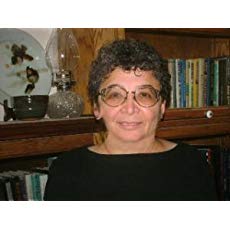
madelineI had the pleasure of getting to know one of our Writers in Residence bloggers, M.M. Gornell, more in depth last month and decided to write up my talk with her for the monthly column I write for a UK magazine called Mystery People.

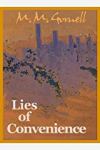
I thought you might like to know what I discovered about Madeline so herewith is the story. The magazine included a photo of her and one of her book covers.

***

U.S. Route 66

“The United States is such a whacking great country it encompasses every type of climate and terrain from deserts to glaciers, providing settings for crime writers in sand, mountains, seas, and snow.

Officially founded in 1776 and with archaeologists discovering tribes who lived here as long ago as seven millennia, America’s history of pioneers, gold miners, railway barons, and migrants continue to capture the imagination of writers. The push West from the East coast, where 100 or so Puritans from England disembarked from the Mayflower in 1620, has inspired books, movies, poetry, and songs, and created myths and legends.

How did these brave souls travel across the vast, undeveloped country?  One answer: Route 66.

route-66-2264400__340One of the most famous, nostalgic, fascinating and historic highways that wagon trains of homesteaders traveled, along with migrants seeking fortunes in gold mines, land, and new opportunities, U.S. Route 66 was originally a 2,500-mile dirt trail that ran from Chicago, Illinois to Santa Monica, California. It was eventually smothered in asphalt and became known as the Mother Road, and the Main Street of America, passing through a total of seven states.

John Steinbeck memorialized Route 66 in his masterpiece, THE GRAPES OF WRATH, in which he described sharecroppers’ gritty hardships and hopes. It is said that there was no symbol more loaded with meaning in Steinbeck’s novel than Route 66.

Many over the years have jumped on the bandwagon (forgive the pun) from the Rolling Stones, the Shakers, and other British bands who wrote hits about Route 66. Currently the BBC is preparing to launch another “The Hairy Bikers” show starring the popular cooks who will be riding their motorbikes along the renowned U.S. highway; no doubt pausing at the famed old diners along the way.

Crime writer M.M. Gornell

One author who actually lives smack on Route 66 in a small community called Newberry Springs in the western Mojave Desert is crime writer M.M. Gornell, Madeline to her friends. A typical oasis in the desert, the small town’s surrounding area boasts man-made lakes, farms, and ranches, and is about 100 miles south of Death Valley.

perfectAlthough her former residences have included other towns and the Sierra Nevada with its rich palette of Red Rock Canyon (the setting for her thriller, DEATH OF A PERFECT MAN), Madeline’s move to Newberry Springs inspired her to set the majority of her eight crime novels, including two series, along the famed highway. “For me, setting definitely comes first, then the story,” she said.
“Through some serendipitous miracle, probably springing from tiredness, the cost, and most importantly the feel of the place, we ended up in Newberry Springs. I come from Chicago, where Route 66 starts, and now I live at the end of it in California. I’m nowhere near to being an expert on the Road, not like real ‘roadies,’ and I’ve never driven the entire route, but in my mind, heart, and emotions the act of crossing this vast country has taken hold of my mind as a symbol for the hardiness and determination of the people who took it on, especially in those early days.”

As it proved for Steinbeck, Madeline said the name itself – Route 66 – is a pretty awesome beacon, leading the way in her writing adventures. “It is a constant writing inspiration.”

The multi-award-winning author’s first published work, including an Honorary Mention at the London Book Festival, was a short story in Alfred Hitchcock Magazine, which led to her debut crime novel, UNCLE SI’S SECRET. “It’s set in the majestic Cascade Mountain range where the seas of evergreen forests and the seemingly boundless waterways all combined to send my creative juices continually a-whirring”.

California and Route 66 beckoned…

liesBut California and Route 66 beckoned in the 1990s, due to mental pictures and expectations she had of the Mother Road twenty years earlier. It was not as easy as she had imagined, but new settings presented themselves and the majestic Sierra Nevada Mountains provided magnificent, magical scenery, inspiring her “Raven” mystery series, then LIES OF CONVENIENCE, and more recently her “Rhodes” mystery series.

dead.route-66-1238115__340Although the romance of the route was a fixed American landmark, it was soon bypassed by the new Interstate Highway System which either paralleled it, resurfaced portions, or went elsewhere, leaving Route 66 abandoned and lined with ghost gas stations and tiny deserted communities. Eventually, it was officially designated as “ceasing to exist.” But you can’t keep an icon like the Mother Road down. It was rediscovered by musicians, hippies, artists, movie makers, and writers.

Madeline is an avid fan of British novelists P.D. James, Ngaio Marsh, Margery Allingham, Marion Chesney, and others of the Golden Age.  She is published by Aberdeen Bay which describes her books as literary mysteries. “My intent is usually to write a murder mystery but they’ve all somehow gotten out of hand and ended up more what I call ‘character studies’.

Why ravens?

r.ravensAsked if any of her life experiences have crept into her stories, and what exactly was her attractions to ravens, Madeline responds with a smile. Those two things fit together in perfect harmony.

c.ravens“Ravens are indeed a prime example of life experiences creeping into my story-lines, even into the titles, RETICENCE OF RAVENS  and COUNSEL OF RAVENS. 

The ravens love our backyard, most likely because of the bird seed we set out. They seem to be intelligent and even fanciful. For reasons I can’t articulate, ravens seem rather mystical and mysterious. My writing mind went on from there.

“None of my stories carry “messages” but occasionally it can happen, especially after I select a title, and especially with the Rhodes series. I regard the Mojave and Route 66 as a sanctuary where no-longer-needed pasts are blown away in the dust.”

Like many authors, Madeline chafes at having to spend time promoting and publicizing her mysteries. But she enjoys talking to people in person where she can present them with bookmarks or even a few small samples of the stoneware pottery she creates when not writing.  She attends a few writers conferences and loves England but her favorite celebration is the annual Newberry Springs Pistachio Festival on Route 66. It attracts many Europeans, as well as locals, who are “doing the Route” and exploring its ramshackle old cafes, rental cabins, and trading posts.

It is a sure bet author M.M. Gornell will never run out of inspiration for her mysteries thanks to her choosing to live along this fixture of historic and popular culture.

***

stoneMoviecaretaker

M.M. GORNELL

Madeline (M.M.) Gornell is the author of six award-winning mystery novels. Her current literary focus is Route 66 as it traverses California’s Mojave Desert. Madeline is a lifetime lover of mysteries, and besides reading and writing, is also a potter. She lives with her husband and assorted canines in the High Desert. Visit her Her Amazon Page


sign.route-66-868967__340


This article was posted for Jill Amadio by Jackie Houchin


NaNoWriMo – No Never! or You Bet!

by Jackie Houchin

NaNo_2019_-_Poster_DesignNa-

NaNoWriMo is short for National Novel Writing Month. You knew that, right?  But did you know that it is the largest writing event in the world?  More than 300,000 writers sign up each November for a “simple but audacious” challenge: Write 50,000 words of a novel in a month. In the twenty years of NaNoWriMo, approximately 3 million writers have taken that challenge, including many bestselling authors.

Fifty thousand words in a month means 1,667 words per day. Doesn’t sound too hard, right?  Maybe an hour and a half at the keyboard? Two at most? A mere sliver out of your day.  HA!

I’ve entered NaNoWriMo five times since 2004 and it IS a heck of a lot of writing time; my bottom got numb, my fingers stiff, everything around me was out of my mind except “The Story.”  Sadly, I only completed the challenge once with my novel “Sister Secrets.” The novel was only 2/3 done at 50,000 words, but I never finished it (let alone edited it). It sits in a dusty file in my computer. (sigh)

So, if you plan to write the 50K words in a month, you’d better allow yourself a bit more time. Many NaNo veterans suggest bumping that word count up on the weekdays, in case your weekends get crazy. And remember, in the US, we have the Thanksgiving Holiday in November. (Eek! Can Aunt Sally do the turkey this year??)

Speaking of word count, why 50K? The staff of NaNo believe that this number is challenging, but doable, even for people with full-time jobs and children. It is definitely long enough to be called a novel. That’s about the length of F. Scott Fitzgerald’s The Great Gatsby.

-No-

A NaNo novel is defined as “a lengthy work of fiction.” Any genre of novel is okay.

Nonfiction, memoir, biography, essay, unrelated short stories, music, etc. do not qualify. But, if you want to write 50,000 words in any of those categories, there is a special group for you – NaNoRebels. Join that forum and you can chat with your fellow outlaws. You can also use the NaNo site to upload your 50K words and validate your work.

Here’s how one “rebel” couple did it:  Nanotunes-NaNoWriMo-NaNoMusicals

NaNo never questions a manuscript. “This is a self-challenge” say the moderators. “The real prize is accomplishment and a big new manuscript you have at the end. Everything beyond that is icing on the cake.”

-Wri-

There are only a few rules.

  1. Write a 50,000 word (or longer) novel, between November 1st and 30th.
  2. Only count words written during November. None of your previously written prose can be included (although outlines, character sketches, and research are all fine). If you choose to continue a previous work, ONLY count the words you write during November.
  3. Be the sole author.
  4. Upload your novel for word-count to our site during the winning period.
  5. Write more than one word repeated 50,000 times.

NaNoWRQI Mo tumblr_pynwv9HiLJ1qd8ab4o2_640“Traditionally, NaNoWriMo works best when you start a brand-new project. It may be an arbitrary distinction, but we’ve seen that novelists do better (and have more fun) when they’re free from the constraints of existing manuscripts. Give yourself the gift of a clean slate!

“That said, we welcome all writers at any stage. Outlines, character sketches, and other planning steps are encouraged, and you’re welcome to continue an old project. Just be sure to only count words written during November toward your goal.”

-Mo

So you decide to accept the month-long challenge, what kind of preparation can/should you do before NaNo begins?  Anything, from a vague idea of your story to one of the detailed outline structures found in the following blog sites.

 NaNoWriMo 6-week Prep.

  • Develop a story idea – September 9-13
  • Create Complex Characters – September 16-20
  • Construct a detailed plot or outline – September 23-27
  • Build a strong world – September 30-October 4
  • Organize your LIFE for writing – October 7-11
  • Find and manage your time – October 14-18

Writers Write – Countdown to NaNoWriMo 1 month Prep.

  • Week One – 1-8 October – Decide on your story idea, protagonist & antagonist, their names, the setting
  • Week Two – 9-16 October – Work out your plot. Give your novel title.
  • Week Three – 17-23 October – Flesh out your characters.
  • Week Four – 24-31 October – Create a timeline. Write a LIST of 60 scenes and sequels that you will include in your novel.

Angel Leigh McCoy on  AngelMcCoyBlog recommends the Milanote.com: “How to start your novel: 5 critical questions you must answer first” article. How to start a Novel

  • The Premise – In 20 words or less, what is this novel about at its core?
  • The Stakes – If the story ended in tragedy, what would that look like?
  • The Core Conflict – What are the opposing sides?
  • The Resolution – How does the core conflict resolve?
  • The Lesson – What is the moral of your story?

There are many more places you can Google to get a head start if you plan to join NaNoWriMo this year.  I know it’s late for most of the above now, but you can do a crash course over an upcoming weekend, or lay out a simple outline to show you a direction.

NOTE: Be sure to check out the blogs above, especially Writers Write which is packed full of writing advice. The daily blog also offers writing tips, writing comics, writing quotes, and writing prompts. They have a monthly Short Story Challenge. And they offer seven extensive online writing courses (fee).  

Speaking of costs, all of NaNoWriMo’s programs (including Camp NaNoWriMo and the Young Writers Program) are FREE.  They run on donations. (tax-deductible) Whether you are writing or not, you can donate here  NaNoWriMo – Donations

You bet!

Yes, I signed up this year. But 50K words? Probably not. But if I get 5K words and finish my children’s mystery “The Bible Thief,” I will jump for joy!


Give me a Na!

Give me a No!

Give me a Wri!

Give me a Mo!

Na-No-Wri-Mo!

Hooray!

My Declaration of Accountability


NOTE: The links to NaNoWriMo may be a little slow loading right now. They changed their hosting company (Yeah I know, dumb time, right?) but they promise all will be up to snuff in the next week or so.


Clothes Make the Character

By guest author,  Sally Carpenter

If you saw a stranger walking down the street, what can you tell from her clothes? Sherlock Holmes could determine the social standing, wealth, occupation, education and gender of persons by their clothes.

Authors use to spend much time in describing their characters’ garments, sometimes to a fault. Without TV or film, writers felt they needed many words to help readers depict the characters in their minds.

In the story “A Scandal in Bohemia,” Arthur Conan Doyle writes: “His dress was rich with a richness which would, in England, be looked upon as akin to bad taste. Heavy bands of astrakhan were slashed across the sleeves and fronts of his double-breasted coat, while the deep blue cloak which was thrown over his shoulders was lined with flame-colored silk and secured at the neck with a brooch which consisted of a single flaming beryl. Boots which extended halfway up to his calves, and which were trimmed at the tops with rich brown fur, completed the impression of barbaric opulence . . .” Sensory overload!

Nowadays writers limit their characters’ physical description, because readers often skip over lengthy sketches to get to the action, and also to encouraging readers to imagine their own selves in the story.

Nancy Ddrew 2The only physical description we have of Nancy Drew is her “titian hair” and “blue eyes.” However, we hear a lot about her chic wardrobe and apparently endless clothes closet. Beyond her stylish threads, Nancy often dresses in costumes and old garments found in attic trunks. When the books were originally released in the 1930s, low-income readers could imagine  wearing Nancy’s pretty outfits for themselves.

Cozy mysteries continue the trend of “less is more.” Clothes are mentioned briefly, if at all. With the modern heroine’s casual lifestyle, her wardrobe consists of tee-shirts, sweats and jeans. Readers want a quick and easy read without wading through mounds of description.

But when I started writing my Psychedelic Spy retro-cozy series, clothing was crucial.

Flower_Power_Fatality_jpg (1) (1)The books are set in 1967, an era of vibrant and varied clothes. Poodle skirts and bobby socks gave way to miniskirts and pillbox hats. East Indian garments were in style. The “British invasion” of roc


k music also brought English designers such as Mary Quant. African Americans adopted styles that expressed their ethnicity. The hippies had their own unique forms of dress.

Clothing of the 1960s differs so much from today’s styles that I had to describe nearly everything that people wore. I tried to keep such explanations to a minimum, yet the clothes were essential to place the reader into the era.

My protagonist, Noelle McNabb, is single and 25 years old. She apparently spends most of her income on clothes. In the first book, “Flower Power Fatality,” Noelle wears 14 different outfits! And her clothes are new, many purchased at the big city mall. She talks about how she loves shopping and checking out the latest fashions.

In finding clothes for Noelle, I’ve used a few costumes that I’ve seen in 1960s TV shows. I also have a great reference book, “Fashionable Clothing from the Sears catalogs: Mid 1960s.” The book has actual photos (and prices) from the era’s Sears mail order catalogs. I’d love to see those clothes come back into style, as they’re more beautiful and feminine than the women’s tee-shirts and leggings sold today.

Clothes also express the generation gap. When Noelle wears a miniskirt to church, her mother complains that the dress is too short. Mom is clad old, fussy dresses with below-the-knee skirts. Mom wears stockings and garter belts; Noelle is in pantyhose and colored tights.

In the 1960s, women wore dresses more frequently than today. I put Noelle in dresses most of the time. Even when she wears pants at her record store job, she’s in nice slacks and pant suits. The only time she’s in dungarees is when lounging around home.

Jeans are reserved for my “bad boy” characters, a group of young males who spend their time racing their choppers, shooting craps and smoking Marlboro cigarettes. In the mid 1960s denim was only slowing becoming acceptable as a fashion choice.

afro in orangeDestiny King is an African American agent who takes Noelle on her spy missions. Destiny sports a trimmed Afro and frequently wears jumpsuits. Her clothes are functional in more ways than one way. For example, she has a pair of earrings that are really plastic explosives.

My hippie couple, Rambler and Moonbaby, are the most fun to cloth. Hippies wore an eclectic style, often put together from castaways and thrift store finds. Styles, patterns and colors did not need to match. One useful reference book is “The Hippie Handbook” by Chelsea Cain, which has a chapter on “How to Dress Like a Hippie” and information on making skirts out of old jeans and how to tie-dye a shirt.

Trevor Spellman is a newspaper reporter on the prowl for a big scoop. He rebels against the small-town norms by wearing his hair long—below his ears—and he never puts on a tie. In the 1960s the collarless shirt became appropriate for formal/dress wear.

The clothing of Mr. Baldwin, the audio-visual technician at the high school, describes him well: white shirts, skinny dark ties, dark pants, plastic-rim glasses and a “dorky haircut.” Did “geek” and “nerd” pop into your head?

What the retired Army colonel wears also paints a picture. He’s in an Army bomber jacket over a khaki shirt. “His voice was as crisp and sharp as the creases pressed into his khaki pants.” Even in retirement he runs his life with military precision.

Clothes can describe a character more efficiently than a long list of traits, helping a reader to visualize a person more so that relying on the reader’s imagination alone.

###


NEW Carpenter photoSally Carpenter is native Hoosier living in southern California.  She has a master’s degree in theater, a Master of Divinity and a black belt in tae kwon do.

Her Sandy Fairfax Teen Idol books are: The Baffled Beatlemaniac Caper (2012 Eureka! Award finalist), The Sinister Sitcom Caper, The Cunning Cruise Ship Caper and The Quirky Quiz Show Caper.

Her Psychedelic Spy series has Flower Power Fatality and the upcoming Hippie Haven Homicide (2020).  Sally has stories in three anthologies and a chapter in the group mystery Chasing the Codex.

She’s a member of Sisters in Crime/Los Angeles. Reach her her at Facebook or  http://sandyfairfaxauthor.com or scwriter@earthlink.net.


This article was posted for Sally Carpenter by Jackie Houchin


Deadlines–The Good, the Bad and… any Ugly?

By Linda O. Johnston


calendar and writingI’m a writer.

Writers have deadlines.

If we’re traditionally published, they’re set by the publisher, with our agreement.  If we’re self published, they’re largely set by ourselves.

I’ve been doing this for a while and generally consider deadlines my friends.  They certainly keep me moving.

Recently I’ve been under deadlines for four Harlequin Romantic Suspense novels.  I met the first two with no problem, but I’d agreed to the third being shorter than usual thinking I could meet it anyway–but I had to ask for an extension.

I just turned in that manuscript.

DEADLINE1Now I’m working on the fourth of those books. I’m first doing a synopsis and three chapters to turn in, then finishing the rest of the manuscript.  I have a few months, so I should be fine. But right now I’m looking at all the weekend events, panels and more, that I’ve agreed to in the near future. Then there will be a visit from some dear family members that will probably use up a week. And an annual trip that has been extended to see those family members at their home. So… well, I’m worried about meeting that deadline.

After I do?  Well, I’m not sure what I’m writing next.  I’m hoping to do more mysteries, but I’m not under any contracts.  And I’d enjoy writing more romantic suspense books as well.

But after that deadline is over, I have some trips planned, so I’ll have to be careful.

Okay, I’m not the only one with deadlines. And I had all kinds of other deadlines when I was also a practicing attorney. Nearly everyone has deadlines in their lives. Do you? Writing deadlines? Work deadlines? Family deadlines?

calendar for deadlineYes, deadlines are a part of life.

What do you think of the ones in your life? Do you face them down and stare at them and meet them? Or do you cringe when you think of them?

Or do you want more of them, as I do?


##

lindaphotoLinda O. Johnston, a former lawyer who is now a full-time writer, currently writes two mystery series for Midnight Ink involving dogs: the Barkery and Biscuits Mysteries, and the Superstition Mysteries.  She has also written the Pet Rescue Mystery Series, a spinoff from her Kendra Ballantyne, Pet-Sitter mysteries for Berkley Prime Crime and also currently writes for Harlequin Romantic Suspense as well as the Alpha Force paranormal romance miniseries about shapeshifters for Harlequin Nocturne.


This article was posted for Linda O. Johnston by Jackie Houchin