Once upon a time…

by Jackie Houchin

Once upon a time, in a WAY long time ago, before I had a smartphone, a computer, an online presence, or even a typewriter, I wrote with a pencil, on lined school paper.  I wrote letters (to pen pals and cousins), stories (mostly tragically romantic vignettes in far-off places), and I wrote in small daily diaries.

You know those little books, about four by five inches, with a strap that wrapped across the pages and fit into a lock on the front, and had a half-inch, flat key to secure it. I mean, even a fork or a good slap could open them! 

The pages were dated, but you had to fill in the year. And you had to write quite small if you had a lot to say, like I did.  Wow, did they hold secrets!  And souvenirs – another good reason for that little strap and key. I wrote about feelings, events, boys, teachers, embarrassments, fights, dreams, disappointments, and things or people who made me mad, jealous, or envious.

One day, I found and opened a thirty-five-year-old diary like that. Oh, my goodness!  I slammed it shut and looked around me. Then I carried it to a small chair in a corner of the bedroom and opened it again.

I wrote THAT?  And that? Oh, my!

I laughed. I cringed. I even cried a little. A couple of times, I gazed off into space, seeing and reliving a sweet incident.  I’d smile and sigh.

How would my life be different if THAT had happened? Or hadn’t happened? Or if I’d said something else? Or acted quickly, nicely, or at least not selfishly? What if….?

What if? 

That’s the way fiction writers often dredge up a story idea or outline. What if such and such happened, or someone said or did THAT?  

I glanced down at the diary and thumbed through the pages, stopping now and then to read a heavily underlined passage.  WHOA!

I eventually put the little book back into the cardboard box with maybe eight others like it.  I’ll read them all, I promised myself.  I’ll write a story or two.  Is there enough for a book, I wondered?  

I stretched the duct tape tightly across the flaps and penciled “diaries” on the front. Tomorrow we will take the last of these attic finds to our new house.  After all the unpacking and settling in, I will dig out these diaries and sit at my computer, and type, “What if….?”

Halfway down the busy freeway to the new house, traveling at 65 mph, our heavily packed pick-up truck hit a pothole. In the passenger side mirror, I saw a small box jump and pitch itself over the truck’s railing. When it landed, the box split apart.  Small square objects flew out and bounced into the bushes growing close along the side.

“OH!” I cried.

“What?” my hubby asked.

“My diaries!  Didn’t you tie the boxes down?”

“I did!”

“But…”

There was no place to pull over. No going around. No going back, either along the freeway… or to that youthful time long ago.

I sat stunned.  Then I laughed, imagining some homeless dude living in the bushes finding and being entertained by my teenage drama and angst. Or maybe a gang of miscreants wearing orange vests and carrying plastic bags would come by to clean up the roadside trash, and find them. 

Hey, my stories could be read in jail! Perhaps even traded among the inmates for snacks or phone calls. Juicy sections could be copied on the backs of old envelopes and reread a hundred times. Pages might be torn out and passed on to new inductees as the old timers were released. My audience would grow! I might become “a best-selling author!”  

Well, maybe not.

Anyway, that’s why I never wrote the “Great American Novel.” 

Did you ever write in diaries?  Do you keep a journal now?  If so, is what you write  “stream-of-consciousness” or does it have a specific purpose?  Have you ever reread your previous ones from a year ago, or many years past?

Get Those Details Right!

By Maggie King

Recently Linda Johnston posted about where writers set their stories. I commented that the next day I planned to visit Charlottesville, Virginia for a research trip. I had finished the first draft of a short story set there, and needed to verify setting details.

I live in Richmond, but lived in Charlottesville for many years, and visit occasionally. It’s a cool place to spend a day. Lots of bookstores! So I have a fair picture of the place. But how accurate was my memory? And Charlottesville is a growing, dynamic city—what had recently changed and what hadn’t?

Here are the setting details in my first draft:
The story opens at the Jefferson Madison Regional Library in the downtown area of Charlottesville. As my main character stands on the steps under a columned portico, she turns and sees the Market Street Park, scene of 2017’s Unite the Right rally. I provide some information on that rally, formed to protest the proposed removal of the Robert E. Lee statue.

Once inside the library, the character takes a wide staircase to the lower level and locates a meeting room where a writing group is meeting.

After the meeting, she and a woman she just met leave and walk to Charlottesville’s Historic Downtown Mall. As they approach the Mud House, a trendy coffee shop, they decide it would be a good place to chat.

Mud House

Later they drive to a semi-country location, the scene of the crime they cooked up while drinking expensive lattes at the Mud House.

Based on my research, some rewriting is in order.

The character standing on the steps gazing at Market Street Park: she could only see a sliver of the park from where she stood. I could have her walk through the park and see the patch of dirt left behind when the Lee statue was removed in 2021. But neither the park nor the statue are important to the story, they only serve to add color to the setting. To use film parlance, this bit is destined for the “cutting room floor.”

The library interior: for all the times I visited this library, apparently I was never in a meeting room. They are located on the top floor, not the bottom, requiring the character to take the elevator (I didn’t check out stairway access). The rooms were in use, but I got a peek of the interiors through the glass doors. As the library is a real place in my story, being accurate with descriptions is important.

Jefferson Madison Regional Library

The Mud House. It’s a very attractive space with a nice, and pricey, selection of coffee and pastries. But it’s been completely redesigned and not conducive to private conversation. And the conversation my characters have needs to be private. But I can fictionalize a coffee spot, so no problem there.

Then there was the trip to the semi-country, where I once lived. The route, which must be accurate, was pretty much unchanged. I drove past the Earlysville Oak, estimated to be 250 to 300 years old.

Earlysville Oak

My old neighborhood was also unchanged—except for the owners of my previous home not keeping up the grounds. But I digress. I’ll make up the neighborhood based on this one. After all, it’s where the crime takes place, and I don’t want to rile my former neighbors!

I’m grateful I took this trip. It pays to verify aspects of the setting, especially if using real locations. I also took lots of photos, noted sights, sounds, and traffic patterns (lots of traffic!) and made time for those bookstores.

See Linda’s post, “LOCATION, LOCATION, LOCATION!”

“Off The Top”

by Jackie Houchin

What do I mean when I say, “off the top of my head…”?

Dictionaries say it means derived from the knowledge you have in your memory or impromptu, without previous thought or preparation.

Does it mean the same as “seat of my pants”?  Hmm. We often say we are “pantsers” when we sit down and start writing a story without a formal outline.

Although I love outlines, pages of notes, and lists of resources, I often sit down and simply start writing. Some call this ‘free writing,’ and it sometimes begins with a prompt. I did that recently with a short story I wrote using the prompt “The Convenience Store Was a Sad Place.”  That prompt made me think of our neighborhood store and gas station. I pictured myself walking into that store, looking around, dealing with a smarty-pants cashier, and away I wrote. The story came to me in a series of vivid mind pictures.

Was it seat-of-my-pants? Or something “derived from the knowledge I had in my memory.” Hmmm.

More recently, in April, to be exact, I joined a month-long Writers Digest PAD Challenge. The idea was to write a Poem-A-Day (PAD) on the daily prompt they gave. You could write any type of poem, from a limerick to a sonnet or free verse.  (I liked the shortness of this challenge.)

I did it. For nineteen days, at least. And the poems were totally “off the top of my head.”

April 1 – An optimistic poem.

There once was a gal with a lump.

When first it was found, she did jump.

“Oh, my! I shall die!”

Was her terrified cry!

But a doctor cut out that bad bump.


April 3 – A sad poem.

The rosebud is gone.

Cut from a lily-white breast.

Warm tears down the drain.


April 4 – A mistake poem, one you made or witnessed.

The mistake was mine. I’ll confess

I love whodunnits. But I digress.

I put down the fiver. I looked away

Hmm, stab or shoot? Which way to slay?

Wait! I’m not stealing a book!

Look in my bag? Really, just look!

There’re TWO books by Christie???

Well, I declare. It IS a mystery.


April 8 – A major event poem.

I gasp and stutter and lisp,

For today, I saw an eclipse.

The sun was gone

But not for long

It returned; its edges all crisp.


Off the top of my head – derived from knowledge I have in my memory.

It was fun for those nineteen days last April. There were longer poems, too, and some more serious.  I’ve often said I’m a short writer. I don’t think I could actually write a book, although I’ve tried.  I admire the Writers In Residence here on this blog for doing just that!

Do you write short or long?  Off the top of your head or from detailed outlines?

..

If you want to see more of my PAD poems, go to my blog, Words and Reviews, and scroll down the right-hand side column to April 2024. 

In the week before June ended, there was a 7-day challenge by Writers’ Digest for personal essays. Again, you have a topic, and you write about it.  My first one was about “a job experience,” and I titled it “Knick-knack, Paddywhack, Give A Dog a Bone.”  You can find that one on my blog site at: Words and Reviews Essays

SPRING INTO WRITING

by Miko Johnston

Ah, what a year it’s been, beginning with a harsh and, in some places, treacherous winter. So far, spring has not been much better or safer in many parts of the country. It took a long while to arrive and settle down on the West Coast. Hubby and I took a last-minute vacation to sunny Sicily to escape the cold and gloom for a few weeks and postponed our annual winter trip to LA for months until we could travel around by car instead of rowboat. Both escapes kept me away from writing for a while.

I’ve always enjoyed spring, a time of renewal, and probably more so this year after the winter we’ve been through. Thoughts turn from shoveling snow to shoveling dirt in the garden, from watching the overflowing rivers subside to marveling at the regeneration of fauna and flora.

Part of that rejoicing can include a return to writing.  Here are some suggestions to inspire you.

I           Change it up

If you’re finding it difficult to focus on your manuscript, or daunting to consider starting one, then don’t. Think about other things to write: short stories, flash fiction, a travel memoir, a chapter from your life. Perhaps a letter – yes, snail mail – to a long lost friend or relative. Buy (or make) some blank-inside cards and create your own birthday, anniversary, get well, and sympathy messages.

In short, forget about your WIP for now, but don’t stop putting words on the page. As we always say, writing is writing.

II         Revisit

If you’re writing in more than one point of view and your WIP isn’t going forward, you may have the wrong character in the driver’s seat.

I recently critiqued pages from a romantic suspense novel which had two protagonists. One chapter felt stodgy IMO, and the female came off as cold and unkind. The author had written the scenes in the male character’s point of view, so he only got to observe her behavior. I suggested redoing the chapter in the female’s POV, since she was undergoing the emotional upheaval. I felt if the reader understood what led to her bad behavior, they would find her more sympathetic.

If you get stuck, try rewriting the troublesome scene in another character’s POV.

III        Revise

One of my favorite quotes about writing has always been: “Books aren’t written – they’re re-written”. Not everyone accepts or believes that.

Some writers tend to think it’s permanent once you’ve written something. We forget that until a manuscript is published, it can always be changed. In my last book, I introduced new characters whom I barely knew. I stopped writing when Covid hit before returning to the partial manuscript a year and a half later. As the story developed I got to “know” the new characters better. With my first draft complete, I went back to their first appearance to find vague conversations and a lack of detail. Using my more intimate knowledge of these characters, I sharpened their dialogue and expanded their descriptions.

If your characters are flat and generic, get to know them better. If your opening doesn’t grab the reader’s attention, your middle sags, or your ending falls flat, rework that section until you’ve solved the problem (for suggestions and tips, search through our archives, including my BACK TO BASICS: WRITER’S BOOT CAMP series).

IV        Forget about Perfection

The opposite problem is to get locked into revisions, snipping away or changing words, sometimes back and forth, all in an attempt to make the manuscript flawless. It won’t happen. It never happens. Finish it. Polish it. Then hire a good editor who will clean up your grammar as well as plot holes. Lastly, find a beta reader, or readers, to give you an unbiased opinion. Do the best work you can, and then let it go.

Trust me, I understand how difficult it can be to carve out time to write, especially if we have no pressing need (such as a deadline from our publisher) to do it. However, remember this: you can’t call yourself a writer if you don’t write.

Now please excuse me, I have a novel to finish.

##

Miko Johnston, a founding member of The Writers in Residence, is the author of the historical fiction series, “A Petal in the Wind”, as well as a contributor to several anthologies including the about-t0-be-released “Whidbey Island: An Insider’s Guide”. Miko lives in Washington (the big one) with her rocket scientist husband. Contact her at mikojohnstonauthor@gmail.com

Let Me Entertain You!

by Jackie Houchin

Lots of medical stuff going on with me right now, so I thought I’d simply share a fun aspect of our Alaska cruise last fall. That aspect is called MUSH.  No, not yelling at sled-pulling dogs (although we DID do that), but a different kind of Mush.

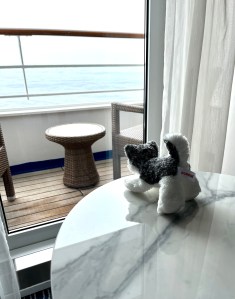
In Skagway, Alaska, I bought a small toy Husky, a beanie-bag size and shape little guy, with soft gray/white fur, big blue eyes, and the name MUSH printed on the tag. I loved the little guy from the first glimpse and perched him on my pillow in the stateroom when we got back to the ship. Joel, our cabin steward aboard the Oceania Regatta ship, loved Mush too.

When we left for dinner in the evenings the steward would come in to straighten up and turn down our beds. When we returned later, we found the usual chocolate candy on our pillows, AND…..Mush, posed in a series of so cute antics. The first time, he was propped on a pillow with the TV remote, watching a football game on the screen.

Another time he was standing on an open book (that I’d been reading), as if he were reading too.

Once when we came back from an excursion ashore and after we’d had lunch at the buffet, we found him on our small room table with the curtains draw slightly, looking out at sea.

And then, every evening HE started getting chocolate candy too, an additional piece placed between his paws. We were absolutely delighted.

Of course “I” started posing Mush for Joel too when we went out for the day, hiding him where the pitcher of ice water was kept, or behind the desk alarm clock, or sometimes just lying on the bed, his head tucked in and front feet up, waiting for a belly rub.

We had such fun with Mush and our very good and so kind cabin steward.  Another sweet memory.  And now, Mush resides on my dresser at night, guarding my glasses, and sometimes on my pillow during the daytime.  (But he’s on a diet now – no chocolate.)

##

Maybe I could write a cute kid’s story starring Mush on an ocean cruise. He could meet friends, find a missing object, solve a mystery, or rescue someone in danger.  Now that’s an idea!! Mush and I might have to put our heads together and come up with a plan!

When A Series SPINS OFF: the Maisie Frobisher Mysteries

A Guest Post by Liz Hedgecock

I didn’t so much decide to write the Maisie Frobisher books. It was more that Maisie Frobisher decided she ought to have her own series!

Let me explain.

The Maisie Frobisher books are actually a spinoff series: the series they sprang from is the Caster and Fleet Mysteries. I co-wrote Caster and Fleet with another writer who is now a good friend, Paula Harmon.

When we began writing the books, Paula and I hadn’t actually met in real life – only via a Facebook writing group. We were already online friends, we liked each other’s writing styles, and we both wrote historical mystery (among other things). We’re not sure who first suggested writing a book together, but we’re very glad they did!

Maisie is a very minor character in the Caster and Fleet world until she has more of a starring role in book 4, The Case of the Masquerade Mob, which is a romp involving masked balls and all sorts of skulduggery. At the end of the book, poor Maisie, who has had rather a rough time, decides to travel the world and forget about men for a while. That was my jumping-off point, because I’d grown to like Maisie very much and I didn’t want to let her go.

My friend Paula also has a spinoff series of her own, set in the run-up to World War I, which follows the younger sister of one of our protagonists, Margaret Demeray.

I had many reasons to set the Maisie series abroad. Firstly, at the end of Masquerade Mob Maisie was going travelling, and I couldn’t go back on that! Secondly, in the 1890s, when the series is set, the world was opening up. Bigger and more luxurious cruise ships, faster journeys, and more capacity to travel for pleasure. I chose India because it was a well-known destination, the route was interesting, and also because of the opportunity to look at the British in India in the time of the Raj.

I try not to get too bogged down in historical research, though there are all sorts of opportunities to get lost down research rabbit holes! One advantage is that I have a Master’s degree in Victorian literature, so I’m fairly well grounded in some aspects. While I want to make the stories accurate, I don’t want to spoil a story for the sake of including every historical fact I’ve discovered. Probably a tenth of the things I’ve read about make it into the final book.

I didn’t choose the late Victorian period just because I knew a bit about it, though. It’s also fascinating because of what was going on at the time. Women were fighting for their rights, the ‘New Woman’ had arrived, and inventions like the safety bicycle meant that women’s mobility could increase.

The Maisie books are also special to me because they mark a change in the way I write. Up to that point, I had always written at my computer. With Maisie, I had the urge to try something different. In the first book in the series, All at Sea, Maisie is on a ship which is always moving, and she must solve the mystery before the ship reaches port. With that sense of urgency in mind, I tried an experiment. I took my phone for a walk and dictated the book’s opening: a letter from Maisie to her mother, followed by a rather different diary entry on the same subject. The words seemed to flow. Ever since then, I’ve dictated my fiction rather than writing it. The result needs correction and editing, of course, but it’s a really good way to get into the flow, get that first draft down, and spend time walking rather than sitting.

If you do try the first Maisie book, All at Sea, or indeed, the first in the Caster and Fleet series, The Case of the Black Tulips, I hope you enjoy them!

#

Liz Hedgecock grew up in London, England, did an English degree, and then took forever to start writing.  Now Liz travels between the nineteenth and twenty-first centuries, murdering people. To be fair, she does usually clean up after herself.

Liz lives in Cheshire with her husband and two sons, and when she’s not writing you can usually find her reading, on a walk, messing about on social media or cooing over stuff in museums and art galleries. That’s her story, anyway, and she’s sticking to it.

Website: http://lizhedgecock.wordpress.com

Facebook: http://www.facebook.com/LizHedgecockWrites

Twitter: http://twitter.com/lizhedgecock

Amazon author page (global link): http://author.to/LizH

###

Note from Jackie Houchin: I began the Maisie Frobisher series – All at Sea – while on a cruise. (I could so identify with Maisie!)  But I got so attached to her sense of adventure and fearless deeds of daring, that I bought the second one (Off The Map). Of course I had to buy that third book with the magnificent Leopard on the cover (Gone to Ground). I’m now reading the fourth one and Maisie is back in London, but still involved in mystery and intrigue. (In Plain Sight)

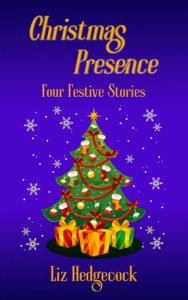
A character from the Maisie books appears in one of the four Christmas short stories in Liz Hedgecock’s Christmas Presence, Four Festive Stories. It’s a perfect way to sample Liz’s work and to gift for the Holidays!

.

This article was posted by member, Jackie Houchin

.

Writing Humor

by Jackie Houchin

How do you make a story funny?

Do you have to be a comedian? If you can’t make it laugh-out-loud-able, how do you make it chuckle-able, or at least grin-able? Or at the VERY least, smirk-able?

Our own Gayle Bartos Pool does it with punny words, double entendre, dialects, and snappy, sometimes tongue-in-cheek dialogue. And… hysterical situations!

You will grin and you will laugh aloud when you read her short story, “Only in Hollywood” in the Sisters-in-Crime collection, LAndmarked for Murder. I mean, can you picture a bunch of thugs pushing a dressed up dead body around in a wheel chair in the Bonaventure Hotel in Hollywood? No Way!

Gayle’s “Glitzville” in her own short story collection From Light to Dark has some hilarious dialogue scenes. They may not be as tangled as Abbott and Costello’s “Who’s on first?” but they sure come close. The back-and-forth conversation between Archie Wright and Sal Cohn is definitely grin-able. Your eyes will dance down the pages as you read it.

Here’s the opening paragraph so you can “taste” the style, before the funny dialogue begins.

“Archie Wright’s the name. Dishing dirt’s the game. My sandbox: Hollywood. The most glamorous and glitzy, vicious, and venomous playground in the world. If you come for a visit, bring your sunscreen and your shark repellant. If you come to stay, let me warn you, Tinsel Town eats up and spits out a hundred just like you every day. Sometimes it isn’t pretty, but it’s my job to chronicle the ebb and flow of the hopeful, the helpless, and the hapless. My best stories come from the dark side of Glitzville.”

And then the whip smart fun begins….

These are two stories in books you can try out for examples of how write comedic.  Perhaps you can recommend others?

If you are an author, how do YOU make scenes funny in your books? Is it by the characters, or some ridiculous premise, or by snappy, punny words and dialogue?  (SHARE YOUR SECRETS!)

##

Okay, as a journalist and book reviewer, I don’t have much talent with humor aside from a pun now and then. So, for the end of this post, I will try to get you to laugh, chuckle, guffaw, grin, or maybe just smirk with a few corny jokes. (from Woman’s Day magazine)

What do you call a snake wearing a hard hat?
A boa constructor.

What do you get when you cross a centipede with a parrot?
A walkie talkie.

How do you make an octopus laugh?
With ten-tickles.

How do you get a country girl’s attention?
A-tractor.

What do you call a beehive without an exit?
Unbelievable.

(You can pause here and come back later if you are grinned out.)

What do you call someone with no body and no nose?
Nobody Knows.

What do you call a blind dinosaur?
A do-you-think-he-saw-us.

Where do pirates get their hooks?
Second hand stores.

What do you call black birds that stick together?
Vel-crows.

(And a few to whet your appetite.)

What do scholars eat when they’re hungry?
Academia nuts.

Why do seagulls fly over the sea?
If they flew over the bay, they’d be called bagels.

Why should you never use “beef stew” as a password?
It’s not stroganoff.

What do you call a pig that does karate?
A pork chop.

(And for our own, Linda Johnston…)

What do lawyers wear to court?
Lawsuits.

What do you call a priest who becomes a lawyer?
A father-in-law.

What’s a lawyer’s favorite drink?
Subpoena colada.

I hope you got some ideas, or at least some laughs.

Remember the Bible verse – “A merry heart does good like medicine.” – Proverbs 17:22.

.

If you can’t find where to comment, click the title of this post at the top (Writing Humor) and you should find Likes & Comments below.

Sadly, the COMMENTS BUTTON seems to be missing. We are working on it with a PC man. Please be patient and keep reading  The Writers In Residence every Wednesday!

.

Here’s a Novel Idea: Read a Book

By Gayle Bartos-Pool

The first person whoever wrote a book didn’t have libraries and bookstores full of previously penned tomes to read and enjoy and from which to get inspiration to perhaps write their own story. They had a story to tell and wrote it. We, centuries later, don’t have any excuses. We not only have books, but plays, movies, and television shows overflowing with plots, characters, scenery, and dialogue to stir our imagination. Not that writers can’t get ideas from life around them, but sometimes actually reading something from another writer lets us know it can be done. Even a lousy book can inspire a would-be writer to say: “Hey. I can do better than that.” And they do just that every day. But first we have to pick up a book.

You might have friends or family members who recommend a particular favorite. You can always go to a bookstore, if there are any left, and ask the bookseller to point out a few books in a particular genre. Long ago I worked at a Waldonbooks in the Glendale Galleria in California. People were always asking where a particular section was. Mysteries, romance, kid’s books, self-help, religion. At times I would point out a favorite of mine. The store would set out best-selling books on tables in the front of the store complete with advertising paraphernalia from the publisher. We didn’t have to do that with the romance novels. They sold like hotcakes and we would sell down to the wall by month’s end. Unfortunately, the book chain decided they didn’t want to carry lots of books in all kinds of genres, only the top selling books. Obviously they didn’t know avid readers liked to pick out a ton of books of their choosing, old titles, newer ones, or try something different. Oh well. Management must have been more interested in their bottom line than their customers. I love capitalism, but I also love books.

But what can a writer or would-be writer do to get inspiration? They need to ask the one person who will have the most influence on their work what they prefer reading? And who is this veritable font of information? Themselves. Writers usually write what they like to read. But they need to read other writers in their chosen genre to see what’s out there. This means the good, the bad, and the: “Oh, God! That’s the best thing I ever read.” kind of book.

Now I might have loved mystery books and mystery shows on TV, but the first book I wrote, though it took a while to get published, was a disaster novel, CAVERNS. Then I spent ten years writing a spy trilogy, but that wasn’t finding a publisher, either. Then my wonderful husband, Richard, said these immortal words: “You used to be a private detective. Why don’t you write a mystery novel?” Ah!

But what did I know about writing a mystery? My spy novels were based on History and a bit about my dad’s life in the Air Force. I added a ton of facts and made up the rest. But a mystery. I needed to know more about the genre since mystery writing wasn’t like a stand-alone novel where the writer defined the parameters. What did I do? First, I joined Sisters-in-Crime in Los Angeles and Mystery Writers of America so I could hear what other mystery writers did. Those two groups had many famous speakers at their meetings who talked about their writing. I read their books and the books of some of the members of both groups. I was learning.

Since a writer needs a place in which to set a story, a few came up. First, I got called to jury duty. Then Richard got called. He went to downtown Los Angeles the same day the O.J. Simpson jurors were called. He came home and told me about the media circus down there with news cameras, helicopters, and microphones. My first Gin Caulfield book was called Media Justice about a high-profile case, the media’s influence, and Gin gets called to jury duty.

Next, Richard and I got free tickets to the Santa Anita Race Track. That became the opening of the second mystery in the Gin Caulfield Mystery Series, Hedge Bet. But then something else happened. I read another book.

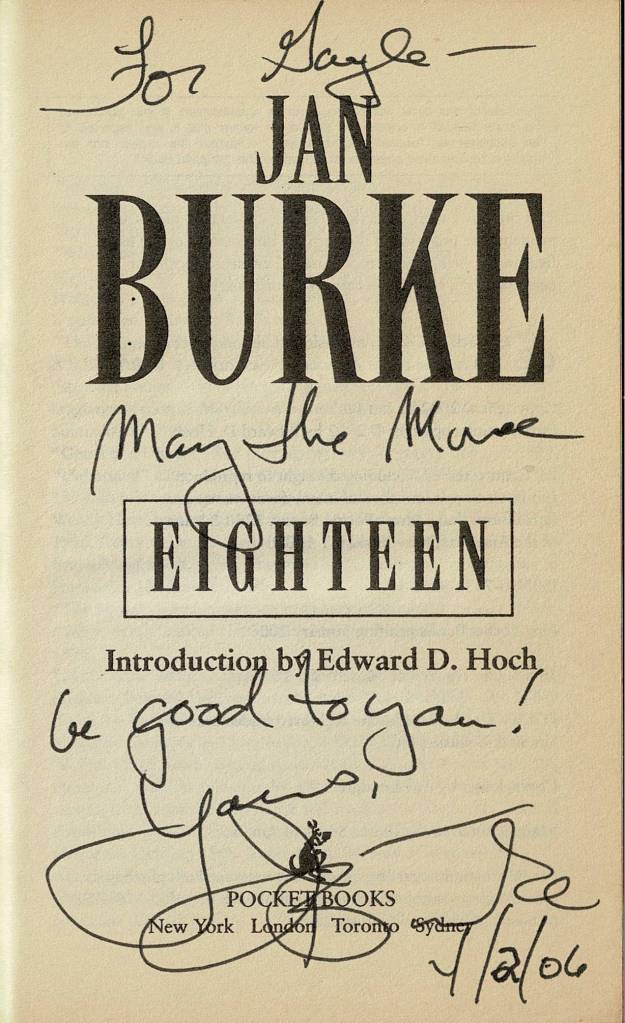
This book was Eighteen by Jan Burke. Jan was a member of Sisters-in-Crime and I picked up her book of short stories. I loved the book and the idea of writing a short story. So I wrote one about an ex-mobster turned private detective. Then I wrote another one about the same guy. Then Sisters-in-Crime announced their latest anthology and asked for submissions. The theme of the anthology was landmarks in Los Angeles. I had to write another story, but it just so happened Richard invited me downtown for lunch one day and we went to the Bonaventure Hotel. That landmark ended up being the one I used in my story and the story got in the anthology. I thanked Jan for her inspiration.

Now I had three stories with the same character. The reviews for my story in the anthology were good, so I wanted to write more with him as the lead. So I wrote a couple more, but can you do a book of short stories all about the same guy?

Then I met another writer. I had read a lot of his books as a teenager and read even more after I met him. His name: Ray Bradbury. Jackie Houchin, a fellow Writers-in-Residence member and good friend, and I went to the opening of his play Fahrenheit 451 since Jackie reviewed plays for a local newspaper as well as an on-line paper. She got to bring a guest, me, but I thought I should review the play, too, since we got in free. On Opening Night Mr. Bradbury mentioned the time he had a batch of short stories he wanted to have published so he asked his publisher what he should do with them. The publisher told Ray to link the stories together which he did and The Martian Chronicles was published. So I had my answer from a writer who got the job done. I linked the Johnny Casino short stories together like a TV series.

I have three books in the Johnny Casino Casebook Series out there now thanks to inspiration from my husband, a book by Jan Burke, some advice from one of the best writers in history, Ray Bradbury, a chance to review Ray’s play because of a friend, and the fact I liked mysteries and wanted to write them.

Ninety present of the books I read are mysteries. I have learned a lot from each one: What to do and what not to do. And also what I can do better. But reading sure made a difference in my writing. If you are a writer: Read On!

A Thank-You Note That Led to Story

by Jackie Houchin

Do you like receiving a thank you note for some little thing you did (or even said)?  I recently received “three thank yous” via email (one was from my very well-trained, sweet granddaughter for a gift I sent).

It used to be something we would pound into our kids’s heads when they got birthday or Christmas gifts. “Write Aunt Dottie a thank you!”  “Tell grandma you loved her gift!” 

One boy at church ALWAYS wrote such sweet notes to me as his Sunday School or AWANA teacher. They were well thought out, and even used “bigger words” than I expected. Many had little drawings of something I might have given him. I would tell his mom that she sure trained him well, but she told me, “Oh, that’s his idea. I don’t say anything.”  Sadly he’s graduated out of my class now.  I miss his notes and illustrations.  (Yes, I’ve saved them.)

I enjoy writing thank you notes as well. I’m always surprised when someone I sent a card to exclaims “Oh, what a wonderful surprise! That was so nice of you!” Sometimes I send an email, and very occassionally a quick text message. But I enjoy writing out my thoughts on real-life cards. And since my granddaughter now has a little business* making greeting cards, I get to use all kinds of them. She’s the artist and designer.

I also write birthday and holiday cards . Dear Kerry!  Don’t make so many cute ones I just HAVE to buy and use!!

    *     *     *

Recently there was an article in our newspaper, The Epoch Times, January 26, 2022, titled “The Importance of Thank-You Notes”. I loved the sentiments and agreed with what was written.

This morning, February 25, 2022, there was a response in the form of letter in The Readers’ Turn section.  It is a wonderful story of one particular thank you.  Here it is (I hope it’s clear enough to read.)

As we here at The Writers In Residence are always encouraging our readers to WRITE, have any of you recently received something in the mail – snail, email, or text – that you could turn into a short story, essay, blog post, or even a poem? Ok, yes, even a utility bill that came. (Have you seen how Natural Gas prices have skyrocketed?? You could write a letter to the editor, or the company!! Haha.)

But I had something else in mind. Something creative. I recently got a snail mail letter from my sister who will be 89 next month. She is super spry physically and mentaly. She is now taking a writing class, and had to write a small piece from each of 30 prompts. She did it, and now she says her local newspaper wants to publish a few of them. Wow! Who knew? MY sister!!!

So… a thank you note that caught your attention, a birthday card, a GALentine’s Day card (yes, my granddaughter makes those!) or perhaps a mailing from a charity with a photo of a needy child, a disaster, or a pet who needs a home might spark a thought. Maybe even a gardening catalogue with seeds from an old variety of flowers that your grandma grew might inspire you to write a mini-memoir.

Go look through your mail. If you’ve got an idea now, let us know below. If it turns out nice, I might consider posting it in one of our GUEST BLOG spots this year. Just go do it! Write!

#

*PacificPeachDesigns.com