
By ROSEMARY LORD
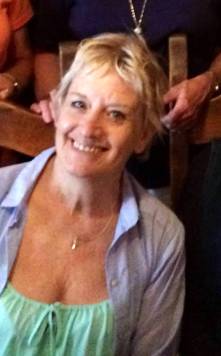
I’m trying not to be – perfect.
Or ‘perfick’ – as H.E. Bates had Pop saying in The Darling Buds of May. For Pop, each day and everything around him was – ‘perfick.’
And that’s what I have always aimed for.
I’m very much a ‘Pollyanna,’ and always seek the best in every circumstance and find positive outcomes for the most dire situation. When someone tells me ‘No, you can’t do that. It’s not possible…” My reaction is always: “I’ll find a way!”
I have also been my harshest critic. Until a friend recently said, “Rosemary, you don’t have to be perfect. You are too hard on yourself. And you expect everyone around you to have those same high standards. They don’t. So don’t beat yourself up about it.”
Hmm. Food for thought.
Life has been a challenge for everyone in the last few months.
At first, I found the lock-down a sort of blessing. An opportunity for us all to take a collective breath and count our many blessings, reassess our lives, and think about what is really important for each of us. Find what it is we really want to do with our lives.
 It certainly gave me time to sort out a lot of Woman’s Club files, paperwork and organization. That makes it easier for me to delegate and hand over the reigns, so I can focus full-time on my writing once more.
And, working on the WCH from home, I was able to squeeze in writing time. I found more and more new writing ideas and goals and decided it was time to put my own life first. To make writing my full time work again. Sooner, rather than later. That’s the plan – and I’m getting closer!
As the Brazilian author of The Alchemist, Paulo Coelho, said, “There are moments when troubles enter our lives and we can do nothing to avoid them. But they are there for a reason. Only when we have overcome them, will we understand why they were there.” Paulo’s parents committed him to a Mental Institution when he was seventeen, after he told them he wanted to become a writer! “Not to punish me, but to save me from that life,” he later said. They failed. Today he is a highly successful author.
Mercy! Makes us appreciate our own parents, doesn’t it? Thank you, Mum and Dad, for being you!
 But after weeks of world-wide shut-downs and no travel permitted, I also saw how small some of our lives had become. Often out of fear. When we do something out of fear – we cease to think rationally, boldly. Our courage leaves us. Some never get it back, especially as we get older.
We did as we were told and stayed home, closed down businesses, gave up jobs we liked, cancelled vacations and celebrations. We stopped going to the gym, too. And having our hair cut. (Well, that’s my excuse for my temporary extra pounds and my ‘mop’ of hair!)

But all was not lost, as many people became very resourceful and creative. They shone through this adversity. They found new ways to keep small businesses going, create sideline businesses, found new ways to communicate, and celebrate. Not worrying about being perfect, they just got the job done. People offered help to their neighbors and strangers, and acknowledged gratitude to those who continued daily schedules in the community as ‘essential workers.’ So, the Covid shut-downs had also brought out the best in some people.
But life had been put on hold.
Meanwhile, I have spent long hours at my computer, at home, on Woman’s Club matters. I’ve accomplished much in working through these months, including resolving a complicated, year-long IRS Audit. But I wished I could be speedier with that very work. I wished I could work faster and do shorter days. I wished I were more technology-minded and that I could work more quickly in these areas. I wished I could do more for the club with online events. But I don’t know how – and felt a failure in those areas. I chastised myself for not doing better.
Remember school reports? “Rosemary could do better. She could try harder.”
So that stuck with me. I could never do well enough for me. And that’s where my friend pointed out my frustrating perfectionism. I had created my own fear – of having to do everything to perfection. Are there any other perfectionists out there? It’s a disease, I tell you!
So, I have taken a deep breath and let go of some of it. Or I’m trying to… They say old habits die hard. And it’s really tough, sometimes!
 In my former writer-life I spent many solitary hours writing. I was oblivious of the world around me. I forgot to eat. Not good when you had a husband hoping for dinner, after returning from a long day’s work! But Rick was very patient and sometimes cooked for us, and a plate of food would appear in front of me, on top of my typed pages. “You haven’t eaten in hours. You’ve GOT to eat…” he would grin and return to listening to his music through headphones, so as not to disturb me. But I loved what I was doing. He knew that, so he was happy.
And I’d lost that joy since he’s been gone.
So, after losing Rick, I took on the responsibility of saving the Woman’s Club, as a way of escaping or forgetting, I guess. But it was such a different challenge. So much administrative work I’d never dealt with before. But I made myself learn. How hard could it be. Ugh! But I felt I must do a perfect job – in order to succeed.
I changed, I later realized. I rather lost my sense of humor. I was NOT amused by the battle I had to fight. The corruption. The thievery! I gritted my teeth and battled on through horrendous episodes. I had taken on a responsibility and I was not going to give up.
But I lost my writing along the way. And that wasn’t all. I’d lost spending time with good friends; friendships neglected. Life was whizzing by neglected and unlived.
These months working alone again at home I realized that, yes, I was a perfectionist where the WCH was concerned. Although no-one else seemed to notice. After my friend pointed this out, I realized I was being too tough on myself. I wasn’t having any fun – and I’d lost my sparkle. A girl has to have some sparkle. And I don’t know where I’d left mine.
So, I began to turn my attention to life around me again. Little by little. Now, new people have appeared to take some of the responsibility of the Club from my shoulders. And if they are not doing it as perfectly as I would like, that’s okay. It’s good enough. Gets the job done. They’re champing at the bit to get back out there. Back to work. Organize fun, interesting events. Escape from the Zoom Room. They are energized, brimming with ideas. And they think it’s fun!! What a relief.
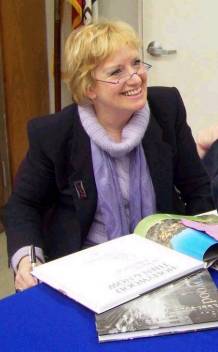 So I am becoming a happy writer, once more. I’ll be even happier once we’re allowed to travel, too. Even if I’m not going anywhere, at least I like to know that I could if I wanted to. I’m a dreamer, too.
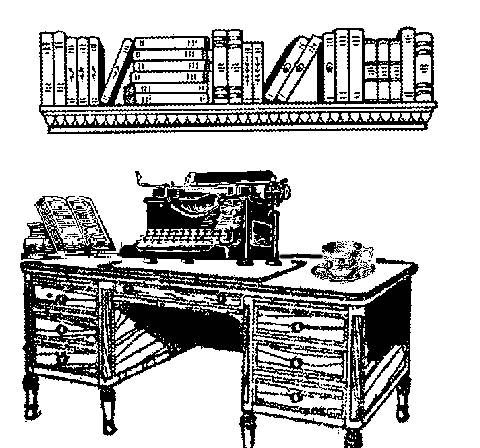
So, my less-than-perfect writing schedule is coming along. With my less-than-perfect editing in my less-than-perfect office space – also known as a messy desk. And my definitely less-than-perfect filing system works just fine.
I’m remembering to eat, most of the time. Sometimes it’s a late-night dark- chocolate bar. And so my girlish figure is less-than- perfect. But that’s okay too. I still occasionally mutter, “I promise to do better.” But now that makes me giggle, instead.
I LOVE what I’m writing, and can’t wait to sit in front of my computer and create – or grab my pad and scribble notes.

Mark Twain once said “Twenty years from now you will be more disappointed by the things you didn’t do than by the ones you did do. So throw off the bow-lines. Sail away from the safe harbor. Catch the trade winds. Explore. Dream. Discover.”
Sounds wonderful to me…
Just perfick!


 I’m sharing today two short blog writing-trails I’ve been down recently. As always, my hope is there’s something in my meanderings that might send you down helpful writing paths of your own.
 Knowing what I know about my myself and where I am writing-wise——answering Paul’s question, I did arrive at being a Movie/TV Show Producer and/or Director (admittedly based only on outsider-knowledge of the professions). I do love movies and TV, and in my mind, producers and directors do all the great things in putting together a compelling story, like picking the setting, lighting, color pallet, sequence of scenes, casting…
 I should backtrack a bit, and point out my prevailing approach and perspective on writing comes from reading. And especially from the golden age. Updated by P.D. James, of course! So, adding radio and movie profession perspectives, though it may be obvious to some, was not such a straight line for me.
 My second Little thing–is weighing egoism, good sense, advice taking, and the shortness of life. Items/thoughts which are a continuing balancing act for me–especially during the editing process.
 Definitely interested in hearing your thoughts on Paul’s question(which I’m still thinking about), and what “perspectives” you might be using for your writing reviews. And here’s hoping, my ziggy/zaggy comments will help you make your next work

 Thank you, Jackie! I’m a native of California, I was born and raised in the Pasadena area. My husband and I still live here, although we have talked about living elsewhere that is less expensive. I have two adult sons and two adorable granddaughters. We live in a condominium with two precious pups, Minnie, a mellow Maltese, and Mandy, a very precocious Terrier mix. They keep us on our toes and give us hours of unconditional love and fun!
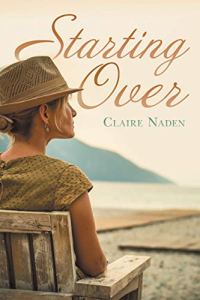 Cache Under the Stacks was published in August 2018, and Starting Over was published December 2019. Both books I “pantsed,” but now I am trying to outline and it is not as easy for me. I’m working on a sequel to Cache Under the Stacks and a sequel to Starting Over, a woman’s fiction that has evolved into a bit of a mystery.
 BOOK REVIEW: Cynthia (pen-name Claire Naden) published Cache Under the Stacks, A Cate Wagner Mystery, two years ago, and I have just found and read it. It’s a story about a divorced, empty-nester bookstore owner, living alone in a nice neighborhood with her sweet pup, Minnie.

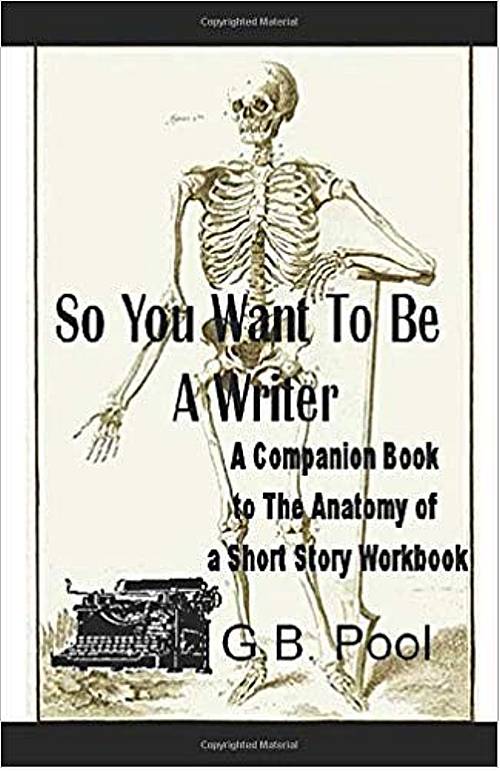
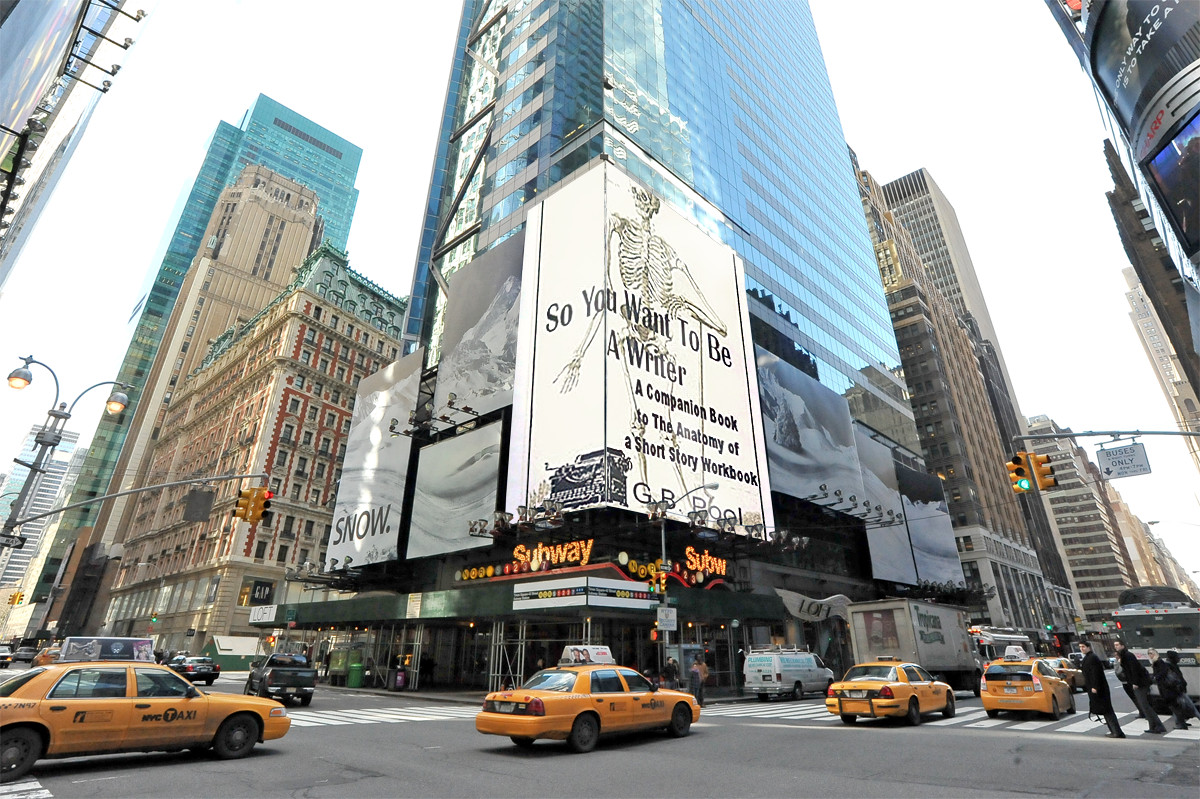 As you learn new skills, like doing a TV interview, let people know about it on your website. Polish old skills. (You can always improve.) You should have learned a hundred great writing techniques and mistakes to avoid in that writing group you joined. (We can all learn from other’s mistakes as well as our own.)


 In the spring of 2010, just six months after I published
  For example, in Maids of Misfortune, I had created two elderly dressmakers who lived in the O’Farrell Street boardinghouse. One of these sisters talked all the time, the other never said a word. And that was about all a reader learned of them in that first book. But I had developed a whole history for them and I wanted my readers to learn that backstory. So, in my second short story,
  Finally, I write these stories so I can explore historical themes in more detail. In
 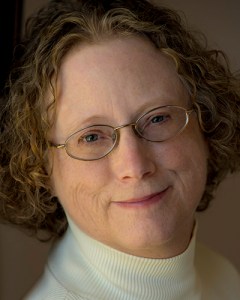 Louisa Locke, a retired professor of U.S. and Women’s History, is the author of the USA Today best-selling cozy Victorian San Francisco Mystery series. This series features Annie, a young boardinghouse keeper, and Nate Dawson, a local San Francisco lawyer, as they investigate crimes with the help of their friends and family in the O’Farrell Street boardinghouse. Not content with just exploring the past, Locke also helped create an open source, multi-author science fiction series called the Paradisi Chronicles. You can find out more about Locke’s books from both of these series at
 I love to write. I love to write novels that contain romance. I love to write novels that contain mystery or suspense.
 My kind of story, and I follow their bible and have my characters interact with the protagonists of other Colton stories in the various mini-series that are part of the Colton series. When I write stories that are all my own I fit a lot of dogs into them, and occasionally have been able to slip one in to a Colton story.



 During the Covid 19 enforced solitary confinement, my writing methods have changed somewhat. Partly because, after all the Woman’s Club administrative work,
  So now, sitting in my newly arranged office space, with smartly labeled files and clearly focused folders – I can’t find anything. I do a lot of research and have copious folders of notes, print-outs and clippings; now all neatly categorized. Normally, when I sit at my desk in my very small ‘office’ (in reality, a corner of the living room) I can reach my arm out and grab the stack of papers I need. Or reach the other arm out and grab the specific notebook. Everything’s at arms length and very convenient. Except now I have to stop and think “which arm?” “Is it to the left or to the right or behind me? My color-coded files are in upheaval because I have re-arranged them methodically. But my creative mind doesn’t work that way. Now I have to rethink my steps as to why I re-filed things and where my logic was going with the new system.

 After ordering restaurant take-out, my husband drove there to pick up dinner. It would take him almost an hour, leaving me time to explore a newly bloomed section of our garden, planted with rhododendrons. If you’re not familiar with the plant, they’re like azaleas on steroids, with flower clusters, some as big as your face, nestled against dark green leaves. Some grow as tall as trees; others have been pruned knee- or chest-high, their blossoms a riot of pinks, fuchsias, purples and reds.
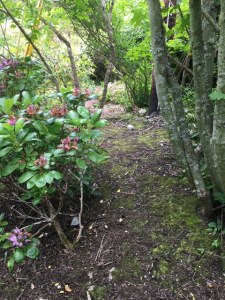 In the shelter of the garden, hidden beneath a canopy of lavender and laurel trees, I sauntered the path that wends through the rhododendrons. As I neared the end of the path, where it rejoins the lawn, I spotted something crescent-shaped sparkling on a branch. A closer look revealed a young bird, judging by its downy feathers of gray, which blended in with the bark. She (as I later discovered) had a curved beak, bright yellow, which stood out like a slice of sunlight in the darkness of the overgrowth.
 I so wanted to hear her sing, but she didn’t. Silently she sat there, occasionally darting her head, watching everything around her as I watched her, delighting in her curiosity, her seeming amazement with the world she’d recently entered. She hadn’t mastered flying yet. Her wings fluttered to help her balance on the branches as she hopped along, taking in the sights and sounds all around her. I’d been feeling blue awhile, in a rut. All that changed with my encounter with this fledgling. I found myself transfixed by her utter joy, and that joy flowed through me for the first time in months.


You must be logged in to post a comment.