By Jackie Houchin
In last week’s Writers in Residence blog post, Gayle Bartos-Pool asked the question, “What do I bring to the party?” She went on to tell of her extensive and varied experiences and personal contacts that have helped in research for her detective and spy novels. It got me to thinking about what I “bring to the party” of my story writing.
(1) I have a good knowledge of the Bible. (2) I’ve been on three short-term mission trips to Malawi, Africa. (3) I have 3 granddaughters who were once little and to whom I told and wrote many stories. (4) I teach the 4th-6th grade Sunday School class at church and I occasionally help in the K-2nd grade Junior Church.
What a set up for writing children’s stories that take place in Africa and that have a Bible truth woven into them. Hey! That’s just what I am doing. I write the “Missionary Kids Stories” series (about a family serving in Malawi) and I send them out to about a dozen young kids (6-11) at church via email every 1-2 weeks. They are entertaining (according to the kids) informative about Africa and mission life (occasionally gross as in the story that follows), “safe” (one mom’s comment), and have truths from the Bible as a take away.
Here is the first one I sent out, introducing the family and setting up the series. It is the shortest and simplest one. The stories vary in age level depending on the MK (Missionary Kid) who is telling the story. Stories five and six – told by a teenager – is one story in two parts with a cliff hanger at the end of five.
Dead Mice
Introduction
These stories are about the (make-believe) Matthews Family, who went to Malawi, Africa about eight years ago to be missionaries. This family has a dad and a mom, and seven children (three boys and four girls including a set of twins). As part of their names, each of them has the month that they were born in as a first or middle name, like Melody May or April Grace. All of the stories are written to you as letters. The first story starts like this:
Hi kids!
My name is Melody May, and I have a twin sister whose name is Charity June. I also have three brothers and two more sisters. We all have the month we were born in as part of our names. It’s really cool I think, but some people think it’s weird.
My mom – her name is Mrs. Matthews – is really fun and creative. She picks out all our names. My dad – his name is Mr. Matthews – just smiles at her with love and agrees to the names.
People call me Melody, but they call my twin sister “June.” You may wonder how twins could be born in two different months. Can you guess how? It’s kind of tricky.
I’ll let my brothers and sisters tell you about themselves in other letters, but right now, let me tell you about what happened to my sister June and I a week ago.
We are MKs (Missionary Kids) who live in Malawi, Africa. Our dad is a college teacher at the African Bible College. We go to a school there too, but in a different building.
One day, an African boy in our class showed us a mouse… a really DEAD mouse. Then he dared us to do something with it. At first June and I refused, but then…..
Here’s how it happened.
The boy’s name is Kukana (Koo-KAH-nah). On that day, the first day of the new school year, he dared us to EAT a dead mouse! Ewww! Would YOU eat a mouse, especially a dead one? (I guess a live one would be worse!)
There are kids from America and Canada and Holland and South Africa in my class. There are many Malawian kids too. We have three grades in our classroom because, well, our teacher is very smart and can teach three grades at once! At least that’s what I think.
That day, when Kukana stood up in class with a closed box and told us he brought something for us to eat, we all smiled. We thought it might be some roasted peanuts, or those small super-sweet bananas they grown in Malawi. Yum.
Then he opened the box and reached in and held up this really stiff, black, hairy thing. Some of the new girls screamed, but June and I didn’t. We almost did, but we grabbed each other’s hands and squeezed real tight.
“This is a mbewa,” he told us.
(You say mbewa like this – mmmmm-BEE-wah.)
“They are very tasty to eat,” Kukana said.
Then he held the mbewa up high by the stiff tail, tilted his head back, put the old dead mouse’s head into his mouth… and crunched it off!!!!! He smiled big as he chewed it. The Malawian boys cheered and stomped their feet!
Our teacher frowned a little, but she didn’t say anything.
Kukana smiled again, real big, and there were little bits of black fur in his teeth! He leaned very close to June and me and showed us his icky tongue, trying to scare us, I think.
Then he ate the rest of it….. even the tail. There were more hoots from the boys, and this time Mrs. Molenaar said, “Okay. That’s enough. Now tell the class about mbewa. Why did you bring it – and eat it?”
Mrs. Molenaar knew about mbewa – we could tell by her look – but she wanted Kukana to explain about this “famous Malawian snack food.”
“We eat mbewa because it’s good protein food,” began Kukana.
June and I looked at each other, our eyebrows raised way up and our eyes got big. OUR family eats eggs, chicken, fish, and sometimes pork or beef for protein.
Kukana went on, “Village families here in Malawi are very poor. They raise goats and sometimes cows to SELL but not to EAT. They do this to have money for beans and maize to eat, and seeds to plant.”
I thought about what else OUR family eats. We like the beans, tomatoes, pumpkins, and peanuts that the villagers grow. We also eat yogurt and canned fruit and oatmeal. Sometimes Mom cooks nsima (nnnnnn-SEE-mah) which is made from white corn, called maize, and tastes like thick hot cereal without any salt. (Mom adds some for us.) Poor Malawians eat that every day. Sometimes that is all they HAVE to eat.
“There’s LOTS of mbewa around,” said Kukana. “You just have to catch them. We go to where old maize stalks or dead grass is piled up. We stand around the pile with sticks. Then someone lifts up the pile with a long pole and mice run out everywhere. We have a lot of fun killing them with our sticks!”
Kukana laughed and all the boys laughed too.
“Then we put five or maybe ten of them on a long stick and roast them.”
Kukana looked right at June and me, opened his eyes really big and added, “….just… like… your… marshmallows!” Then he laughed in a mean way.
That made us feel mad and scared and icky, but we didn’t do anything. I think it was then, that I started to think….. maybe I WILL eat a dead mouse!
Mrs. Molenaar gave Kukana a stern look and he finished his talk like this. “Sometimes our fathers burn off the maize stubble (old stalks) in our fields. Then all the people stand around the edge of the field to catch the mice that run out.”
Mrs. Molenaar told the rest of it. “After the mice are roasted, which dries out the bodies but doesn’t burn off all the fur, they will keep for quite a while. Maybe you American children have tried jerky. It’s a bit like that.”
She turned to Kukana. “Did you want to share your mbewa with the class?”
He walked through the desks with the box down low. All the Malawian boys and girls took one out and started crunching and chewing. One American boy, named Benji took one too.
When the box came to June and me, my sister leaned way back, but I….. I reached in, grabbed a stiff hairy burned mouse and took it out. Before I could think about what I was doing, I leaned back, held the thing up, and crunched off its head!!!!!!
This time June DID scream. “Melody! Noooo!! You are going to get sick and die!! And Mom will be very mad!”
I didn’t look at her. I stared at Kukana as I chewed the prickly, scratchy thing. It tasted kind of like burnt peanut shells and grease to me. Finally I swallowed it and stuck out my black-specked tongue to prove I ate it.
Kukana was surprised. He smiled at me (nicely, this time) and gave a little nod. After that, he didn’t tease June and me. He kind of respected me, and since I was usually with my sister, he didn’t dare tease her either. After a while we even became friends.
Let me tell you a secret now. I didn’t finish the dead mouse. I passed it to the boy behind me who snatched it up and ate it.
And you know what else? I didn’t get sick and die.
I just became a Malawian.
But Mom DID get mad at me and told me never to do that again. I promised her that I wouldn’t. I figured I would never HAVE to do it again.
Later in our Sunday School class at the International Bible Fellowship church where my Dad sometimes preaches, I learned what Paul wrote in one of his letters in the Bible. He was a missionary to MANY countries. I don’t know if he ever had to eat mice, but he did say in 1 Corinthians 9:22, that he wanted to “become all things to all men that he might save some” for Christ.
I hope Kukana will someday want to know Jesus too. Maybe he will listen to me now when I tell him the gospel story ….. BECAUSE I ate the mouse.
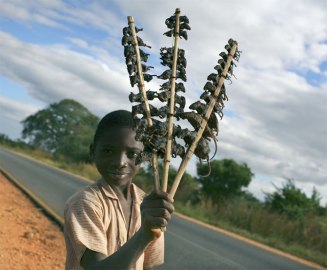
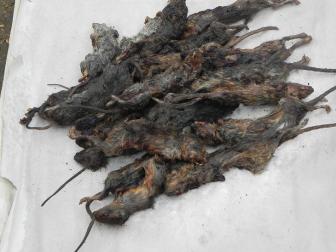
~~ Facts ~~
Malawians DO eat mice like this for protein. Sometimes you can see them along the road, selling mbewa still lined up in a row on the roasting sticks, or in piles on a piece of cloth they spread out on the ground. They also eat big grasshoppers for protein which they fry in oil and sprinkle with hot pepper.

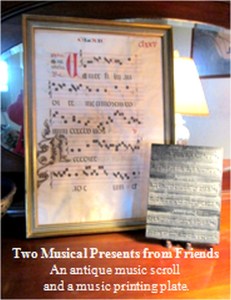 And indeed, this may be something only I “hear.” A concept only important to me. And there are enough hurdles and “things” to think about already in writing—I certainly don’t want to build artificial new ones. But bringing music to your writing is something to think about—especially for those of you who can tell C from D, and a flat from a sharp when you’re singing all those lovely Christmas Carols!
 Often, before diving into a scrumptious feast, the host of a Thanksgiving celebration will ask her guests to pause and answer this question.

 by G.B. Pool
 Or how about A Christmas Carol? Kids might like the Ghost of Christmas Past and Present and maybe even the Ghost of Christmas Yet to Come, but it will take a while before they understand what the story means on a more adult level.

 Years ago I worked at Walden Books in the Glendale Galleria. At the beginning of the holiday season the mall had a Santa who sang songs when he wasn’t talking to kids. I moved the Santa to Las Vegas in the book The Santa Claus Singer and made him a lounge singer who gets laid off and who ends up playing Santa at the mall and sings to the customers. He meets a young girl who is need of an operation. He is just the right blood type and he volunteers for the gig. At the same time, he gets a job singing in one of the hot night spots on Christmas Eve. A once in a lifetime opportunity. Only thing is, he promised to visit the young girl that same night. And then his car breaks down…
 The newest book is called The Santa Claus Machine. I got the idea from a Christmas card. In order to modernize his image, Santa builds a series of Santa robots that are sent to stores around the world. They are programmed to tell Santa’s stories and record children’s wishes. An unscrupulous sales manager at the largest department store chain in America, along with their computer engineer, kidnap the real Santa and hide him in an ice cave. They reprogram all the Santa Claus Machines to encourage children to ask for more and more toys. When Santa learns about the change, he becomes disheartened and thinks he might have to cancel Christmas.
 And I have been working on a new story for next year. The idea came when I bought a Christmas ornament, a small dragon. I found a tiny wreath on the sidewalk while walking one of the dogs and slipped it over the dragon’s head. Then I set him on the roof of the Santa castle and said, “Every Castle Needs a Dragon.” That’s the name of the book. I bet you don’t know that dragons are the protectors of something very precious in the world. If they have the wrong champion, they can go astray and do great damage, but if they are taught well, they do nothing but good. Now someone wants to capture this one particular dragon… You will get to read the rest of the story next Christmas.
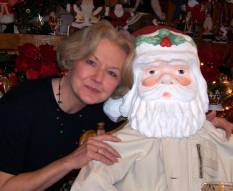 A former private detective and once a reporter for a small weekly newspaper, Gayle Bartos-Pool (G.B. Pool) writes the Johnny Casino Casebook Series and the Gin Caulfield P.I. Mysteries. She also wrote the SPYGAME Trilogy: The Odd Man, Dry Bones, and Star Power; Caverns, Eddie Buick’s Last Case, The Santa Claus Singer, Bearnard’s Christmas and The Santa Claus Machine. She teaches writing classes: “The Anatomy of a Short Story” (which is also in workbook form), “How to Write Convincing Dialogue” and “How to Write a Killer Opening.” Website:

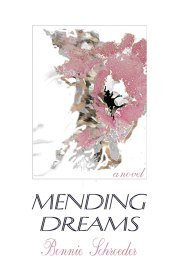


 Where do you escape to when it all gets too much? When that sleep that you really, really need alludes you? For those stressed with over-work, with family or money worries or health problems – a respite is definitely needed. Other than flying away from it all and off to an exotic desert island, what are we ordinary mortals supposed to do? I have discovered my best escape is found between the pages of a book.
 And in the middle of the night, instead of tossing and turning and sheep-counting – reach for a book. I do. I currently have a favorite Rhys Bowen novel about Molly Murphy in the turn-of-the-century New York mystery series. In a different mood, I will re-read Rosamund Pilcher’s The Shell Seekers, a Maeve Binchy novel, a Marcia Willet story, one of Carol Drinkwater’s books set in the South of France, or Victoria Hislop’s The Island and her other Mediterranean-set novels. I just love anything set in the sunny Mediterranean. No rush-hour traffic jams, no screaming police sirens, angry crowds pushing and shoving. Just gentle walks though olive grows, planning delicious simple meals, folk watching the tides come in and go out again under breath-taking sunsets. What’s not to like?
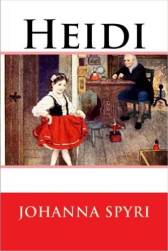 Although my all-time favorite remains the childhood classic, Heidi, by Johanna Spyri, about the little girl who goes to live with her grandfather in the Swiss mountains. Some years ago I learned to refocus my mind while in the dentist’s dreaded chair – and would whisk myself off to that Swiss mountain side with Heidi and her goat-herd friend Peter.
 The author of Best Selling non-fiction Hollywood Then and Now and Los Angeles Then and Now, English born ROSEMARY LORD has lived in Hollywood for over 25 years. As an actress, her credits include Monty Python, Rivals of Sherlock Holmes, Days of Our Lives, L.A. Heat and more. She did voice-work on Titanic, Star Trek, Shakespeare In Love, The Holiday and Pirates of the Caribbean amongst many others. A former journalist, she is published in many magazines such as Woman’s Journal, Atlantic Review, Woman, Films & Filming, Jackie, Field newspapers and more in the UK, USA and Australia, where she wrote about Hollywood’s Golden Age, interviewing such luminaries as Cary Grant, James Stewart, Tony Hopkins, John Huston. She was a Senior Publicist at Columbia Pictures. Rosemary lectures on Hollywood history and is the Historian of the Woman’s Club of Hollywood. She is a member of MWA, Sisters-in-Crime, SAG, BAFTA and contributes to The Writers In Residence Blog.
 Jacqueline Vick is the author of over twenty short stories, novelettes and mystery novels. Her April 2010 article for Fido Friendly Magazine, “Calling Canine Clairvoyants”, led to the first Frankie Chandler Pet Psychic mystery, Barking Mad At Murder, followed by A Bird’s Eye View of Murder. Her first Harlow Brothers’ mystery, Civility Rules, is out in ebook format and paperback. To find out more, visit her website at
  Dave Rosenfeld brings us the Andy Carpenter mysteries. His character is a defense attorney who inherited a pile of wealth, so he spends most of his free time with the Tara Foundation, a dog rescue. The rescue is the launching point for the mystery, such as when a dog is stolen from the foundation only to turn up next to a corpse in Who Let the Dog Out? And yes, I do plan to purchase The Twelve Dogs of Christmas for my holiday reading list.
 picked up Ashley Weaver’s Death Wears a Mask based solely on the cover, so I guess good covers do matter. I found a fun world that revolved around Amory Ames and her playboy husband, Milo. The back cover described it as Agatha Christie updated, and I thought it came close. This is the second book in the series, so I’ll have to go back and start with number one.
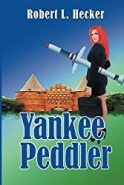 L. Hecker’s Yankee Peddler is more of a farcical social commentary than a mystery, but it’s so funny I had to include it. Ambassador Elizabeth Sullivan Wexford Adams sets out to sell the Litanians on “The American Way.” Hard to do when these isolated islanders have never heard of the USA.






 And this isn’t an isolated event for me. Research that gets out of hand—at least at “that” moment of interest. Here’s a picture of an ages old bookcase in my kitchen, stuffed with unused recipe books and internet printouts. Many are products of “Research.” Nonetheless, I sincerely believe–not only are past memories, experiences (see several preceding excellent posts here on our site), and travels invaluable to writing, but all the “research gone array” also contributes to the mosaic of our stories. Maybe not exactly at this moment in writing time, maybe even unconsciously, but down the road for sure. To use a bread analogy, to write with texture, flavor, and aroma (I can smell the bread), research is invaluable. Though it can get out of hand for some of us. But even if I’m completely wrong about the value part, it sure is fun.


You must be logged in to post a comment.