Writers on the Road

by Linda O. Johnston

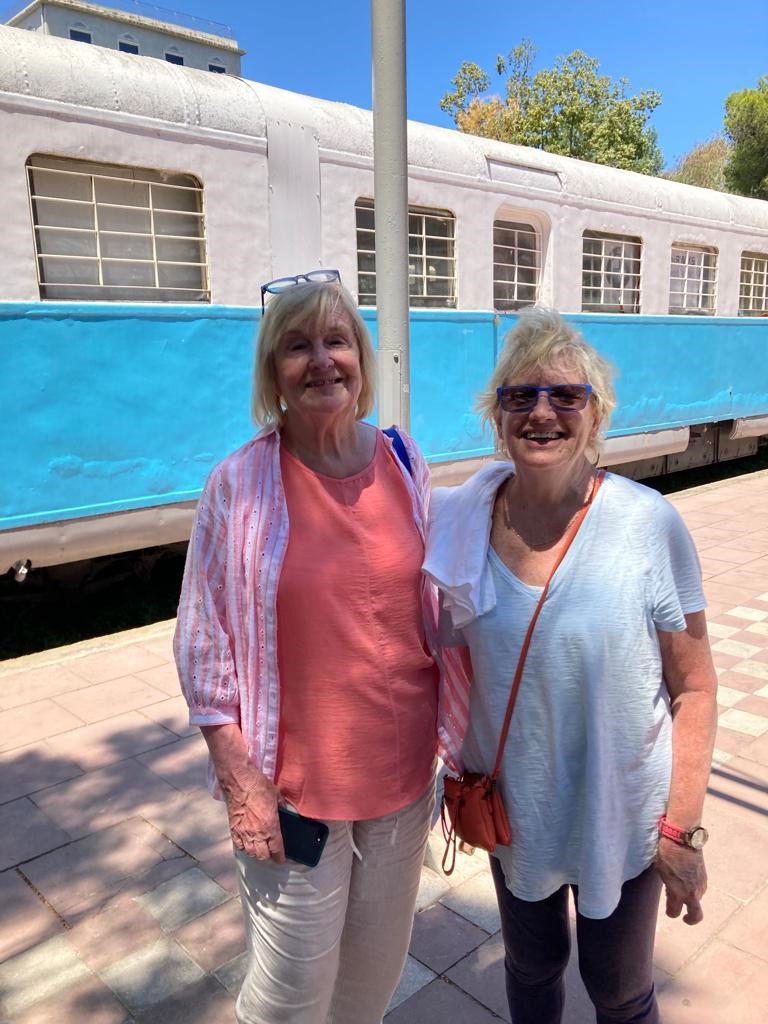
Well, not literally on the road necessarily, but traveling. On vacation. 

Is there such a thing as a vacation for a writer? Yes… and no.

Wherever we are, whatever we’re doing, our minds are busy.  Never mind whether we’re sitting at a computer churning out whatever story we are working on. That might not happen as much while we are out of our usual environment.

But yes, we’re writing when we’re not writing. Our minds are at work, observing what’s around us, the environment, the people including possibly our families but also those who are there on vacation too, or locals, or those who are taking care of us at whatever hotels or resorts we might be visiting or cruises we’re on.

It’s all inspiration! No matter what we might be writing at the moment or planning to write in the near future, we’re always open to new ideas that we might head for in the future.

Yes, last time I was here I wrote about a life of strange inspirations. But what about inspirations that aren’t strange, but fun?

So why am I addressing this? Well, last week I was on a family trip at a resort in Cancun. Oh, yes, it was fun. I loved being with family, and the environment was amazing. Extremely windy when we were there, but the brilliant blue water beyond the white sand beach at the place we were staying was beautiful. A lot of generous service from the resort staff. Multi-level swimming pools. Vast buildings around areas where outside entertainment was provided. Even fireworks!

I had mixed emotions about some of it. We’d been to that resort before, and they have a couple of large pools containing dolphins that appear to be well treated considering where they are, but having such smart animals that are originally from vast sea environments contained like that… Well, I’ve researched dolphins. They’re wonderful beings. As smart as humans in their environment. Am I inspired to write about them? I’ve always been inspired to write about them, but definitely not in situations like that—unless they can find a way out and get revenge!

See! My mind was at work while I was relaxing and enjoying my vacation.

How about you? Does traveling inspire you to develop new ideas, new stories, different kinds of things?

By the way, this subject is so vital to me that I’m incorporating it into the three blogs I’m posting on the same day this month. I’m addressing it somewhat differently, but it’s definitely on my mind. Along with my writing.

###

Photo by Leon Overweel on Unsplash

WHAT ARE WE MISSING?

by Rosemary Lord

Well, we wanted this year to be different, didn’t we? Or, did we yearn for The Good Old Days of yore: that is pre-Covid? The truth is somewhere in the middle…

For two years, we did as we were told. Because lives were at stake, and livelihoods, businesses, careers. We shut our lives down, following the Covid-19 restrictions and guidelines. We did the best we could.

But now, not a moment too soon, our world is supposed to be opening up again. How’s that working for you?  What are you looking forward to doing, as we get out and about, and happily smile, bare-faced, at each other again?

I don’t know about you – but, as a writer, I really missed all the Writers’ Conferences and workshops. It was a chance to get together with other creative folk from all over the world – writers, publishers, readers, agents – and swap ideas, hear news and get inspired and encouraged once more. Whether we attended in person, participated via Zoom or read about them online. They always made me feel part of a wonderful, chattering, writers’ world.

I loved reading about the conferences far, far away. Especially those sublime Writers’ Retreats in Tuscany, Greece or exotic Eastern islands. I mean, who could afford them? Even the fare to get there? Who had the time? But it was lovely to dream about the ‘one day’ when I had several best-selling novels under my belt and knew I could write the expenses off from my high taxes of my super-successful writing career.

I also learned a lot reading the descriptions of the workshops offered. Some were business oriented, about how the super-successful J. K. Rowlings and her compadres ran their writing careers or businesses. Or had someone else do it for them. Details of the foreign retreats that focused on creativity had descriptions to drool over: the leisurely, dreamy days gazing out on azure seas, after early-morning yoga, while tutors encouraged one to write something totally different from your usual style. To explore hidden corners of our creative brains. A morning of writing would be followed by exquisitely prepared meals of fresh, local produce served ‘en-plein-air’ – in the shade of exotic trees. To be followed by an afternoon saunter to the local farmers’ markets – or perhaps a wine tasting at the local vineyard. Then return to your room for more writing time. That is, if you could stay awake after the food and wine! Those Writers’ Retreats are VERY expensive. But one can dream…

In reality, most of us attend the more practical conferences packed with workshops on different styles and genres, on research, on editing our tomes, and how to wrap them up with an eye-catching pitch. There are always plenty of opportunities to attend agent-lead workshops, meet publishers and editors and hear lectures by our successful counterparts. I used to love listening to the late (and dearly missed) Sue Grafton. She always made us feel that if she had achieved success, then we could surely do the same. Charlaine Harris, Ann Perry, Lee Child, Ann Cleeves, Michael Connelly – I could go on – but they all spoke at these numerous events, sharing advice and encouragement for their fellow writers.  

These conferences are held all over the country. The annual Bouchercon was to have been in New Orleans last year but was cancelled due to Covid. I was looking forward to that! This year it’s in Minneapolis in September. The last Left Coast Crime Writers Conference I attended was in Vancouver in 2019. The 2020 one in San Diego was cancelled. This next one is in Albuquerque in April. (I’m moderating a panel of screenwriters and guesting on a panel about Twentieth Century Mysteries.) Malice Domestic Conference will be in Bethesda late April. The International Thriller Writers Conference is June 4th in New York.

There are several more venues for writers to hone their craft and network, including the California Crime Writers, which has gone online due to Covid precautions. There’s something for every writer: romance writers, mystery writers, screen writers, short-story writers. Something for every genre, for beginners and experienced career writers, traditionally published, self-published and ‘pre-published.’ In that long conference weekend, we get to talk about writing, meet new writers and readers, new agents and publishers, learn the latest forensic discoveries, the new publishing trends – and often, we plot how to commit murders that we can get away with! For our literary characters that is, of course! Although that discussion might well happen at the Romance Writers Conference occasionally, too!

            Many conferences were in California, so I would drive to them. But other times I would fly to another state.  Apart from the fun adventure of travelling to these events, I’ve missed seeing my writer friends from all over the globe. We laugh a lot, catch up on each other’s lives, eat a lot – and the bars are always open. It’s a lovely escape – before we return home to our usually isolated writing life. There, we scribble in our endless notebooks, then tap away on our computers – until we have something completed that we can discuss at the next writers’ conference.

So, we’re back to normal – sort of.

Almost.

Yay!

What part of your writers’ life did you miss most these past couple of years?

A Final Pass

by Miko Johnston

By the time you read this, the manuscript for my fourth A Petal In the Wind novel will be back from the editor and ready for its final draft before publication. Prior to sending it out, I made several passes through it, each time searching for ways to fix or improve the work.

In my first pass I searched for everything from formatting issues to misspelled words. In light of recent events I found parts of the story, which I’d begun writing in 2017, had become dated. I couldn’t gloss over a worldwide pandemic and the social rifts that emerged from political discord. Several new characters who were introduced in chapters written years before the book’s conclusion sounded too generic; I’d gotten to know them better as the story progressed and that needed to be reflected in their earlier dialog and mannerisms.

Other passes looked for repetition, excess verbiage, more precise word choices, missed misspellings, lapses in logic, and incorrect information. With that complete, I sent out my manuscript, anticipating a few more changes would be needed once I heard back from my editor. I took advantage of the wait time to put together all the additional material needed – logline, book blurb and synopsis.

Whenever I have to write marketing stuff, I cringe. It’s not what like to do, or do well. I view it as a necessary evil, and many authors I know feel the same way. However it must be done, and the good news: I’ve found an advantage to it beyond promoting the book.

When you have to encapsulate your x-hundred page novel into a one page summary, then a teaser for the back cover, and finally a one-sentence logline, it forces you to look at your theme in a different way. Gone are the long passages of prose, the snappy dialogue, the transitional scenes and flashbacks. You must have a laser focus on what your story is about – what you’re trying to get across to the reader in terms of theme, character, and plot. By doing so you sometimes will see aspects of the story that are important but may not have been shown in a compelling or complete way. So beyond my editor’s input, I saw that I wasn’t done with my revising.

I came to that conclusion when I encapsulated a 106,500 book into a few paragraphs with just a hint of where the story will eventually wind up. I had my external conflict and internal struggle, and pointed that out in my blurb. Then I wrote my logline:

Amidst the social and political upheaval in the aftermath of WWI, a woman who identifies as an artist marries the love of her life, but chafes at being relegated to wife and mother.

We can understand the difficulties a woman would face in giving up her career to marry and have children, especially at a time when such notions weren’t as accepted as they are today. But had I adequately shown how she feels in the book? Could I have made it not only clearer, but on a much deeper level?

The logline hints at the deeper issue. What she rails against is not being married to the man she loves, or even the challenges of motherhood. It’s losing her identity, having to see herself as only a reflection of her husband and children. When Jane marries John Doe, she becomes Mrs. John Doe. Her baby’s mama. She’d wonder—what happened to Jane?

My character Lala is a woman who’s accomplished a great deal despite her youth. She not survived the trauma and hardships of WWI and kept her family alive, but her home town as well. It’s described as a factory town north of Prague throughout the series. In America we’d call it a company town, where a single business – in this case a furniture factory – provides the economic base of the area.  Circumstances force her to take charge of the factory and oversee its conversion to wartime production. If it had closed, which it nearly did, the town would have been devastated. How can someone like this ignore all she achieved, the skills she developed, the talent that resides within her?

When the manuscript returns from the editor, I will review the comments and make some changes, including a few of my own – adding more layers of my character’s internal dilemma to the story. Then I’ll probably rework my promotional material. A writer’s work is never done…that is, until it goes to the publisher.


Miko Johnston, a founding member of The Writers In Residence, is the author of the historical fiction saga A PETAL IN THE WIND, as well as a contributor to anthologies, including “LAst Exit to Murder” and the soon-to-be-released “Whidbey Landmarks”. The fourth book in her series is scheduled to be published later this year. Miko lives in Washington (the big one) with her rocket scientist husband. Contact her at mikojohnstonauthor@gmail.com


Mystery People, Jessica Speart

by Jill Amadio

Few mystery writers pour their personal passion into their fiction to get their message across as successfully and as brilliantly as multi-book author Jessica Speart.  Published traditionally by such as Severn House, William Morrow, and others as one of the most addictive thriller series, the acclaimed American author’s plots are based on true, wildlife issues.

Elephants slaughtered for their tusks, sharks for their fins, rhinos for their horns, and other species for their rarity, many endangered, form the focus of Rachel Porter’s action-packed sleuthing. An agent for the U.S. Fish and Wildlife Service, (USFWS), the fictional character is a composite based on real agents who investigate smuggling, murders, and criminals who break the laws that cover illegal species trading.

Casting a worldwide net, Speart sets her mysteries in several American states, and peoples them with characters in Mexico, Russia and other countries where illegal hunting is at its most prevalent such as Hawaii for its rare reptiles and exotic birds in Florida, but what stands out the most is the remarkably meticulous and detailed research that Speart brings to her books. The reader learns a wealth of fascinating facts told in an often-humorous style while at the same time learning how poachers work, the tools needed to trap tortoises, and the clever ruses criminals use that include the rich and famous with their collecting obsessions.

Doing research is essential to my writing,” she said. ”The idea is not to just make things up [but] to provide facts in a compelling way.”

An investigative freelance journalist for several years after studying theater at the Boston University College of Fine Arts, and stints as an actress off-Broadway, in commercials, and soap operas, Speart switched from acting to writing.

“I needed to get away for a while and ended up going to Africa. It was there that I witnessed the poaching of elephants for their ivory and rhino for their horns. I came home determined to do something to try and help.”

Speart took a direct approach and began her magazine career writing stories about the USFWS special agents and their investigations. She became fascinated with their work. Many of her articles involved wildlife and drug-trafficking crimes and were published in the New York Times, Mother Jones, and many other outlets.

But the subject matter, she discovered, wasn’t high on the list of law enforcement agencies. An animal lover, she decided to take justice into her own hands by starting a crime series, knowing the popularity of mysteries and thrillers could give her topic a voice.

My first ten books are the fictional Rachel Porter mystery series,” she said, “which sprang from my magazine work. I became frustrated with the outcome of many wildlife cases. The illegal trade in endangered species is worth between $15-20 billion a year and yet the fines and punishment remain low.”

In the process Speart became an expert in demand at endangered species conferences, a keynote speaker at a wide range of distinguished forums including the American Museum of Natural History, John Jay College of Criminal Justice, chapters of the Audubon Society, and others, and a frequent guest on television shows and documentaries..

“The transition from non-fiction journalism to fiction wasn’t difficult, given the reality of the issues,” she said, having covered cases from initial suspicious behavior to arrest and conviction.

The fast-paced Rachel Porter series begins with what could be considered fragments of the author’s own life. Titled GATOR AIDE, it takes place in the steamy bayous of Louisiana and the New Orleans French Quarter, featuring an alligator chained to a bathtub with a dead stripper nearby. The book’s characters include cops, killers, drag queens, and corrupt politicians.

Speart’s second book, TORTOISE SOUP, crosses the country to a new assignment in Nevada where endangered tortoises have disappeared, while book 3, BIRD BRAINED, sends the USFWS agent back to the southeast coast and Florida, where exotic cockatoos and parrots are smuggled out. The cast includes a wonderfully-rendered sleazy snake dealer, Cuban cigar smugglers, airboat cowboys, and Castro terrorists. The action never stops.

Primates inhabit book 4 and the locale is the Mexican border. Not too surprisingly because they exist in real life, there’s a game ranch stocked with rare antelopes, Indian deer, and African oryx for the rich to hunt down and kill for sport. Rachel Porter unwittingly joins the group on the wrong side of the party.

Caviar, anyone? BLACK DELTA NIGHT explains how Tennessee’s Mississippi River paddlefish becomes a rival to Beluga for the Russian mafia to exploit. This time Rachel goes undercover when murder is on the menu.

While her methods eventually result in catching the criminals, her way of operating tends to irritate her bosses and, once again, she is shipped off to another state. Montana, long known as home to private militias and survivalists, also has more than its share of grizzly bears. But why are they being killed along with several Native Americans? A KILLING SEASON provides a dazzling backdrop to the puzzle.

Books 7, 8 and 9 see Rachel once again shuttled off to other states to get her out of her boss’ hair. This time she is sent to Georgia with its manatees in COASTAL DISTURBANCE, and then to northern California with BLUE TWILIGHT in which a collector is obsessed with a rare butterfly. Again, Speart’s research brings reality to the characters, locales, and plot lines. In RESTLESS WATERS Rachel is back in Hawaii to chase down those who upset the fragile ecological balance.

Book 10 winds up the series with UNSAFE HARBOR involving the importation of illegal Tibetan antelope fur clothing, before Speart turns to non-fiction for her 11th book, WINGED OBSESSION: The Pursuit of the World’s Most Notorious Butterfly Smuggler.

“It deals with an actual case that is so crazy no one would believe it if I wrote it as fiction,” she said. “A Japanese national began prowling around America’s national parks. One butterfly he chased was the Apache Fritillary, catching 500 of them and shipping them back to Japan to sell.”

Following up on the true case she flew to Japan and went undercover to make friends with the man. Soon, she discovered he was setting her up. A thriller, indeed.

Whether writing non-fiction or fiction Speart spends time outlining her books before giving it its freedom. “I’m a big outliner, especially when it comes to writing a mystery. Otherwise, it’s like driving your car through a tunnel without lights on a dark night. You are bound to have an accident.”

She noted that some authors spend a year-sometimes two or three – nurturing their book. “Then comes the morning when we finally have to let go and the book takes on a life of its own.”

Speart finds that releasing a published book is exciting and frightening both at the same time. “There’s the rush of having the published book hit the stores, there’s the fear that no one will like it. But what about those folks who read your book and become angry?”

After BLUE TWILIGHT went on sale a small group of butterfly collectors felt she had attacked them, and, in turn, began attacking her.

“Apparently, I’d hit a nerve,” she said. “I’m not saying butterfly collecting is a crime but there are those who cross the line between collecting legal butterflies versus collecting protected and endangered butterflies. There are instances where even legal butterflies have been over-collected.”

The author points out that there is a class system when it comes to species being valued, and that if they were chimps, tigers and others public reaction would be one of horror. She continues the argument on her website in one of her blogs. She also discusses the difference between the two styles, saying that narrative non-fiction is fact-based storytelling employing some of the same skills that are used in fiction, setting each scene, presenting fascinating characters, and creating a strong narrative persona.

As for specific dialogue in non-fiction, Speart again brings her research to the forefront. It requires, she says, exhaustive digging which is something she enjoys. She also points out that narrative non-fiction doesn’t have to be told as purely objective journalism. Writers can bring emotion to their characters and create a sense of drama while following the story arc.

A few books that fit into the discussion are some of her favorites including In Cold Blood by Truman Capote; Into Thin Air by Jon Krakauer; The Orchard Thief by Susan Orlean; The Perfect Storm by Sebastian Junger, and Midnight in the Garden of Good and Evil by John Berendt, a book that began Speart’s love affair with the city of Savannah.

Jessica Speart teaches an advanced mystery writers workshop in Connecticut, and reminds students: “You have to believe in your work and not give up. Writing is a rough business and not for the faint of heart.

Fiction to Reality to Fiction

winding road
The Winding Writing Road

Escapism through scenery and characters is what I love about reading fiction! And because of that I’ve often shared here on Writers in Residence my meandering and self-centric thoughts on both aspects—scenery and characters from a writing perspective. And in this post, I’m visiting both again—conjointly— as they are both affecting my writing adventure right now. For sure, I was completely surprised by Parnell Chatterman. A new hero and series I hope to start this year. (Big deal for me—a one at a time kind of writer.)I’m guessing part of my interest and surprise stems from a 2021 malaise that grabbed hold of me writing-wise all last year. So I certainly didn’t expect a new and concurrent series popping up!

In the past, my one at a time few books have been inspired and happened in the various places I lived at the time. I.e, Uncle Si’s secret, my first was written when I lived in North Bend, WA. From there, the next was around Ridgecrest, CA, and from there to the Mojave and fictional Newtown and Shiné. All real and inspiring places for me, and the last, nonexistent Shiné in particular, has become very real. And I’m thinking, the people in Shiné too? Hence the surprise—out of Shiné the place and it’s inhabitants, I’m starting a new series (only a few pages written) based on an “inhabitant” of Shiné. I honestly hadn’t realized how real Shiné had become for me. Real enough to become further fiction?

The distinction (and irony) I’m making and pointing out may not be obvious…so I’ll try to explain a little further. I walk my dog(s) every morning. It’s early, and I’m out in open desert (Shiné land!)  But in the far distance I can barely see trucks moving along I-15. Sometimes my imagination wanders off to what the drivers might be thinking, their back stories, and of course, how they would fit in a murder mystery. For me, scenery and setting inspiring fiction. (one such driver has a “walk on” in my current WIP.)

But Parnell Chatterman’s existence came out of place already in existence. (I know, I know, Shiné doesn’t really exist), GroupOfPeoplebut it is very real in this writer’s mind. The Mojave location, Shiné’s layout, the inhabitants—combined and somehow gave life to a new character with a series of his own!

So what is the take away from what I’m experiencing that might inspire writing friends, and also may be interesting to readers as to where all this writing stuff comes from? I think the nugget is to try to make your setting and characters so enticing, that consequently, a place someone might want to live in or visit in reality— and for the writers reading this, a whole new series may arise? Maybe there’s a character you really like in a current book that you want to bring to the stage? Or, on the other improvement side, maybe your current-book’s world isn’t enticingly-real enough to “create” new fiction. And the question would be do you want to change that?

And, the additional point —that for me and maybe some others of you—this writing journey is sooo full of surprises, and the importance of keeping our minds open to those surprises. Let them in!

questioningmanHaving reread this—I’m thinking my thoughts here might be either helpful—or maybe just come across as idiotic twaddle. Either way though, hoping my meanderings will re-emphasize how important setting and characters are. Parnell Chatterman certainly thinks so!(smile) I better get writing… And reading. Have Death of a Green-Eyed Monster by M.C. Beaton with R.W. Green waiting for me, and Hamish Macbeth and the Scottish Highlands are a setting and characters I love visiting! Lochdubh and Hamish are real, aren’t they?

Happy Writing Trails!

A Thank-You Note That Led to Story

by Jackie Houchin

Do you like receiving a thank you note for some little thing you did (or even said)?  I recently received “three thank yous” via email (one was from my very well-trained, sweet granddaughter for a gift I sent).

It used to be something we would pound into our kids’s heads when they got birthday or Christmas gifts. “Write Aunt Dottie a thank you!”  “Tell grandma you loved her gift!” 

One boy at church ALWAYS wrote such sweet notes to me as his Sunday School or AWANA teacher. They were well thought out, and even used “bigger words” than I expected. Many had little drawings of something I might have given him. I would tell his mom that she sure trained him well, but she told me, “Oh, that’s his idea. I don’t say anything.”  Sadly he’s graduated out of my class now.  I miss his notes and illustrations.  (Yes, I’ve saved them.)

I enjoy writing thank you notes as well. I’m always surprised when someone I sent a card to exclaims “Oh, what a wonderful surprise! That was so nice of you!” Sometimes I send an email, and very occassionally a quick text message. But I enjoy writing out my thoughts on real-life cards. And since my granddaughter now has a little business* making greeting cards, I get to use all kinds of them. She’s the artist and designer.

I also write birthday and holiday cards . Dear Kerry!  Don’t make so many cute ones I just HAVE to buy and use!!

    *     *     *

Recently there was an article in our newspaper, The Epoch Times, January 26, 2022, titled “The Importance of Thank-You Notes”. I loved the sentiments and agreed with what was written.

This morning, February 25, 2022, there was a response in the form of letter in The Readers’ Turn section.  It is a wonderful story of one particular thank you.  Here it is (I hope it’s clear enough to read.)

As we here at The Writers In Residence are always encouraging our readers to WRITE, have any of you recently received something in the mail – snail, email, or text – that you could turn into a short story, essay, blog post, or even a poem? Ok, yes, even a utility bill that came. (Have you seen how Natural Gas prices have skyrocketed?? You could write a letter to the editor, or the company!! Haha.)

But I had something else in mind. Something creative. I recently got a snail mail letter from my sister who will be 89 next month. She is super spry physically and mentaly. She is now taking a writing class, and had to write a small piece from each of 30 prompts. She did it, and now she says her local newspaper wants to publish a few of them. Wow! Who knew? MY sister!!!

So… a thank you note that caught your attention, a birthday card, a GALentine’s Day card (yes, my granddaughter makes those!) or perhaps a mailing from a charity with a photo of a needy child, a disaster, or a pet who needs a home might spark a thought. Maybe even a gardening catalogue with seeds from an old variety of flowers that your grandma grew might inspire you to write a mini-memoir.

Go look through your mail. If you’ve got an idea now, let us know below. If it turns out nice, I might consider posting it in one of our GUEST BLOG spots this year. Just go do it! Write!

#

*PacificPeachDesigns.com

Writing a Page Turner

By Gayle Bartos-Pool

            Not all mysteries require vast amounts of page-turning events to keep the story moving along. If the main characters are interesting, intriguing, fun, clever… you know what I mean, the reader will keep reading to the end. There should be some drama and a little danger for the hero or heroine to overcome, but it can be parceled out gently. Cozy mysteries work in that manner and have done very well for the past hundred years.

            Private detective stories and police procedural might have a few more cliff-hangers at the end of every chapter, but they usually deal with more technical aspects of tracking down the bad guy rather than discussing the situation over a cup of tea in a cozy novel. Those gals in the cozies always get their man or woman, so their way works, too. But professionals do have access to information not available to Miss Marple in the Agatha Christie novels or Jessica Fletcher in all those Murder She Wrote TV shows. I’ve seen them all many, many times and loved every one.

            We all know the Three-Act Structure of writing. Act One introduces the main characters and a problem. Act Two has the hero assembling his resources and trying to understand what’s really going on while the bad guy is setting more traps for our hero. Act Three has that do-or-die moment when the hero asks himself if he can handle the job, then he calls up all his resources and goes to battle the villain in the last chapter.

            But how do writers construct those “page-turner” events at the end of every chapter? Here are some of those moments in my stand-alone novel Closer. I recently reread the book and was surprised how many of these little hints were strategically placed throughout the story, some even within the chapter and not necessarily at the end of one. And something else I noticed, sometimes my main character would have a thought she posed on the page. Sometimes it was another character thinking to themselves about things that were happening. Those are good ways to let the reader know what those characters are reacting to or plotting, after all, they are moving the story along with those thoughts. They let the reader know there are things that have to be discovered.

            But several times the third-person teller of the story (the author) throws in a thought or two himself. These are shared between the reader and the writer. It’s up to the characters in the book to not only ask the questions himself, but discover the answers in order to solve the puzzle. Closer has numerous hints, thoughts, and questions posed by the characters as well as the writer. Here are a few from the beginning of the book:

As she turned off the car’s engine, Shelby noticed her tank was nearly empty. She thought she had nearly a full tank. As one of the two lieutenants with the Santa Isabel Police Department and one of the two officers who had to be on call for anything that happened in town because the higher-ups always managed to find an excuse not to show up, she always kept a full tank just in case something important did happen.

She was surprised she hadn’t noticed the low gas gauge when she drove home the evening before. But then, she hadn’t noticed the sedan sitting on the street opposite the police station either. It was an unremarkable vehicle, gray and nondescript, invisible in weather like this. Since the weather made the roads slippery, she spent more time trying not to hydroplane into parked cars along the street rather than notice somebody watching her.

Or how about this part?

Harry wasn’t good at small talk. The cop in him had to either ask questions or formulate an hypothesis. He came right to the point after several miles down that dark country road.

“Maybe the shooter was aiming at me.”

“What makes you think that?” she asked.

“I’m up here from Los Angeles. I knew the poor woman who got shot. Maybe the killer wanted to get rid of anybody who might recognize him.”

Shelby studied Harry’s face. His eyes never left the road. He was taking this pretty well, considering the ramifications. And here she had thought the shooter might have been after her since this was her turf. Now they could share the worry, if that made it easier. But two dead people wasn’t good no matter what, and she didn’t want any more additions to the body count.

“I’ll put out some feelers back in L.A.,” added Harry, “to see if anybody was interested in the fact I was sent up here to investigate the commander’s wife’s death.”

“Do you think somebody down in LA would want Mrs. Wright dead?” Shelby tossed that one out as another hypothesis.

He turned and looked at her this time. Something about her question made him think of other possibilities. She could tell there was something on his mind, but he wasn’t ready to share that bit of information. Instead, he answered her with, “I’ll think about that one. Let me change the subject for a while. Let our brains relax. You worked in Los Angeles. What was it like for you?”

Now it was her turn to avoid the subject. She gazed out the window and then spoke. “I guess I’m better in a small town. Too much happens in the big, bad city that you don’t see coming.”

“Tell me about it.” His voice was calming. He sounded truly interested in her response, but she wasn’t quite ready to open up.

“Nothing to tell,” she said back to him. Her words clipped. Then she added in a friendlier tone, “Didn’t get along with a few of my fellow officers in L.A., so I asked for a transfer. Best thing all around.”

Harry gave her another look. “If you ever want to talk about it, I’m a good listener.”

She breathed a small sigh. She dodged that bullet. Maybe some other time the two would open up. Not today. “How about you tell me why you decided to transfer to LAPD.” She turned slightly in her seat and watched him drive. “L.A.’s bigger and hairier and the publicity can be brutal.”

“You got that right,” he admitted. “As for me, the drug busts up in the Foothills had started to clean out that cesspool. I worked on a few of those babies. A couple of my cases took me out of the country when I was after a drug dealer wanted by several countries. All I could do was gather evidence and hand it over to the local constabulary and then hope we had extradition privileges with that country.”

“We’ve had the same problem up here with major art thefts. If the fugitive heads to some countries in Africa, we’re screwed unless we can hogtie them, stuff them in a trunk, and spirit them out of the country.”

“Would you do that?” He took another glance in her direction.

She thought about her answer for a second. “Maybe. It depends on what painting he stole and from whom.” She said that with a slight chuckle in her voice. “But don’t quote me. How about you?”

“I always wonder what someone would do if the circumstances were right.”

“It would take mighty big circumstances for me to go too far out of bounds.”

“What if someone you cared about did something totally wrong? Would you lie for them?”

“Sometimes you don’t really know people.” She turned away from him and gazed out into the dark. “They can disappoint you,” she said this mostly to her reflection in the window as she watched the black trees crowd that section of highway.

Harry didn’t look over at her this time. The road was not lighted and the curves were too sharp to take his eyes away, but he did hear her. Now he had more to think about.

He dropped her off at the station. He said he had a lot of phone calls to make and that he would get together with her for dinner the next evening. She waved as he drove away. Her thoughts were on the case as well as on the guy from L.A. There was something about him that grabbed her attention.

A few paragraphs more and we have this…

She opened her car door and saw her sunglasses hanging over the steering wheel.

“Rats,” she said out loud. She needed gas. That’s when she remembered it was odd that she had run out of “petrol.” She never ran out of gas.

She grabbed the flashlight from the shelf under the dashboard and aimed it under her car. No sign of a leak. This older model vehicle didn’t have all the new fangled bells and whistles that opened and locked the doors with an electronic device. Even a third-rate carjacker could get into her car with little effort, but everybody in town knew who owned the boxy beauty, so stealing it wouldn’t get them very far. And if anybody wanted to siphon gas, all they had to do was undo the gas cap.

She thought about who in town might pull a stunt like that as she drove to the nearest gas station and filled up. She also thought she’d find a mechanic who could put a lock on the gas cap.

She thought that would be her only concern except for that body on the pier and poor Earl Riley, but that wasn’t the half of it.

More questions for Shelby to get answers to. But they are trying to solve a murder, so the young officer working with Shelby is out with Harry Davenport’s young officer sidekick, Frances Lynton, and getting some information and some questions, too.

“How long have you worked with Davenport?” Not that he wanted to know, but maybe she would finally run out of “Harry the Magnificent” stories.

“Ever since he came back to L.A. He actually asked for me as a partner.” Her eyes widened like a kid on Christmas morning. “He interviewed almost everybody in the division, but he liked me best. I’d do anything for him.”

“My boss is like that, too, but sometimes she goes places I don’t want to go.”

“I know what you mean. Harry was checking on your boss—”

“He what?”

Afraid she said too much, Frances went into damage control mode. She reached over and took Marcus’s hand and then gave him a smile that aroused his libido. “He wanted to make sure you guys put the best person on the case. The death of his boss’s wife meant a lot to Harry. He had to make sure Shelby was up to the job. The fact he spends so much time with her, says he trusts her.”

And remember, you can always begin a chapter with a page-turner…

CHAPTER 7

_________________________

The next day was a game changer on more than one level. It was around eight o’clock in the morning when the team met in the larger conference room where they had set up a whiteboard for notes and a long table with the evidence from the crime scene laid out. Other than the flashlight, the old map, the passports, and those now wilted flowers and fern, there wasn’t any new tangible, solid evidence. But there are different kinds of evidence.

Or what about when our police detective is checking on a vehicle that was driven by the now dead wife of the high-ranking police officer in Los Angeles and Shelby wonders if the car rental place rented a particular vehicle that nearly ran her off the road a few days earlier.

“Did you rent a big gray Volvo a few days ago? Maybe one that came back with a ding on the front bumper?”

“Yeah. I worked on the repair job the day it happened. Only needed a little tapping with a rubber mallet to straighten her out. I can do those in my sleep.”

“You probably clean them up pretty thoroughly when they’re returned, right?”

“You bet. I get that job, too. Why?”

“Fingerprints. Can you tell me who rented it?”

He gave her a questioning look and then said, “Sure.”

Back inside the office, Kirby looked up the vehicle and found the information.

“Frances Lynton. If I remember right, I think she’s a cop,” said the young man.

Frances Lynton is Harry’s sidekick…

            Here is Shelby’s thought on the matter.

The drive back to the station gave her time to think. From what Marcus had told her, Shelby knew Frances had a thing about her boss, but trying to run them off the road because she might be jealous was a bit extreme. Or was there something else driving that woman?

So now we have tension from another cause… Jealousy, perhaps? Some new truths are going to be revealed from Harry, Shelby, and Frances. But there are more players in this story and their connection to the dead body found at the dock in this small town is revealed one layer at a time.

I use the word “layer” because it’s the old “peel the onion” method of writing a page-turner one layer or revelation at a time. Set up a question or drop a hint early on and then answer it or expose a truth later to make sure your reader stays happy. Just remember to answer those questions somewhere before the end of the story. You never want to disappoint your readers. You want them to come back for more. Write On!

Every Day is Valentine’s Day 

by Maggie King

For lovers, every day is Valentine’s Day. But February 14 is the official day when Cupid’s arrow strikes and big business rakes in billions spent on candy, flowers, jewelry, and fine dining.

How did Valentine’s Day get its start? Who was St. Valentine? Good questions, with no easy answers. The history of the saint and the day that honors him is murky, to say the least.

Pope Gelasius I established St. Valentine’s Day in the 5th century to pay homage to two saints named Valentinus who were martyred on February 14. Some believe there was only one saint. A popular legend has it that Valentine was a temple priest who was arrested after ministering to Christians being victimized by the Roman empire. While in prison, he fell in love with a young woman who may have been the warden’s daughter. Before his execution, he sent her a note and signed it “Your Valentine.”

When Emperor Claudius forbade young soldiers to marry, another legend was born: Valentine was beheaded for performing secret weddings for the soldiers.

And then there’s Lupercalia, a Roman fertility festival celebrated from Feb. 13 to Feb. 15. Some say the festival inspired Valentine’s Day.

There’s a suggestion of romance in these stories, but the link between romantic love and Valentine’s Day is credited to the works of Chaucer and Shakespeare. In the middle ages couples expressed their love with handmade paper cards (valentines). In time, factory-made cards became available; but Hallmark Cards of Kansas City, Mo. came on the scene in 1913 and made the holiday the big business it is today.

How do the characters in my Hazel Rose Book Group Mysteries celebrate Valentine’s Day? I’ve yet to set a story in February, so I can only guess. But my main characters, Hazel Rose and her husband, Vince Castelli, would certainly celebrate the day in style.

In Murder at the Book Group, the series debut, Hazel describes Vince as her on-again, off-again lover. She attributes their sporadic relationship to their inability to get along. She doesn’t offer details as to why they don’t get along but the reader can guess that the real problem is Hazel’s cold feet about committing to a permanent relationship. She’s been married four times and isn’t eager to make a fifth trip to the altar, only for the relationship to sour soon afterwards. Does she love Vince? She doesn’t want to commit to that either, but she definitely has a soft spot for him.

When Carlene Arness dies after drinking poisoned tea at a book group meeting, Vince finds out that Hazel was there. He’s surprised by her determination that Carlene didn’t commit suicide and dismayed that she’s hell bent on finding the killer on her own. Someone needs to protect her and he figures it might as well be him. Hazel doesn’t make that an easy task.

At first, Hazel sees Vince as a liaison with the police (he’s a retired homicide detective), but soon realizes that she needs him for more—much more.

Will solving the mystery of Carlene’s death put Hazel and Vince on the road to happily-ever-after?

If you read #2 in the series, Murder at the Moonshine Inn, you will know the answer is “yes.” They married in beautiful Costa Rica. Hazel becomes a successful romance writer. The very name Hazel Rose conjures romance.

Hazel and Vince are best friends who respect each other and share a great passion. The passion is only suggested. I close the bedroom door on the reader.

Marriage definitely suits this couple. But they do have conflicts, the main one being when Hazel goes off on her own. Vince knows he can’t stop her from investigating, but he has her promise to always have him or another friend with her. But Hazel manages to find spur of the moment sleuthing opportunities that she can’t pass up. She knows she has to mend her ways. Trust is very important to their relationship.

The book group members don’t fare as well as Hazel and Vince in the romance department:

  • Hazel’s cousin Lucy (the “perfect” one) is having marital issues in Laughing Can Kill You, #3 in the series. She was very happy with her husband Dave until a chance discovery made her question his faithfulness.
  • In the first two books, Sarah Rubottom was married to a paraplegic Vietnam war veteran who was an outrageous flirt. In Laughing Can Kill You, he has died and Sarah chooses global travel over romance.
  • Trudy Zimmerman is the ex-wife of the victim in Laughing Can Kill You. She almost remarried aboard a cruise, but her fiancé dumped her (figuratively) for another passenger. Trudy is happy on her own.
  • Eileen Thompson has no romantic interest and is content without one.
  • Lorraine Popp’s own mother calls her an “old maid.”

The characters outside the book group are also unlikely to celebrate Valentine’s Day in any big, or even small, way. In the Hazel Rose mysteries, marriages and relationships are plagued with infidelities, addiction, women with bad boys, men with bad girls. There are women with husbands in prison. There’s a woman with a husband who may not even exist!

Then there’s the colorful and free-spirited Kat Berenger. Kat enjoys casual flings with a number of men. Perhaps she and her lover du jour exchange valentines.

Of course, I’m writing murder mysteries. Conflicts, misunderstandings, and unrealized expectations can lead to murder. I can’t have too many happy and romantic couples like Hazel and Vince.

Now my mind is abuzz with ideas for Valentine mysteries. I can see Hazel and Vince finding romance and murder while zip-lining in Costa Rica.

Happy Valentine’s Day+2. Because every day is Valentine’s Day!

#

Maggie King is the author of the Hazel Rose Book Group mysteries and short stories set in Virginia. Her story, “The Last Laugh,” appears in the recently-released Virginia is for Mysteries III anthology.

Maggie is a member of the Short Mystery Fiction Society, International Thriller Writers, James River Writers, and is a founding member of the Sisters in Crime Central Virginia chapter. Maggie lives in Richmond with her husband, Glen, and cats, Morris and Olive. She enjoys walking, cooking, travel, film, and the theatre. Visit her at MaggieKing.com.

Facebook: https://www.facebook.com/MaggieKingAuthor

Twitter: https://twitter.com/MaggieKingAuthr

Instagram: https://www.instagram.com/authormaggieking

#

POSTED FOR MAGGIE KING by Jackie Houchin

A Life of Strange Inspirations

 by Linda O. Johnston

I wrote last time I was here about how a writer might decide what to write.  I’m going to expand upon that a bit today since I’ve been considering some strange inspirations. 

There’s one we all have these days: Covid. Should we include the pandemic in stories we’re writing now? What about a series that deals, in a fictional way with a lot of the issues and arguments and other matters relating to the disease, and how people deal with them—or don’t? I’m fascinated with the idea, but doubt I’ll dive into it.

 And then there’s what happened on my very nice residential street the other night. 

My husband and I were walking our dog Cari around the block. When we got to the fence behind the property next to our home we saw that one of the fronds of the cacti growing behind it near the street had been broken. (We live in LA.) And then my husband saw a large, dangerous-looking knife lying there and we assumed it had been used to cut the cactus. We saw blood on the sidewalk and we then assumed whoever did it had cut him or herself. My husband moved the knife but hid it to show neighbors later. We weren’t thrilled, especially my husband, who’d planted the cactus with the neighbor’s approval. 

Cut to an hour or so after we got home. Our doorbell rang, and when I answered a couple of uniformed police officers were there. Turned out someone had been stabbed in the area in the middle of the night. We have security cameras outside but they weren’t connected at the time, unfortunately. The cops had hoped we would have footage of what happened—since someone was apparently stabbed there by another person, which resulted in the fallen cactus. 

My husband gave them the knife, of course, and said he hoped they’d make it clear why his fingerprints are on it. We still have no details about what happened or why or if the police are still investigating, but you can imagine that led my mind to start wondering if I could use that in a story. 

And then a dear relative, after we related what had happened, made a suggestion about a whole mystery series based on some matters relating to that incident. 

My mind is still churning around that. But I don’t know if I’ll follow through. I’m concerned about such things happening nearby, in any event. But as a writer, of course I let it potentially inspire me for a story or more. 

And yes, some strange things can become inspirations. When should we include reality in our stories? Whenever it works—with embellishments!

WORDS AND PICTURES – AND MEMORIES….

By ROSEMARY LORD

NEW YEAR PIC2

It’s fun, isn’t it, to start a new year? We rush in, brimming with scintillating ideas – relieved to see the back of last year, when all did not go according to plan. We had some wonderful memories, but – nah – let’s look forward.

I think we enjoyed this Holiday Season – Hanukah, Christmas, New Year festivities and the like – as a chance to take a deep breath, chill out and set our course on totally new horizons.

Speaking of ‘chilling out’ – I spent Christmas in England with my siblings. For the first time since we were teenagers! And the Kent countryside was so beautiful – like a winter wonderland painting. But it was freezing cold! For me, anyway. Used to California temperatures, it was a shock to my system, since I’d not been there in December for decades. London (where I stay with my brother, Ted) was not much better – only fractionally warmer. I was wrapped up in a long, quilted coat over a leather jacket, a fleece jacket, sweaters, vests (!), thermal underwear including long-johns. I wore gloves, a huge warm scarf, woolly hat and – the best bit: faux-fur earmuffs. The obligatory face mask actually helped keep my face warm!

Big Ben

So my brothers Ted and Phil, brother-in law Peter and sister Annie and I had a wonderful old-fashioned, cozy Christmas filled with lots of laughter over childhood memories. Christmas lights everywhere and hours ‘mucking in’ together in the kitchen, preparing endless delicious meals to fill tables groaning with food. It was especially meaningful, as Annie and Peter had moved into this spacious, welcoming house last March – in a truly delightful ‘Miss Marple’s style village – during the Covid lock-downs. So we gave the house a wonderful Christmas launch.

They had moved from a picturesque, 18th century cottage further out in the country, with 4 acres of fields with stables. With no horses, those stables became the repository for all sorts of boxes, trunks – and assorted exercise equipment.

One of those trunks was mine. With my roaming all over, from the moment I left school,  before I settled in Hollywood, California, my Mum had saved my ‘stuff’ from my childhood bedroom, from my travels and beyond. And when Peter and Annie downsized for their house move – a whittled down version of my ‘stuff’ came with them. So, some of this Christmas was spent going through this large box of my life. I’d forgotten I’d saved all my old 9×12 inch diaries, filled with all my appointments, interviews and auditions from leaving school through my early acting and journalism years. There were letters from big-time film directors that I had naively written to, asking for an acting job! In those days they actually wrote back to me! Alfred Hitchcock, Fred Zinneman, Elia Kazan, Bryan Forbes, Carl Foreman, Delbert Mann and so on. Wow!

rosie-and-the-hollywood-sign    I found my old, long-forgotten scrapbooks, filled with pictures of sunny Hollywood, palm trees, movie studios. Photos of the movie stars I wanted to emulate – Audrey Hepburn, Olivia DeHavilland, Irene Dunne, Gene Tierney, Grace Kelly. And those gorgeous actors that made girls swoon – Tyrone Power, Clark Gable, James Stewart, Gregory Peck. Pictures and articles of them all – and how they had accomplished their dreams. And now I have that large box of diaries, letters, several scrapbooks, that Mum had watched over for me – and that my sister had stored for me.

Looking through this treasure trove of memories, I reconnected with that skinny little girl with pigtails and freckles who had Big Dreams. Dreams of living and working in Hollywood, after devouring all those black and white Ginger Rogers and Fred Astaire movies on the telly. Bette Davis, Greer Garson, Gene Kelly, Cary Grant. That was the world I wanted to inhabit. And so I did.

I remember, not long after I had made Hollywood my home, I was having coffee with Tony Hopkins (as you do!) at the luxurious Beverly Hills home he and his wife Jenny lived in. He was giving me a ‘pep talk’ about following my dreams. He said that before he became an actor, living and struggling through life in a small town in Wales, he had dreams of becoming an actor and living in America. So he kept some pictures cut from magazines of the life he aspired to. Including a beautiful home in a sunny American setting. Many years later he moved into this beautiful home, where we were sitting, and realized that it was the same house that he had kept a now dog-eared magazine picture of all these years.

It’s amazing the things we keep. Especially us writers. We hang on to notes, scribbles, pictures, photos, pages that pique our interest. And what a good thing that we do. For this is often where we glean our ideas and inspiration.

69a16-hollywood2bthen2band2bnowLos Angeles Then and Now new cover

My first published writing in England and America, was about the Movie Stars I had interviewed. About the city of Hollywood and the Movie Studios. I wrote for magazines and newspapers – all about Hollywood. Especially the Golden Era of Hollywood. That led to my first published books on the history of Hollywood and Los Angeles. And it all started because I had kept cuttings, articles and pictures of the life I wanted to live – in Hollywood.

So now I have a whole new box of memories to plow through, that will inspire many more stories. Although now they will not only be about Hollywood, but inspired by all the other places I have visited on my journey here. With a murder or two woven into my stories along the way. Boy, am I glad I kept all that ‘stuff.’ Stuff that now feels like a goldmine to me.

Do other writers and readers out there keep ‘stuff’? Do you save articles, pictures, notes that have later inspired you to write something wonderful? Did you ever make those Vision Boards filled with inspiring words and pictures? And did anything ever come of them, I wonder? And what would your visions be now, today, for your future? Have you accomplished your childhood dreams? And have your earlier desires and ambitions changed? To what? I see another story emerging here….

(Posted for Rosemary Lord by Gayle Bartos-Pool)