
by Maggie King

This is the opening line to an oft-quoted poem by Brian A. Chalker. It describes how people come into our lives for a purpose. According to PsychCentral, these purposes fall into three categories:
Reason: This is when a short-lived relationship brings you a benefit or helps you with a realization. It helps you with a specific difficulty you’re facing, either intentionally or unintentionally.
Season: This is when a relationship accompanies you through a certain period of your life. It lasts for some time and brings you joy and growth. You might learn a lot from the relationship, but it eventually ends.
Lifetime: This is when a relationship lasts a lifetime.
Today I have a story about someone I met for a brief moment. He clearly falls in the “reason” category described above.
One day in 2007 I walked into one of those mall bookstores that probably no longer exist, like Waldenbooks or B. Dalton. There I met James Pendleton and his wife when he was signing Drinkwater’s Folly. I told him I was writing my first mystery and he said, “Don’t ever let anyone discourage you.” It wasn’t just his words that have stuck with me to this day—it was his sincerity and earnestness. And the fact that he came along just when I needed to hear his simple yet sage advice.
Over the years, whenever I felt discouraged, his words would come to me. I considered him an angel on my shoulder. Need I say that often the someone discouraging me was me?
When I finally published Murder at the Book Group in 2014, I wanted to personally thank Mr. Pendleton for his helpful advice that kept me on my writing path. Likely he wouldn’t remember the advice, or even meeting me. No matter, I remembered. Since he didn’t have an online presence I had no way of reaching him other than the old school method: writing to his publisher, Ivy House Publishing Group. As Ivy House was out of business (although they seem to be in business now), that avenue took me nowhere.
I sent my thanks out to the universe and hoped Mr. Pendleton would hear it on some level of awareness. And he will forever have a place of honor on the acknowledgments page of Murder at the Book Group.
Even with James Pendleton whispering in my ear for so many years, I had never read Drinkwater’s Folly, the book he signed for me. One day in 2015 I found it on my bookshelf and read it in one day. Set on historic Roanoke Island in North Carolina, the tale follows a bold, intrepid, and ambitious woman as she navigates the turbulent sixties. The story may not be known to many readers (a sleeper, to borrow movie parlance), but is worth seeking out.
Reading James Pendleton’s work renewed my interest in locating him, and this time I was successful–sadly, I found his obit from 2009. And what an obit! Here are a few of the highlights:
James Pendleton taught at VCU (Virginia Commonwealth University) for 34 years, and was Dean of Students, Chairman of Freshman English, and Professor of English until his retirement in 1992. He was recognized as the founding playwright of the Creative Writing section at VCU.
At various times in his life he was a baritone soloist, singing in such venues as Carnegie Hall and with the Chicago Symphony; he directed a jazz band, playing lead trumpet; taught Small Arms at the Ft. Benning Infantry School; did stints as a disc jockey, roving reporter, newspaper editor, choir director, and pilot of light planes.
As for writing, he wrote ten plays for stage, as well as a number of TV, radio, and film scripts. He was published in many prestigious newspapers and magazines, wrote book reviews and novels, and won numerous awards including the Virginia Governor’s Screenwriting Award and The Eugene O’Neill New Drama for Television Award.
His travels to Central America prompted him to write the play “Sanctuary,” about political refugees in the US, and his final book, Last Night in Managua.
I sure would have welcomed a “season” relationship with this Renaissance man, but I’ll always value that brief “reason” moment when he gave me so much. According to PsychCentral, “Even a short interaction with a stranger can impact your life in meaningful ways.”
“People come into your life for a reason, a season, or a lifetime.”
Indeed.
Read the entire poem.
Can you recall someone who came into your life for a reason and left a lasting impression?




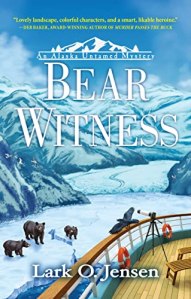 My mystery series for Crooked Lane is the Alaska Untamed series, under my first pseudonym, Lark O. Jensen. It has wildlife, and dogs, in it. I like to read many kinds of mysteries, and those that take place in Alaska also intrigue me, especially if they have dogs. And other stories in Alaska also get my attention. Plus other mysteries…primarily with dogs.





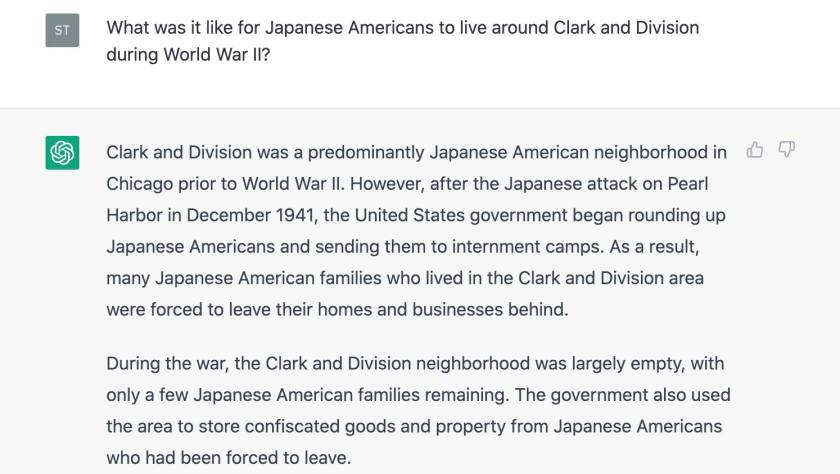
 (Naomi Hirahara is the Edgar- and Mary Higgins Clark Award-winning author of the Mas Arai mystery series and the historical novel, Clark and Division. Evergreen, the sequel to Clark and Division, will be released this August. For more information, go to her website,
 Before we go on to some inspiring quotes from a dozen great mystery writers, here’s a little housekeeping to help you get the most from our blog.
 On my Personal Blog: “Words and Reviews” I took part in what WordPress called BLOGanuary. It was a gimic at the first of the year to get bloggers to write every day. They sent questions to answer, and tags so you could connect with the community. It worked I guess. I went from 79 to 91 to 141 followers in one month! (Yeah, I know that’s no big deal, but my blog is less than a year old, and I don’t promote it much.)


You must be logged in to post a comment.