ANOTHER TOOL IN THE WRITER’S TOOLBOX

by Miko Johnston

In the course of a story, a character learns that someone important to him has just been killed. His reaction? We can easily imagine shock, grief, sadness, disbelief. A look of confusion as he tries to absorb the news, his face twisted in pain, tears flowing freely from his eyes. We can even picture him so overwhelmed by what’s happened he collapses. But what if his reaction is no reaction? Complete silence, his face devoid of expression. A cop-out? Or a way to rouse our interest as we wonder what’s going through his mind?

I often say writers have many tools in their toolbox to use, and I’ve written several posts about them over the years. Today, I’m focusing on one valuable tool that often gets overlooked – negative space writing.

By this, I don’t mean being critical. The term negative space refers to various techniques. In art, it’s the empty space around or between the primary subject or the background. In writing, using a white space to indicate the passage of time within a book chapter or story is a prime example. We utilize negative space to break up a lengthy section of dialogue with bits of physical action by the speaker (instead of “he said”) or to relieve long stretches of exposition with some dialogue or internal thoughts.

Negative space might focus on something unexpected in a scene, leaving the reader to wonder whether it’s direction or misdirection. It can be contrasting two opposites, like a calm character in a chaotic setting, or the other way around, the surprising reaction piquing our curiosity. It can be using subtext in dialogue, which leaves the reader thinking about what’s really going on beneath the surface.

A common method is to leave gaps or omissions – small but unimportant details out of a story, which allows the reader to fill in the rest. This can be as simple as allowing the reader to assume that if a phone rings, the character will answer it with “Hello”, or they’ll get up from their chair, walk to the door and turn the knob to open it when someone knocks. Negative space can also mean describing a person to a degree, but not down to the thickness of her hair, its precise shade of brown, or how many clips she’s used to pin it up if it’s not essential to the story. This creates a synergy between reader and writer, allowing the reader to participate in the story. It also keeps the pace moving.

Description is, to an extent, a matter of taste. Some prefer a brief sketch, just enough to get a sense of it, and then let the story move forward. Others like more details so they can fully picture what’s being described, down to the smells and tactile sensations. Leaving some negative space means you’re as conscious about what you leave out as what you put in. You never want to omit anything important to the story or limit the sensory details that make scenes come alive. Here, negative space gives some breathing room so the reader doesn’t feel overwhelmed with everything everywhere, all at once.

Another technique implies, rather than describes, an action, emotion or a setting. A classic example of this is by writing about the absence of something rather than what’s present. In my first novel, I wanted the reader to not only see, but feel the destruction of my character’s village. In addition to describing the wreckage, I also included what was missing – any signs of life…

…No birds chattered, no horses whinnied, no chickens screeched, no men shouted for their wives, no women screamed for their children, no babies cried for their mothers….

The positive space describing the destruction evokes sensory images – the wreckage and plumes of smoke, the smell of burning wood, which we can see. The negative space evokes a different response, one we feel. One provides visuals, the other, emotions. It creates a more complete picture. It also gives the appropriate weight to this important scene, one that will affect my character for her entire life, over the course of five novels.

Here’s another example of positive space vs negative space writing. Imagine a protagonist sitting down for a drink at a café or bar, when a huge explosion happens nearby. Positive space writing would show the scene post-explosion; the wreckage, the body count, the survivors, both injured and stunned. It would include the character’s reaction, physically and mentally. We learn immediately if she was seriously hurt, bloodied, dazed, or temporarily deafened. We’re there watching as she bolts from the scene, or runs toward the explosion to help.

With negative space writing, the character might act uncharacteristically; perhaps she remains seated to finish her drink, with the reader wondering why. Or you might cut to another scene, either one created in her unconscious mind, or set elsewhere with other characters who learn of the explosion, leaving the reader to ponder what happened before returning back to explore the aftermath. This would build interest, as the reader not only has to figure out what caused the explosion, but what happened to the protagonist. Or, you might skip ahead with a white space and leave it to the reader to figure out how many deaths and injuries resulted in the explosion, how scared she felt, or how she got away – if we eventually figure out what we need to know about what happened in that scene.

To use negative space writing successfully, you must do it deliberately and with purpose. You never want to leave out anything important to the story, or neglect to make your characters recognizable, your scenes intriguing, and your plot believable. The omissions and subtext must be apparent, as well as their meaning. When done properly, it engages the reader, playing to their curiosity, encouraging their involvement with the plot and attachment to the characters. It’s what we as writers want to accomplish, which makes negative space a useful tool in the writer’s toolbox.

Have you incorporated negative space writing in your work? If so, how do you use it?

Miko Johnston, a founding member of The Writers in Residence, is the author of the historical fiction series, “A Petal in the Wind”, and currently minutes away from completing the fifth and final book of the saga (whew!) She’s a contributor to several anthologies including the recently released “Whidbey Island: An Insider’s Guide”. Miko lives in Washington (the big one) with her rocket scientist husband. Contact her at mikojohnstonauthor@gmail.com

Acting Class 101

By Gayle Bartos-Pool

If we’re lucky, we learn stuff everywhere we go in life. I did just that when I moved to California when I was twenty-five. I wanted to write for television and the movies. Me and five million other people. Since I didn’t know anything about the “business” of Hollywood, I thought it would be a good idea to take an acting class to see what writers needed to know when creating a screenplay character.

I happened to get a job working for a talent agent, and he got me in an acting class. This one was taught by Bruce Glover. You might have seen him in the James Bond movie Diamonds Are Forever. He played the sinister/funny character that was trying to kill off Bond.

What Bruce taught was when you’re playing a character, large part, small part, or walk-on, have your character do something that makes him stand out. Have a menacing smile or a delivery of your lines that has everybody notice you. Many famous actors started as bit players and went on to fame and fortune when they did something that stood out on the screen. And that doesn’t mean just having a pretty face.

As a writer, I figured that when I wrote characters, large or small, I would give them something that stood out. It might be their clothes that telegraphed what economic bracket they fell into or a whacky giggle to show that maybe their elevator didn’t go up too many floors. Maybe it’s the words they use that show their high-toned upbringing or their lack of education.

While taking that class, I had to do an improvised scene with another actor. We were to be boyfriend and girlfriend who were having problems. As the other actor and I were chatting on stage pretending we were seeing eye-to-eye while all the time pointing out the major problems we were having with the other character, I had a piece of paper in my hand that I said was the love letter he had written to another woman. I kept folding it in half, long-ways, until it looked like a knife. Obviously, my character was signaling what I wanted to do to my soon-to-be-ex boyfriend. Actions speak louder than words sometimes.
I try to give most of the characters I write that little bit extra to define them, too.

That acting class wasn’t the only one I took. I got lessons from Rudy Solari and Guy Stockwell. Both men had long careers in Hollywood. What Rudy had actors do was write a biography for the character they were playing so they knew exactly who they were when they stepped on the stage. It didn’t have to write pages and pages, just a brief background of that character, stating where he came from, how he was raised, his education, and what he wanted out of that scene.

What this did for the actor was let him know what motivates his character because in a screenplay, the writer usually just provides the dialogue, maybe how the line should be spoken like a whisper or yelling, and a few physical actions like running away or punching someone. Of course, the director will provide even more of those directions.

But the writer of a novel or short story needs to know who this character is, what motivates him, and things like his age, hair color, and stature, because when you’re writing a story, you don’t want to get to page 275 and have your twenty-five-year-old character with black hair all of a sudden be a thirty-six-year-old blond.

I write a short biography for all my main characters, adding to it as I think about what their past might have included that will help the current story angle. And I keep a Character List for everybody appearing in the story so I know who is who, and who they know, and why they’re there. It sure helps when I get to a spot and need to know all the previous things I wrote about that character like their age, hair color, or their role in the story.

And something else about those two acting classes, they gave me the confidence to get up in front of an audience when I’m talking about the books I wrote. I already know my motivation: get people to read.

“She is going, you know, to…” 

by Jill Amadio

“He fell down, you know, on that.. blah, blah blah…”

Bombarded with the words “you know” in person, on Zoom, on TV, and on the radio, I have this hollow feeling that if I do not know what I am supposed to know when someone says the phrase, what am I missing? How do we “get the drift” of what the speaker means, if we are told we already know it? What is the significance of their words if taken literally? I already know what I am being told?

In other words, how am I to know what the person talking means when it is assumed I know precisely what they mean? By slipping in those two words, often twice in a short sentence and more frequently in long ones, I am left feeling like an idiot because, like many writers, I take words not only seriously but by their true intent.

I am tempted to tell the next person who uses it out of context that, No, I do not know, or I shall ask them why they think I know what they assume I know. I shall also ask them what their intention is in telling me something they think I already know. If I already know it, why waste their time in re-telling it?

What is this innocuous but irritating manner of speaking doing to our psyche? Will our personalities change, or our memories be challenged? Will what we already need be thrown out with the bathwater? A dilemma indeed.

I have yet to read “you-know” used in any newly-published books, thank goodness, but there’s always tomorrow for the opportunity to chance upon this ultimate word-mystery.

I have not yet thrown my buttered scone at the television set as I assume, you know, that the pundit cannot hear me, but, you know, what do I know? With all this high-tech stuff circling the globe, maybe I am wrong, you know. Could I, you know, be behind the times?

Perhaps “you-know” is used to give the speaker a moment to collect their thoughts, to come up with a different statement they intended, or to end a sentence with a lilt of the voice to indicate a question.

There are, of course, plenty of ways to ask  the you-know question, such as, “Do you know that…” or “You do know, of course, that he murdered her?” This dialogue sits so much more easily upon a writer’s shoulder, placing the you-know bit within its proper grammatical intention (I think).

Then there’s my gracious understanding of why people use it: to give themselves a break to think up their next statement, to find their place on the teleprompter, to allow them to sound “with-it.”

Intonation, when using “you-know,” is also important, I have observed. There is rarely a tonal upswing indicating it is a question.

If “you-know” is spoken to a young child, do we expect a cogent answer? Children tend to take what we say as dogma. We do not want to saddle kids with untruths.

Can we pronounce “you-know” as y’all know, or y’know? Perhaps this slide into dialect can remove some of its insidious, unnecessary sentiment. Or maybe to give it an inflection it does not deserve.  Should we replace “you-know” with a different phrase? I’ve heard people slip in a “my dear” and “indeed, but “you-know” rules the roost – at present.

I have come to regard “you-know” as a target and have to constrain myself from counting how many times it is spoken and in what context. Frankly, I cannot think of any unless “you-know” is posed in a readable sentence such as, “Do you know that…” or “You do know, of course, he is…”

When used in this context, it is obvious that an answer is required, whereas thrown in higglety-pigglety, the phrase has no meaning, but at least it does not put the listener on the spot. However, who knows? I sure don’t.

A TRIBUTE TO WORDS AND WRITING

By Miko Johnston

My late father co-founded a non-profit organization dedicated to Scandinavian philately. In addition to translating and publishing educational books on the subject, the group held monthly meetings as well as annual exhibitions where members could present their best work. Dad served as their president for many years; his name and phone number appeared on all contact sources.

He wasn’t home the day a young man called for more information about the organization. I offered to answer as much as I could. His first question: “Can you join if you’re under eighteen?” Yes, I told him, there is no age limit. “Can I bring another guy to the meetings?” Sure, I said, but something told me he had something, um, different in mind. I then said, “You do realize that philately is stamp collecting.”

“Oh.” He promptly hung up.

We spend a great deal of time writing about words on this blog. If you hunt through our archives, you’ll find many posts on the topic, which should come as no surprise. Words are the most important tool in a writer’s toolbox. We think about them, which one to use in any situation, whether a particular word or one of its cousins (aka synonyms) would be more precise, more distinctive. Can we convert that verb/adverb pairing into one verb? How many descriptives can we edit out without losing the image, the rhythm, or the voice of a character?

Words convey and put into context images, thoughts and ideas, especially when they’re carefully selected. We have non-verbal ways of communicating as well, but unless there’s some established pattern to it, such as sign language or Morse code, their subtlety makes them less effective for interpretation – is she slouching because she’s humiliated, or her back hurts?

Whether spoken or written, signed or signaled, we rely on words as the basis of communication. Misinterpretations may cause embarrassment, as my earlier story shows, but in the right hands they surprise in an entertaining way. Writers can inform the reader without the character’s knowledge, a technique I relied upon in my first novel, when my protagonist was a child. Or they can make the reader wait – ideally with keen anticipation – for information the character already knows.

We can use words to assure clarity of thought, or to deliberately deceive. Red herrings in mysteries fall into the latter category, as do ambiguous phrases meant to mislead the reader into thinking something the author intends to prove wrong later. I’ve done this so often in my writing it might be a hallmark of my style.

Words have the power to calm and reassure, to encourage and inspire, or to agitate and inflame. Think of all the influential speeches you’ve heard or read, or the memorable phrases culled from them. Whether by actors reading from a script, politicians addressing their constituents, or activists crusading for their cause, their words, carefully chosen with deliberation, hold the power to move people. To bolster their spirits, or shock them. Convince them they’re right, or maybe, just maybe, they’re not.

All have one thing in common: Someone, or some ones, wrote those words.

Not to equate a frothy page-turner with The Gettysburg Address, but I celebrate writers who celebrate the written word. I commiserate with writers who agonize over the best way to express their or their characters’, thoughts. I respect writers for what they try to accomplish whenever they put pen to paper or fingers on the keyboard.

That’s why we deserve a formal representation for what we do.

The practice of medicine has a symbol – a caduceus with two snakes coiled around it. The symbol of law is the scales of justice. No formal symbol of writing exists, although if you Google it you’ll find cartoons of a hand holding a pencil or pen.

What do you think would make an apt symbol for writers?

Miko Johnston, a founding member of The Writers in Residence, is the author of the historical fiction series, “A Petal in the Wind”, as well as a contributor to several anthologies including the recently released “Whidbey Island: An Insider’s Guide”. Miko lives in Washington (the big one) with her rocket scientist husband. Contact her at mikojohnstonauthor@gmail.com

The Case of The Runaway Bride

By Jill Amadio

Outraged at my character deciding to get herself murdered far too early in my mystery, I was also furious that she had the temerity to go out on her own and run off with my carefully organized plot. She wasn’t actually a bride, but she sure was a runaway. And a female.

How dare she!  I had barely sorted out a new setting and spent time researching a lonely location in the UK when this forward young woman opted out of my book. Not only had she escaped from my timeline, but she was also in the wrong place.

Her impulsive decision and demise threw two other characters, one the murderer, into complete confusion. I almost felt them turning to me and saying, “Now what?”

Keeping control of one’s fictional characters is usually a given. Like chess pieces, the author can move them here and there with impunity. We can, and often do, change people and places around but the decision has to be the writer’s.

Something similar happened to me once before. In my second mystery, I knew who the killer was, and I looked forward to her denouement. However, the more I wrote her, the more I came to like her. The upshot was I had to choose a different character as the murderer and thus change his gender and personality, to say nothing of his traits and habits.

However, my runaway person really put me over a barrel with her unexpected death. Should I write her out completely? Force her to stay alive a little longer? What did her early, unplanned demise mean to the rest of the storyline, the remaining characters, and my peace of mind?

It seemed that the best thing to do was to move the chapter in which she wrote herself gone forever to the end of my Word document so that I wouldn’t have to look at that chapter until l I decided where to fit it in, given the new circumstances.

Actually, I knew exactly where and when I wanted her to meet her end, but her decision to die on her own terms threw me into disarray. To say nothing of writer’s block.

I perused my synopsis, wondering if I should wedge her in where she wanted to be, but again, it was clear that her interference meant a lot more work. I would have to rearrange people and places, maybe add a new character and perhaps an extra victim, if any of her shenanigans were to make sense.

Another thought – must I re-think my POV? In order to get her back in line, would she be satisfied with being re-written in first? Her dramatic demise certainly was a plea for help. On the other hand, I had envisioned and written her with poor eyesight and she wore glasses. How did that affect the decision to off herself?  Was she too vain to wish to continue as one of my characters? I saw my authority begin to dissolve.

So, in a heroic effort to re-establish and re-claim my jurisdiction – after all, she was supposedly my creation – I finally decided I needed to be very firm with her. She could not just go around deciding how, when, and where to become the center of the action. What if others followed her lead?

Ah! Maybe that was her problem. She felt like a minor character rather than a major one. She wanted more attention. Still, offing herself hardly seemed the way to go about it since, once she was dead, she had no way to enjoy the fruits of her action. I’d not planned for her to play a prominent part. I guess she realized she was definitely not the important character she thought she deserved to be.

Again, I had a lightbulb moment. Therein lay the danger of a runaway character. They imagine they have a more significant role in the plot or a different personality than the author provides. Writers know that characters make a story. When your fictional book people populate your imagination and come alive their actions determine the story.

Readers want to be swept away into the life of a character. This silly woman ruined that purpose. I was sorely tempted to discard any reference to her and replace her with a male.

As I continued to figure out what to do, I began to question my understanding of human nature. Then I remembered that this runaway lady was not human but a creation—an AI. Perhaps my fellow Residence writers can suggest a solution. Am I being a Pollyanna?

Big Words, Bad Words

By Maggie King

Many years ago I read a mystery with so many words I didn’t know that I had to keep my dictionary close at hand. As I enjoy learning new words I liked the experience the popular author provided. But when I mentioned it to a couple of friends, they said, “Not me. I’d have put that book down, and fast. I want to read words I already know.”

I’ve always had a love of words. I fondly remember vocabulary lists in high school: perspicacious, truculent, vapid, loquacious, polemic, specious, logy. With all those big words swirling through my brain, you’d think my SAT scores would have been more impressive than they were.

When I presented my manuscript for Murder at the Book Group (my debut, published in 2014) to a long-ago critique group, the members advised me to ditch the big words. “What big words?” I asked, bewildered. They named a few but the one that stuck with me was “diatribe.” I didn’t consider diatribe a big word and it would surely be understood in context, as in “Arthur ignored his mother and carried on with his diatribe against Evan.”

The upshot was that I kept diatribe, but changed some of the other “big” words.

A word I recall from reading Nancy Drew was “elated,” as in “Nancy was elated by the news.” The context wasn’t clear, so I ran to the dictionary and learned that Nancy was ecstatically happy by the news. Elated is a wonderful word to teach a ten-year-old.

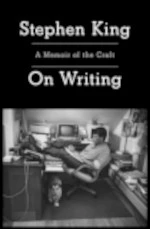
One of my favorite books on writing is On Writing: A Memoir of the Craft by Stephen King. In the book, King says, “Wherever your vocabulary is at today is fine. There’s no need to learn more words or different words. Whatever words you know right now, you use. This will help you develop your voice and sound unique.”

Is using big words in a story a good idea? In my opinion, the answer is yes—as long as the writer chooses words whose meaning and context is easily understood. A thesaurus is a great tool, but don’t use it to come up with words you think sound cool and sophisticated. Readers have a wide range of word knowledge but even those with an impressive vocabulary feel that showing it off is pretentious.

To sum it up: use your best judgment.

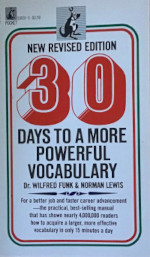
In the meantime, I’ll hang on to my precious dog-eared copy of 30 Days to a More Powerful Vocabulary and see how many of the words I learn end up in my writing. Ceraunophobia, anyone?

To swear or not to swear?


Do your characters swear? Do they swear too much? Not enough? Should they swear at all?

Personally, I don’t get exercised over swearing. Let’s face it, people swear—some a little, some a lot, some only when “necessary.” Swearing can add a touch of realism to our writing (after all, what does one say when tripping over a dead body?). We’ve all known colorful folks who liberally season their conversations with salty words. For one story, I created a character loosely based on a former co-worker who never felt the need to censor her speech. Not a word of it.

But my readers object to profanity and I must respect their wishes. There are ways to suggest swearing and author Naomi Hirahara is so skilled at this that you know the exact word she’s not using. Another author, F.M. Meredith, has this to say about the lack of salty language in her Rocky Bluff P.D. series: “Oh, the characters do cuss, I just don’t quote them.”

Here are ways I’ve suggested swearing in my stories: She shrieked a litany of curse words; She continued to scream and curse …; He included a few four-letter words of a sexist nature; Donna slurred a few non-PG13 adjectives to describe her feelings for her ex; Kat cursed a blue streak (I wouldn’t choose this one again, as it’s a cliché that sneaked past me and my editor).

On several occasions I’ve presented a seminar/webinar on dialogue and tackled the question of profanity. This is how I answered the question “To swear or not to swear?”:

• Know your reader and your genre. Cursing and four-letter words are more acceptable in a thriller than in a romance or a cozy mystery.
• Refrain from profanity in narrative, but an occasional expletive in dialogue is acceptable (depending, of course, on genre).
• Realize that profanity is more noticeable in a novel than it is in real-life conversation.

Again, use your best judgment. And ask your beta readers for feedback.

Your thoughts?

THE PRESSURE TO PROMPT

By Jill Amadio

Quick, write a sentence containing the word ‘shallow.’ Or ‘camel.’ Maybe your creativity freezes at the first word but gushes forth at the second.

The urge to prompt is overtaking the writing community, both fiction and non-fiction.

What is a prompt? A suggested word, phrase, or sentence on which to build a paragraph or two during a specified time period. Prompt and their answers can include half sentences and are all the rage these days. Indeed, dozens of books and workbooks have been written on the subject of prompts and to the why, where, how, and when to engage in this mental exercise.

Many writers love prompts as a way to get started writing of a sterile morning, to fire up the imagination, and even to provide satisfaction that you are actually working at writing something, anything, although, in fact, it has no relevance to your WIP. However, you could stick the finished prompt into your WIP folder for use somewhere if you feel your words are immortal and need to be recorded for posterity.

Frankly, I am not a fan pf the prompt phenomenon. I believe that if you are going to spend time writing, why not work on your book, article, or blog? Why spend the time fiddling around with a piece of prose you may never use, that has no relation whatsoever to your current project, and that can send you off on a tangent to which you may find it difficult to return?

Ah, say prompt fans, prompting gets you typing. It puts pressure on you to come up with some words to fit the suggestion and actually make sense. The closest I have come to prompts lately is writing a Grocery and a To-Do list. The former is boring, the latter daunting but I have a couple of writer friends who salivate at the prospect of attacking their morning prompt.

One definition of a prompt I found online, posted by Karen Frazier, notes that a writing prompt is a statement usually followed by questions. I also found a very large collection of books on amazon.com devoted to the subject including titles such as Polyvagal Prompts, Writing Prompts Balance, The Writing Prompts for Seasons workbook, Writing Prompts for the Apocalypse, and The Art of Prompt Engineering. Not sure about that last one but it was amidst the others so I assume one needs something of a mechanical mindset to tackle it.

Some prompt books include journaling pages, and vice versa. Another offering is in the form of prompt notecards in a pretty box– a nice gift and not too insulting.

The books are directed at both fiction and non-fiction writers as well as adults, children, and humans (who or what else writes?). Also targeted are genres such as poetry, fantasy, art, drawing, songwriting, and truly interesting:  for dinosaur enthusiasts.  I haven’t seen a prompt book for AI robots yet but one could be in the works. Or already on sale.

I certainly honor those who need and enjoy a prompt to spark their creativity but as my years advance I need as much time as possible to compete the third book in my “Digging…” mystery series, and beyond.

Could a prompt, if one writes sufficient words, be considered a short story? It could surely lead to one and that is a good thing. How about prompts for birthday and Christmas cards? They can be written in advance and stored on your computer for future use.

So, where does the pressure to prompt com in? We are urged to start writing as fast and as furiously as we can as soon as we clap eyes on the prompt. Now, that is pressure par excellence. No time to consult a thesaurus. Is reviewing and editing allowed afterwards or during?  I did try prompting once and sent myself off into daydreaming, my laptop forgotten as I imagined myself back in Bangkok.

I heartily endorse the claim that writing prompts can help create characters and other elements and that, too, is a good thing. Prompts can also build writing skills, craft, and techniques as well as become story starters.

This entire subject of defining prompts has kept me away from working on my WIP. In the past four weeks I have only come up with a new title. However, part of it could be considered a prompt. Here’s a clue: Dangling Participle.

NEW IDEAS, PAST AND PRESENT

by Miko Johnston

We’re barely two months into the new year, but as I contemplate what we’ll write about in the future, and what will inspire us to keep at it, I’ve found some of my answers to those questions in our posts from the previous year.

Hannah wrote about overthinking. How many of us are guilty of getting obsessive about our writing? Characters, plots and background have to be thought out, but we also must keep it all in balance. That has become harder for me to achieve, partly because age has undermined my ability to multitask and partly because my priorities have shifted. I still enjoy writing and am committed to finishing at least two more books, but I’m reminded of Madeline’s piece on Writing Scared, and the idea of switching up the type of writing you do. I’ve done that in the past, so now I’m adding a new avocation – photography.

Years of writing has given me a sense of what works and what doesn’t, and while I still rely on critiques from fellow writers, I often can figure out problems in my manuscript on my own. Not so with my new hobby. I look at a photo and I may like it, but I don’t know why, exactly, nor can I be certain it’s any good. I’ve joined a photography club and have been invited to participate in their biannual exhibit. I’m going to need a lot of critique and advice before I select which pictures I want to use.

Linda’s piece on attending writers conferences reminded me that many more may be held this year as the risk from the recent pandemic fades from our memory, if not from our lives. Will these events be successful, or will the attendance habit, having been interrupted, be broken? Costs, from registration to travel to hotels and meals, will likely be higher than we remember. I can see where some will be very selective about which they’ll attend while others choose not to register for conferences at all.

Gayle’s piece on The Future of the Written Word really resonated with me. I’m often puzzled, even shocked, by how many words have been usurped and had their meanings altered, some with additions, some with subtractions. Regardless, these 2.0 definitions have led to divisions. A lack of clarification, or precision, makes the word’s meaning, well, meaningless. I suspect if any of the worst offenders of this phenomenon were reading this, they would have stopped at usurped (insert my sarcastic smirk here).

And speaking of the written word, Jill contributed a post on a similar, if lighter, topic – the subtle differences between American and British English. With three Brits in our WinR group and many others within our writing circle, it can be a challenge.

Rosemary’s Collecting Memories touched me. While clearing out closets and shelves in anticipation of a thorough spring cleaning, I’ve uncovered a trove of precious mementos – cards, notes and letters from family and friends, some going back to my birth. Programs from bar/bat mitzvas, funerals, and other events. Menus from private supper clubs, conference galas and corporate dinners at restaurants. Each find brought back wonderful memories of the people and places I’ve enjoyed over the years. That included a copy of the dedication that went into the L.A. Library’s copy of Rosemary’s book, “Hollywood Then and Now”, in memory of her beloved husband Rick. Her post reminded me that these keepsakes – all comprised of words – and the memories they invoke, are precious, something Maggie explained so eloquently in her post based on the “a reason, a season, or a lifetime” quote.

Jackie’s interviews with writers as well as all the fabulous guest posts she’d arranged added dimension to our blog, and her piece on naming characters had many solid tips I’ve come to rely on. And I’ll add a special shout-out for all the technical help she’s provided to us, especially a technical “muggle” like me.

There are many more posts from my co-WinRs that have and continue to inspire me. I can only hope I might have had the same effect on them, as well as our readers.

Miko Johnston, a founding member of The Writers in Residence, is the author of the historical fiction series, “A Petal in the Wind”, as well as a contributor to several anthologies including the about-t0-be-released “Whidbey Island: An Insider’s Guide”. Miko lives in Washington (the big one) with her rocket scientist husband. Contact her at mikojohnstonauthor@gmail.com

Reach Your Blog Readers – using Hashtags, Titles, & Images correctly!

A guest Post by Edie Melson

(Reprinted by permission – The Write Conversation, Monday, August 29, 2022.)

by Edie Melson @EdieMelson

A little teaching moment… 
 
With the chaos of social media, and the strict guidelines now in place with email, our digital connections have gotten more complicated. But one thing hasn’t change—the ability to be found through an organic search. 
 
This process begins when we know the basics of keywords and SEO. The post I wrote, How to Apply SEO to Your Blog – One Blogger’s Process, will help you get started.
 
Recently I’ve been working with several bloggers about ways to get more organic page views. Organic views happen when someone searches for a topic—either through a search in a search engine or by searching for a topical hashtag. Beyond keywords and SEO, titles and hashtags are critical to getting found. 
 
It may surprise you to learn that it is possible to be found. But as bloggers, we need to deliberately set ourselves us to be found in a topical search. So today we’re specifically looking at the use of hashtags when we share a post on social media, the titles we choose for posts, and the images we pair with them. 
 
Hashtags
There are two times when bloggers need to carefully choose hashtags for a post.
  1. When composing a click to tweet within the post.
  2. When sharing a social media update about a specific post.
Here are the things we need to remember when choosing hashtags.
  • Choose two. Occasionally it may make sense to use a third, and even more rarely use only one. But the majority of your updates (unless you’re on Instagram) should have two. 
  • Choose hashtags that are relevant and specific. I see more mistakes here than in any other use of hashtags. For example, if I was sharing a blog post about tips on how to deal writing rejection it might seem like a good thing to use rejection as a hashtag. The word rejection is not a good hashtag. The context of that hashtag is rejection—NOT writing rejection. It doesn’t help us get more views or likes because the people searching for rejection hashtags are primarily looking for relationship advice. Hashtags are a search tool and must stand alone in their context or they’re worthless.
  • If possible, hashtag words in the main message of the update. For example, if the word you want to hashtag is in the title, hashtag that instead of adding the word again unless it’s the first word. Avoid hashtagging the first word of a tweet.
Titles
Titles need to reflect the full topic of the post. This is not time to be clever or too generic. Here are three things to remember.
  • Your readers will evaluate your post’s content based on the title. When a title is misleading or even ambiguous, the reader can walk away feeling cheated.
  • The blog title must stand alone—with full context—when shared on social media. For example, if we go back to that imaginary post about how to deal with writing rejection. I’ve seen a lot of bloggers who would go with the title: Tips to Deal with Rejection. At first glance that seems like a pretty good title for someone who is reading a post on a writing site. But what about those doing a search in a search engine or reading the text in a social media update? For them it’s misleading and generic. A better title would be: Tips to Deal with Writing Rejection. What makes sense to a reader who has the full content of a blog is much different from what makes sense without visual clues and context.
  • The title should contain a phrase that someone would type into a search engine to find the content in your post. It’s not clever, but I can see many people typing How to deal with writing rejection, into a search engine. That’s the final piece of the puzzle and immediately moves your post up in a search engine search. 
Images
It may seem like images are less important when it comes to being found in an organic search, but when we know how to do certain things, an image can provide a huge boost in visibility. 
  • Images need to illustrate the main focus of the blog post. Let’s once again go back to the imaginary blog post, Tips to Deal with Writing Rejection. If we’re not careful about the image we choose, we can lead potential readers astray. For example, choosing the image below could send the wrong message if someone misses the word, writing, in the title. 
  • We all know that images aren’t searchable….Unless they are captioned….Unless the file name of the image contains a searchable keyword. Yep. By taking a few extra moments to compose a relevant caption and saving the image with a relevant file name instead of some generic title you can increase your organic search views. Let’s once again visit that imaginary blog post.
    • That image above has a file name that includes the word loneliness—this is what www.Pixabay.com lists as the title of this specific image. So this image is not only a poor choice, but with that file title it will reinforce the wrong type of results in an organic search. 
The bottom line is that the details matter. It’s important that we blog smart. By paying attention to the titles we choose, the hashtags we use, and the classification of images we can make a huge difference in the visibility of our posts. 
 
Now it’s your turn. What questions do you have about these details? Be sure to leave your thoughts in the comments section below. 
 
Don’t forget to join the conversation!
Blessings,
Edie
 
TWEETABLE


Edie Melson is a woman of faith with ink-stained fingers observing life through the lens of her camera. No matter whether she’s talking to writers, entrepreneurs, or readers, her first advice is always “Find your voice, live your story.” As an author, blogger, and speaker she’s encouraged and challenged audiences across the country and around the world. Her numerous books reflect her passion to help others develop the strength of their God-given gifts and apply them to their lives. Connect with her on her website, through FacebookTwitter, and Instagram.


Words, Words, Words. Who keeps track? Writers!

By Jill Amadio

Words, words, words. More than three million of them.

That’s how many a Tamil in India wrote. Granted, the words were spread over 26 volumes but still, quite remarkable. Chinese authors wrote lengthy books, too, while contemporary writers like J.R.R. Tolkien confined himself to a mere 558,003 words to complete The Lord of the Rings.  J.K. Rowling wrote 1,084,170 words in the Harry Potter series. Carl Sandburg threw half a million words onto the pages of Remembrance Rock, while Stephen King prefers to write long, and his thriller, It, has a whopping 1,138 pages for a paperback price of around $30.  A bit heavy for reading in bed. Kurt Vonnegut’s Slaughterhouse Five is around 500 words under 50,000, and Tolstoy’s War and Peace that everyone thought to be the longest book in the world offers 587,287 of text.

I was curious last week as to word count while putting the finishing touches to my 9/11 novel. Based on a true story, I found, to my horror, that the manuscript only contained 61,000 words. I know for cozies that is acceptable but anxious to check out what the going word count was for novels these days I went online to research.

Happily, the consensus is that the majority of publishers are content with a range of 50,000 to 100,000 of an author’s polished prose. One site claimed that anything over 40,000 is acceptable. However, books by C.S. Lewis, Roald Dahl, and George Orwell among others were bestsellers with books under that number of words.

It actually depends on genre. A literary novel, one site tells me, and by the way what the heck is a literary novel as all writing is, by definition, literary, no? No. It turns out that literary fiction must be intellectual, have depth, character and style. Surely, mysteries fit right into the middle of those requirements.

Publishing industry standards can vary. Authors of romance novels typically write between 80,000 to 100,000 words, and science fiction and fantasy can exceed 140,000. Westerns are, surprisingly, shorter, between 45,000 and 75,000, and novellas can be from 18,000 to 40,000 words The Reedsy blog site points out that a too-long word count is a symptom of a major plot or pacing problem.  First drafts can usually tell us whether we’ve overstepped the yardstick, and where to cut. Most editors warn writers not to edit their manuscript until that first draft is complete, and keep an eye on bringing too many characters into your story.

It is tempting to include extraneous material when your write about a favorite hobby or pastime you love but it’s a no-no for publishers unless it’s a theme like knitting, baking, or cheese. Frankly, I enjoy learning something new and my current read, The Crossing Places by Elly Griffiths is an archaeological mystery that briefly explains many of the basics of the discipline in dialogue, the perfect place.

Thus armed, I began to edit my latest novel’s first draft and found I was right in the ballpark of acceptable word count. Of course, if you are going to self-publish with KDP, or other places, you can make up your own rules. But if readers expect a certain number of pages in your series it makes sense to adhere to that. Another point to keep in mind is that if you are adding an audiobook to your editions it could require a rather lengthy listening period that could get tiring.

A godsend to writers is the software that continually counts your words as you write and at the same time posts the page number you are currently on. A few writers I know never look at those results over periods of days or weeks in order to be wonderfully surprised when they finally do take a peek. Or not. They say that being required to produce or eliminate a certain number of words is soul destroying.

As several authors have commented when considering word count: “When it’s done, it’s done. When the tale is told, it’s told.”  End of story.