Finding Time to Write: a “Flashback” Post from 15 years ago. Still True?

by Jacqueline Vick

Some writers snatch a few moments of time wherever they find it. Others adhere to strict schedules. Walter Mosley tells us to write every day. Peter Brett wrote his first novel on his smartphone during his daily travels on the F train. Do you follow a set writing schedule? Write every day? Have a favorite writing spot? Do you put ‘butt to chair’ until you’ve finished a specific word count? Tell us about your writing schedule.

***********

Writers Write by Bonnie Schroeder

I try (emphasis on “try”) to write every day first thing in the morning — okay, I feed the dogs and make coffee first and then retreat to my desk with one dog underfoot and one cat in my lap. On my desk, I have a kitchen timer that I set for one hour. Some days, I actually write for the full hour before the phone rings or the other cat barfs or my stomach starts growling. Some days I have to stop the timer until the aforementioned distractions are dealt with; then I try to finish the hour later on. I don’t always make my goal, but occasionally, I actually exceed it.

For me, the important thing is to try for it every day — weekends included. It keeps the circuits open and the muse engaged. When I worked at a job 50 miles away with a two-plus hour daily commute, there were times when I could only manage 15 minutes a day, so an hour is a huge luxury for me now. But even with those quarter-hour writing sessions, I finished the draft of a novel. It took a few years, but that daily contact with the pages kept them in my mind and kept me plugged into the current. And that, to me, is the secret: write something every day, even if it’s just a paragraph or even a sentence. Then I can legitimately say, “I’m a writer.”

***

Lucky by Jacqueline Vick

I’m extremely lucky. I was able to quit my day job to pursue writing full-time. (Well, writing AND homemaking full time.) That means that every morning when I rise, my day is my own and my schedule is whatever I want. Sounds great, doesn’t it? There are a few downsides.

When I’m working on a novel manuscript, there is no boss handing me deadlines, no client with a specific need to fill. I have to set all of those goals myself…and keep them. Repercussions can be a wonderful motivator; without them, it’s more difficult to stay on course.

My deadlines consist of “finish the first draft by May 1st.” I’m always happy to find a short story contest, because that gives me a specific deadline and specific criteria to meet.

Yesterday, I was talking to my brother, who is a personal coach, and he said that the difficulty most people run into is keeping promises to themselves. They don’t value their own time and their own goals as much as they value other people’s time and goals. I’m starting to get around this by setting more specific goals and deadlines and then pretending that I work for a fabulous author named Jacqueline Vick. She has high expectations, and I don’t want to disappoint her. I imagine her asking me to have the rewrites on chapter one on her desk by Friday. It’s a bit kooky, but it works.

I write every day, including weekends. My butt is in the chair for about 8 hours on weekdays, a few hours here and there on Saturday and Sunday. I write in the only place available to me–the dining room table. It’s a pain to keep cleaning off the table each night, but the thought of my husband reaching around a stack of papers for the pepper mill helps keep me organized.

***

Writing Away by Jackie Houchin

For an organized, everything-in-its-place kind of person, my writing schedule is very haphazard and irregular. I mostly write when a deadline looms, so I’m thankful I have those. I write reviews for magazines and articles for a newspaper and newsletters. If I don’t get my copy in, it doesn’t get printed, and I don’t get paid. Simple as that, and no amount of boo-hoo’ing will fix it. The next issue already looms on the horizon.

If I were to write a book, I fear I would find myself writing franticly for 23 hours every day during the last weeks before the agent/editor/publisher’s scheduled deadline. I admire my fellow Wonder Women, who persistently and faithfully write for months and even years to bring their creations into the world. Their ultimate satisfaction will far outshine my instant bursts of pride.

So which style is best? “Whatever works for you.” Yeah, you’ve heard that before, but it’s true. Whether it’s dedicating specific minutes, hours, and days to craft a novel or franticly writing and rewriting and “ripping the paper out of a typewriter” before rushing it to an editor…it doesn’t matter. If our words, opinions, ideas, and stories are read (sooner or later), well, that’s what counts.

That’s my opinion, and I’m sticking to it. Now, let’s see… when’s my next deadline?

PS: Where do I write? Either at my dinosaur desktop PC in my office until the “backside” can’t stand sitting anymore, or more recently, standing at the breakfast bar in the corner of my kitchen with a 6-foot cat tree behind me (usually occupied by three cats lounging and looking over my shoulder, and trying to foil my thought processes with their diabolical purring and mind games) while I pound away on my laptop.

***

“Finding Time to Write,” from June 2009, was reposted by Jackie Houchin.

Photo by Andrey Grushnikov: 

Big Words, Bad Words

By Maggie King

Many years ago I read a mystery with so many words I didn’t know that I had to keep my dictionary close at hand. As I enjoy learning new words I liked the experience the popular author provided. But when I mentioned it to a couple of friends, they said, “Not me. I’d have put that book down, and fast. I want to read words I already know.”

I’ve always had a love of words. I fondly remember vocabulary lists in high school: perspicacious, truculent, vapid, loquacious, polemic, specious, logy. With all those big words swirling through my brain, you’d think my SAT scores would have been more impressive than they were.

When I presented my manuscript for Murder at the Book Group (my debut, published in 2014) to a long-ago critique group, the members advised me to ditch the big words. “What big words?” I asked, bewildered. They named a few but the one that stuck with me was “diatribe.” I didn’t consider diatribe a big word and it would surely be understood in context, as in “Arthur ignored his mother and carried on with his diatribe against Evan.”

The upshot was that I kept diatribe, but changed some of the other “big” words.

A word I recall from reading Nancy Drew was “elated,” as in “Nancy was elated by the news.” The context wasn’t clear, so I ran to the dictionary and learned that Nancy was ecstatically happy by the news. Elated is a wonderful word to teach a ten-year-old.

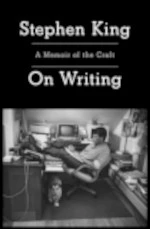
One of my favorite books on writing is On Writing: A Memoir of the Craft by Stephen King. In the book, King says, “Wherever your vocabulary is at today is fine. There’s no need to learn more words or different words. Whatever words you know right now, you use. This will help you develop your voice and sound unique.”

Is using big words in a story a good idea? In my opinion, the answer is yes—as long as the writer chooses words whose meaning and context is easily understood. A thesaurus is a great tool, but don’t use it to come up with words you think sound cool and sophisticated. Readers have a wide range of word knowledge but even those with an impressive vocabulary feel that showing it off is pretentious.

To sum it up: use your best judgment.

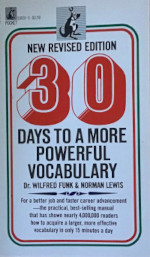
In the meantime, I’ll hang on to my precious dog-eared copy of 30 Days to a More Powerful Vocabulary and see how many of the words I learn end up in my writing. Ceraunophobia, anyone?

To swear or not to swear?


Do your characters swear? Do they swear too much? Not enough? Should they swear at all?

Personally, I don’t get exercised over swearing. Let’s face it, people swear—some a little, some a lot, some only when “necessary.” Swearing can add a touch of realism to our writing (after all, what does one say when tripping over a dead body?). We’ve all known colorful folks who liberally season their conversations with salty words. For one story, I created a character loosely based on a former co-worker who never felt the need to censor her speech. Not a word of it.

But my readers object to profanity and I must respect their wishes. There are ways to suggest swearing and author Naomi Hirahara is so skilled at this that you know the exact word she’s not using. Another author, F.M. Meredith, has this to say about the lack of salty language in her Rocky Bluff P.D. series: “Oh, the characters do cuss, I just don’t quote them.”

Here are ways I’ve suggested swearing in my stories: She shrieked a litany of curse words; She continued to scream and curse …; He included a few four-letter words of a sexist nature; Donna slurred a few non-PG13 adjectives to describe her feelings for her ex; Kat cursed a blue streak (I wouldn’t choose this one again, as it’s a cliché that sneaked past me and my editor).

On several occasions I’ve presented a seminar/webinar on dialogue and tackled the question of profanity. This is how I answered the question “To swear or not to swear?”:

• Know your reader and your genre. Cursing and four-letter words are more acceptable in a thriller than in a romance or a cozy mystery.
• Refrain from profanity in narrative, but an occasional expletive in dialogue is acceptable (depending, of course, on genre).
• Realize that profanity is more noticeable in a novel than it is in real-life conversation.

Again, use your best judgment. And ask your beta readers for feedback.

Your thoughts?

BRINGING CHARACTERS TO LIFE

by Miko Johnston

We can plot our stories well, describe settings vividly, and touch on all the senses, but the heart of any story is its characters, and they need more than a heart to make them come alive.

I began writing fiction, or more accurately, learning how to write fiction, while working in a library. It gave me access to numerous books and magazines for self-study. One book in the collection devoted a chapter to creating characters, complete with a checklist of traits and their opposites – outgoing vs shy; scholarly vs uneducated – from which the prospective writer could choose and assemble. I found the idea silly and worse, useless. Whether in my writing or my reading, I want characters to resemble real human beings, only more interesting than the average person. You can’t achieve that by compiling random parts. Just ask Dr. Frankenstein.

We’re told to have our characters want something and then keep it from them, make them fight for it. Good advice, crucial for plot. We must describe them with enough detail so the reader can visualize them; again, good advice. Backstories and bios, family and friends, strengths and flaws, jobs and hobbies or interests. How they dress. What and who they like or dislike. The dark secret in their past that drives them forward or holds them back. These big picture details lay a foundation for characters. However, it takes more to breathe life into them. Whether you call them quirks, idiosyncrasies or eccentricities, these subtle differences add a realistic quality to them.

Although our individual quirks may differ, we all have them, which makes this a commonality. In other words, a human trait.

Think of Robert Crais’ Elvis Cole and his affection for cartoon characters, the dry humor of Nelson DeMille’s John Corey, or the fussy Inspector Poirot and his eggs in Agatha Christie’s mystery series. Master art restorer Gabriel Allon inherited his talent, as well as trauma, from his Holocaust survivor mother. And while we naturally empathize with a blind girl like Marie-Laure in “All The Light We Cannot See”, the way she copes with it makes her mesmerizing.

There are two general types of quirks – nature and nurture. Nature includes those the character was born with, such as personality types or bio-physical traits like an intellectual disability or a club foot. A life experience, whether an acquired taste or an emotionally painful experience, would fall under the nurture category. In all cases, how the character has internalized the trait leads to the quirk.

Quirks have to be worked organically into the story. They shouldn’t be unrooted in the character’s history or biology. They should play a role in the character’s thoughts, emotions or actions. They need to be noticeable, but not too blatant; subtle, but not too vague. Readers need to discover them on their own by being shown the behaviors rather than being told about them.

A character’s quirks can be related to their physicality, the way they dress or groom themselves, their behavior or personality, or they can be completely random. Here’s one example: money. Most everyone I’ve met has a philosophy, or criteria, about what they’re willing to spend on something. They’ll be tight-fisted about some things and looser, even extravagant about others. What does it say about a character who’ll spend hundreds of dollars on tickets to the opera, a Broadway play, or the Superbowl, but won’t pay two dollars for a can of tuna in the supermarket unless they get a double-off coupon? Or worse, not buy it at all because they can remember when it cost thirty-nine cents? It says they’re “human”.

Ultimately, it’s not so much a matter of “what” a character does or doesn’t do, what they like or dislike, that makes them full-fledged humans. It’s the “why” that makes it interesting and brings them to life. Always listen to your character, for they’ll often tell you what’s right for them. For hints on this, see Gayle’s earlier post.

When treading the fine line between character and caricature, here’s what to avoid:

  • Cliched or overused idiosyncrasies. If I had a dollar for every alcoholic PI, or divorced or widowed detective, I could pay my cable bill for a year. If you’ve seen it before, add a new twist. If you’ve seen it over and over again, avoid it like the plague (humor intended).
  • An assemblage of unrelated quirks, as if selected from a list found in a book (jab intended). Author Rex Stout’s Nero Wolfe tends his orchids, reads voraciously, and feasts on gourmet food from the comfort of his luxurious home. The genius of his character is how all his passions connect.
  • Limit the number of quirks, or else – well, just ask Dr. Frankenstein.
  • Don’t overdo the ones you use. Quirks are like seasoning – you need enough to enhance the flavor without overpowering it.

If you found this post helpful, leave a comment, and feel free to contribute your suggestions for making characters come to life. Frankly, my ulterior motive in writing this comes as much from my goal to write books with believable and engrossing characters as my desire to read them.

Miko Johnston, a founding member of The Writers in Residence, is the author of the historical fiction series, “A Petal in the Wind”, as well as a contributor to several anthologies including the about-t0-be-released “Whidbey Island: An Insider’s Guide”. Miko lives in Washington (the big one) with her rocket scientist husband. Contact her at mikojohnstonauthor@gmail.com

Teach A Writing Class?

by Jill Amadio

Teach a writing class? I have enough trouble getting myself to work on my next mystery, of which I only have one-third finished. However, I am working full-speed on my new career as a writing coach.

Westport, CT has more than its share of elderly, I was told at the town’s country-club-style senior center where I use their gym. The executive director figured many of the members would love to write their life story if only they knew how.

Interesting, I thought, because I have been looking for a paying job. I’ve written four biographies under my own name and a few as co-author. My greatest contribution to assist another person’s attempt to get their autobiography on the page has been as a ghostwriter. I’ve written 15 for clients. This is the kind of book you can write with no repercussions tied your own fragile persona. No one can take pot shots at you for you putting on the published page swipes or dislike for certain relatives, remembered experiences that showed others as fools, or perhaps an opportunity to lay bare your absolute hatred of your cousin’s prize poodle. I do, however, urge a client’s caution and I try to appeal to their good nature, if they have one.

So, did I want to take up the challenge of teaching some old fogies like myself how to write their memoir? The idea appealed to me. I had never taught anyone anything in my whole life. Well, maybe a few table manners to my kids.   So, yes, I accepted the challenge to help anyone over 65 jot down their life story in presentable and publishable form.

Creating a curriculum was my first worry. What would I teach? The elements of style came immediately to mind. I’d want to know how to structure a book, create my personal style, and how to write down my thoughts and feelings.  I’d want to know how to describe places and people, events and experiences that had made up my world since birth, and was still occupying my psyche both physically and mentally.

For the first class I asked my students to create a Timeline, a list of each year of their life with a significant note, a few words, to mark why it was memorable.

I decided that handouts were important because I had always loved receiving them at writers conferences, so I found Rudy Vallee’s timeline I’d created back in 1989, as well as a champion cowboy’s timeline that chronicled his trek across America from coast to coast on horseback. One handout was a list of 106 descriptive verbs I’ve used for years.

In addition to the Timeline, I also mapped out writing techniques and elements for the following classes. In addition to Structure, Style, and Context I added how to write Characters, Flashbacks, Settings, Cliffhangers, Editing, Beginnings and Endings, Publishing, and Marketing.  I became so enamored of my advice I began to inspect my own WIP and made changes. I dredged up a few tips and notes I’d taken at various conferences and thus was able to flesh out my curriculum.

An observation about the students. They were exreremely keen to learn how to write their memoirs. It was clear some of them had been thinking about writing such a tome for a few years but had no idea how to go about it. By the homework I gave them, i.e. the Timeline, they returned to class time and time again more enthusiastic than ever. I told them to always interrupt me any time with questions, hoping that my fear they’d forget them before the end of class was not apparent.

Among these senior students, limited to 12,  were a school bus driver, a poet, an attorney, an ad saleswoman, a lady from Germany who escaped the Nazis, a couple of teachers, a financier, and an accountant. One gentleman dropped out after lesson #2 because he said now that he was about to describe his life he found it too painful to do so. Another gentleman said he doubted he would continue because as a reporter he was trained to write lean, and that was the antithesis of writing a book. I told him I’d initially experienced the same hesitation when I was first approached about ghostwriting. My editor at the magazine I wrote for said that a CEO had called asking for a referral to a writer for his business book. Before calling him back with a recommendation she sked me if I’d be interested.

“A book? A whole book? No way!” I said.  “I enjoy writing the 3,000-word articles for the magazine but 70,000 words? Forget it.”

“Think of it this way,” the editor said. “Approach each chapter is an article. And the pay is really good.”

“Oh. Okay, I’ll do it.”

After that first book I received many referrals and became a ghostwriter, a few people contacting me through my website, www.ghostwritingpro.com.  One client, a banker, asked me to ghostwrite her novel about a financial fraud.

“Hmm,” I said. “Sounds a bit boring. How about we add a murder to spice it up?”

“Yes! How many murders can we have?”

The publishing of that book inspired me to create my own Tosca Trevant mystery series while I continued to ghostwrite as my main source of income.

Back to my seniors’ class. The atmosphere was informal, friendly, and focused. I showed them several of my memoirs, and said that although we only had eight hours in total with which to cover the subject, at least it would get them started thinking and planning.

By lesson #4 we all felt comfortable with each other reading aloud the homework. One lady was writing her memoir only for her grandchildren and refused to share with us but everyone else was eager for everyone’s critique. The lawyer fella incorporated funny poems into his memoir, and someone else brought us to chuckles with her descriptions of working in a donut shop as a teenager. The German lady brought us to tears with her childhood memories of fleeing the Nazis

That first 8-hour course was popular enough to be repeated, and later in the spring I shall be teaching How to Write a Short Story or Essay. Luckily, when I lived in Laguna Woods, California, several of my stories were published in the community’s anthologies over the years although I can’t remember ever writing an essay. Tips for my seniors, anyone?

SPRING INTO WRITING

by Miko Johnston

Ah, what a year it’s been, beginning with a harsh and, in some places, treacherous winter. So far, spring has not been much better or safer in many parts of the country. It took a long while to arrive and settle down on the West Coast. Hubby and I took a last-minute vacation to sunny Sicily to escape the cold and gloom for a few weeks and postponed our annual winter trip to LA for months until we could travel around by car instead of rowboat. Both escapes kept me away from writing for a while.

I’ve always enjoyed spring, a time of renewal, and probably more so this year after the winter we’ve been through. Thoughts turn from shoveling snow to shoveling dirt in the garden, from watching the overflowing rivers subside to marveling at the regeneration of fauna and flora.

Part of that rejoicing can include a return to writing.  Here are some suggestions to inspire you.

I           Change it up

If you’re finding it difficult to focus on your manuscript, or daunting to consider starting one, then don’t. Think about other things to write: short stories, flash fiction, a travel memoir, a chapter from your life. Perhaps a letter – yes, snail mail – to a long lost friend or relative. Buy (or make) some blank-inside cards and create your own birthday, anniversary, get well, and sympathy messages.

In short, forget about your WIP for now, but don’t stop putting words on the page. As we always say, writing is writing.

II         Revisit

If you’re writing in more than one point of view and your WIP isn’t going forward, you may have the wrong character in the driver’s seat.

I recently critiqued pages from a romantic suspense novel which had two protagonists. One chapter felt stodgy IMO, and the female came off as cold and unkind. The author had written the scenes in the male character’s point of view, so he only got to observe her behavior. I suggested redoing the chapter in the female’s POV, since she was undergoing the emotional upheaval. I felt if the reader understood what led to her bad behavior, they would find her more sympathetic.

If you get stuck, try rewriting the troublesome scene in another character’s POV.

III        Revise

One of my favorite quotes about writing has always been: “Books aren’t written – they’re re-written”. Not everyone accepts or believes that.

Some writers tend to think it’s permanent once you’ve written something. We forget that until a manuscript is published, it can always be changed. In my last book, I introduced new characters whom I barely knew. I stopped writing when Covid hit before returning to the partial manuscript a year and a half later. As the story developed I got to “know” the new characters better. With my first draft complete, I went back to their first appearance to find vague conversations and a lack of detail. Using my more intimate knowledge of these characters, I sharpened their dialogue and expanded their descriptions.

If your characters are flat and generic, get to know them better. If your opening doesn’t grab the reader’s attention, your middle sags, or your ending falls flat, rework that section until you’ve solved the problem (for suggestions and tips, search through our archives, including my BACK TO BASICS: WRITER’S BOOT CAMP series).

IV        Forget about Perfection

The opposite problem is to get locked into revisions, snipping away or changing words, sometimes back and forth, all in an attempt to make the manuscript flawless. It won’t happen. It never happens. Finish it. Polish it. Then hire a good editor who will clean up your grammar as well as plot holes. Lastly, find a beta reader, or readers, to give you an unbiased opinion. Do the best work you can, and then let it go.

Trust me, I understand how difficult it can be to carve out time to write, especially if we have no pressing need (such as a deadline from our publisher) to do it. However, remember this: you can’t call yourself a writer if you don’t write.

Now please excuse me, I have a novel to finish.

##

Miko Johnston, a founding member of The Writers in Residence, is the author of the historical fiction series, “A Petal in the Wind”, as well as a contributor to several anthologies including the about-t0-be-released “Whidbey Island: An Insider’s Guide”. Miko lives in Washington (the big one) with her rocket scientist husband. Contact her at mikojohnstonauthor@gmail.com

SEPARATING CRITIQUE FROM CRITICISM

by Miko Johnston

Unlike some of you, I never took creative writing classes. Early in my adult life, thanks to dropping out of college, I floundered in various low-level clerical positions to earn my way, but writing was my dream job. By luck I got to meet a writer whom I admired, and told him of my goal. “I want to be a writer,” I said. He responded, “Then why aren’t you?” I realized I’d asked a meaningless question. I should have been more specific – “I want to write professionally”. That’s when I returned to college and eventually became a journalist. I lost that career after a car crash and five year recovery period. Still, the urge to write persisted.

About forty years ago I decided to switch to writing fiction and began working on a series of short stories based on a childhood pet, thinking they might make good children’s books. I showed them to a good friend, who knew me ‘back when’, as well as the critter in question. I thought the stories were cute, funny and clever; as the character grew up, the storylines and maturity of the writing grew with her. My friend’s reaction? “They’re terrible.” Disheartened, I filed the stories away in a drawer. Care to guess how long it took for me to write again?

Eventually I dipped my toe in the writing world once more, this time with the idea of writing a novel. I slowly built my skills by writing, studying authors whom I respected, and reading books on the subject, but mostly by participating in writers groups.

I joined an established critique group about twenty-five years ago, where I met several of my fellow WInRs. I credit the core members with guiding me though the completion and polishing of my manuscript for publication, and like most who stuck around in the group, I eventually did get it published.

I can still recall presenting Chapters 1 – 5 of what is now my first novel, A Petal in the Wind. I’d compressed what eventually became my entire novel into fifty pages. I also recall the group’s unanimous opinion: to put it kindly, not good, but they explained WHY. No character development, hardly any scene setting or sensory details, and worst of all, an unrealistic reaction by my protagonist, thereby committing the worst crime in fiction by presenting a totally unbelievable situation. Their comments were tough to hear, but I listened and took them to heart. The next time I presented pages for critique, I received a very different response.
I see now the group doubted my ability to write well, based on my initial submission, a reasonable assumption. However, the next time I presented pages, which incorporated their suggestions and advice, the revisions not only impressed them, but convinced them I could do this. Frankly, it convinced me as well. The group treated me differently from then on.

Whenever my turn for submitting pages came up, they mixed praise for the good stuff with very useful suggestions for the problematic parts. Some members had a specialty; one focused on the big picture issues, while another (okay, it was Jackie Houchin) scrutinized each word with forensic precision. The group kept me going with positive and constructive feedback until I finished my first draft. When I presented multiple premises for my follow-up book, their comments helped me find the right path forward in continuing my saga.

I also learned how to give critique. In one of my first meetings, I listened to a short story being read aloud by the writer (okay, it was Jackie Houchin), and all I could contribute was a fashionable woman wouldn’t be wearing a white in winter. With the practice that came with reading or hearing pages from other writers, and picking up clues from their critiques, I began to develop sharper skills for evaluating the good and the not-so-good, not only other’s work, but in my own.

This year I celebrate the twentieth anniversary of my first publishing contract. It would never have happened if not for the support and encouragement of my writers group. Nor would it have happened if I’d disregarded their feedback, or became so insulted by it I’d left the group.

I can take some credit for this, but much should go to the core members. They always knew the boundary line between critique and criticism. Others crossed that line, but thankfully they did not remain in the group for very long because they usually could not accept anything beyond praise for their work. Their loss.

I’ve had the opportunity to pay it forward over the years, in critique groups and through my volunteer work with a local high school creative writing class. Occasionally someone who finds out I’m a published author will ask me to evaluate their writing. The lessons I’ve learned through my groups have helped me do that in a positive, yet helpful way.

Learning the difference between criticism and critique is crucial to the process. Critique must be reassuring, especially when you’re calling out the problems in someone’s writing. Criticism is merely negative. Criticism says something isn’t good, while critique may say that but also explain why. Good critique supports the writer, and encourages them by separating the good from the what-could-be-good-if…. It’s uplifting. It pushed you forward, whereas criticism beats you down.

What if I’m asked to critique a piece that may be beyond redemption? That’s when it helps to have a few key phrases, and a list of recommended reading. I find something, anything to praise or comment favorably on, even if it’s a character’s name. I’ll pick one salvageable problem with the writing and suggest a generic solution. Perhaps there’s too much repetition, the dialog’s clunky, or the genre is unclear. I admit some writers shouldn’t be given false hope, but I needn’t be completely discouraging. I might also remind them there’s nothing wrong with writing for one’s own pleasure, or journaling about one’s life (and keeping it private).

I recently found my pet stories and reread them. Granted, many needed work, but unlike the response I got from my friend, they weren’t awful. Sad that it discouraged me for years, delaying me from doing what I always wanted to do. But I’m writing now, and will continue to do so, having learned the difference between criticism and critique.

On another note, I always love to receive and read your comments, but forgive me if I don’t respond immediately. Today’s post coincides with my 25th wedding anniversary, so hubby and I will be off celebrating. I promise to get back to you soon.

#

Miko Johnston, a founding member of The Writers in Residence, is the author of the historical fiction series, “A Petal in the Wind”, as well as a contributor to several anthologies including the about-t0-be-released “Whidbey Island: An Insider’s Guide”. Miko lives in Washington (the big one) with her rocket scientist husband. Contact her at mikojohnstonauthor@gmail.com

.

This story by Miko Johnston was posted by Jackie Houchin

THE PRESSURE TO PROMPT

By Jill Amadio

Quick, write a sentence containing the word ‘shallow.’ Or ‘camel.’ Maybe your creativity freezes at the first word but gushes forth at the second.

The urge to prompt is overtaking the writing community, both fiction and non-fiction.

What is a prompt? A suggested word, phrase, or sentence on which to build a paragraph or two during a specified time period. Prompt and their answers can include half sentences and are all the rage these days. Indeed, dozens of books and workbooks have been written on the subject of prompts and to the why, where, how, and when to engage in this mental exercise.

Many writers love prompts as a way to get started writing of a sterile morning, to fire up the imagination, and even to provide satisfaction that you are actually working at writing something, anything, although, in fact, it has no relevance to your WIP. However, you could stick the finished prompt into your WIP folder for use somewhere if you feel your words are immortal and need to be recorded for posterity.

Frankly, I am not a fan pf the prompt phenomenon. I believe that if you are going to spend time writing, why not work on your book, article, or blog? Why spend the time fiddling around with a piece of prose you may never use, that has no relation whatsoever to your current project, and that can send you off on a tangent to which you may find it difficult to return?

Ah, say prompt fans, prompting gets you typing. It puts pressure on you to come up with some words to fit the suggestion and actually make sense. The closest I have come to prompts lately is writing a Grocery and a To-Do list. The former is boring, the latter daunting but I have a couple of writer friends who salivate at the prospect of attacking their morning prompt.

One definition of a prompt I found online, posted by Karen Frazier, notes that a writing prompt is a statement usually followed by questions. I also found a very large collection of books on amazon.com devoted to the subject including titles such as Polyvagal Prompts, Writing Prompts Balance, The Writing Prompts for Seasons workbook, Writing Prompts for the Apocalypse, and The Art of Prompt Engineering. Not sure about that last one but it was amidst the others so I assume one needs something of a mechanical mindset to tackle it.

Some prompt books include journaling pages, and vice versa. Another offering is in the form of prompt notecards in a pretty box– a nice gift and not too insulting.

The books are directed at both fiction and non-fiction writers as well as adults, children, and humans (who or what else writes?). Also targeted are genres such as poetry, fantasy, art, drawing, songwriting, and truly interesting:  for dinosaur enthusiasts.  I haven’t seen a prompt book for AI robots yet but one could be in the works. Or already on sale.

I certainly honor those who need and enjoy a prompt to spark their creativity but as my years advance I need as much time as possible to compete the third book in my “Digging…” mystery series, and beyond.

Could a prompt, if one writes sufficient words, be considered a short story? It could surely lead to one and that is a good thing. How about prompts for birthday and Christmas cards? They can be written in advance and stored on your computer for future use.

So, where does the pressure to prompt com in? We are urged to start writing as fast and as furiously as we can as soon as we clap eyes on the prompt. Now, that is pressure par excellence. No time to consult a thesaurus. Is reviewing and editing allowed afterwards or during?  I did try prompting once and sent myself off into daydreaming, my laptop forgotten as I imagined myself back in Bangkok.

I heartily endorse the claim that writing prompts can help create characters and other elements and that, too, is a good thing. Prompts can also build writing skills, craft, and techniques as well as become story starters.

This entire subject of defining prompts has kept me away from working on my WIP. In the past four weeks I have only come up with a new title. However, part of it could be considered a prompt. Here’s a clue: Dangling Participle.

NEW IDEAS, PAST AND PRESENT

by Miko Johnston

We’re barely two months into the new year, but as I contemplate what we’ll write about in the future, and what will inspire us to keep at it, I’ve found some of my answers to those questions in our posts from the previous year.

Hannah wrote about overthinking. How many of us are guilty of getting obsessive about our writing? Characters, plots and background have to be thought out, but we also must keep it all in balance. That has become harder for me to achieve, partly because age has undermined my ability to multitask and partly because my priorities have shifted. I still enjoy writing and am committed to finishing at least two more books, but I’m reminded of Madeline’s piece on Writing Scared, and the idea of switching up the type of writing you do. I’ve done that in the past, so now I’m adding a new avocation – photography.

Years of writing has given me a sense of what works and what doesn’t, and while I still rely on critiques from fellow writers, I often can figure out problems in my manuscript on my own. Not so with my new hobby. I look at a photo and I may like it, but I don’t know why, exactly, nor can I be certain it’s any good. I’ve joined a photography club and have been invited to participate in their biannual exhibit. I’m going to need a lot of critique and advice before I select which pictures I want to use.

Linda’s piece on attending writers conferences reminded me that many more may be held this year as the risk from the recent pandemic fades from our memory, if not from our lives. Will these events be successful, or will the attendance habit, having been interrupted, be broken? Costs, from registration to travel to hotels and meals, will likely be higher than we remember. I can see where some will be very selective about which they’ll attend while others choose not to register for conferences at all.

Gayle’s piece on The Future of the Written Word really resonated with me. I’m often puzzled, even shocked, by how many words have been usurped and had their meanings altered, some with additions, some with subtractions. Regardless, these 2.0 definitions have led to divisions. A lack of clarification, or precision, makes the word’s meaning, well, meaningless. I suspect if any of the worst offenders of this phenomenon were reading this, they would have stopped at usurped (insert my sarcastic smirk here).

And speaking of the written word, Jill contributed a post on a similar, if lighter, topic – the subtle differences between American and British English. With three Brits in our WinR group and many others within our writing circle, it can be a challenge.

Rosemary’s Collecting Memories touched me. While clearing out closets and shelves in anticipation of a thorough spring cleaning, I’ve uncovered a trove of precious mementos – cards, notes and letters from family and friends, some going back to my birth. Programs from bar/bat mitzvas, funerals, and other events. Menus from private supper clubs, conference galas and corporate dinners at restaurants. Each find brought back wonderful memories of the people and places I’ve enjoyed over the years. That included a copy of the dedication that went into the L.A. Library’s copy of Rosemary’s book, “Hollywood Then and Now”, in memory of her beloved husband Rick. Her post reminded me that these keepsakes – all comprised of words – and the memories they invoke, are precious, something Maggie explained so eloquently in her post based on the “a reason, a season, or a lifetime” quote.

Jackie’s interviews with writers as well as all the fabulous guest posts she’d arranged added dimension to our blog, and her piece on naming characters had many solid tips I’ve come to rely on. And I’ll add a special shout-out for all the technical help she’s provided to us, especially a technical “muggle” like me.

There are many more posts from my co-WinRs that have and continue to inspire me. I can only hope I might have had the same effect on them, as well as our readers.

Miko Johnston, a founding member of The Writers in Residence, is the author of the historical fiction series, “A Petal in the Wind”, as well as a contributor to several anthologies including the about-t0-be-released “Whidbey Island: An Insider’s Guide”. Miko lives in Washington (the big one) with her rocket scientist husband. Contact her at mikojohnstonauthor@gmail.com

I DREAM OF WRITING

by Miko Johnston

We often say writing is a solitary endeavor, but that isn’t really true. It takes a village to be a writer, or at least to be a good writer, whatever that means to you. Certainly it includes getting published, selling books and receiving mostly favorable reviews.

The process of writing may not be solitary, but it is sedentary. It requires long periods of what former WInR Kate Thornton called BIC (butt in chair). Sitting at the computer may be good for building the story but not for building muscle. Therefore I must balance my writing time with more physical activities, and as I get older I find that normal routines like housework or light gardening are not enough. I need a regimen of specific exercises to ward off the effects of aging, arthritis and apathy.

One of my exercises is a type of squat, where I pretend to sit down and get up. I begin by standing with my upper arms straight out, perpendicular to my body and parallel to the floor, and then I cross my forearms. The pose reminds me of the titular character from “I Dream of Jeanie” so much, one day I started humming the theme song to keep time as I lowered and raised my bottom.

That’s what may have inspired this post.

If I met a genie who granted me three wishes, what would they be?

I’d have to establish the ground rules first: how big an ask is possible? World peace? Cures for the most horrendous diseases? Depolluting our planet? I suspect that would be beyond the scope of a genie, so I’d have to focus on more personal asks. And with only three, I’d have to be very shrewd about what I chose.

However, since every discipline nowadays seems to be super specific, perhaps that extends to genies as well. Might there be an athlete genie who can’t make your kids call you more often but can give you toned abs? Or a knitting genie who can correct those dropped stitches without ripping out multiple rows?

And what about a writing genie? Could they turn you into a best-selling author? Improve your dialogue? Inspire a brilliant twist in your mystery? Or finally get that idea you’ve toyed with for years (decades!) plotted out and on the page?

Imagine that I were a genie and had the power to grant you three wishes, only they had to be specific to writing. What would your three wishes be?

Miko Johnston, a founding member of The Writers in Residence, is the author of the historical fiction series, “A Petal in the Wind”, as well as a contributor to several anthologies including the recently released “Whidbey Landmarks”. Miko lives in Washington (the big one) with her rocket scientist husband. Contact her at mikojohnstonauthor@gmail.com

Saying Goodbye is Hard To Do.

By  Marilyn Meredith, guest blogger

In this case, it’s saying goodbye to two whole sets of characters who’ve been living in my head for many years. First it was the all the police officers and their families who live in the beach town of Rocky Bluff, as well as many of their citizens. This is the first series I wrote and the first published. Reversal of Fortune is number 17, and the last one. I am going to miss the Rocky Bluff P.D.  (I wrote this series using the author name F. M. Meredith.)

When I moved to Springville, I learned we lived near the Tule River Indian Reservation and I became friends with a Native woman who grew up on the rez. I love the little town where I now live and incorporated a lot of my surroundings in the Deputy Tempe Crabtree series. I’m certainly going to miss Tempe and her husband, Hutch, a pastor, and their good friend, Nick Two John. The latest book is #20,
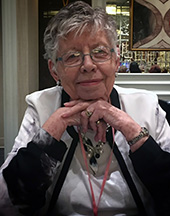
The hardest part is that I know all these people so well—even knowing how they think, and how each one will act in any situation. In many ways, it’s like losing good friends.

I’ve been asked several questions about this decision. Was I tired of the characters and the settings? Absolutely not. I loved the folks who lived in Rocky Bluff, especially the men and women of the RBPD. The beach community of Rocky Bluff only existed in my imagination, but reflected much of the area where I once lived and other small towns along the coast.

Those who lived in Bear Creek and the surrounding area are near and dear to me since I live in the community that inspired it, with some minor changes. I’ve used much of what is here in many different books in the Deputy Tempe Crabtree series: the small river that sometimes floods as it did this year, the Inn as it was in earlier years, and the surrounding mountains. I’m staying where I am, but Tempe and Hutch are moving on.

Another question was had I run out of ideas? No, that wasn’t the problem. With the Rocky Bluff series policing is changing so fast, I didn’t think I was able to keep up with the changes. With the Tempe Crabtree series, I knew in my heart it was time—20 books was enough

So what will I do now? I have another cook book on the back burner—this one with camping recipes. I plan to update one I wrote when I was a Camp Fire Girl leader and we went on many camping trips.

I’m also planning to write either a young adult mystery series set during World War II in Los Angeles, or a memoir. Haven’t really decided yet. My childhood and early teen years were during that period. I have lots of memories during a time that was much different than now.

Like the characters in my books, my life has made some major changes and I am changing along with them.

Marilyn Meredith aka F.M. Meredith

Visit me at http://fictionforyou.com/  

Blog: https://marilynmeredith.blogspot.com/

.

Marilyn’s article was posted by member, Jackie Houchin