Teach A Writing Class?

by Jill Amadio

Teach a writing class? I have enough trouble getting myself to work on my next mystery, of which I only have one-third finished. However, I am working full-speed on my new career as a writing coach.

Westport, CT has more than its share of elderly, I was told at the town’s country-club-style senior center where I use their gym. The executive director figured many of the members would love to write their life story if only they knew how.

Interesting, I thought, because I have been looking for a paying job. I’ve written four biographies under my own name and a few as co-author. My greatest contribution to assist another person’s attempt to get their autobiography on the page has been as a ghostwriter. I’ve written 15 for clients. This is the kind of book you can write with no repercussions tied your own fragile persona. No one can take pot shots at you for you putting on the published page swipes or dislike for certain relatives, remembered experiences that showed others as fools, or perhaps an opportunity to lay bare your absolute hatred of your cousin’s prize poodle. I do, however, urge a client’s caution and I try to appeal to their good nature, if they have one.

So, did I want to take up the challenge of teaching some old fogies like myself how to write their memoir? The idea appealed to me. I had never taught anyone anything in my whole life. Well, maybe a few table manners to my kids.   So, yes, I accepted the challenge to help anyone over 65 jot down their life story in presentable and publishable form.

Creating a curriculum was my first worry. What would I teach? The elements of style came immediately to mind. I’d want to know how to structure a book, create my personal style, and how to write down my thoughts and feelings.  I’d want to know how to describe places and people, events and experiences that had made up my world since birth, and was still occupying my psyche both physically and mentally.

For the first class I asked my students to create a Timeline, a list of each year of their life with a significant note, a few words, to mark why it was memorable.

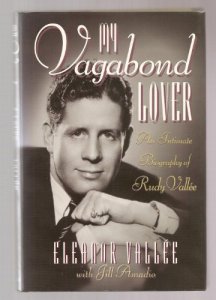
I decided that handouts were important because I had always loved receiving them at writers conferences, so I found Rudy Vallee’s timeline I’d created back in 1989, as well as a champion cowboy’s timeline that chronicled his trek across America from coast to coast on horseback. One handout was a list of 106 descriptive verbs I’ve used for years.

In addition to the Timeline, I also mapped out writing techniques and elements for the following classes. In addition to Structure, Style, and Context I added how to write Characters, Flashbacks, Settings, Cliffhangers, Editing, Beginnings and Endings, Publishing, and Marketing.  I became so enamored of my advice I began to inspect my own WIP and made changes. I dredged up a few tips and notes I’d taken at various conferences and thus was able to flesh out my curriculum.

An observation about the students. They were exreremely keen to learn how to write their memoirs. It was clear some of them had been thinking about writing such a tome for a few years but had no idea how to go about it. By the homework I gave them, i.e. the Timeline, they returned to class time and time again more enthusiastic than ever. I told them to always interrupt me any time with questions, hoping that my fear they’d forget them before the end of class was not apparent.

Among these senior students, limited to 12,  were a school bus driver, a poet, an attorney, an ad saleswoman, a lady from Germany who escaped the Nazis, a couple of teachers, a financier, and an accountant. One gentleman dropped out after lesson #2 because he said now that he was about to describe his life he found it too painful to do so. Another gentleman said he doubted he would continue because as a reporter he was trained to write lean, and that was the antithesis of writing a book. I told him I’d initially experienced the same hesitation when I was first approached about ghostwriting. My editor at the magazine I wrote for said that a CEO had called asking for a referral to a writer for his business book. Before calling him back with a recommendation she sked me if I’d be interested.

“A book? A whole book? No way!” I said.  “I enjoy writing the 3,000-word articles for the magazine but 70,000 words? Forget it.”

“Think of it this way,” the editor said. “Approach each chapter is an article. And the pay is really good.”

“Oh. Okay, I’ll do it.”

After that first book I received many referrals and became a ghostwriter, a few people contacting me through my website, www.ghostwritingpro.com.  One client, a banker, asked me to ghostwrite her novel about a financial fraud.

“Hmm,” I said. “Sounds a bit boring. How about we add a murder to spice it up?”

“Yes! How many murders can we have?”

The publishing of that book inspired me to create my own Tosca Trevant mystery series while I continued to ghostwrite as my main source of income.

Back to my seniors’ class. The atmosphere was informal, friendly, and focused. I showed them several of my memoirs, and said that although we only had eight hours in total with which to cover the subject, at least it would get them started thinking and planning.

By lesson #4 we all felt comfortable with each other reading aloud the homework. One lady was writing her memoir only for her grandchildren and refused to share with us but everyone else was eager for everyone’s critique. The lawyer fella incorporated funny poems into his memoir, and someone else brought us to chuckles with her descriptions of working in a donut shop as a teenager. The German lady brought us to tears with her childhood memories of fleeing the Nazis

That first 8-hour course was popular enough to be repeated, and later in the spring I shall be teaching How to Write a Short Story or Essay. Luckily, when I lived in Laguna Woods, California, several of my stories were published in the community’s anthologies over the years although I can’t remember ever writing an essay. Tips for my seniors, anyone?

Teaching a Writing Class?

by Jill Amadio

Teach a writing class? I have enough trouble getting myself to work on my next mystery, of which I only have one-third finished. However, I am working full-speed on my new career as a writing coach.

Westport, CT, has more than its share of elderly, I was told at the town’s country-club-style senior center where I use their gym. The executive director figured many of the members would love to write their life story if only they knew how.

Interesting, I thought, because I have been looking for a paying job. I’ve written four biographies under my own name and a few as co-author. My greatest contribution to assisting another person’s attempt to get their autobiography on the page has been as a ghostwriter. I’ve written 15 for clients. This is the kind of book you can write with no repercussions tied to your own fragile persona. No one can take potshots at you for you putting on the published page swipes or dislikes for certain relatives, remembered experiences that showed others as fools, or perhaps an opportunity to lay bare your absolute hatred of your cousin’s prize poodle. I do, however, urge a client’s caution, and I try to appeal to their good nature if they have one.

So, did I want to take up the challenge of teaching some old fogies like myself how to write their memoirs? The idea appealed to me. I had never taught anyone anything in my whole life. Well, maybe a few table manners to my kids.  So, yes, I accepted the challenge to help anyone over 65 jot down their life story in presentable and publishable form.

Creating a curriculum was my first worry. What would I teach? The elements of style came immediately to mind. I’d want to know how to structure a book, create my personal style, and how to write down my thoughts and feelings.  I’d want to know how to describe places and people, events and experiences that had made up my world since birth and were still occupying my psyche both physically and mentally.

For the first class, I asked my students to create a Timeline, a list of each year of their life with a significant note, and a few words to mark why it was memorable.

 I decided that handouts were important because I had always loved receiving them at writers’ conferences, so I found Rudy Vallee’s timeline I’d created back in 1989, as well as a champion cowboy’s timeline that chronicled his trek across America from coast to coast on horseback. One handout was a list of 106 descriptive verbs I’ve used for years.

In addition to the Timeline, I also mapped out writing techniques and elements for the following classes. In addition to Structure, Style, and Context, I added how to write Characters, Flashbacks, Settings, Cliffhangers, Editing, Beginnings and Endings, Publishing, and Marketing.  I became so enamored of my advice I began to inspect my own WIP and make changes. I dredged up a few tips and notes I’d taken at various conferences and thus was able to flesh out my curriculum.

An observation about the students. They were extremely keen to learn how to write their memoirs. It was clear some of them had been thinking about writing such a tome for a few years but had no idea how to do it. By the homework I gave them, i.e. the Timeline, they returned to class time and time again more enthusiastic than ever. I told them to always interrupt me any time with questions, hoping that my fear they’d forget them before the end of class was not apparent.

Among these senior students, limited to 12,  were a school bus driver, a poet, an attorney, an ad saleswoman, a lady from Germany who escaped the Nazis, a couple of teachers, a financier, and an accountant. One gentleman dropped out after lesson #2 because he said now that he was about to describe his life, he found it too painful to do so. Another gentleman said he doubted he would continue because as a reporter, he was trained to write lean, and that was the antithesis of writing a book. I told him I’d initially experienced the same hesitation when I was first approached about ghostwriting. My editor at the magazine I wrote for said that a CEO had called asking for a referral to a writer for his business book. Before calling him back with a recommendation, she asked me if I’d be interested.

“A book? A whole book? No way!” I said.  “I enjoy writing the 3,000-word articles for the magazine, but 70,000 words? Forget it.”

“Think of it this way,” the editor said. “Approach each chapter as an article. And the pay is really good.”

“Oh. Okay, I’ll do it.”

After that first book, I received many referrals and became a ghostwriter. A few people contacted me through my website, www.ghostwritingpro.com.  One client, a banker, asked me to ghostwrite her novel about financial fraud.

“Hmm,” I said. “Sounds a bit boring. How about we add a murder to spice it up?”

“Yes! How many murders can we have?”

The publishing of that book inspired me to create my own Tosca Trevant mystery series while I continued to ghostwrite as my main source of income.

Back to my seniors’ class. The atmosphere was informal, friendly, and focused. I showed them several of my memoirs and said that although we only had eight hours in total with which to cover the subject, it at least would get them started thinking and planning.

By lesson #4, we all felt comfortable with each other reading aloud the homework. One lady was writing her memoir only for her grandchildren and refused to share it with us. But everyone else was eager for everyone’s critique. The lawyer fella incorporated funny poems into his memoir, and someone else brought us to chuckles with her descriptions of working in a donut shop as a teenager. The German lady brought us to tears with her childhood memories of fleeing the Nazis

That first 8-hour course was popular enough to be repeated, and later in the spring, I shall be teaching How to Write a Short Story or Essay. Luckily, when I lived in Laguna Woods, CA several of my stories were published in the community’s anthologies over the years, although I can’t remember ever writing an essay. Tips for my seniors, anyone?  

.

Jill’s article was posted by Jackie Houchin

Teaching Seniors to Write A Memoir

by Jill Amadio

Invited to give as class on How to Write Your Memoir at the Westport, CT senior center, I agreed, somewhat reluctantly. It would be six 1-hour sessions and limited to 10 people. I almost wrote ‘students’ which, I suppose, they are, but somehow the idea of a group of elderlies didn’t seem to fit.

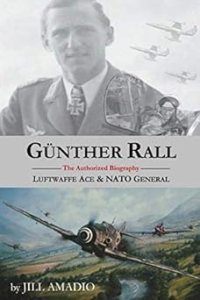
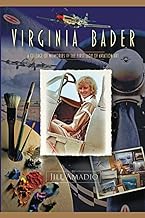
Having written what I now regard as a rather staggering number of biographies and autobiographies when I pulled all 18 of them from my bookshelves to show the class and let them know I felt confident to consider myself qualified to a certain extent, I realized that no matter how young or old such students would be, I had over the years accumulated the knowledge and experience to write and be published. Thus I would share my insights as an instructor. Of course, six hours is a laughably insufficient time to teach someone how to write their life story but I decided that covering the basics could start them on their journey.

All but six of my books were ghostwritten. The remainder were authored by me or co-authored – often a surprise as my contracts specifically identified me as the ghostwriter and thus hidden and forbidden to reveal who actually wrote the story. I am usually mentioned at the end of the ‘author’s’ Acknowledgements page, with a simple ‘Thank you to Jill Amadio.’ I am still waiting for a client to add – ‘for writing my book for me.’

One traditional publisher insister I be listed as co-author, much to the chagrin of the client’s boyfriend, and a UK publisher graced another book with my name as co-author without asking my permission. Quibble? Ha! It was a delightful surprise which earned me author talks at area locations including to a large group of auto racing drivers and vintage car collectors.

However, this first teaching gig to seniors gave me a few pre-class jitters. Would I have to speak very loudly if they were hard of hearing? Would they be able to read the handouts, meaning I’d probably have to print them in 18-point font? Would they find me boring and self-serving by passing around my hoard of books to establish my credentials?

I need not have worried. The first class was a group of extremely enthusiastic six women and two gentlemen who sat at our conference table with pens and pads ready to jot down my golden advice. I’d created a syllabus, and explained the subject matter each of the six sessions would cover. I also told everyone that they could interrupt me at any time with questions. I thought that if they held their questions until afterwards they might forget them.

All went well and I was bombarded with queries about all aspects of writing, not just memoirs. By the way, I had decided to lump the telling of life stories under the term ‘memoir’ because these days it appears to include biographies and autobiographies, and to my mind has a more important ring to it. Time was when ‘memoir’ meant a telling of a slice of one’s life, a particular incident, but these days many media outlets, for example, have called Prince Harry’s whiny-fest book, ‘Spare,’ by that description (whiny-fest is my own opinion)

My only admonition to the class was that they should not give in to temptation and use their book as a bludgeon against relatives, friends, employers, or others who have, perhaps, wronged the writer at one time or another. I hope they will remember this advice from Omar Khayyam’s poem, “The moving finger writes, and having writ, moves on. Nor all your piety nor wit shall lure it back to cancel half a line, nor all your tears wash out a word of it.”

As I prepare for my second class, next week, I will explain that bringing in several elements of mystery writing can lift a life story by adding tension and suspense, to name a few. Settings and characters can be enhanced with the addition of the writer’s detailed emotions, feelings, and personal point of view. I had told the class about the rhythm of writing and the very next day there was Tammy Walker’s excellent post on our site!

While researching my subject I came across a marvelous list of more than a hundred descriptive verbs. Using them is a great way to bring a scene alive – as we do in our mystery and thriller writing.

Interestingly, as a final note, there was a general consensus from the class when I announced there would be no prompts to be written. Many writing classes include a prompt at each class, whereby students are given a subject, a phrase, or a sentence, and must write a page around it. To my mind, this is a waste of time that can be better employed writing your book. Everyone agreed with me! However, I do encourage journaling as one way to loosen up that creative s spirit.

Do any of my fellow Writers in Residence have any relevant tips?

##


A few of Jill Amadio’s ghostwritten biographies.

A Blog Challenge – Write the Chapter Titles in Your Autobiography

by Jackie Houchin

On my Personal Blog: “Words and Reviews” I took part in what WordPress called BLOGanuary. It was a gimic at the first of the year to get bloggers to  write every day. They sent questions to answer, and tags so you could connect with the community. It worked I guess. I went from 79 to 91 to 141 followers in one month! (Yeah, I know that’s no big deal, but my blog is less than a year old, and I don’t promote it much.)

Anywho, the question of post #30 was: What would you title the chapters of your autobiography?

At first I thought this challenge was just TOO hard.

I didn’t WANT to write an autobiography or even a memoir.  (Although a friend in THIS writer’s group blog has encouraged us to do just that. “Everyone has a story!” Gayle Bartos-Pool urges. And yes, she wrote her own life’s story, wonderfully illustrated, titled – A SCRAPBOOK LIFE.)

OK, I told myself, I’ll write down just TEN chapter headings and be done.

THIS is what I came up with….

Chapter — Title

  1. A Baby Sister!
  2. Hanging By a Head
  3. The Bobby Pin
  4. The Long Trek
  5. Trailor Park Life
  6.  Daddy’s Demise
  7.  Rude Awakening
  8. An Auto Repair Shop
  9. The Lone Ranger
  10. Joe Boysen
  11. The Gunsmith
  12. Church Camp Decision
  13. Nancy’s House
  14. Locker Combinations
  15. The 3-Mile Walk
  16. Pimples and Fat
  17. Denny Murphy
  18. The Evil Out There
  19. Double Dating
  20. A Twelth-Grade Diamond
  21. Dr Dentist
  22. Hollywood Firsts
  23. No Valentine’s Day
  24. Miramar Reality
  25. Cats and Cooking Disasters
  26. Baby Mine
  27. Hot Rods First
  28. Adoption Debacle
  29. Terror and Escapes
  30. Wrong Way Turns
  31. Dancing With Devils
  32. Comedy and Tragedy
  33. Horsing Around
  34. Deadly Diagnosis
  35. The Southern Retreat
  36. Faith
  37. Africa and Beyond
  38. Letters to Kids
  39. Pandemic Teaching
  40. See, Hear, Speak No Evil
  41. Cruising
  42. Grands and Greats
  43. Facing the Future

Gosh, maybe I SHOULD write my autobiography!

IF YOU WERE ME, with which chapter would YOU begin writing?  From 1 to 43, or here and there?  Tell me your answer in the Comments.

AND… let me challenge you to give this a try too.  Write out at least 10 chapter headings if YOU were to write YOUR autobiography.  Seriously. Try it! It may inspire you!

Memoir: What it is/What it isn’t

By guest blogger, Alison Wearing

I think it’s so much easier to define memoir by what it’s not…Memoir is not a chronological recitation of a life. It’s not therapy. It’s not an accusation. It’s not a boast. It’s not fiction. It’s not gossip. Memoir is a search to understand the human condition—to tell a personal, resonating story. Memoir writers look back with empathy—toward themselves and toward others. They fabricate nothing on purpose. They know what to leave out. And they recognize—explicitly and implicitly—they are not the only ones in the room. Their readers matter, too.” 
Beth Kephart, author of Handling the Truth

It used to be that only famous people wrote about their lives: retired politicians, Hollywood personalities, rock stars. They wrote their memoirs; they still do. The aim of a person’s memoirs is to cover as much of a life as possible, to draft an overview that touches on all the essential points: family, education, relationships, influences, crucial turning points, successes, failures, accomplishments. Memoirs can also be called autobiographies.

More often than not, memoirs and autobiographies are structured chronologically, and generally, we are drawn to read them because the authors (or, in the case of ghostwritten autobiographies, the subjects) are people already familiar to us. There is absolutely nothing wrong with writing an autobiography, as long as your intended audience is your family or those close to you (unless you are famous, in which case your fans await your story!).

I once had a woman in one of my workshops who was creating a handwritten and hand-bound autobiography, complete with sketches of floor plans of the houses the family had lived in, paintings of significant buildings, black-and-white photographs. It was a magnificent creation and will be a priceless treasure for her family and future generations. Those of us in the workshop enjoyed paging through the volumes, admiring certain drawings and photographs, but the story itself didn’t invite or include us. It was a series of details that had relevance only to the people involved in the life described. For what it was, it was spectacular. I don’t want to detract from that approach and the author was very clear about what she was doing and for whom. The reason she joined my workshop was to learn how to write more personally, to delve into the realm of communicating emotion rather than simply the facts. I’m not sure she’ll choose to include that kind of writing in her book, but her family might treasure that intimacy if she does. Either way, this kind of a work isn’t a memoir. It’s an autobiography. It’s the whole kit and caboodle. It’s the wide-angle photo of a life.

An autobiography can be a beautiful endeavor, but it is markedly different from a memoir. For while an autobiography is the story of a life, a memoir is a story from a life.

A memoir may visit different parts and elements of a person’s life, but the intention is not to tell or describe the whole thing. It may deal with a period of time, a place, a relationship, a journey, or several of those things, but the story is delineated, it has a container far smaller than the span of the writer’s life. A memoir has a focus; ideally, it has a clear and narrow focus. And paradoxically, the narrower the focus, the greater the freedom the writer may have to talk about the breadth and fullness of her life. We’ll delve into that more deeply when we get into structure, but for now, let’s just cover the basics of the genre.

In addition to a clear focus, a memoir has, at its heart, a transformation of some kind, a shift in perspective or understanding, a new way of seeing one’s life, a place, a relationship, the world, whatever the theme of the story.

In this way, a memoir often chronicles an emotional journey of some kind, a departure from one aspect of oneself and an arrival at another (often more enlightened) state of being. The author might be trying to achieve resolution, to solve of a problem, or to achieve a higher understanding or acceptance of circumstances, events.

Or, as Mary Karr, author of the now-classic memoir The Liar’s Club, puts it: “In a great memoir, some aspect of the writer’s struggle for self often serves as the book’s organizing principle, and the narrator’s battle to become whole rages over the book’s trajectory.”

The “battle” Karr refers to may take a variety of forms, and it might not be a dramatic fist-fight-of-a-battle so much as a peaceful and gradual unfolding. It could be a recollection of travels written from a broader perspective than what was available at the time.

It could be a revisiting of a traumatic incident from a place of recovery or empathy. Whatever its focus, a memoir is more than just an honest account of an event or a time, more than a simple recounting of events, more than a detailed reportage of a journey from A to B.

It is an effort to make sense of—and perhaps make peace with—an aspect of the writer’s life.

It is an exterior and interior expedition, a quest for meaning.

“Memoir is not about you, or me. It’s about something universal. That is, if you want anyone else to read it.  Good memoir takes on something universal and uses you as the illustration of that larger idea.”                                                                                     ~ Marion Roach Smith, author of The Memoir Project

##
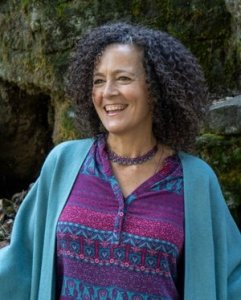
Alison Wearing is a best-selling, multiple-award winning writer, playwright, and performer.

She is also the creator and facilitator of Memoir Writing Ink, an interactive online program that guides people through the process of transforming personal stories into memoir.

Do you have a personal story you wish to write?

Do you wonder how to craft your story to make it compelling reading for others? Or how to structure it so it holds together? Or how to write about difficult memories? Or how to write truthfully about something that happened decades ago? Or what to do if someone else remembers the same events differently, or if they don’t want you to write your story?

These questions can paralyze us, but that doesn’t need to be the case. In fact, those same questions can be the doorways to the finest iterations of your story.

If you’d like to learn more about her 12-week course, visit: Memoir Writing, Ink

##

Alison also leads Memoir Writing Retreats – next up is in Tuscany, Italy in October 2022 and in April 2023.  Interested?  Tuscany Retreats

..

The Secret Books of Poison

by Alan Bradley


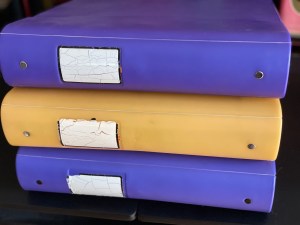
In my library are three slightly repellent books. One is the colour of poisoned custard, and the other two are a poisonous purple.

They look as if they’ve been through a lot. And they have.

These fat volumes, of about 500 pages each, were compiled in a time of disaster, and at the time, I didn’t know what I was doing or why. All I knew was that it needed to be done.

But first, a word of explanation. I am often asked, as are most writers, “Where did your main character come from? How did you go about creating him/her?” The simple answer is “I didn’t”, but the truth lies hidden in the thousand and more pages of these three uneasy books.

We had, at the time, a comfortable home on the edge of a forest – just like in the fairy tales. Until one night, lightning struck, and our forest was ablaze. Although we managed to get out safely with our pets, just ahead of the flames, more than 200 of our neighbours’ homes were reduced to ashes. When we were finally allowed to return, several weeks later, we found ourselves living in a blasted landscape: skeleton trees in a dead landscape of soot and ashes.

Time changed, and everything became different, including ourselves. What were we to do?

Sometime during those long hours and days and weeks that followed, I began compiling a compendium of poisons. The psychologists ought to have a field-day with that! Without knowing why, I had begun collecting and collating everything I could find on poisons and their history, all nicely filed alphabetically and indexed all the way from ‘A is for Arsenic’ to ‘Z is for Zarutin.’

The files grew from a folder, to many, and then to a book, then two, then three.

They contained detailed descriptions of the life and crimes of famous and not-so-famous poisoners, the history of specific poisoners from antiquity until just yesterday, the chemistry of poisons and their medical aspect. Ancient newspaper accounts told many a grim story, all so sadly the same: love gone wrong, ambition gone mad, and cleverness come a cropper.

There were heart-breaking tales of poor children who, in searching for something to eat, had – but enough! You get the idea.

Then, as the world around us restored itself, I put these books away, not knowing if I would ever look at them again. Whatever angel had caused me to compile this stuff had not bothered to leave an explanatory note. When the time came, I would know why.

Several years passed. Five, in fact. And there came a day when I decided that it was time to sit down and write that ‘Golden Age’ mystery novel I had been mulling since my younger days. It was a book that I much looked forward to, a tale that would draw on my years of experience in television broadcasting. Something fresh – something startling.

But it was not to be. I got no farther than the second chapter when, in a scene involving a visit to a crumbling country house in England, an eleven-year-old girl materialised suddenly on the page and would not, in spite of my every effort, be budged. She would not be written out and she would not be ignored. After a time, I realised that she had taken over my book completely. It was her book now, and my role was to sit down, shut up, and write what she told me to write.

And it came as no real surprise that her whole being revolved around a passion for poisons. Her knowledge of the subject was, you might say, voluminous.

Since then, she has more or less dictated ten novels, and has gathered readers around the globe in forty-some countries and forty-some languages. She has been on the New York Times bestseller list.

And that, dear reader, is the origin of Flavia de Luce, as best as I can manage to explain it.

And these three noxious volumes are the only proof I have that all of this is true.

See for yourself!

#


My website is www.flaviadeluce.com  My facebook page is AlanBradleyauthor. My gmail is flaviadeluce@gmail.com
 
Happy to hear from readers.
 
Photo by Jeff Bassett
 
I grew up in a small town in Southern Ontario, and being always fascinated by the magic of light and colored glass, naturally went into television broadcasting, both private and public. After twenty-five years as Director of Television Engineering at the University of Saskatchewan, I took early retirement to write a mystery that never got written. I did manage to write other things, though.
 
Now that I’m retired from retirement, having lived for a while in Malta, my wife and I now live in the Isle of Man, in the shadow of an old castle, where we keep an eye on the sea at our door, which was once frequented by Saint Patrick and the Vikings.


Alan Bradley has written TEN Flavia deLuce books, plus a short story, The Curious Case of the Copper Corpse. His newest novel is The Golden Tresses of the Dead. All the books are available in audiobook form (which I love). 
He also wrote a wonderful ebook memoir, The Shoebox Bible. 


Me? Write a Memoir? But…!

by Gail Kittleson

Decades ago, some friends invited us to go rafting on a local stream. I thought our son, three years old at the time, would be excited, but he said,

          “I’m scared of those rabbits, Mommy.”

          “Rabbits?”

          “Yeah. Evelyn said we’re going to come to some rabbits…”

Those rapids would’ve scared me, too, if I thought they might hop into our raft. After a bit of explanation about the mild rapids, our son loved rafting.

**

Misunderstandings often ground our fears, and this proves true with writing. Being afraid to express our anxieties in black and white originates in false assumptions:

  1. What we write may be used against us.
  2. There’s a ‘right’ way to write, and we haven’t learned how.
  3. Once we write something down, we’re bound to the perspective we embraced at the time.
  4. Once written, our words will be “golden,” and therefore, we can’t destroy them.

          First of all, what we write may be used against us. But this is no reason to forego all the benefits of the process. Writing in a safe place that no one ever sees has done wonders for many people experiencing trials.

The feeling that we have no control over who might see what we write can keep us bound by the tide of emotions swirling inside us. Launching out to safely journal our thoughts, tied irrevocably to those emotions, may seem beyond our power.

          In order to take this tentative step, we must unlearn the second misconception, that there’s a ‘right’ way to write. Nothing could be farther from the truth. No perfect method for expressing what we feel exists.

In fact, the ‘perfect way’ will be the way our words come out. Each person’s story contains unique content, since it comes from our one-of-a-kind inner being. Each of us perceives even the identical situation with variations.

A family outsider, my sister, or my brother will see what I remember differently than I do. But my first feeble step—even if that amounts to writing one short paragraph about what’s transpiring inside me—unleashes immense healing power.

          Now to the third misnomer: we are not bound by our viewpoint at any given time. A glance around us reveals that everything changes constantly. The only constant is change, as they say.

If I still looked at what I experienced fifteen years ago with the same eyes, I would be in big trouble. But the thing is, I would never have arrived at my present perspective if I hadn’t started writing down my thoughts and feelings.

          At the time, my journal pages seemed somehow sacred, and they were. But as the years have passed, I’ve grown, and at certain points, I let go of certain writings from the pasts. Burned them, because they no longer seemed ‘golden.’ Some of them, I kept and edited. And re-edited, and re-re-edited into a memoir. That’s not the route for everyone, but proved to be an important part of my journey.

The point is, your writings are your writings. You have the right to choose what to do with them, including chucking them down a sinkhole never to be seen again.

And the broader point is that in the darkness of an emotional avalanche, we cannot even know what we think. By allowing words to flow from us, we invite clarity, and through this process, discover truths we would never have imagined.

Words equal an enormous gift—penned quietly in secret places, they blossom like hidden desert plants that bloom in darkness, where no one observes. But their flowers bear perfume, attracting the necessary insects for pollination. It may be that we will rework and launch our writings into a published memoir, but either way, this practice can become a powerful experience.

“Today you are you, that is truer than true. There is no one alive who is youer than You.” 
Dr. Seuss


Gail Kittleson 2

When Gail’s not steeped in World War II historical research, writing, or editing, you’ll find her reading for fun, gardening, or enjoying her grandchildren in Northern Iowa. She delights in interacting with readers who fall in love with her characters.

Gail Kittleson taught college expository writing and ESL before writing women’s historical fiction. From northern Iowa, she facilitates writing workshops and women’s retreats, and enjoys the Arizona Ponderosa forest in winter.

catching up

Catching Up With Daylight; a Journey to Wholeness, is Gail’s own memoir. She and her husband began renovating an old house after he returned from a deployment in Iraq.  The book is “a gorgeous tapestry of non-fictional thoughts. This very gifted author knows how to weave her thoughts, memories, and the history of the old house she is refurbishing into a journey of emotional and spiritual wholeness.”


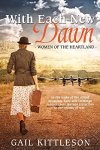
Women of the Heartland, Gail’s World War II series, highlights women of The Greatest Generation: In Times Like These, April 2016, With Each New Dawn, February, 2017 A True Purpose (Lighthouse Publishing of the Carolinas, and Word Crafts Press, December, 2017.)


  Cover_APuroseTrue    With Each New Dawn    In-times-like-these
Visit her at the following social media sites:

 ******
NOTE: This article was posted for Gail Kittleson by The Writers In Residence member, Jackie Houchin