
By Jill Amadio
As a Brit I put up with a lot of ribbing in America. Some friends take me to task for pronunciation. Well, I can’t help it if I have a very slight West Country accent as I am from Cornwall. To my amusement my accent is occasionally mistaken for Australian.
As a writer from over there, though, the ribbing can give me indigestion or at the very least depression for hours. The main problem is spelling. I am warned by colleagues that editors at U.S. publishing houses come down hard if you keep inserting a “u” into words like behaviour, colour, and honour, or substitute a ”z’ for an “s”. Other minefields include using “ae” rather than “e,” as in “aeon” and “eon”. Maybe it’s a matter simplicity. Americans pare as many ells from words as possible while Brits love double ells, such as “levelling” versus “leveling”.
My books are published here but habits die hard and I usually claim that Brits use the correct spellings. They only got chopped when unnecessary (to whom?) letters are summarily killed off. Flautists are called flutists, kerb is curb, and gaol is jail. Obviously what it comes down to is pronunciation, though. Americans spell words economically as they are spoken which is commendable although it escapes me why tyre is spelled tire. I think it has to do with the Boston Tea Party and wanting to be set apart from that awful king.
It’s a huge temptation to some authors who have leapt across the pond to use British spelling, perhaps as a sly signal to agents and publishers they are querying that the writer is a Brit – a sort of literary snobbism one occasionally encounters. In my first mystery I have my lead character admonish the British consul’s wife for this attitude which I did, in fact, actually encounter in Newport Beach.
Then there’s the grammar. Collective nouns in particular give me pause. Is a group, say, a government, singular or plural? Americans say it’s the former; Brits insist on the latter. I have a page from the Associated Press Stylebook permanently stuck to my printer to remind me which to use.
Figuring out past particles is always fun. For instance, Brits say “pleaded” Yanks say “pled”. Oh, and the very, very worst word I hate to see changed is “hanged”. To my mind it should refer only to someone at the loop end of a rope, giving the action a far heftier meaning than the briefer word “hung”, as used here. People are not paintings.
What else? “Have” and “take” always flummox me. Am I going to take a bath? Or, am I going to have a bath? I read somewhere that this is an example of a delexical verb, which I’m not even going to touch.
While writing my mystery my beta readers caught another mistake. I wrote, “He drove her to hospital.” Wrong. I was told there should be a “the” in front of “hospital”. I’m sure there’s some kind of diabolical rule about this but I think it is fine to give an in-house editor something to mark up to justify his/her salary. As for tenses, the past participle in the U.S. for “got” is “gotten,” an ugly word that makes me shudder enough to want to write a thriller entitled “The Dangling Participle and the Dark, Dark Pluperfect”.
While writing the first in my crime series, whose amateur sleuth is a disgraced Cornish woman exiled by the palace for discovering a scandal (not sexual!), I had to learn the police rankings and figure out who was a sheriff and who was a police officer. Having worked with a reporter at the good old British rag, the Sunday Dispatch, I decided to have my sleuth simplify her confusion (and mine) by using British titles. When caught speeding she addresses a California Highway Patrol (CHiP) officer as Chief Superintendent, and calls the Chief of Police, Constable. I was very pleased to learn that sheriffs and policemen can be lumped into a group collectively referred to as “cops”.
When I mention a British pastime, such as nighthawking, no one has a clue as to its meaning. I was going to give the nasty habit to a character in my next book but I decided the explanation could be tedious unless you’re one yourself.
Even the four seasons can be a challenge. Seeking representation for my new book I scoured the agent lists and was rejected by 55 of them. I knew small presses can be approached directly and I found one with whose name I fell totally in love: Mainly Murder Press in Connecticut. However, the website declared, NO SUBMISSIONS UNTIL LATE SPRING!
Ha. I immediately sent in my query along with a note: “Dear MMP, I live in Southern California and although it is only January according to the calendar, and snowing where you are, it is already late spring here. You should see the roses!”
I received an email back within three hours, asking me to send chapters. Which I did. Obviously the publisher was not off in Tahiti but still on the snowy East Coast.” MMP published only 12-14 books a year and has now closed its doors but who can resist the name? So my advice is to go ahead and break the rules. Lay it on thick. Change the climate. Worked for me.
###
Jill Amadio is from Cornwall, UK, but unlike her amateur sleuth, Tosca Trevant, she is far less grumpy. Jill began her career as a reporter in London (UK), then Madrid (Spain), Bogota (Colombia), Bangkok (Thailand), Hong Kong, and New York. Jill writes a column for a British mystery magazine, and is an audio book narrator. She is the author of the award-winning mystery, “Digging Too Deep” and the second book in the series, “Digging Up the Dead.” The books are set in Newport, California. http://www.jillamadio.com


###
This article was posted for Jill Amadio by Jackie Houchin (Photojaq)

 Of course, the correct common usage idioms are “stubbed my toe, a drop in the bucket, beat around the bush, and a dime a dozen.” The last two are alliterative, yes, but why, I wonder, are toes the only part of our anatomy ever stubbed? And why drops only drip into a bucket instead of any other container? My favorite, though, is “a short/long week – or year, or hour.” What do they actually mean? Six days instead of seven? 11 months instead of 12? Sure, it’s easy to explain that an hour can drag on seemingly forever and a short week can mean time flies by, so why don’t we write that?
 I have a book, “The Describer’s Dictionary” that contains oodles of such hackneyed idioms but they do inspire me to create my own if possible. The book is tremendously helpful when trying to find a way to describe, for example, low-elevation clouds. One description offered is “a cloud mass like a formless gray horizontal sheet.” Would you honestly use that? However, I have found the book invaluable for character physiques, architecture, locales, settings, and surfaces and textures. There is an entire chapter on Necks. Granted, it’s only half a page but it encourages the mind to explore other possibilities.
 Jill Amadio is from Cornwall, UK, but unlike her amateur sleuth, Tosca Trevant, she is far less grumpy. Jill began her career as a reporter in London (UK), then Madrid (Spain), Bogota (Colombia), Bangkok (Thailand), Hong Kong, and New York. She is the ghostwriter of 14 memoirs, and wrote the Rudy Valle biography, “My Vagabond Lover,” with his wife, Ellie. Jill writes a column for a British mystery magazine, and is an audio book narrator. She is the author of the award-winning mystery, “Digging Too Deep.” The second book in the series, “Digging Up the Dead,” was released this year. The books are based in Newport
 Turned out I had grabbed a paperback I’d bought second-hand years ago and never got around to reading, Irving Wallace’s “The Writing of One Novel.’ It relates the all-absorbing 16 years he spent researching, traveling for settings, and finally writing his bestseller, “The Prize.” In meticulous detail Wallace describes his exhausting, frustrating, and determined journey into the background of the Nobel Prize. He interviewed dozens of judges, winners, losers, and journalists who covered the event. He kept daily journals and diaries of his efforts to get behind the politics, drama, and the decisions, all of which resulted in “The Prize” being almost non-fiction. Wallace discovered facts, regarded as explosive and titillating at the time, about all those involved over the years. Most of the characters were a combination of the real person and the author’s creativity but they were so obvious that the country of origin of the Nobel Prize, Sweden, refused to publish or distribute the book.
 That aside, the tattered paperback I was reading, yellowed with age – it was published in 1951 – was the most honest and revealing of any author’s how-I-wrote-it book I have come across. It is more than a fascinating peek into Wallace’s writing process and method of research. He lays bare the heart, mind, and soul of a writer’s inner workings. Would reading this book turn off a new writer? It’s a daunting task that Wallace set for himself because he wanted to know everything, and as he dove deeper and deeper into the history of the Nobel Prize he uncovered real data that he could not resist including in his novel. Luckily today we are armchair researchers, although I find that visiting locales can’t be beat for sniffing the atmosphere.
 Interestingly, Wallace’s “The Writing of One Novel” mentioned another author who wrote a tell-all of his writing process. I immediately downloaded Thomas Wolfe’s “The Story of a Novel.”
 “Look Homeward, Angel.” Wolfe dredged up so many childhood and young adult personal experiences that the novel is considered practically autobiographical. His first draft was over one million words! Happily, Scribner’s genius editor, Max Perkins, sorted it all out and gave us Thomas Wolfe in all his glory. Perkins probably also heavily edited “The Story of a Novel” because Wolf admits at one point that all he did when writing it was jot down a few random notes.
 Both memoirs put me in mind of Graham Greene’s despondent “The End of the Affair,” another heart-breaker that makes one wonder how much of the author’s life it reveals. Faulkner called the book “true and moving.”

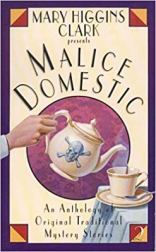 The event is the largest annual gathering in America for writers and fans of traditional mysteries in the genre of Agatha Christie, which places them in a genre called ‘cozy.” It appears that publishers here prefer authors to be strictly categorized into the type of book they write: romantic suspense, noir, thriller, psychological suspense, hard-boiled, legal thriller, historical, private investigator, cozy, police procedural, and sub-genres such as a sci-fi and the newest, cyber-crime mysteries.
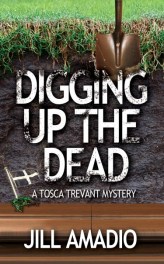 The second book in my series, “Digging Up the Dead: A Tosca Trevant Mystery” was published just in time for this premier annual event. My main character hails from Cornwall and comes to live in Newport Beach, like me, so the “Fish Out of Water” panel was perfect for us both. It was fun to explain to the audience that Tosca Trevant, a London gossip columnist (me too!) had rattled the royals by discovering yet another scandal at Buckingham Palace. This led her editor to re-assign her temporarily to America. Cussing mildly in the Cornish language, and coping with a culture that sees no need for a teashop on every corner, the meddlesome, outspoken and humorous Tosca turns amateur sleuth when she stumbles upon human remains in a neighbor’s garden, in the best Miss Marple tradition although Tosca is a younger version.
 She was instantly contradicted by a voice behind my chair shouting out, “Yes! You did know!” The voice was male and sounded exactly the way I had described his gravelly voice in a previous chapter. I swung around, dumbfounded. Of course, there was no one there and no one else was in the house. Some writers say their characters often take over their role in a book but this was different. Sam spoke a line of dialogue that added another dimension to the plot. It worked well, surprisingly, giving an extra twist to the story. I didn’t hear from him again nor from anyone else I created so I guess he and the others were satisfied with how the plot was progressing.

 The Writers in Residence
You must be logged in to post a comment.