Group Post #1 – How do you handle TECHNOLOGY?

Occasionally, we have an open spot on our blog schedule. One of our members suggested we all (or those able) could jump in for a group blog question.  Our first was suggested by Miko Johnston.

How do you incorporate ever-changing technology in your writing, especially in a series that covers years?
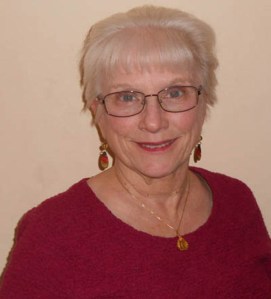
Jackie Houchin — In my short stories, I use the technologies needed in the story’s time and place. I used GPS settings to find a long-buried stash in one mystery set in modern New York. In that story, the dates were firmly set by newspaper clippings. In my missionary kids’ series set in modern but rural Africa, cell service is spotty (indeed, you can’t even be sure of electricity), so I use these technologies but don’t depend on them.  Actually, “no cell service” adds to the suspense of the moment when an emergency happens.

#

Gayle Bartos-Pool — If you write stories set in the Roaring Twenties, you might want to include a bunch of things to define that era, like telephone operators connecting you to whomever you are calling or a radio program providing music and some news. There were no televisions or cell phones back then. The automobile was new with the Ford Model T, and assembly lines were just gearing up. 

Every era has its newfangled gadgets, but do they have to do more than set the stage in the story? Sometimes, too much detail distracts from the narrative unless there is one particular thing that plays a key role in your story, like the old typewriter with the damaged key and the ransom note with that same twisted letter. That’s been done before in several old movies, but it worked. 

But if you are writing a contemporary tale, do you have to rely on the main character’s cell phone on every page? After a while, it gets old to have the characters pull out his or her phones rather than use their eyes and ears to see the problem at hand.

I do like gadgets, but I don’t depend on them totally in my books. My characters will use a computer, but they use their brains more.

#

Miko Johnston — Back in the 1990s, before I started my series of historical novels, I attempted to write a (then) present-day mystery thriller that centered around a secret high-tech device. The problem was that I knew nothing about the subject and figured what I’d made up would ring false with knowledgeable readers, so I put the manuscript aside. Twenty years later, I revisited the story and realized I knew enough about what had been developed back then to finish the story with authenticity. 

I do incorporate technology in my modern work as it’s such an integral part of life now. For example, my short story, Senior High, comically follows three older women who travel to Washington, one of the first states to decriminalize marijuana. Although they haven’t “partied” since the seventies, they decide to get high one more time but can’t figure out how until Siri comes to their aid.

.
 

HOW I FOUND MYSELF WORKING AS A WRITER IN RESIDENCE OF A HIGH-SECURITY MALE PRISON

by Hannah Dennison

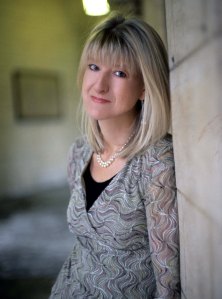
I’m excited to introduce our special guest today Sunday Times bestselling thriller author Jane Corry. As you’ll soon learn, Jane’s writer-in-residence experience is quite simply extraordinary.

Jane – welcome! 

My novelist career took off when I went from being a features writer on a well-known women’s magazine to prison.
I’m not joking. But I should add that I was a writer in residence at a prison rather than being a prisoner myself.

My story started the month I got divorced from my first husband after 27 years of marriage. Two weeks later, my weekly magazine column ended due to a staff shake-up. Although I had maintenance, I found myself in need of extra income in order to bring up my three children.

After moving house, my new neighbor suggested that I look in the papers for work. I hadn’t applied for a job for 27 years—I’d been a freelancer since my children were born. But there it was—an advert saying, ‘Wanted! A writer in residence of a high-security male prison.’

Frankly, I didn’t think I had a chance. After all, I didn’t have any experience of prison, either from the outside or in.  Indeed, the only crime I’d ever committed was to park on a double yellow line.

But the money they offered was exactly what I needed to pay my mortgage – to a penny.

My sister and friends didn’t think I should apply. In fact, they thought I was crazy even to consider it.  I was, as they pointed out, in a bad place emotionally. How was it going to help me to work in a prison? I like to think it helped both me and my students, but I’ll come onto that in a moment.

I was very surprised to get an interview and not at all surprised to fluff it up. The governor asked what I would do if a prison officer came into the room where I was running a writing class and told everyone to get out. I said that I would get them to stop in the middle of the sentence so it would make it easier for them to come back to it – it’s a good writing technique. He looked at me, his eyebrows raised. ‘And by that stage,’ he pointed out drily, ‘half the prison would have escaped.’

He had a point. From that moment, I relaxed because I knew I’d blown it. So you can imagine his surprise when he rang that evening and offered me the job.

On my first day, I was given the keys to the prison. To be precise, I was handed a key belt and told that I had to lock any doors that I unlocked and went through, otherwise I’d be out on my heels. I also had to make sure that I signed in every night and handed the key back.

My role was to be a sort of literary Pied Piper. I wasn’t part of the education department, where people had to come to my lessons. I had to woo them in through notices which I put up round the prison.  I printed them out with titles such as ‘Come and join my workshop to write a letter, novel, short story, life story.’

Life stories were particularly popular. I learnt more about crime than I care to talk about. I will say, however, that I was reduced to tears of shock and horror by one man’s story. He then apologized for upsetting me and I told him he should be apologizing to the people he had held up and threatened with death.

I entered his life story for the Koestler Awards, given to men and women for art and writing in prison and he won a silver. His behaviour immediately changed for the better and the guards said that it was due to his new-found story telling skills. He told me that if he hadn’t expressed his remorse on paper, he might have banged his head against the wall.

On the whole, I was treated very well in the prison, although there were times when I was scared. I was followed around at one point by a man who – when I looked up his crime – had tried to kill his girlfriend. I didn’t look up any crimes after that apart from the former accountant who had been a rapist. I don’t want to go into that. He seemed such a nice man.

One night, the governor asked if I would spend the night in the prison for a charity drive. I would have turned down the invitation but the money was going to help pay for my next year at the prison. So I felt obliged. It was terrifying being locked in. There was a bowl under the bed for my business. I spent all night typing. The gov had allowed me to bring my typewriter in. In the middle of the night, an officer knocked on my door and asked what I was doing. I told him I had permission to write and reluctantly he went away.

On other occasions, I brought in writer friends to talk, including Colin Dexter. The men asked him how he got his inspiration. He told them that it was a large bottle of malt whiskey. This didn’t go down well with the officers, but the men thought he was wonderful.

When I started my prison job, I was told that the men either spent their leisure  time in the gym or in the chapel. That stayed in my mind. Then as I walked past the gym, with sounds of machinery pounding, a title fell into my head. The Book Of Uncommon Prayer. So I asked both the men and the staff to write down sayings that helped them through life. I’d written something similar for the women’s magazine earlier. It seemed to go down well and also improve relations between some staff and men.

My two year contract was extended to 3 years. They then asked me to stay for a fourth but I thought that I might never leave. By then I’d got married again so I said goodbye but I volunteered to be a judge for the Koestler Awards and have done so now for the past ten years. Every summer, I go up to Wormwood Scrubs and leaf through entries. The winners’ work is displayed at the Southbank in London every autumn.

I gave up romantic fiction and began writing gritty suspense novels about families who’d been affected by crime, either as aggressors or victims. I changed agents and my new one sold me to Penguin. I’ve since had eight top ten Sunday Times best-sellers.

People sometimes ask if I miss my old life. Actually, it haunts me.  You can take the girl out of the prison. But you can’t take the prison out of the girl.

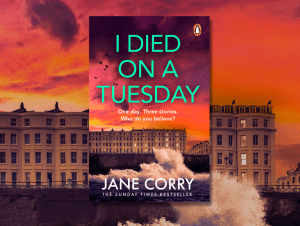
You can buy my new novel ‘I DIED ON A TUESDAY’ in supermarkets, shops and   https://bit.ly/3SE8UVi. Thank you. You can also find out more about my books at www.janecorryauthor.com,   

The book on Amazon

Why You Need To Start Journaling in 2024

After nearly 20 years of journaling, I realized that everyone should be doing this one thing
 
(First published in Readers Hope. Reposted by permission.)   4 min read


I have been journaling for years.

There is a box in my office full of journals I have had since 2004. That’s right, nearly 20 years of journals. They have my ideas and worries and capture the events that have gone on in my life over the years.

And I am not done yet.

I have found there to be an immense power in journaling. It has helped me find clarity and emotional stability and even solve problems. Most of all, it is like having a space to remove what bothers me and listen for what is good.

“Journaling is like whispering to one’s self and listening at the same time.”
– Mina Murray in Bram Stoker’s 
Dracula

In a world where technology is taking over and life is becoming more fast-paced, journaling remains a timeless and effective tool for self-improvement.

Whether kept in a handwritten notebook, a digital file, or even a specialized app, journaling gives people a distinct place to think, process, and learn essential life lessons.

This article examines the many advantages journaling offers to one’s mental, emotional, and even physical health and its transformational potential.

A Personal Journey

“Journal writing, when it becomes a ritual for transformation, is not only life-changing but life-expanding.” — Jen Williamson

Journaling is fundamentally a very personal process. It offers a secure space where people can freely share their ideas, emotions, and experiences without fear of rejection.

People can externalize their innermost ideas and make sense of complex emotions and life’s threads when they put pen to paper or fingers to keys.

Action Step: Set aside three to five minutes daily to journal. Let your thoughts run freely onto the pages while you write, free from self-censorship or criticism.

Emotional Release and Stress Reduction

“Journaling is like a whisper to the soul, an emotional release that heals and rejuvenates.” — Mari L. McCarthy, Heal Yourself with Journaling Power

The capacity of journaling to act as a channel for releasing emotions is among its most obvious advantages.

Writing about difficult situations, annoyances, or fears can be therapeutic and an excellent way to release bottled-up feelings. Research has indicated that this procedure can lower stress levels, elevate mood, and enhance general well-being.

Action Step: Set aside a specific area in your journal for writing about your feelings. Use this area to release tension or emotional weight, permitting oneself to let go.

Clarity and Problem Solving

“Journaling is the first step to self-discovery, and self-discovery is the key to clarity.” — Darryn Kirschner

Moreover, journaling is an effective method for problem-solving and clarity. Writing helps people arrange their ideas and consider other viewpoints when faced with tough choices or uncertainties.

Solutions frequently become more evident during this process, and people feel more empowered as they understand they can overcome obstacles.

Action StepSpend some time outlining the benefits and drawbacks of any difficult decision you are faced with. Keep a notebook to record your observations and brainstorm ideas from many perspectives.

Tracking Personal Growth

“Your journal is like a compass; it may not point north, but it will guide you to where you need to go.” — Jessica de la Davies

Maintaining a journal offers concrete documentation of one’s evolving personal development. Reviewing previous postings, people can recognize trends, reoccurring themes, and accomplishments.

This backward-looking viewpoint emphasizes the importance of continuous self-improvement by fostering a sense of continuity and development.

Action Step: Designate a particular day of the month to review your journal entries. Make a note of your progress, pinpoint your areas for growth, and decide on new objectives for the next month.

Enhanced Creativity and Self-Expression

“Journaling opens the door to your creative mind, inviting it to dance on the pages of your soul.” — Alexandra Elle

Beyond its therapeutic advantages, journaling can foster self-expression and creativity. People can freely explore ideas, express dreams, and develop a closer relationship with their inner selves by writing in journals.

Journaling’s unrestricted format fosters an abundance of creativity that can be utilized for creative projects, problem-solving, or self-exploration.

Action Step: Set aside time in your journal for artistic expression. Compose poetry, sketch, or experiment with any creative medium that speaks to you.

Final Thoughts on Journaling

Amidst the hectic pace of contemporary life, journaling remains a potent and easily attainable method for personal development.

Journaling opens people’s potential and provides a route to self-discovery, emotional release, and improved well-being through its therapeutic, contemplative, and artistic aspects.

The straightforward practice of writing continues to be a timeless companion as we traverse the complexity of our lives, leading us toward self-awareness and transformation.

###

The above article was posted by Jackie Houchin.

Can Writers Be Replaced by AI?

By Guest blogger/author Naomi Hirahara

Artificial intelligence, especially ChatGPT, is on people’s minds these days. ChatGPT is developed through OpenAI, a company Elon Musk co-founded with a controlling and growing investment by Microsoft, which is beta-testing artificial intelligence in its search engine, bing. Instead of doing a simple Google search in which you type in a word, phrase, or even question, resulting in a list of search links, chat bots can provide full narratives. They are interactive, too, and can simulate a conversation with the user, albeit with mixed results. (See https://www.kpcc.org/2023-02-27/how-microsofts-experiment-in-artificial-intelligence-tech-backfired)

These developments have Google on the run and the whole high-tech community both excited and nervous about what disruptions may take place. Certain authors savvy about this world have also expressed the whole range of emotions—fear, anticipation, and indifference. Artificial intelligence is already used in narrating audiobooks for outlets like Apple Books in lieu of “real people.” (For an interesting conversation about AI audiobook narration, listen to the last story on this page: https://www.kpcc.org/show/airtalk/2023-01-23/lunar-year-massacre-in-monterey-park-leaves-ten-dead)

I’ve been listening to and reading such conversations as both a novelist and co-chair of the Imagine Little Tokyo short story contest. Regarding the latter, some journals and magazines mostly in the science-fiction realm have been recently dogged with a flood of short story submissions created on AI. (See https://www.theverge.com/2023/2/25/23613752/ai-generated-short-stories-literary-magazines-clarkesworld-science-fiction) Could someone input our guidelines on ChatGPT with locations in Little Tokyo and come up with a semblance of a good story? I can’t imagine how teachers in the future will evaluate the veracity of student essays with the spread of AI.

Joanna Penn of the Creative Penn podcast has been discussing AI for years, pointing out how writers already utilize artificial intelligence, which predicts language based on patterns, in checking our spelling and improving our prose through software programs like Grammarly and ProWritingAid. She’s also now utilizing AI exploring various creative storytelling options.

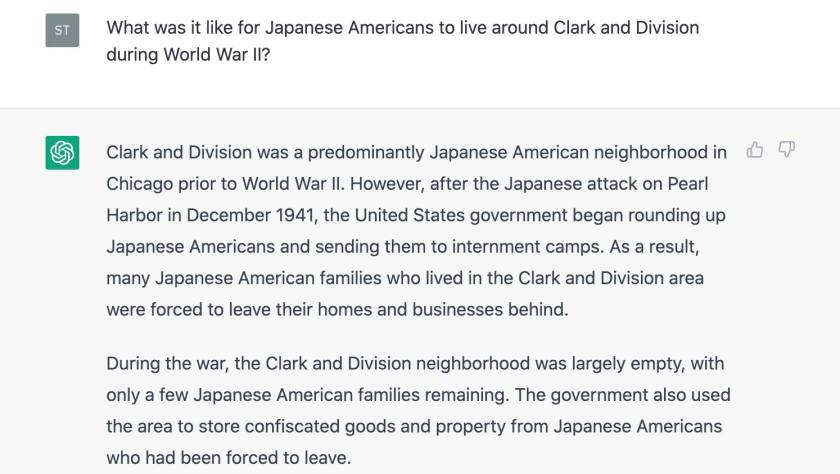
As an author who writes very specific historical and ethnic stories, I haven’t been that concerned that I can be possibly replaced by a robot. But for fun, I did go to ChatGPT and asked the bot questions about the incarceration of Japanese Americans during World War II. The answers it gave me were both encouraging and unnerving. Encouraging in that the answers were correct and factual. Unnerving because the prose was clear and well-written. Then I asked ChatGPT specifically about the topic of my recent historical mystery, CLARK AND DIVISION, which is set largely in 1944 Chicago, where many Japanese Americans released from the ten detention camps sought refuge for some months and years. For this question, ChatGPT picked up none of the historical nuance and came up with a completely wrong answer. (See screenshot.)

As I discussed recently at a Sisters in Crime Los Angeles meeting, when writing historical mysteries—or perhaps any kind of fiction—look for the gaps of knowledge. Let’s surprise our readers, take them to places and situations that they have never been. If a robot can easily replicate our tropes, characters, or plot points, maybe we should seek to create fresher tales that only living, breathing person can tell. Let’s go to those archives and open those dusty books that haven’t been digitized or engage in vulnerable, emotional conversations with people who share stories that they have never told. In this way, I see artificial intelligence as a good challenge more than a competitor. I seek to stump the robot instead of destroying it.

For a headier analysis of ChatGPT, go to science fiction writer Ted Chiang’s article in the New Yorker, in which he likens the new technology to a bad photocopy of source material: http://Ted Chiang’s Article

(Naomi Hirahara is the Edgar- and Mary Higgins Clark Award-winning author of the Mas Arai mystery series and the historical novel, Clark and Division. Evergreen, the sequel to Clark and Division, will be released this August. For more information, go to her website, http://www.naomihirahara.com.)

.

(Naomi Hirahara’s article is posted by Jackie Houchin)

Memoir: What it is/What it isn’t

By guest blogger, Alison Wearing

I think it’s so much easier to define memoir by what it’s not…Memoir is not a chronological recitation of a life. It’s not therapy. It’s not an accusation. It’s not a boast. It’s not fiction. It’s not gossip. Memoir is a search to understand the human condition—to tell a personal, resonating story. Memoir writers look back with empathy—toward themselves and toward others. They fabricate nothing on purpose. They know what to leave out. And they recognize—explicitly and implicitly—they are not the only ones in the room. Their readers matter, too.” 
Beth Kephart, author of Handling the Truth

It used to be that only famous people wrote about their lives: retired politicians, Hollywood personalities, rock stars. They wrote their memoirs; they still do. The aim of a person’s memoirs is to cover as much of a life as possible, to draft an overview that touches on all the essential points: family, education, relationships, influences, crucial turning points, successes, failures, accomplishments. Memoirs can also be called autobiographies.

More often than not, memoirs and autobiographies are structured chronologically, and generally, we are drawn to read them because the authors (or, in the case of ghostwritten autobiographies, the subjects) are people already familiar to us. There is absolutely nothing wrong with writing an autobiography, as long as your intended audience is your family or those close to you (unless you are famous, in which case your fans await your story!).

I once had a woman in one of my workshops who was creating a handwritten and hand-bound autobiography, complete with sketches of floor plans of the houses the family had lived in, paintings of significant buildings, black-and-white photographs. It was a magnificent creation and will be a priceless treasure for her family and future generations. Those of us in the workshop enjoyed paging through the volumes, admiring certain drawings and photographs, but the story itself didn’t invite or include us. It was a series of details that had relevance only to the people involved in the life described. For what it was, it was spectacular. I don’t want to detract from that approach and the author was very clear about what she was doing and for whom. The reason she joined my workshop was to learn how to write more personally, to delve into the realm of communicating emotion rather than simply the facts. I’m not sure she’ll choose to include that kind of writing in her book, but her family might treasure that intimacy if she does. Either way, this kind of a work isn’t a memoir. It’s an autobiography. It’s the whole kit and caboodle. It’s the wide-angle photo of a life.

An autobiography can be a beautiful endeavor, but it is markedly different from a memoir. For while an autobiography is the story of a life, a memoir is a story from a life.

A memoir may visit different parts and elements of a person’s life, but the intention is not to tell or describe the whole thing. It may deal with a period of time, a place, a relationship, a journey, or several of those things, but the story is delineated, it has a container far smaller than the span of the writer’s life. A memoir has a focus; ideally, it has a clear and narrow focus. And paradoxically, the narrower the focus, the greater the freedom the writer may have to talk about the breadth and fullness of her life. We’ll delve into that more deeply when we get into structure, but for now, let’s just cover the basics of the genre.

In addition to a clear focus, a memoir has, at its heart, a transformation of some kind, a shift in perspective or understanding, a new way of seeing one’s life, a place, a relationship, the world, whatever the theme of the story.

In this way, a memoir often chronicles an emotional journey of some kind, a departure from one aspect of oneself and an arrival at another (often more enlightened) state of being. The author might be trying to achieve resolution, to solve of a problem, or to achieve a higher understanding or acceptance of circumstances, events.

Or, as Mary Karr, author of the now-classic memoir The Liar’s Club, puts it: “In a great memoir, some aspect of the writer’s struggle for self often serves as the book’s organizing principle, and the narrator’s battle to become whole rages over the book’s trajectory.”

The “battle” Karr refers to may take a variety of forms, and it might not be a dramatic fist-fight-of-a-battle so much as a peaceful and gradual unfolding. It could be a recollection of travels written from a broader perspective than what was available at the time.

It could be a revisiting of a traumatic incident from a place of recovery or empathy. Whatever its focus, a memoir is more than just an honest account of an event or a time, more than a simple recounting of events, more than a detailed reportage of a journey from A to B.

It is an effort to make sense of—and perhaps make peace with—an aspect of the writer’s life.

It is an exterior and interior expedition, a quest for meaning.

“Memoir is not about you, or me. It’s about something universal. That is, if you want anyone else to read it.  Good memoir takes on something universal and uses you as the illustration of that larger idea.”                                                                                     ~ Marion Roach Smith, author of The Memoir Project

##

Alison Wearing is a best-selling, multiple-award winning writer, playwright, and performer.

She is also the creator and facilitator of Memoir Writing Ink, an interactive online program that guides people through the process of transforming personal stories into memoir.

Do you have a personal story you wish to write?

Do you wonder how to craft your story to make it compelling reading for others? Or how to structure it so it holds together? Or how to write about difficult memories? Or how to write truthfully about something that happened decades ago? Or what to do if someone else remembers the same events differently, or if they don’t want you to write your story?

These questions can paralyze us, but that doesn’t need to be the case. In fact, those same questions can be the doorways to the finest iterations of your story.

If you’d like to learn more about her 12-week course, visit: Memoir Writing, Ink

##

Alison also leads Memoir Writing Retreats – next up is in Tuscany, Italy in October 2022 and in April 2023.  Interested?  Tuscany Retreats

..

What Makes a Good Mystery Series for the Author and the Reader?

While Jackie Houchin is on vacation (in Spain or France now) we have another Guest Author. (Thank-you, Elaine!)  Jackie hopes to return with her next scheduled post of June 8, 2022. 

by Elaine L.  Orr

Like most writers, I put words on paper because if they don’t get out that way I risk screaming on a street corner. I get those words into print because I think others would enjoy them.

When readers like the characters, they may clamor for more. Even if they don’t initially, we think they will. I consider several things when I start a new mystery series.

  • Is the setting or main topic interesting enough to keep exploring? My first series (the now twelve-book Jolie Gentil series) is set at the Jersey shore because I love small, east coast beach towns.
  • Can I connect to the characters enough that readers can too? This doesn’t mean does an author like the characters. Some of the most relatable ones are the evil ones.
  • Is the life of the main character part of a profession or hobby that makes discovering a lot of big problems (or bodies) realistic? Jolie is a real estate appraiser and runs a food pantry, both things that bring her into contact with many people in varied settings.
  • Is there a plan to have the characters evolve over time? If lead characters have the same strength and foibles in every book, they become predictable. That sameness can lead to reader (and writer) boredom.
  • Is the plan to write a certain number of books, culminating in a big event or life transition? Or can stories continue as long as the author has ideas?

I’ve used the Jolie Gentil Series as the example, so I’ll do it one more time. I envisioned three books, with the third being called Justice for Scoobie, a childhood friend she reconnects with as an adult. Wrong. He’s the favorite character. Couldn’t bump him off and have Jolie solve that crime!


My primary hobby is researching family history, a natural one seeing that I like U.S. history and finding my families’ links to it. Why did I never make that an important focus of a series? Beats me. It is now.

The Family History Mystery Series has the fourth book underway. And that tells me something. My other two series (River’s Edge and Logland) have three books each. I may start fourth books, but why not jump into them immediately after the third?

Did I not think through the first four questions above? I did, and I have more ideas. What was missing? Passion. Hard to define, but it’s another key component of writing. You have to REALLY want those characters’ lives to continue if they appear in a series.

Have you noticed I didn’t use the word plot once in this piece? All good stories need more than a beginning, middle and end. They need a compelling story and conflict, which doesn’t necessarily mean action. In mysteries, there are a myriad of criteria. For example, if the villain pops up at the end with very little role or foreshadowing, reviews may not be kind.

As in all books, plot matters in a series. But the characters (and their evolution) matter most. Main and even ancillary characters need to contribute to the story and have a clear purpose.

Reader reactions matter, but they can’t determine how your characters develop. They can, however, inform what you do after book one. Take them seriously, but don’t make them your guide.

Finally, enjoy writing the series. If you don’t, the series could meet an untimely demise.

###


Elaine L. Orr writes four mystery series, blogs, keeps in touch with lots of family and friends, and tromps cemeteries looking for long-dead ancestors.

To learn more, visit https://www.elaineorr.com.


It’s Never Too Late

A Guest post by P.A. De Voe

(posted by Jackie Houchin)

A few years after my retirement, my first novel, A Tangled Yarn, was published as part of a cozy mystery book-of-the-month series. I had found the opportunity to write for the series through a regional writer’s conference where I met a representative from the publishing company.

I tell you this for two reasons. First, it’s never too late to begin anew and reach for your dream. Second, dreams can come true if you’re proactive. I would never have published that first novel if I had stayed home and just dreamt about becoming a “real” author. I met the publisher’s representative because I had started attending conferences to learn more about the how and what of writing, and to meet agents and publishing companies’ representatives. Even though I am an introvert (a good many authors are), I really believe that joining writers’ groups and attending conferences are invaluable for building our skills, for learning about our business, and for networking.

Since that first book after “retiring,” I have gone on to publish a second cozy mystery, five historical mysteries, and a collection of historical short stories—with a sixth historical novel to be published this summer.

My historical stories are all set in Imperial China, specifically (at this point) in the late 1300s, the beginning of the Ming Dynasty. The first three—Hidden, Warned, and Trapped—is a young adult trilogy that I had been thinking about and working on for many years. My educational background is anthropology with an interest in Chinese culture and traditions. Of course, that was long before I retired from jobs that did not specifically involve much of this training.
So, when I decided to write historical Chinese mysteries, I needed—and still need—to do a lot of research on the time period. I read Chinese literature and whatever scholarly papers or books I can find dealing with Imperial China. I look at materials on the law, economics, religion, art, education, geography, medicine, local and family histories, and more. My research is broad because I never know what’s going to be useful for a story. Criminal case reports are, of course, important because they not only tell me about the why and how a case was handled, they also expose the tensions/stresses in the society at that time. Other areas also provide windows into the social, intellectual, and religious realities for people at that time in history, which are critical for forming believable, historically grounded characters and motivations.

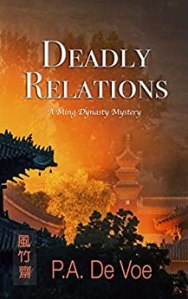
  Also, research is needed to get a realistic picture of what’s happening at the local level, beyond the Emperor’s court. In my newest series, A Ming Dynasty Mystery (Deadly Relations and No Way to Die), I wanted to show life from both a male and female perspective. The male character, Shu-chang, was easy to develop. He’s an amalgamation of striving young men struggling to achieve social and economic success through the long-standing Chinese merit system which was based on an examination process. There are many, many examples of such young men.

The female character, however, was more difficult because I wanted her to be educated and to have freedom to act outside of her home. At the same time, she had to be realistic. I couldn’t simply give her a contemporary mindset in order to create an interesting story. After all, she lived in a period and culture with a different set of expectations for men and women. Fortunately, while reading broadly, I ran across an account of a learned woman who had trained as a professional women’s doctor under her own grandmother. I was able to use her as a model on which to build my character Xiang-hua. I now had a strong female protagonist that I felt was also true to her time and place.

Fortunately for me, I enjoy research, sifting through and collecting historical tidbits. I can easily get lost in the details. However, only a small fraction of what I find interesting can or should go into a story.

As we know, an author has to be judicious in what and how information is used. It has to support what is happening without overwhelming the reader. A story is not the place for an information dump! This is true whatever the genre, but in historical fiction it is particularly important to get the balance right.

The trick is to provide enough detail that readers can easily envision the characters and environment—which may be alien or exotic to them—without being boring or bringing the story to a standstill. Consistently meeting this challenge is a skill that takes practice, and a good reader or editor can be invaluable in helping to correct the balance if and when it goes astray.

Finally, let me add one more thing on beginning to write fiction later in life. I have heard authors say they are compelled to write their stories. That’s not me. I don’t feel compelled. After all, until I retired, I wrote only a little poetry and few short stories or novels. Mostly, I immersed myself in whatever current job I had and in my family life. Once retired, however, I went back to dreams largely laid aside and dusted them off. Writing cozies and, especially, historical mysteries provides constant new challenges for me. Each story gives me a goal to work toward. A new world to share with others. And that brings me true enjoyment.

###

P.A. De Voe, an anthropologist and China specialist, writes contemporary mysteries and historical crime stories set in Ming Dynasty China. She’s a Silver Falchion award winner and twice a Silver Falchion award and an Agatha award finalist. Her short story, The Immortality Mushroom, was in the Anthony Award winning anthology Murder Under the Oaks edited by Art Taylor. She is a member of Sisters in Crime National, Tucson Sisters in Crime, the SinC Guppy Chapter, the Short Mystery Fiction Society, St. Louis Writer’s Guild, Saturday Writers, the Historical Novel Society, and Mystery Writers of America/MWA Midwest. Find her at padevoe.com. Her books can be found on Amazon.

Every Day is Valentine’s Day 

by Maggie King

For lovers, every day is Valentine’s Day. But February 14 is the official day when Cupid’s arrow strikes and big business rakes in billions spent on candy, flowers, jewelry, and fine dining.
How did Valentine’s Day get its start? Who was St. Valentine? Good questions, with no easy answers. The history of the saint and the day that honors him is murky, to say the least.

Pope Gelasius I established St. Valentine’s Day in the 5th century to pay homage to two saints named Valentinus who were martyred on February 14. Some believe there was only one saint. A popular legend has it that Valentine was a temple priest who was arrested after ministering to Christians being victimized by the Roman empire. While in prison, he fell in love with a young woman who may have been the warden’s daughter. Before his execution, he sent her a note and signed it “Your Valentine.”

When Emperor Claudius forbade young soldiers to marry, another legend was born: Valentine was beheaded for performing secret weddings for the soldiers.

And then there’s Lupercalia, a Roman fertility festival celebrated from Feb. 13 to Feb. 15. Some say the festival inspired Valentine’s Day.

There’s a suggestion of romance in these stories, but the link between romantic love and Valentine’s Day is credited to the works of Chaucer and Shakespeare. In the middle ages couples expressed their love with handmade paper cards (valentines). In time, factory-made cards became available; but Hallmark Cards of Kansas City, Mo. came on the scene in 1913 and made the holiday the big business it is today.

How do the characters in my Hazel Rose Book Group Mysteries celebrate Valentine’s Day? I’ve yet to set a story in February, so I can only guess. But my main characters, Hazel Rose and her husband, Vince Castelli, would certainly celebrate the day in style.

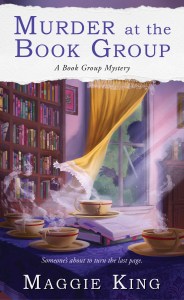
In Murder at the Book Group, the series debut, Hazel describes Vince as her on-again, off-again lover. She attributes their sporadic relationship to their inability to get along. She doesn’t offer details as to why they don’t get along but the reader can guess that the real problem is Hazel’s cold feet about committing to a permanent relationship. She’s been married four times and isn’t eager to make a fifth trip to the altar, only for the relationship to sour soon afterwards. Does she love Vince? She doesn’t want to commit to that either, but she definitely has a soft spot for him.
When Carlene Arness dies after drinking poisoned tea at a book group meeting, Vince finds out that Hazel was there. He’s surprised by her determination that Carlene didn’t commit suicide and dismayed that she’s hell bent on finding the killer on her own. Someone needs to protect her and he figures it might as well be him. Hazel doesn’t make that an easy task.

At first, Hazel sees Vince as a liaison with the police (he’s a retired homicide detective), but soon realizes that she needs him for more—much more.

Will solving the mystery of Carlene’s death put Hazel and Vince on the road to happily-ever-after?

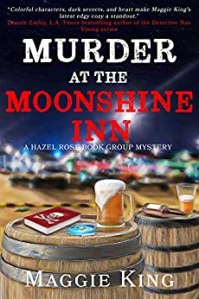
If you read #2 in the series, Murder at the Moonshine Inn, you will know the answer is “yes.” They married in beautiful Costa Rica. Hazel becomes a successful romance writer. The very name Hazel Rose conjures romance.
Hazel and Vince are best friends who respect each other and share a great passion. The passion is only suggested. I close the bedroom door on the reader.

Marriage definitely suits this couple. But they do have conflicts, the main one being when Hazel goes off on her own. Vince knows he can’t stop her from investigating, but he has her promise to always have him or another friend with her. But Hazel manages to find spur of the moment sleuthing opportunities that she can’t pass up. She knows she has to mend her ways. Trust is very important to their relationship.

The book group members don’t fare as well as Hazel and Vince in the romance department:

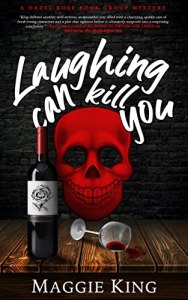
  • Hazel’s cousin Lucy (the “perfect” one) is having marital issues in Laughing Can Kill You, #3 in the series. She was very happy with her husband Dave until a chance discovery made her question his faithfulness.
  • In the first two books, Sarah Rubottom was married to a paraplegic Vietnam war veteran who was an outrageous flirt. In Laughing Can Kill You, he has died and Sarah chooses global travel over romance.
  • Trudy Zimmerman is the ex-wife of the victim in Laughing Can Kill You. She almost remarried aboard a cruise, but her fiancé dumped her (figuratively) for another passenger. Trudy is happy on her own.
  • Eileen Thompson has no romantic interest and is content without one.
  • Lorraine Popp’s own mother calls her an “old maid.”

The characters outside the book group are also unlikely to celebrate Valentine’s Day in any big, or even small, way. In the Hazel Rose mysteries, marriages and relationships are plagued with infidelities, addiction, women with bad boys, men with bad girls. There are women with husbands in prison. There’s a woman with a husband who may not even exist!

Then there’s the colorful and free-spirited Kat Berenger. Kat enjoys casual flings with a number of men. Perhaps she and her lover du jour exchange valentines.

Of course, I’m writing murder mysteries. Conflicts, misunderstandings, and unrealized expectations can lead to murder. I can’t have too many happy and romantic couples like Hazel and Vince.

Now my mind is abuzz with ideas for Valentine mysteries. I can see Hazel and Vince finding romance and murder while zip-lining in Costa Rica.

Happy Valentine’s Day+2. Because every day is Valentine’s Day!

#

Maggie King is the author of the Hazel Rose Book Group mysteries and short stories set in Virginia. Her story, “The Last Laugh,” appears in the recently-released Virginia is for Mysteries III anthology.

Maggie is a member of the Short Mystery Fiction Society, International Thriller Writers, James River Writers, and is a founding member of the Sisters in Crime Central Virginia chapter. Maggie lives in Richmond with her husband, Glen, and cats, Morris and Olive. She enjoys walking, cooking, travel, film, and the theatre. Visit her at MaggieKing.com.

Facebook: https://www.facebook.com/MaggieKingAuthor

Twitter: https://twitter.com/MaggieKingAuthr

Instagram: https://www.instagram.com/authormaggieking

#

POSTED FOR MAGGIE KING by Jackie Houchin

Two Murders in One Book: A Story-Within-a-Story

by V.M. (Valerie) Burns

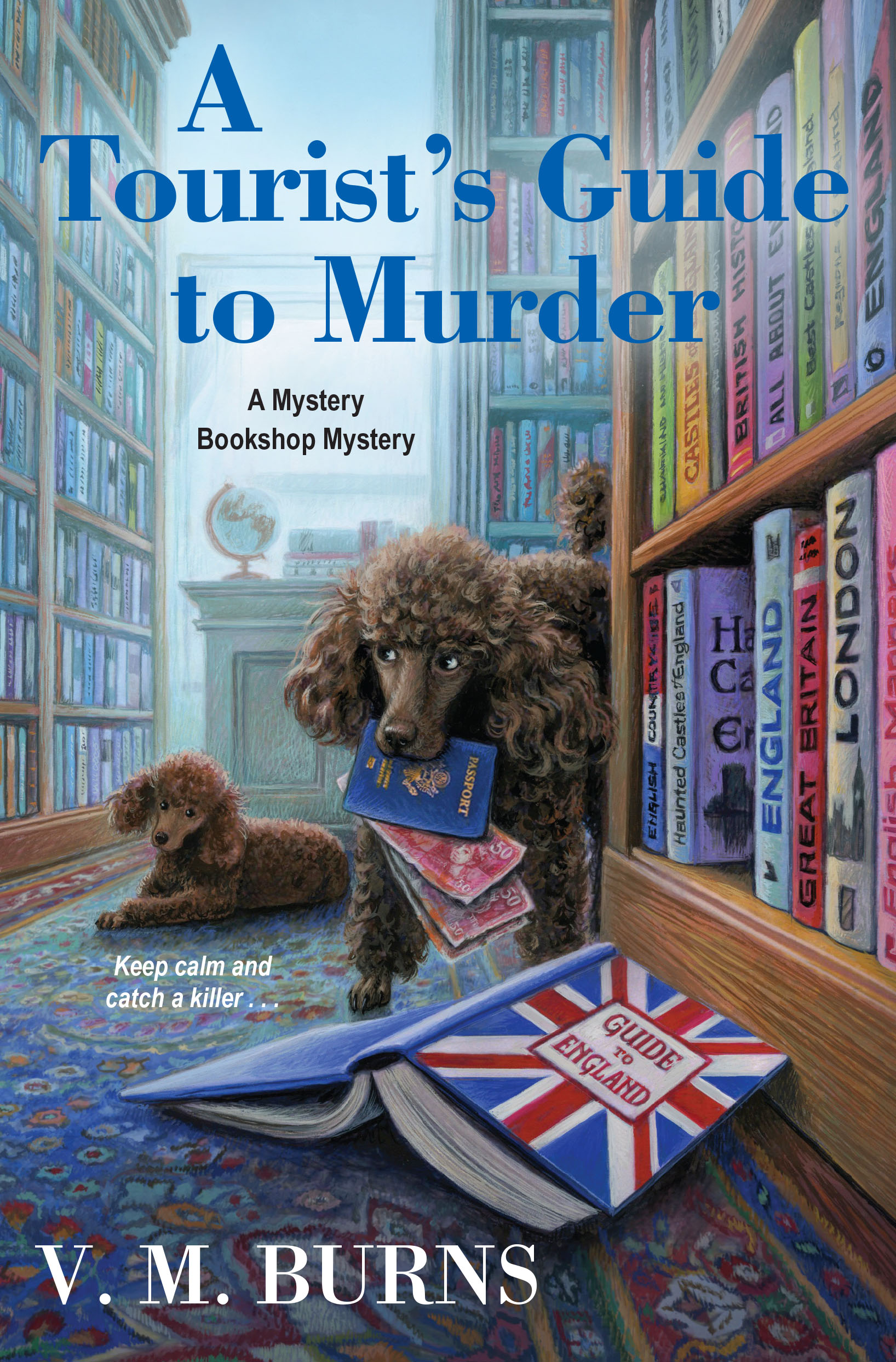
Each book in my Mystery Bookshop Mystery series features a story-within-a-story. My protagonist, Samantha Washington and her late husband, Leon, dreamed of quitting their jobs and owning a mystery bookshop. When her husband dies, Samantha realizes life is too short not to follow your dreams. So, she quits her job, buys the building she and Leon always dreamed about, and opens a mystery bookshop. Owning a bookshop that specializes in mysteries was a dream Sam shared with her husband. However, she also had another dream. She dreamed of writing British historic cozy mysteries, which she does to fill her time after her husband’s death. Each book in the Mystery Bookshop mystery series includes two mysteries, the mystery that Sam is solving in her real life and the British historic cozy mystery that she’s writing.

People often ask, what inspired me to write a story-within-a-story. The truth is this series didn’t start out that way. When I first started to flesh out the idea for the series, my initial plan was that the only murders would take place in the book that my protagonist was writing. I didn’t plan on having Sam solve a murder in her personal life at all. This is where I got the title for the first book, THE PLOT IS MURDER. My theory was that it would be more realistic that way and I wouldn’t have dead bodies littering the streets of the small fictional town of North Harbor, Michigan. However, I wondered if mystery readers would be satisfied with that. Then, I had my eureka moment. What if, I had two mysteries? The protagonist would solve a mystery in her life AND there would also be a murder to solve in the book she was writing. As a mystery lover, I thought that would be a book I would want to read. As an author, I wondered, what was I thinking? It’s hard enough to write one mystery. How was I going to write two?

I tackled the task of writing two mysteries in every book the same way you eat an elephant—one bite at a time. When I started, I didn’t have an elaborate plan (or much of a plan at all). I knew I wanted parallels between my two storylines. My thought was that writing the British historic cozy would help my protagonist (Samantha) solve the mystery in her real life. So, if Sam was faced with a locked room mystery, then there would be a locked room mystery in the book she was writing. 

Another common question I get is whether I write the stories separately or simultaneously. For me personally, I write in sequence. I have friends who can write scenes out of order. However, I can’t do that. I have to write in order. Occasionally, I get stuck (it might be more than occasionally) and I have to move forward and come back and finish a scene later, but that’s about all I can do out of sequence. It’s probably just a personal quirk (I’ve got quite a few). 

My best advice for writing, whether it’s a story-within-a-story, a stand-alone, a series, short story, whatever, is to figure out what works for you and do that. Writing isn’t a one size fits all activity. Just because one method works for one person, doesn’t mean it will work for everyone. Each person and each writer is different. Writing a book from beginning to end is hard. Don’t make it harder on yourself by trying to be someone else. Also, keep in mind that everyone doesn’t like the story-within-a-story concept. I’ve heard from readers who found it distracting and have told me they skip the British historic cozy. I’ve also heard from readers who prefer the British historic cozy over the contemporary mystery. Every person is different with their own unique likes and dislikes. It will be impossible to please everyone. As a writer, all you can do is focus on writing the best book you possibly can. Keep your fingers crossed. With perseverance, hard work, and a great deal of luck, your dreams can come true, just like Samantha Washington.

Tourist Guide to Murder_TRD

While visiting the land of Miss Marple and Sherlock Holmes, bookstore owner and amateur sleuth Samantha Washington finds herself on a tragical mystery tour . . .
 
Sam joins Nana Jo and her Shady Acres Retirement Village friends Irma, Dorothy, and Ruby Mae on a weeklong trip to London, England, to experience the Peabody Mystery Lovers Tour. The chance to see the sights and walk the streets that inspired Agatha Christie and Arthur Conan Doyle is a dream come true for Sam—and a perfect way to celebrate her new publishing contract as a mystery author.
 
But between visits to Jack the Ripper’s Whitechapel district and 221B Baker Street, Major Horace Peabody is found dead, supposedly of natural causes. Despite his employer’s unfortunate demise, the tour guide insists on keeping calm and carrying on—until another tourist on their trip also dies under mysterious circumstances. Now it’s up to Sam and the Shady Acres ladies to mix and mingle among their fellow mystery lovers, find a motive, and turn up a murderer . . .

You can read more about Samantha Washington in the other Mystery Bookshop Mysteries.

THE PLOT IS MURDER

READ HERRING HUNT

THE NOVEL ART OF MURDER

WED, READ, AND DEAD

BOOKMARKED FOR MURDER

Purchase Link

# # # # # # # # # # #

About the author

TOURIST 62C

V.M. (Valerie) Burns was born and raised in Northwestern Indiana. She is a member of Mystery Writers of America, Dog Writers Association of America, Thriller Writers International, Southeast Mystery Writers of America, and is on the national board for Sisters in Crime. V.M. Burns is also the Agatha Award nominated author of The Plot is Murder, the first book in the Mystery Bookshop Mystery series; and the RJ Franklin Mystery series. She now lives in Eastern Tennessee with her two poodles. Readers can keep up with new releases by following her on social media.

Website: http://www.vmburns.com/

Facebook: https://www.facebook.com/vmburnsbooks/

Instagram: https//www.instagram.com/vmburnsbooks

Bookbub: https://www.bookbub.com/authors/v-m-burns


This article was posted for V. M. Burns by Jackie Houchin.