
 When I was asked to teach a writing course for Sisters-in-Crime/Los Angeles, I decided I better evaluate how I wrote a story first. I write novels as well as short stories and figured there were similar fundamentals all writers use in both endeavors. Then I remembered the Aristotle course I had taken in college. I still had the textbook, The
  Poetics, so I dusted it off and read the part on the 5 Basic Elements in any story: Plot, Character, Dialogue, Setting, and The Meaning of the story.
I have covered most of these points in previous blogs, but there is one crucial thing a writer needs to make sure all these elements fit and that is a Timeline. I looked back over the files I had on all the books and stories I had written and lo and behold, I actually made a timeline for just about all of the stories.
What does a Timeline do? It keeps track of Who does What Where and When and sometimes Why.
I actually use several methods to achieve these goals. If the story doesn’t cover very much time or utilizes few locals, I write a simple timeline noting the date and time certain things happen and where the action takes place and who does what each time. If there is a lot of time covered, I use a calendar.
I generally have a basic idea what my story is about before I start putting words on paper. I write the opening (usually about 20 times) until I know where I’m going and the tone I want in the story. Then I jot down the relative time of day each event happens as the story progresses. I break them into no less than 15 minute intervals. Usually it is thirty minutes or by the hour. You can’t have more than 24 hours in any given day, so it keeps you honest and organized.
If my characters are driving around the city, take for instance Los Angeles, I use Google Maps to see how long it takes to get from point A to point B. I’ve seen TV shows where people in L.A. can get someplace in thirty seconds… Only if they use a teleporter. (“Beam me up, Scotty.”) I discipline myself and make my fiction a tad more real.
When I have finished the story, I’ll go back over the Timeline to see if I have crammed too much or too little into that given time frame. And I do something else. I’ll see if the plot holds together. Sometimes a destination doesn’t make sense or maybe some other character should be involved or eliminated. And sometimes I need to add a high point or low point just to give the story movement. I know movies today are all action and explosions and no plot, but I prefer plot and character.
 There is another type of timeline I make: A List of Characters. I include their date of birth in case they age throughout the story. You want to make sure you don’t have a character born in 1920 be only fifty in 1990. And you don’t want a character to remember seeing news of the Hindenburg when she was born in 1947. Keep track.
Fellow Writer-in-Residence blogger, Bonnie Schroeder, has a new book (Write My Name on the Sky) coming out in July that starts out in the late Sixties. She had to make sure the items mentioned were around then. She did it meticulously. She might have lived through that time, but she still had to make sure she didn’t drop a 21st Century gadget into the story or mention a tune that wasn’t around then.
I start out with a piece of paper that I print off just for this task. I pencil in the character’s name as I write them. I give a brief description of their role and age. Many times I change the name. If you will note, there is an alphabet at the bottom of that page. I circle the first letter of the character’s name in that alphabet. I want each name to fit each particular character, but they can’t all begin the same letter unless you’re having fun.
When I’m finished with the story, I copy all those names and descriptions into the computer and add even more description and start evaluating those characters. Do some need more personality? Does one need to be meaner? Or smarter? Or should a particular character add something to the story that is needed? Or should the character be eliminated? One time I wrote a book knowing who the bad guy (or in this case gal) was going to be, but when I was finished I had another thought. I bumped off the initial suspect and then my private detective had to go back over the case to see what she missed… or was it time to hang up her .38s and retire? It was by reviewing that list of characters that allowed me to see a “What if?” scenario. And I am glad I did. It made for a much better and far more exciting conclusion to the novel.
And here is another benefit in having that Timeline. It gives you an Outline for your story in case an editor or publisher wants a synopsis of your book. And even better, that quick rundown of the plot lets you see what your story is about so you can more easily write the all important blurb for the back of your book. You only need the first third to tell any reader what is in store. Think of the timeline as the dry run for that “elevator pitch” you have heard about. The fact that you have consolidated your story into a few pages of a “timelined” plot; you can easily tell someone what the story is about.
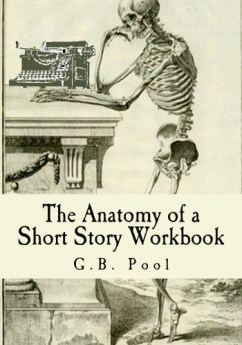 I have put most of my writing course into a book: The Anatomy of a Short Story Workbook. It covers many of the things I have posted on our blog, but as an added bonus, it gives you diagrams and pictures of these worksheets. I use them in all my writing. I never create a story without them. Maybe they can help you.
Author Bio
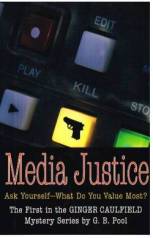
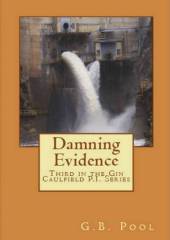
A former private detective and a reporter for a small weekly newspaper, Gayle Bartos-Pool has several books in print: The Johnny Casino Casebook 1- Past Imperfect, The Johnny Casino Casebook 2 – Looking for Johnny Nobody, and The Johnny Casino Casebook 3 – Just Shoot Me; Media Justice, Hedge Bet, and Damning Evidence in the Gin Caulfield P.I. Series; From Light To DARK, a collection of short stories; Eddie Buick’s Last Case, Second Chance, The Santa Claus Singer, Bearnard’s Christmas and The Santa Claus Machine. She is the former Speakers Bureau Director for Sisters in Crime/Los Angeles and also a member of Mystery Writers of America and The Woman’s Club of Hollywood. She teaches writing classes: “Anatomy of a Short Story,” “How to Write Convincing Dialogue” and “Writing a Killer Opening Line” in sunny Southern California. Website: www.gbpool.com.

 Chance McCoy was a private detective killed during a routine case, but he is given a second chance to make good. But with his track record as a P.I., he just might blow this chance, too.

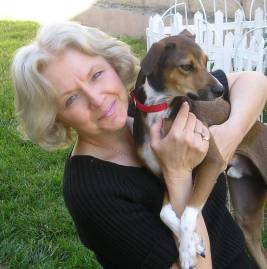 As for me, since I have always had a pet in my house, as a kid and as an adult, I never thought it odd to put a cat or dog in a story. My Ginger Caulfield private detective character has two dogs, Sherlock and Foxtrot. In reality, my husband and I got our two Italian Greyhounds, coincidentally named Sherlock and Foxtrot, from the Los Angeles pound. The two canines don’t solve mysteries in Gin Caulfield novels… yet. Though you never know. But I will tell you one thing… no dead dogs will EVER turn up in my stories.
 The three books in my Christmas series are full of animals even though Santa doesn’t consider them pets. After all, Bearnard, the Polar bear from Bearnard’s Christmas, works in the castle and even helps solve a mystery in the third book, Every Castle Needs a Dragon, coming out at Thanksgiving. Even the dragon, Orville by name, plays a rather large part in the story. (He reads as well as talks!)


 My spy novels reference Sukoshi, the Beagle I had as a kid and up until I was working as a private detective at the age of 21. She is mentioned because the books are loosely based on my dad’s career in the Air Force and Sukoshi went to France with us when my father was stationed there. When we were visiting West Berlin, she had a very long leash that allowed her to wander under the barricade into the no-man’s land that separated West and East Berlin, so she actually got closer to the commie-side than I did.
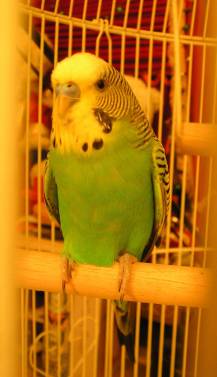 It really wasn’t a coincidence on my part to make these comparisons because, you see, I dedicated the book to Freddy J. Feathers, our beloved parakeet who recently passed away. I found Fred wandering in the backyard about six years ago and he got a “second chance” with us. That fact fit perfectly with this particular book. And the short piece at the end of the book ties my love of pets up with a big ribbon. (You’ll have to read that part for yourself.)

 A former private detective and once a reporter for a small weekly newspaper, Gayle Bartos-Pool (G.B. Pool) writes the Johnny Casino Casebook Series and the Gin Caulfield P.I. Mysteries. She also wrote the SPYGAME Trilogy: The Odd Man, Dry Bones, and Star Power; Caverns, Eddie Buick’s Last Case, The Santa Claus Singer, Bearnard’s Christmas and The Santa Claus Machine. She teaches writing classes: “The Anatomy of a Short Story” (which is also in workbook form), “How to Write Convincing Dialogue” and “How to Write a Killer Opening.” Website:
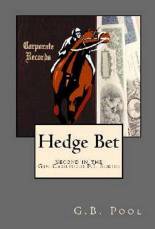
 “Johnny worked for me several years until he had enough P.I. hours under his belt to go out on his own. I hated to see him go, but I knew he worked better alone. Most of the time I do my work solo like the case at the racetrack in Hedge Bet. I should amend that statement because I got my husband, Fred, to do some work for me. His trip to Mexico to bring back a witness led to a few choice words from him, mostly unprintable. But the guy’s a natural P.I.

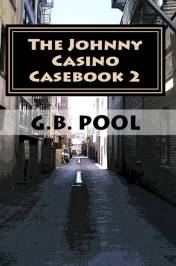 or at least I thought it was his real name, until another story in the Johnny Casino Casebook series uncovered something that even Johnny didn’t know. It changed everything for him. It’s in The Johnny Casino Casebook 2 – Looking for Johnny Nobody. That’s when I started seeing a pattern.”

 If you ever come to my house you will see small notebooks all over the place that I can grab and jot down an idea if it drops out of the sky. And they do on occasion. My fellow author, Bonnie Schroeder, gave all us Writers-in-Residence ladies a notebook and pencil set for the shower that writes in the wet. What a concept. So I am covered wherever an idea strikes.
 Stories are everywhere. The writer just has to see the possibilities. But remember, as a writer, you control your world and you can twist the story into something unique if you try. Just try not to twist it into something that doesn’t make any sense. More and more TV shows are turning into pretzels that barely make sense. That’s why I read more books than watch television.
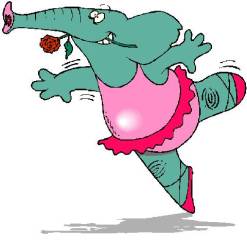 Now how about the middle? There it sits. Is it a big, hulking middle that the reader has to push around the dance floor with no music or is it thin and bony with no rhythm at all? This middle section is where the reader learns all the little things that hold the story together. Some backstory and some character traits are sprinkled in along with the bulk of the plot. Whether it’s on the high-calorie side with lots of detail or maybe a diet plate with most of the fat is trimmed off, you have to make the middle tasty.
 Editing happens here. Add a little to enhance the story. Cut some off to make the pages turn faster toward the climax. Sweeten it with some good dialogue. Add some choice settings to give it flavor.

 by G.B. Pool
 Or how about A Christmas Carol? Kids might like the Ghost of Christmas Past and Present and maybe even the Ghost of Christmas Yet to Come, but it will take a while before they understand what the story means on a more adult level.

 Years ago I worked at Walden Books in the Glendale Galleria. At the beginning of the holiday season the mall had a Santa who sang songs when he wasn’t talking to kids. I moved the Santa to Las Vegas in the book The Santa Claus Singer and made him a lounge singer who gets laid off and who ends up playing Santa at the mall and sings to the customers. He meets a young girl who is need of an operation. He is just the right blood type and he volunteers for the gig. At the same time, he gets a job singing in one of the hot night spots on Christmas Eve. A once in a lifetime opportunity. Only thing is, he promised to visit the young girl that same night. And then his car breaks down…
 The newest book is called The Santa Claus Machine. I got the idea from a Christmas card. In order to modernize his image, Santa builds a series of Santa robots that are sent to stores around the world. They are programmed to tell Santa’s stories and record children’s wishes. An unscrupulous sales manager at the largest department store chain in America, along with their computer engineer, kidnap the real Santa and hide him in an ice cave. They reprogram all the Santa Claus Machines to encourage children to ask for more and more toys. When Santa learns about the change, he becomes disheartened and thinks he might have to cancel Christmas.
 And I have been working on a new story for next year. The idea came when I bought a Christmas ornament, a small dragon. I found a tiny wreath on the sidewalk while walking one of the dogs and slipped it over the dragon’s head. Then I set him on the roof of the Santa castle and said, “Every Castle Needs a Dragon.” That’s the name of the book. I bet you don’t know that dragons are the protectors of something very precious in the world. If they have the wrong champion, they can go astray and do great damage, but if they are taught well, they do nothing but good. Now someone wants to capture this one particular dragon… You will get to read the rest of the story next Christmas.
 A former private detective and once a reporter for a small weekly newspaper, Gayle Bartos-Pool (G.B. Pool) writes the Johnny Casino Casebook Series and the Gin Caulfield P.I. Mysteries. She also wrote the SPYGAME Trilogy: The Odd Man, Dry Bones, and Star Power; Caverns, Eddie Buick’s Last Case, The Santa Claus Singer, Bearnard’s Christmas and The Santa Claus Machine. She teaches writing classes: “The Anatomy of a Short Story” (which is also in workbook form), “How to Write Convincing Dialogue” and “How to Write a Killer Opening.” Website:




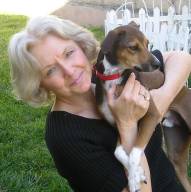 A former private detective and once a reporter for a small weekly newspaper, Gayle Bartos-Pool (G.B. Pool) writes the Johnny Casino Casebook Series and the Gin Caulfield P.I. Mysteries. She also wrote the SPYGAME Trilogy, Caverns, Eddie Buick’s Last Case, The Santa Claus Singer, Bearnard’s Christmas and The Santa Claus Machine. She teaches writing classes: “Anatomy of a Short Story” (which is also in book form), “How to Write Convincing Dialogue” and “How to Write a Killer Opening.” Website:
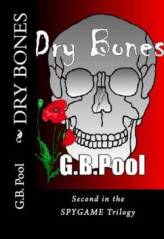
 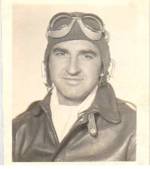 My father was in the Air Force. We traveled a lot. I lived on Okinawa and in France as well as in Memphis (near Elvis) and here in California. There were a few other military bases along the way and many of these places turn up in my SPYGAME Trilogy. I used some of my father’s experiences as a pilot during World War II and afterwards, as well as my imagination, to concoct an intriguing set of stories. The first one, The Odd Man, deals mostly with WWII and the Bay of Pigs. I went to a boarding school in France and that place finds a home in book two, Dry Bones. Book three, Star Power, wraps up the trilogy by bringing back characters from books one and two for a climax ending up in Southern California with some Hollywood stars tossed in for fun, though some are positively deadly.

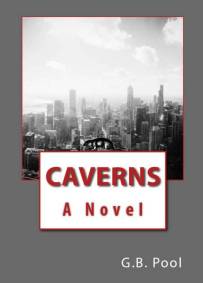 Here’s another story. When I was on assignment in Chicago as a P.I., I lived in an apartment near Lake Michigan. It was February. A brutal winter. I had to take the subway and a bus to the job at night. I worked from 5 p.m. until 2 in the morning. I survived Chicago. Years later I heard a story from a co-worker in California about a police officer in New York City who ran across something rummaging around in garbage cans down an alley. He shot it. It was a rat. It weighed in at 105 pounds. I moved the rat and his friends to snowy Chicago and I have them eating away the garbage on which a large area of The Windy City was built after the Great Fire. This was near the lake. Huge caverns have been carved out under the condos around the lake. Disaster looms. That book is Caverns.
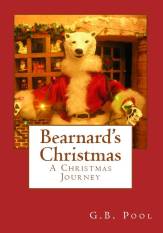 started making my own and making vignettes. I had an idea for a Christmas castle that I designed. I still have the sketch. I decided to write a story to go along with the idea of this castle. Then I decided to build the castle and make the figures that went with the story. Then I published the book. The first one was Bearnard’s Christmas.

 A former private detective and reporter for a small weekly newspaper, G.B.Pool writes the Johnny Casino Casebook Series and the Gin Caulfield P.I. Mysteries. She teaches writing classes: “Anatomy of a Short Story,” “How To Write Convincing Dialogue” and “Writing a Killer Opening Line.”
 This takes me to Anna Katharine Green and Mary Roberts Rinehart. These two ladies lived a hundred years ago. Anna Katharine Green wrote her Amelia Butterworth character in 1897, well before Agatha Christie wrote The Murder at the Vicarage (1930) featuring Miss Marple. Christie acknowledges Green as her inspiration. Green also wrote about a young female amateur sleuth, Violet Strange, years before the first Nancy Drew stories hit the bookstore shelves.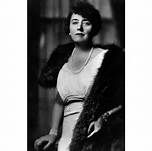
 he is considered the source for the term: “The butler did it.” She didn’t use that exact phrase, but the butler was the culprit. She even has a series of stories centered around World War I. She was a trained nurse and married a doctor; so much of what she writes has facts behind it. She even served as a war correspondent during World War I in Belgium and toured the front lines, so the visuals are based on things she saw firsthand. Not all her stories are mysteries, but they are all good, solid stories, some even slightly romantic, but nothing even remotely lurid. How refreshing.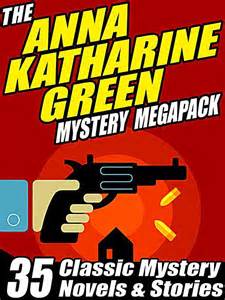


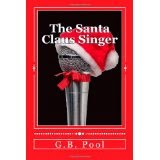
 natomy of a Short Story Workbook will be out this summer on Amazon. It’s a great way to analyze your story whether it’s a novel, screenplay or short story. It will help with your Opening and your Ending and everything in between.


You must be logged in to post a comment.