A Woman in Journalism – Nellie Bly

by Jackie Houchin

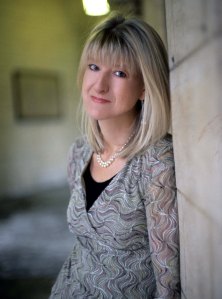
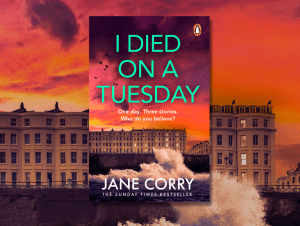
(Note to self: Use this article as a base – review two books written about her – “Ten Days In A Madhouse” and “Nellie Bly & Investigative Journalism for Kids.”  Fill in info from other sources, use the three photos (her in 1890 and the book jackets.) )

Eighteen-year-old Elizabeth Cochrane was living in Pittsburgh when the local newspaper published an article titled “What Girls are Good For” (having babies and keeping house was the answer, according to the article). The article displeased Elizabeth enough that she wrote an anonymous rebuttal, which in turned so impressed the paper’s editor that he ran an ad, asking the writer to identify herself.
When Elizabeth contacted him, he hired her on the spot. It was customary at the time for female reporters to use pen names, so the editor gave her one that he took from a Stephen Foster song. It was the name under which she would become famous—Nellie Bly.
Bly’s passion was investigative reporting, but the paper usually assigned her to more “feminine” subjects—such as theater and fashion. After penning a controversial series of articles uncovering the working conditions of female factory workers, and subsequently being assigned once more to cover society events and women’s pastimes, at the age of 21, Bly embarked on a hazardous and unprecedented (for a woman) mission to Mexico to report on the living conditions of the working-class individuals there.
After her reporting got her in trouble with the local authorities, she fled the country and later published her dispatches into a popular book.
At age 23, having established a reputation as a daring and provocative reporter, Bly was hired by Joseph Pulitzer’s New York World and there she began the undercover project that made her famous. In order to investigate the conditions inside New York’s “Women’s Lunatic Asylum,” Bly took on a fake identity, checked into a women’s boarding house, and faked insanity—so convincingly that she soon found herself committed to the asylum.
The report she published of her ten days there was a sensation and led to important reforms in the treatment of the mentally ill.
The following year Bly undertook her most sensational assignment yet: a solo trip around the world inspired by Jules Verne’s Around the World in 80 Days. With only two days’ notice, Bly set out on November 14, 1889, carrying a travel bag with her toiletries and a change of underwear, and her purse tied around her neck.
Pulitzer’s competitor, the New York Cosmopolitan, immediately sent out one of its reporters—Elizabeth Bisland—to race Bly, traveling in the opposite direction. As Pulitzer had hoped, the stunt was a publicity bonanza, as readers eagerly followed news on Bly’s journey and the paper sponsoring a contest for readers to guess the exact time of Bly’s return (with the correct guess winning an expense-paid trip to Europe).
Seventy-two days later, Bly made her triumphant return (four and half days ahead of Bisland), having circumnavigated the globe, traveling alone almost the entire time. It was the fastest any human had ever made the journey. Nellie Bly was an international celebrity.
At age 31 Bly married industrialist Robert Seaman, a 73-year-old millionaire, leaving behind her journalism career and her pen name. As Elizabeth Cochrane Seaman she helped run the family business. She patented two inventions during her time as an industrialist, but business was not her really in her skillset and under her leadership the company went bankrupt.
When World War I broke out, she returned to journalism, becoming one of the first women reporters to work in an active war zone.
Nellie Bly’s remarkable life ended on January 27, 1922,  when she died of pneumonia in New York at age 57.

SPRING INTO WRITING

by Miko Johnston

Ah, what a year it’s been, beginning with a harsh and, in some places, treacherous winter. So far, spring has not been much better or safer in many parts of the country. It took a long while to arrive and settle down on the West Coast. Hubby and I took a last-minute vacation to sunny Sicily to escape the cold and gloom for a few weeks and postponed our annual winter trip to LA for months until we could travel around by car instead of rowboat. Both escapes kept me away from writing for a while.

I’ve always enjoyed spring, a time of renewal, and probably more so this year after the winter we’ve been through. Thoughts turn from shoveling snow to shoveling dirt in the garden, from watching the overflowing rivers subside to marveling at the regeneration of fauna and flora.

Part of that rejoicing can include a return to writing.  Here are some suggestions to inspire you.

I           Change it up

If you’re finding it difficult to focus on your manuscript, or daunting to consider starting one, then don’t. Think about other things to write: short stories, flash fiction, a travel memoir, a chapter from your life. Perhaps a letter – yes, snail mail – to a long lost friend or relative. Buy (or make) some blank-inside cards and create your own birthday, anniversary, get well, and sympathy messages.

In short, forget about your WIP for now, but don’t stop putting words on the page. As we always say, writing is writing.

II         Revisit

If you’re writing in more than one point of view and your WIP isn’t going forward, you may have the wrong character in the driver’s seat.

I recently critiqued pages from a romantic suspense novel which had two protagonists. One chapter felt stodgy IMO, and the female came off as cold and unkind. The author had written the scenes in the male character’s point of view, so he only got to observe her behavior. I suggested redoing the chapter in the female’s POV, since she was undergoing the emotional upheaval. I felt if the reader understood what led to her bad behavior, they would find her more sympathetic.

If you get stuck, try rewriting the troublesome scene in another character’s POV.

III        Revise

One of my favorite quotes about writing has always been: “Books aren’t written – they’re re-written”. Not everyone accepts or believes that.

Some writers tend to think it’s permanent once you’ve written something. We forget that until a manuscript is published, it can always be changed. In my last book, I introduced new characters whom I barely knew. I stopped writing when Covid hit before returning to the partial manuscript a year and a half later. As the story developed I got to “know” the new characters better. With my first draft complete, I went back to their first appearance to find vague conversations and a lack of detail. Using my more intimate knowledge of these characters, I sharpened their dialogue and expanded their descriptions.

If your characters are flat and generic, get to know them better. If your opening doesn’t grab the reader’s attention, your middle sags, or your ending falls flat, rework that section until you’ve solved the problem (for suggestions and tips, search through our archives, including my BACK TO BASICS: WRITER’S BOOT CAMP series).

IV        Forget about Perfection

The opposite problem is to get locked into revisions, snipping away or changing words, sometimes back and forth, all in an attempt to make the manuscript flawless. It won’t happen. It never happens. Finish it. Polish it. Then hire a good editor who will clean up your grammar as well as plot holes. Lastly, find a beta reader, or readers, to give you an unbiased opinion. Do the best work you can, and then let it go.

Trust me, I understand how difficult it can be to carve out time to write, especially if we have no pressing need (such as a deadline from our publisher) to do it. However, remember this: you can’t call yourself a writer if you don’t write.

Now please excuse me, I have a novel to finish.

##

Miko Johnston, a founding member of The Writers in Residence, is the author of the historical fiction series, “A Petal in the Wind”, as well as a contributor to several anthologies including the about-t0-be-released “Whidbey Island: An Insider’s Guide”. Miko lives in Washington (the big one) with her rocket scientist husband. Contact her at mikojohnstonauthor@gmail.com

Slipped my mind…

Oh, no!  I was so involved with my SELF this week, that I forgot my coveted place here in the rotation for The Writers in Residence. So, this is a quickie catch-up.

HOAG Cancer Center is where I’m now spending my days – like, EVERY day – after the breast cancer surgery I had back in March.  Now I’m going through 15 days of preventative Radiation, so (hopefully) that nasty cancer stuff doesn’t come back. (At least the chances are lessened.)

Meet ELEKTA.

She’s my partner for about 15 minutes every day. She circles me like a rising and setting sun four times, shooting the “anti” death ray at my left chest area. I hear a high-pitched “zinging” noise and feel a slight warmth, but nothing else.  I thought my skin would get “cooked,” but nothing yet, just a feeling of tightness.  I thought I would experience fatigue, but also not yet. (Of course, so many people are praying for me!!)

A woman who was scheduled after me yesterday, says she is on Day 12, and the fatigue has hit her.  My Radiologist talked to me today, and when I told him I was surprised at the lack of skin burning, he said. “The sunburn will come in week three. Just keep applying that radiation cream two to three times each day.”

Believe me, I do.

That funny crunched white glob under ELEKTA’s eye on the table is a molded pillow they made when I was “mapped” for radiation two weeks ago.  It holds my shoulders, head, and left arm stretched above and over my head in the exact same position. So there’s no messing around each time I come in. The molded pillow is situated. I lay back and fit my arm and shoulders in it. They expose my left breast, line up the machine over the markers on my chest, and tell me, “Don’t move.” (Yes, I have weird PLUS and MINUS signs semi-permanently pasted on me for ELEKTA to read.)

About now, you are thinking, “Wait, I thought this was a writing blog. What’s with all this medical stuff.”  Hey, have you ever heard of Robin Cook’s books? (Coma, Toxin, Fatal Cure),  Michael Palmer (Miracle Cure), Tess Gerritsen (The Surgeon), etc.  Yes, so I know I’m not an author like them, but I AM writing about my Cancer Journey, and reviewing books that pertain to it.  I’m writing my “Journey” on Substack, and on Friday, I’ll post the next weekly update, titled “RADIATION & ME.” (You guys get a mini-sneak peek here.)

If you want to read last week’s post, here is the link, VULNERABLE  & EXPOSED. 

If that doesn’t work for you, go on Substack and search for “Jackie’s Musings & Meanderings.”  I have about thirty I’ve been writing, but the last seven are on my cancer journey. You can subscribe (but no pressure), and it’s FREE. Don’t get tricked into paying. Not needed.

So, you see, I AM writing.  Each day, I quiz the technicians on something I want to know about so I can include it in next week’s Substack post.  (And maybe the following week too, as I finish up.)

Do you have any questions or comments? If you click on the title of this post—SLIPPED MY MIND—you can find the spot below to do that.

Dropping Clues Along the Way

by Gayle Bartos-Pool

Gayle at Bill's House Sept 2022

I have read a lot of mysteries over the years and have written quite a few myself. My detectives, whether they are a professional or a talented amateur, always gets the bad guy or gal. Writers like a happy ending.

Most detectives, private or otherwise, usually spot a few clues toward the end of the story that help them pinpoint the culprit responsible for the previous mayhem. Jessica Fletcher in the Murder She Wrote TV series usually came across a major clue early on in the hour show, but she doesn’t put two and two together until after the last commercial break. It might be formulaic, but most of us like the show and the redundant plotline enough to come back for more.

KNIFE

But there are a few variations of the theme that are kind of fun to write. While I was writing one of the new stories in my latest book called The Four Detectives, I was having trouble with how I was going to finally catch the would-be killer. In this new book, I have taken the three private detectives from my three previous mystery series, added a retired cop from a stand-alone book, and have them join forces in a new detective agency. But I couldn’t figure out how to get this one P.I. to catch the killer before she struck again.

First, I was going to have the killer turn the tables on Ginger Caulfield and blame her for the killing she was planning, but after researching how long it would take for Gin to go to court and deal with lawyers and judges and the media was way too time consuming. Some of these court cases take years. This was to be a short story, not Gone with the Wind.

People 5

I knew how I wanted Gin to get ensnared in the plot against her, but getting her out was taking too long, so I had another thought. What if she smelled a rat early on and turns the tables on this would-be menace?

Not that this hasn’t been done before, but I wanted to actually drop a ton of clues throughout the story so my readers might start getting the hint early on and guess what was coming. This method would allow the reader become the detective, too.

I did this by putting quotation marks around a few words. That usually means the word has a double meaning. And I have a character grin at certain times after they say something that might not require a grin. That telegraphs to the reader that the statement probably has a hidden implication. Or I had a character hesitate when they shouldn’t be hesitating. That usually means somebody’s lying. I added a number of these “tells” just like a bad poker player does when his actions let other players know what kind of a poker hand the guy is holding. Usually a bad one.

As for me, the writer, I wanted to give the reader some clues that they might put in their fertile brain to see if they could solve the case along with my detective. It was a fun journey and I think my private detective got a laugh out of it, too.

Writers always need a way to tell a story that entertains the reader, but it’s fun for the writer when they can have some fun as well. Write On!

typewriter-and-desk

Getting Out There

by Linda O. Johnston

Writers write. But to help sell what we write, we need to do promotion not only online, but also in person. So, we have to get out there.

Okay, I admit I’m doing it less than I used to before the pandemic. Not that I’m terrified about getting sick, but I kind of got used to not going to as many conferences as I used to. I previously attended Malice Domestic, Left Coast Crime and Bouchercon and the Romance Writers of America conferences often, as well as local meetings.

Now—well, I did go to Bouchercon and an RWA conference last year. This year, I’ve mostly just gone to meetings of local chapters of Sisters in Crime, Mystery Writers of America and Orange County Romance Writers, sometimes on Zoom.

Oh, and coming up will be the Los Angeles Times Festival of Books, and I’ll be signing at the local SinC and MWA booths there on Sunday, April 21.

Enjoyable? Yes. It’s always fun to see other writers in person, and to sell as many books as possible and get to autograph them for the buyers.

And I have to admit I miss the frequent lunches I used to attend with other Writers in Residence members. But some have moved away and it’s become more difficult to get together with any of them.

More conferences in the future? I hope to.

So—well, how do you get together with other writers these days? With readers? Only online, or do you see them in person too?

LAVENDER and BURNT TOAST

      By ROSEMARY LORD

“Lavender and burnt toast.” A book title? A recipe? Sounds intriguing.

I have racked my brain to figure what this was about. I had written this in a notebook of story ideas. But then I have a plethora of such notes, squiggles, post-its, unfinished paragraphs in multiple notebooks and single pages – of ideas that swirl around my head – spilling as hurried notes in these many notebooks. But, over the years, I have become a lot more organized. I have actual files – with labels!

            It took me back to Professor Randy Pausch’s gem of a book, The Last Lecture, which he undertook during the last months of his life after a terminal cancer diagnosis. It was about overcoming obstacles and seizing every moment. “Because,” he said, “time is all you have – and you may find one day that you have less than you think.”   

“Time must be explicitly managed, like money,” he observed. And “Ask yourself, are you spending your time on the right things?”  Most useful was, “You can always change your plan, but only if you have one.”

But the thing I remember most was his thoughts on being really, super organized. Randy’s wife was against having everything filed and alphabetized. She said it sounded way too compulsive. Randy responded, “Filing in alphabetical order is better than running around saying, “I know it was blue and I was eating something when I had it.” Sounds familiar. How often have I been heard to mutter, “…It was blue and I was eating something……” as I rummage through my boxes of writing files for some specific pages of an unfinished manuscript.

“It’s not where you start – it’s where you finish…” wrote Dorothy Fields, lyricist for the 1973 Tony Award winning Broadway musical Seesaw, which was based on the William Gibson play, Two for the Seesaw.  “…It’s not how you go, it’s how you land.”

I’m not so sure about that…I’ve always favored the maxim that it’s the journey that counts. It was Ralph Waldo Emerson who said, “Life is a journey, not a destination.”

            Do you ever look back at the journeys you have been on – or had thrust upon you? Journeys are adventures. Because it’s on those journeys that we discover exciting detours and encounter fascinating people.

Even if it’s literally a train, plane, bus or car journey we’re taking. Just think of people you met along the way, places you saw. This is, after all, where many of us writers find our inspiration. From the people and happenstances along the way.

We can see how things have never got back to the way they were, since the Covid lockdowns. So much changed. We’re in a different reality now. We were shut-ins. As writers, we had more time to ourselves to write during the shutdowns. But the regular writer gatherings and frequent workshops and writers’ conferences have been very slow to return. And they were such fun, where we caught up with fellow writers from across the world, met new writers, editors, experts and publishers, heard new ideas, discovered new talent. I’ve missed them. Zoom meetings are not the same.

Sometimes one feels like Sisyphus, earnestly toiling away to survive and thrive in this new world, dealing with the puddles that life frequently presents for us to jump over.    

In Greek Mythology, Sisyphus was condemned to an eternity of pushing a boulder up a mountain. Once he got to the top, the weight of the boulder forced it to start rolling down to the bottom, wherein he had to start again.  According to Albert Camus, the Greek gods felt that there is no more dreadful punishment than this futile and hopeless labor for Sisyphus. Hmmm. Sometimes life feels like that. Oh well. We soldier on, dealing with the adventures and challenges of our regular lives and balancing our writer’s goals and dreams.

Then, just when we least expect it, something magical happens. We discover a new author whose words inspire us to try something new, encourage us to take a leap of faith into the unknown. We hear a new piece of music or see a new painting that re-awakens that creative spark. We make a new friend or meet someone who has that missing piece of life’s jigsaw we have been trying to complete. We never know where or when that serendipity appears.

And with the freezing winter and endless rain we have all been living through, hopefully now in the rear-view mirror, Spring is just around the corner. So it really is the time to start thinking of planting new seeds. New plants. New crops. In our gardens, window-boxes and in our lives. Maybe something different this year. Read something different. Write something different. But most of all – time to make fresh plans for the year ahead, seek new ventures, add new goals to our To Do lists.

Whilst I try to remember what Lavender and burnt toast was all about….

SEPARATING CRITIQUE FROM CRITICISM

by Miko Johnston

Unlike some of you, I never took creative writing classes. Early in my adult life, thanks to dropping out of college, I floundered in various low-level clerical positions to earn my way, but writing was my dream job. By luck I got to meet a writer whom I admired, and told him of my goal. “I want to be a writer,” I said. He responded, “Then why aren’t you?” I realized I’d asked a meaningless question. I should have been more specific – “I want to write professionally”. That’s when I returned to college and eventually became a journalist. I lost that career after a car crash and five year recovery period. Still, the urge to write persisted.

About forty years ago I decided to switch to writing fiction and began working on a series of short stories based on a childhood pet, thinking they might make good children’s books. I showed them to a good friend, who knew me ‘back when’, as well as the critter in question. I thought the stories were cute, funny and clever; as the character grew up, the storylines and maturity of the writing grew with her. My friend’s reaction? “They’re terrible.” Disheartened, I filed the stories away in a drawer. Care to guess how long it took for me to write again?

Eventually I dipped my toe in the writing world once more, this time with the idea of writing a novel. I slowly built my skills by writing, studying authors whom I respected, and reading books on the subject, but mostly by participating in writers groups.

I joined an established critique group about twenty-five years ago, where I met several of my fellow WInRs. I credit the core members with guiding me though the completion and polishing of my manuscript for publication, and like most who stuck around in the group, I eventually did get it published.

I can still recall presenting Chapters 1 – 5 of what is now my first novel, A Petal in the Wind. I’d compressed what eventually became my entire novel into fifty pages. I also recall the group’s unanimous opinion: to put it kindly, not good, but they explained WHY. No character development, hardly any scene setting or sensory details, and worst of all, an unrealistic reaction by my protagonist, thereby committing the worst crime in fiction by presenting a totally unbelievable situation. Their comments were tough to hear, but I listened and took them to heart. The next time I presented pages for critique, I received a very different response.

I see now the group doubted my ability to write well, based on my initial submission, a reasonable assumption. However, the next time I presented pages, which incorporated their suggestions and advice, the revisions not only impressed them, but convinced them I could do this. Frankly, it convinced me as well. The group treated me differently from then on.

Whenever my turn for submitting pages came up, they mixed praise for the good stuff with very useful suggestions for the problematic parts. Some members had a specialty; one focused on the big picture issues, while another (okay, it was Jackie Houchin) scrutinized each word with forensic precision. The group kept me going with positive and constructive feedback until I finished my first draft. When I presented multiple premises for my follow-up book, their comments helped me find the right path forward in continuing my saga.

I also learned how to give critique. In one of my first meetings, I listened to a short story being read aloud by the writer (okay, it was Jackie Houchin), and all I could contribute was a fashionable woman wouldn’t be wearing a white in winter. With the practice that came with reading or hearing pages from other writers, and picking up clues from their critiques, I began to develop sharper skills for evaluating the good and the not-so-good, not only other’s work, but in my own.

This year I celebrate the twentieth anniversary of my first publishing contract. It would never have happened if not for the support and encouragement of my writers group. Nor would it have happened if I’d disregarded their feedback, or became so insulted by it I’d left the group.

I can take some credit for this, but much should go to the core members. They always knew the boundary line between critique and criticism. Others crossed that line, but thankfully they did not remain in the group for very long because they usually could not accept anything beyond praise for their work. Their loss.

I’ve had the opportunity to pay it forward over the years, in critique groups and through my volunteer work with a local high school creative writing class. Occasionally someone who finds out I’m a published author will ask me to evaluate their writing. The lessons I’ve learned through my groups have helped me do that in a positive, yet helpful way.

Learning the difference between criticism and critique is crucial to the process. Critique must be reassuring, especially when you’re calling out the problems in someone’s writing. Criticism is merely negative. Criticism says something isn’t good, while critique may say that but also explain why. Good critique supports the writer, and encourages them by separating the good from the what-could-be-good-if…. It’s uplifting. It pushed you forward, whereas criticism beats you down.

What if I’m asked to critique a piece that may be beyond redemption? That’s when it helps to have a few key phrases, and a list of recommended reading. I find something, anything to praise or comment favorably on, even if it’s a character’s name. I’ll pick one salvageable problem with the writing and suggest a generic solution. Perhaps there’s too much repetition, the dialog’s clunky, or the genre is unclear. I admit some writers shouldn’t be given false hope, but I needn’t be completely discouraging. I might also remind them there’s nothing wrong with writing for one’s own pleasure, or journaling about one’s life (and keeping it private).

I recently found my pet stories and reread them. Granted, many needed work, but unlike the response I got from my friend, they weren’t awful. Sad that it discouraged me for years, delaying me from doing what I always wanted to do. But I’m writing now, and will continue to do so, having learned the difference between criticism and critique.

On another note, I always love to receive and read your comments, but forgive me if I don’t respond immediately. Today’s post coincides with my 25th wedding anniversary, so hubby and I will be off celebrating. I promise to get back to you soon.

#

Miko Johnston, a founding member of The Writers in Residence, is the author of the historical fiction series, “A Petal in the Wind”, as well as a contributor to several anthologies including the about-t0-be-released “Whidbey Island: An Insider’s Guide”. Miko lives in Washington (the big one) with her rocket scientist husband. Contact her at mikojohnstonauthor@gmail.com

.

This story by Miko Johnston was posted by Jackie Houchin

THE PRESSURE TO PROMPT

By Jill Amadio

Quick, write a sentence containing the word ‘shallow.’ Or ‘camel.’ Maybe your creativity freezes at the first word but gushes forth at the second.

The urge to prompt is overtaking the writing community, both fiction and non-fiction.

What is a prompt? A suggested word, phrase, or sentence on which to build a paragraph or two during a specified time period. Prompt and their answers can include half sentences and are all the rage these days. Indeed, dozens of books and workbooks have been written on the subject of prompts and to the why, where, how, and when to engage in this mental exercise.

Many writers love prompts as a way to get started writing of a sterile morning, to fire up the imagination, and even to provide satisfaction that you are actually working at writing something, anything, although, in fact, it has no relevance to your WIP. However, you could stick the finished prompt into your WIP folder for use somewhere if you feel your words are immortal and need to be recorded for posterity.

Frankly, I am not a fan pf the prompt phenomenon. I believe that if you are going to spend time writing, why not work on your book, article, or blog? Why spend the time fiddling around with a piece of prose you may never use, that has no relation whatsoever to your current project, and that can send you off on a tangent to which you may find it difficult to return?

Ah, say prompt fans, prompting gets you typing. It puts pressure on you to come up with some words to fit the suggestion and actually make sense. The closest I have come to prompts lately is writing a Grocery and a To-Do list. The former is boring, the latter daunting but I have a couple of writer friends who salivate at the prospect of attacking their morning prompt.

One definition of a prompt I found online, posted by Karen Frazier, notes that a writing prompt is a statement usually followed by questions. I also found a very large collection of books on amazon.com devoted to the subject including titles such as Polyvagal Prompts, Writing Prompts Balance, The Writing Prompts for Seasons workbook, Writing Prompts for the Apocalypse, and The Art of Prompt Engineering. Not sure about that last one but it was amidst the others so I assume one needs something of a mechanical mindset to tackle it.

Some prompt books include journaling pages, and vice versa. Another offering is in the form of prompt notecards in a pretty box– a nice gift and not too insulting.

The books are directed at both fiction and non-fiction writers as well as adults, children, and humans (who or what else writes?). Also targeted are genres such as poetry, fantasy, art, drawing, songwriting, and truly interesting:  for dinosaur enthusiasts.  I haven’t seen a prompt book for AI robots yet but one could be in the works. Or already on sale.

I certainly honor those who need and enjoy a prompt to spark their creativity but as my years advance I need as much time as possible to compete the third book in my “Digging…” mystery series, and beyond.

Could a prompt, if one writes sufficient words, be considered a short story? It could surely lead to one and that is a good thing. How about prompts for birthday and Christmas cards? They can be written in advance and stored on your computer for future use.

So, where does the pressure to prompt com in? We are urged to start writing as fast and as furiously as we can as soon as we clap eyes on the prompt. Now, that is pressure par excellence. No time to consult a thesaurus. Is reviewing and editing allowed afterwards or during?  I did try prompting once and sent myself off into daydreaming, my laptop forgotten as I imagined myself back in Bangkok.

I heartily endorse the claim that writing prompts can help create characters and other elements and that, too, is a good thing. Prompts can also build writing skills, craft, and techniques as well as become story starters.

This entire subject of defining prompts has kept me away from working on my WIP. In the past four weeks I have only come up with a new title. However, part of it could be considered a prompt. Here’s a clue: Dangling Participle.

NEW IDEAS, PAST AND PRESENT

by Miko Johnston

We’re barely two months into the new year, but as I contemplate what we’ll write about in the future, and what will inspire us to keep at it, I’ve found some of my answers to those questions in our posts from the previous year.

Hannah wrote about overthinking. How many of us are guilty of getting obsessive about our writing? Characters, plots and background have to be thought out, but we also must keep it all in balance. That has become harder for me to achieve, partly because age has undermined my ability to multitask and partly because my priorities have shifted. I still enjoy writing and am committed to finishing at least two more books, but I’m reminded of Madeline’s piece on Writing Scared, and the idea of switching up the type of writing you do. I’ve done that in the past, so now I’m adding a new avocation – photography.

Years of writing has given me a sense of what works and what doesn’t, and while I still rely on critiques from fellow writers, I often can figure out problems in my manuscript on my own. Not so with my new hobby. I look at a photo and I may like it, but I don’t know why, exactly, nor can I be certain it’s any good. I’ve joined a photography club and have been invited to participate in their biannual exhibit. I’m going to need a lot of critique and advice before I select which pictures I want to use.

Linda’s piece on attending writers conferences reminded me that many more may be held this year as the risk from the recent pandemic fades from our memory, if not from our lives. Will these events be successful, or will the attendance habit, having been interrupted, be broken? Costs, from registration to travel to hotels and meals, will likely be higher than we remember. I can see where some will be very selective about which they’ll attend while others choose not to register for conferences at all.

Gayle’s piece on The Future of the Written Word really resonated with me. I’m often puzzled, even shocked, by how many words have been usurped and had their meanings altered, some with additions, some with subtractions. Regardless, these 2.0 definitions have led to divisions. A lack of clarification, or precision, makes the word’s meaning, well, meaningless. I suspect if any of the worst offenders of this phenomenon were reading this, they would have stopped at usurped (insert my sarcastic smirk here).

And speaking of the written word, Jill contributed a post on a similar, if lighter, topic – the subtle differences between American and British English. With three Brits in our WinR group and many others within our writing circle, it can be a challenge.

Rosemary’s Collecting Memories touched me. While clearing out closets and shelves in anticipation of a thorough spring cleaning, I’ve uncovered a trove of precious mementos – cards, notes and letters from family and friends, some going back to my birth. Programs from bar/bat mitzvas, funerals, and other events. Menus from private supper clubs, conference galas and corporate dinners at restaurants. Each find brought back wonderful memories of the people and places I’ve enjoyed over the years. That included a copy of the dedication that went into the L.A. Library’s copy of Rosemary’s book, “Hollywood Then and Now”, in memory of her beloved husband Rick. Her post reminded me that these keepsakes – all comprised of words – and the memories they invoke, are precious, something Maggie explained so eloquently in her post based on the “a reason, a season, or a lifetime” quote.

Jackie’s interviews with writers as well as all the fabulous guest posts she’d arranged added dimension to our blog, and her piece on naming characters had many solid tips I’ve come to rely on. And I’ll add a special shout-out for all the technical help she’s provided to us, especially a technical “muggle” like me.

There are many more posts from my co-WinRs that have and continue to inspire me. I can only hope I might have had the same effect on them, as well as our readers.

Miko Johnston, a founding member of The Writers in Residence, is the author of the historical fiction series, “A Petal in the Wind”, as well as a contributor to several anthologies including the about-t0-be-released “Whidbey Island: An Insider’s Guide”. Miko lives in Washington (the big one) with her rocket scientist husband. Contact her at mikojohnstonauthor@gmail.com

Let Me Entertain You!

by Jackie Houchin

Lots of medical stuff going on with me right now, so I thought I’d simply share a fun aspect of our Alaska cruise last fall. That aspect is called MUSH.  No, not yelling at sled-pulling dogs (although we DID do that), but a different kind of Mush.

In Skagway, Alaska, I bought a small toy Husky, a beanie-bag size and shape little guy, with soft gray/white fur, big blue eyes, and the name MUSH printed on the tag. I loved the little guy from the first glimpse and perched him on my pillow in the stateroom when we got back to the ship. Joel, our cabin steward aboard the Oceania Regatta ship, loved Mush too.

When we left for dinner in the evenings the steward would come in to straighten up and turn down our beds. When we returned later, we found the usual chocolate candy on our pillows, AND…..Mush, posed in a series of so cute antics. The first time, he was propped on a pillow with the TV remote, watching a football game on the screen.

Another time he was standing on an open book (that I’d been reading), as if he were reading too.

Once when we came back from an excursion ashore and after we’d had lunch at the buffet, we found him on our small room table with the curtains draw slightly, looking out at sea.

And then, every evening HE started getting chocolate candy too, an additional piece placed between his paws. We were absolutely delighted.

Of course “I” started posing Mush for Joel too when we went out for the day, hiding him where the pitcher of ice water was kept, or behind the desk alarm clock, or sometimes just lying on the bed, his head tucked in and front feet up, waiting for a belly rub.

We had such fun with Mush and our very good and so kind cabin steward.  Another sweet memory.  And now, Mush resides on my dresser at night, guarding my glasses, and sometimes on my pillow during the daytime.  (But he’s on a diet now – no chocolate.)

##

Maybe I could write a cute kid’s story starring Mush on an ocean cruise. He could meet friends, find a missing object, solve a mystery, or rescue someone in danger.  Now that’s an idea!! Mush and I might have to put our heads together and come up with a plan!