
by Jill Amadio
Ever feel like a fish out of water? As an ex-pat in California where residents are famous for being “the people from somewhere else,’ I humbly claim myself as a prime example. Because I am a Brit from Cornwall I was invited to be a “Fish-Out-of-Water” panelist at the three-day Malice Domestic Writers Conference held in Bethesda, MD just outside Washington, D.C.
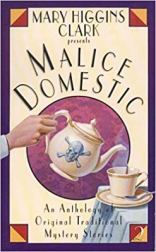 The event is the largest annual gathering in America for writers and fans of traditional mysteries in the genre of Agatha Christie, which places them in a genre called ‘cozy.” It appears that publishers here prefer authors to be strictly categorized into the type of book they write: romantic suspense, noir, thriller, psychological suspense, hard-boiled, legal thriller, historical, private investigator, cozy, police procedural, and sub-genres such as a sci-fi and the newest, cyber-crime mysteries.
Some crime writers look down their noses at cozy writers. We are often considered to be the low man on the totem pole. No matter. We bask in the knowledge that it attracts hundreds of attendees from all over the country. It was my first foray into this cozy conference although I am a veteran of Bouchercon, Left Coast Crime, Ladies of Intrigue, Surrey International in Canada, and other conferences for cozy writers and readers.
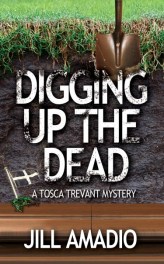 The second book in my series, “Digging Up the Dead: A Tosca Trevant Mystery” was published just in time for this premier annual event. My main character hails from Cornwall and comes to live in Newport Beach, like me, so the “Fish Out of Water” panel was perfect for us both. It was fun to explain to the audience that Tosca Trevant, a London gossip columnist (me too!) had rattled the royals by discovering yet another scandal at Buckingham Palace. This led her editor to re-assign her temporarily to America. Cussing mildly in the Cornish language, and coping with a culture that sees no need for a teashop on every corner, the meddlesome, outspoken and humorous Tosca turns amateur sleuth when she stumbles upon human remains in a neighbor’s garden, in the best Miss Marple tradition although Tosca is a younger version.
I was the only ex-pat author among us five panelists at Malice, whose main characters were also considered outsiders rather than police detectives or private investigators. I was bombarded with questions from the packed audience about how I came to live in the United States (“my ex-husband insisted and who needs all that rain back home?”), why I write traditional mysteries (“because Agatha Christie is my muse”) and how I manage to conjure up clues, settings, and plots. My favorite question is usually how I decide who the murderer will be. I answer honestly that I don’t always know until I’m into the story.
In my new book I created a character whom I intended to be the killer but the more I wrote about that person the more I came to like them so I designated someone else to be the villain instead. Another time during the writing of chapter 16 something incredible happened to me. I was writing dialogue wherein a character denies knowing something.  She was instantly contradicted by a voice behind my chair shouting out, “Yes! You did know!” The voice was male and sounded exactly the way I had described his gravelly voice in a previous chapter. I swung around, dumbfounded. Of course, there was no one there and no one else was in the house. Some writers say their characters often take over their role in a book but this was different. Sam spoke a line of dialogue that added another dimension to the plot. It worked well, surprisingly, giving an extra twist to the story. I didn’t hear from him again nor from anyone else I created so I guess he and the others were satisfied with how the plot was progressing.
One important take-away I have learned from being a panelist and this was particularly true at Malice: make ‘em laugh. I was fortunate enough to be able to describe some of Tosca’s amusing clashes with American culture, a few of which I experienced myself when I arrived in the U.S. Her reactions, though, are a bit more defined and she has no problem expressing herself although most of the time she is proven to have grabbed the wrong end of the stick or has misinterpreted the meaning, which makes for a few giggles.
So the lesson is that the more listeners you can make laugh, the more likely they are to buy your books. The key is for your readers to like you as a person, which can encourage them to believe they’ll like your writing. I was lucky enough to have sold out of my books at that first conference, as did other authors. I’m told that cozy readers make up the bulk of the crime-reading market so I plan to attend Malice Domestic forever. Or as long as I write mysteries.
###

Jill Amadio’s mysteries are available in paperback and kindle on amazon, Barnes and Noble, and Nook. She is also the ghostwriter of 16 memoirs and biographies, and co-author of the Rudy Vallee life story, “My Vagabond Lover.”
This article was posted for Jill Amadio by Jackie Houchin (Photojaq)


 Then there’s Romance Writers of America. It’s in San Francisco this year, and I’d certainly planned to go there, only… Well, things have changed in the entire organization. It’s been rocked by a scandal involving discrimination issues. I haven’t entirely followed all the changes and nuances, but a lot of people in charge have been ousted from their positions or resigned, and even a lot of members have decided not to renew their membership, even though the discrimination issues will hopefully all be addressed–and eliminated.
 So, instead of four conferences this year, I doubt I’ll attend any.
 My writing has matured over those thirty years, as has my heroine. Granted, when introduced in my first book, she was “almost eight”, so her voice and thoughts had to reflect her age. However, the book was meant for adults, therefore it had to present the story at a more mature level. Much of the storyline and the tension springs from a child who’s unable to fully understand her situation and an adult audience who clearly can.
 Mike McNeff introduced his hero Robin Marlette in GOTU (pronounced Got-U, it’s short for Guardians of the Universe). His action/adventure series features a covert ops team that has to balance work with home life. Mike’s currently writing the fourth book in the series. When I asked him how his characters have evolved over time, he decided to let Robin speak for himself:
 What began for Heather Ames as a stand-alone novel turned into a deftly blended mystery, suspense and romance series featuring Detective Brian Swift and socialite/club owner Kaylen Roberts (due in part to encouragement from some members of this blog). Ames says, “My characters have evolved from two people who didn’t even trust each other enough to share confidences into two people who have been trying to work through various challenges. They weren’t sure they could work things out by the end of Book one, but they both wanted to try.”
 Pat Kelley Brunjes traveled a similar route with her characters as I, opening her series with a story loosely based on her family history. In her first novel, The Last Confession, her protagonist serves as a stand-in for Brunjes. “Maggie was me seeking to find the truth about my grandmother’s relationship to the Catholic Church.” Although based on her research, she fictionalized the story, which allowed her to take Maggie in a non-biographical – and more dangerous – direction. In the sequel she’s writing, her heroine gets entangled in a cold-case murder and human trafficking. “In the second novel, Maggie has evolved into her own person dealing with what fate has thrown her, and how her personal beliefs guide her decision to help others.” Having given herself the freedom to step away from semi-autobiography, Brunjes will have much flexibility in plotting future entries in the series.
 Avis Rector faces a unique challenge in writing her historical fiction series, based on the early life of her family on Whidbey Island. In her first book, Pauline, the heroine and her husband settle on the island during the Depression. “So much of the first Pauline was based on my memories of the stories I heard as a child from my father who loved to tell stories—usually real happenings, but many embellished.” However, in her sequel, the story moves into the 1940’s, a time Rector lived through. She’s having to reinterpret her childhood memories through an adult’s perspective. “Actually, I’m having a hard time writing how the adults felt about the time. Pauline has changed.”

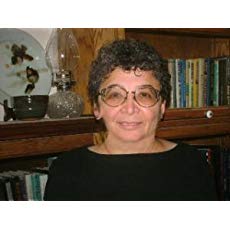 I had the pleasure of getting to know one of our Writers in Residence bloggers, M.M. Gornell, more in depth last month and decided to write up my talk with her for the monthly column I write for a UK magazine called Mystery People.
 One of the most famous, nostalgic, fascinating and historic highways that wagon trains of homesteaders traveled, along with migrants seeking fortunes in gold mines, land, and new opportunities, U.S. Route 66 was originally a 2,500-mile dirt trail that ran from Chicago, Illinois to Santa Monica, California. It was eventually smothered in asphalt and became known as the Mother Road, and the Main Street of America, passing through a total of seven states.
 Although her former residences have included other towns and the Sierra Nevada with its rich palette of Red Rock Canyon (the setting for her thriller, DEATH OF A PERFECT MAN), Madeline’s move to Newberry Springs inspired her to set the majority of her eight crime novels, including two series, along the famed highway. “For me,
  But California and Route 66 beckoned in the 1990s, due to mental pictures and expectations she had of the Mother Road twenty years earlier. It was not as easy as she had imagined, but new settings presented themselves and the majestic Sierra Nevada Mountains provided magnificent, magical scenery, inspiring her “Raven” mystery series, then LIES OF CONVENIENCE, and more recently her “Rhodes” mystery series.
 Although the romance of the route was a fixed American landmark, it was soon bypassed by the new Interstate Highway System which either paralleled it, resurfaced portions, or went elsewhere, leaving Route 66 abandoned and lined with ghost gas stations and tiny deserted communities. Eventually, it was officially designated as “ceasing to exist.” But you can’t keep an icon like the Mother Road down. It was rediscovered by musicians, hippies, artists, movie makers, and writers.


 Na-
Na- “Traditionally, NaNoWriMo works best when you start a brand-new project. It may be an arbitrary distinction, but we’ve seen that novelists do better (and have more fun) when they’re free from the constraints of existing manuscripts. Give yourself the gift of a clean slate!
 The Writers in Residence
You must be logged in to post a comment.