When A Series SPINS OFF: the Maisie Frobisher Mysteries

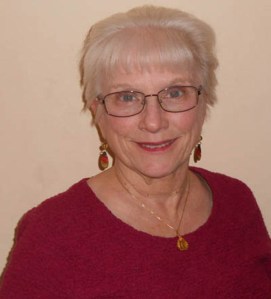
A Guest Post by Liz Hedgecock

I didn’t so much decide to write the Maisie Frobisher books. It was more that Maisie Frobisher decided she ought to have her own series!

Let me explain.

The Maisie Frobisher books are actually a spinoff series: the series they sprang from is the Caster and Fleet Mysteries. I co-wrote Caster and Fleet with another writer who is now a good friend, Paula Harmon.

When we began writing the books, Paula and I hadn’t actually met in real life – only via a Facebook writing group. We were already online friends, we liked each other’s writing styles, and we both wrote historical mystery (among other things). We’re not sure who first suggested writing a book together, but we’re very glad they did!

Maisie is a very minor character in the Caster and Fleet world until she has more of a starring role in book 4, The Case of the Masquerade Mob, which is a romp involving masked balls and all sorts of skulduggery. At the end of the book, poor Maisie, who has had rather a rough time, decides to travel the world and forget about men for a while. That was my jumping-off point, because I’d grown to like Maisie very much and I didn’t want to let her go.

My friend Paula also has a spinoff series of her own, set in the run-up to World War I, which follows the younger sister of one of our protagonists, Margaret Demeray.

I had many reasons to set the Maisie series abroad. Firstly, at the end of Masquerade Mob Maisie was going travelling, and I couldn’t go back on that! Secondly, in the 1890s, when the series is set, the world was opening up. Bigger and more luxurious cruise ships, faster journeys, and more capacity to travel for pleasure. I chose India because it was a well-known destination, the route was interesting, and also because of the opportunity to look at the British in India in the time of the Raj.

I try not to get too bogged down in historical research, though there are all sorts of opportunities to get lost down research rabbit holes! One advantage is that I have a Master’s degree in Victorian literature, so I’m fairly well grounded in some aspects. While I want to make the stories accurate, I don’t want to spoil a story for the sake of including every historical fact I’ve discovered. Probably a tenth of the things I’ve read about make it into the final book.

I didn’t choose the late Victorian period just because I knew a bit about it, though. It’s also fascinating because of what was going on at the time. Women were fighting for their rights, the ‘New Woman’ had arrived, and inventions like the safety bicycle meant that women’s mobility could increase.

The Maisie books are also special to me because they mark a change in the way I write. Up to that point, I had always written at my computer. With Maisie, I had the urge to try something different. In the first book in the series, All at Sea, Maisie is on a ship which is always moving, and she must solve the mystery before the ship reaches port. With that sense of urgency in mind, I tried an experiment. I took my phone for a walk and dictated the book’s opening: a letter from Maisie to her mother, followed by a rather different diary entry on the same subject. The words seemed to flow. Ever since then, I’ve dictated my fiction rather than writing it. The result needs correction and editing, of course, but it’s a really good way to get into the flow, get that first draft down, and spend time walking rather than sitting.

If you do try the first Maisie book, All at Sea, or indeed, the first in the Caster and Fleet series, The Case of the Black Tulips, I hope you enjoy them!

#

Liz Hedgecock grew up in London, England, did an English degree, and then took forever to start writing.  Now Liz travels between the nineteenth and twenty-first centuries, murdering people. To be fair, she does usually clean up after herself.

Liz lives in Cheshire with her husband and two sons, and when she’s not writing you can usually find her reading, on a walk, messing about on social media or cooing over stuff in museums and art galleries. That’s her story, anyway, and she’s sticking to it.

Website: http://lizhedgecock.wordpress.com

Facebook: http://www.facebook.com/LizHedgecockWrites

Twitter: http://twitter.com/lizhedgecock

Amazon author page (global link): http://author.to/LizH

###

Note from Jackie Houchin: I began the Maisie Frobisher series – All at Sea – while on a cruise. (I could so identify with Maisie!)  But I got so attached to her sense of adventure and fearless deeds of daring, that I bought the second one (Off The Map). Of course I had to buy that third book with the magnificent Leopard on the cover (Gone to Ground). I’m now reading the fourth one and Maisie is back in London, but still involved in mystery and intrigue. (In Plain Sight)

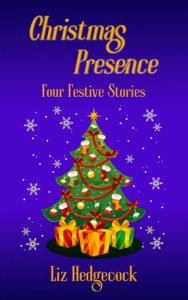
A character from the Maisie books appears in one of the four Christmas short stories in Liz Hedgecock’s Christmas Presence, Four Festive Stories. It’s a perfect way to sample Liz’s work and to gift for the Holidays!
.

This article was posted by member, Jackie Houchin

.

How Do You Name Your Characters?

by Jackie Houchin

NAMES in stories are important in that they have to “fit” the characters, the era, the country, and even class in which they live. You wouldn’t name a society woman, Buster. (Well, unless there was a right good reason for it.)  Also, a native seamstress of New Delhi probably wouldn’t be called Manuela. So how do you find those perfectly fitting monikers?

It used to be you could use telephone books, but who even has seen one of those in the last 15 years??  There are websites that offer names for babies and their meanings. Some even suggest names that were popular in different years. (See below)  Maybe you will name your heroine or villain after someone you love, or love to hate.

SUGGESTION One – A couple years ago I came up with an idea for a short story in a contest. I liked the name Autumn (the story had to be set in the fall). She would be a painter. I know how I wanted her to look – long, wavy auburn hair, green eyes. And she would be the quiet type.

Boy, did I get a shock when I asked my friends on Facebook what a character with the name Autumn Gold would look like and what she might do for a living. Nearly all of them said she would be a sexy night club dancer or even a street walker. Yikes!  I changed her name to Audrey Gould. But I titled the story, and named the fantastical woodland painting her boyfriend made with her hidden image in the colors, “Autumn Gold.”

I got honorable mention out of 400 entries.  Asking around might be a way to check out that clever name you’ve chosen.

SUGGESTION Two – I also wrote a middle grade mystery titled “The Bible Thief” set in a church much like the one we attend. For some weird reason 4 or 5 people (including myself) lost their Bibles at some church event. Some were found, others not.

Hmm. I pondered, and immediately thought of a clever gang of kids who would “investigate” and discover the remarkable solution to this mystery. Because I wanted to share the story with the kids in the 4th-6th grade class I was teaching, I minimally disguised their own names as the gang, their parents, and a few other easily recognizable people (by description) in the congregation.

That was easy!  And maybe YOU have used names of people you know but changing Sheryl to Sherry, or Garrett to Darren.

SUGGESTION Three – And lastly, I also wrote a series of related short stories for the same age children, set in Africa. There were seven kids (one set of twins, and one who passed away at a week old), and they all had names that coordinated in some way with the month they were born in.

The youngest boy, born near Christmas (and since his father was a mission pastor) got named Deacon. “Deek” for short.

There was a girl, April (yeah, I know, too easy) and the twin girls were named Melody May and Charity June. (Know why twins have two months?)

A younger boy was named August, nicknamed “Gus.”  The oldest boy was Marshall (can you guess his month?).

A sensitive girl born in July I named Julie Joy. And the little guy that didn’t make it very long was Freddie, born just after Valentine’s Day.

So, that is how I sometimes choose character names. How do YOU come up with yours?

##

Baby names from Social Security lists by popularity, the top 5 by year, by decade, state, and US Territory – https://www.ssa.gov/oact/babynames/

2023 Baby name finder and the meaning/origin – https://emma.ca/baby-names

70,000 Baby names by gender, alphabet, origin, meaning, and religion – https://www.momjunction.com/baby-names/

Let Your Characters Take Over

by G.B. Pool

Let me repeat myself:

When your characters start talking,

get out of the way and let them talk.

Why do I say this? Because I have done just that and my characters have taken me places I didn’t know I would be going to. They have told me who they were when I thought they were somebody else. This goes for minor characters as well as major characters.

When I was writing CAVERNS about rats eating away the ground underneath the high rises along Lake Shore Drive in Chicago, I was going to kill off a cop who first discovers the rats, but as I was writing about him, I realized I liked this guy, so I had him turn into one of the three male leads in the book. I gave him a life with a not-so-great wife, a great kid, and a really nice girlfriend. He kept telling me who he was and the story grew. I even have my female lead in the story help rescue the girlfriend. Who knew there was that much more story to write? I guess my character did, because the cop character kept nudging me to write more about himself.

One of my three detective series features this guy named Johnny Casino. I figured that would be his name. I grew up reading detective novels that my mother had and watching detective shows on television. There were three famous detectives from old TV series and a movie whose name was like a playing card: Spade, Diamond and Heart. Sam Spade from the Humphrey Bogart movie The Maltese Falcon, David Janssen’s TV series “Richard Diamond, Private Detective,” and Robert Wagner who starred in “Hart to Hart.” I wanted my detective to be the fourth playing card, a club. But “Club” wasn’t right for a last name, so I thought: what name means club? How about casino? And Johnny Casino was born.

But wait: Johnny was more than just a name. He started “talking” to me about who he was. The first page of The Johnny Casino Casebook 1, Past Imperfect, the first book in the trilogy, was literally Johnny telling me about himself. I just typed out what he was saying. This is the first paragraph in that book:

My name is Johnny Casino. I’m a retired P.I. with a past. I just hope it doesn’t catch up with me. Before I went legit, I ran numbers in Jersey for Big Louie “Fingers” D’Abruzzo and then busted heads in Miami for Big Eddie “Mambo” Fontaine. But at the ripe old age of twenty-four, Little Johnny beat a hasty retreat to L.A. when somebody slipped the cops a hot tip and all of a sudden, I became the fall guy for the Mob.

That first page was typed out in one continuous effort… No re-writes. This was who the character was going to be. I couldn’t tell you where it came from, but there it was. He knew he was born in Jersey. His dad was a consiglieri to a local crime family. His mother was from another crime family in Chicago. He worked for the mob for a while until he told himself this wasn’t the life for him and eventually moves to California. But Johnny’s real name had been Cassini back in Jersey. He changed it when he made that move to Los Angeles. But in The Johnny Casino Casebook 2, Looking for Johnny Nobody, Johnny finds out he really wasn’t a Cassini. He meets his real mother and her second husband. Johnny’s father, a cop, had been killed before he was born and an unscrupulous organization basically took him from his mother and sold him to the New Jersey pair. And how did I learn all this stuff? Johnny told me when I was writing out more of his biography for the second book.

Biography? Why not? I learned to do this when I took acting lessons in the last century. Back in 1973, I took acting lessons so I could learn how to write dialogue. It was a great way to see what actors needed to do to bring their characters to life. My teachers, Rudy Solari and Guy Stockwell, were fabulous teachers. They wanted the actor to know who they were portraying before they set foot on the stage or in front of the camera, so they had the actor write a brief bio of their character. The script doesn’t tell you everything, so Rudy said create a life for these people that you are portraying. I did it then and I still do it for the characters I write. It can be a paragraph or pages long. Just enough to know where the character came from, who they are, and why they do what they do. It really does a make a difference to the actor. If the character had a rough upbringing, they will hit the stage with attitude. If they were sheltered or beaten, they will hunch over, head down, eyes averted. The actor needs to know this. So does the writer.

Sometimes the character tells me who they are when I’m writing their dialogue. They’ll start saying something that defines them. I did this recently with one of the short stories in the third Chance McCoy book, my third detective series. I wanted a television scriptwriter to write a murder mystery that has something in the plot that rings a bell with somebody who recognizes exactly what they had done in a fairly recent murder. I was going to have the gal be a mousy little writer, but as she started to appear on the page, I realized this lady was no shrinking violet. Chance McCoy might have a lady-friend from book two, but this gal gets him thinking about doing something more permanent about his relationship with that first woman. And it all came about when this new character started talking about herself in her own voice.

I really do this, and I’m not the only writer who “hears voices.” Other writers tell me the same thing. And if you ask an actor who has taken acting lessons, they will tell you about doing “improv.” That’s when an actor will be on stage “in character” and will let their imagination make up dialogue that fits the character and the scene they’re creating on the spot. The Improv Comedy Club in the Los Angeles area and The Second City Improve group in Chicago have been doing this for decades.

So, open your mind and your imagination and let some of these characters you are fashioning tell you a little more about themselves. You never know who will appear on the page to make your story terrific. Write On!

A Debut Mystery and Using Cornish Cuss Words!

by Jill Amadio

Mystery writers are often asked how they decided to choose not only the genre but the plot itself. My revelation for my debut novel came about when I moved to the United States. I’d been a reporter and figured on continuing in that profession forever. I loved it. However, life has a way of setting one down a different path than planned.

Balboa Island isn’t too shabby a place to live if you are banished to the colonies as I was. As a result of my divorce conditions I agreed to live in America with our three children.  A job on a magazine brought me to Balboa Island that is part of Newport Beach on the edge of the Pacific Ocean, and the ritziest coastal town in Orange County, California. A virtual village, quaint and stunningly beautiful, Balboa is a place where nothing untoward ever, ever happens. Many of the beach “cottages” are stylish mansions with yachts bobbing at private docks and everyone goes to bed at 10 p.m.

In order not to confuse readers or tourists, I moved a few streets around for the plot and changed the name of the island to a fictional one in my book, “Digging Too Deep” naming it Isabel Island. When I lived there crime was non-existent except for an occasional purloined bicycle.  In short, the perfect setting for a murder or two.

After ghostwriting a crime novel for a Beverly Hills financier who never read books but wanted his name on one I decided mysteries were for me. I’d created a series character for him hoping we’d continue, and I was paid, to boot. But he declined after a lengthy book tour including a cruise while signing my book. Thus I plunged into writing my own first mystery.

A terrorist plot seemed the most shocking event to wake up the islanders but after meeting many authors who were writing violent, brutal thrillers I changed my mind.  In my bones are the books of Agatha Christie, Ruth Rendell. M.C. Beaton and P.D. James whose gentler murders fit more into the solve-the- puzzle, cat-and-mouse games I prefer rather than the graphic police procedurals and private detective plots so popular in the U.S.

Like most authors I bring a few personal experiences to my work and I wanted to establish a series character so my amateur sleuth, Tosca Trevant, is from Cornwall, UK. I’d dumped her onto Isabel Island where she grumbles about the lack of rain.

I asked poet and professor Pol Hodge in Redruth, Cornwall who teaches Cornish, for a supply of Cornish cuss words for my main character. He sent two pages of unbelievably descriptive and naughty ones – just as well my modified translations aren’t too precise — and I got to work on plot and setting.

I joined Sisters in Crime and its offshoot called Guppies, the Great Unpublished.  I also joined Mystery Writers of America, another national organization. Both offer excellent workshops and speakers but as we all know it’s the bum-on-the-chair that puts the words on the page.

After the book was polished I paid a professional editor to give it a look. He said I’d broken most of the Rules of Writing a Mystery; I had not followed The Formula publishers insisted upon; I was too free-wheeling with my character’s humor, and I should start all over again. Fat chance.

Next, there was the dreaded Perfect Query to be created.  Queries to agents must be specific, beautifully shaped, and, again, adhere to their golden rules as posted on their web sites. This time I paid great attention, followed the submission guidelines, reluctantly whittled my prose down to the required three paragraphs, and made up a list of unsuspecting agents.

There must be five thousand of them in America. The list was so lengthy I went to sleep reading it. I finally got it down to 60 agents after spending weeks checking each of their websites, a time-consuming exercise but no way around it at that time although today one can define the search.  I queried six simultaneously. I’d already talked to two agents – at $50 a pop – at writers’ conferences which were so frequent one’s bank balance is constantly depleted.

No takers. I queried 45 before giving up. Many sent me form letters of rejection, two asked for chapters before telling me No Thanks, and several never answered at all. It was depressing but my fellow writers urged me to keep submitting. So I next tried the small presses that can be approached directly without an agent. However, a few of those too have strict rules – no violence, no cruelty to animals, no swearing (Oh, dear), and no sex. That last bit was easy. I was British, after all.

After three editors rejected me the next on my list was Mainly Murder Press. Frankly, I fell in love with the name. It stated exactly and honestly what it published, and was on the East coast where all the big publishers were located, a fact that appealed to my snobbish instincts.  MMP only produced 12-15 books a year and its site stated “Absolutely No Submissions Until Late Spring.” Gosh. It was only January and I was impatient. Then I thought, well, it may be January on the East Coast but I was in Southern California and the daffies were already nodding their lovely yellow heads. I sent my query in, claiming that where I live it was already late spring.

The very next day MMP asked for chapters, then the full manuscript, and one week later I’d signed a 3-book contract. They thought my book was “wonderful”!  All of their editors and beta readers (a new term to me) loved “Digging Too Deep,” and I was in heaven.  I liked the book cover design although I requested the flag of Cornwall be added unobtrusively somewhere; the font was fine, and I waited anxiously for their digital ARC I was to send out to reviewers.

MMP did not promote nor send ARCs out early but it did distribute through Ingram, which was peachy, I thought. This publisher also did not give author advances but paid standard royalties and mailed catalogues to 650 independent U.S. bookstores, and to 4,000 public libraries.

Alas, the ARCs arrived barely a week before the paperback was published. Most reviewers refuse to accept such tardiness so I missed out on many reviews. However, I did my best. I thought that the bookstore on my island would order dozens of copies. Ha! I took the book in, asked them to stock it, and asked, May I please have a book signing here?

Again, I’d done everything wrong.  I was told, No, no, you have to create some buzz first! So I called a couple of local editors I knew. After they reviewed the book in their newspapers I took the clippings to the bookstore, thrust them into the owner’s hand, and said, Right. Here’s your buzz. I also sent the book to my UK hometown bookstore but never heard a word.

Nevertheless, I lined up more signings. One of the most enjoyable was at the annual Gathering of the California Cornish Cousins, a sly move I admit, but I sold a lot of books.  Thinking outside the box I also joined the Cornish-American Heritage Society which holds annual Gatherings along with a pasty-toss contest. Heaven forbid a pasty splits open and covers someone in meat and potatoes. My second mystery, “Digging Up the Dead,” earning a review from author Anne Perry.

So, while I am still ghostwriting biographies for a living having just finished a memoir and moved to Connecticut, Tosca’s third adventure is underway. After all, I have only used up nine Cornish cuss words.

A Do-Over Dilemma

by Miko Johnston

If you had your life to live over, would you change it in any way? And assuming the answer is yes, how – or more to the point,  how much – would you change it?

For me that’s not a philosophical question. I actually have the opportunity to change an entire life, only it isn’t mine. It’s my characters’.

When CAB, the publisher of my first three books, ceased operations, the rights reverted to me. I was fortunate to find a new publisher to accept all four books and after some consideration, decided to focus on getting the new book published before reissuing the previously issued novels.

I received my original publishing contract on July 4, 2014 for the first two books of the series, already completed, and first right of refusal for the next two. Six years later to the day, my new publisher notified me that proof copies for A Petal In The Wind 4 were on order. While I wait, I’m preparing the earlier three books.

I knew of two mistakes in the series that needed correcting: an engagement ring that mysteriously wound up on a different finger and a currency that wasn’t in use at the time the book took place. I felt certain I would also find some spelling, grammatical, and punctuation errors as I reread each book in order, which I did and noted for correcting. I also found something I didn’t consider – signs of an inexperienced writer.

If you’ve read this blog over time, you may recall me saying my writing has matured along with my character Lala, and that statement became abundantly clear as I returned to my earlier works.

As a novice working on my first book, I lacked confidence in my writing and kept many aspects simple. I didn’t understand how to show the passage of time, other than having the characters go to bed one night and wake up the next morning. The idea of carrying a story over weeks, let alone years, felt too complicated, so my first book takes place in the course of a week and has a linear plotline. Very few scenes have more than three characters interacting, and I kept the language simple. One reader, who gave me my worst review ever (two stars), said, “The book reads like it was written by a child.” My protagonist was a child, “almost eight”, so I relied on subtext to convey some plot points. I will admit I found some of it overly dramatic.

By the second book, I felt able to carry the main story over the course of several months and comfortably handle scenes with four or more characters. In it, Lala is a young woman who’s about to experience romantic love for the first time. My reaction was similar to the first book – very dramatic, perhaps overly so. If I were writing it today, I would have been more subtle, but does the heightened drama and verbal hand-wringing reflect the character, even if it no longer reflects my writing?

Now I’m faced with a dilemma similar to what Lala faced in that book, when a ruse she devises backfires and she finds herself trapped. She observes what she fears most “…hadn’t taken place—yet. It could be stopped. She could stop it.” Ultimately she does.

What about me? Should I correct the mistakes and leave the rest as is, or make changes to the book to reflect the writer I am today? I can do it, but it doesn’t mean I ought to.

Have you found yourself in a similar situation? What did you do? What would you advise me to do?

What will I choose to do? Keep posted.

Miko Johnston, a founding member of The Writers in Residence, is the author of the historical fiction saga A PETAL IN THE WIND, as well as a contributor to anthologies, including “LAst Exit to Murder” and the soon-to-be-released “Whidbey Landmarks.”

The fourth book in her series is available now.

Miko lives in Washington (the big one) with her rocket scientist husband. Contact her at mikojohnstonauthor@gmail.com

.

What Makes a Good Mystery Series for the Author and the Reader?

While Jackie Houchin is on vacation (in Spain or France now) we have another Guest Author. (Thank-you, Elaine!)  Jackie hopes to return with her next scheduled post of June 8, 2022. 

by Elaine L.  Orr

Like most writers, I put words on paper because if they don’t get out that way I risk screaming on a street corner. I get those words into print because I think others would enjoy them.

When readers like the characters, they may clamor for more. Even if they don’t initially, we think they will. I consider several things when I start a new mystery series.

  • Is the setting or main topic interesting enough to keep exploring? My first series (the now twelve-book Jolie Gentil series) is set at the Jersey shore because I love small, east coast beach towns.
  • Can I connect to the characters enough that readers can too? This doesn’t mean does an author like the characters. Some of the most relatable ones are the evil ones.
  • Is the life of the main character part of a profession or hobby that makes discovering a lot of big problems (or bodies) realistic? Jolie is a real estate appraiser and runs a food pantry, both things that bring her into contact with many people in varied settings.
  • Is there a plan to have the characters evolve over time? If lead characters have the same strength and foibles in every book, they become predictable. That sameness can lead to reader (and writer) boredom.
  • Is the plan to write a certain number of books, culminating in a big event or life transition? Or can stories continue as long as the author has ideas?

I’ve used the Jolie Gentil Series as the example, so I’ll do it one more time. I envisioned three books, with the third being called Justice for Scoobie, a childhood friend she reconnects with as an adult. Wrong. He’s the favorite character. Couldn’t bump him off and have Jolie solve that crime!


My primary hobby is researching family history, a natural one seeing that I like U.S. history and finding my families’ links to it. Why did I never make that an important focus of a series? Beats me. It is now.

The Family History Mystery Series has the fourth book underway. And that tells me something. My other two series (River’s Edge and Logland) have three books each. I may start fourth books, but why not jump into them immediately after the third?

Did I not think through the first four questions above? I did, and I have more ideas. What was missing? Passion. Hard to define, but it’s another key component of writing. You have to REALLY want those characters’ lives to continue if they appear in a series.

Have you noticed I didn’t use the word plot once in this piece? All good stories need more than a beginning, middle and end. They need a compelling story and conflict, which doesn’t necessarily mean action. In mysteries, there are a myriad of criteria. For example, if the villain pops up at the end with very little role or foreshadowing, reviews may not be kind.

As in all books, plot matters in a series. But the characters (and their evolution) matter most. Main and even ancillary characters need to contribute to the story and have a clear purpose.

Reader reactions matter, but they can’t determine how your characters develop. They can, however, inform what you do after book one. Take them seriously, but don’t make them your guide.

Finally, enjoy writing the series. If you don’t, the series could meet an untimely demise.

###


Elaine L. Orr writes four mystery series, blogs, keeps in touch with lots of family and friends, and tromps cemeteries looking for long-dead ancestors.

To learn more, visit https://www.elaineorr.com.


A Final Pass

by Miko Johnston

By the time you read this, the manuscript for my fourth A Petal In the Wind novel will be back from the editor and ready for its final draft before publication. Prior to sending it out, I made several passes through it, each time searching for ways to fix or improve the work.

In my first pass I searched for everything from formatting issues to misspelled words. In light of recent events I found parts of the story, which I’d begun writing in 2017, had become dated. I couldn’t gloss over a worldwide pandemic and the social rifts that emerged from political discord. Several new characters who were introduced in chapters written years before the book’s conclusion sounded too generic; I’d gotten to know them better as the story progressed and that needed to be reflected in their earlier dialog and mannerisms.

Other passes looked for repetition, excess verbiage, more precise word choices, missed misspellings, lapses in logic, and incorrect information. With that complete, I sent out my manuscript, anticipating a few more changes would be needed once I heard back from my editor. I took advantage of the wait time to put together all the additional material needed – logline, book blurb and synopsis.

Whenever I have to write marketing stuff, I cringe. It’s not what like to do, or do well. I view it as a necessary evil, and many authors I know feel the same way. However it must be done, and the good news: I’ve found an advantage to it beyond promoting the book.

When you have to encapsulate your x-hundred page novel into a one page summary, then a teaser for the back cover, and finally a one-sentence logline, it forces you to look at your theme in a different way. Gone are the long passages of prose, the snappy dialogue, the transitional scenes and flashbacks. You must have a laser focus on what your story is about – what you’re trying to get across to the reader in terms of theme, character, and plot. By doing so you sometimes will see aspects of the story that are important but may not have been shown in a compelling or complete way. So beyond my editor’s input, I saw that I wasn’t done with my revising.

I came to that conclusion when I encapsulated a 106,500 book into a few paragraphs with just a hint of where the story will eventually wind up. I had my external conflict and internal struggle, and pointed that out in my blurb. Then I wrote my logline:

Amidst the social and political upheaval in the aftermath of WWI, a woman who identifies as an artist marries the love of her life, but chafes at being relegated to wife and mother.

We can understand the difficulties a woman would face in giving up her career to marry and have children, especially at a time when such notions weren’t as accepted as they are today. But had I adequately shown how she feels in the book? Could I have made it not only clearer, but on a much deeper level?

The logline hints at the deeper issue. What she rails against is not being married to the man she loves, or even the challenges of motherhood. It’s losing her identity, having to see herself as only a reflection of her husband and children. When Jane marries John Doe, she becomes Mrs. John Doe. Her baby’s mama. She’d wonder—what happened to Jane?

My character Lala is a woman who’s accomplished a great deal despite her youth. She not survived the trauma and hardships of WWI and kept her family alive, but her home town as well. It’s described as a factory town north of Prague throughout the series. In America we’d call it a company town, where a single business – in this case a furniture factory – provides the economic base of the area.  Circumstances force her to take charge of the factory and oversee its conversion to wartime production. If it had closed, which it nearly did, the town would have been devastated. How can someone like this ignore all she achieved, the skills she developed, the talent that resides within her?

When the manuscript returns from the editor, I will review the comments and make some changes, including a few of my own – adding more layers of my character’s internal dilemma to the story. Then I’ll probably rework my promotional material. A writer’s work is never done…that is, until it goes to the publisher.


Miko Johnston, a founding member of The Writers In Residence, is the author of the historical fiction saga A PETAL IN THE WIND, as well as a contributor to anthologies, including “LAst Exit to Murder” and the soon-to-be-released “Whidbey Landmarks”. The fourth book in her series is scheduled to be published later this year. Miko lives in Washington (the big one) with her rocket scientist husband. Contact her at mikojohnstonauthor@gmail.com


Mystery People, Jessica Speart

by Jill Amadio

Few mystery writers pour their personal passion into their fiction to get their message across as successfully and as brilliantly as multi-book author Jessica Speart.  Published traditionally by such as Severn House, William Morrow, and others as one of the most addictive thriller series, the acclaimed American author’s plots are based on true, wildlife issues.

Elephants slaughtered for their tusks, sharks for their fins, rhinos for their horns, and other species for their rarity, many endangered, form the focus of Rachel Porter’s action-packed sleuthing. An agent for the U.S. Fish and Wildlife Service, (USFWS), the fictional character is a composite based on real agents who investigate smuggling, murders, and criminals who break the laws that cover illegal species trading.

Casting a worldwide net, Speart sets her mysteries in several American states, and peoples them with characters in Mexico, Russia and other countries where illegal hunting is at its most prevalent such as Hawaii for its rare reptiles and exotic birds in Florida, but what stands out the most is the remarkably meticulous and detailed research that Speart brings to her books. The reader learns a wealth of fascinating facts told in an often-humorous style while at the same time learning how poachers work, the tools needed to trap tortoises, and the clever ruses criminals use that include the rich and famous with their collecting obsessions.

Doing research is essential to my writing,” she said. ”The idea is not to just make things up [but] to provide facts in a compelling way.”

An investigative freelance journalist for several years after studying theater at the Boston University College of Fine Arts, and stints as an actress off-Broadway, in commercials, and soap operas, Speart switched from acting to writing.

“I needed to get away for a while and ended up going to Africa. It was there that I witnessed the poaching of elephants for their ivory and rhino for their horns. I came home determined to do something to try and help.”

Speart took a direct approach and began her magazine career writing stories about the USFWS special agents and their investigations. She became fascinated with their work. Many of her articles involved wildlife and drug-trafficking crimes and were published in the New York Times, Mother Jones, and many other outlets.

But the subject matter, she discovered, wasn’t high on the list of law enforcement agencies. An animal lover, she decided to take justice into her own hands by starting a crime series, knowing the popularity of mysteries and thrillers could give her topic a voice.

My first ten books are the fictional Rachel Porter mystery series,” she said, “which sprang from my magazine work. I became frustrated with the outcome of many wildlife cases. The illegal trade in endangered species is worth between $15-20 billion a year and yet the fines and punishment remain low.”

In the process Speart became an expert in demand at endangered species conferences, a keynote speaker at a wide range of distinguished forums including the American Museum of Natural History, John Jay College of Criminal Justice, chapters of the Audubon Society, and others, and a frequent guest on television shows and documentaries..

“The transition from non-fiction journalism to fiction wasn’t difficult, given the reality of the issues,” she said, having covered cases from initial suspicious behavior to arrest and conviction.

The fast-paced Rachel Porter series begins with what could be considered fragments of the author’s own life. Titled GATOR AIDE, it takes place in the steamy bayous of Louisiana and the New Orleans French Quarter, featuring an alligator chained to a bathtub with a dead stripper nearby. The book’s characters include cops, killers, drag queens, and corrupt politicians.

Speart’s second book, TORTOISE SOUP, crosses the country to a new assignment in Nevada where endangered tortoises have disappeared, while book 3, BIRD BRAINED, sends the USFWS agent back to the southeast coast and Florida, where exotic cockatoos and parrots are smuggled out. The cast includes a wonderfully-rendered sleazy snake dealer, Cuban cigar smugglers, airboat cowboys, and Castro terrorists. The action never stops.

Primates inhabit book 4 and the locale is the Mexican border. Not too surprisingly because they exist in real life, there’s a game ranch stocked with rare antelopes, Indian deer, and African oryx for the rich to hunt down and kill for sport. Rachel Porter unwittingly joins the group on the wrong side of the party.

Caviar, anyone? BLACK DELTA NIGHT explains how Tennessee’s Mississippi River paddlefish becomes a rival to Beluga for the Russian mafia to exploit. This time Rachel goes undercover when murder is on the menu.

While her methods eventually result in catching the criminals, her way of operating tends to irritate her bosses and, once again, she is shipped off to another state. Montana, long known as home to private militias and survivalists, also has more than its share of grizzly bears. But why are they being killed along with several Native Americans? A KILLING SEASON provides a dazzling backdrop to the puzzle.
Books 7, 8 and 9 see Rachel once again shuttled off to other states to get her out of her boss’ hair. This time she is sent to Georgia with its manatees in COASTAL DISTURBANCE, and then to northern California with BLUE TWILIGHT in which a collector is obsessed with a rare butterfly. Again, Speart’s research brings reality to the characters, locales, and plot lines. In RESTLESS WATERS Rachel is back in Hawaii to chase down those who upset the fragile ecological balance.

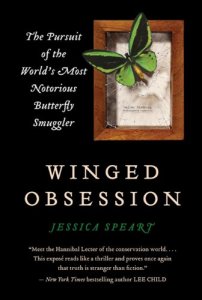
Book 10 winds up the series with UNSAFE HARBOR involving the importation of illegal Tibetan antelope fur clothing, before Speart turns to non-fiction for her 11th book, WINGED OBSESSION: The Pursuit of the World’s Most Notorious Butterfly Smuggler.

“It deals with an actual case that is so crazy no one would believe it if I wrote it as fiction,” she said. “A Japanese national began prowling around America’s national parks. One butterfly he chased was the Apache Fritillary, catching 500 of them and shipping them back to Japan to sell.”

Following up on the true case she flew to Japan and went undercover to make friends with the man. Soon, she discovered he was setting her up. A thriller, indeed.

Whether writing non-fiction or fiction Speart spends time outlining her books before giving it its freedom. “I’m a big outliner, especially when it comes to writing a mystery. Otherwise, it’s like driving your car through a tunnel without lights on a dark night. You are bound to have an accident.”

She noted that some authors spend a year-sometimes two or three – nurturing their book. “Then comes the morning when we finally have to let go and the book takes on a life of its own.”

Speart finds that releasing a published book is exciting and frightening both at the same time. “There’s the rush of having the published book hit the stores, there’s the fear that no one will like it. But what about those folks who read your book and become angry?”

After BLUE TWILIGHT went on sale a small group of butterfly collectors felt she had attacked them, and, in turn, began attacking her.

“Apparently, I’d hit a nerve,” she said. “I’m not saying butterfly collecting is a crime but there are those who cross the line between collecting legal butterflies versus collecting protected and endangered butterflies. There are instances where even legal butterflies have been over-collected.”

The author points out that there is a class system when it comes to species being valued, and that if they were chimps, tigers and others public reaction would be one of horror. She continues the argument on her website in one of her blogs. She also discusses the difference between the two styles, saying that narrative non-fiction is fact-based storytelling employing some of the same skills that are used in fiction, setting each scene, presenting fascinating characters, and creating a strong narrative persona.

As for specific dialogue in non-fiction, Speart again brings her research to the forefront. It requires, she says, exhaustive digging which is something she enjoys. She also points out that narrative non-fiction doesn’t have to be told as purely objective journalism. Writers can bring emotion to their characters and create a sense of drama while following the story arc.

A few books that fit into the discussion are some of her favorites including In Cold Blood by Truman Capote; Into Thin Air by Jon Krakauer; The Orchard Thief by Susan Orlean; The Perfect Storm by Sebastian Junger, and Midnight in the Garden of Good and Evil by John Berendt, a book that began Speart’s love affair with the city of Savannah.

Jessica Speart teaches an advanced mystery writers workshop in Connecticut, and reminds students: “You have to believe in your work and not give up. Writing is a rough business and not for the faint of heart.

Another Look At Descriptions

by Miko Johnston

In my contributions to this blog, I’ve written about descriptions several times. Describing, or as Jackie likes to say, illustrating in our writing has always presented a challenge to me. Part of it is how much? and is this necessary? There’s also how well…? – am I using fresh word pairings and metaphors that impress, not impede? Will readers not only ‘see’ it, but believe it?

All writing needs description to bring the story to life, but contemporary fiction usually depends on what we see around us. Science fiction, fantasy and, to a lesser extent, alt-reality requires more description as the reader can’t assume anything in a newly created world. So does the procedures of a character with an unusual or highly technical occupation, or day to day life in historical fiction to avoid anachronisms.

Writing historical fiction, as I do, requires a great deal of research, not only of history but images that represent the time. Clothing, hairstyles, machinery and tools, art and architecture infuse the story with the flavor of authenticity. In managing the word count, one picture can truly be worth a thousand words – if you find the right words.

I faced an insurmountable challenge in my latest novel. I wanted a character to wear a dress I’d seen illustrated in a period catalogue, a flamboyant style from the early 1920s. Today I’d describe it as having a side hooped (pannier) skirt with rolls of fabric resembling vertical soda can stackers hanging from each hip. However, that would not be time-appropriate for the era I write in and I couldn’t come up with a better way to depict the dress. It forced me to change her garment into something equally ridiculous but more describable, something Little Bo Peep might have worn.

That wasn’t the first time I’ve had trouble describing something in a way that a reader could visualize it. I envy writers who have that knack. I recently read a piece by Eric Asimov, who writes the Wine column for the New York Times, describing the ideal corkscrew, sometimes referred to as a waiter’s friend. He writes:

“It’s essentially a knifelike handle with a spiral worm for inserting into the cork, a double-hinged fulcrum for resistance and a small, folding blade for cutting the foil that protects the cork.”

Brilliantly descriptive and clear. You can not only see it, but see how it’s used.

Another challenge is trying to describe a situation that many have gone through; for example, pregnancy and labor. If you’ve given birth, you would probably rely on your personal recollections. If not, you’d research what others have endured, like I did. Either way, some readers will tell you that’s not what they experienced. In my first literary pregnancy, I was so concerned about the birth that I left that scene ‘off the page’; my character leaves town a month before her due date and returns with babe in arms.

Now several of my characters have gone through pregnancy and childbirth. I’ve gotten more controversial feedback on that subject than any other, and always from mothers. Certain suggestions, such as those little moments you could never envision unless you were ‘there’, helped. Other comments were less beneficial, for although there is much commonality in the experience, little of it is universal. “That’s not how it was for me,” they’d say, and I’d tell them “Okay, but that’s how it was for my character.”

*          *          *

As I’ve recently finished my fourth novel in a series, I’ve reviewed the manuscript multiple times and also reread sections of the earlier books. In doing so I learned something about my method of describing. The more important an element is, the more I’ll usually describe it. For instance, in my second book, my character meets a family that will play a prominent role in the rest of the series. It’s my young protagonist’s first impression of them, so I devote at least a full paragraph to the description of each person, I’ve augmented the descriptions as time passed to show how they’ve changed with age. Minor characters, such as the housekeeper, merit a phrase, enough to picture the woman when she returns later in the story. Thanks to Gayle’s tutelage, I’ve learned a title – waiter, shopkeeper – often suffices for ‘walk-on’ characters, though I might include a glimpse to set the scene, such as the wizened mother-in-law of a black marketeer, opulent earrings hanging from her lobes like chandeliers.

The character’s perspective also plays a role. My heroine, Lala, is introduced as a child, “almost eight”, who grew up poor. Her thoughts and observations had to be filtered by her age and experience, which is why it took me weeks to come up with a way for her to ‘describe’ a terrazzo floor (…like flat pebbles floating in a sea of cream). As she matured, so did her perceptions and understanding of human nature. Whatever captures her interest, or she feels passionate about, will inspire a more detailed description.

I approach themes in the same way. In my most recent novel, I chose to represent the political and social turmoil of post-WWI Europe with an image I found in my research. Lala, now married with child, observes it while stuck in traffic:

She perused the art work, most of it propaganda celebrating the recent wave of Communist Party member assassinations in Germany. One placard illustrated a macabre street scene in Hungary, judging by the uniforms worn by a line of soldiers hanging from gallows. Wives and children wept at the dead men’s feet while, standing in the middle of the road, a Bolshevik in uniform observed the carnage with a haughty air of satisfaction. The caption read, Erzet Harcoltunk? – ‘This is what we fought for?’…The artist had placed the smug-looking Bolshevik in the foreground, hands on hips, an unkempt uniform wrapped around his fat middle. Skinny legs stuffed into unpolished boots. Thin arms as well, implying physical weakness…Then she noticed the slight alteration of the Bolshevik’s cap, a subtle nod to a trait he shared with many of the political assassination victims.

The gold star affixed above the brim did not have five points, but six.

Rather than rely on the headlines of the day, I chose to let the reader “see” what she’s describing and understand the meaning behind the images.

This method works for me. What techniques do you rely on to get the right balance of description and imagery in your writing?

###

Miko Johnston, a founding member of The Writers In Residence, is the author of the historical fiction saga A PETAL IN THE WIND, as well as a contributor to anthologies, including LAst Exit to Murder. She has recently completed the fourth book in her series. Miko lives in Washington (the big one) with her rocket scientist husband. Contact her at mikojohnstonauthor@gmail.com

A Revelation and a Lesson in Reality

Moving from California to Connecticut, coast-to-coast, during the first months of the COVID pandemic resulted in flying out of an airport almost devoid of staff and passengers. I sailed through Security with only two other people in line. In fact, the airport was a ghost town, as was LaGuardia when I reached New York. No coffee shops or stores were open, but, warned ahead of time, I’d brought my own travel cup and, of course, my kindle loaded with eBooks.

It had been 23 years since I had lived in CT and discovered that I knew not a soul any longer except for my son and daughter. I searched the Obituaries pages for news of long-lost friends and called up a newspaper I used to work for but no one had heard of my fellow reporters from so long ago.

Needing to get back into the writing community I joined the New York chapters of Mystery Writers of America, Sisters in Crime, and renewed my Authors Guild membership, but there were no actual meetings scheduled except for Zoom. Like most writers I thrive on in-person contact where we have an opportunity to pick up characteristics of other humans, locales, and other, often small, details we put to use in our books.

I cast around for any group related to writing that met in person and this month, lo and behold, I was told of a women’s book club that was actually meeting at a coffee shop. There was also a memoir group at someone’s home. I’d been to several book clubs in California as their speaker when one of my books was the subject of discussion but what would it be like sitting on the other side of the table? I’d been treated with great respect, gentleness, and politeness each time with questions that were easy to answer and expected the same for this author and his work.

Instead, it was a revelation and a lesson in reality.

The book under discussion was a pretty hefty novel by a renowned author.  I was struck the most by everyone’s intensity, enthusiasm, and deep knowledge of each character and their supposed intent; the proposed meaning of every scene, and talk about the author’s hidden message on almost every page even if there were none. It was fascinating to hear that three members said they were in disagreement with the author because one character didn’t really mean what he said and other members backed her up. Another lady said a character should not have done what she did and offered an alternative to what the author wrote, and yet another lady said two of the characters should never have had the argument they did if only they had done so-and-so.

Wow!

Suggesting rewriting parts of an important classic to suit varying ideas about where the plot and its people should have gone gave me an introspective that I knew was impossible to achieve. There are a couple of classics wherein the author addresses the reader as “dear reader,” in his/her books but I doubt it is a plea for understanding the book’s intent. Authors cannot please everyone, and occasionally cannot please themselves when they re-read a book they wrote years earlier, perhaps, and see one or two parts they’d like to edit.

I enjoyed the back and forth between the ladies who were diplomatic in their critiques despite opposing opinions. One tended to hog the limelight by going on and on until the group leader gently cut her off. I was surprised that 4 or 5 of the 14 in the group remained mute the entire time but the others made up for their silence with well-articulated points of view, albeit wishing the author had written some scenes a bit differently.

As the newcomer I mostly listened and didn’t reveal I was an author.  Maybe it wouldn’t have mattered but I was there to discuss someone else’s work.  Only at the end did I disagree with the general conclusion that the main character had redeemed herself by her ringing endorsement of a couple in love rather than try to split them apart as she had earlier in a book-long fit of jealousy. One member asked if the author wished readers to come to like his previously nasty main character at the end by having her do a complete turn-about of herself.

My take was that she was self-serving by pretending to have changed in order to receive everyone’s good wishes instead of their usual disparaging remarks when she dissed them ad nauseum. She was congratulated and basked in their comments, but to me she was still living up to her me-me-me attitude. My statement was then discussed and agreed to by a slim majority of members, while others said they hadn’t thought of it that way but, yes, it made sense.

Perhaps had the author been at this meeting he would have been flabbergasted at the suggestions for changes, as sensible as they were, and probably even a little daunted at the thought but, all in all, I liked the fact that these book clubbers genuinely loved books and discussing them in depth was important to their lives. I am glad I joined and plan to attend every month.

Should I take a lesson from the discussion? Yes, very much so except I am still writing what I want to write. If a reader finds problems in a book that is fictional the author can be excused. What have been your book club experiences?

###

Jill Amadio is a ghostwriter and cozy mystery writer. This is her new novel.

A leggy wildflower of a girl, teenage Sofia runs away from rural Oregon to big city Portland where she meets and marries a charismatic Saudi Arabian later known as 9/11 hijacker #13. While a slumbering America embraces feng sui and pizza she is present when terrorist sleeper cells are organized in her home, maps of landmark buildings, airports, and bridges are studied, and teams of recruits take flying lessons.

IN TERROR’S DEADLY CLASP, a novel, is based on her true story, providing a rare, chilling glimpse under the radar of the terrorists’ daily lives as they enjoy strip clubs, fast food, and freedom from their religious rules. After warning the FBI of the Arabs’ photo sessions, driving several men into America illegally from Mexico, and other suspicious activities, she goes undercover for U.S. intelligence agencies with deadly consequences.