
Gayle will be at the Buena Vista Branch of the Burbank Library on Saturday, October 21, from 1-4 P.M. Drop by and say hello!
PART ONE
by Gayle Bartos-Pool
Whether you are writing a novel, short story or screenplay, you use the same basic literary tools. If you want to give yourself a better chance to have your short story or novel picked up by an agent and then a publisher, you have to get their attention. If you are lucky, an agent/publisher will read your first chapter. Usually they will just read the first few pages or maybe only the first paragraph. This holds true for a short story that you might submit to a contest. They have 50-100 manuscripts stacked up and they are looking for any excuse to toss your work into the round file. You want to make your opening a grabber.
What exactly does an Opening Line/Paragraph/Scene in a Short Story, Novel or Screenplay do? I will explain using the Short Story, but much of this pertains to novels or screenplays as well.
- The Opening Line sets the TONE (funny/tragic/etc.), identifies the sub-genre of the story (Noir/cozy/sassy sleuth), states the problem, and hints at the solution. Put one or two of these in that opening line or paragraph.
How do you write a good Opening?
2. The Opening should get the reader’s attention:
Example: I couldn’t believe they found Brad’s body. I thought I buried him deeper. From “A Role To Die For” by G.B. Pool
3. Avoid the clichéd opening. EXAMPLE: Instead of: It seemed like a good idea at the time… or This was the worst day of my life…try: The two-by-four smacked me in the head. And here I thought the guy with the gun was my problem. (It’s the unexpected that grabs attention.)
4. The Opening should establish the RULES of the story; they must be consistent; you can’t start out as a comedy and end up with a philosophical think piece.
5. One way of setting the Tone in a short story is with a Very Strong Voice. You do this by either writing in First Person or using a strong Narrator (Third Person) describing the main character or the problem at hand. The voice will propel the short story. Whereas in a novel you can be more emotional and flowery in your delivery. A strong voice tells the reader what type of story he is reading, is more one-on-one, and holds the reader’s attention. The Omniscient Voice is colder, more remote, and unemotional. Third Person Close is more personal.
EXAMPLE: Archie Wright’s the name. Dishing dirt’s the game. My sandbox: Hollywood. The most glamorous and glitzy, vicious, and venomous playground in the world. If you come for a visit, bring your sunscreen and your shark repellent. If you come to stay, let me warn you, Tinsel Town eats up and spits out a hundred just like you every day. Sometimes it isn’t pretty, but it’s my job to chronicle the ebb and flow of the hopeful, the helpless, and the hapless. My best stories come from the dark side of Glitzville. From “Glitzville” by G.B. Pool
6. The Opening should allude to the ending or the Payoff, so you come full circle when you get to the end.
EXAMPLE – The Opening: “I already told you. I met the guy in a bar. We got to talking. Somehow he knew I’d been in trouble with the law before.”
****
EXAMPLE – The Closing: “Perhaps you would like to speak to a lawyer now, Mr. Harrison?” said the cop. From “The Big Payoff” by G.B. Pool (The poor shlub at the beginning has been confessing to a cop. This isn’t known until the end.)
As An Exercise: Compile Beginnings and Endings of Short Stories or Chapters in a novel. Use yours or the masters. It’s eye-opening.
 7. The Opening should hint at, but not necessarily give away, the ending. A good example where this is done well is the opening from the movie Sunset Boulevard. (There is a dead body floating in a pool. It is narrating the story. How he got that way is the plot.)
Part Two will be up in a few weeks to continue this theme… Openings are important, my friends.
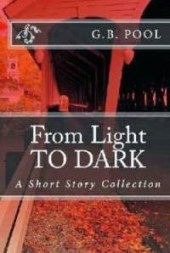
Most of the examples used are from my short story collection: From Light TO DARK.

 Some months ago there was an unbelievable news story on TV. The gist was that some teachers no longer wanted to teach the classics. Unlike my reaction to other things I have heard on TV news shows (or the Internet), I actually believed the report. My snarky first reaction was that the teachers probably couldn’t read themselves and didn’t want their students to know they were illiterate. I’m still tossing around that idea.

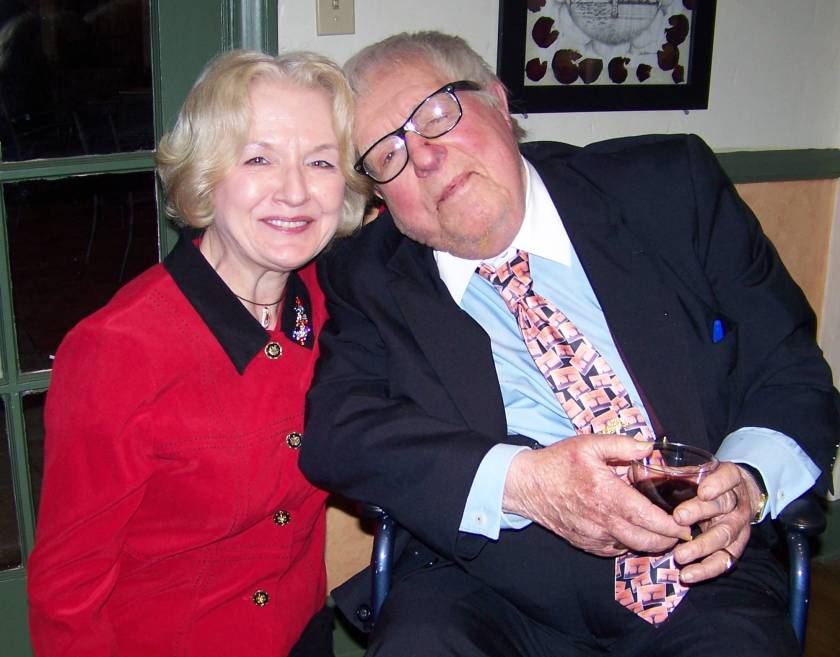






 Jacqueline Vick is the author of over twenty published short stories, novelettes and mystery novels. Her April 2010 article for Fido Friendly Magazine, “Calling Canine Clairvoyants”, led to the first Frankie Chandler Pet Psychic mystery, Barking Mad About Murder. To find out more, visit her website at
  Sally Carpenter put out a post about her new book The Quirky Quiz Show Caper. I saw it on Facebook. (Hint: Don’t be afraid to promote your books, gently, on social media.) I immediately downloaded a copy, realized I hadn’t read the previous book, and downloaded that one, too. (See? Promotion pays off!)
 back together at 38 after drying out. The choices available to him at this point in his career are pretty cheesy, but as grandma used to say, beggars can’t be choosers.
 I’m glad I did, because I wouldn’t have wanted to miss the excitement. Samantha and Nick Taylor just may move their relationship to a new level, but will the handsome photographer Dante get in the way? And what’s Dante doing hanging around Samantha at Christmas anyway? He’s lending brotherly support to his sister Cat whose husband has just been murdered. Did I mention Cat is eight months pregnant? If you think it sounds like a soap opera, you’re right. Twists and surprises galore but without the annoying “scene hold” before commercial break.
 I’ll have to wait until October for the next Ellen Byron novel, A Cajun Christmas Killing, and I’ve been to several bookstores looking for Ashley Weaver’s The Essence of Malice. Ooh! Did I just see an Amory Ames Kindle Single? Another for the pile!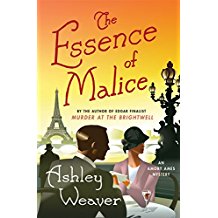

 questions were, “Where do you get your ideas?” and “How do you know all that stuff?”
 But then recently at the Vons grocery store, a lovely lady traveling on Route 66 from Illinois to Santa Monica came up to me, and said “I know you!” I had on a Route 66 T-shirt, and as it turned out, it was mistaken identity–she thought I was a “Roadie” she’d met elsewhere in another state.

 “A boost up”….when someone holds their clasped hands together next to a horse, and you put your foot in like a stirrup, and they propel you upward into the saddle.
 After writing my first three published short stories, something happened: Readers responded favorably to one of my characters. They liked this guy’s personality.


 And to add one more thing to this blog, Johnny Casino isn’t the only short story character to be in a book of his own. Chance McCoy arrived this year. His first book is called Second Chance. There are more stories to come. And there is a second short story anthology called Only in Hollywood coming out next year. The book consists of various stand-alone stories, but one features a guy named Charles Miro, a former TV actor turned private eye. He works for a younger woman who owns the detective firm. There are several stories about these two coming up. You see, even a short story can magically turn itself into a book if you try.

 The Writers in Residence
You must be logged in to post a comment.